China Sourcing Made Simple: How Link4a Connects You to Trusted Suppliers
China Sourcing Made Simple: How Link4a Connects You to Trusted Suppliers
China sourcing for United States buyers is a managed procurement process that bridges the gap between American product requirements and verified Chinese manufacturing capacity, moving beyond simple marketplace searches to include factory vetting, compliance verification, and logistics coordination. For US importers, DTC brands, and online creators, effective sourcing requires a partner who handles supplier shortlisting, MOQ negotiation, sample validation, and multilingual communication to mitigate risks associated with cross-border trade. Link4a serves as this operational bridge, offering a commission-based model for factories and verifiable search performance for buyers, ensuring that the products sourced meet specific US market standards rather than generic export specifications.
The demand for reliable china sourcing in the United States stems from a need to balance cost efficiency with strict regulatory adherence and brand reputation. While platforms like made-in-china.com provide access to vast categories ranging from Consumer Electronics to Textiles, US buyers often struggle to distinguish trading companies from actual manufacturers or to verify claims without on-ground support. This article outlines the specific regulatory, cultural, and logistical realities of importing into the US and demonstrates how a dedicated sourcing partner transforms a high-risk gamble into a predictable supply chain asset.
China Sourcing in United States — Market Overview
The United States remains the world’s largest consumer market, driving massive volume across diverse sectors including apparel, electronics, home goods, and industrial components. Industry estimates suggest that despite diversification efforts, China continues to account for a significant portion of US imports due to its unmatched manufacturing ecosystem and infrastructure maturity. US buyers range from Amazon FBA sellers and Shopify DTC founders to mid-market retailers and enterprise procurement teams, all seeking to maintain margins while meeting domestic consumer expectations for quality and speed. The sheer scale of available suppliers is evident on major B2B platforms; for instance, made-in-china.com lists extensive categories such as Agriculture & Food, Auto/Motorcycle Parts, Construction & Decoration, and Health & Medicine, reflecting the breadth of US import demand.
Demand drivers for US-based china sourcing have shifted from pure price arbitrage to supply chain resilience and compliance. Post-pandemic disruptions and evolving relations between Washington and Beijing have forced American businesses to prioritize transparency over rock-bottom pricing. Buyers now seek partners who can navigate tariff classifications, validate social compliance audits, and manage inventory buffers against geopolitical volatility. This shift has elevated the role of sourcing agents from mere translators to strategic operators who understand both US retail standards and Chinese production realities.
Common buyer profiles in the United States share specific pain points that generic marketplaces cannot solve alone. DTC store owners need low MOQs and private labeling capabilities but lack the leverage to negotiate these terms directly with large factories. Online creators require rapid sampling and content-ready packaging but face communication barriers when coordinating with overseas production lines. Mid-sized importers need consistent quality control and regulatory documentation for customs clearance but cannot justify maintaining a full-time office in Shenzhen or Yiwu. These segments benefit most from a managed service model where the sourcing partner assumes responsibility for supplier performance and communication accuracy.
What's Specific About United States Sourcing Requirements
Sourcing for the US market involves navigating a complex web of federal regulations that do not apply to other regions. Customs and Border Protection (CBP) enforces strict rules on country of origin marking, intellectual property rights, and forced labor prohibitions under the Uyghur Forced Labor Prevention Act (UFLPA). A sourcing partner must be able to trace raw materials back to their source to prevent shipments from being detained at the port of entry. Additionally, products must comply with agency-specific standards: CPSC for children’s goods, FDA for food contact items, FCC for electronics, and DOT for automotive parts. Failure to secure proper testing reports and certificates before shipment can result in costly seizures or recalls.
Cultural and language considerations extend far beyond basic translation. Business norms in China rely heavily on guanxi (relationships) and indirect communication, which can clash with the direct, contract-driven style preferred by US buyers. Misunderstandings often arise when "yes" means "I hear you" rather than "I agree," leading to specification errors that only surface during mass production. Effective china sourcing for US clients requires bilingual staff who understand American retail expectations and can translate technical feedback into actionable manufacturing instructions. Platforms recognize this gap; related searches on made-in-china.com frequently include "Translation" and "Translator services," indicating that language support is a primary friction point for international buyers.
Payment methods and financial security also differ significantly from domestic US transactions. While US businesses typically operate on Net 30 or Net 60 terms, Chinese factories often require 30% deposits via T/T wire transfer before production begins, with the balance paid before shipment. Letters of Credit (L/C) are common for larger orders but involve banking fees and documentation complexity. US buyers must also consider currency fluctuation risks and the impact of Section 301 tariffs on landed costs. A competent sourcing partner helps structure payment milestones tied to inspection results, reducing the risk of paying for non-conforming goods. They also assist in verifying supplier banking details to prevent business email compromise fraud, a growing threat in cross-border import transactions.
How to Choose a China Sourcing Provider in United States
Selecting a sourcing partner requires evaluating criteria specific to US business operations, starting with verifiable on-ground presence and legal standing. Many self-proclaimed agents operate solely as remote intermediaries without physical access to factories or local business licenses. US buyers should verify that their partner maintains registered entities in both jurisdictions and employs native-speaking staff located in key manufacturing hubs. Time-zone coverage is equally critical; a provider should offer overlapping hours with US business days to facilitate real-time problem solving rather than delayed email chains. Link4a addresses this through multilingual teams that handle buyer conversations directly, drafting responses based on actual factory inventory rather than automated scripts.
Language support must go beyond conversational fluency to include technical and regulatory competency. A provider should demonstrate experience with US-specific terminology, certification requirements, and marketing nuances. For example, Link4a offers managed overseas storefronts in six languages, including Arabic formatted right-to-left, with per-language keyword research rather than direct English translation. This level of localization ensures that product descriptions resonate with target markets and accurately reflect manufacturing capabilities. When evaluating providers, ask for examples of previous work involving US compliance documentation, Amazon listing optimization, or DTC brand development to assess their functional expertise.
Transparency in supplier vetting and ranking methodology separates professional partners from directory listings. US buyers need assurance that recommended factories have been audited for production capacity, quality systems, and ethical compliance—not just listed because they paid for advertising. Link4a uses a verifiable ranking system rather than promises; a sweep of 60 product pages on a client store conducted on August 31, 2026, found 17 ranking first on US Google and 31 in the top 10, with queries published publicly for verification. This data-driven approach allows buyers to evaluate potential partners based on measurable outcomes rather than sales pitches. Additionally, inquire about their commission structure; Link4a charges factories only on closed orders, aligning incentives toward successful transactions rather than listing fees.
Pricing in United States: Understanding Cost Structures
Pricing for china sourcing services in the United States varies widely based on service scope, order volume, and product complexity. Typical models include flat monthly retainers ($500–$3,000+), percentage-based commissions (3%–10% of order value), or hybrid structures combining base fees with success bonuses. US buyers should be wary of providers offering unusually low rates, as these often correlate with kickbacks from suppliers or inadequate vetting processes. Transparent pricing should clearly delineate what is included: factory audits, sample shipping, quality inspections, consolidation, and customs documentation. Link4a’s commission-only entry for factories eliminates upfront costs for suppliers, which can translate to more competitive pricing for buyers since factories aren’t recouping listing fees through inflated unit costs.
Several factors influence local pricing dynamics for US-bound goods. Tariff classifications under Section 301 can add 7.5% to 25% (or more) to dutiable value, making accurate HTS code assignment essential for cost forecasting. Product customization levels affect MOQs and tooling amortization; highly customized items typically carry higher per-unit costs but lower competition. Logistics mode selection—ocean freight vs. air express vs. rail via the Belt and Road Initiative corridors to Europe then transloading—impacts both unit economics and cash flow cycles. Seasonal demand peaks like Q4 holiday rushes or Canton Fair periods can temporarily inflate production and shipping rates. A knowledgeable sourcing partner helps model total landed cost including duties, freight, insurance, and brokerage fees to avoid margin erosion.
Currency exchange management also plays a role in final pricing. RMB/USD fluctuations can swing landed costs by 5-10% over a production cycle. Some sourcing partners offer locked-rate guarantees or hedging advice, while others pass through spot rates at time of payment. US buyers should clarify exchange rate policies upfront and consider timing payments strategically when possible. Additionally, hidden costs like domestic Chinese trucking, export licensing, fumigation certificates, and palletization fees can accumulate if not itemized in initial quotes. Request detailed proforma invoices breaking out every cost component before committing to production runs.
Common Challenges for Buyers in United States
Regulatory Compliance and Sanction Risks
US importers face increasing scrutiny regarding supply chain ethics and national security. The UFLPA presumes guilt for goods originating from Xinjiang unless proven otherwise through exhaustive documentation. Similarly, export controls and entity lists restrict dealings with certain Chinese firms involved in advanced technology or military applications. Navigating these sanction regimes requires continuous monitoring and deep supplier visibility that most individual buyers cannot maintain independently. Even unintentional violations can trigger penalties, shipment seizures, and reputational damage. Working with a sourcing partner who maintains updated compliance databases and conducts regular supplier re-audits is no longer optional for serious US importers.
Supplier Reliability and Quality Consistency
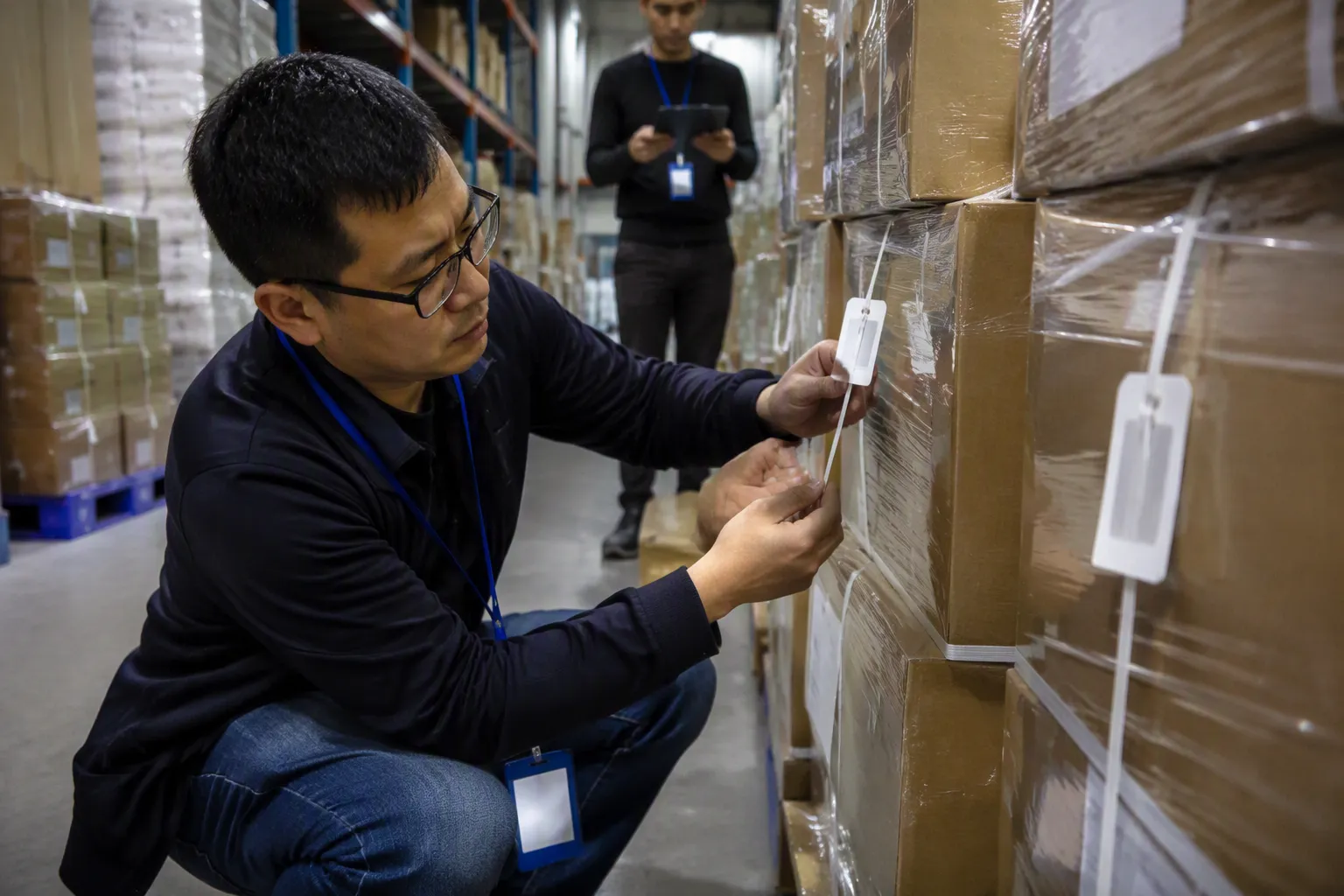
Factory capabilities change over time due to staff turnover, equipment upgrades, subcontracting shifts, or financial stress. A supplier who delivered excellent samples may produce inconsistent bulk lots months later without warning. US buyers often discover quality drift only after goods arrive domestically, when returns or rework become prohibitively expensive. Cultural differences in quality perception compound this issue; what constitutes "acceptable tolerance" in some Chinese factories may fail US retail standards. Mitigating this requires pre-shipment inspections conducted by trusted third parties or in-house teams, clear written specifications with photographic references, and contractual remedies for non-compliance. Link4a’s repeat ordering and sample coordination services build institutional knowledge of supplier performance trends, flagging risks before they escalate.
Logistics Bottlenecks and Geopolitical Disruptions
Global shipping networks remain vulnerable to port congestion, container shortages, labor strikes, and regional conflicts. The Belt and Road Initiative has created alternative land routes, but maritime lanes still dominate US-China trade flows. Delays at Shanghai or Ningbo ports can cascade into missed selling seasons and stockouts for US retailers. Additionally, evolving relations between major powers can suddenly alter tariff schedules or inspection protocols, requiring agile response capabilities. US buyers need sourcing partners with established freight forwarder relationships, real-time shipment tracking, and contingency planning expertise. Proactive communication about delays matters as much as preventing them; buyers prefer honest early warnings over optimistic silence followed by crises.
Frequently Asked Questions (United States-Specific)
How does Link4a differ from using Alibaba or made-in-china.com directly? Marketplaces connect you to thousands of suppliers but leave vetting, negotiation, and quality assurance entirely on your shoulders. Link4a acts as your operational partner, shortlisting verified factories, negotiating MOQs and pricing based on real production data, coordinating samples, and managing ongoing communication in native languages. We also handle compliance documentation and post-sale issues that marketplaces typically disclaim responsibility for.
Can I source small quantities for my DTC store without hitting high MOQs? Yes, but it requires targeted supplier matching. Many factories reserve low-MQ production slots for partners who bring consistent volume across multiple clients. Link4a aggregates demand from various US buyers to negotiate favorable terms that individual small businesses couldn’t secure alone. We also identify factories specifically structured for flexible batch production rather than mass manufacturing.
What happens if a shipment fails US customs inspection or CPSC testing? Prevention is primary; we coordinate pre-shipment testing against US standards and verify all required documentation before goods leave China. If issues arise despite precautions, our team manages remediation with the factory—including rework, replacement, or refund negotiations—and assists with customs broker communications to minimize detention time and penalties. Our commission structure aligns our interests with yours: we succeed only when orders close successfully.
Do you help with products subject to Section 301 tariffs or UFLPA restrictions? Absolutely. We conduct supply chain mapping to verify raw material origins and ensure compliance with forced labor prohibitions. For tariff-affected goods, we assist with HTS classification review, duty drawback eligibility assessment, and alternative sourcing strategies where appropriate. Transparency about regulatory exposure is built into our vetting process so you can make informed decisions before committing capital.
How quickly can I expect samples and production timelines for US delivery? Timelines vary by product category and factory workload, but typical sample turnaround ranges from 7-15 days plus international shipping. Mass production usually takes 30-60 days depending on complexity and component availability. We provide realistic schedules based on current factory capacity checks rather than generic estimates, and we track progress weekly to flag delays early. Air freight options exist for urgent needs, though ocean freight remains standard for cost efficiency.
Is there an upfront fee to start working with Link4a as a buyer? No. Our buyer-facing services operate on project-based or retainer models tailored to your volume and complexity needs. Factories pay us commissions only on closed orders, which removes perverse incentives to push unsuitable suppliers. Contact us for a customized proposal based on your specific sourcing requirements and growth stage.
How do you verify factory claims versus actual capabilities? We combine desk research, on-site audits, production record reviews, and reference checks with existing US/EU clients. Our rankings are based on verifiable performance metrics—including organic search visibility and historical fulfillment data—rather than paid placements. We publish query datasets openly so buyers can independently validate our supplier recommendations against real market signals.
Get Started in United States
Effective china sourcing for US businesses demands more than directory access; it requires a partner embedded in both cultures with proven operational discipline and transparent incentives. Whether you’re launching a new DTC line, scaling an existing brand, or diversifying away from unreliable suppliers, the next step is concrete evaluation against your specific product and compliance needs. Review your current pain points—MOQ flexibility, quality consistency, regulatory documentation, communication responsiveness—and prepare a brief outlining your target products, estimated annual volumes, and must-have certifications.
Request a consultation with Link4a to discuss your sourcing requirements and receive a tailored assessment of viable factory matches, estimated landed costs, and timeline projections. Visit https://link4a.com to submit your inquiry, explore published ranking data, or schedule an introductory call with our US-China sourcing team. Stop gambling on marketplace listings and start building a supply chain engineered for American market success.