Customs in China: Trade Regulations & Business Etiquette for Importers
Customs in China: Trade Regulations & Business Etiquette for Importers
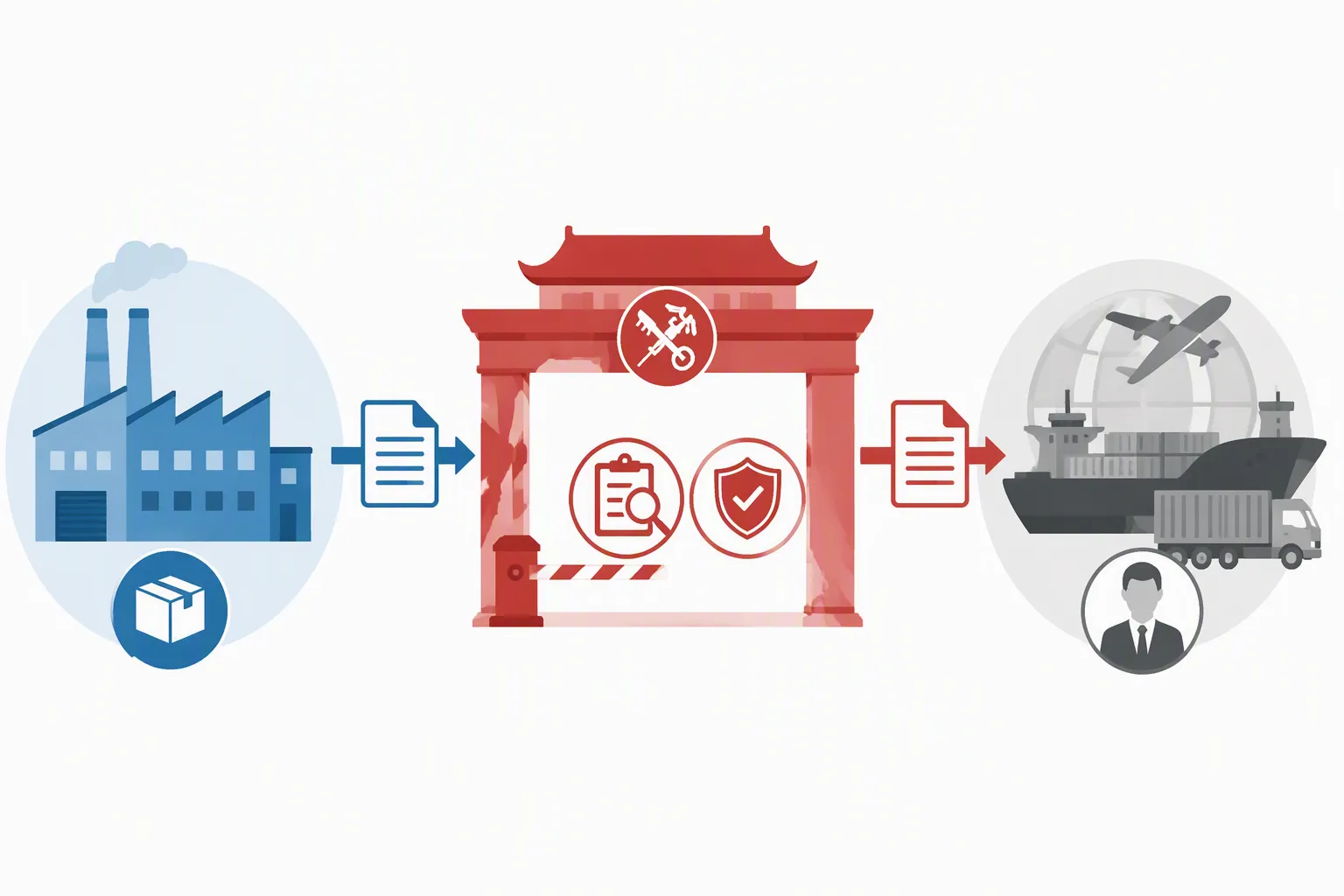
Customs in China refers to two distinct but interconnected frameworks that overseas buyers must master: the regulatory compliance protocols enforced by the General Administration of Customs (GACC) for cross-border trade, and the traditional social etiquette that governs business relationships. Success in Chinese sourcing requires satisfying strict documentation requirements for export clearance while simultaneously adhering to cultural norms like hierarchy and guanxi (relationships) that dictate how deals are actually negotiated and fulfilled. Understanding both dimensions prevents shipments from being detained at the port and ensures suppliers remain motivated to prioritize your production runs over others.
For DTC store owners and importers, the distinction matters because a factory can be fully compliant on paper yet culturally misaligned with your expectations, leading to quality fade or communication breakdowns. Conversely, perfect interpersonal rapport cannot fix an incorrect HS code or missing export license. This guide addresses both the bureaucratic realities of moving goods through Chinese ports and the human customs that determine whether a supplier becomes a long-term partner or a one-time transaction, specifically tailored for buyers who need vetted manufacturing rather than marketplace gambling.
Customs in China — Market Overview
China covers an area of 9,596,961 square kilometers with a population estimated at 1,376,049,000 as of 2015, creating a domestic market and manufacturing base of unparalleled scale (AFS USA). This vast geography means "customs" is not monolithic; regulations and enforcement intensity vary significantly between coastal hubs like Shenzhen and Ningbo versus inland provinces. Buyers sourcing from multiple regions often encounter different local interpretations of national GACC directives, making on-the-ground verification essential rather than optional. The sheer size of the market also drives demand for specialized intermediaries who can bridge the gap between foreign compliance standards and local execution capabilities.
The primary buyer profiles engaging with Chinese customs today have shifted from large multinational procurement teams to independent creators, niche e-commerce brands, and small-batch importers. These buyers typically lack in-house compliance departments and cannot absorb the cost of detained shipments or failed inspections. They require partners who handle not just logistics but the pre-export validation that prevents customs issues before goods leave the factory floor. Demand is increasingly driven by product categories requiring specific certifications—electronics, cosmetics, children's goods—where regulatory risk is highest and margin for error is lowest.
Market dynamics are further shaped by initiatives like the Belt and Road Initiative, which has streamlined customs procedures with participating nations while creating new documentation requirements for transshipment routes. Trade relations with key markets including India and Western nations continue to evolve, occasionally introducing new sanction screenings or tariff classifications that affect specific product categories. Buyers must recognize that customs compliance is a moving target influenced by geopolitical shifts, not a static checklist. A sourcing partner operating within this environment needs real-time awareness of these changes to protect buyer interests across different destination markets.
What's Specific About China: Regulatory and Cultural Frameworks
Regulatory Compliance and Export Documentation
Chinese customs authorities operate under a centralized framework, but practical application depends heavily on accurate product classification and supplier licensing. Every export shipment requires correct Harmonized System (HS) codes, commercial invoices, packing lists, and often category-specific certificates like CCC marks for electronics or CFDA registration for cosmetics. Misclassification is the most common cause of delays; a product described generically as "accessories" may face scrutiny that "stainless steel jewelry components" would not. The GACC maintains searchable databases for registered exporters, and verifying a factory's actual export license—not just their business license—is a non-negotiable first step.
Sanction screening has become integral to Chinese export compliance, particularly for dual-use goods or products destined for markets with active trade restrictions. Suppliers must now confirm end-use declarations and sometimes provide additional documentation proving goods won't be diverted to restricted entities. This layer of compliance affects lead times and requires transparent communication between buyer and manufacturer. Working with a managed export operator like Link4a provides structural protection here, as commission-only models align incentives toward successful delivery rather than upfront fees regardless of outcome.
Cultural Customs That Impact Business Outcomes
Regulatory compliance gets goods to the port; cultural competence gets them manufactured correctly. Chinese business culture is deeply influenced by Confucian values emphasizing hierarchy, harmony, and reciprocal obligation (AFS USA). Direct confrontation or public criticism of a supplier's mistake causes loss of face and can damage the relationship irreparably, even if you're contractually correct. Issues are better addressed privately through intermediaries or framed as collaborative problem-solving rather than blame assignment. This isn't mere politeness—it directly affects whether a factory prioritizes reworking your defective batch or moves to the next client's order.
Social rituals carry genuine business weight. When exchanging business cards, use two hands and study the card briefly before putting it away; treating it casually signals disrespect (Teaching House). Dining is communal, and refusing shared dishes or failing to participate in toasts can create distance. If someone pours you a drink, tapping your index and middle fingers together twice on the table acknowledges the gesture without interrupting conversation (Teaching House). These practices aren't performance—they're signals of respect that build the trust necessary for suppliers to share honest capacity constraints, flag potential quality issues early, or offer better pricing during negotiations.
Language considerations extend beyond translation accuracy. Mandarin is the official language, but regional dialects dominate factory floors in Guangdong, Zhejiang, and Fujian (AFS USA). Technical specifications translated into formal Mandarin may still be misunderstood by production managers who speak Cantonese or Wenzhounese as their primary language. Effective communication requires confirming understanding through samples, visual references, and sometimes dialect-aware intermediaries rather than assuming written translations suffice. This is why multilingual support in sourcing partnerships must include regional linguistic competence, not just standard Mandarin proficiency.
How to Choose a Customs Provider in China
Selecting a provider capable of handling both regulatory and cultural dimensions requires evaluating specific operational criteria beyond generic claims of expertise. First, verify on-the-ground presence in the manufacturing regions relevant to your product category. A provider based solely in Shanghai or Beijing may lack the local relationships and dialect fluency needed in Yiwu or Dongguan. Ask for specific examples of factories they've vetted in your target region and request references from buyers with similar product complexity. Physical proximity to factories enables faster sample coordination, unannounced quality checks, and real-time problem resolution that remote operators cannot match.
Licensing and compliance infrastructure should be auditable, not promised. Request proof of the provider's own export licenses, GACC registration status, and any category-specific certifications relevant to your products. For managed export operators like Link4a, examine their track record with verifiable outcomes rather than testimonials alone. The company's published case studies demonstrating measurable marketing execution and search visibility for client stores illustrate operational competence that correlates with successful export management. Providers unwilling to share verifiable performance metrics or specific factory audit reports are higher-risk choices.
Time-zone coverage and language support must match your operational reality. A provider offering only China-business-hours support creates bottlenecks for buyers in North America or Europe who need urgent responses during their working hours. Multilingual capability should extend beyond English to include the languages of your target markets; Link4a's six-language storefronts with locale-specific keyword research and right-to-left Arabic layouts exemplify this depth. Critically, confirm that buyer communications are drafted from actual factory inventory and production capacity, not templated responses disconnected from real stock levels. This prevents the common failure mode where providers promise availability that doesn't exist, causing delays and eroding trust.
Pricing in China: Cost Structures and Local Variables
Pricing for customs-related services in China varies based on scope, product complexity, and service model rather than flat rates. Traditional sourcing agents typically charge 3-8% of order value plus upfront retainers, while managed export operators like Link4a use commission-only structures where factories pay nothing until orders close. This alignment reduces buyer risk and eliminates sunk costs in supplier evaluation phases. For buyers, the relevant cost metric isn't the service fee alone but total landed cost including avoided detention fees, reduced defect rates, and faster time-to-market from competent compliance handling.
Local currency fluctuations in Renminbi (CNY) directly impact pricing stability (AFS USA). Suppliers quoting in USD may embed currency buffers that inflate prices, while CNY-denominated contracts expose buyers to exchange rate volatility. Experienced providers structure pricing to account for this, either through regular rate adjustments or hedging mechanisms built into service agreements. Regional cost differences also matter; factory labor and overhead in coastal Guangdong exceed inland Henan by significant margins, affecting both product pricing and service provider operating costs. Buyers should understand these geographic variations when evaluating quotes that seem anomalously low or high.
What affects pricing locally includes regulatory complexity, order volume, and relationship maturity. Products requiring special export licenses, pre-shipment inspections, or category-specific testing incur additional compliance costs that should be itemized transparently. Repeat orders typically reduce per-unit service costs as suppliers and providers develop familiarity with your requirements. MOQ negotiations also influence pricing; providers with established factory relationships can often secure lower minimums and better unit economics than buyers approaching factories directly. Request detailed cost breakdowns showing product, compliance, logistics, and service components separately to enable accurate comparison between providers.
Common Challenges for Buyers in China
Logistics and Port-Specific Variations
Different Chinese ports enforce regulations with varying strictness and processing speeds. Shipments cleared through Shanghai may face different inspection rates than identical goods moving through Qingdao or Xiamen. Buyers relying on single-port strategies risk disruption when local policy shifts occur. Diversifying exit ports and maintaining relationships with forwarders experienced in multiple jurisdictions mitigates this risk. Seasonal congestion around Chinese New Year and Golden Week compounds logistical challenges, requiring advance planning that accounts for factory shutdowns and customs backlog accumulation.
Regulatory Shifts and Classification Disputes
HS code reclassifications happen regularly and can retroactively affect pending shipments. A product previously cleared under one code may suddenly require additional documentation or face higher duties under revised interpretations. Staying current requires active monitoring of GACC announcements and industry-specific regulatory updates. Suppliers without dedicated compliance staff often learn about changes only when shipments are flagged, causing delays buyers could have prevented through proactive verification. Partnering with providers who maintain regulatory watch functions transfers this burden and reduces exposure to classification disputes.
Supplier Reliability Beyond Paper Compliance
Factories can possess all required licenses yet still fail to deliver consistent quality or honor agreed terms. Verifiable ranking and past performance data matter more than certificates alone. Link4a's approach of drafting buyer responses from actual in-stock catalogues prevents overpromising that plagues marketplace listings. Cultural factors compound reliability risks; suppliers may agree to unrealistic deadlines to preserve harmony rather than negotiate honestly. Intermediaries who understand these dynamics can extract truthful capacity information and set realistic expectations before orders are placed, preventing failures that no amount of contractual enforcement can remedy after the fact.

Frequently Asked Questions (China-Specific)
What documents are mandatory for exporting most consumer goods from China? Commercial invoice, packing list, bill of lading, and accurate HS code classification form the baseline. Category-specific requirements like CCC certification for electronics, CFDA registration for cosmetics, or textile composition labels apply depending on product type. Always verify current requirements with your customs broker or managed export provider before production begins, as regulations update frequently.
How do cultural customs affect negotiation timelines with Chinese suppliers? Relationship-building activities like shared meals and informal conversations aren't delays—they're prerequisites for trustworthy dealings. Rushing negotiations to meet Western timeline expectations often produces superficial agreement masking unresolved concerns. Budget 2-4 weeks for initial supplier engagement including site visits and social interactions before expecting firm commitments on pricing or MOQs.
Can I handle Chinese customs compliance remotely without a local partner? Technically possible but practically high-risk for all but the most experienced importers. Language barriers, time-zone misalignment, regional regulatory variations, and cultural nuances create failure points that remote management struggles to address. Most successful small and mid-sized buyers use local partners precisely because the cost of errors exceeds service fees.
How does the Belt and Road Initiative affect my shipments? The initiative has created streamlined customs corridors with participating countries, potentially reducing transit times and documentation requirements for eligible routes. However, it also introduced new compliance layers for transshipment verification. Whether your shipments benefit depends on origin, destination, and product category. Consult logistics providers with BRI route experience to evaluate applicability.
What payment methods are standard for B2B transactions with Chinese factories? Bank transfers (T/T) remain dominant, typically structured as 30% deposit and 70% before shipment. Letters of credit suit larger orders but add complexity and cost. Alipay and WeChat Pay serve domestic transactions but rarely accommodate international B2B payments. Never wire funds to personal accounts; legitimate factories always receive payments to registered corporate bank accounts matching their business license name.
How do I verify a supplier's export license independently? Search the GACC registered exporter database using the supplier's unified social credit code. Cross-reference this with their business license scope to confirm export authorization covers your product category. Request copies of recent export declarations for similar products as additional proof. Managed export operators like Link4a maintain pre-vetted supplier networks where this verification is completed before buyer introduction.
Do age calculation differences affect business documentation? Yes, indirectly. In China, children are considered one year old at birth and gain a year at Lunar New Year rather than on birthdays, meaning stated ages may differ from Western calculations by 1-2 years (Teaching House). While irrelevant for most product compliance, this affects age-verified categories like children's goods where safety standards reference age brackets. Confirm which age system applies to your product's regulatory requirements.
Get Started in China
Navigating customs in China requires simultaneous mastery of regulatory compliance and cultural relationship management—a combination few overseas buyers can develop internally without significant investment. The path forward involves three concrete steps: audit your current supplier base for verifiable export licenses and cultural alignment, map your product categories against current GACC requirements to identify compliance gaps, and evaluate sourcing partners based on demonstrated outcomes rather than promises.
If you're seeking a sourcing partner that handles factory vetting, MOQ negotiation, sample coordination, and multilingual buyer communication on a commission-only basis, request a consultation with Link4a. Our team provides verifiable performance data, six-language market coverage, and responses grounded in actual factory inventory—not marketplace speculation. Share your product specifications and target market details to receive a tailored assessment of compliance requirements, supplier options, and realistic timelines for your next order.