7 Steps to Decide What to Import and Export Profitably
7 Steps to Decide What to Import and Export Profitably
Deciding what to import and export means selecting physical goods for cross-border trade based on verifiable margin, factory capability, and target-market demand. Buyers who skip this evaluation process often end up with dead stock, while factories that guess their overseas appeal waste production capacity. The core task is matching a specific product specification to a verified manufacturer and a confirmed buyer segment before any money changes hands.
For overseas buyers, DTC store owners, and online creators, figuring out what to import and export requires more than browsing marketplace listings. It demands supplier shortlisting, factory vetting, MOQ negotiation, and sample coordination. For Chinese factory owners, it means identifying which items in their catalogue actually hold value abroad without hiring an internal export sales team. This guide breaks down the exact process both sides use to make those decisions, replacing guesswork with documented steps. If you are building your strategy from scratch, learning how to start an import export business ensures your operational foundation supports these selection criteria.
What Does Deciding What to Import and Export Actually Mean?
At its most basic, determining what to import and export is the process of evaluating whether a specific manufactured good can be sourced at a cost that leaves room for profit after shipping, tariffs, and marketing are deducted. But the definition extends beyond simple arithmetic. It involves verifying that a factory can produce the item consistently, that the materials meet the destination country's compliance standards, and that the final retail price aligns with what buyers will pay.
Many first-time importers treat this decision like buying jewelry or trading pawn items—assessing surface-level aesthetics rather than structural viability. A gold-plated necklace might look profitable until you realize the plating thickness does not meet EU REACH regulations, resulting in customs seizures. Similarly, a factory might offer a low unit price on leather belts, but if their minimum order quantity (MOQ) requires purchasing 5,000 units and your storage capacity holds 1,000, the deal fails operationally even if the math works on paper.
Understanding the difference between B2B bulk sourcing and direct-to-consumer fulfillment is critical here. If you are evaluating models for your business, reading B2B vs B2C: The Complete Comparison Guide for Business Decision-Makers clarifies how order volumes and buyer expectations shift the entire selection process.
The Difference Between Product Selection and Supplier Selection
Choosing the product is only half the equation. Selecting the manufacturer who produces it is the other half. A common mistake among DTC operators is finding a trending item on social media and immediately searching for the cheapest factory to replicate it. Instead, the process should start with identifying factories that already manufacture similar goods, checking their certifications (like ISO 9001 or BSCI audits), and requesting material safety data sheets before discussing pricing.
How to Evaluate What to Import and Export Step by Step
Evaluating products for international trade requires a structured approach. Skipping verification steps leads to delayed shipments, quality failures, and lost capital. Here is the sequence successful buyers follow.
Step 1: Demand Verification Before Factory Contact
Before contacting a single manufacturer in China, confirm that the target market actually searches for the product. Use keyword research tools to check search volume in your primary locale. If you plan to sell in six different languages, do not simply translate English keywords. Per-language keyword research is required because a term that drives high sales volume in the US might have zero search traction in Arabic-speaking markets, where the terminology and consumer behavior differ entirely.
Step 2: Supplier Shortlisting and Vetting
Once demand is confirmed, build a list of potential factories. Do not rely solely on marketplace search results where unverified traders pose as manufacturers. A dependable sourcing partner shortlists factories based on production capability, past export history, and willingness to accept third-party inspections. Factory vetting includes checking business licenses, visiting facilities (or hiring local agents to do so), and verifying that the factory owns the tooling rather than outsourcing it to a secondary workshop. Mastering import and export sourcing helps DTC brands formalize this exact vetting stage to avoid partnering with middlemen.
Step 3: MOQ and Price Negotiation
Factories set MOQs to cover their setup costs. If a factory quotes $4.50 per unit at an MOQ of 2,000 pieces, but your initial test run requires 500 pieces, you must negotiate. This often means accepting a higher per-unit cost for the first run to prove the sales channel before committing to larger volumes. Price negotiations should also clarify Incoterms—whether the quote is EXW (Ex Works) or FOB (Free on Board)—as this drastically changes your landed cost.
Step 4: Sample Coordination and Testing
Never approve a bulk production run based on photographs. Request physical samples. Test them against your quality standards. If you are importing electronics, verify FCC or CE markings. If you are importing textiles, test for shrinkage and colorfastness. Document every failure point during sampling so the factory can adjust the manufacturing process before mass production begins.
Step 5: Pre-Shipment Inspection and Quality Control
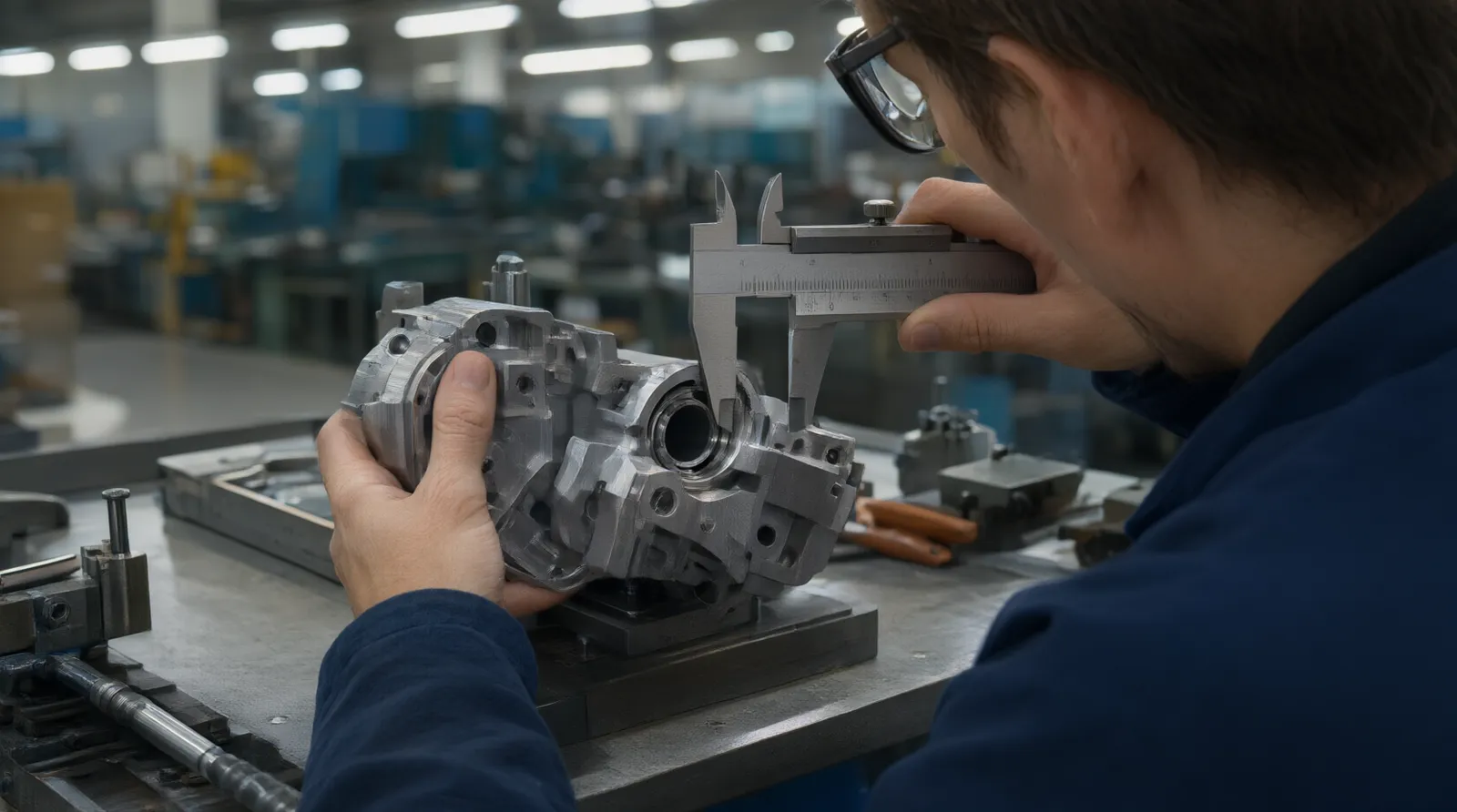
The first order tests the relationship; repeat orders generate the profit. But before any goods leave the factory floor, you need a formal pre-shipment inspection. Waiting until the container arrives at your warehouse to discover defects means you have already paid ocean freight on unusable inventory. Third-party inspectors should verify dimensional accuracy, packaging integrity, and functional performance against the approved sample. Establish a standard operating procedure that dictates exactly how many units are pulled from the production line for testing and what defect rate triggers a full batch rejection. Factories that perform well on the first run sometimes relax quality controls on subsequent orders if no one is actively monitoring them, making independent inspection non-negotiable.
Step 6: Landed Cost Calculation and Margin Analysis
A factory quoting $2.00 per unit does not mean your cost is $2.00. Before confirming the shipment, calculate the true landed cost. This includes ocean or air freight, customs duties, port handling fees, warehousing, insurance, and last-mile delivery to your customer or fulfillment center. If those additional logistics add $2.50 per unit, your actual cost is $4.50. Map this number directly against your planned retail price and your estimated customer acquisition cost. If the remaining margin cannot absorb your marketing spend and operational overhead, the product is not viable for import regardless of how cheap the factory price appears. Never authorize a purchase order until this math is finalized.
Step 7: Repeat Ordering and Scaling
Once the first shipment clears customs, passes quality checks, and begins selling, you move into the scaling phase. Repeat ordering is where the actual profitability of international trade materializes, because the upfront costs of vetting, sampling, and negotiating are already covered. Establish clear communication channels with the factory for defect reporting and agreed-upon lead times. Account for manufacturing variability; during peak seasons leading up to major global holidays, a standard 30-day production window can stretch to 60 days. Lock in raw material pricing for future runs if possible, and schedule your next purchase order well before your current inventory depletes to prevent stockouts that kill sales momentum.
Why Is Knowing What to Import and Export Important for Your Margins?
Selecting the wrong product destroys margins faster than high shipping rates. When buyers understand what to import and export based on data rather than intuition, they protect their capital.
Consider the role of macroeconomic infrastructure. China's Belt and Road Initiative has expanded rail and port access across Asia, Africa, and Europe. This infrastructure reduces transit times and lowers freight costs for specific corridors. A buyer importing heavy machinery components from inland China to Central Asia benefits directly from these routes, whereas air-freighting the same goods would eliminate any margin. Understanding these logistical realities dictates which products are viable for specific regions.
Marketing spend is another factor. If you select a highly commoditized product—like standard phone cases—your customer acquisition cost will likely exceed your profit per unit because you are competing solely on price. Choosing a product with specific features, better materials, or localized branding allows you to charge a premium. The value of the item must justify the cost of the advertising required to sell it.
For a deeper breakdown of how cross-border mechanics affect profitability, The Ultimate Import Export Guide for Sourcing from China covers the logistical and financial frameworks buyers need before placing their first purchase order.
The Cost of Ignoring Compliance and Certification
Importing goods that fail destination-country compliance does not just result in returned shipments. Customs agencies can issue fines, destroy the inventory at the importer's expense, or ban future shipments. For example, importing children's toys into the US requires strict adherence to CPSC standards and CPSIA testing. If a factory in China lacks the testing reports or uses prohibited phthalates in the plastic, the entire shipment becomes a liability. Knowing what to export means knowing exactly which certifications the destination country mandates.
When Should You Use a Managed Process to Decide What to Import and Export?
You need a structured, managed process when the complexity of the supply chain exceeds your internal capacity. Solo entrepreneurs running a Shopify store rarely have the time to fly to Guangdong province, audit three factories, and negotiate tooling costs.
For Overseas Buyers and DTC Store Owners
If you are an online creator or DTC operator, your expertise is in audience building and conversion, not manufacturing logistics. You should use a managed process when you want to transition from dropshipping generic items to selling custom-branded products. This is the exact moment when gambling on a random marketplace listing stops working. You need someone to handle multilingual communication with the factory, coordinate the sampling phase, and manage repeat orders so you can focus on sales.
For Chinese Factory Owners
Factory owners face a different trigger point. You should seek external help when you have excess production capacity or a proven domestic catalogue, but lack the personnel to sell overseas. Hiring an internal export sales team requires salaries, training, and language capabilities. A managed export operator solves this by building an overseas storefront, handling buyer conversations drafted directly from your actual in-stock catalogue, and managing the sales pipeline.

What Are the Benefits of Partnering for What to Import and Export?
Relying on a dedicated sourcing partner or managed export operator shifts risk away from the individual buyer or factory and places it into a system designed to handle it.
Commission-Only Entry Reduces Financial Risk
Traditional sourcing agents often charge upfront retainers or monthly fees regardless of whether an order closes. A commission-only model means the factory pays nothing until a sale is finalized. For Chinese manufacturers exploring overseas markets, this removes the barrier to entry. You do not have to gamble your operating budget on an unproven sales channel.
Verifiable Rankings Over Empty Promises
Many agencies promise "global visibility" without providing proof. A verifiable approach relies on published data. For example, Link4a (链上科技) conducted a sweep of 60 product pages on a client store on 31 Aug 2026 and found 17 ranking first on US Google and 31 in the top 10. These queries are published directly on their homepage for verification. This level of transparency separates functional SEO execution from generic marketing claims.
True Localization, Not Just Translation
Selling in multiple regions requires localized infrastructure. Setting up six locales means each gets its own pages. Arabic interfaces must be laid out right-to-left. Weekly SEO content must be generated per market using local keyword research, rather than taking an English blog post and running it through translation software. Buyer replies must be drafted based on the factory's actual in-stock catalogue, ensuring that promises made to international buyers match physical reality on the warehouse floor.
Dedicated Communication Channels
Language barriers cause the majority of sourcing failures. Misunderstood specifications lead to incorrect production runs. Having a partner that manages multilingual communication ensures that technical details—like thread count, alloy composition, or voltage requirements—are transmitted accurately between the overseas buyer and the Chinese manufacturing floor.
Common Mistakes When Deciding What to Import and Export
Even experienced buyers fall into predictable traps when evaluating new products. Recognizing these errors prevents costly delays.
Confusing Unit Price with Landed Cost
A factory quotes $2.00 per unit. The buyer assumes a 4x markup yields an $8.00 retail price with healthy profit. But this ignores ocean freight, customs duties, port handling fees, warehousing, and last-mile delivery. The true landed cost might be $4.50 per unit, shrinking the margin significantly. Always calculate the total landed cost before committing to an MOQ.
Skipping Pre-Shipment Inspections
Waiting until the goods arrive at your warehouse to discover defects means you have already paid for shipping on unusable inventory. Pre-shipment inspections, performed by third-party verification teams at the factory before the container is sealed, catch dimensional errors, packaging damage, and functional failures early.
Relying Solely on Platform Algorithms
Marketplace algorithms prioritize sellers who pay for ads or have historical sales velocity, not necessarily those with the best manufacturing standards. Buyers who source strictly through platform search results often interact with trading companies adding a markup, rather than direct factories. Performing independent verification outside the platform ecosystem is necessary to secure genuine wholesale pricing.
Ignoring Lead Time Variability
Manufacturing lead times fluctuate based on raw material availability and factory workload. During peak seasons, such as the months leading up to major global holidays, a standard 30-day production window can stretch to 60 days. Failing to account for this variability results in stockouts and missed sales windows.
How Link4a Operates as a Sourcing and Export Partner
Link4a functions as both a China sourcing partner for overseas buyers and a managed export operator for Chinese factories. The operational model addresses the friction points outlined above.
For overseas buyers, importers, and DTC store owners, the team handles the entire lifecycle: supplier shortlisting, factory vetting, MOQ and price negotiation, sample coordination, and repeat ordering. Instead of forcing buyers to navigate fragmented marketplace listings, Link4a acts as the intermediary that verifies the factory's capabilities before capital is deployed.
For Chinese factory owners wanting their catalogue sold overseas without hiring an export sales team, the service provides a managed storefront. This includes deployment across six languages, per-language keyword research, weekly SEO content tailored to each specific market, and buyer conversation management. Responses to international inquiries are drafted directly from the factory's actual in-stock catalogue, preventing overselling or misrepresentation. The commercial model charges commission only on closed orders, meaning factories carry no upfront financial risk.
If you are looking to formalize your cross-border strategy, understanding the foundational differences in trade direction is essential. Our breakdown in Export vs Import: The B2B Buyer's Sourcing Guide outlines how the responsibilities shift depending on which side of the transaction you occupy.
Next Steps for Evaluating Your Supply Chain
Deciding what to import and export is not a one-time choice; it is an ongoing cycle of market testing, supplier verification, and margin analysis. The businesses that scale internationally are those that replace assumptions with documented processes. They test samples before committing to bulk. They calculate landed costs before setting retail prices. They localize their digital presence instead of translating it.
Whether you are an overseas buyer trying to find reliable manufacturing in China, or a factory owner attempting to reach international consumers without expanding your payroll, the mechanism remains the same: verify the product, verify the partner, and verify the demand before scaling.
Review your current product line today. Identify one item where your landed cost calculation relies on estimates rather than hard quotes. Reach out to your sourcing partner or contact Link4a to request a verification sweep on that specific product category, ensuring your next production run is backed by data rather than assumption.
Frequently Asked Questions
What is what to import and export?
"What to import and export" refers to the strategic selection of SKUs—such as injection-molded consumer electronics or CNC-machined hardware from verified factories in Shenzhen, Dongguan, or Ningbo—that meet target market compliance standards like FCC, CE, UL, or BSCI. For DTC operators sourcing Chinese supply, this evaluation requires confirming concrete production parameters: typical MOQs of 500–3,000 units per SKU, 30–45 day lead times post-deposit, and specific manufacturing processes (e.g., SMT assembly, die-casting) supported by the supplier. Platforms like 链上科技, Sitebox, or Inbox are often used to audit these factory capabilities, verify certifications, and align export-ready goods with overseas import regulations.
How to what to import and export?
To determine what to import from China, DTC operators should audit factories via platforms like 链上科技 or Sitebox for verified production capabilities—specifically targeting suppliers with ISO 9001/BSCI certifications, MOQs of 500–1,000 units per SKU, and standard 30–45 day lead times for injection molding or CNC processes. To decide what to export back or re-export, evaluate products that clear destination compliance (e.g., FCC/CE marks) and where the FOB cost plus shipping yields a minimum 3x retail markup. Always request pre-shipment SGS inspection reports before finalizing any import/export PO to mitigate defect risks.
Why is what to import and export important?
Selecting what to import and export is critical because it directly determines landed cost, compliance risk, and fulfillment speed for DTC operators sourcing from China. For example, importing injection-molded electronics requires verifying factory certifications like ISO 9001, UL/CE marks, and BSCI audits, while negotiating MOQs (often 1,000–3,000 units) and 30–45 day lead times with specific contract manufacturers or platforms like 链上科技. Export decisions are equally vital, as misclassifying HS codes or shipping non-compliant goods triggers customs holds that disrupt overseas inventory pipelines.
When should I use what to import and export?
Use import/export documentation and Incoterms (e.g., FOB Shenzhen, EXW) when sourcing from Chinese factories—such as 链上科技 for electronics or Sitebox for packaging—to clearly define customs liability, MOQs (typically 500–1,000 units), and lead times (30–45 days post-sample approval). You must export with verified compliance documents, including ISO 9001 factory audits, CE/FCC/UL certifications, and commercial invoices, to clear destination customs without delays. DTC operators should initiate this process once pre-production samples are signed off and the 30% deposit is wired to secure production slots.
What are the benefits of what to import and export?
Strategically selecting what to import and export lets DTC operators source from verified Chinese factories—such as 链上科技 for electronics or Sitebox for packaging—with specific certifications (ISO 9001, BSCI, UL) that reduce compliance risk in destination markets. It also allows buyers to optimize unit economics by targeting facilities offering scalable MOQs (e.g., 500–1,000 units for initial runs) and predictable lead times (typically 25–45 days including tooling and QC). This precision prevents capital waste on unvetted suppliers and ensures your imported goods meet the exact material and process specifications required for Inbox-style direct-to-consumer fulfillment.