How to Source Affordable Luxury Jewelry: A B2B Buying Guide
How to Source Affordable Luxury Jewelry: A B2B Buying Guide
Affordable luxury jewelry bridges the gap between mass-produced costume pieces and high-end fine jewelry, typically retailing between $80 and $1,500 while using materials like 14k gold vermeil, lab-grown diamonds, and moissanite. For overseas buyers, importers, and DTC store owners, sourcing these pieces reliably means partnering with vetted Chinese factories that can deliver consistent quality at margins that support a profitable retail operation.
Who This Guide Is For
This guide is written for purchase-ready procurement managers, DTC e-commerce founders, online creators launching merchandise lines, and boutique importers who need to source affordable luxury jewelry from China without gambling on unvetted marketplace listings. You are likely evaluating your next production run or switching suppliers because your current factory failed a quality inspection, missed a shipping window, or refused to negotiate minimum order quantities (MOQs) down to a workable level. Whether you are looking to stock yellow gold bezel-set diamond pendants or build a custom men's jewelry line, this framework will help you evaluate sourcing partners, verify material claims, and structure repeat orders that protect your margins.
What Affordable Luxury Jewelry Actually Does for Your Business
Affordable luxury jewelry—often described by industry observers as "the new luxury"—allows DTC brands to offer high-perceived-value products without the prohibitive inventory costs of traditional fine jewelry Source. Instead of tying up capital in natural stones, buyers source lab-grown diamonds and moissanite engagement rings that carry identical optical properties at a fraction of the wholesale cost Source.
For a business, this category does three specific things: it increases average order value (AOV) compared to fashion jewelry, it reduces return rates when plating and stone-setting standards are strictly enforced, and it opens access to the "quiet luxury" consumer segment—a trend driving massive search volume, evidenced by content discussing alternatives to heritage houses like Van Cleef and Cartier pulling in over 56,000 views on single video uploads Source. Sourcing the right product mix—such as double prong hoop earrings or cushion shape diamond pendants with pavé halos—positions your catalog to capture this demand Source. If you are building a broader brand identity around these pieces, our guide on how to source a luxury jewelry brand outlines the strategic steps required to scale beyond single-product drops.
Key Decision Factors
When procuring affordable luxury jewelry, evaluating the aesthetic alone will bankrupt your business. Use these eight criteria to assess both the product and the sourcing partner facilitating it. For a deeper look at navigating the Chinese manufacturing landscape specifically for higher-end goods, consult this resource on how to source luxury jewelry from China.
Material Integrity and Plating Standards
What to evaluate: Base metal composition (e.g., 925 sterling silver vs. brass), plating thickness measured in microns, and stone grading reports for lab-grown diamonds or moissanite. What "good" looks like: A reliable factory provides exact micron counts for gold vermeil (typically 2.5 microns or higher for longevity) and issues third-party assay certificates. If you are sourcing permanent jewelry chains designed to be welded directly onto the customer's wrist, the alloy must be hypoallergenic and highly resistant to tarnish.
Minimum Order Quantity (MOQ) Flexibility
What to evaluate: The supplier’s baseline MOQ per SKU versus their willingness to consolidate multiple SKUs into a single production run to meet the total unit threshold. What "good" looks like: Reliable sourcing partners negotiate MOQs directly with Chinese factories on your behalf, allowing DTC brands to test designs—like a new line of men's signet rings—without committing to thousands of units upfront. Good sourcing partners aggregate orders or leverage existing factory relationships to lower entry barriers.
Pricing Model and Margin Protection
What to evaluate: Unit cost breakdowns including raw materials, labor, packaging, and export fees. Beware of suppliers quoting only EXW (Ex Works) prices without clarifying freight and duties. What "good" looks like: Transparent tiered pricing where unit costs decrease predictably at volume thresholds. A managed export operator should provide landed cost estimates so you know exactly what your margin looks like before the goods leave the port.
Quality Assurance and Defect Rates
What to evaluate: Pre-shipment inspection protocols, acceptable quality limits (AQL), and the process for handling defective batches. What "good" looks like: Factories that allow third-party inspections (like SGS or QIMA) before final payment. When sourcing intricate pieces like eternity rings or rainbow sapphire pendants, the setting tolerance must be strict to prevent stone loss during transit or wear.
Production Lead Time and Capacity
What to evaluate: Sample turnaround time, bulk production timelines, and the factory's ability to scale during peak seasons (e.g., Q4 holidays). What "good" looks like: Clear, contractually binding lead times. While some direct-to-consumer retailers promise worldwide delivery in 3-7 business days to end consumers Source, your B2B production lead time needs to account for manufacturing, QC, and ocean/air freight. A dependable partner coordinates this timeline so your warehouse isn't left empty.
Custom Design Capabilities
What to evaluate: CAD rendering speed, mold-making costs, and intellectual property protection for your custom designs. What "good" looks like: A factory with an in-house design team that can translate your sketches into 3D renders within days, not weeks. If you want to create styles inspired by the charm-based aesthetics popularized by brands like pandoras or the architectural motifs seen in kendra scott collections, the factory must have proven experience executing those specific casting techniques without infringing on registered trademarks.
Compliance and Certifications
What to evaluate: Nickel-free compliance (REACH for Europe, CPSIA for the US), conflict-free mineral sourcing documentation, and ethical labor audits. What "good" looks like: Up-to-date testing reports from accredited labs. Selling affordable luxury jewelry requires adherence to strict heavy-metal regulations; a single customs seizure due to non-compliance can destroy your brand's reputation.
Communication and Multilingual Support
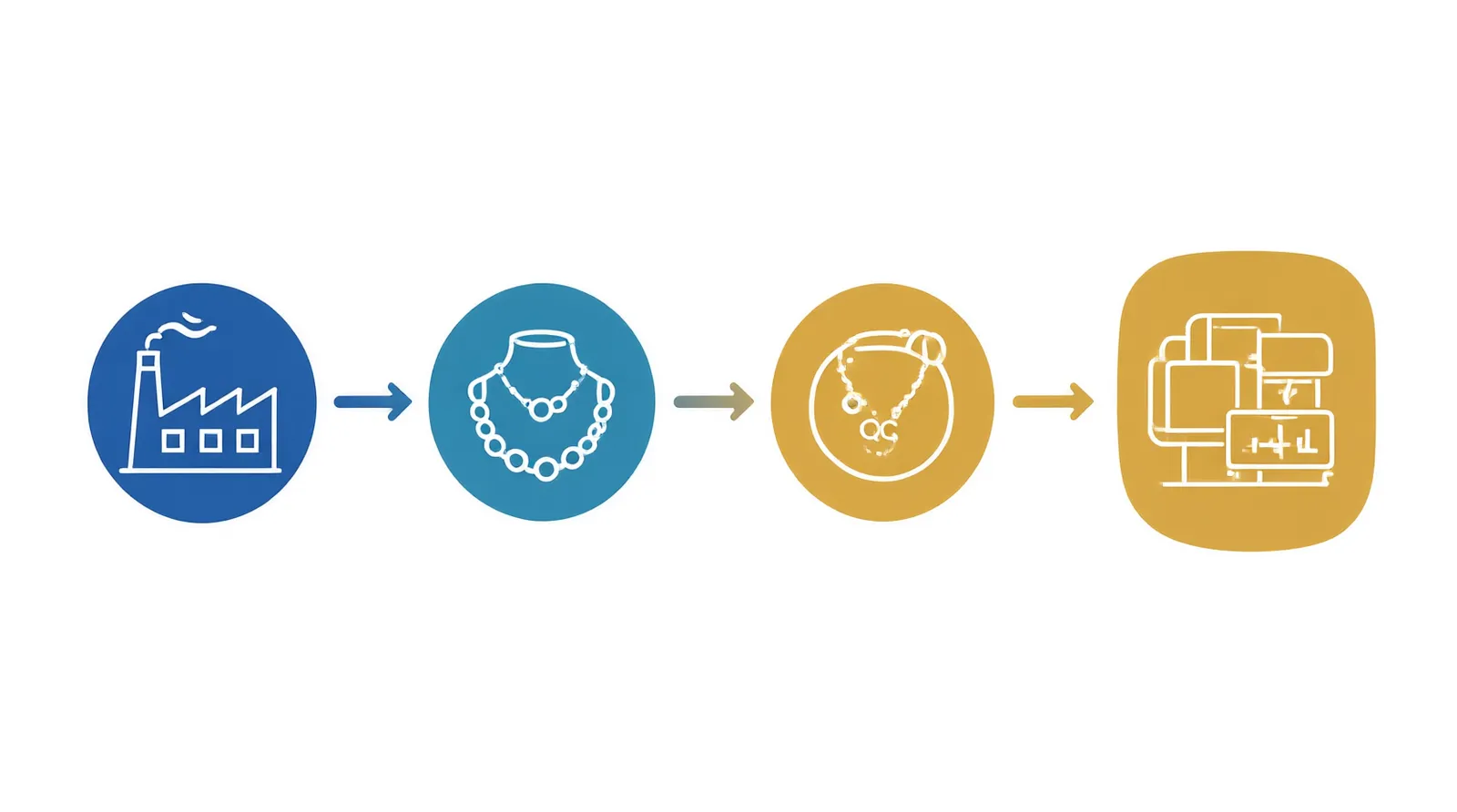
What to evaluate: Response times, language proficiency, and whether you are speaking to a middleman or the actual production floor. What "good" looks like: A sourcing partner that handles multilingual communication directly with the factory. Effective partners draft replies to buyers based on the factory's actual in-stock catalogue rather than generic templates, ensuring you never sell out-of-stock items. They also manage overseas storefronts in multiple languages—including right-to-left layouts—with per-language keyword research rather than lazy translations.
Budget Tiers
Use this table to align your procurement budget with realistic expectations for materials and sourcing models in the affordable luxury jewelry space.
| Tier | Typical Wholesale Price Range (Per Unit) | What You Get | Ideal Buyer Profile |
|---|---|---|---|
| Entry | $15 – $45 | 925 sterling silver base, 1-2 micron gold plating, cubic zirconia or basic moissanite. Standard catalog designs. High MOQs unless using a sourcing aggregator. | Online creators launching first merch lines; small boutiques testing the market. |
| Mid-Market | $45 – $150 | Heavy gold vermeil (2.5+ microns), lab-grown diamonds (VS clarity), intricate settings (pavé, bezel). Access to custom CAD designs and moderate MOQ negotiation. | Established DTC brands, regional importers, growing e-commerce stores. |
| Premium / Enterprise | $150 – $500+ | Solid 10k/14k gold options, high-carat lab-grown diamonds, complex mechanisms (e.g., hidden clasps). Dedicated production lines, low defect rates, full IP protection. | High-volume importers, established retail chains, premium private-label programs. |
Note: Retail markups for affordable luxury jewelry typically range from 3x to 6x the wholesale cost. Some DTC operators structure free shipping thresholds around the $80 retail mark to incentivize larger basket sizes Source.
Red Flags to Avoid
Walk away from a supplier or sourcing arrangement if you encounter any of the following:
- Refusal to send pre-production samples: Never authorize a bulk run based solely on digital renderings. Physical samples are non-negotiable.
- Unverifiable material claims: If a factory claims a piece is 14k gold but cannot provide an assay report or refuses third-party testing, they are likely selling plated brass.
- Demanding 100% upfront payment via untraceable methods: Standard terms involve a deposit (e.g., 30%) with the balance paid after pre-shipment inspection. Wire transfers to personal bank accounts are a major warning sign.
- No clear policy on defects or returns: If the supplier goes silent when you ask about their acceptable quality limit (AQL) or replacement process for damaged goods, you will absorb all losses.
- "Too good to be true" pricing on complex items: A quote for a david yurman-inspired cable bracelet that is 80% cheaper than the rest of the market usually indicates hollow tubing instead of solid wire, which will dent immediately upon wear.
- Middlemen posing as factories: Many Alibaba or marketplace listings are trading companies marking up prices. If they cannot arrange a live video tour of the production floor, verify them through a managed export operator.
- Lack of localized market understanding: If your sourcing partner simply translates English copy into other languages without conducting per-market keyword research, your products will remain invisible in non-English markets.
Buying Process Checklist
Follow this step-by-step procurement framework to move from initial research to finalized repeat orders safely.
- Define Requirements: Document your target retail price points, required materials (e.g., lab-grown diamond specs, plating thickness), estimated order volume, and target launch date.
- Shortlist Vendors: Instead of scrolling blindly through B2B marketplaces, engage a China sourcing partner like Link4a. They shortlist vetted factories based on your exact specifications, eliminating the guesswork.
- Request and Evaluate Samples: Order physical samples from your top 2-3 factory choices. Test them for weight, clasp tension, plating adhesion (tape test), and stone security.
- Negotiate MOQ and Price: Have your sourcing partner negotiate terms. Do not accept the first quoted MOQ; factories often have flexibility if you commit to a longer-term purchasing schedule.
- Conduct Factory Audit: Verify the factory's existence, working conditions, and machinery. A managed export operator handles this vetting process, checking facilities so you don't have to fly to China.
- Draft the Purchase Order (PO): Specify every detail in the contract—materials, dimensions, packaging requirements, delivery dates, and penalty clauses for delays.
- Execute Pre-Shipment Inspection: Hire a third-party inspector or rely on your sourcing partner to check the goods against the approved sample before the final payment is released.
- Coordinate Logistics and Freight: Arrange shipping (air for speed, ocean for cost). Ensure all customs documentation, including commercial invoices and packing lists, are accurate.
- Establish Repeat Ordering Protocols: Once the first batch arrives and sells, set up automated reorder triggers with your sourcing partner to maintain inventory levels without renegotiating terms every time.
Questions to Ask Vendors
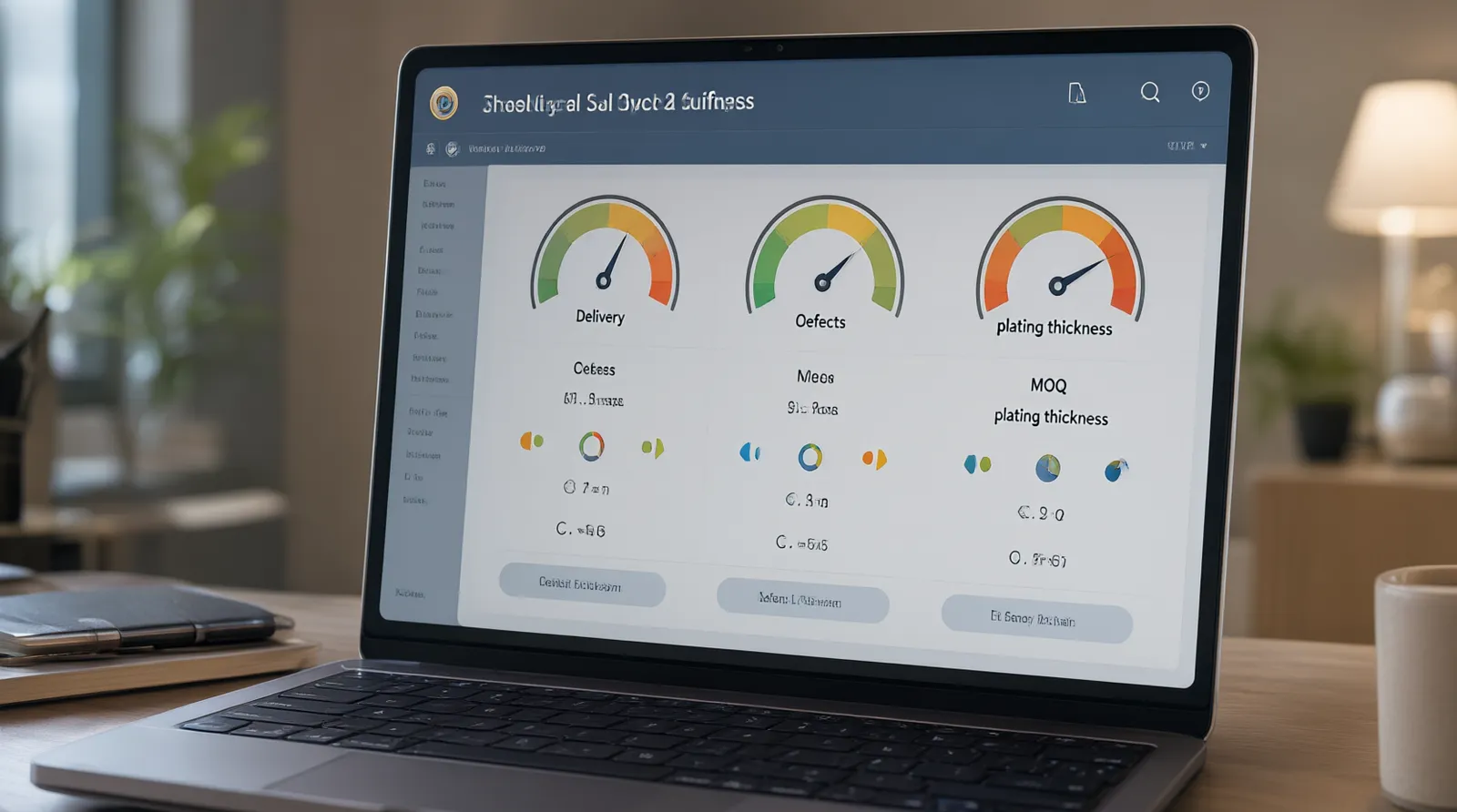
Before signing a contract or wiring a deposit, require concrete answers to these questions:
- What is the exact base metal used, and can you provide a recent third-party assay report?
- What is your standard MOQ for custom designs versus existing catalog items, and is there room to negotiate based on a 12-month purchasing commitment?
- How many microns of gold plating do you apply, and what electroplating process do you use?
- What is your acceptable quality limit (AQL) for bulk orders, and how do you handle batches that fail inspection?
- Can you provide references from other overseas DTC brands or importers you currently manufacture for?
- What is your standard lead time from PO confirmation to ex-factory date for an order of
[your estimated volume]units? - Do you hold certifications for REACH, RoHS, or CPSIA compliance regarding nickel and lead content?
- Are the lab-grown diamonds or moissanite stones accompanied by grading certificates (e.g., IGI, GIA)?
- Who owns the molds and CAD files if we pay for custom tooling—us or the factory?
- What are your payment terms, and do you accept Letters of Credit (L/C) for larger enterprise orders?
- How do you package the jewelry to prevent scratching and tarnishing during international ocean freight?
- If a specific style becomes a best-seller, what is your maximum weekly production capacity to fulfill rapid reorders?
Recommended Next Steps
Sourcing affordable luxury jewelry from China shouldn't feel like a gamble. Every hour spent vetting unverified marketplace listings is an hour lost on marketing and scaling your brand. If you are an overseas buyer, importer, or DTC store owner ready to secure reliable manufacturing, stop relying on chance and start using a structured procurement model.
If you are a Chinese factory owner looking to sell your catalog overseas without hiring an internal export sales team, consider a commission-only model where nothing is paid before an order closes, supported by verifiable SEO results that drive organic traffic to your product pages.
Partner with a managed export operator that handles supplier shortlisting, factory vetting, MOQ negotiation, sample coordination, and multilingual communication on your behalf.
Get MOQ & Pricing from Vetted Factories → Request a Quote at Link4a.com