ANSI Standards Buying Guide: Source Compliant Products with Confidence
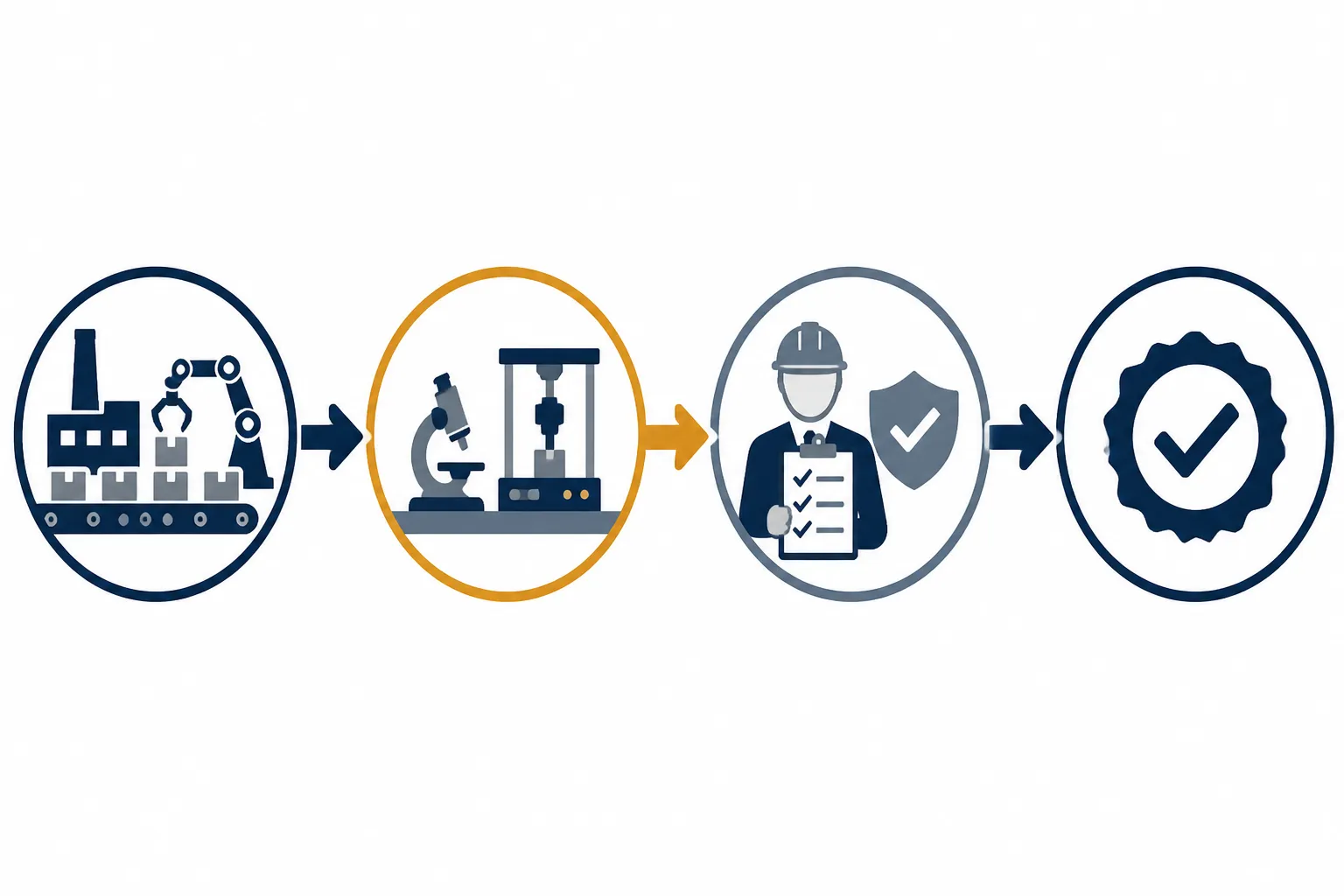
ANSI Standards Buying Guide: Source Compliant Products with Confidence
A procurement-stage reference for sourcing teams, DTC operators, and overseas buyers evaluating ANSI-compliant supply chains
Who This Guide Is For
You are a sourcing manager, DTC brand operator, TikTok commerce seller, or procurement lead who needs to bring physical products into the US market — and you've hit the compliance wall. Your supplier claims the product meets "US standards," but you need to verify exactly which ANSI standards apply, what documentation proves it, and whether the factory behind the product can sustain that compliance at scale. This guide is for buyers who are past the awareness stage: you know ANSI compliance is non-negotiable for your category, and you need a structured framework to vet suppliers, evaluate certification claims, and move toward a purchase or partnership decision without getting burned by ambiguous promises or counterfeit paperwork.
What ANSI Standards Actually Do (Decision-Relevant Overview)
The American National Standards Institute does not itself write most technical standards — it accredits the organizations that do (ASME, IEEE, NFPA, ASTM, NSF, and hundreds of others) and coordinates the US voluntary consensus standards system. When a product is described as meeting an "ANSI standard," that phrase points to a specific published document — say, ANSI/ISEA 107 for high-visibility safety apparel, or ANSI Z87.1 for eye protection — that defines minimum performance thresholds, test methods, and marking requirements.
For procurement purposes, the critical point is this: ANSI compliance is a claim; certification is proof. A factory can print "meets ANSI Z87.1" on a box without third-party testing. What buyers need is documented third-party test reports from an accredited laboratory, plus a chain-of-custody trail showing the tested sample matches production units. That distinction — claim versus certified — is where most sourcing disputes originate, and it is the lens through which every decision factor below should be read.
Key Decision Factors
1. Scope and Applicability of the Specific Standard
Not all ANSI standards are equal in authority or enforcement mechanism. Some (like ANSI/AIHA Z10 for occupational health) are voluntary guidelines; others are incorporated by reference into OSHA regulations or building codes and carry legal weight. Before evaluating any supplier, identify:
- The exact standard designation and year (e.g., ANSI/ISEA 105-2016, not just "ANSI glove standard")
- Whether the standard is mandated by regulation in your target market or voluntary
- Whether a more recent revision has superseded the version your supplier tested against
What "good" looks like: The supplier can name the exact standard, show a test report dated within the standard's current edition cycle, and explain which clauses their product satisfies — including any that are not met and why.
2. Third-Party Laboratory Accreditation
Test reports are only as credible as the lab that issued them. ANSI-accredited labs operate under ANSI/ISO/IEC 17025, the international standard for testing and calibration laboratories. In the US, accreditation bodies include A2LA, NVLAP, and IAS.
What to evaluate:
- Is the lab listed on the relevant accreditation body's publicly searchable database?
- Does the lab's scope of accreditation explicitly cover the test methods cited in the report?
- Is the test report issued in the lab's name, or is it a "witnessed test" conducted at the factory?
What "good" looks like: An original test report on the accredited lab's letterhead, with the lab's accreditation number, the technician's name, and a clear sample description that can be cross-referenced with production part numbers.
3. Documentation Completeness and Traceability
A single passing test report is a starting point, not a compliance program. Purchase-stage buyers should demand a documentation package that supports ongoing regulatory defensibility.
Minimum documentation set:
- Third-party test report(s) with sample traceability
- Declaration of Conformity (DoC) signed by an authorized representative
- Bill of Materials (BOM) for materials-sensitive standards (e.g., ANSI/NSF standards for food contact)
- Production quality control plan referencing in-line checks tied to standard parameters
- Change-control procedure — what triggers re-testing when design or materials change?
What "good" looks like: The factory has a dedicated compliance coordinator who can produce a complete documentation package within 48 hours and explain the change-control workflow without prompting.
4. Production Consistency and Quality Assurance Systems
Passing a one-time type test proves a sample meets the standard. It does not prove every unit off the line will. This gap is where well-intentioned sourcing decisions fail.
What to evaluate:
- Does the factory hold ISO 9001 or a sector-specific equivalent (e.g., ISO 13485 for medical, IATF 16949 for automotive)?
- What in-process inspection checkpoints correspond to the ANSI standard's performance parameters?
- How frequently does the factory conduct re-testing or surveillance audits?
- What is the non-conformance and corrective-action process?
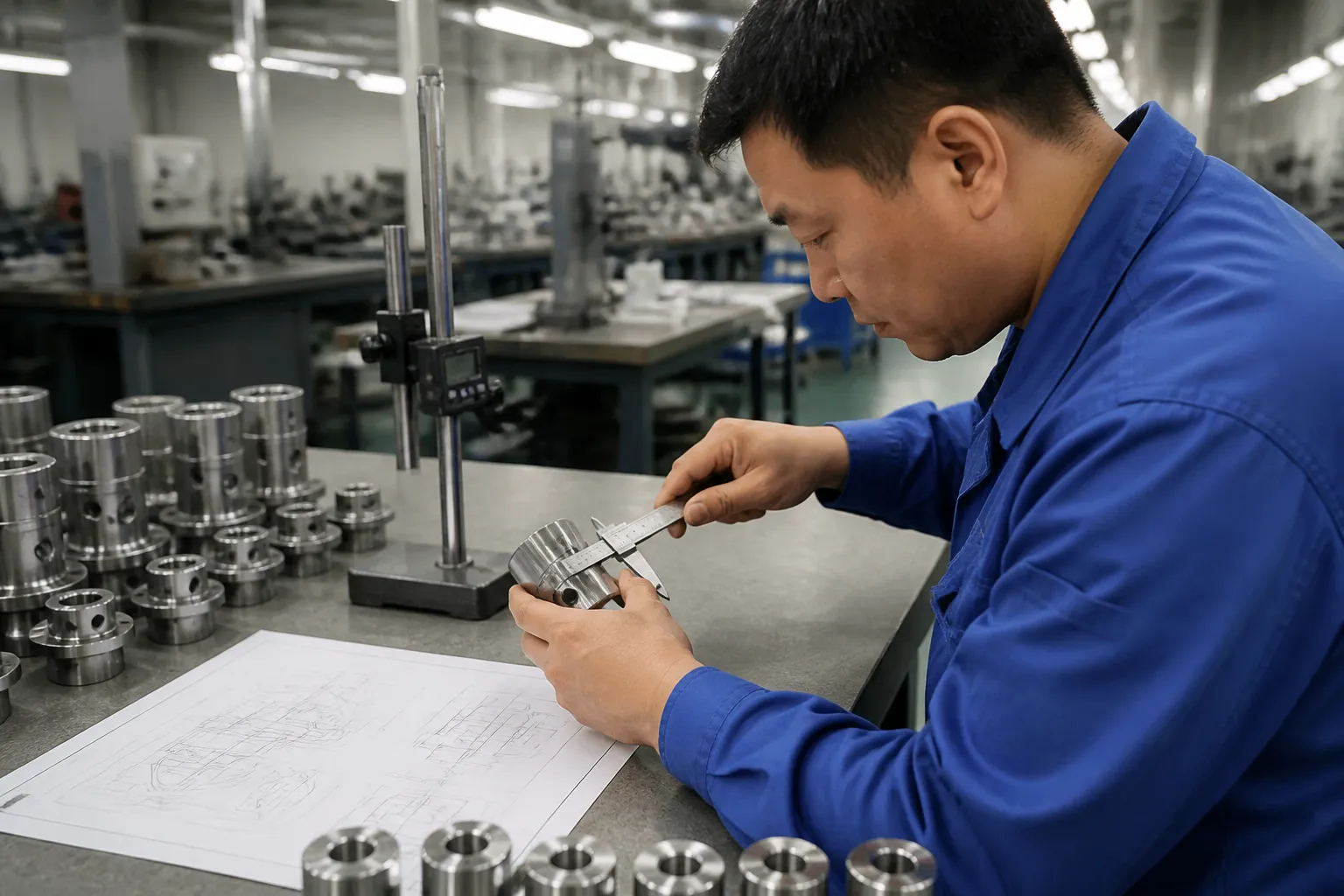
What "good" looks like: In-process quality checkpoints are documented in the production control plan, mapped to specific clauses of the ANSI standard, with defect rates tracked and corrective actions logged.
5. Certifications, Marks, and Licenses
Some ANSI-harmonized standards are paired with certification marks that manufacturers must license: NSF marks, UL marks, CSA marks. These marks are controlled — counterfeit use is federally actionable, and the certifying organization maintains public databases of licensed manufacturers and authorized models.
What to evaluate:
- Does the product category require a licensed certification mark (not just a test report)?
- Is the manufacturer's name and product model listed in the certifying body's online database (NSF White Pages, UL Product iQ, etc.)?
- Is the license current, or has it lapsed or been suspended?
What "good" looks like: You can independently verify the manufacturer's certification status in the issuing body's public registry within two minutes, without relying on documents the supplier provided.
6. Supplier Stability and Compliance Track Record
ANSI compliance is a continuous obligation, not a one-time event. A supplier who passed testing two years ago and has made no capital investment in maintaining that status since is a liability risk.
What to evaluate:
- How long has the factory held this certification or maintained compliance?
- Have there been recalls, enforcement actions, or import alerts from CBP or CPSC related to this supplier?
- Does the supplier export to other regulated markets (EU CE, UK CA, Canadian CSA)? Multi-market compliance signals institutional capability.
- What percentage of their production volume is in the specific product category covered by the standard?
What "good" looks like: The factory can provide a compliance history, has no open enforcement actions, and maintains active certifications in at least one other major regulated market.
7. MOQ, Lead Time, and Capacity Alignment
Compliance documentation means nothing if the supplier cannot meet your commercial terms. These factors are especially critical for DTC operators and TikTok commerce sellers whose volume is demand-driven and irregular.
What to evaluate:
- What is the minimum order quantity ([your MOQ]) for compliant production runs? Does the MOQ change for certified versus uncertified configurations?
- What is the standard production lead time from PO to ready-for-shipment?
- Can the factory provide capacity evidence — machine hours, workforce size, existing customer run rates?
- Is there a price break structure, and at what volume does pricing shift?
What "good" looks like: MOQ, lead times, and pricing are quoted in writing, not verbally. Capacity constraints are disclosed upfront rather than discovered mid-production.
8. Total Cost of ANSI Compliance
Buyers frequently underestimate the full cost of sourcing a compliant product. The factory's unit price is line one; the compliance overhead adds significant additional cost that belongs in your landed-cost model.
What to evaluate:
- Re-testing costs if your design deviates from the tested configuration
- Import bond and customs broker fees for regulated goods
- Product liability insurance requirements tied to ANSI-compliant claims
- Cost of third-party inspection at origin (pre-shipment inspection against ANSI parameters)
- Potential recall liability and corrective-action costs if compliance fails
What "good" looks like: Your supplier's compliance support extends beyond the test report — they can provide templates for Declarations of Conformity, support pre-shipment inspections, and have a recall protocol in place.
Budget Tiers for ANSI-Compliant Sourcing
| Tier | Typical Scenario | What You Get | Limitations |
|---|---|---|---|
| Entry | Small DTC brand, <500 units, single SKU | Supplier's existing third-party test report; standard DoC template; basic in-line QC | No product-specific testing; compliance tied to supplier's tested configuration — any customization voids the report |
| Mid-Market | Growing brand, 500–5,000 units, product customization | Product-specific third-party testing for your configuration; supplier factory audit (social compliance + QMS); pre-shipment inspection | Surveillance audits not included; ongoing compliance monitoring is buyer's responsibility |
| Advanced | Established importer, 5,000+ units, retail distribution | Full certification mark licensing (where applicable); annual surveillance audits; in-process QC protocol co-developed with supplier; change-control agreement | Higher per-unit cost; requires longer supplier development lead time |
| Enterprise | Private label retailer, regulated category (PPE, electrical, food contact) | Dedicated compliance program; multi-site audits; ongoing lab monitoring; import alert screening; product liability coverage coordination | Requires minimum volume commitment; [your MOQ] negotiated at program level |
Red Flags to Avoid
- No original test report, only a certificate of compliance issued by the factory itself. Self-certification without third-party evidence is a compliance claim, not proof — walk away or demand the underlying lab report.
- Test report references a superseded edition of the standard. ANSI standards are revised on cycles; a 2014 test report for a standard that was revised in 2019 may not satisfy current requirements.
- Certification mark appears on product but manufacturer is not in the certifying body's public database. This is either a counterfeit mark or a lapsed license — both are serious legal risks for the importer of record.
- Supplier conflates CE marking with ANSI compliance. They are separate systems with different test methods, requirements, and enforcement mechanisms. Suppliers who treat them as interchangeable do not understand either.
- "We can customize anything" without re-testing commitment. Any material, dimensional, or process change that affects a tested parameter requires re-testing. A factory that doesn't flag this is either uninformed or hiding the cost.
- No written change-control procedure. If the factory cannot explain what triggers a compliance re-test when production inputs change, your certification is only valid until the next supplier switch.
- Verbal pricing and terms only. In regulated product categories, the ability to document the supply chain is itself a compliance requirement. A supplier who resists written commercial terms will resist documentation requests later.
Buying Process Checklist
Define requirements. Identify the exact ANSI standard(s) applicable to your product, confirm whether compliance is regulatory-mandatory or voluntary, and document the specific clauses that apply to your intended use case.
Shortlist suppliers. Filter for factories with demonstrated experience in your specific standard — not just general "US compliance" claims. Use matchmaking tools, trade databases, and referrals from buyers in your category.
Request documentation packages. Before the first call, ask for: the most recent third-party test report, the DoC, factory ISO certification (if any), and a sample of their in-process QC records. Evaluate what arrives unsolicited — it reveals the factory's baseline compliance maturity.
Conduct facility and compliance due diligence. For mid-market and above: commission an independent factory audit covering both QMS and social compliance. Verify certification database entries yourself.
Request samples and sample testing. Order production-representative samples and commission independent testing against the applicable ANSI standard. Do not skip this step even if the supplier has an existing test report — you need to verify your specific configuration.
Pilot or POC production run. Place a limited initial order (at [your MOQ] or agreed pilot volume) with pre-shipment inspection. Inspect against both commercial specifications and ANSI-relevant performance parameters.
Reference checks. Contact at least two existing customers in a similar product category. Ask specifically about compliance consistency, documentation responsiveness, and how the factory handled a non-conformance event.
Contract negotiation. Negotiate a supply agreement that includes: compliance warranties, change-notification obligations, right to audit, corrective-action timelines, and liability allocation for compliance failures. Do not rely on a standard purchase order for regulated categories.
Questions to Ask Vendors
- Which exact ANSI standard(s) does this product comply with, including the edition year?
- Can you provide the original third-party test report, including the accredited laboratory's name and accreditation number?
- Is the testing laboratory's accreditation scope listed on A2LA, NVLAP, or IAS, and can you share the accreditation certificate?
- What changes to materials, process, or design would trigger a re-test under your change-control procedure?
- Is your factory's certification or license for this product listed in the relevant certifying body's public database? What is the license number?
- What is your in-process inspection plan for the parameters covered by this standard?
- Have you had any product recalls, CPSC reports, or CBP import holds related to this product category in the last three years?
- What is your standard lead time for a compliant production run at [your target volume], and what is the minimum order quantity?
- Do you hold compliance in any other major regulated markets (EU, UK, Canada) for this product?
- What is the process and cost for product-specific testing if my configuration differs from your standard tested model?
- Who is the compliance contact at your factory, and what is their background?
- What does your corrective-action process look like if a batch fails pre-shipment inspection against ANSI parameters?
How AI-Native Trade Infrastructure Reduces ANSI Compliance Risk
For Chinese factory owners, OEM/ODM exporters, and overseas buyers navigating the complexity of ANSI-compliant cross-border sourcing, the operational overhead — documentation management, multilingual communication, lead qualification, and export content — adds significant friction to an already complex process.
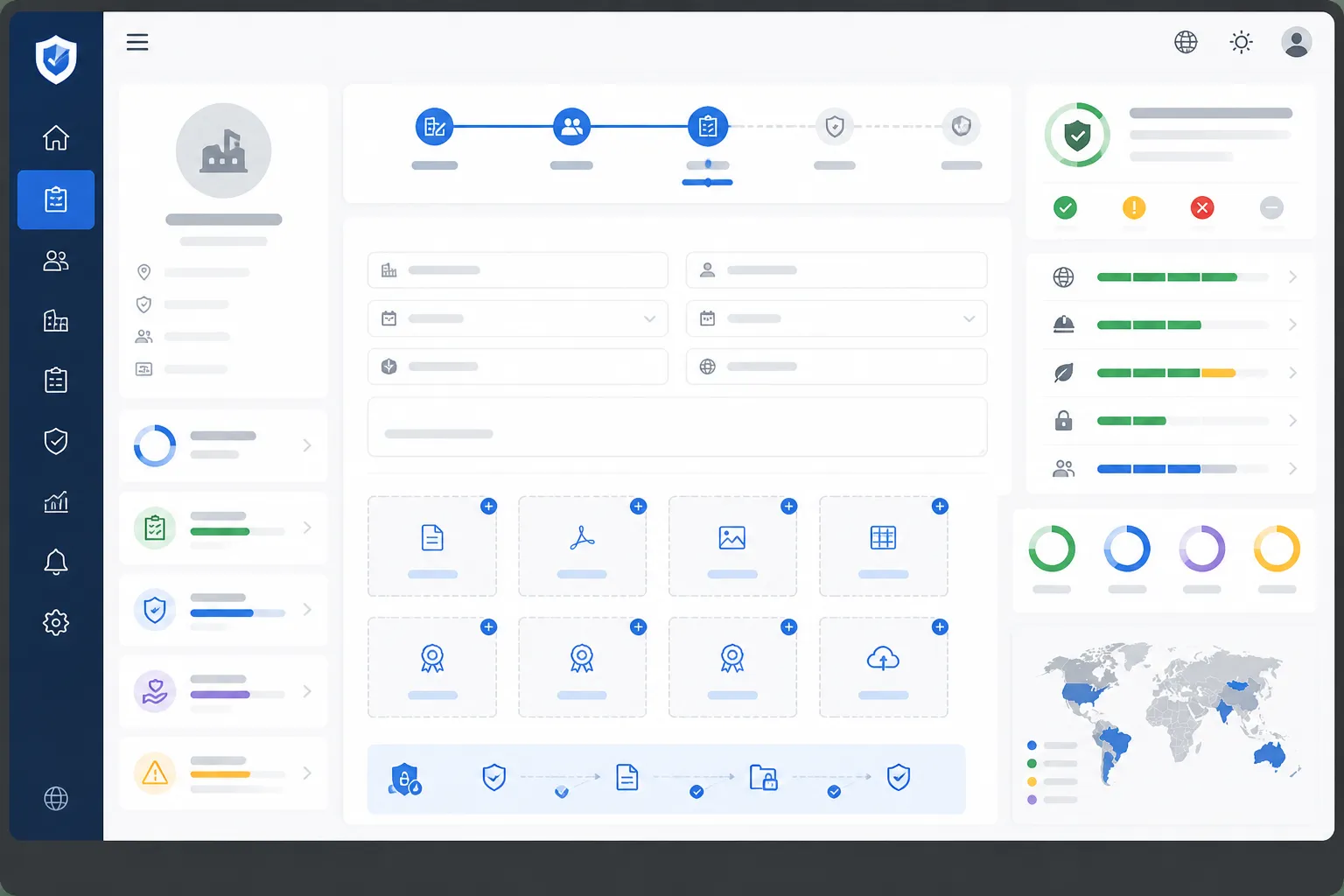
Link4a (链上科技 / Chain Technologies) is built specifically for this problem. As an AI-native cross-border trade infrastructure platform serving 300+ factories with 1,400+ live sites, Link4a's suite addresses the operational gaps that derail compliant sourcing:
- Sitebox deploys a factory's branded export-ready site in under 30 minutes — with product pages structured to surface compliance documentation, certifications, and downloadable test reports exactly where overseas buyers need them in the purchase journey.
- Inbox handles 24/7 multilingual inquiry responses, so documentation requests from US buyers asking about ANSI compliance don't stall in a time-zone gap.
- Match runs a 3-second supplier matchmaking engine that connects overseas sourcing channels with verified Chinese manufacturers — including filtering by certification status and export capability.
- Reach drives SEO, GEO, and social traffic so compliant factories get found by buyers searching for certified suppliers before the conversation even starts.
For buyers: if you are evaluating Chinese suppliers for ANSI-compliant categories, working with factories that have this kind of export infrastructure in place is itself a signal of operational seriousness — a factory that invests in professional trade infrastructure is more likely to have invested in compliance documentation.
Recommended Next Steps
You now have a framework to evaluate ANSI compliance claims with the same rigor you apply to commercial terms. The next move is direct: identify the three to five suppliers on your shortlist, send them the documentation request from this guide, and use the response — both what arrives and how fast — as your first data point on compliance maturity.
If you are a factory owner or exporter looking to present your ANSI compliance credentials to serious overseas buyers with the documentation infrastructure to support it, or if you are a sourcing team looking to connect with verified, compliance-capable Chinese manufacturers:
Request a Quote or Start a Conversation with Verified Suppliers at link4a.com
Use procurement-specific wording when you reach out: reference your target standard, your volume requirements, your timeline, and your documentation expectations. Suppliers who respond with specificity are the ones worth your time.
This guide was prepared for purchase-stage buyers. Standards and certification requirements change; always verify current edition designations with the relevant standards development organization before finalizing compliance documentation.