ASTM Standards: The Ultimate Compliance Guide for Exporters
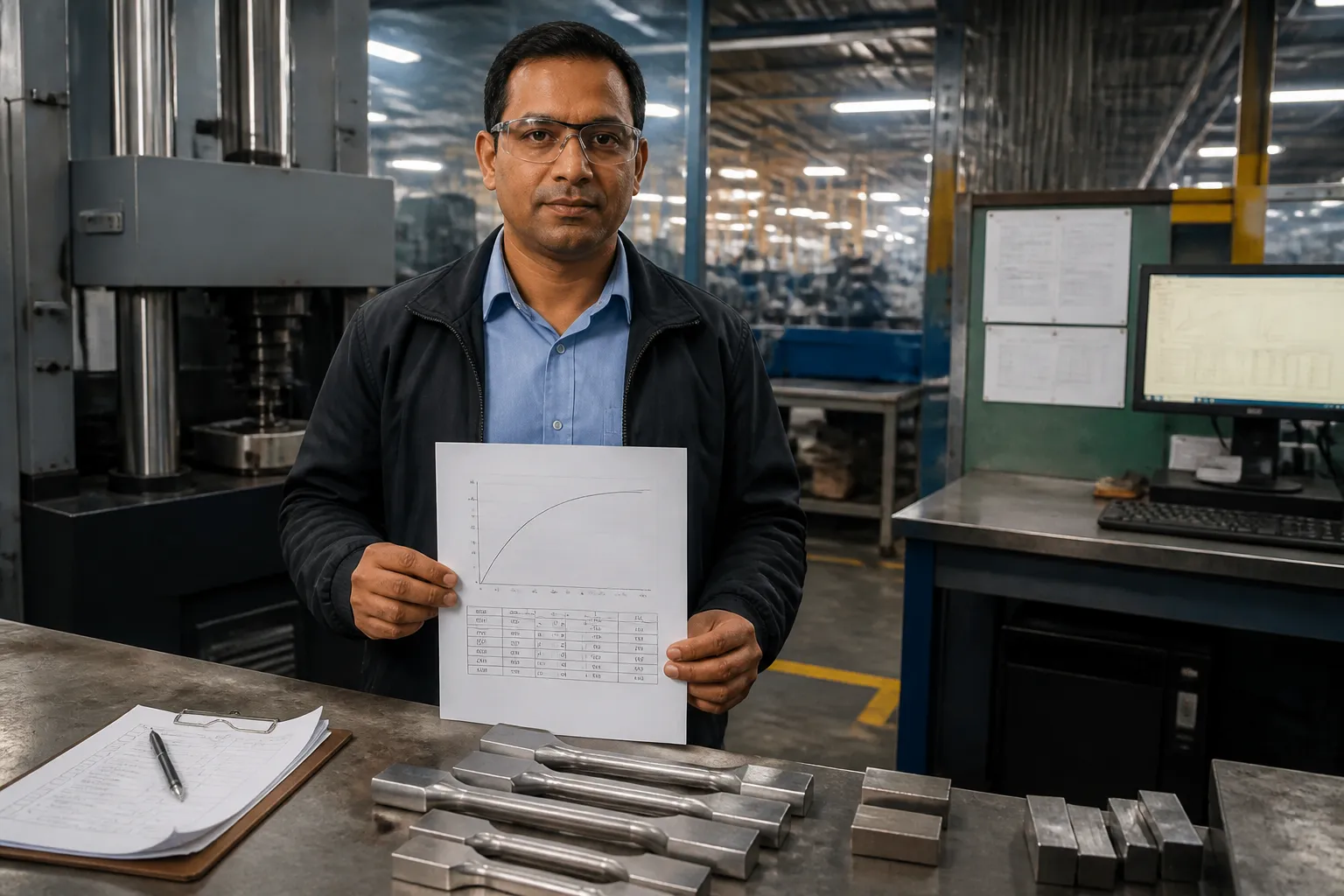
ASTM Standards: The Ultimate Compliance Guide for Exporters
Definition (Featured Snippet target): ASTM standards are voluntary technical specifications published by ASTM International that define material properties, testing methods, product performance thresholds, and labeling requirements. Compliance signals to overseas buyers that a product meets a recognized, auditable benchmark — not just a factory's internal claim.
If you manufacture or source physical goods and sell into the U.S. market — or any market that references U.S. technical norms — ASTM standards are the single most cited compliance framework your buyers will ask about. For Chinese factories, OEM/ODM exporters, and overseas sourcing managers evaluating Chinese supply, understanding how ASTM standards work is not optional. It is table stakes for any serious procurement conversation.
This guide covers what ASTM standards actually are, how they're structured, which product categories they govern, what compliance costs and timelines look like for Chinese manufacturers, and how to evaluate a supplier's ASTM documentation before issuing a purchase order.
What Are ASTM Standards?
ASTM International (formerly the American Society for Testing and Materials) is a U.S.-headquartered, globally recognized standards organization founded in 1898. It publishes over 12,000 active voluntary consensus standards across industries including:
- Construction materials (steel, concrete, lumber, coatings)
- Consumer products (toys, textiles, furniture)
- Plastics and composites
- Petroleum and chemicals
- Medical devices and laboratory equipment
- Environmental testing
Each standard is identified by a letter prefix + number (e.g., ASTM A36 for structural carbon steel, ASTM F963 for toy safety, ASTM D638 for tensile properties of plastics). The letter designates the commodity class:
| Prefix | Category |
|---|---|
| A | Ferrous metals |
| B | Nonferrous metals |
| C | Cement, ceramics, concrete |
| D | Miscellaneous materials (plastics, rubber, textiles) |
| E | Miscellaneous subjects (testing methods) |
| F | End-use products (toys, medical, sports) |
Voluntary vs. Mandatory
ASTM standards are voluntary by default — ASTM itself has no regulatory authority. However, they become effectively mandatory when:
- A U.S. federal or state regulation references an ASTM standard (e.g., CPSC references ASTM F963 for toys sold in the U.S.)
- A buyer contract or purchase order specifies ASTM compliance
- An industry certification body (UL, NSF, IAPMO) requires ASTM testing as part of their scheme
For Chinese exporters, this distinction matters: your buyer's PO may be the compliance trigger, not a law. Read every PO carefully before committing to production.
Why ASTM Standards Matter for Cross-Border Trade
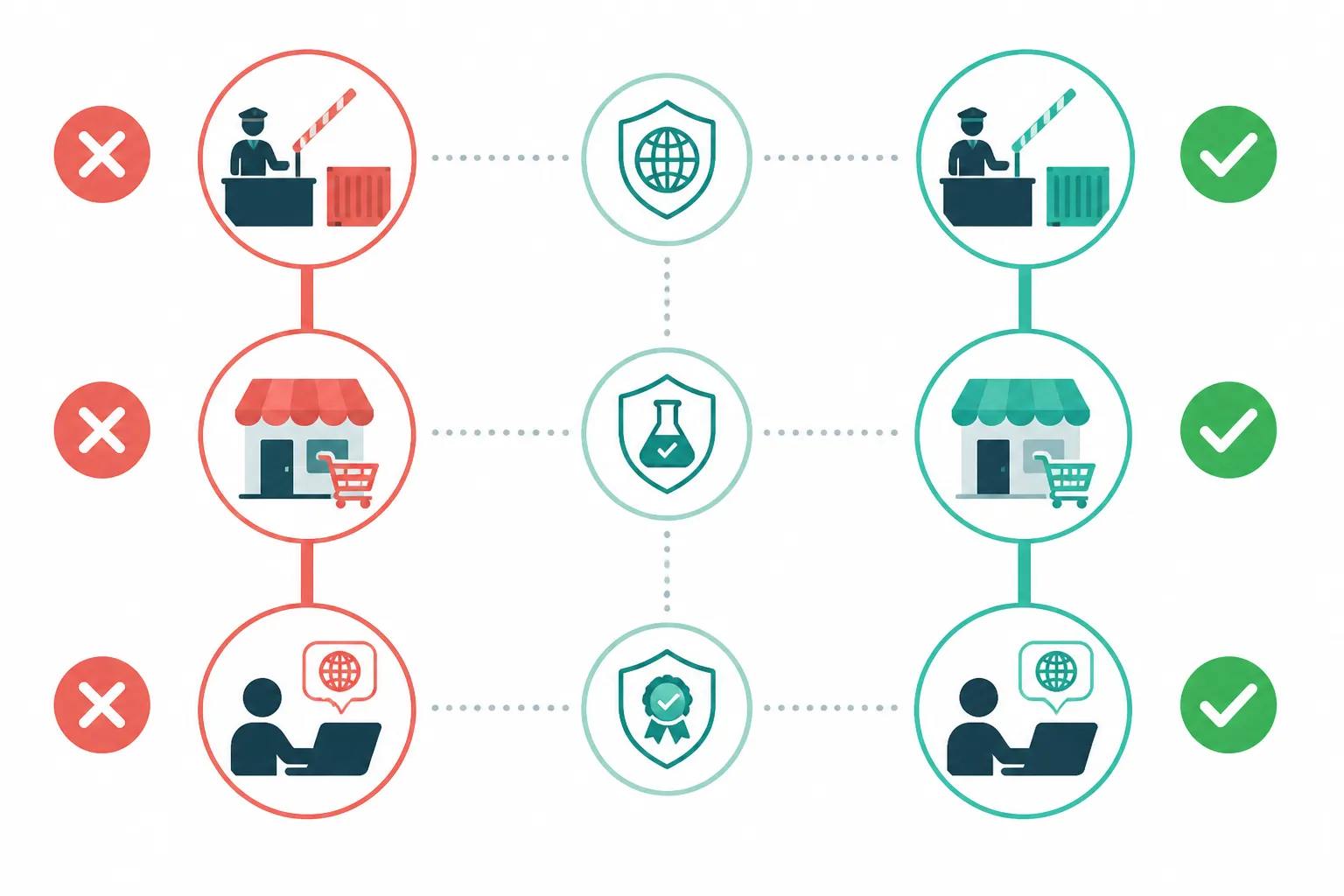
For overseas sourcing managers and DTC operators evaluating Chinese supply, ASTM compliance does three concrete things:
1. It Reduces Customs and Recall Risk
U.S. Customs and Border Protection (CBP) works with the Consumer Product Safety Commission (CPSC). Products in regulated categories (toys, children's furniture, electrical goods) can be held at port or subject to mandatory recall if ASTM requirements aren't met. The cost of a U.S. recall — logistics, legal, brand damage — typically exceeds the margin on the original shipment by 10x–50x.
2. It Creates a Shared Technical Language
When a Chinese factory says "our steel meets ASTM A36," a U.S. structural engineer can pull up the published standard, verify yield strength requirements (minimum 250 MPa / 36 ksi), and independently confirm whether a mill certificate is credible. No translator needed. No ambiguous "national standard" conversation.
3. It Unlocks Retail and Platform Access
Major U.S. retailers (Home Depot, Amazon, Walmart) and B2B platforms increasingly require ASTM documentation in vendor onboarding packets. Factories without third-party ASTM test reports are filtered out before a sourcing conversation even starts.
How ASTM Standards Work: The Testing and Certification Process
Understanding the pipeline helps factory owners and sourcing managers set realistic timelines and cost expectations.
Step 1: Identify the Applicable Standard
Start with the product category and intended market. A children's toy sold in the U.S. needs ASTM F963. A structural steel component needs the relevant A-series standard. A plastic enclosure may need ASTM D638 (tensile) + ASTM D256 (impact) + UL 94 (flammability, though UL 94 is a UL standard, not ASTM).
If you're unsure, the ASTM standard index is searchable at astm.org. Alternatively, your U.S. buyer should specify the standard in their technical specification sheet or PO.
Step 2: Engage an Accredited Third-Party Laboratory
ASTM standards specify test methods, not testing labs. However, for results to be credible to U.S. buyers and regulators, testing must be performed by a lab accredited by:
- ILAC-MRA (International Laboratory Accreditation Cooperation Mutual Recognition Arrangement)
- A2LA (American Association for Laboratory Accreditation)
- CNAS (China National Accreditation Service for Conformity Assessment — accepted for many categories)
Labs commonly used by Chinese factories for ASTM testing include SGS, Bureau Veritas (BV), Intertek, TÜV Rheinland, and QIMA. Each has offices in major Chinese manufacturing hubs (Guangzhou, Shenzhen, Dongguan, Yiwu, Ningbo).
Step 3: Sample Submission and Testing
Typical testing timelines for common categories:
| Product Type | Applicable ASTM Standard | Lab Turnaround |
|---|---|---|
| Toy (general) | ASTM F963 | 3–6 weeks |
| Structural steel | ASTM A36 / A572 | 1–2 weeks (mill cert) |
| Plastic parts | ASTM D638, D256 | 1–3 weeks |
| Textile / apparel | ASTM D5034, D3787 | 2–4 weeks |
| Paint / coatings | ASTM D3359, D4541 | 2–3 weeks |
These are standard service turnarounds; expedited service (extra cost) can compress timelines by 30–50%.
Step 4: Test Report and Certification Letter
Upon passing, the lab issues a test report and, where applicable, a certificate of conformity. These documents must be retained and available for buyer audit, customs inspection, or CPSC investigation. Keep originals; issue copies to buyers.
Step 5: Maintain Compliance Through Production Changes
ASTM compliance is not a one-time event. If you change:
- Raw material supplier or grade
- Manufacturing process (e.g., heat treatment parameters)
- Product dimensions or geometry beyond tolerances specified in the standard
…you need to re-test. Many factories fail audits not because the original product was bad, but because production changes after initial certification were never re-validated.
Key ASTM Standards by Product Category (Chinese Export Focus)
This section focuses on the standards most relevant to Chinese OEM/ODM factories exporting to North America.
Consumer Products & Toys
ASTM F963 – Standard Consumer Safety Specification for Toy Safety The foundational toy safety standard in the U.S., referenced by CPSC under the Consumer Product Safety Improvement Act (CPSIA). Covers mechanical hazards, chemical limits (heavy metals, phthalates), flammability, electrical safety, and age-grading requirements.
Procurement criteria to confirm: Third-party F963 test report from an accredited lab, dated within 12 months of production run; separate chemical test report for CPSIA heavy metals (ASTM F963-17 Section 4.3.5).
Furniture & Home Goods
ASTM F2057 – Clothing Storage Units (Tip-Over) ASTM F1169 – Full-Size Baby Cribs
Anti-tip and structural stability standards are heavily enforced categories. U.S. states (especially California) reference these in their own regulatory frameworks. Expect full structural testing, not just documentation review.
Metals and Structural Components
ASTM A36 / A572 / A992 – Carbon and high-strength steel ASTM B117 – Salt spray (corrosion resistance) testing
For steel components, buyers often accept Mill Test Certificates (MTCs) as primary documentation, provided the MTC references the specific ASTM standard and heat/lot number. Verify that MTCs come from the steel mill, not the fabricator.
Plastics and Rubber
ASTM D638 – Tensile properties of plastics ASTM D256 – Izod impact resistance ASTM D2240 – Shore hardness (rubber/elastomers)
These are method standards — they define how to test, not pass/fail thresholds. Thresholds are set by your buyer's product specification or the end-use standard that references them.
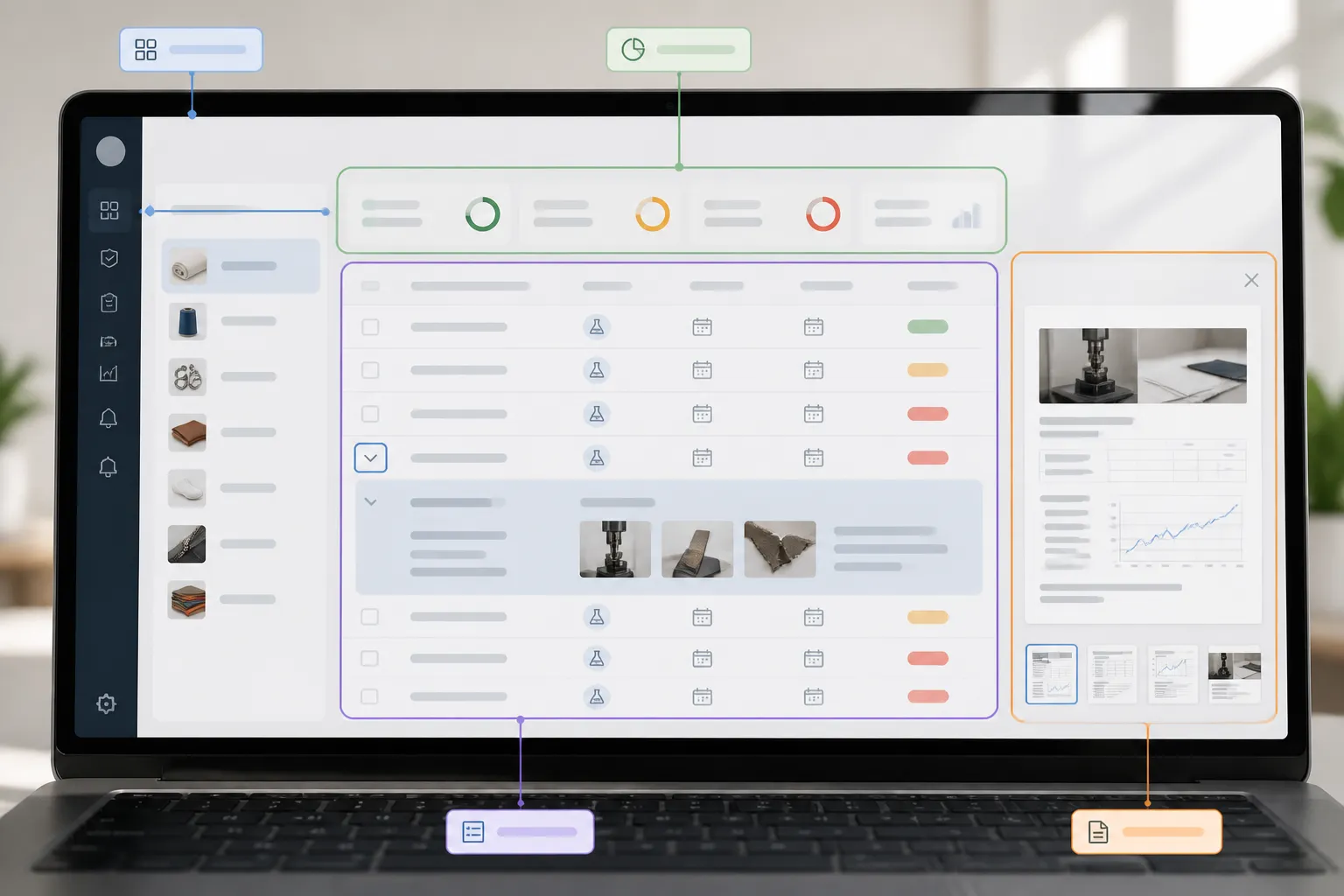
Evaluating a Chinese Supplier's ASTM Compliance: A Sourcing Checklist
For overseas sourcing managers and DTC operators, here is a concrete evaluation framework to use before issuing a PO.
Document Verification
- Test report issued by named, accredited lab — confirm lab accreditation status via A2LA or CNAS database (not the factory's word)
- Test report covers the correct standard version — ASTM standards are revised periodically (e.g., F963-17 vs F963-23); confirm the version matches current U.S. regulatory requirements
- Sample tested = product you're ordering — verify product description, model number, and materials on the test report match your PO spec
- Test report age — most buyers require reports within 12–24 months; some retailers require annual re-testing
- Test report scope — partial passes are common; confirm all sections of the standard are covered, not just the easy ones
Procurement Criteria to Discuss with the Factory
When evaluating ASTM-compliant Chinese suppliers, these are the dimensions that determine whether compliance is real or paper-thin:
MOQ and Production Consistency Ask: "What is your [your MOQ] for the compliant product line, and how do you ensure production samples match the tested sample?" Compliant factories should have documented incoming material inspection (IQC) and in-process quality controls (IPQC) tied to the material specs that passed ASTM testing.
Pricing Premium for Certified Materials ASTM-compliant raw materials (e.g., ASTM A36 steel vs. unlabeled structural steel) carry a cost premium. Ask for a material BOM (bill of materials) and confirm the specified ASTM-grade materials are line-itemed, not bundled into a lump-sum price.
Lead Time Impact Third-party ASTM testing adds 2–6 weeks to pre-production lead time for new product lines. For repeat orders using previously certified formulations/materials, this step can be skipped or replaced with batch testing (faster, lower cost).
Production Capacity and Certification Scope Confirm that the factory's ASTM certification covers the specific production line, not just a showroom sample. Ask for a factory audit report or visit history from a recognized audit body (SMETA, BSCI, or buyer-specific audit).
Quality Assurance on Shipment Ask whether the factory conducts pre-shipment inspection (PSI) against ASTM parameters. A reputable factory will allow or facilitate third-party PSI (SGS, Intertek, QIMA) at your cost before container loading.
Common ASTM Compliance Failures (and How to Avoid Them)
Chinese factories — even experienced ones — make predictable errors when managing ASTM compliance for export. Knowing these in advance protects both the buyer and the supplier relationship.
1. Material Substitution Without Re-Testing
A factory originally tested Product A using resin grade X. After a supplier shortage, they switch to resin grade Y. The product looks identical. The ASTM D638 tensile properties may differ by 15–30%. Without re-testing, the original test report is technically invalid for the new production run.
Mitigation: Require the factory to maintain a Material Change Control log and submit to re-testing whenever input materials change.
2. Test Report Scope Creep
A toy manufacturer tests one color variant of a product. They then sell five additional color variants using pigments with different chemical compositions (some pigments contain heavy metals). Only the original variant has a valid ASTM F963 report.
Mitigation: Require test reports for each color/material variant, or a laboratory declaration confirming chemical equivalence.
3. Outdated Standard Versions
ASTM F963 has been updated multiple times. A factory presenting an F963-11 report for a 2025 production run may not be compliant with current CPSIA requirements, which reference the latest version.
Mitigation: Cross-reference the CPSC published list of incorporated standards before accepting a test report.
4. Mill Certificate Forgery
In steel and metals, MTC (Mill Test Certificate) fraud is a known issue in Chinese supply chains. Fabricators sometimes create MTCs in-house rather than sourcing them from the mill.
Mitigation: For high-stakes structural applications, request heat traceability back to the mill and consider independent material verification testing (PMI — Positive Material Identification) on a sample batch.
How AI-Native Trade Infrastructure Streamlines ASTM Compliance Management
For Chinese factories managing multiple export markets, tracking ASTM compliance across product lines, buyers, and standard revisions is operationally complex. 链上科技 (Link4a) builds AI-native infrastructure specifically for this workflow.
The Inbox system handles 24/7 multilingual buyer inquiries — when an overseas buyer asks "do your products comply with ASTM F963?" at 2 AM Guangzhou time, Inbox extracts the question, routes it to the relevant product compliance file, and returns a factual answer with document references, without requiring a human agent to be on call.
The Match engine surfaces verified Chinese suppliers against buyer-specified compliance requirements — including ASTM standard citations — in under 3 seconds, drawing from a network of 300+ factories with documented export compliance histories.
For DTC operators and TikTok creators sourcing at volume from Chinese supply, the Sitebox product deploys a branded independent storefront in under 30 minutes, with supplier compliance documentation (including ASTM test reports) integrated into the product detail page — a requirement for any buyer who needs to pass downstream audits.
The Reach engine drives content and SEO/GEO traffic loops, including compliance-focused content that converts sourcing buyers searching for ASTM-certified Chinese manufacturers into qualified inquiries.
This is not a plugin stack. It's an end-to-end workflow designed for the compliance-heavy reality of cross-border B2B trade.
When Should You Reference ASTM Standards in a Sourcing RFQ?
Not every product requires ASTM compliance documentation. Use this decision framework:
| Scenario | ASTM Reference Required? |
|---|---|
| Children's toy sold via U.S. Amazon | Yes — ASTM F963 mandatory (CPSIA) |
| B2B structural steel for U.S. construction | Yes — ASTM A36/A572 standard practice |
| Private-label apparel for U.S. adult DTC | Case-by-case — depends on buyer contract |
| Home décor (candles, frames) for U.S. retail | Partial — ASTM F2285 (candle safety) relevant |
| Industrial B2B components, spec sheet provided | Reference buyer's spec, which may cite ASTM |
| Electronics | ASTM rarely primary — UL/FCC dominate |
When in doubt, include ASTM compliance as a requirement in your RFQ and let the supplier confirm which standards they can certify. Absence of a requirement does not mean absence of risk.
Conclusion: ASTM Standards as a Commercial Signal, Not Just a Compliance Checkbox
ASTM standards are, at their core, a trust infrastructure. They compress the information asymmetry between a Chinese factory and a U.S. buyer who has never visited the production floor. When a factory presents a valid, third-party-verified ASTM test report, it is making a verifiable claim — not a marketing assertion.
For overseas sourcing managers and DTC operators evaluating Chinese supply: use ASTM documentation as a baseline filter, not a final answer. A real ASTM-compliant factory will have dated test reports from named accredited labs, material traceability, and a process for re-testing when production changes. A factory that cannot produce these documents is offering a price, not compliance.
For Chinese OEM/ODM factories exporting to North America: ASTM compliance is not a one-time certification sprint. It is a recurring operational discipline — tied to your material sourcing, production controls, and QA process — that your best buyers will audit continuously.
Next step: If you are evaluating Chinese suppliers for ASTM-compliant production, or if you are a factory looking to document and surface your compliance credentials to overseas buyers, Request a Quote or compliance consultation at link4a.com →
Procurement checklist: before issuing a PO for any ASTM-regulated product, confirm lab accreditation status, standard version currency, sample-to-production equivalence, material change control procedures, and pre-shipment inspection access. These five points cover 90% of the compliance failures that result in holds, returns, or recalls.