12 Real B2B Examples That Reveal How Business-to-Business Sales Work
12 Real B2B Examples That Reveal How Business-to-Business Sales Work
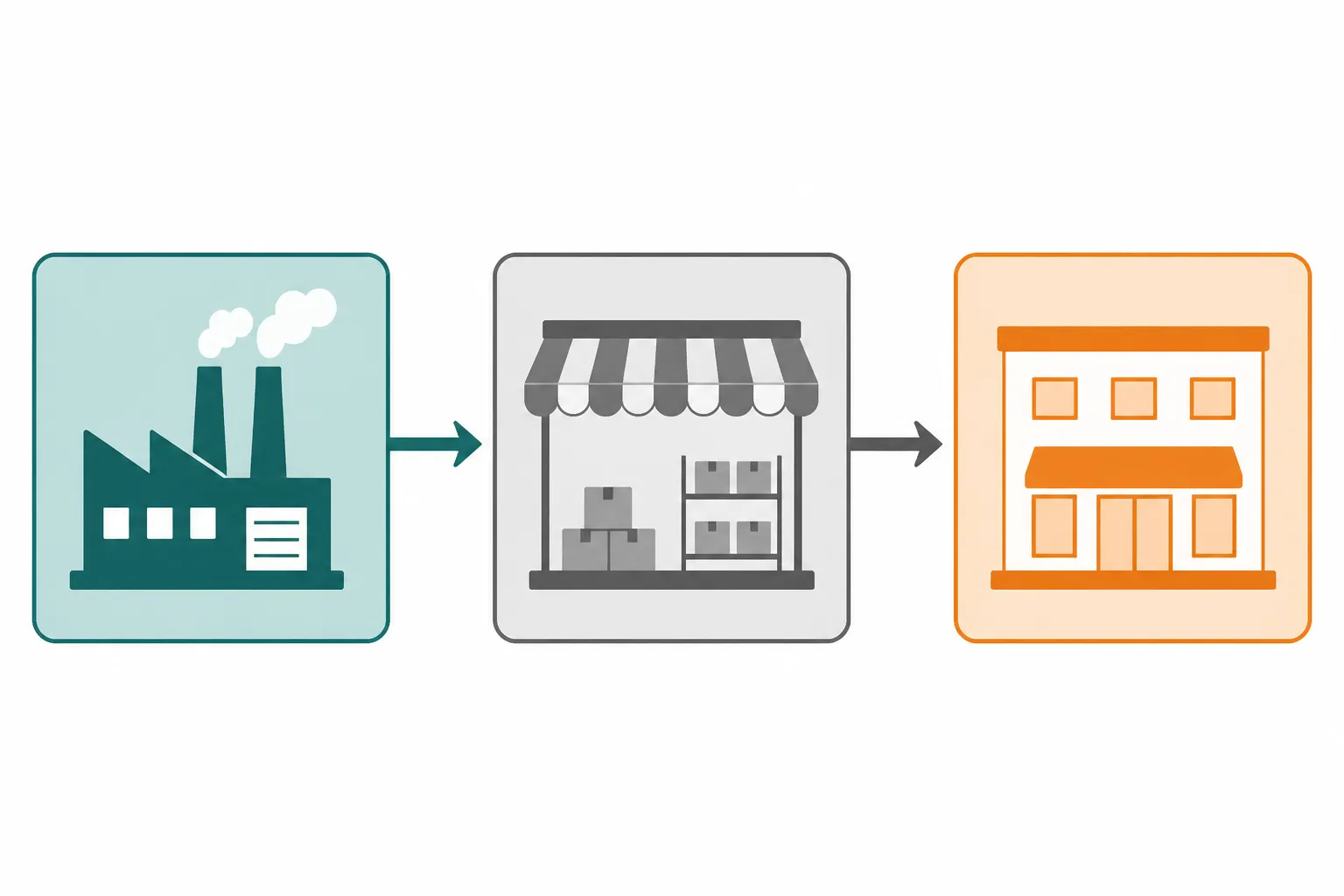
B2B — business-to-business — means one company sells products, services, or information to another company rather than to individual consumers. The distinction matters because the sales cycle, pricing structure, and marketing approach are fundamentally different from consumer retail. Classic b2b examples include Salesforce (CRM software sold to enterprise sales teams), Intel (processors sold to PC manufacturers), and Alibaba (a marketplace connecting Chinese factories with overseas wholesale buyers).
This article breaks down real b2b examples across technology, manufacturing, and cross-border trade — with enough specificity to help sourcing buyers, DTC operators, and factory owners understand how B2B models work and how to choose the right partners.
For context on how B2B differs structurally from consumer-facing models, see B2B vs B2C: The Complete Comparison Guide for Business Decision-Makers.
What Does B2B Mean? The Core Definition
B2B stands for "business-to-business," wherein businesses sell products, services, or information to other businesses rather than to individual consumers. Disruptive Advertising defines it precisely: when a consumer purchases something from Amazon, the consumer is the buyer and either Amazon or an Amazon seller is the business — making it a B2C (business-to-consumer) transaction. But when a retailer orders bulk inventory from a manufacturer on Alibaba, both parties are businesses — making it B2B.
The meaning matters practically. B2B transactions typically involve:
- Longer sales cycles — weeks to months, not minutes
- Multiple decision-makers — procurement teams, finance, technical evaluators
- Larger order volumes — governed by MOQ (minimum order quantity) and contract terms
- Formal evaluation criteria — certifications, lead times, quality assurance processes
B2B plays a crucial role in the global economy, facilitating trade and collaboration between enterprises and industries. The companies behind the products consumers eventually buy — component suppliers, logistics firms, SaaS platforms, contract manufacturers — are almost all running B2B models.
B2B Examples in SaaS and Technology
The SaaS sector produces some of the clearest b2b examples because the buyer-seller relationship is explicit: a business pays a monthly or annual fee to use software that makes its own operations more efficient.
Salesforce
Salesforce sells CRM software to sales teams at other companies. An individual consumer would never need Salesforce; it exists entirely to help businesses manage their pipeline, track leads, and run marketing campaigns. Its pricing, onboarding, and support model are all built around the company as the buyer unit, not the individual.
HubSpot
HubSpot is another B2B SaaS example — it sells marketing automation, CRM, and lead generation tools to marketing and sales departments. A DTC brand running TikTok campaigns might use HubSpot to capture inbound leads and route them to sales reps. The buyer is the business; the end-user is the employee.
Slack and Asana
Slack (team communication) and Asana (project management) are workplace tools sold to businesses on a per-seat basis. Neither product makes sense for personal consumer use — they exist to make teams at companies more effective. Both are pure B2B SaaS plays.
Adobe
Adobe Creative Cloud started as a consumer product but has become predominantly B2B — most revenue comes from enterprise contracts where marketing agencies, publishers, and design studios buy licenses for entire teams.
The pattern across all these SaaS b2b examples: the product solves a business workflow problem, pricing scales by seats or usage, and the sales motion involves demos, procurement approvals, and annual contracts rather than an impulse purchase.
For a deeper look at platforms that drive B2B sales outcomes, see B2B Sales: 6 Platforms and Resources That Drive Results in 2026.
B2B Examples in E-Commerce and Marketplaces
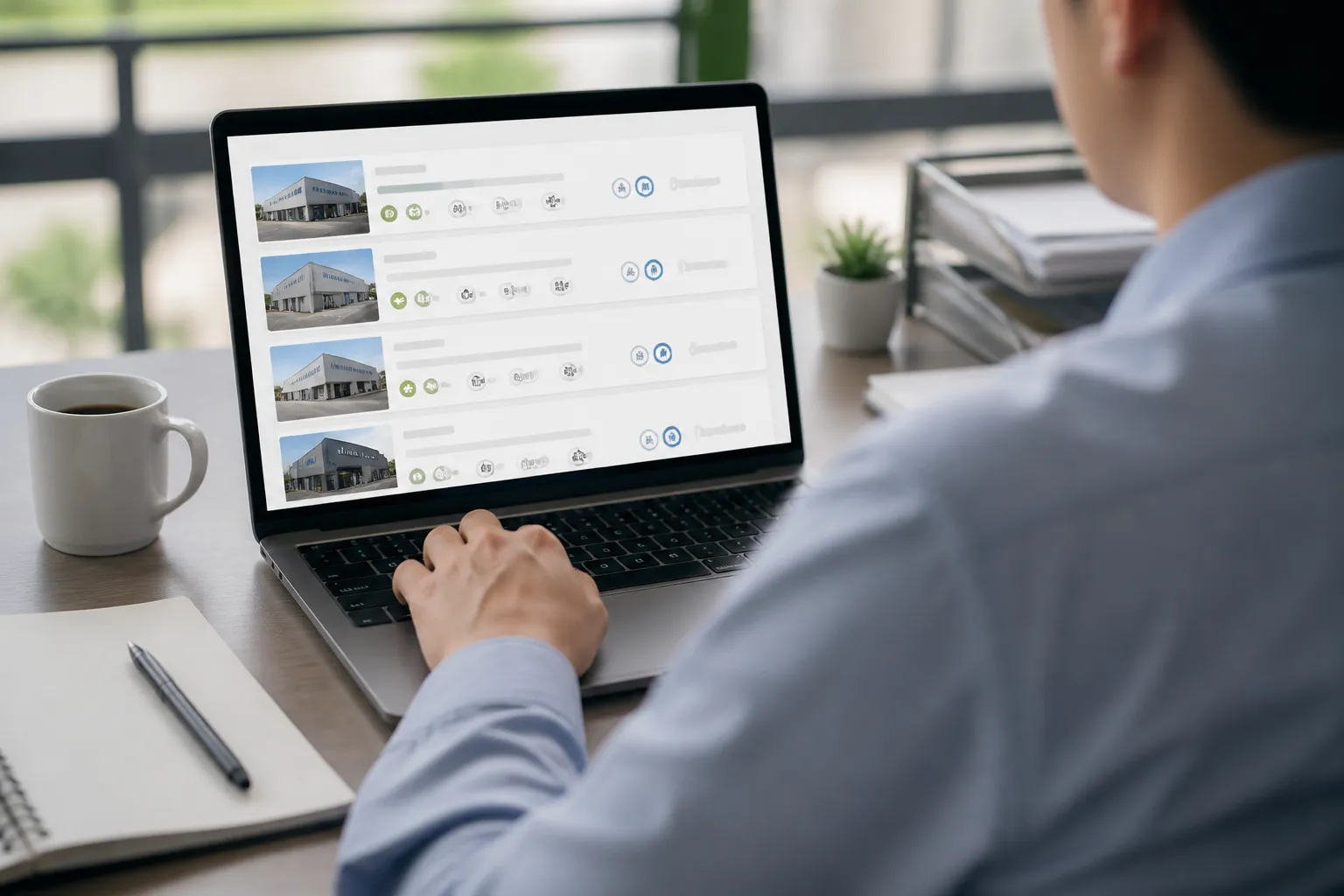
B2B e-commerce is distinct from B2C e-commerce in structure and intent. As TradeCentric's analysis of B2B marketplace examples shows, B2B platforms must handle purchase orders, contract pricing, approval workflows, and invoice-based payment — none of which a standard consumer checkout handles.
Alibaba
Alibaba is the canonical cross-border B2B marketplace example. Chinese manufacturers list products with MOQ requirements, factory certifications, and production lead times. An overseas buyer — a DTC brand, a retailer, a distributor — searches, negotiates, and places bulk orders. The transaction is business-to-business throughout: the buyer is sourcing inventory, not buying for personal use.
Amazon Business
Amazon has a separate B2B layer: Amazon Business. Unlike consumer Amazon, it offers bulk pricing tiers, business-only listings, purchase order payment, and spending analytics for procurement teams. When a hospital system buys PPE through Amazon Business, the buyer and the seller are both operating in a B2B context even though the underlying platform started as B2C.
Intel as a B2B Component Supplier
Intel's core revenue comes from selling processors to PC manufacturers like Dell, HP, and Lenovo — not to consumers who walk into a store. The chip in a laptop was a B2B sale before it ever became a B2C product. This upstream B2B layer is invisible to consumers but represents enormous transaction volume.
B2B Examples in Manufacturing, Logistics, and Industrial Sectors
Boeing
Boeing sells commercial aircraft to airlines, cargo operators, and governments. No individual buys a 787 Dreamliner; the entire business model is built around enterprise procurement, multi-year contracts, and post-sale maintenance agreements. This is B2B at industrial scale.
General Electric
GE sells jet engines, power turbines, and medical imaging equipment to airlines, utilities, and hospitals. Like Boeing, the buyer is always an organization — and the sales process involves engineering reviews, compliance documentation, and multi-year service contracts.
FedEx
FedEx operates partly B2C (consumers shipping packages) and partly B2B — logistics contracts with retailers, manufacturers, and e-commerce platforms. The B2B side involves volume pricing, API integrations for order tracking, and dedicated account management. A Chinese factory shipping 10,000 units to a US distribution center is a B2B FedEx customer.
Cisco
Cisco sells networking hardware and security infrastructure to enterprises and telecom providers. No consumer buys an enterprise router. Cisco's sales motion involves system integrators, resellers, and enterprise procurement teams — a multi-tier B2B model.
B2B Lead Generation: How Business Buyers Find Suppliers
B2B lead generation is the process of identifying and attracting potential business buyers or suppliers. The meaning differs significantly from consumer lead generation: B2B leads are companies, not individuals, and qualification involves verifying organizational fit, budget authority, and procurement readiness.
Common B2B lead generation channels include:
Outbound (supplier-initiated)
- Cold email sequences targeting procurement managers
- LinkedIn outreach to sourcing directors
- Trade show participation with follow-up sequences
- SEO and GEO-optimized content that ranks for buyer search terms
Inbound (buyer-initiated)
- Search engine traffic to product pages and comparison articles
- Industry directories and marketplace listings (Alibaba, ThomasNet, Kompass)
- Referrals from existing customers
- Social proof: certifications, audit reports, case studies
For Chinese factories looking to generate inbound leads from overseas buyers, the challenge is infrastructure: most factory websites are not built to convert English-speaking sourcing buyers. A site that loads slowly, lacks English content, and has no clear RFQ (request for quote) flow will lose a buyer within 30 seconds.
Link4a's Sitebox product addresses this directly — a Chinese manufacturer can deploy a brand-ready, SEO-optimized independent site in under 30 minutes, with multilingual capability and built-in inquiry handling via Inbox (24/7 AI that responds to sourcing inquiries). The Match engine then surfaces supplier-buyer connections rapidly, and Reach drives content and SEO traffic in a single loop. The underlying principle is the same as any B2B SaaS example above: solve a specific business workflow problem and let the platform handle the operational complexity.
B2B Marketing: How Companies Reach Business Buyers
B2B marketing is structurally different from consumer marketing. The audience is smaller, more informed, and motivated by ROI and risk reduction rather than emotion or impulse.
Content Marketing and SEO
Companies like HubSpot and Salesforce built dominant market positions largely through content marketing — publishing detailed guides, benchmarks, and tutorials that rank for the search terms their buyers use. This creates inbound lead generation at scale without direct cold outreach.
Account-Based Marketing (ABM)
ABM targets specific companies (accounts) rather than broad audiences. A supplier targeting Fortune 500 procurement teams might run a campaign specifically for 200 named companies rather than running generic digital ads. Qualtrics, the experience management platform cited as a B2B example by Disruptive Advertising, uses ABM extensively to reach enterprise buyers.
Trade Shows and Certifications
In manufacturing B2B, marketing often means certifications and audit reports more than advertising. A factory with ISO 9001, BSCI, or REACH compliance documentation is marketing to procurement managers who evaluate risk before they evaluate price. A CE mark on a product is a B2B marketing signal.
Social and Influencer (Emerging)
TikTok and Instagram are increasingly being used for B2B product discovery — not to close deals, but to surface suppliers to DTC operators and sourcing agents who scroll for product ideas. A factory with strong short-video content showing production processes and quality control gets organic inbound inquiries from buyers who never would have found them on Alibaba.
Why B2B Examples Matter for Chinese Exporters Going Global
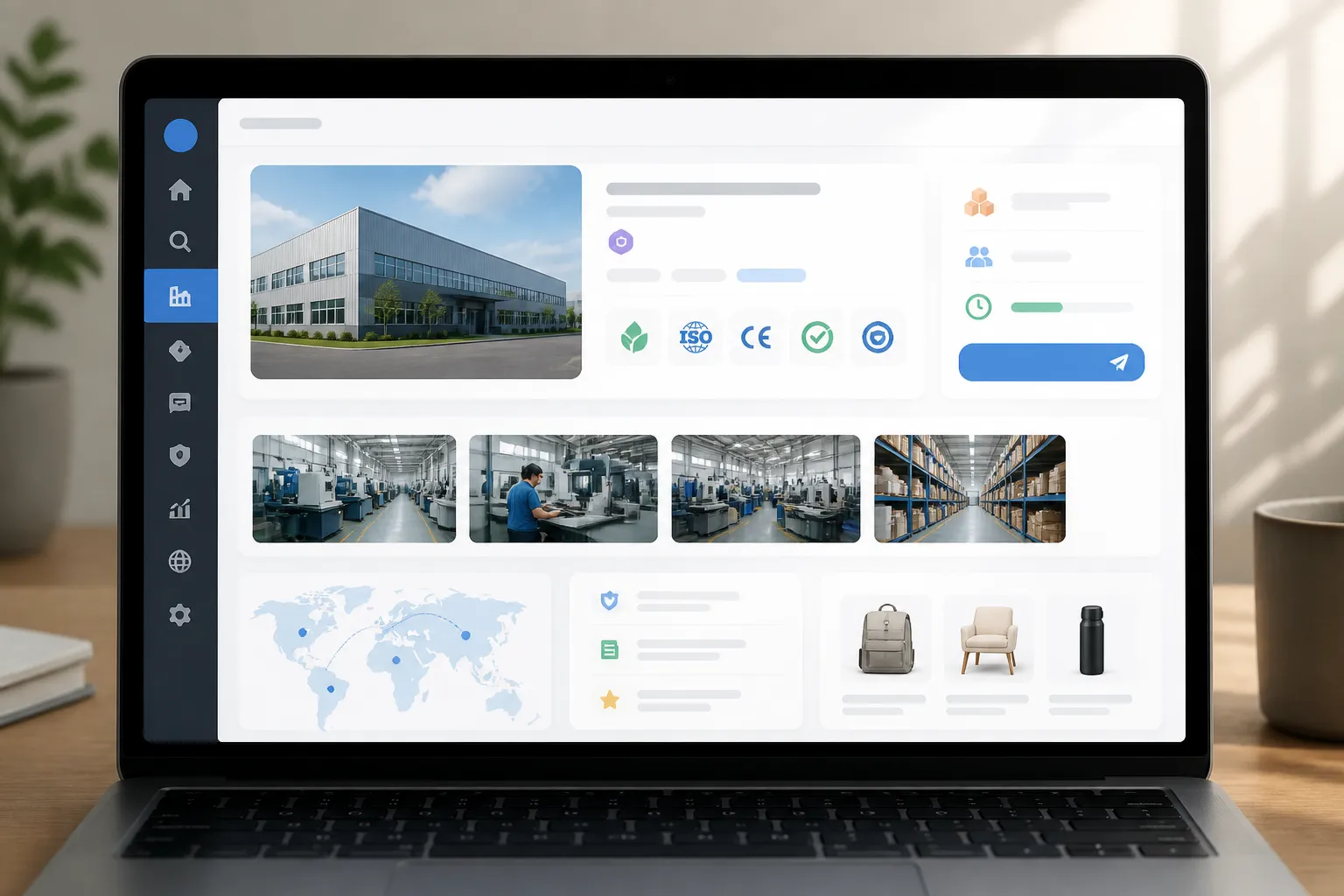
Chinese OEM/ODM factories are deeply embedded in the global B2B supply chain — but most operate primarily as tier-2 or tier-3 suppliers, invisible to the end buyer. Understanding how the best B2B examples above operate reveals what infrastructure a factory needs to move up the value chain and own direct relationships with overseas buyers.
The companies that succeed in cross-border B2B share common characteristics:
Clear procurement evaluation signals A buyer evaluating a new supplier wants to know immediately: What is your MOQ? What certifications do you hold? What is your standard production lead time? What quality assurance process do you use? Factories that answer these questions clearly and prominently on their web presence convert inquiries at significantly higher rates than those that require back-and-forth email.
English-language presence with Chinese operational backbone The buyer is overseas; the factory is in China. The site, inquiry responses, and product documentation need to operate in English at the buyer's timezone — but the production, quality control, and logistics systems remain in Chinese. This split-language requirement is operationally hard without purpose-built infrastructure.
Documented quality and compliance For buyers in regulated categories (electronics, apparel, food contact materials, toys), a factory without relevant certifications is a procurement risk, regardless of price. B2B sales in these categories are partly a documentation transfer exercise.
Responsive inquiry handling A sourcing buyer who submits an RFQ at 9 AM EST and gets a response 36 hours later is likely already talking to a competitor. 24/7 AI-driven inquiry response — like what Link4a's Inbox provides — closes the timezone gap that kills otherwise qualified leads.
How to Evaluate a B2B Supplier or Platform: A Procurement Checklist
Whether you're a DTC operator sourcing Chinese supply or a factory trying to attract overseas buyers, the same evaluation dimensions apply:
| Dimension | What to Verify |
|---|---|
| MOQ | Request the minimum order quantity in writing; confirm it matches your volume requirements |
| Pricing | Request a formal quote for your target SKU at your projected volume tier |
| Lead time | Confirm standard production lead time and express options; get this in the contract |
| Certifications | Request current certificates (ISO, CE, BSCI, REACH, etc.) — verify expiry dates |
| Quality assurance | Ask for the QC process: inline inspection, final inspection, AQL standards used |
| Supplier reliability | Request references from active buyers in your market; check factory audit reports |
| Inquiry responsiveness | Test response time before committing — if a supplier takes 48 hours to respond to an RFQ, expect the same during production |
For platforms, the same logic applies. A B2B SaaS tool should be evaluated on uptime SLAs, support response times, integration depth with your existing stack, and evidence of ROI from comparable customers.
The B2B vs B2C Boundary Is Blurring — Here's Why It Matters
Some of the most interesting B2B examples today sit at the boundary between B2B and B2C. Amazon started as a B2C retailer and added a full B2B layer. Alibaba is primarily B2B but has consumer-facing arms (Taobao, AliExpress). Mailchimp — listed among B2B examples — serves both small business owners (functionally B2C in acquisition) and enterprise marketing departments (full B2B procurement cycle).
For Chinese factories, this blurring creates an opportunity: DTC operators and TikTok creators who discover a factory through social media begin the sourcing journey as individual buyers but execute procurement as businesses. A factory with both a strong social content presence and a professional B2B inquiry funnel can capture buyers at both ends of this spectrum.
Understanding this spectrum is why B2B Meaning: What Business-to-Business Actually Means & 6 Best Resources is worth reading alongside this article — the definitional grounding matters when you're building infrastructure to reach buyers across channels.
Conclusion: Pick One B2B Example and Reverse-Engineer It
The most practical takeaway from studying b2b examples is that every successful B2B company — Salesforce, Intel, Alibaba, Boeing — has solved one specific infrastructure problem for a specific buyer. They didn't try to serve everyone; they built the best possible system for a defined transaction type and scaled from there.
For a Chinese factory going global, the equivalent is: build the infrastructure that makes it operationally easy for an overseas buyer to find you, evaluate you, and place an order. That means a professional English-language web presence, documented procurement information (MOQ, certifications, lead times), 24/7 inquiry response, and a content strategy that generates inbound traffic from your target buyer market.
Ready to build your B2B sales infrastructure? If you're a factory owner or OEM/ODM exporter looking to generate qualified overseas buyer inquiries, Request a Demo at link4a.com to see how Sitebox, Inbox, Match, and Reach work as an integrated system — not a stack of disconnected plugins.
For related reading, see B2B Sales: 6 Platforms and Resources That Drive Results in 2026 and B2B vs B2C: The Complete Comparison Guide for Business Decision-Makers.
Frequently Asked Questions
What is b2b examples?
B2B (business-to-business) examples in the Chinese supply chain context include a DTC apparel brand sourcing blank-and-dye hoodies directly from a Guangzhou cut-and-sew factory (MOQ 300 pcs/colorway, 45-day lead time, OEKO-TEX certified), or a US retailer placing a private-label electronics order with a Shenzhen ODM that handles tooling, FCC/CE certification, and 3PL consolidation. Other common examples: a European importer buying seasonal homeware from a Yiwu trading company acting as aggregator across 12 category suppliers, or a platform like 链上科技 connecting buyers directly to verified tier-1 factories with real-time capacity and audit data, cutting out middlemen on orders above ¥500K.
How to b2b examples?
B2B Examples in Chinese Supply Sourcing
Concrete B2B arrangements typically look like this: a DTC apparel brand signs a 12-month blanket order with a Guangdong cut-and-sew factory (MOQ 500 pcs/SKU, 30-day lead time, OEKO-TEX certified) and uses a platform like 链上科技 to manage PO issuance, QC sign-off, and payment milestones in one workflow. A second common model is a distributor using Sitebox or Inbox to consolidate multi-vendor shipments from Yiwu commodity suppliers into a single FCL, reducing per-unit freight by 15–20% versus LCL. In both cases, the B2B relationship is defined by written specs (tech packs or product briefs), agreed AQL inspection standards (typically AQL 2.5 for majors), and net-30/60 payment terms tied to Bill of Lading release.
Why is b2b examples important?
B2B examples matter because they translate abstract supplier claims into verifiable proof points — a buyer evaluating a Shenzhen injection-molder, for instance, can benchmark MOQ (typically 500–5,000 units), tooling lead times (4–6 weeks), and certifications (ISO 9001, RoHS) against documented deals rather than marketing copy. Concrete case studies reveal how a factory actually performed under real order conditions: whether a Dongguan garment supplier hit a 45-day production window for a 10,000-unit DTC reorder, or how a 链上科技 fulfillment partner handled a Black Friday volume spike. For overseas sourcing buyers and DTC operators, these examples compress the vetting cycle and reduce the risk of locking capital into an untested supply relationship.
When should I use b2b examples?
Use B2B examples when pitching to a procurement manager or retail buyer who needs to justify spend internally — concrete cases (e.g., a DTC brand sourcing 500-unit MOQ injection-molded packaging from a Guangdong factory with ISO 9001 and a 30-day lead time) cut through abstract claims faster than feature lists. They're also essential during supplier vetting calls or RFQ negotiations, where a comparable deal's pricing, certifications (BSCI, REACH), and defect-rate outcomes give the buyer a benchmark. Skip them only in early-stage cold outreach where a brief capability summary is more appropriate than a deep case study.
What are the benefits of b2b examples?
B2B examples give sourcing buyers and DTC operators concrete benchmarks to evaluate suppliers — for instance, knowing that a Guangdong injection-molding factory runs MOQs of 500 units, 30-day lead times, and holds ISO 9001 + RoHS certs immediately filters out mismatched vendors. Real-world transaction cases also surface hidden variables like tooling amortization schedules, HS code classification choices, and payment terms (T/T 30% deposit vs. LC at sight) that generic spec sheets omit. Finally, documented examples build negotiating leverage: if a comparable buyer secured 15% unit cost reduction at 2,000 units from a Yiwu OEM, you have a data point to anchor your own price discussion.