How to Source 14k Gold Jewelry: A Buyer's Guide for DTC Brands
How to Source 14k Gold Jewelry: A Buyer's Guide for DTC Brands
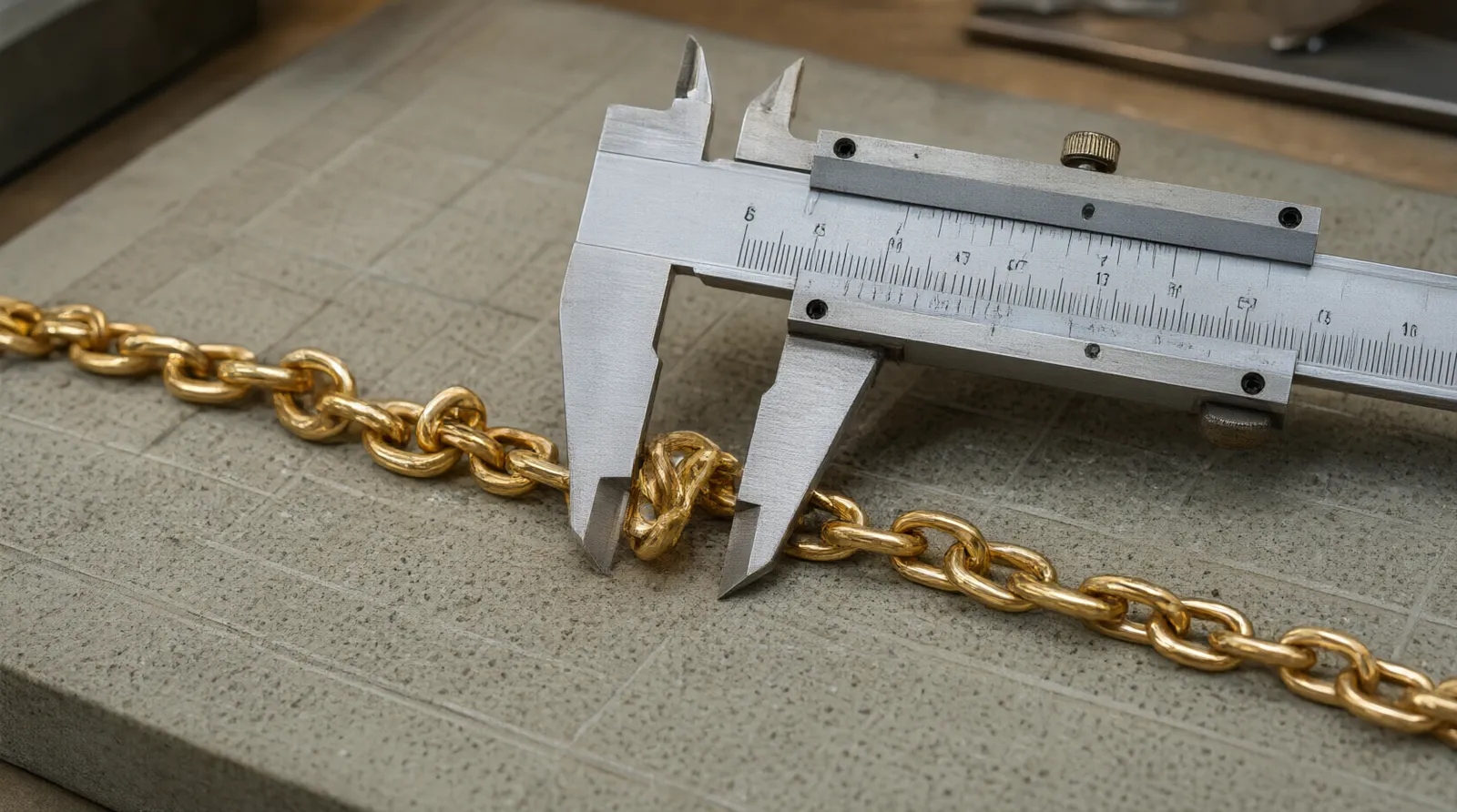
14k gold jewelry contains exactly 58.3% pure gold alloyed with metals like copper, silver, or zinc to balance durability with intrinsic value. For DTC store owners and importers, it represents the highest-volume commercial sweet spot in fine jewelry—offering a lower wholesale entry point than 18k while commanding significantly higher retail margins than gold-plated or vermeil alternatives. If you are building out your sourcing strategy, understanding how to source solid gold jewelry that actually sells is a critical first step before locking in suppliers.
Who This Guide Is For
This guide is written for overseas buyers, DTC e-commerce founders, online creators launching merchandise lines, and importers actively researching suppliers for 14k gold jewelry. You are likely moving past dropshipping cheap alloys or testing the market with plated pieces, and you now need a dependable sourcing partner who shortlists factories, checks them, negotiates MOQ and price, coordinates samples, and handles repeat orders instead of gambling on a marketplace listing. Whether you are expanding a permanent jewelry studio, adding men's chains to an existing catalog, or looking for affordable fine jewelry that competes with established brands, your immediate trigger is finding vetted Chinese manufacturing capacity without hiring a full export sales team.
What 14k Gold Jewelry Actually Does
At 58.3% purity, 14k gold resists scratching, bending, and tarnishing far better than 24k or 18k, making it the standard for everyday wear items like engagement rings, huggie hoops, and permanent welded bracelets. From a procurement standpoint, 14k gold jewelry allows retailers to price products in the accessible luxury tier—often between $150 and $800 retail—while maintaining healthy margins over raw material costs. It bridges the gap between fashion jewelry (which churns) and investment-grade bullion (which moves slowly). Buyers source 14k specifically because it machines well for custom designs, holds intricate textures, and satisfies consumer demand for "real gold" without the prohibitive cost of higher karats. For those focusing specifically on earwear, exploring how to source 14k gold hoop earrings can provide a targeted framework for one of this category's highest-converting SKUs.
Key Decision Factors
When evaluating suppliers for 14k gold jewelry, move past aesthetic preferences and audit these operational realities.
Purity Verification and Hallmarking
What to evaluate: How the factory proves the gold content. Every piece must be stamped (usually "585" or "14k") and backed by assay reports. Good looks like: The supplier provides third-party metallurgical testing certificates per batch, not just a generic company promise. If a factory cannot produce verifiable assay documentation matching their output, walk away.
Pricing Model and Raw Material Pegging
What to evaluate: How the quote is structured. Gold prices fluctuate daily. A reliable supplier separates the raw gold weight cost (pegged to the live LBMA spot price plus a fixed premium) from the manufacturing labor fee. Good looks like: Transparent line-item quoting where you can calculate your exact margin based on today's gold spot price, rather than a flat, opaque per-piece cost that hides margin erosion.
Minimum Order Quantity (MOQ) Flexibility
What to evaluate: The threshold required to initiate production. Many overseas factories demand high MOQs that tie up capital. Good looks like: A sourcing partner who negotiates MOQ down to match your current cash flow, allowing you to test custom designs or specific categories—like a new line of men's signet rings—without committing to thousands of units upfront.
Custom Design and CAD Capabilities
What to evaluate: The factory’s ability to translate your sketches into production-ready molds. Consumers increasingly seek personalized items, and competing with mass-market aesthetics requires unique tooling. Good looks like: In-house CAD designers who provide 3D render files for approval before cutting steel molds, ensuring your custom pendants or textured bands match your exact specifications.
Scalability and Production Lead Times
What to evaluate: Capacity to handle your growth. A factory might manage 100 units easily but fail at 5,000. Good looks like: Documented production lead times (e.g., [your lead time] days for sampling, [your lead time] days for bulk) and a track record of scaling output without degrading finishing quality.
Supplier Vetting and Communication
What to evaluate: Who you are actually talking to. Direct factory communication across language barriers often leads to costly errors. Good looks like: Working through a managed export operator like Link4a, which handles multilingual communication, drafts replies to buyers directly from the factory's actual in-stock catalogue, and operates on a commission-only model for factories—meaning they only get paid when an order closes, aligning their incentives with yours.
Market Positioning and SEO Support
What to evaluate: How the product will be sold once sourced. If you operate a DTC brand, your supplier ecosystem should support your go-to-market strategy. Good looks like: Partners who understand retail positioning. For instance, Link4a provides managed overseas storefronts in six languages—including right-to-left Arabic layouts and localized Russian pages, as seen in regional listings for items like the Four-Leaf Clover Textured Gold-Plated Necklace — STRAND (ستراند) and the Four-Leaf Clover Textured Gold-Plated Necklace — STRAND (СТРЭНД). They conduct per-language keyword research rather than relying on direct English translation, yielding verifiable results: periodic audits of client storefronts have shown multiple product pages achieving first-page rankings on US search engines.
Total Cost of Ownership (TCO)
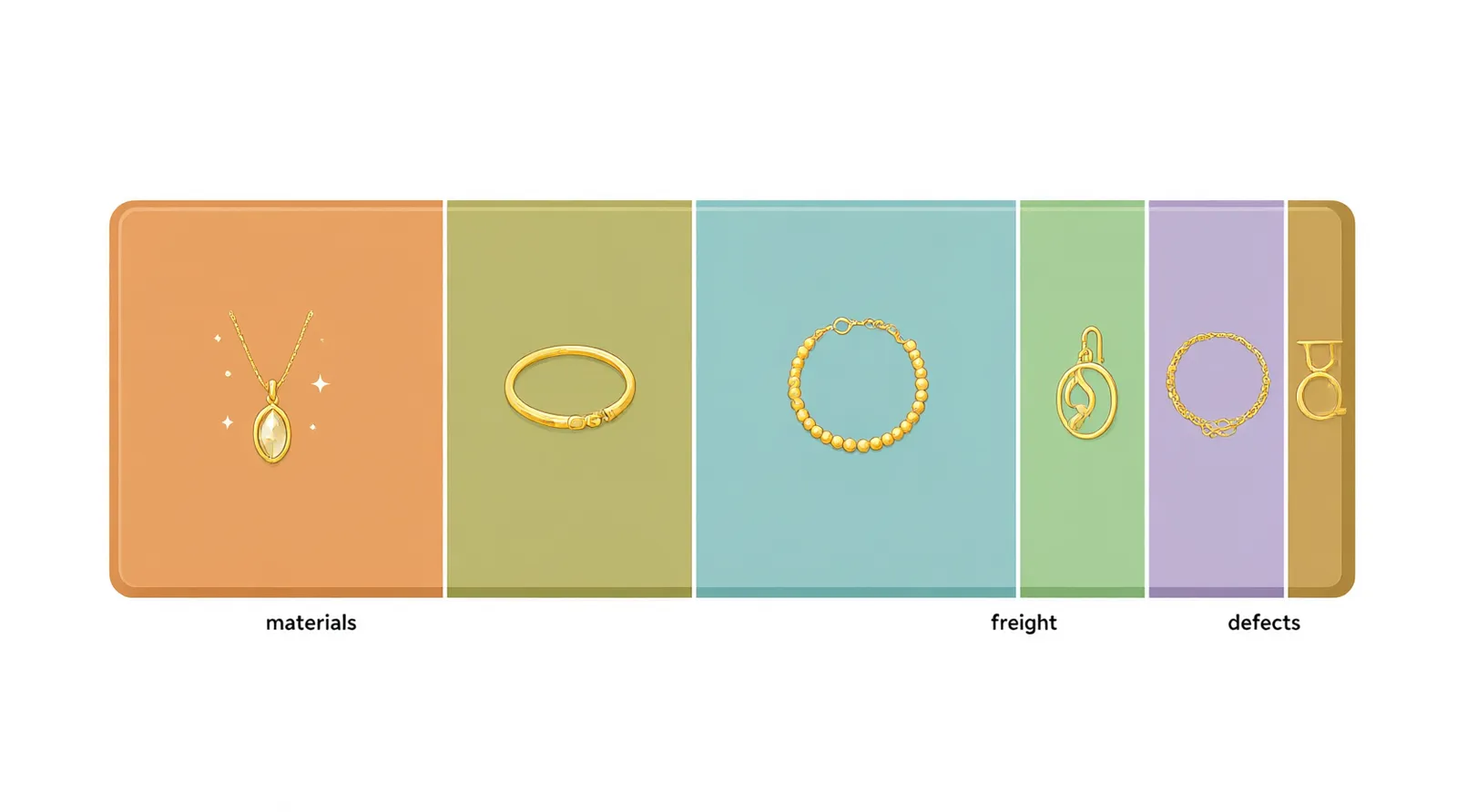
What to evaluate: Landed cost, not just unit cost. Factor in shipping, insurance, customs duties, defect rates, and the cost of replacing sub-par inventory. Good looks like: A supplier who coordinates secure logistics and maintains a defect rate below 2%, preventing your TCO from eroding your retail margin.
Budget Tiers
Pricing for 14k gold jewelry depends heavily on gram weight and design complexity. Use this framework to align your purchasing power with the right manufacturing tier.
| Tier | Typical Wholesale Range | Target Buyer Profile | What You Get |
|---|---|---|---|
| Entry / Testing | $50 – $150 per piece | Creators, small boutiques testing 14k for the first time. | Standardized catalogue designs (studs, simple bands), higher MOQ negotiation required, basic packaging. Competes on being affordable yet solid. |
| Mid-Market / DTC | $150 – $400 per piece | Growing e-commerce brands targeting the aesthetic of brands like Jenny Bird, Kendra Scott, or David Yurman. | Semi-custom designs, laser engraving, moderate MOQs, consistent color-matching (yellow, white, rose), polished finishing suitable for luxury branding. |
| Enterprise / Scale | $400+ per piece | Established importers, large-scale retailers competing with legacy houses or charm ecosystems like Pandoras. | Fully custom CAD tooling, dedicated production lines, strict assay compliance per batch, volume discounts on labor fees, priority sampling. |
Note: Raw gold costs fluctuate. Always request a quote pegged to the current spot price.
Red Flags to Avoid
Walk away from a supplier if you encounter any of the following during your evaluation:
- Refusal to provide assay certificates: If they cannot prove the 58.3% purity via independent lab testing, the product is likely under-karated.
- Flat-rate pricing ignoring gold markets: Gold is a commodity. A supplier quoting a static price for 14k gold jewelry over a multi-month contract without a spot-price adjustment clause is either hiding massive margins or planning to cut purity later.
- "Yes" to every custom request without CAD proofing: Factories that agree to complex structural changes without providing 3D renders or prototype samples usually lack the engineering capability to execute them.
- No physical address or factory audit trail: If your contact operates solely through a marketplace chat and refuses video calls showing the production floor, you are dealing with an unverified middleman.
- Demanding 100% upfront payment: Standard terms involve a deposit (e.g., 30%) with the balance paid after pre-shipment inspection. Full upfront payment eliminates your leverage.
- Vague lead times: Responses like "soon" or "when ready" instead of specific day counts for sampling and bulk production indicate poor capacity planning.
- Stock photos instead of real inventory: If the supplier's digital presence relies on stolen imagery rather than photos drafted from the factory's actual in-stock catalogue, you have no idea what you are buying.
Buying Process Checklist
Follow this sequence to procure 14k gold jewelry systematically and reduce supply chain risk.
- Define Requirements: Specify your target karat (14k), alloy color (yellow, white, rose), estimated gram weights, and whether you need catalogue items or custom designs.
- Shortlist Vendors: Identify 3-5 potential manufacturing partners. Using a China sourcing partner like Link4a accelerates this by providing pre-vetted factories rather than forcing you to filter marketplace noise.
- Request Initial Quotes: Ask for pricing broken down by gold weight and labor. Ensure quotes specify the MOQ.
- Coordinate Samples: Order physical samples of 2-3 SKUs. Do not skip this step. Evaluate the clasp tension, chain drape, polish quality, and hallmark accuracy.
- Conduct Reference Checks: Ask the supplier for contacts of other overseas buyers they currently manufacture for. Verify their claims regarding lead times and defect resolution.
- Negotiate Terms: Finalize the pricing model, payment schedule, and shipping incoterms (e.g., FOB, DDP).
- Place Pilot Order: Start with a smaller production run (e.g., 50-100 units) to test the factory's consistency before committing to enterprise volumes.
- Pre-Shipment Inspection: Hire a third-party inspector or rely on your sourcing partner to verify weight, purity, and craftsmanship before the goods leave the factory floor.
- Establish Repeat Ordering Cadence: Once the pilot succeeds, set up a schedule for restocking core SKUs to maintain inventory stability.
Questions to Ask Vendors
Copy these questions directly into your RFQ communications to separate professional manufacturers from unreliable traders.
- What is your exact MOQ for standard catalogue items versus custom CAD designs?
- How is your pricing structured? Can you separate the raw 14k gold cost from the manufacturing labor fee?
- Which live gold spot price index do you use to calculate the raw material cost on the day of the order?
- Do you provide independent third-party assay certificates verifying 58.3% purity for every production batch?
- What are your current lead times for sample approval and subsequent bulk production?
- Can you accommodate specific alloy mixes for different colors (e.g., nickel-free white gold for EU compliance)?
- How do you handle quality control failures or defect rates exceeding the agreed threshold?
- Are your CAD files and custom molds stored securely, and do I retain exclusive rights to my custom designs?
- Do you offer laser engraving or stone-setting services in-house, or are those outsourced?
- What incoterms do you typically ship under, and do you assist with export customs documentation?
- Can you provide references from other DTC brands or importers currently ordering 14k gold jewelry from your facility?
- If working through a managed export operator, is their commission structure transparent, and do they draft responses based strictly on your actual in-stock catalogue?
Recommended Next Steps
Sourcing 14k gold jewelry requires more than finding a low price; it demands verified purity, predictable lead times, and a partner who protects your capital. Stop guessing on marketplace listings where provenance is unclear and communication breaks down across time zones.
If you are an overseas buyer, importer, or DTC store owner ready to secure vetted manufacturing capacity, your next step is to formalize your requirements and connect with a managed export operator. Link4a shortlists factories, verifies their capabilities, negotiates your MOQ and pricing, and coordinates the entire sampling and production process so you can focus on retail growth.