Buying Products Produced in Another Country Is Known as Importing: B2B Comparison Guide
Buying Products Produced in Another Country Is Known as Importing: B2B Comparison Guide
Main Keyword: buying products produced in another country is known as Comparison: Importing (International Sourcing) vs. Domestic & Nearshore Alternatives
TL;DR / Quick Verdict
Buying products produced in another country is known as importing, and for most product categories it remains the dominant procurement strategy for DTC brands, retailers, and sourcing operators — primarily because of cost, manufacturing capacity, and specialization depth that domestic or nearshore alternatives cannot match at scale. That said, alternatives including domestic manufacturing, nearshoring, and regional sourcing are legitimate choices when speed-to-market, IP sensitivity, or supply chain resilience outweigh unit economics. Read the breakdown below to determine which model fits your category, volume, and operational maturity.
At-a-Glance Comparison Table
| Dimension | Importing (International Sourcing) | Domestic / Nearshore Alternatives |
|---|---|---|
| Unit Cost | Typically lower, especially from China OEM/ODM | Higher — labor and overhead costs apply |
| MOQ Flexibility | Varies widely; many factories start at [your MOQ] |
Often lower MOQ, but price per unit rises |
| Lead Time | 30–90 days (production + freight) | 1–4 weeks for domestic; 2–6 weeks nearshore |
| Production Capacity | Very high — factory clusters handle large runs | Limited by local infrastructure |
| Product Range | Extremely broad — electronics, apparel, machinery, consumables | Narrow; specialized by local industry strength |
| Certifications | CE, RoHS, FDA, BSCI, ISO — ask supplier per category | Domestic certifications standard; easier audit trail |
| Supplier Verification | Requires due diligence; platforms like Match reduce friction | Easier in-person audits |
| Communication | Language and time-zone gaps; AI tools close this | Minimal friction |
| Scalability | Very high — scale within factory ecosystem | Constrained by local workforce and facility size |
| Best For | Cost-driven buyers, high-volume runs, broad SKU sourcing | Speed, IP protection, reshoring mandates |
Importing (International Sourcing) Overview
Buying products produced in another country is known as importing. In a B2B procurement context, it specifically refers to sourcing finished goods, components, or OEM/ODM manufactured products from overseas suppliers and bringing them into your home market for resale, assembly, or distribution.
Who it's built for:
- DTC brands looking for competitive unit economics on manufactured goods
- TikTok Shop operators and e-commerce resellers building private-label product lines
- Retailers that need high-volume runs at consistent quality
- Sourcing agents and procurement managers managing multi-SKU catalogs
Standout strengths of international sourcing from China specifically:
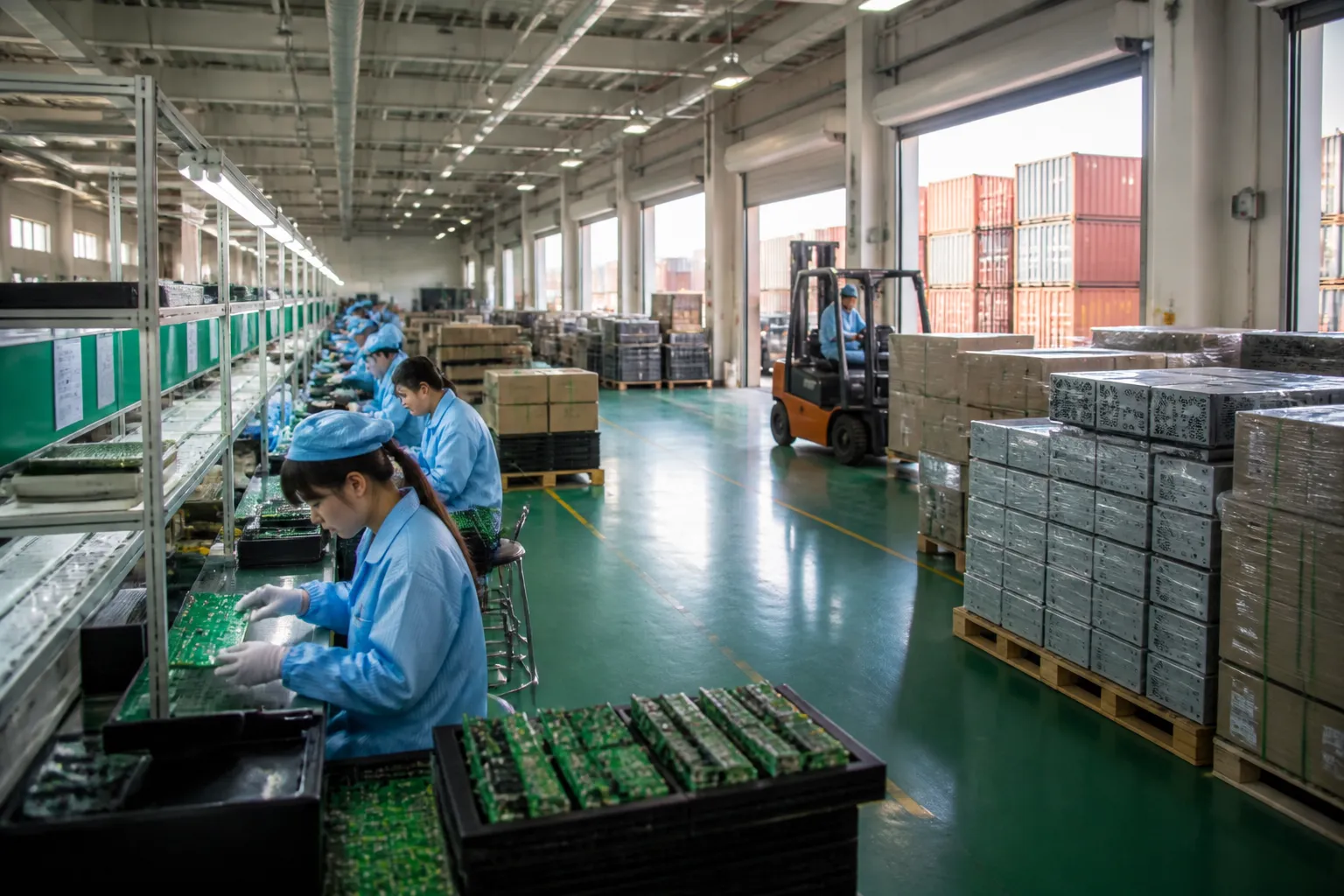
China's Pearl River Delta, Yangtze River Delta, and inland manufacturing hubs collectively represent the world's densest concentration of OEM and ODM capability. Factory clusters mean that a single sourcing trip or platform query can yield suppliers for electronics, textiles, packaging, and tooling — often within a 200 km radius. The depth of specialization built over 30 years of export manufacturing is genuinely difficult to replicate elsewhere at comparable price points.
The operational challenge historically has been friction: finding the right factory, verifying it, communicating specs across language barriers, and maintaining quality over repeated orders. This is exactly where AI-native platforms like Link4a (链上科技) close the gap. Their Match engine surfaces verified Chinese suppliers in an average of 3 seconds — replacing weeks of trade show sourcing or directory browsing. Their Inbox product handles 24/7 multilingual inquiry management so language gaps don't stall procurement cycles.
Alternatives Overview
"Alternatives" in this context means any sourcing model that does not involve buying products produced in another country — including:
- Domestic manufacturing: Products made and bought within the same country
- Nearshoring: Sourcing from geographically proximate countries (e.g., Mexico for US buyers, Eastern Europe for EU buyers, Vietnam for some APAC buyers)
- Reshoring: Moving previously offshored production back to the home country
- Regional sourcing hubs: ASEAN, South Asia, or MENA alternatives to Chinese supply
Who alternatives are built for:
- Brands with strict IP protection requirements where factory audits need to be hands-on
- Companies under government mandates or ESG policies limiting offshore sourcing
- Products where logistics cost or time sensitivity erases the unit-cost advantage of importing
- Businesses rebuilding supply chain resilience after single-source concentration risk
Standout strengths: Shorter lead times are the primary advantage. Domestic or nearshore suppliers can often turn around reorders in one to three weeks, versus the four-to-twelve week window typical of ocean-freight-dependent import chains. Compliance documentation is also simpler when both buyer and supplier operate under the same regulatory jurisdiction.
Feature-by-Feature Breakdown
Cost & Pricing
Importing wins on unit economics for most manufactured goods categories. Labor cost differentials between China and Western markets remain substantial, and the accumulated tooling, supply chain depth, and economies of scale in Chinese export manufacturing compress prices further. For OEM buyers, Chinese factories often absorb tooling amortization across large runs in ways domestic shops cannot.
Domestic and nearshore alternatives carry higher labor overhead but can eliminate tariff exposure and reduce freight costs significantly. Post-2018 tariff regimes on Chinese goods have narrowed (but rarely closed) the unit cost gap in categories like electronics and apparel for US buyers.
Buyer action: Request a landed-cost comparison, not just FOB pricing. Factor in freight, duties, tariffs, and compliance testing costs before comparing quotes across sourcing models.
Lead Times & Production Capacity
Alternatives lead here. Domestic manufacturing and nearshore suppliers operate within days-to-weeks lead times that importing simply cannot match when ocean freight is involved. For trend-sensitive categories — fashion, seasonal goods, TikTok-driven demand spikes — this matters enormously.
Importing excels on capacity ceiling. A Chinese OEM factory running three shifts can absorb order volumes that would overwhelm most domestic suppliers. For buyers scaling from 5,000 to 500,000 units, international sourcing scales with less friction.
Supplier Verification & Reliability
This has historically been importing's weakest point. Verifying a factory 10,000 km away requires third-party audits, certifications review, and reference checks — a process that could take weeks through traditional channels.
Platforms like Link4a's Match engine compress supplier matchmaking to seconds, surfacing factories from a verified pool of 300+ manufacturers across categories. For buyers who have previously lost months to unvetted factory relationships, this is a material operational improvement.
Domestic sourcing offers easier in-person audits and tighter legal recourse, but the supplier pool is shallower.
Quality Assurance & Certifications
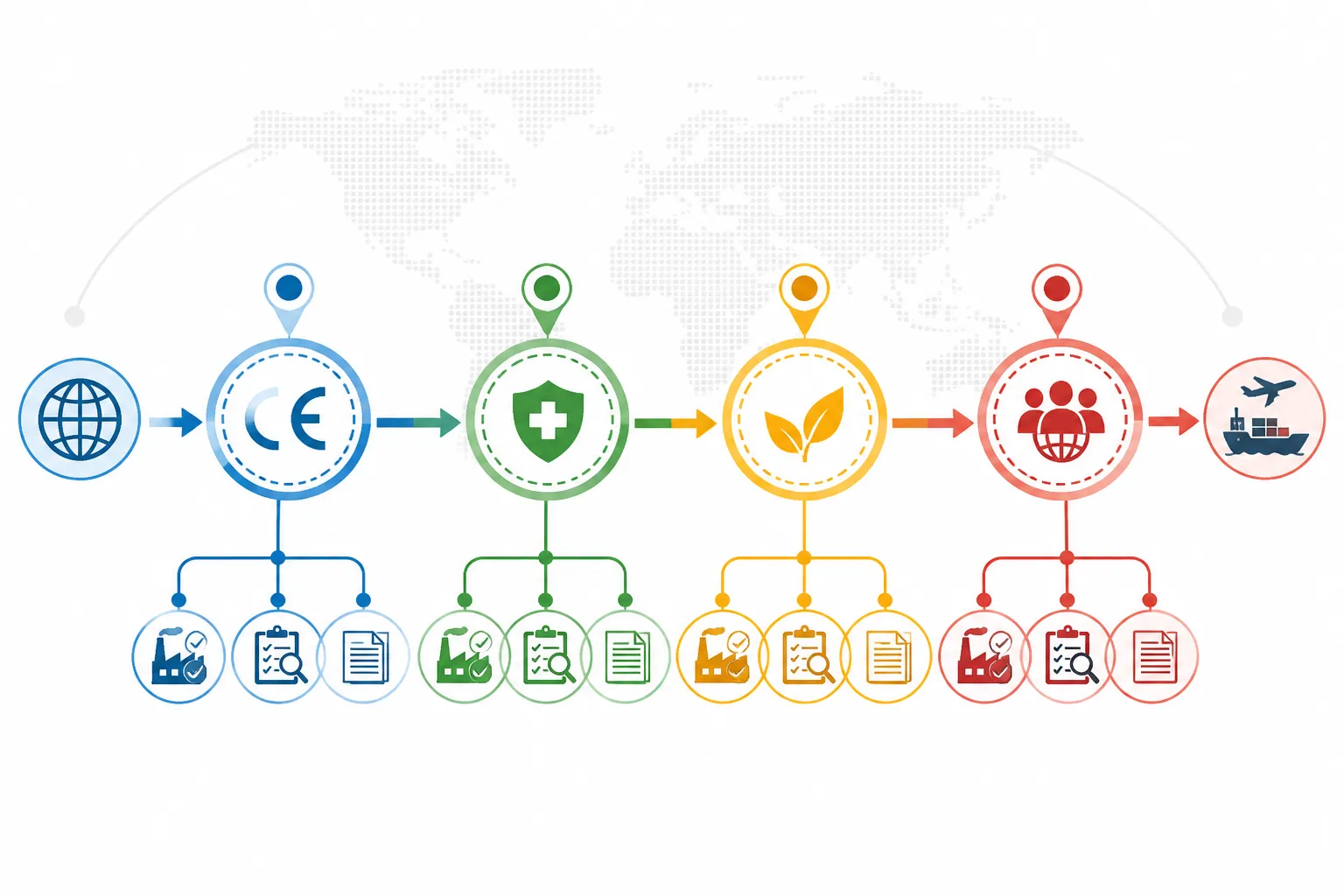
Both models can achieve equivalent quality outcomes; the processes differ. Importing requires proactive specification of standards, pre-shipment inspection protocols, and certification verification. Common certifications to request from Chinese suppliers include CE, RoHS, BSCI, ISO 9001, and FDA registration depending on product category.
Domestic suppliers typically hold local certifications by default, reducing the documentation burden. Nearshore suppliers in established manufacturing regions (Vietnam, Mexico, Poland) have increasingly matured their compliance infrastructure to meet the same international standards as Chinese counterparts.
Ask your supplier: What third-party certifications does the factory hold? What is the inspection protocol for each production run? Can you access audit reports?
Communication & Operational Workflow
This is where the friction of international sourcing becomes tangible. Language barriers, time zone differences, and the challenge of conveying technical specifications across distance have historically caused costly errors.
AI-native platforms directly address this. Link4a's Inbox provides 24/7 multilingual inquiry management — Chinese factory owners can respond to English, Spanish, or Arabic-language RFQs without delay, and overseas buyers get responses within business hours regardless of time zone. For sourcing operators managing dozens of supplier relationships simultaneously, this closes a real operational gap.
Domestic sourcing has no language or time zone friction by definition. This advantage matters most in early-stage supplier development where miscommunication risk is highest.
Scalability & Growth Infrastructure
For brands actively scaling international supply chains, the infrastructure layer matters as much as the factory itself. Exporters and overseas buyers who use Link4a's Sitebox can deploy brand-ready independent sites in under 30 minutes — critical for Chinese suppliers building DTC export presence, and equally useful for overseas buyers who need a supplier's verified storefront as part of due diligence. The platform's Reach engine adds omni-channel content, SEO/GEO traffic, and outbound lead mining in a single workflow — replacing what would otherwise require a stack of disconnected tools.
Domestic sourcing has no equivalent platform layer — buyers work directly with suppliers through conventional procurement channels.
Pros and Cons
Importing (International Sourcing)
Pros:
- Lower unit costs across most manufactured goods categories
- Deep OEM/ODM specialization and tooling capability
- High production capacity ceiling — scales with volume without friction
- Broad product range and category coverage
- AI platforms now compress supplier discovery and communication gaps significantly
Cons:
- Longer lead times due to ocean freight
- Tariff and duty exposure depending on country of origin and product category
- Requires proactive due diligence on supplier verification
- Language and time zone friction without the right infrastructure
- Supply chain concentration risk if single-sourced
Domestic & Nearshore Alternatives
Pros:
- Short lead times — critical for trend-sensitive categories
- Easier regulatory compliance and IP protection
- Simpler supplier audits and dispute resolution
- No tariff exposure (domestic); reduced freight cost
- Lower supply chain concentration risk
Cons:
- Higher unit costs — labor and overhead compress margins
- Narrower supplier pool and product range
- Lower production capacity ceiling
- Limited OEM/ODM depth for complex manufactured goods
- Reshoring economics rarely pencil out for commodity categories
When to Choose Importing
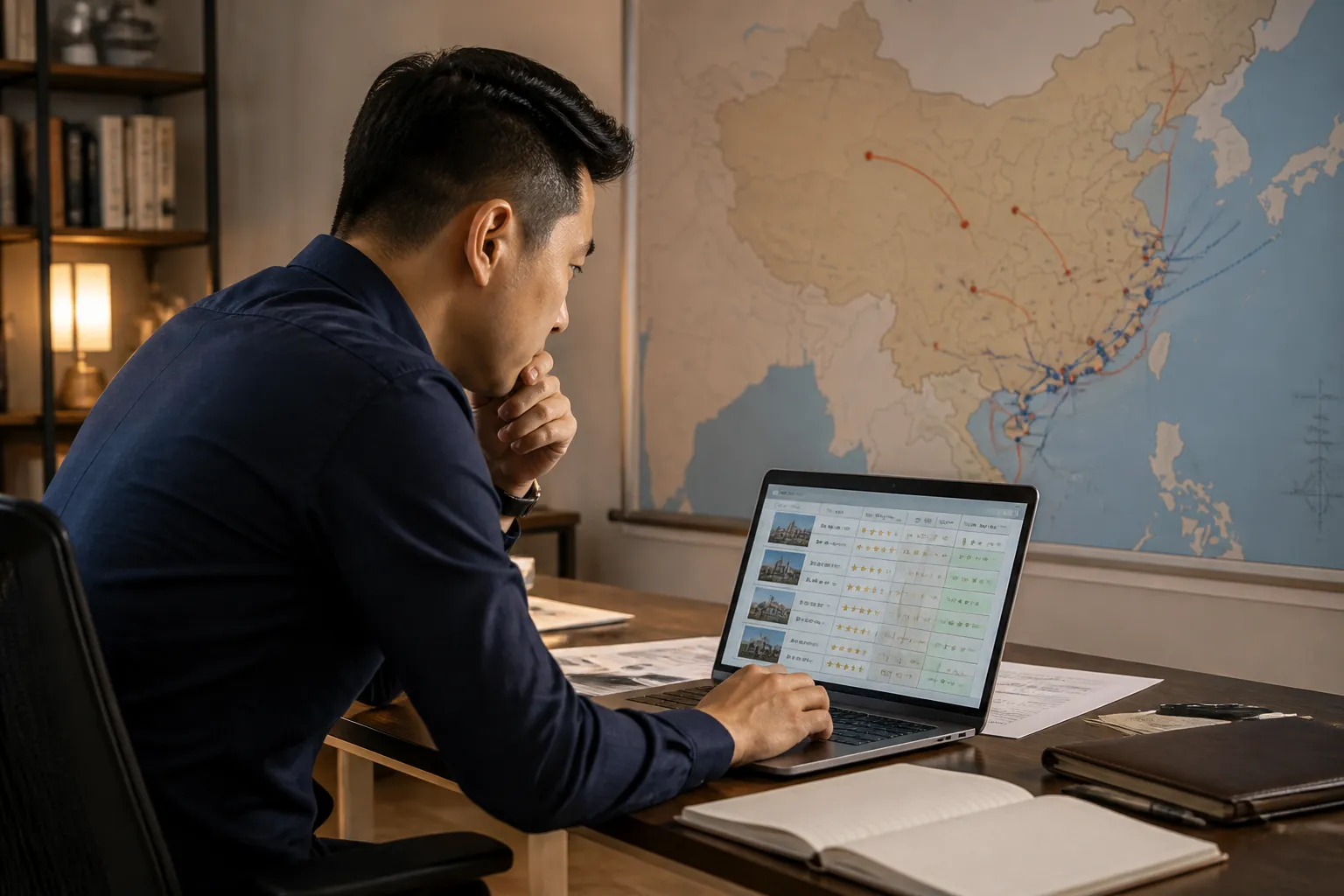
Choose international sourcing — buying products produced in another country — when:
- Unit economics are the primary driver. If your margin model depends on hitting a target COGS and domestic alternatives exceed it by more than 20–30%, importing is the default rational choice.
- You need OEM or ODM capability. Custom tooling, mold development, private-label manufacturing — Chinese factories have unmatched depth here.
- Volume justifies the lead time. If you're placing orders 90+ days ahead with reasonable demand visibility, ocean freight lead times become manageable.
- You're building a multi-SKU catalog. The breadth of the Chinese manufacturing ecosystem lets sourcing operators consolidate suppliers across categories in ways domestic markets cannot support.
- You have (or can access) supplier verification infrastructure. Platforms like Link4a's Match reduce the historically high discovery and vetting costs, making importing accessible to operators who previously couldn't absorb that overhead.
When to Choose Alternatives
Choose domestic manufacturing or nearshore sourcing when:
- Speed-to-market is existential. TikTok trend cycles, seasonal spikes, or rapid replenishment needs may not tolerate 60-day ocean freight windows.
- IP protection is non-negotiable. Novel formulations, proprietary designs, or pre-patent products may warrant domestic production despite the cost premium.
- Regulatory mandates apply. Government procurement requirements, Buy America provisions, or ESG supply chain policies may require domestic or regional sourcing.
- Your freight cost erases the unit-cost advantage. Heavy, bulky, or low-value-density goods may reach landed-cost parity with domestic alternatives once freight is factored in.
- You're managing supply chain resilience after a concentration incident. Single-source dependency on any offshore supplier is a risk management problem as much as a cost optimization problem.
Final Verdict
Buying products produced in another country is known as importing — and for the majority of B2B procurement scenarios involving manufactured goods, it remains the structurally superior model on cost, capacity, and category breadth. The historical friction points of international sourcing (supplier discovery, verification, communication, workflow management) are now directly addressable through AI-native platforms rather than headcount or expensive sourcing trips.
The case for alternatives is real but narrower: it applies most cleanly when speed, IP sensitivity, regulatory requirements, or freight economics shift the landed-cost calculus. These are legitimate buyer scenarios, not edge cases — but they represent a subset of the market, not the default.
For overseas buyers building or scaling cross-border sourcing from China: the infrastructure question matters as much as the factory selection. A verified supplier accessed through a matchmaking engine, communicated with through AI-powered multilingual inquiry tools, and transacted through a purpose-built export commerce platform is a materially different procurement experience than cold-contacting factories from a directory.
Ready to Source Verified Chinese Suppliers?
If you're evaluating international sourcing and want to compress the discovery-to-quote timeline, Link4a connects overseas buyers directly to 300+ verified Chinese OEM/ODM factories across categories — with average supplier matching in 3 seconds through the Match engine, and 24/7 multilingual inquiry handling through Inbox.
Get MOQ & Pricing | Request a Verified Supplier Match https://link4a.com
Bring your product spec, target COGS, and volume forecast. A procurement conversation starts with the right supplier introduction.
Article reflects sourcing market conditions as of mid-2026. Tariff rates, freight costs, and certification requirements vary by product category and country of origin — verify current figures with your logistics and compliance advisors before finalizing sourcing decisions.