Canada China Trade Agreement: What U.S. Importers Need to Know in 2026
Canada China Trade Agreement: What U.S. Importers Need to Know in 2026
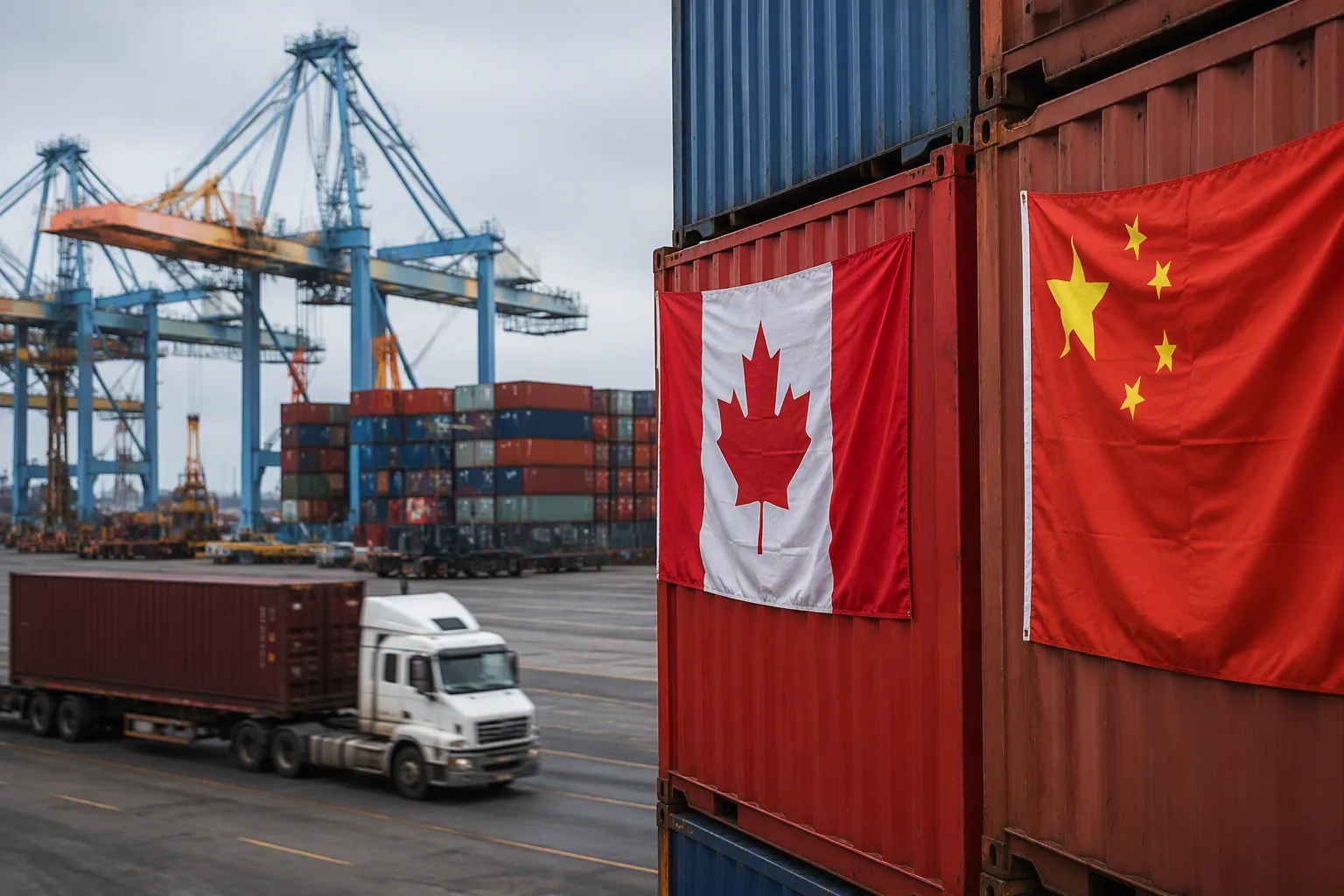
The Canada-China trade agreement is a bilateral framework that directly reshapes sourcing costs, tariff exposure, and supply chain routing for U.S. importers who move goods through North America. As of early 2026, Canada announced a Preliminary Joint Arrangement on Addressing Bilateral Economic and Trade Issues with China — a development that U.S. buyers cannot afford to ignore. For a broader look at how this intersects with direct U.S.-China trade policy, see our guide on the US China trade deal.
Canada-China Trade Agreement in the United States — Market Overview
The bilateral trade relationship between Canada and China has a longer history than most buyers realize. The foundational Trade Agreement between the Government of Canada and the Government of the People's Republic of China was signed at Peking on October 13, 1973 — the signatures of Pierre Elliott Trudeau and Chou En Lai making it one of the earliest formal trade frameworks to bridge North America and mainland China. That 1973 deal granted each country most-favoured-nation (MFN) treatment on customs duties, taxes, and import/export formalities — a baseline that still echoes in how Canadian importers structure their sourcing.
For U.S. buyers, the relevance is structural rather than direct. Canada is not party to the United States–Mexico–Canada Agreement (USMCA) on behalf of its China trade, so goods moving China → Canada → U.S. do not automatically inherit USMCA duty treatment. What the Canada-China arrangement does do is influence where factories choose to gate their North American distribution — warehousing in Vancouver or Montreal versus Long Beach or Houston. Industry estimates suggest a meaningful segment of U.S. e-commerce sellers, particularly DTC store owners and Amazon FBA operators, now evaluate Canadian fulfillment hubs as a secondary routing option when U.S. Section 301 tariffs on Chinese goods make direct import margins too tight.
The buyer profiles tracking this deal most closely fall into three groups: small-to-mid-sized importers watching for tariff arbitrage windows, larger U.S. brands that source through Canadian subsidiaries, and marketplace sellers whose thin-margin products become viable or unviable based on a few percentage points of landed cost. All three groups need accurate, current intelligence — not marketplace guesswork.
What's Specific About the United States
The U.S. regulatory environment for goods originating in China is distinct from Canada's, and the gap widened considerably between 2024 and 2026. Section 301 tariffs — administered by the U.S. Trade Representative (USTR) — apply layered duties on hundreds of Chinese product categories, on top of standard MFN rates set by U.S. Customs and Border Protection (CBP). A sourcing deal that works cleanly for a Canadian importer may carry an additional 7.5% to 25% (or higher, depending on the HTS code) for the same buyer operating under a U.S. entity.
Sanctions also show up here. The U.S. maintains a robust set of trade controls under the Office of Foreign Assets Control (OFAC) and the Bureau of Industry and Security (BIS). Certain Chinese manufacturers — particularly in semiconductors, surveillance technology, and some textiles — appear on entity lists or are subject to the Uyghur Forced Labor Prevention Act (UFLPA), which creates a rebuttable presumption of forced labor for goods from Xinjiang. A Canadian importer may clear goods through CBSA without issue, then find those same goods blocked at the U.S. border if they are subsequently imported by a U.S. entity. U.S. buyers routing through Canada should not assume Canadian clearance equals U.S. clearance.
Payment norms in the U.S. for China-sourced goods typically run on 30% T/T deposit against purchase order, with the remaining 70% due against bill of lading — though many factories require full payment before production for new buyers. The 1973 agreement specified that payments could be made in Canadian dollars, Chinese renminbi, or "other mutually acceptable freely convertible currencies." For U.S. buyers, USD wire transfers remain the practical standard; Chinese factories quote almost universally in USD regardless of which North American market is the final destination.
Cultural and language norms matter too. U.S. buyers tend to expect English-only communication and brief, direct emails. Chinese factory contacts often communicate through WeChat, send voice messages, and expect a relationship-building phase before committing on price. That gap in communication style is one of the most common points where orders fall apart before they start.
How to Choose a Canada-China Trade Agreement Provider in the United States
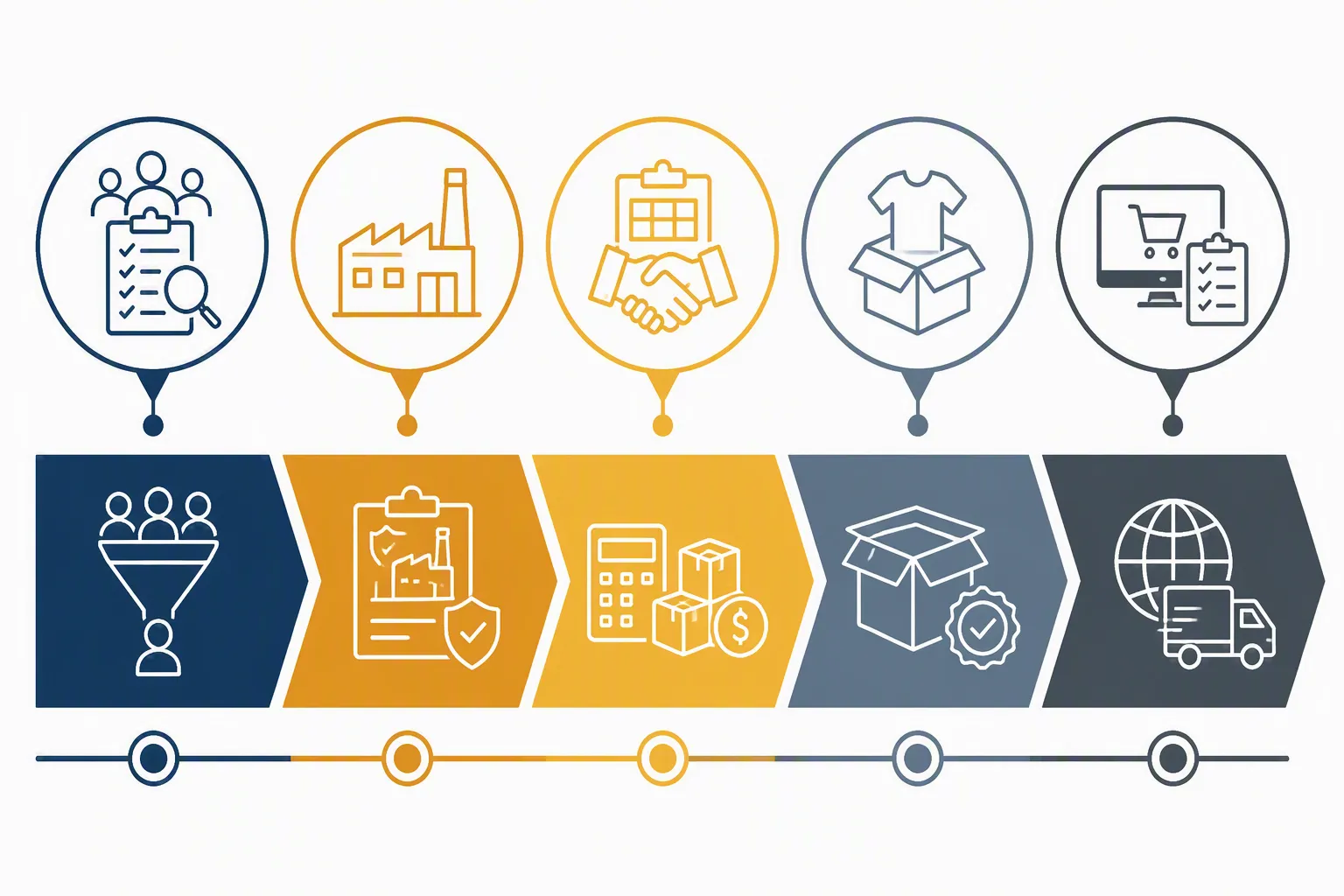
"Provider" here means something specific: a sourcing partner or managed export operator who can navigate the China-side of the supply chain on your behalf, not a freight forwarder or customs broker. The evaluation criteria that matter for U.S.-based buyers differ from what a Canadian buyer would prioritize.
Verifiable track record, not promises. Any sourcing partner can claim they rank suppliers and check factories. Fewer can show you live proof. Link4a, a China sourcing partner and managed export operator, publishes the actual search queries where their client store pages rank — a sweep of 60 product pages on August 31, 2026 found 17 ranking first on U.S. Google and 31 in the top 10. That kind of verifiable ranking record is worth more than a deck full of logos.
Time-zone and language coverage. A sourcing partner based in China operating purely on China Standard Time (CST, UTC+8) puts factory communication 13–16 hours ahead of U.S. Eastern time. For order-critical questions — a production hold, a shipment delay, a quality defect caught mid-run — that lag is costly. Look for partners who maintain coverage during U.S. business hours, or who operate with multilingual staff who can escalate to the factory in Mandarin and report back to you in English within a single business day.
Commission-only versus retainer models. Some sourcing agents charge monthly retainers regardless of whether an order closes. Others, like Link4a, charge commission only on closed orders — nothing before a deal is done. For U.S. buyers testing a new product category or managing unpredictable order volumes, the commission-only model removes the fixed-cost risk.
Factory vetting depth. Ask specifically: what does vetting include? Business license verification, production capacity audit, and sample review are table stakes. The better partners cross-reference factories against publicly available watchlists relevant to UFLPA compliance — because a factory that passes a Canadian inspection may still create problems at a U.S. port of entry.
For a detailed walkthrough of the sourcing process specific to importers operating under both Canadian and U.S. supply chains, see Canada-China Trade Deal 2026: The Complete Buying Guide for Importers.
Pricing in the United States
Pricing for sourcing services in the U.S. market reflects the complexity added by Section 301 tariffs and compliance requirements. A few reference points worth understanding:
Sourcing agent commissions typically run 5%–10% of the FOB (Free on Board) factory price, though this varies by product category and order volume. Commission-only structures mean no upfront cost — you pay when the order ships.
Tariff impact on landed cost is the dominant variable most U.S. buyers underestimate. A product with a 20% Section 301 tariff on top of a standard 4% MFN rate changes the landed cost math entirely. Before fixating on factory price, U.S. buyers should classify their goods under the correct Harmonized Tariff Schedule (HTS) code and look up the applicable Section 301 rate on the USTR's published lists.
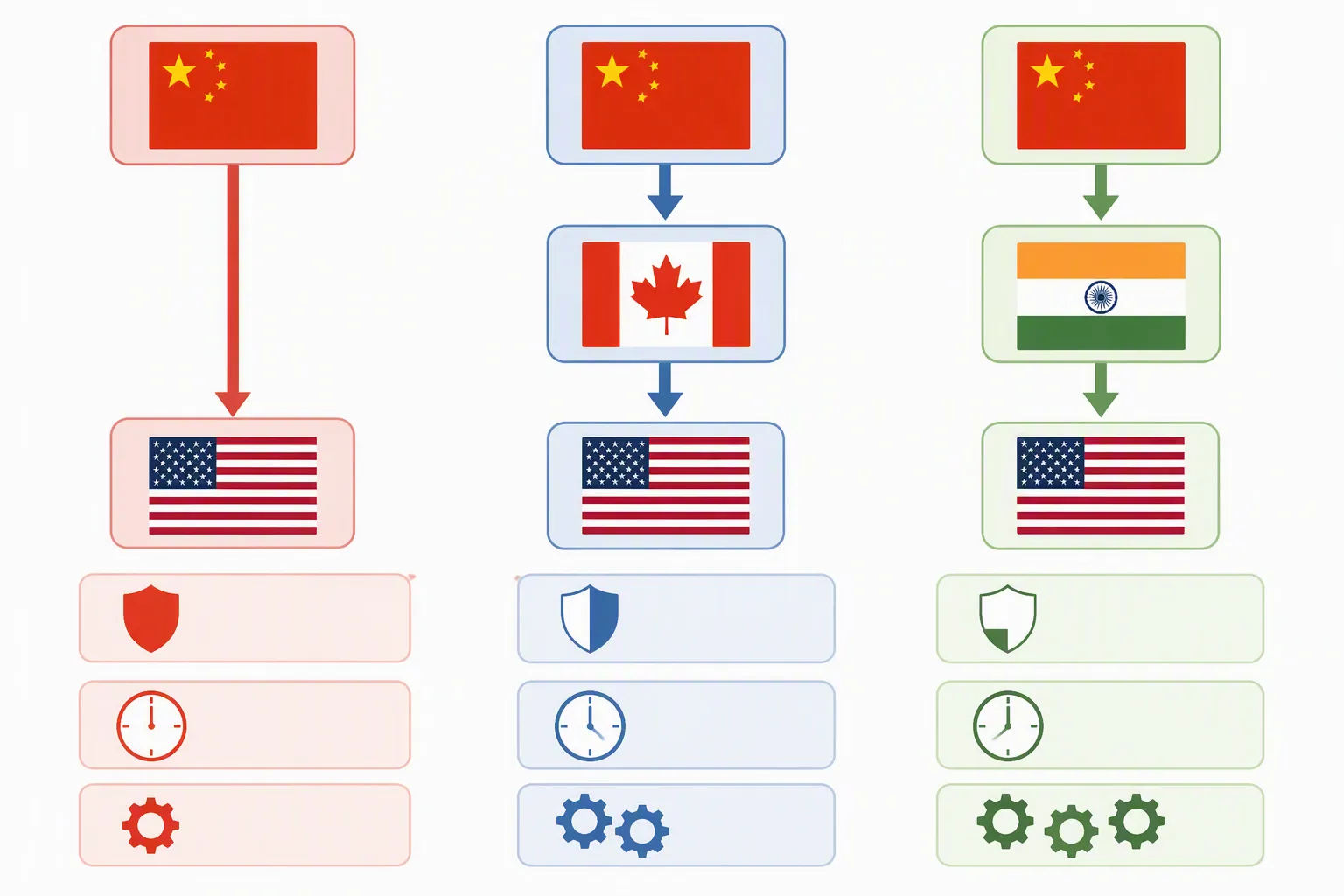
Canadian routing costs. Some U.S. buyers explore a Canada-first import model — bringing goods into Canada under lower or zero tariffs, then transshipping to the U.S. This is legally constrained. Goods must genuinely satisfy rules of origin to qualify for USMCA treatment, and CBP actively investigates transshipment schemes. The cost of a failed customs audit — seizure, penalties, reputational damage with CBP — typically exceeds any tariff savings.
Sample costs run $50–$300+ per unit depending on product complexity, plus international courier fees. Some factories absorb sample cost if a production order follows; others require full payment upfront. Ask your sourcing partner to clarify this before committing.
Common Challenges for U.S. Buyers
Tariff Classification Errors
The most expensive mistake U.S. importers make is self-classifying products under a favorable HTS code without a formal binding ruling. CBP can retroactively reclassify goods and issue back-duty bills. The correct approach: request a Customs Ruling (known as a "ruling letter") through CBP's CROSS database before your first shipment.
Supplier Reliability Across Borders
Factory show quality on a sample does not guarantee production consistency. A factory producing 500 units for a Canadian buyer on a Tuesday is running 10,000 units of someone else's order on the Monday your production was supposed to start. U.S. buyers operating without on-the-ground oversight in China have no visibility into this. A managed sourcing partner with actual factory relationships — not just a Alibaba profile — can escalate and hold production schedules.
Belt and Road Logistics Disruption
China's Belt and Road Initiative (BRI) has reshaped freight routes across Central Asia and Southeast Asia, concentrating shipping capacity on certain corridors while leaving others underserved. U.S. buyers sourcing from inland Chinese provinces — Chengdu, Wuhan, Zhengzhou — sometimes find that rail freight under BRI connections is faster than ocean freight to a Chinese coastal port, then onward to the U.S. West Coast. Understanding this routing option can cut lead times by 5–10 days in some scenarios.
Communication Gaps and Specification Drift
Specifications that seem clear in English become ambiguous when translated internally by factory staff. Color tolerances, material grades, packaging dimensions — these drift between sample and production run if not locked in writing with agreed-upon reference samples held by both sides. U.S. buyers relying on marketplace listings to communicate specs are particularly exposed to this risk.
Sanction and Compliance Blind Spots
The U.S. maintains more aggressive trade restrictions on Chinese entities than Canada does. The UFLPA, entity list designations, and BIS export controls create a compliance layer that Canadian sourcing partners are not automatically versed in. U.S. buyers should verify that their sourcing partner understands U.S.-specific requirements — not just Canadian customs clearance norms.
India as an Alternative or Complement
Some U.S. buyers are evaluating India as a manufacturing alternative, particularly for textiles, leather goods, and light manufacturing — categories where India's trade relations with the U.S. are comparatively cleaner. China still dominates on cost, tooling capability, and speed for most product categories, but India's manufacturing base is expanding. A well-connected sourcing partner should be able to give you an honest comparison, not a reflexive push toward China for every product.
Frequently Asked Questions (United States-Specific)
Does the Canada-China trade agreement apply to U.S. importers?
Not directly. The agreement governs bilateral trade between Canada and China. U.S. importers are subject to U.S. trade law — primarily the Harmonized Tariff Schedule, Section 301 tariffs, and import regulations administered by CBP. However, the Canada-China arrangement indirectly affects U.S. buyers who route goods through Canadian entities or who compete with Canadian importers in the same product categories. For a deeper breakdown of these indirect impacts, read our analysis of the China and Canada trade agreement.
What was the original Canada-China trade deal, and is it still in force?
The foundational agreement was signed on October 13, 1973 and granted each country most-favoured-nation treatment on duties and customs formalities. That framework has evolved through subsequent bilateral arrangements, including the January 2026 Preliminary Joint Arrangement and the March 2026 announcement of renewed market access. The core MFN obligations from 1973 remain the baseline.
Can I legally route Chinese goods through Canada to avoid U.S. tariffs?
No — not without genuinely satisfying USMCA rules of origin. CBP treats transshipment (moving goods through an intermediate country purely to avoid tariffs without substantive transformation) as customs fraud. The penalties include seizure, back-duties, and potential criminal referral. This is a gate that CBP actively monitors.
What does a China sourcing partner actually do that I can't do myself on a marketplace?
A sourcing partner shortlists factories, vets them against quality and compliance criteria, negotiates MOQ and price, coordinates samples, manages production communication in Mandarin, and handles repeat ordering. What you cannot replicate on a marketplace listing: a factory relationship that lets you hold a production slot, escalate a defect mid-run, or get an honest answer about capacity. The difference shows up in the second and third orders, not the first sample.
How do U.S.-China trade relations affect sourcing decisions I make today?
Relations remain complicated. The 2026 Canada-China deal shows that bilateral arrangements can shift quickly — what looks like a stable tariff environment can change within a single budget cycle. The practical response is to qualify multiple factory options, understand your HTS classification before you're under pressure, and work with a sourcing partner who can move quickly when conditions change.
What payment methods should I expect when buying from Chinese factories as a U.S. importer?
USD wire transfer (T/T) is the dominant payment method for U.S.-based buyers working directly with Chinese factories. PayPal and credit card are available with some trading companies but typically at a cost premium. Letters of credit (LC) are used for larger orders where both sides want payment protection. For new factory relationships, 30% deposit on purchase order with 70% against bill of lading is a common structure.
How does Link4a handle buyers based in the U.S. specifically?
Link4a operates per-language storefronts with dedicated keyword research for each market — U.S. English pages are built around U.S. search behavior, not translated from a single English post. Buyer conversations are handled on the factory's behalf, with replies drafted from the factory's actual in-stock catalogue. For U.S. buyers evaluating sourcing options, see also Canada China Trade Deal: What U.S. Importers Need to Know in 2026 for a deeper look at the regulatory and cost considerations specific to this market.
Get Started in the United States
The Canada-China trade agreement news in early 2026 is a signal, not an action item on its own. The action items for U.S.-based importers are more concrete: classify your products correctly under HTS, understand which Section 301 lists apply to your categories, and stop relying on marketplace listings to manage factory relationships.
If you're sourcing from China — or evaluating whether to start — the next step is a conversation with a sourcing partner who can show you verifiable results, not a pitch deck. Link4a works on a commission-only basis for factories and on a transparent partnership model for buyers: supplier shortlisting, factory vetting, MOQ and price negotiation, sample coordination, and multilingual communication with the factory handled end to end.
The 1973 Canada-China trade framework was built to last — it came into force on the date of signature and was designed to be renewed. Your sourcing strategy should be built the same way: durable, verifiable, and not dependent on one platform's algorithm staying favorable next quarter.