Canada-China Trade Deal 2026: What U.S. Importers Must Know Now
Canada-China Trade Deal 2026: What U.S. Importers Must Know Now
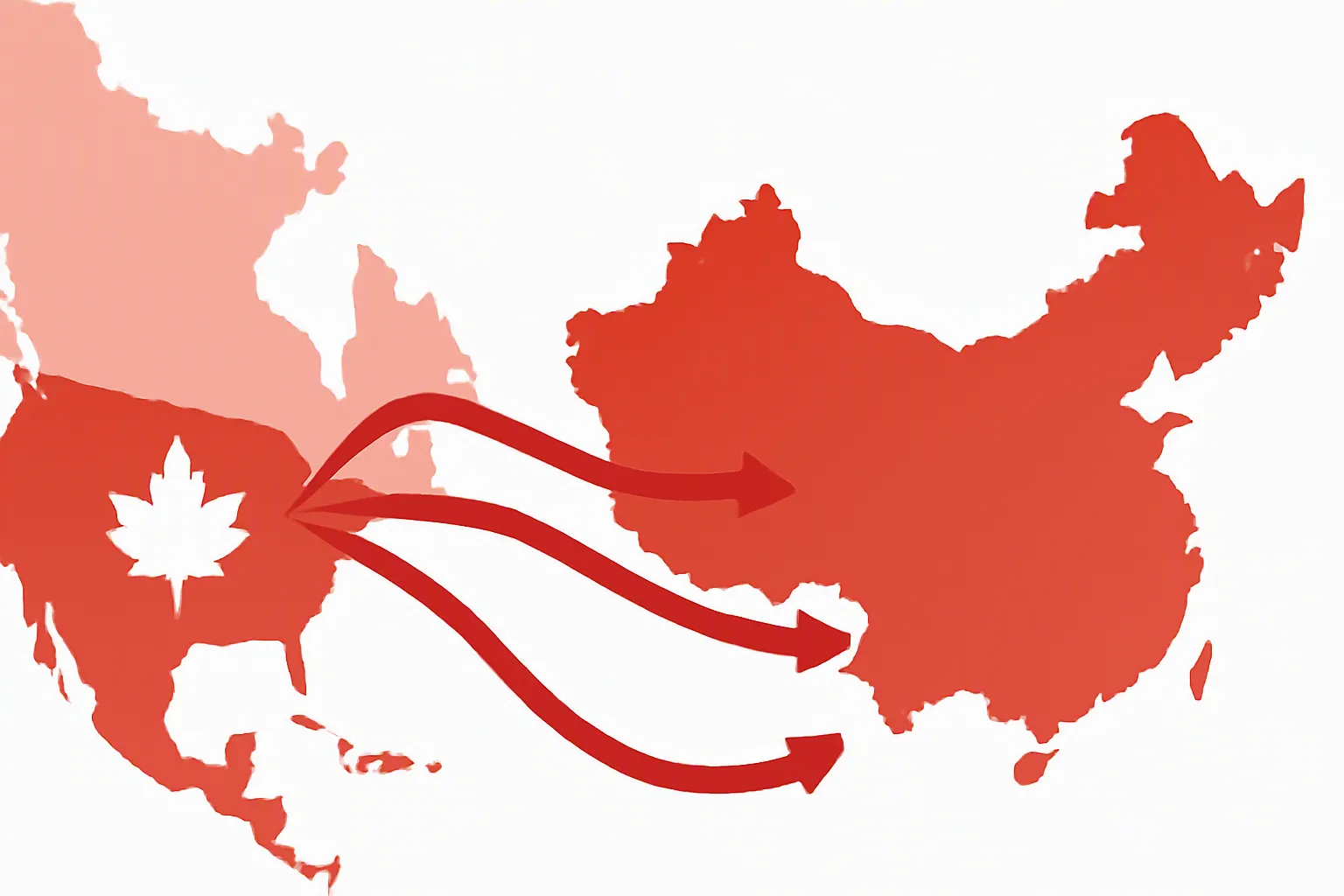
Canadian Prime Minister Mark Carney's office announced a landmark trade deal with China in January 2026, and U.S. importers felt the impact immediately. The deal — described by the IBA as "not a free-trade agreement but rather an agreement in principle on certain goods" — reshapes sourcing dynamics across North America and forces American buyers to reassess their China supply chains with fresh urgency.
Canada and China Trade Deal in the United States — Market Overview
The Canada-China deal landed at a precise geopolitical inflection point. After close to 18 months of trade war between Ottawa and Beijing, the normalization of their commercial relations sends ripple effects straight across the U.S. border. For American buyers, Canada functions as both a competing buyer market and — in some verticals — a transit corridor. That means pricing benchmarks, supplier allocation windows, and factory negotiating posture all shift when a major G7 economy reengages Beijing at scale.
U.S. import demand from China remains one of the largest bilateral trade flows on earth. Electronics, apparel, jewelry, industrial components, and consumer goods are deeply tied to Chinese manufacturing. When Canada formalizes renewed market access and frames it as a strategy to "catalyse massive new levels of investment" — as the Canadian government press release stated on 4 March 2026 — Chinese factories face competing allocation demands from a new direction. That matters for U.S. buyers who assumed they held implicit priority with key suppliers.
Canada's stated goal was diversification — reducing dependence on the American market. That motive should register clearly with U.S. importers: your northern neighbor is actively competing for Chinese factory attention that American buyers have long taken for granted. The shift in factory allocation, sample capacity, and pricing leverage is real, even if it develops gradually over 2026 and into 2027.
What's Specific About the United States
Three regulatory frameworks define how U.S. buyers must approach China sourcing in the current environment: the Uyghur Forced Labor Prevention Act (UFLPA), entity list restrictions managed by the Bureau of Industry and Security (BIS), and tariff schedules administered by U.S. Customs and Border Protection (CBP). No other market faces this exact combination of enforcement postures.
On tariffs, the legal architecture shifted materially in 2026. The U.S. Supreme Court ruled that the International Emergency Economic Powers Act does not allow the President to implement tariffs of indefinite scope unilaterally. Following that ruling, President Trump announced a 15% global tariff rate under Section 122 of the 1974 Trade Act. IBA expert Matthew Kronby — a partner at Canadian firm Osler and member of the IBA International Trade and Customs Law Committee — characterized Canada's pivot toward Beijing as a direct response to Trump's "America First" tariff policy. The Canada-China deal announcement pointedly avoided any mention of the United States, but its timing was no coincidence.
For U.S. buyers, standard payment norms run on wire transfer (T/T), letters of credit for larger orders, and escrow-adjacent platforms like Alibaba Trade Assurance. Chinese factories now courting Canadian and U.S. buyers simultaneously may carry more negotiating confidence. Securing favorable payment structures — staged deposits with balance before shipment — requires documented, verifiable supplier relations, not marketplace assumptions.
Cultural context matters here. Chinese business culture assigns significant value to long-term commercial relations. A buyer with consistent ordering history earns more factory prioritization than a first-time buyer placing a large spot order. U.S. buyers accustomed to transactional domestic procurement often underestimate how quickly relationship capital accumulates with Chinese factories — and how quickly it can erode if a Canadian buyer with a freshly normalized government relationship shows up offering volume.
How to Choose a China Sourcing Partner in the United States
Given the Canada-China deal's implications, U.S. buyers evaluating China sourcing partnerships need tighter evaluation criteria in 2026 than they needed two years ago. Generic marketplace listings — Alibaba storefronts, trade show booth numbers, catalog PDFs — provide no protection against compliance or capacity risks.
Sanction and entity list verification. Any sourcing partner you engage must demonstrate the ability to cross-reference Chinese factories against the BIS entity list, the OFAC SDN list, and UFLPA-related Xinjiang supply chain restrictions. This is a baseline U.S. import obligation, not a value-add feature. For a complete framework, the China Sanctions: A U.S. Buyer's Complete Compliance Guide covers exactly what documentation you need at each stage of the sourcing process.
Factory vetting depth. A credible sourcing partner shows you audit documentation — business license verification, production line evidence, and historical order records — not just a reference list. In high-stakes verticals like electronics (UL certification requirements), jewelry (karatage accuracy and provenance standards), or pawn-industry resale goods (authenticity traceability), "we know a factory" is not a sufficient answer.
Time-zone coverage. U.S. buyers face a 12–15 hour gap with Chinese factories. A sourcing partner without a bilingual team member available during U.S. business hours creates operational delays that cost production slots. This risk is more acute now that Canadian buyers — facing the same gap — are competing for the same factory relationships.
Results over promises. Ask for verifiable proof, not pitch decks. Link4a publishes the actual search rankings of client product pages: a sweep of 60 product pages on a client store in August 2026 found 17 ranking first on U.S. Google and 31 in the top 10, with the specific queries published on the homepage. That kind of concrete, checkable evidence is worth more than any guarantee.
Belt and Road Initiative familiarity. The Belt and Road Initiative has expanded Chinese logistics infrastructure and pushed many Chinese factories to become multi-market exporters with experience across diverse regulatory environments. A factory with that export sophistication often has better documentation practices than one that primarily sold domestically. Ask sourcing partners whether they work with Belt and Road-era exporters who already understand multi-country compliance demands.
Pricing in the United States
China sourcing costs for U.S. buyers stack in layers: factory FOB price, ocean or air freight, import duties, customs broker fees, and domestic last-mile logistics. The Canada-China deal adds a new pressure variable to this stack — if Canadian buyers secure preferential pricing or priority allocation from key factories, U.S. buyers without locked-in supplier relationships may see price drift over the next 12–18 months.
General framework (all figures in USD):
- Import duties: The current baseline includes a 15% global rate under Section 122 of the 1974 Trade Act, with China-specific additional tariffs layered on top by product category. Always verify current rates through the CBP Harmonized Tariff Schedule online before finalizing a landed cost model — do not rely on figures from before the 2026 Supreme Court ruling.
- Ocean freight: Budget figures vary significantly by route and market conditions. Get current quotes from at least two freight forwarders before committing to a supplier's production timeline.
- Sourcing partner fees: Models range widely. Commission-only structures — where you pay nothing until an order closes — carry lower upfront risk than retainer-based models. Request a clear, written fee structure before engaging any partner.
- Samples: Factory sample costs typically range from $30 to $200+ per unit depending on complexity, plus international courier. A sourcing partner should coordinate sample ordering and negotiate sample pricing on your behalf.
For DTC store owners and online creators, landed cost is the number most importers calculate incorrectly. Build your pricing model from landed cost backward to retail — the spread between FOB and landed is where most margin surprises live.
Common Challenges for Buyers in the United States
Navigating Tariff Uncertainty After the Supreme Court Ruling
The legal basis for U.S.-China tariffs changed in 2026. Importers who built multi-year pricing models on previous tariff assumptions need to revisit those models with a customs attorney. The Section 122 framework is the current operative authority, but trade policy in this environment shifts quickly. Build buffer assumptions into your cost structure.
Supplier Reliability Under Competing Market Pressure
Chinese factories allocating production between U.S. and Canadian buyers face decisions they didn't face in 2024. Buyers without contracts, production guarantees, or active sourcing intermediaries may find themselves deprioritized when competing orders arrive. This is not hypothetical — it is the direct commercial consequence of Canada's renewed market access.
Sanction and Compliance Risk
U.S. sanctions enforcement is the importer of record's responsibility. A CBP shipment detention tied to a non-compliant factory results in goods seized, re-exported at importer cost, or destroyed. The factory does not bear this risk. The marketplace listing does not bear this risk. You do. Verify factory compliance before placing any order.
India as an Alternative — and Its Limits
Many U.S. buyers have explored India as a diversification strategy, given relatively stable U.S.-India relations and India's push to attract manufacturing investment. For textiles, pharmaceuticals, and some jewelry categories, India offers genuine alternatives. For electronics, precision tooling, and high-volume consumer goods, China's infrastructure and production scale remain difficult to match. The Canada-China deal is a data point confirming China's continued centrality to global sourcing, even as diversification pressures mount.
Communication Gaps and Quality Control
Misunderstood specifications, substituted materials, and ignored engineering changes are chronic problems for U.S. buyers sourcing without an intermediary who can communicate in Mandarin at the factory level. Time-zone differences make real-time course correction nearly impossible without an on-the-ground or bilingual partner.
Trade Show Sampling vs. Production Reality
What a factory shows at a Canton Fair booth — or on a catalog page — does not always reflect volume production quality. Independent sample ordering, milestone inspections, and documented specification agreements reduce this risk. Never skip the sample stage, regardless of urgency or the factory's confidence.
Frequently Asked Questions (United States-Specific)
Q: Does the Canada-China trade deal directly change U.S. tariffs on Chinese goods?
No. The Canada-China agreement is a bilateral deal between Ottawa and Beijing. It does not modify U.S. tariff schedules, which are governed by U.S. trade law independently. The indirect effects — on factory allocation, supplier pricing posture, and Canadian buyer competition — are real but operate through market dynamics, not regulatory change.
Q: Is the Canada-China deal a full free-trade agreement?
No. The IBA characterized it as "not a free-trade agreement but rather an agreement in principle on certain goods" and described it as primarily a renormalization of the Canada-China trading relationship following several years of tensions. There are no broad tariff elimination schedules of the kind you'd see in a comprehensive FTA.
Q: What does the 2026 Supreme Court ruling mean for my import costs?
The Court ruled that IEEPA cannot support tariffs of indefinite scope. President Trump subsequently announced a 15% global tariff under Section 122 of the 1974 Trade Act. This changed the legal basis for tariff authority — meaning your customs broker and trade counsel should be re-evaluating your specific tariff exposure by HS code. Guidance from before the ruling may be stale.
Q: Should I worry about China sanctions when working with a third-party sourcing agent?
Yes, unambiguously. U.S. sanctions compliance rests with the importer of record regardless of how you sourced the goods. UFLPA obligations, BIS entity list restrictions, and OFAC rules apply to you directly. A qualified sourcing partner will assist with factory verification, but the legal responsibility is yours. The China Sanctions: A U.S. Buyer's Complete Compliance Guide is a practical starting point.
Q: How does China's Belt and Road Initiative affect U.S. sourcing decisions?
The Belt and Road Initiative expanded Chinese logistics infrastructure and pushed many Chinese manufacturers to become experienced multi-market exporters. For U.S. buyers, the practical benefit is that factories with Belt and Road-era export track records often have better documentation habits, more sophisticated freight partnerships, and broader experience with varied regulatory environments than domestically-focused factories.
Q: Is routing goods through Canada a valid workaround for U.S.-China tariffs?
No. Transshipment — routing Chinese-origin goods through Canada to sidestep U.S. tariffs — is customs fraud under CBP rules. Country-of-origin determinations are based on substantial transformation, not port of export. Goods manufactured in China that do not undergo substantial transformation in Canada remain China-origin goods subject to China-specific duties, regardless of which port they ship from. Do not attempt this.
Q: How do I evaluate whether a China sourcing partner is actually reliable?
Ask for verifiable evidence: factory audit documentation, references from current U.S. clients, sample orders before any commitment, and written terms covering MOQ, pricing, lead time, and quality standards. Commission-only fee structures — where you pay nothing until an order closes — align incentives more directly than retainer models. Sourcing partners who publish verifiable outcome data, such as actual client product rankings, provide a credibility benchmark that promises alone cannot match.
Get Started in the United States
The Canada-China deal is a signal worth acting on. It tells you that the global trading system is actively reorganizing around U.S. tariff policy, and that Canadian buyers — with a freshly normalized government-to-government relationship with Beijing — are building factory relationships right now. Waiting for supply chain stability before building a China sourcing strategy is itself a form of risk.
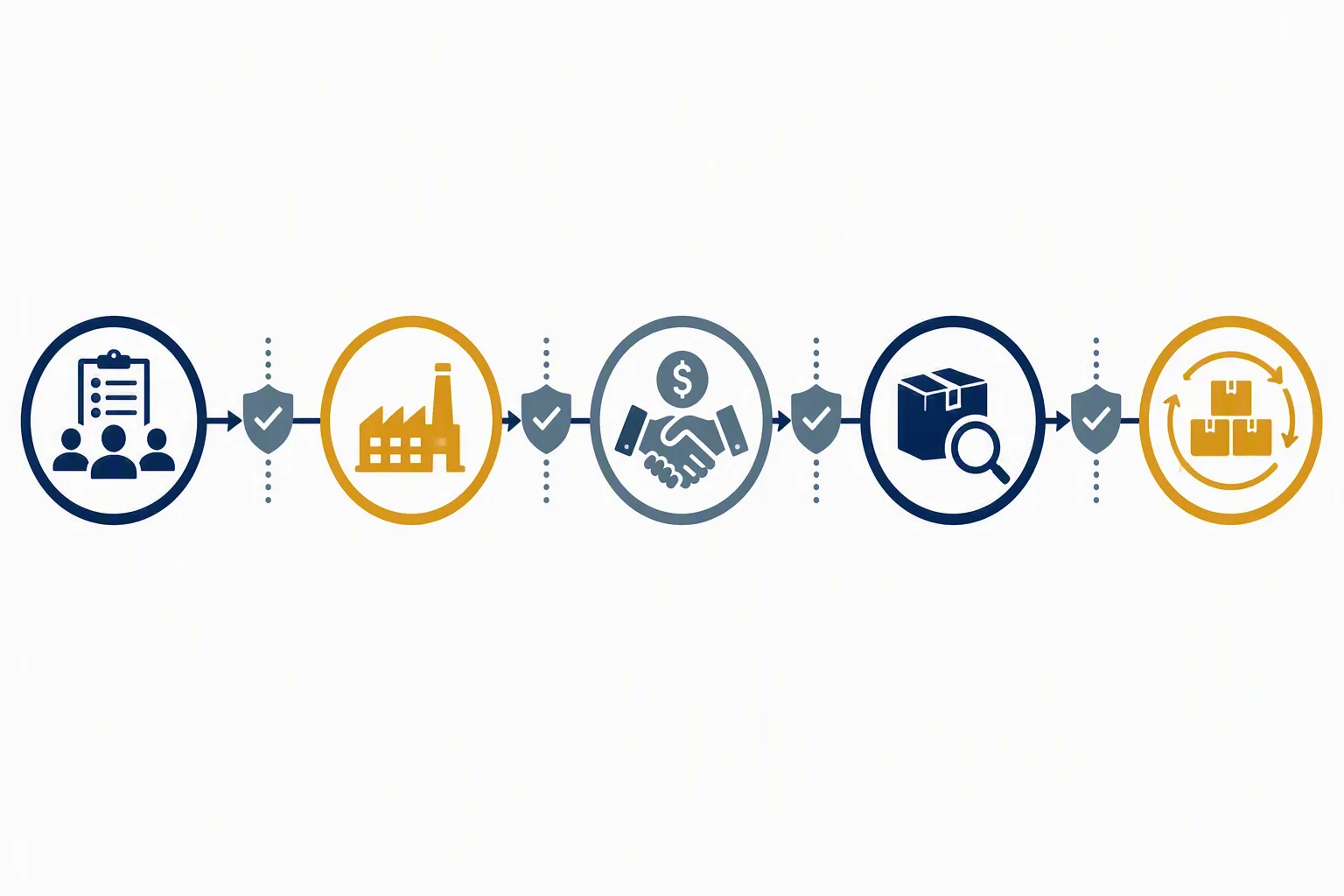
The practical move is to stop relying on marketplace listings and begin building verified supplier relationships through a partner who can negotiate, vet, and manage factory communication on your behalf. That means finding a sourcing operator who knows your product category, cross-checks factories against U.S. compliance requirements, and communicates factory-level in Mandarin — not just with you.
For a broader picture of how American buyers are navigating current China sourcing conditions, the China Trade for U.S. Buyers: What You Need to Know in 2026 covers product categories, compliance priorities, and supplier evaluation frameworks in depth.
Link4a works with overseas buyers, DTC store owners, and importers who need a dependable sourcing partner in China — one who shortlists factories, runs due diligence, negotiates MOQ and price, coordinates samples, and manages repeat ordering. For factories, Link4a provides a managed overseas storefront in six languages — including Arabic laid out right to left, with per-language keyword research rather than translated English content — and handles buyer conversations entirely on the factory's behalf. Commission is charged only on closed orders, so factories carry no upfront cost.
Start with your product category and target landed cost. Specify your compliance requirements upfront. Link4a will match you to vetted factories, handle negotiation, and coordinate your first sample order — with replies drafted from actual in-stock factory catalogues.