Canada China Trade Deal: What U.S. Importers Need to Know in 2026
Canada China Trade Deal: What U.S. Importers Need to Know in 2026
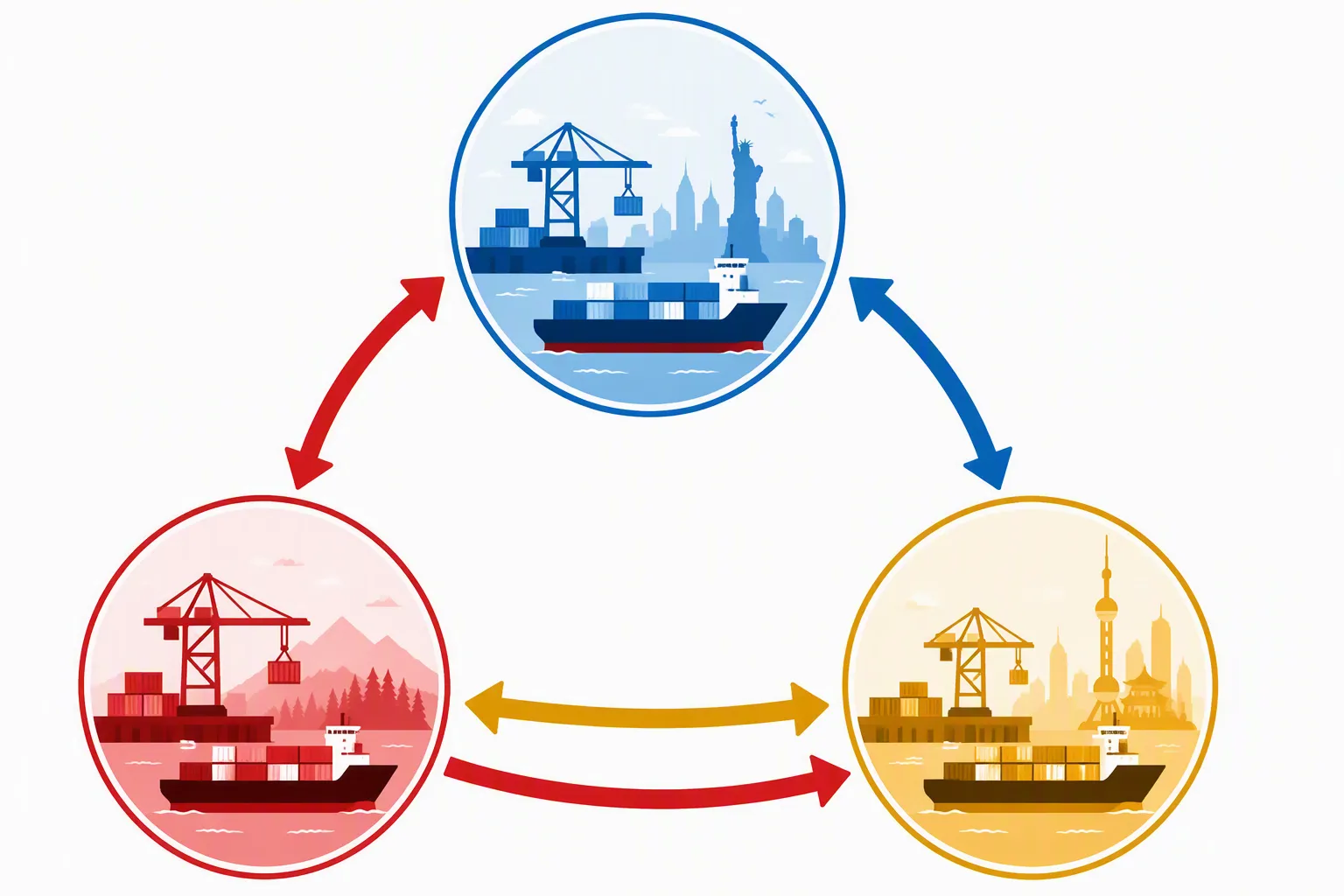
On March 4, 2026, Global Affairs Canada announced that Canada had secured renewed market access with China — a pivot that directly reshapes how American businesses think about North American supply chains, tariff arbitrage, and China sourcing strategy. For U.S. importers, DTC store owners, and online sellers who've been watching the geopolitical map shift, the Canada-China rapprochement is not a distant diplomatic story. It's a live variable in your cost structure.
Canada China Trade Deal in the United States — Market Overview
The United States sits at an unusual vantage point in the Canada-China story. American buyers are not party to the deal, but they feel its gravity immediately. Canada is the largest trading partner of the U.S. by volume, and for years American importers have used Canadian intermediaries — bonded warehouses in Vancouver, consolidators in Toronto — as part of cross-border sourcing arrangements. When Canada's bilateral relations with China improve, those routing options become more attractive and, in some cases, more competitive against direct U.S.-China sourcing channels.
The common buyer profiles showing up in U.S. sourcing conversations right now are varied. You have the mid-size hardware and home goods importer in the Midwest who is hunting for tariff relief on Section 301 categories. You have the DTC brand operator on Shopify who sources three to five SKUs from Chinese factories and needs a repeatable ordering process without the minimum order quantity pressure of Alibaba wholesale. And you have the online creator — YouTube, TikTok Shop, Amazon affiliate — who has identified a product gap and wants a vetted manufacturer, not a reseller. All three of these profiles are looking at the Canada-China trade deal and asking the same question: does this open a gate I should be walking through?
Industry estimates suggest that U.S.-China bilateral goods trade still runs in the hundreds of billions annually, and Canada's renewed access with Beijing — coming after documented periods of diplomatic friction that go back through 2024 and 2025 — creates a fresh corridor that logistically savvy buyers are starting to map. The deal does not eliminate U.S. tariffs on Chinese goods. What it does is recalibrate the competitive advantage of Canadian sourcing routes.
What's Specific About the United States
Regulatory and Compliance Environment
American importers operate under a thicker compliance stack than most. U.S. Customs and Border Protection (CBP) enforces country-of-origin rules that determine whether goods routed through Canada still attract Section 301 tariffs. The answer is usually yes: substantial transformation must occur in Canada for goods to qualify as Canadian-origin. Routing electronics or apparel through a Canadian warehouse does not change the tariff treatment. Buyers who assume otherwise are heading toward a CBP audit.
Beyond origin rules, there are sector-specific frameworks to navigate. The Uyghur Forced Labor Prevention Act (UFLPA) imposes a rebuttable presumption that goods from Xinjiang are produced with forced labor — and that presumption travels with the goods regardless of whether they enter via Canada or directly. CBP's Forced Labor Enforcement Task Force (FLETF) maintains an active entity list, and U.S. buyers are responsible for knowing whether a Chinese factory appears on it. This is not a paperwork formality. Enforcement actions have resulted in port holds and full seizure of shipments.
The Office of Foreign Assets Control (OFAC) administers sanction programs that can affect payment flows to certain Chinese entities. While broad sector-level sanctions on Chinese manufacturing are not currently in place (as of the date of this article), targeted designations exist in defense-adjacent technology sectors. Any buyer sourcing electronics components, drone hardware, or dual-use goods should run a sanction screen before committing to a supplier relationship.
Cultural and Payment Norms
U.S. buyers dealing directly with Chinese factories often encounter a friction point that the Canada-China deal does not resolve: the communication gap. Chinese factories typically operate in Mandarin, maintain relationships on WeChat, and quote in RMB or USD depending on the relationship stage. Payment terms for new buyers usually show Alibaba Trade Assurance or T/T with a 30% deposit — wire transfers remain dominant in Chinese B2B trade, not ACH or credit cards. U.S. buyers accustomed to net-30 terms and purchase orders need to set that expectation aside for the first few orders.
Time zone coverage is a real operational issue. A factory in Guangdong is 12 to 15 hours ahead of U.S. East Coast time, meaning same-day responses require either early morning or late evening availability on one side of the conversation. Many U.S. importers underestimate how much this slows sampling rounds.
How to Choose a Sourcing Partner in the United States to Navigate the Canada China Trade Deal
The term "Canada China trade deal provider" is doing a lot of work. For U.S. buyers, it practically means: who can help me take advantage of the shifting trade environment and source from China more reliably? The evaluation criteria are specific.
Supplier vetting capability. Any sourcing partner you engage should be able to show how they shortlist and vet Chinese factories — not just point you to a Alibaba Gold Supplier badge. Ask specifically: do they conduct factory audits? Do they verify business licenses and export authority? Can they show evidence of prior orders placed with a factory before recommending it? A sourcing partner who can only show you a catalog is not a sourcing partner — they are a directory.
MOQ and price negotiation track record. Chinese factories set minimum order quantities based on production runs, and those numbers can be prohibitive for small U.S. buyers. A capable sourcing partner negotiates MOQ downward, often by aggregating orders across multiple buyers or by leveraging existing factory relationships. Ask your prospective partner what MOQ reductions they have achieved for buyers in your product category and request contact references.
Multilingual, on-the-ground presence. English-only communication with a Chinese factory is workable but slow. A sourcing partner with native Mandarin speakers who can interact directly with factory production managers eliminates a layer of translation delay — and reduces the risk of specifications being misunderstood at the sample stage.
Transparency on commission and fees. Some sourcing agents charge a flat percentage of invoice value; others charge by task. The cleanest model for buyers new to China sourcing is commission-only on closed orders — no upfront retainer, no sourcing fee before you see a sample.
Link4a operates on a commission-only basis for buyers connecting to its vetted Chinese factory network. Suppliers are shortlisted, factory-vetted, and negotiations on MOQ and price are handled before a buyer commits to a sample order. Communication with the factory is multilingual — including Arabic right-to-left layout for Middle Eastern buyers — and repeat ordering is managed through the same point of contact. For U.S. buyers looking for a repeatable China sourcing process without the trial-and-error of marketplace listings, requesting a consultation at link4a.com is a concrete first step.
Pricing in the United States
Pricing for China sourcing services in the United States varies widely depending on the service model and product category. Here is a realistic breakdown of what U.S. buyers encounter:
Sourcing agent fees: Typically 5–15% of FOB invoice value, charged on each order. Some agents charge a flat project fee of $300–$1,500 for supplier identification, separate from per-order commission. For buyers placing high-volume repeat orders, negotiating a tiered commission structure (e.g., lower percentage above a certain order value) is standard practice.
Sample costs: U.S. buyers usually pay actual sample production cost plus international courier shipping. DHL or FedEx from Guangdong to a U.S. address runs $80–$200 for a small parcel, depending on weight and declared value. For complex or custom samples, production cost can range from $50 to several hundred dollars depending on the product.
Freight: Full container load (FCL) ocean freight from major Chinese ports to U.S. West Coast ports has fluctuated significantly. Industry estimates place current standard rates in the several thousand dollar range per 20-foot container, though spot rates can move sharply. Less-than-container-load (LCL) consolidation is an option for smaller shipments but adds handling fees.
Tariffs: Section 301 tariffs on Chinese goods apply across many categories at varying rates, which have been subject to active renegotiation and executive action throughout 2024–2026 (as of the date of this article). These are assessed on customs value (typically CIF) and are unavoidable for goods that do not meet UFLPA or CBP's substantial transformation standard in a third country.
The Canada-China deal does not create a tariff loophole for American buyers. What it may do, over time, is show some products' effective landed cost to the U.S. via Canadian manufacturers who source Chinese inputs — a scenario that applies mainly to value-added goods with genuine Canadian processing.
Common Challenges for U.S. Buyers
Logistics and Port Congestion
West Coast ports — Los Angeles and Long Beach — handle the majority of U.S. imports from China. Labor actions, container imbalances, and seasonal peaks (especially pre-holiday) create unpredictable transit times. U.S. buyers who commit to hard launch dates without buffer weeks built into logistics schedules routinely miss them. Experienced China sourcing partners build in explicit contingency — typically two to three weeks beyond the quoted factory lead time — before promising a U.S. arrival date.
Regulatory Complexity and Forced Labor Enforcement
The UFLPA's rebuttable presumption standard is stricter than most U.S. buyers realize. The burden of proof is on the importer to demonstrate that goods were not produced with forced labor — not on CBP to prove they were. For supply chains that include Xinjiang cotton, polysilicon, or certain chemical inputs, documentation requirements are extensive. Buyers sourcing through an agent who cannot provide full supply chain traceability are exposed.
Supplier Reliability and Quality Drift
A factory that delivers perfect samples may not deliver identical production runs three orders later. Chinese manufacturers sometimes substitute materials, shift production to a lower-cost subcontractor, or deprioritize smaller U.S. buyers when larger domestic orders fill their capacity. U.S. buyers relying on one-time audits or Alibaba reviews as their quality assurance are operating without a net. Third-party pre-shipment inspection — arranged independently from the factory — is the standard mitigation for repeat importers.
The India Factor in China Sourcing Decisions
India has emerged as a credible alternative manufacturing base for some product categories, and U.S. sourcing teams increasingly run China-versus-India comparisons. For textiles, certain electronics assembly, and pharmaceutical inputs, India's cost structure can be competitive, and the regulatory profile (no UFLPA exposure, no Section 301 tariffs) is cleaner. That said, for the breadth of product categories, factory infrastructure density, and speed-to-sample, China's manufacturing ecosystem remains unmatched in 2026. The comparison is worth doing but rarely results in a wholesale switch — more often, buyers diversify across both.
Belt and Road Initiative and Long-Term Supply Chain Shifts
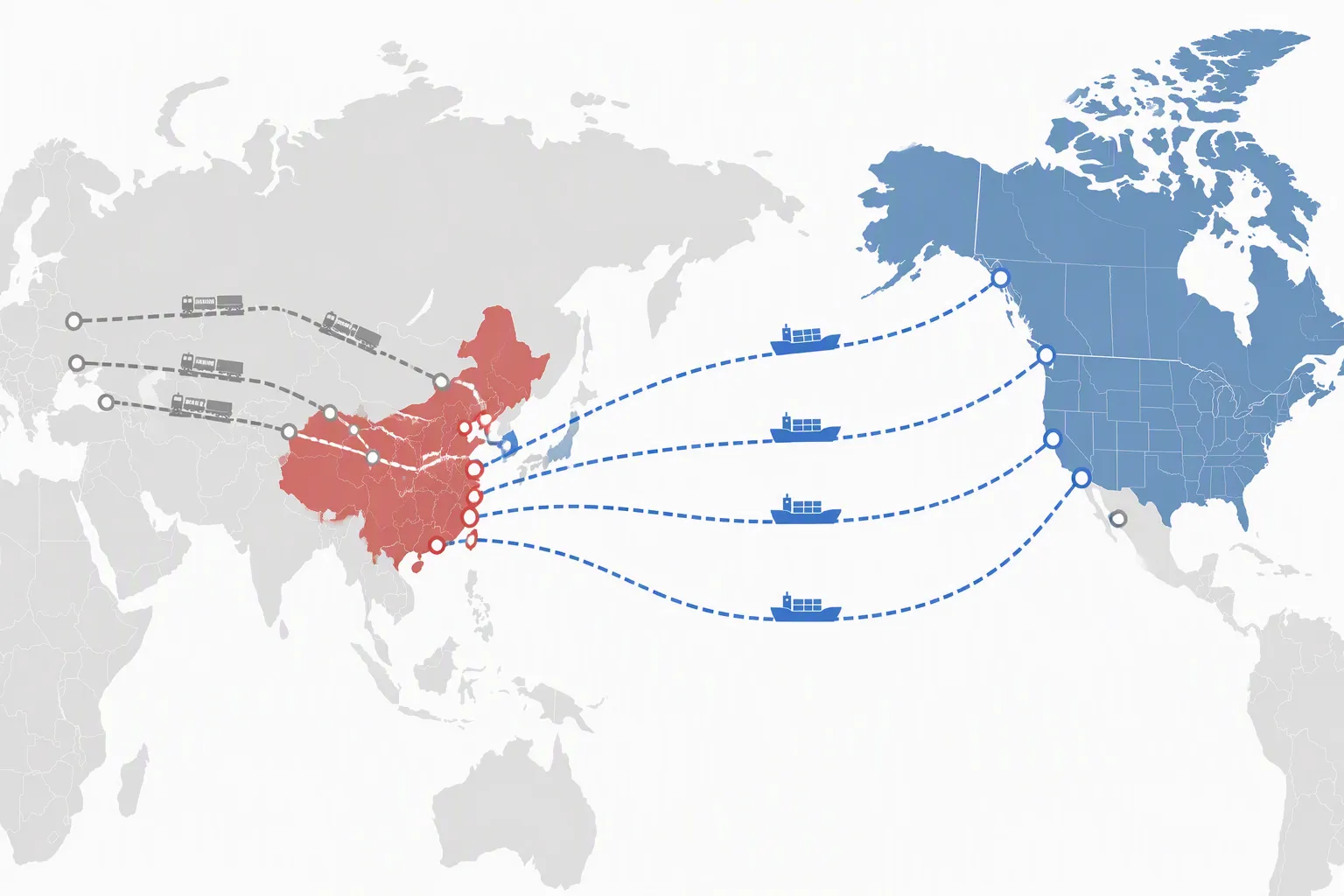
China's Belt and Road Initiative continues to shape port infrastructure and logistics routes across Central Asia, the Middle East, and Africa. For U.S. buyers, this matters at the margin: factories in western Chinese provinces that previously had limited export access now have improved rail and road connectivity to European and Middle Eastern markets. This affects where factories locate, which suppliers grow, and which logistics routes become viable. Buyers sourcing from interior provinces of China (rather than coastal Guangdong or Zhejiang) should ask their sourcing agent specifically about export logistics — the picture has changed in the past three years.
Frequently Asked Questions (United States-Specific)
Q: Does the Canada-China trade deal lower tariffs on Chinese goods imported into the U.S.? No. The March 2026 Canada-China market access agreement is a bilateral arrangement between Canada and China. It has no direct effect on U.S. import tariffs, including Section 301 duties. U.S. buyers cannot use Canadian routing to avoid tariffs unless goods undergo substantial transformation on Canadian soil.
Q: Can I route Chinese goods through Canada to avoid Section 301 tariffs? Not legally, in most cases. CBP enforces country-of-origin rules based on substantial transformation — where the goods were meaningfully manufactured, not where they last touched land. Simple transshipment through Canada does not change the tariff treatment. Misrepresenting origin is customs fraud and carries serious penalties.
Q: How do I vet a Chinese factory from the United States without traveling there? Third-party audit firms (SGS, Bureau Veritas, Intertek) offer factory inspection services in China with English-language reports delivered remotely. A sourcing partner with on-the-ground presence in China can also conduct initial vetting visits on your behalf, including checking business licenses, export authority certificates, and production capacity. Request a full audit report — not just a summary — before committing to an order.
Q: What should I ask a China sourcing agent before signing up? Key questions: What factories have you worked with in my product category, and can I contact prior buyers? How do you verify a factory's UFLPA compliance posture? What is your commission structure, and when does it apply? Who handles communication with the factory — you or an automated system? How do you manage disputes if the production run deviates from the sample?
Q: Are there OFAC sanctions I need to check before paying a Chinese supplier? Yes. OFAC maintains sanction lists that apply to specific Chinese entities, particularly in technology and defense-adjacent sectors. U.S. buyers should run supplier names against OFAC's SDN list and the BIS Entity List before initiating wire transfers. Most commercial trade finance platforms include automated screening, but if you are paying directly via wire, the screening responsibility falls on you. Related Canadian entities involved in re-export should also be checked for compliance with Canada's own sanctions framework, which Global Affairs Canada administers.
Q: How does the Canada-China deal affect U.S. companies with Canadian subsidiaries? A U.S. company with a Canadian subsidiary that imports Chinese goods into Canada for genuine value-added processing — and then exports finished goods to the U.S. — may benefit indirectly. The improved Canada-China relations could mean better pricing, more reliable supply, and fewer diplomatic disruptions to that Canadian leg of the supply chain. The USMCA (formerly NAFTA) governs U.S.-Canada trade terms for qualifying goods. A trade attorney with cross-border experience is the right resource to map the specific scenario for your product category.
Q: Is it better to source directly from China or use a Canadian intermediary after this deal? It depends on what you're optimizing for. Direct China sourcing gives you price transparency and supplier relationship control. Canadian intermediaries (where genuine value-add exists) can offer a cleaner compliance profile for certain product categories and potentially easier logistics. For most U.S. buyers, the decision turns on product type, order volume, and compliance risk tolerance — not on headlines about the Canada-China deal.
Get Started: Sourcing from China as a U.S. Buyer
The Canada-China trade deal is a signal, not a solution. It shows which direction bilateral relations are moving, and it makes cross-border supply chain planning more important — not less — for American buyers who've been watching the geopolitical picture while their competitors build factory relationships.
Practical next steps if you are a U.S. importer or DTC seller looking to act on this:
Audit your current tariff exposure. Know which HTS codes apply to your product and what the current Section 301 rate is. This is your baseline cost that any sourcing or routing decision needs to beat.
Identify your product category's compliance risks. Is your supply chain UFLPA-exposed? Do you have full-chain traceability documentation? If not, build that before scaling volume.
Request a vetted supplier shortlist. Rather than searching Alibaba independently, work with a sourcing partner who has pre-screened factories in your category and can provide references from prior U.S. buyers.
Run a sample order before committing volume. Any factory worth working with long-term will accept a sample order. Use it to test not just the product but the communication quality, packaging compliance (FCC, UL, CPSC markings as applicable), and shipping documentation accuracy.
Set up a pre-shipment inspection process. Commission an independent third-party inspection on your first production run. The cost is typically $200–$400 per inspection and is among the most cost-effective quality assurance tools available to small and mid-size importers.
For buyers who want a sourcing partner that handles supplier shortlisting, factory vetting, MOQ and price negotiation, sample coordination, and repeat ordering — and whose results are verifiable rather than promised — Link4a offers a commission-only entry point: nothing owed until an order closes.
If you want context specifically on how the deal's implications cascade through the U.S. import process, see our detailed breakdown at Canada-China Trade Deal 2026: What U.S. Importers Must Know Now — it covers the tariff mechanics, compliance checkpoints, and sourcing alternatives in depth.
The gate between North American buyers and Chinese manufacturers has always required the right key. The key is not a diplomatic headline — it's a vetted factory relationship, a clear compliance posture, and a sourcing process that scales. Request a sourcing consultation at link4a.com to build one.