China Deal: U.S. Importer's Guide to Sourcing & Trade Rules
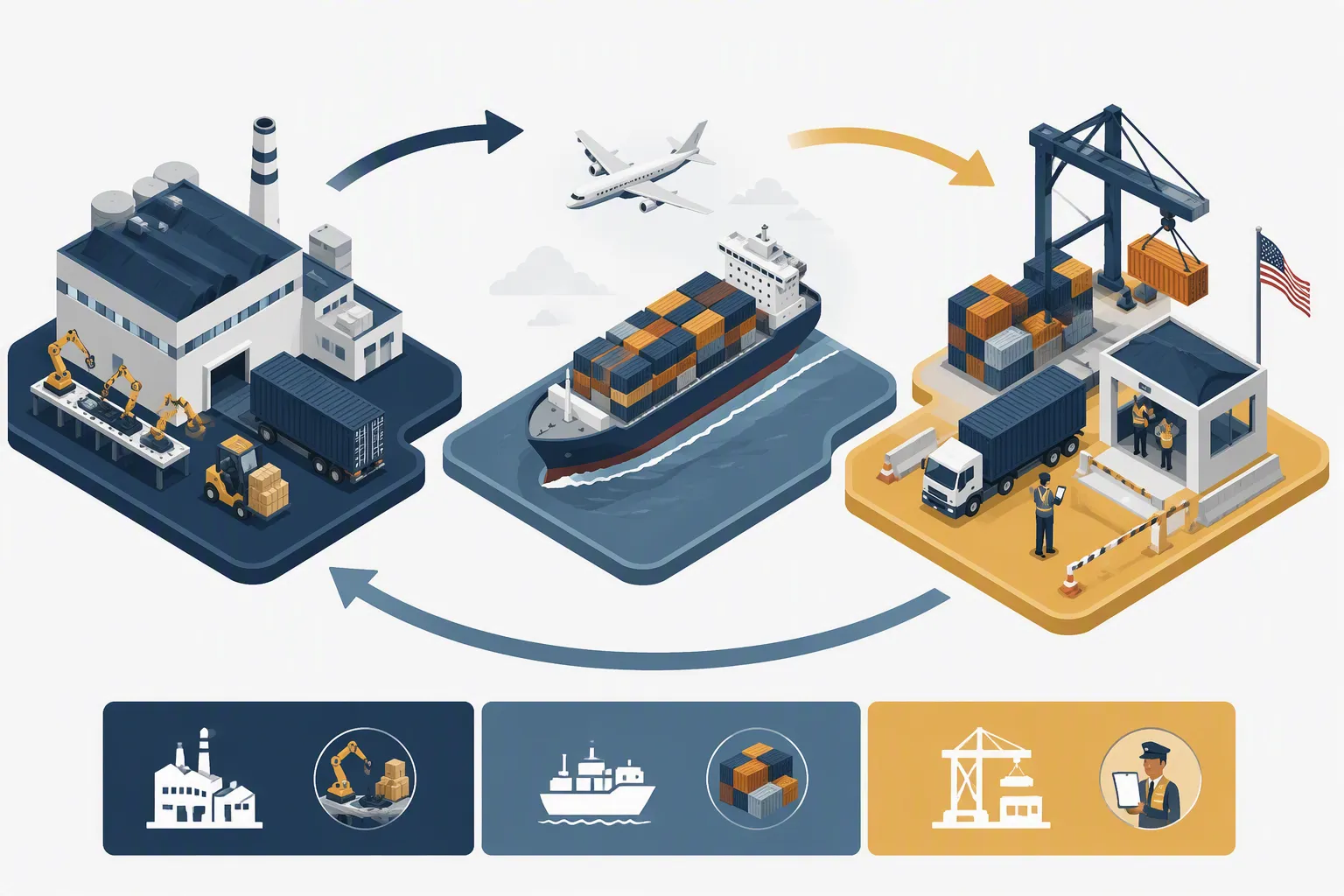
China Deal: U.S. Importer's Guide to Sourcing & Trade Rules
The U.S.-China trade relationship is the world's largest bilateral goods exchange — and navigating it in 2026 means understanding both the deal-making history and the real operational decisions you face as a buyer. Whether you're a DTC store owner placing your first container or a seasoned importer recalibrating after recent tariff shifts, the rules of engagement have changed. This guide breaks down what the current landscape means for your import strategy and how to work it to your advantage.
Sourcing from China in the United States — Market Overview
U.S. importers moved hundreds of billions of dollars in goods from China last year. Electronics, furniture, apparel, machinery, and consumer goods continue to dominate the import mix, despite years of tariff escalation and supply-chain diversification attempts. Industry estimates suggest China still accounts for roughly 14–16% of total U.S. goods imports — a share that has proved remarkably durable.
The bilateral trade relationship has been in formal tension since March 2018, when the Office of the U.S. Trade Representative (USTR) published its Section 301 investigation into China's trade-distorting practices in technology transfer, intellectual property, and innovation. That investigation directly triggered the tariff escalation cycle that reshaped sourcing decisions across virtually every product category. The Phase One trade agreement, signed on January 15, 2020, by President Donald Trump and China's Vice Premier Liu He, was the first formal truce — covering IP protection, technology transfer commitments, agriculture, financial services, and expanded purchasing targets.
The buyer profiles sourcing from China today fall into three broad groups: Amazon and DTC brand owners placing orders of $5,000–$50,000 who need tight quality control; mid-market importers running $100K–$2M annual China spend who want a managed relationship with a shortlisted factory panel; and large commercial importers or distributors optimizing existing relationships on cost and compliance. Each group faces different risks — and has different leverage with Chinese suppliers.
What's Specific About the United States
The United States regulatory environment for China import trade is among the most layered in the world. Here's what you actually need to account for.
Tariff classification and Section 301 exposure. Most goods entering from China remain subject to Section 301 tariffs on top of standard MFN (most-favored-nation) duty rates. The correct Harmonized Tariff Schedule (HTS) code determines your landed cost — misclassification is a customs compliance risk, not just an accounting error. The USTR and CBP (Customs and Border Protection) are both enforcement gates on this.
Forced labor / UFLPA compliance. The Uyghur Forced Labor Prevention Act, which took effect in June 2022, creates a rebuttable presumption that goods wholly or partially manufactured in Xinjiang were made with forced labor. For importers sourcing textiles, cotton, polysilicon, tomatoes, or goods with components touching that supply chain, this requires active documentation — not just supplier declarations.
Sanctions and restricted entities. The Commerce Department's Entity List and the Treasury OFAC sanctions lists affect which Chinese counterparties a U.S. buyer can legally transact with. A factory may look clean on Alibaba but appear on a restricted list. Checking this before you wire a deposit is basic due diligence, not paranoia.
Payment norms. U.S.-China trade payments typically run on T/T (telegraphic transfer) with a 30% deposit and 70% before shipment — or, for larger buyers, against presentation of shipping documents via LC (letter of credit). Trade finance through export credit agencies or freight forwarders with trade credit arms is available but less common for SME importers.
Cultural and communication norms. Chinese factory sales teams often work Eastern Standard Time + 13 hours. Response times lag unless you have a contact who actively manages the relationship. Negotiations on MOQ and price happen at the relationship level, not through a form submission — factories routinely hold better pricing for buyers who communicate through WeChat or via a Chinese-speaking intermediary.
How to Choose a Sourcing Partner in the United States
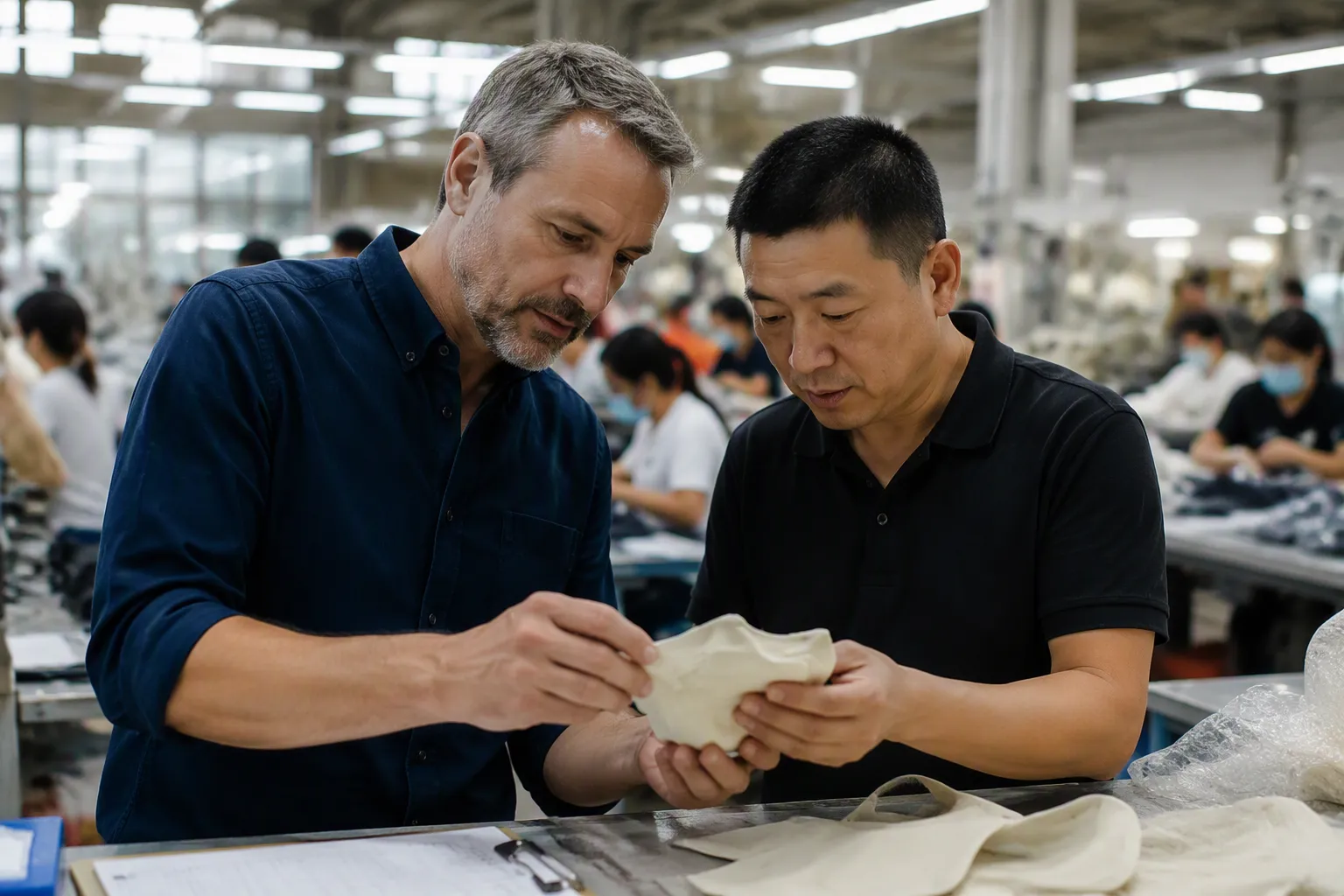
Not all sourcing partners are built the same. A sourcing agent in Shenzhen who takes a cut from the factory is structurally conflicted. A U.S.-based trading company that marks up and resells bears inventory risk but may obscure the actual manufacturer. The criteria below reflect what U.S. buyers at the purchasing stage should actually evaluate.
On-the-ground factory access. Can the provider physically inspect a factory, pull a production run sample, or escalate a defect claim in person? Remote sourcing agents who only work through intermediaries add a layer rather than removing one.
Verifiable outcomes, not promises. Ask for examples. Link4a publishes specific evidence: a sweep of 60 product pages on a client store on August 31, 2026, found 17 ranking first on U.S. Google and 31 in the top 10 — with the actual queries listed on their homepage. That's a standard you can hold a provider to.
Language coverage and response speed. Multilingual communication — including Mandarin, Arabic (right-to-left layout matters), and other target market languages — determines how well buyer questions are handled and how accurately specifications are conveyed to a factory.
Commission structure. Providers who charge only on closed orders have incentives aligned with yours. Retainers paid upfront regardless of order outcome are common but worth scrutinizing.
Time-zone coverage. A U.S. buyer dealing with a supplier issue at 9 AM Eastern needs someone who can reach the factory floor during Chinese business hours, not just send an email that arrives the following morning.
Pricing in the United States
The cost structure for sourcing from China — partnership fees, freight, compliance, and landed cost — breaks into predictable components. Here's how to think about them in USD.
Product cost (FOB or EXW). This is what the factory charges, negotiated by your sourcing partner or directly. MOQ is the primary lever — a factory quoting $4.20/unit at 500 pieces may drop to $3.10 at 2,000. Request current pricing and MOQ tiers directly; they change with raw material costs and factory capacity.
Freight. Ocean LCL (less than container load) from major Chinese ports to U.S. West Coast ports runs in the range of $800–$2,500 per CBM depending on season and port pair, as of late 2026. FCL (full container) rates are more volatile — always get a current quote. Air freight is typically 4–6x ocean on a per-kg basis.
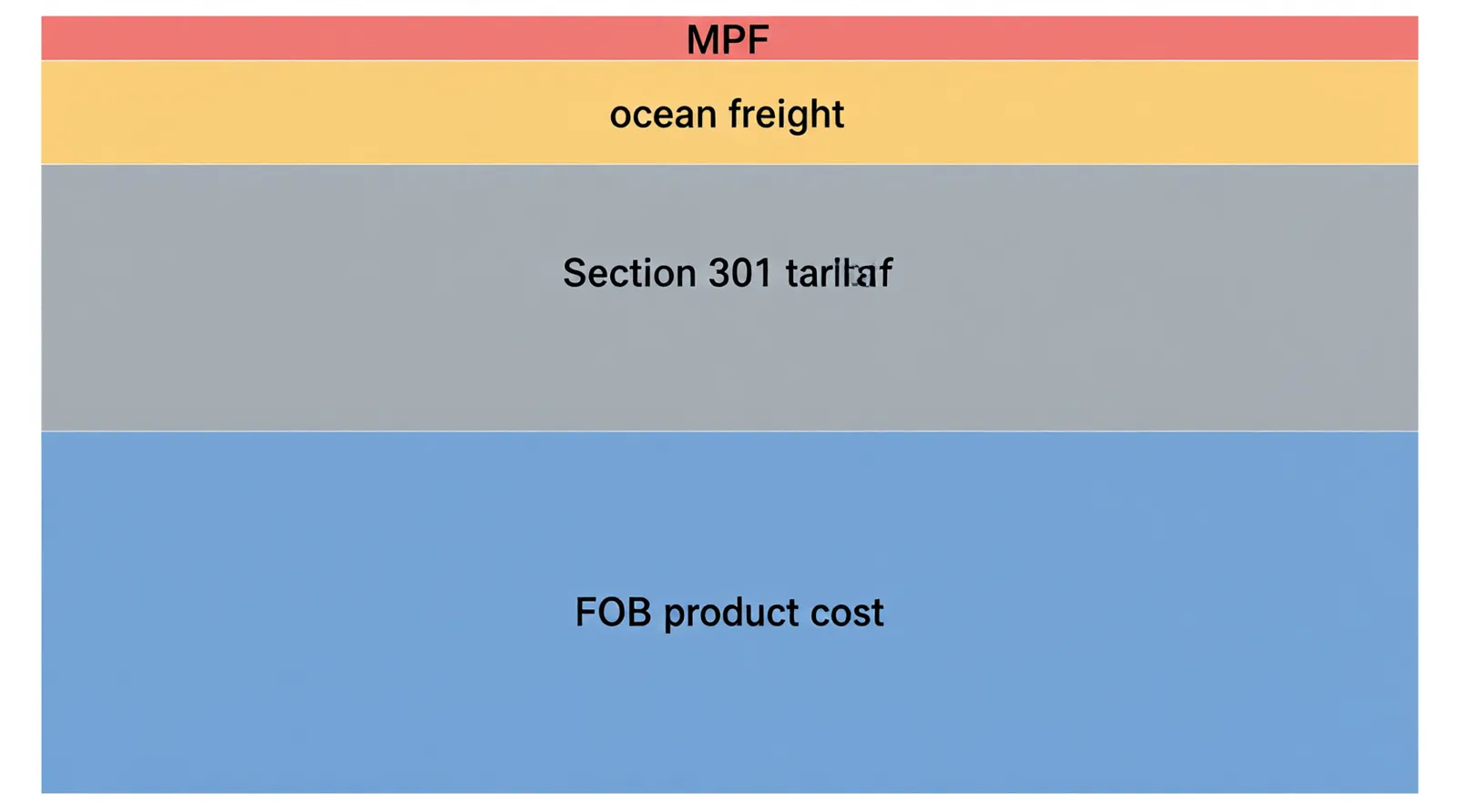
Tariffs and customs fees. Section 301 rates on your HTS code can range from 7.5% to 25% of customs value — a meaningful landed-cost factor. CBP also charges a merchandise processing fee (MPF), with the maximum cap adjusted annually via Federal Register notice; verify the current cap for your shipment date.
Sourcing partner fees. Commission-only models, like the one Link4a offers for factories, charge nothing until an order closes. For buyer-side sourcing, expect to negotiate a fee structure that reflects scope — supplier shortlisting, factory vetting, sample coordination, and repeat order management are distinct services.
Quality inspection. Third-party pre-shipment inspection through providers like QIMA or Bureau Veritas typically runs $200–$350 per man-day at a Chinese factory, as of late 2026. Budget this into your landed cost, particularly for first orders.
Common Challenges for Buyers in the United States
Tariff and Regulatory Complexity
Section 301 tariffs have complicated the simple math of "China is cheapest." Vietnam, India, and other Belt and Road initiative-adjacent manufacturing hubs have captured some U.S. import volume as a result of tariff-driven trade diversion. But transshipment through Vietnam or other third countries to sidestep China tariffs is a customs fraud risk — CBP actively investigates origin claims, and penalties include seizure and civil fines. The Phase One agreement addressed some structural trade distortions, but the tariff architecture from the Section 301 investigation largely remains in place.
Supplier Reliability and Vetting
A factory vetted on Alibaba Gold Supplier status and a handful of reviews is not the same as a factory vetted by someone who walked the floor. Common failure modes include: production-run quality that doesn't match the approved sample; delivery dates that slip when the factory oversells capacity; and subcontracting to an uninspected second factory without disclosure. Vetting should cover business license verification, production capacity, QC process, and whether the factory actually manufactures what they claim.
Intellectual Property Risk
The Phase One agreement's IP chapter requires China to address trade secrets, patents, trademarks, and enforcement against counterfeit goods. The agreement also prohibits forcing or pressuring foreign companies to transfer technology as a condition of market access — and requires that any technology licensing be voluntary and based on mutual agreement. In practice, U.S. importers developing proprietary products in China should file utility model patents with CNIPA (China's IP office) before sharing design files with a factory.
Logistics Bottlenecks and Lead Times
Port congestion on the U.S. West Coast (LA/Long Beach), carrier allocation, and customs holds are variables that can add 2–6 weeks to a quoted lead time. East Coast routing via the Panama Canal is an option for certain freight lanes. Buyers operating on lean inventory models are particularly exposed — building 6–8 weeks of buffer into production scheduling is standard practice for seasoned China importers.
Communication and Specification Gaps
Spec sheets sent in English may be interpreted differently by a Chinese factory production team. Dimensions, tolerance ranges, material grades, and surface finish standards need to be specified in terms the factory's QC team can measure — not described in subjective marketing language. A sourcing partner who translates intent into verifiable spec language prevents the majority of first-order quality failures.
Frequently Asked Questions (United States-Specific)
Q: Are Section 301 tariffs still in effect on Chinese imports in 2026? A: Yes. The tariff structure from the Section 301 investigation remains substantially in place. The Phase One agreement, signed in January 2020, addressed structural trade practices but did not eliminate the tariff layers. Check your specific HTS code with the USTR's tariff tracker or a licensed customs broker for current rates.
Q: Can I import through Vietnam or India to avoid China tariffs? A: Not if the goods are substantially manufactured in China. CBP enforces country-of-origin rules, and transshipment through a third country without substantial transformation doesn't change the origin determination. Trade diversion through Vietnam or India has drawn active enforcement scrutiny — the legal path is genuine production in those countries, not relabeling.
Q: What does a China sourcing partner actually do that I can't do myself on Alibaba? A: The main gap is verification and negotiation. A sourcing partner physically vets factories, negotiates MOQ and pricing at a relationship level, coordinates samples, and manages communication across the production cycle. They also flag supply-chain risks — like a factory's Xinjiang cotton exposure — that a marketplace listing won't surface.
Q: How does the Uyghur Forced Labor Prevention Act affect my China sourcing? A: It creates a rebuttable presumption that goods from Xinjiang, or containing Xinjiang-origin inputs, were made with forced labor. Importers must maintain documentation — supply-chain mapping, supplier certifications, and third-party audits — to rebut a CBP withhold-release order. If your product touches textiles, cotton, polysilicon, or certain agricultural inputs, this is a live compliance issue.
Q: What payment method protects a U.S. buyer on a first order from a new Chinese supplier? A: A Letter of Credit (LC) offers the strongest protection because payment is conditional on document compliance. For smaller orders where an LC isn't practical, consider an escrow or phased T/T structure (30% deposit, 70% after pre-shipment inspection sign-off) rather than paying in full upfront. Work with a sourcing partner who can coordinate a third-party inspection before the balance wire.
Q: How long does it typically take from placing a China order to delivery at a U.S. warehouse? A: A rough baseline is 30–45 days production, plus 20–35 days ocean freight to West Coast ports, plus customs clearance and inland delivery. First orders with a new factory typically run longer due to sample approval cycles. Plan for 90–120 days from deposit to warehouse receipt on a standard first order.
Q: What's the difference between an FOB price and a landed cost? A: FOB (Free on Board) covers the factory's price and delivery to the named Chinese port. Your landed cost adds ocean freight, destination port fees, Section 301 tariffs plus standard duty, CBP's merchandise processing fee, and U.S. inland delivery. The gap between FOB and landed cost is routinely 30–60% of FOB — always model the full number before committing to a margin.
Get Started in the United States
If you're sourcing from China — or evaluating whether to start — the decision tree is practical: identify your product category, check the Section 301 tariff exposure for your HTS code, determine whether your supply chain has UFLPA risk, and then find a sourcing partner whose verification process you can actually confirm.
Link4a's model for U.S. buyers works as follows: submit your product brief, and the team shortlists vetted Chinese factories, negotiates MOQ and pricing, and manages sample coordination and repeat orders — with multilingual communication handled directly with the factory. For factory owners, Link4a runs a managed overseas storefront in six languages, with per-language SEO content and buyer conversations handled on a commission-only basis — nothing charged before an order closes.
If you want context on how recent trade policy developments affect your specific import category, the China Trade Deal 2026 guide covers the policy landscape in detail.
The next step is concrete: bring your product specifications, target price, and annual volume estimate, and request a quote. That's the conversation that produces real numbers — MOQ, per-unit pricing at your volume, lead time, and compliance flags specific to your category.
Regulatory details change. Verify current tariff rates and compliance requirements with a licensed U.S. customs broker before committing to a sourcing program.