China Direct Wholesale in the U.S.: What Buyers Need to Know in 2026
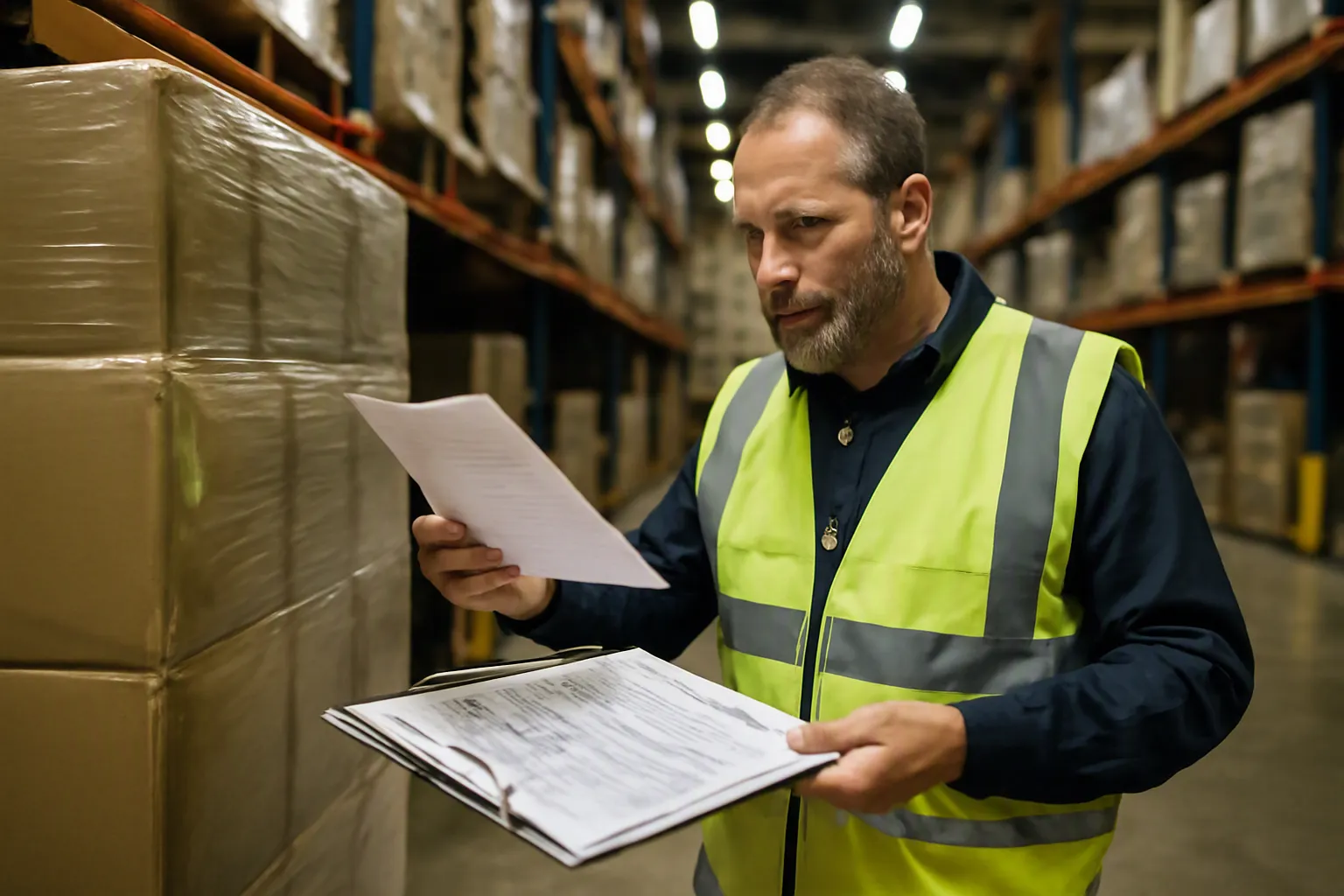
China Direct Wholesale in the U.S.: What Buyers Need to Know in 2026
China direct wholesale is one of the fastest ways for U.S. businesses to cut sourcing costs and build competitive margins — but the process looks different depending on your product category, order volume, and compliance obligations. This guide breaks down how the U.S. market works, what to watch for, and how platforms like Link4a's Match engine are changing how American buyers connect with Chinese factories.
China Direct Wholesale in the United States — Market Overview
The United States is the single largest destination for Chinese manufactured exports, and the wholesale channel is a significant part of that flow. American retailers, contractors, DTC brands, and platform sellers have long sourced plumbing fixtures, windows, doors, building materials, tools, and consumer electronics directly from Chinese factories — often through distributors, sometimes through trade shows, and increasingly through digital sourcing platforms.
The economic logic is straightforward. Labor costs in China remain dramatically lower than in the U.S., which means that for many physical product categories, even after shipping and import duties, factory-direct pricing gives American sellers room to work. A standard rule in the e-commerce sourcing world is a 4X retail markup model: every dollar shaved off sourcing cost either adds four dollars of pricing headroom or drops straight to the bottom line. At that multiplier, getting direct access to factory pricing — rather than buying through a domestic importer or middleman distributor — matters enormously.
Buyer profiles in the U.S. vary widely. Home builders and general contractors source windows, doors, and plumbing components at volume. Amazon and Walmart Marketplace sellers look for OEM-ready consumer goods with strong photo potential. TikTok Shop operators want trending items with fast turnaround. And independent hardware and tool distributors need consistent supply on core SKUs across long replenishment cycles. Each of these buyers has distinct requirements around MOQ, lead time, and compliance — and that's precisely where a generalist directory often falls short.
What's Specific About the United States
Regulatory and compliance environment
U.S. import compliance is layered and non-negotiable. Customs and Border Protection (CBP) administers tariff collection, and most Chinese goods entering the U.S. carry Section 301 tariffs on top of standard MFN duty rates — rates have shifted substantially since 2018 and escalated significantly through 2025, making it essential to verify the current rate for your specific HTS codes with a licensed customs broker before modeling landed cost. Buyers need to classify goods correctly using the Harmonized Tariff Schedule (HTS) and factor in the total landed cost, not just the ex-works factory price.
For specific product types, additional certifications are required before goods can be legally sold. Electrical tools and appliances often require UL listing or FCC certification. Plumbing fixtures sold into the U.S. must comply with NSF/ANSI 61 (for products contacting drinking water) and, in California, with Prop 65 lead content rules. Windows and doors must meet AAMA or ENERGY STAR requirements for many commercial and residential applications. Suppliers who cannot provide test reports and certificates from recognized labs should be treated as unqualified suppliers, full stop.
Payment methods and business norms
Wire transfer (T/T) is still the dominant payment mechanism for factory-direct orders in this channel — typically 30% deposit against purchase order, 70% before shipment or against bill of lading. Letters of Credit (L/C) are used for larger orders where buyers want documentary protection. U.S. buyers should be cautious about suppliers pushing for full upfront payment via informal channels. Established factories expect standard commercial terms.
Culturally, American buyers tend to operate on shorter lead-time expectations than many Chinese factories are built around. Communicating U.S. holidays (Thanksgiving, Christmas shipping cutoffs) and planning around Chinese national holidays — Golden Week in early October, Chinese New Year in January/February — is essential to avoid supply gaps. Having a supplier contact who responds during U.S. business hours, or using AI-powered inquiry tools that handle asynchronous communication, removes significant friction.
How to Choose a China Direct Wholesale Provider in the United States
Not all sourcing platforms or supplier networks are built for the U.S. market specifically. Here's what to evaluate:
Supplier verification and on-the-ground auditing
U.S. buyers are separated from Chinese factories by an ocean. That asymmetry creates risk. Look for platforms that verify factory business licenses, conduct or arrange factory audits, and provide third-party inspection services. Directories that self-report without verification are not the same as platforms with independently verified supplier credentials.
Compliance documentation support
Can the supplier provide product testing certificates relevant to U.S. requirements — UL, FCC, NSF, CPSC compliance documentation — before production begins? If a supplier hedges on this question or says "we can add it later," walk away. Documentation gaps become your legal exposure when goods clear customs.
Time-zone coverage and language support
If a sourcing platform or supplier only operates during China Standard Time (CST, UTC+8), your team loses 13 hours of productive communication per day relative to Eastern Time. Platforms with 24/7 multilingual support — or AI-driven inquiry handling that fields questions in real time regardless of time zone — dramatically reduce the friction for U.S. buyers. Link4a's Inbox product, for example, runs a 24/7 multilingual AI that handles supplier inquiries around the clock, so U.S. buyers asking about plumbing fixture specs at 9 PM EST don't wait until the next business morning in Shenzhen.
Matchmaking speed and specificity
There are four primary methods for finding Chinese wholesale suppliers: wholesale directories (Alibaba, Global Sources, Made In China, 1688.com), wholesale marketplaces (AliExpress, DHgate), ocean import record databases (Panjiva, Import Genius), and trade shows (Canton Fair, Global Sources Trade Show). Each has advantages, but all require significant time investment to filter relevant, qualified matches. Link4a's Match engine reduces that time dramatically — returning verified supplier matches in approximately 3 seconds across 300+ factory partners — making it useful when buyers need to move fast on a sourcing decision.
Internal link: If you're newer to this space, the China Products Wholesale in the US: The Complete 2026 Buyer's Guide covers foundational sourcing strategy in detail.
Pricing in the United States
Price ranges for China direct wholesale vary enormously by category. A few illustrative ranges based on common product types:
- Plumbing fixtures (faucets, shower systems): FOB factory pricing can run $8–$60 per unit depending on finish and grade, with higher-end brands commanding more
- Windows and doors (aluminum or uPVC): heavily volume-dependent; builders committing to full container loads can achieve meaningful cost advantages over domestic wholesale, with pricing sensitive to profile complexity, glass spec, and finish
- Hand tools and power tool accessories: among the most price-competitive categories; factory-direct pricing on private-label tools can undercut domestic distributors significantly
- Consumer electronics accessories: margins are tight because competition is high; pricing advantage is real but MOQ and tooling costs matter
All prices above are FOB (Free on Board) estimates and do not include freight, U.S. import duties (including Section 301 tariffs), customs brokerage fees, or inland delivery. A full landed cost analysis always includes those elements.
What moves the price in the U.S. context specifically:
- HTS classification: misclassifying goods leads to unexpected duty bills at the port of entry
- Freight mode: air freight is fast and reliable with real-time tracking but expensive per kilogram; sea freight (FCL or LCL) is cost-effective for bulk but adds 25–45 days of transit time; DDP (Delivered Duty Paid) arrangements shift freight and duty management to the supplier, simplifying the buyer's logistics but adding a premium
- MOQ tier: most factories have tiered pricing — hitting a higher quantity threshold often drops the per-unit price meaningfully
- Customization: adding private labels, custom colorways, or OEM tooling raises unit costs but unlocks brand control and pricing power on the selling side
Common Challenges for U.S. Buyers
Tariff Complexity and HTS Classification
Section 301 tariffs introduced since 2018 created a patchwork where similar products carry wildly different duty rates depending on their exact HTS code. Getting this wrong costs money. Work with a licensed customs broker before committing to a large order — the cost of professional classification advice is small relative to a surprise duty bill on a container shipment.
Logistics Lead Times and Inventory Planning
Sea freight from major Chinese shipping hubs — Shenzhen, Guangzhou, Shanghai, Ningbo — to U.S. West Coast ports typically runs 14–21 days; East Coast ports add another 10–14 days via Panama. Add factory lead time (often 30–60 days for custom orders), and U.S. buyers need to plan inventory 90–120 days in advance for sea freight orders. Buyers who underestimate this shift to air freight in emergencies, which can erase the entire margin advantage of direct sourcing.
Supplier Reliability and Quality Consistency
The first sample is almost never representative of production-run quality. Build sample approval, pre-production inspection, and pre-shipment inspection checkpoints into every supplier relationship — not just the first order. Third-party inspection services (SGS, Bureau Veritas, Intertek) operating in China can inspect goods before they leave the factory. For tool and plumbing categories specifically, random post-shipment testing against safety standards is worth adding to the QA protocol.
Communication and Responsiveness
Time zone gaps, language barriers, and staff turnover at factories all degrade communication quality. U.S. buyers who rely on a single WhatsApp contact at a factory are exposed if that person leaves. Platforms that route communication through structured inquiry management — rather than personal contact networks — create more durable supplier relationships.
Intellectual Property and Brand Control
U.S. importers are responsible for ensuring goods they import don't infringe third-party trademarks or patents. This applies even if the factory produced the goods. If a factory claims a product design is "their own," ask for documentation. Register your own trademarks with the USPTO and record them with CBP to protect your brand at the border.
Frequently Asked Questions (United States-Specific)
Q: Do I need a customs broker to import from China to the U.S.? A: Technically, importers can self-file customs entries for shipments valued under $2,500. In practice, for any commercial shipment you intend to sell, using a licensed customs broker is worth the fee. They handle HTS classification, CBP filing, ISF (Importer Security Filing) submission, and can flag holds or examinations before they become delays.
Q: How do Section 301 tariffs affect my total landed cost? A: Section 301 tariffs are applied in addition to standard MFN duty rates and are calculated on the customs value of the goods (typically the transaction value). Depending on the product, they range from 7.5% to 25% or more. For a $10,000 shipment with a 25% Section 301 tariff and a 5% MFN rate, you're paying $3,000 in duties before freight and brokerage. Always model landed cost before committing to a price that works only at FOB.
Q: What's the minimum order quantity (MOQ) for China direct wholesale? A: MOQs vary by factory and product type. For mass-market consumer goods, some factories will work with buyers at 200–500 unit minimums. For custom tools, plumbing components, or windows and doors requiring tooling, MOQs are often 1,000+ units or defined in container-load quantities. Platforms like Link4a's Match engine can filter suppliers by MOQ tier, which is useful when your volume doesn't qualify you for the largest factories.
Q: Can Chinese suppliers provide products that meet U.S. safety certifications? A: Yes — many established Chinese factories maintain UL, FCC, CE, NSF, and other certifications for their export products. The key is to request copies of current, valid test certificates before placing an order, not after production. Certificate scope matters: a certificate for one product model doesn't automatically extend to a modified version.
Q: How do I verify a Chinese supplier is legitimate before wiring money? A: Request the factory's business license, ask for their Alibaba Gold Supplier or Global Sources Verified status documentation, use a third-party service to pull their export records from ocean import databases like Panjiva or Import Genius, and conduct a video call factory tour before the first order. For significant orders, a paid factory audit through a third-party inspection company is the most reliable verification.
Q: Is DDP (Delivered Duty Paid) shipping a good option for U.S. buyers? A: DDP freight means the supplier handles logistics and duty payment to your U.S. door. It simplifies your operation significantly — you pay one all-in price rather than managing freight forwarders, customs brokers, and duty payments separately. The tradeoff is less control over the logistics chain and a premium on the DDP price. For buyers new to importing, DDP is often the right starting point.
Q: What's the fastest way to find verified Chinese suppliers for my product category? A: Trade shows like the Canton Fair offer direct factory access, but attendance requires travel and significant time commitment. Digital matchmaking platforms have compressed that process considerably. Link4a's Match engine, built specifically for cross-border trade, returns verified supplier matches in roughly 3 seconds — filtering by product category, MOQ, certification status, and export market experience.

Get Started with China Direct Wholesale in the United States
The first step is getting your landed cost model right before you talk to any supplier. Know your target selling price, work backward through your retail margin, and determine the maximum FOB cost you can afford after U.S. duties and freight. That number tells you whether a product category is viable before you spend time on supplier discovery.
Once you have your cost model, supplier qualification becomes the core work. Request samples from at least three factories before committing to any production order. Ask specifically for their export compliance documentation relevant to U.S. requirements — UL listings, NSF certificates, CPSC compliance records — and build your QA inspection checkpoints into the contract before you wire a deposit.
For ongoing supply chain health, consider separating your supplier discovery process from your supplier management process. Finding new factories through a high-speed matchmaking tool handles discovery; building long-term relationships with two or three qualified suppliers handles stability.
Link4a's platform — combining the Sitebox brand deployment system, Inbox multilingual AI, Match supplier engine, and Reach content and SEO engine — is built specifically for this global trade workflow. More than 300 factories and 1,400 active sites use it to manage the full cycle from supplier to buyer, across time zones and languages.
If you're ready to identify qualified Chinese suppliers for your U.S. sourcing needs, request a quote or start a supplier match now.