China Import for U.S. Buyers: Sourcing, Tariffs & Supplier Verification
China Import for U.S. Buyers: Sourcing, Tariffs & Supplier Verification
China import for United States buyers is currently defined by navigating Section 301 tariffs, enforcing UFLPA compliance, and verifying factory legitimacy beyond marketplace listings. While electrical and electronic equipment remains the dominant category at $583.88 billion in annual trade volume, successful procurement now depends less on finding products and more on validating supply chains against specific U.S. regulatory frameworks (Source: Trading Economics).
U.S. importers face a bifurcated market where established brands maintain vetted supplier networks while DTC store owners and online creators often rely on unverified marketplace data. The gap between these two groups is not product access but risk management; professional sourcing partners bridge this by handling factory audits, MOQ negotiations, and multilingual communication directly with manufacturers rather than trading companies. For U.S. businesses exploring China direct wholesale, the primary objective has shifted from lowest unit cost to total landed cost stability, factoring in duties, compliance testing, and logistics reliability.
China Import in United States — Market Overview
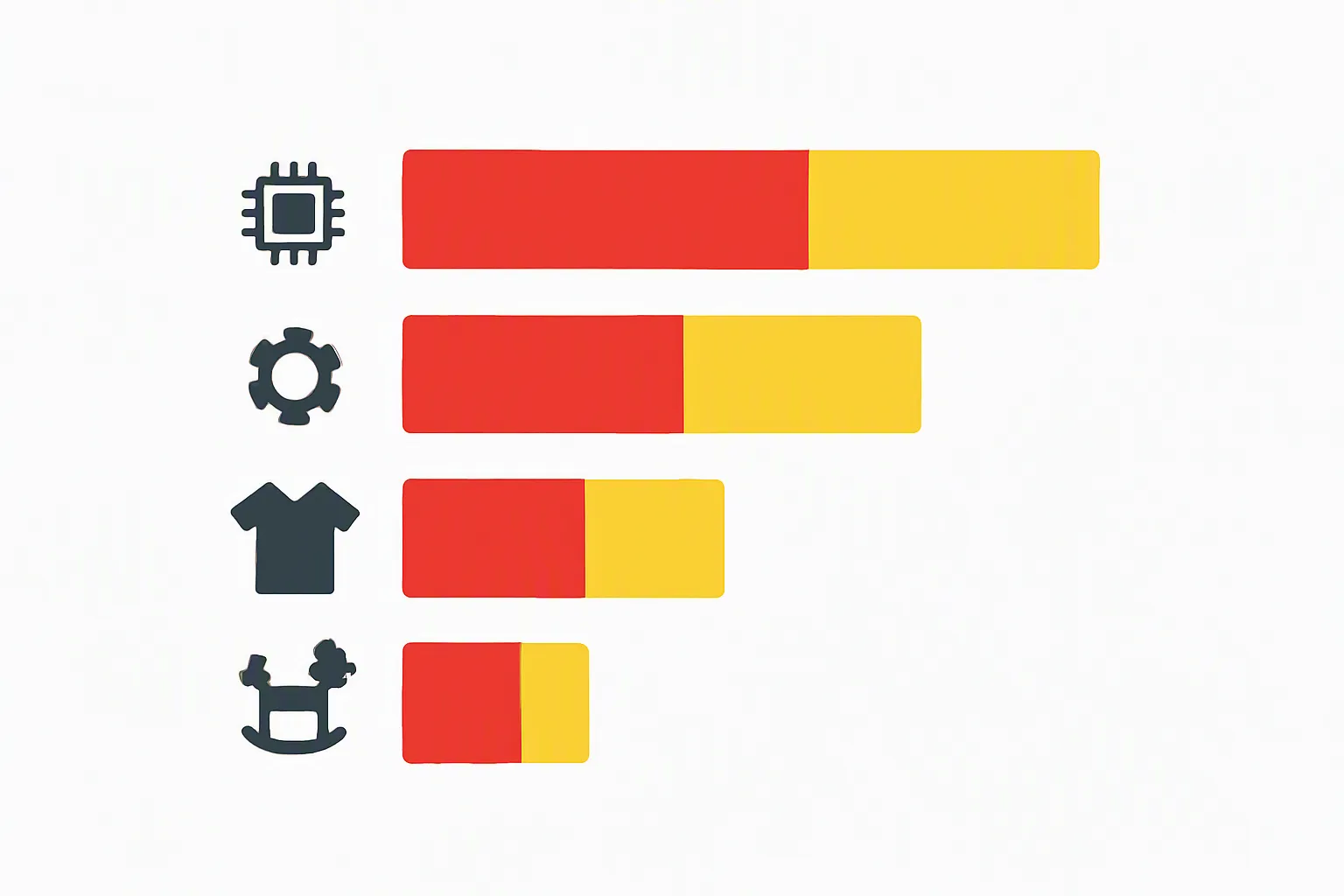
The scale of U.S.-China trade dictates that even niche buyers must understand macro-level shifts to avoid supply chain disruptions. China’s total imports reached $2,585.13 billion in 2024, creating a massive industrial base that serves U.S. demand across diverse categories (Source: Trading Economics). For American buyers, this volume means supplier capacity is rarely the bottleneck; instead, the challenge lies in identifying factories that meet U.S. quality standards and export documentation requirements amidst this vast output. Electrical and electronic equipment tops the list at $583.88 billion, followed by mineral fuels, oils, and distillation products at $504.02 billion, ores, slag, and ash at $251.06 billion, and machinery and nuclear reactors at $229.11 billion, signaling deep specialization across energy, raw materials, and high-value manufacturing sectors relevant to U.S. tech and industrial buyers (Source: Trading Economics).
Demand drivers in the United States have evolved from pure price arbitrage to supply chain resilience and speed-to-market. DTC brands and Amazon FBA sellers now prioritize suppliers who can handle smaller initial MOQs while maintaining the ability to scale rapidly during Q3 and Q4 peak seasons. This shift has increased demand for sourcing partners who can negotiate flexible terms directly with factories, as opposed to rigid marketplace listings designed for bulk wholesale. Industry estimates suggest that U.S. buyers are increasingly diversifying within China itself—moving from coastal Tier-1 cities to inland manufacturing hubs—to mitigate regional risks while retaining access to mature infrastructure.
Common buyer profiles in the United States now include a significant segment of digital-native entrepreneurs who lack traditional import experience. These buyers require end-to-end support ranging from supplier shortlisting to sample coordination, distinct from the needs of legacy retailers with established procurement teams. Unlike enterprise buyers who may have offices in Shenzhen or Ningbo, these emerging importers depend entirely on remote verification and third-party validation. Consequently, the market for managed export operations and sourcing partnerships has grown, serving as the operational backbone for U.S. businesses that cannot justify hiring full-time staff in Asia but still require factory-direct relationships. For a broader perspective on category selection, consult our China products wholesale guide.
What's Specific About United States Regulatory and Business Environment
United States importers operate under one of the most complex regulatory environments for China trade, primarily driven by Section 301 tariffs and forced labor prevention laws. The Office of the United States Trade Representative (USTR) maintains specific policy frameworks for China, Mongolia, and Taiwan that directly impact duty rates and admissibility (Source: USTR). Buyers must verify HTS codes against current exclusion lists, as tariff applicability can change with presidential actions. A product classified under one code might face a 25% additional duty, while a slightly different classification could be exempt; this makes accurate product categorization a financial imperative, not just administrative paperwork.
Compliance extends beyond tariffs to supply chain transparency under the Uyghur Forced Labor Prevention Act (UFLPA). U.S. Customs and Border Protection (CBP) requires importers to provide clear and convincing evidence that goods were not produced with forced labor in Xinjiang. This necessitates traceability documentation that goes deeper than standard certificates of origin; buyers often need raw material sourcing records, production logs, and shipping manifests linking specific batches to verified facilities. Sourcing partners like Link4a assist here by vetting factories against known entity lists and collecting upstream documentation before goods ship, reducing the risk of detention at U.S. ports.
Payment norms and business culture also distinguish U.S. buyers from other international markets. While T/T (wire transfer) remains standard, U.S. buyers frequently request payment terms tied to inspection milestones or letters of credit for larger orders to mitigate fraud risk. Culturally, U.S. procurement emphasizes written specifications and contractual enforcement over relationship-based flexibility common in domestic Chinese trade. This creates friction when dealing directly with factories accustomed to informal agreements. Effective intermediaries translate not just language but business expectations, ensuring that U.S. quality tolerances and delivery penalties are understood and accepted by the manufacturer before production begins.
Documentation standards for U.S. imports are codified by federal agencies and require precision. The International Trade Administration provides detailed guidance on China import requirements, emphasizing that incomplete or inaccurate paperwork is a primary cause of delays (Source: Trade.gov). Commercial invoices must include specific declarations, packing lists must match physical counts exactly, and certain products require FDA, FCC, or CPSC certifications before entry. U.S. buyers cannot assume their supplier understands these requirements; proactive verification of export readiness is essential to avoid costly demurrage charges or seizure.
How to Choose a China Import Provider in United States
Selecting a sourcing partner requires evaluating their actual on-ground capabilities rather than marketing claims. U.S. buyers should verify whether the provider employs staff physically located in Chinese manufacturing hubs versus operating solely through remote agents. Physical presence enables unannounced factory visits and real-time production monitoring that remote teams cannot replicate. Time-zone coverage is equally critical; a provider serving U.S. clients must offer overlapping hours for communication while maintaining daytime presence in China for factory coordination. Providers that only work U.S. hours often miss critical production windows, leading to delayed responses and extended lead times.
Language support must extend beyond basic translation to technical and commercial fluency. A competent provider drafts replies to buyers based on the factory’s actual in-stock catalogue and production capabilities, not generic templates. This ensures that quotes reflect reality and reduces the back-and-forth clarification that plagues cross-border transactions. Multilingual capability matters for U.S. sellers targeting diverse markets; for example, Link4a supports six locales including right-to-left Arabic layouts, enabling U.S. importers to source products suitable for multiple destination markets through a single partnership. Verify that keyword research and content localization are performed natively per language rather than machine-translated from English, as this affects both supplier matching accuracy and downstream e-commerce performance.
Verification processes distinguish reliable partners from directory services. Ask specifically how suppliers are vetted: do they check business licenses, visit production lines, audit subcontractors, and verify export history? Link4a’s approach involves supplier shortlisting, factory vetting, and direct negotiation of MOQ and pricing, replacing the gamble of marketplace browsing with structured due diligence. For U.S. buyers concerned about supplier reliability, request evidence of past performance such as verifiable ranking data or client case studies. Transparency builds trust; providers confident in their network will share tangible proof of supplier quality and search visibility outcomes.
Commission structures reveal alignment of incentives. Traditional sourcing agents charge upfront retainers regardless of outcome, creating misaligned incentives. Commission-only models, where fees apply only after an order closes, align the provider’s success with the buyer’s satisfaction. This structure benefits U.S. buyers testing new products or suppliers without committing significant capital upfront. It also attracts better factories; manufacturers prefer partners who earn revenue from closed deals rather than listing fees, resulting in access to higher-quality production capacity. Evaluate whether the provider charges hidden fees for sampling, inspections, or communications that should be included in the service scope.
Pricing in United States Context
Pricing for China import services in the United States varies significantly based on service model and order complexity. Traditional sourcing agencies typically charge monthly retainers ranging from $1,500 to $5,000 USD plus percentage-based commissions on purchase orders. In contrast, commission-only models eliminate upfront costs, charging typically 5-15% on closed order value depending on product category and order size. U.S. buyers should calculate total landed cost including service fees, not just unit price; a lower commission rate paired with poor negotiation may result in higher overall spend than a premium service securing better factory terms.
Local factors affecting pricing include product complexity, compliance requirements, and order frequency. Highly regulated categories like medical devices or children’s products command higher service fees due to extensive documentation and testing coordination. Custom tooling and mold development involve separate cost structures that should be negotiated transparently; U.S. buyers should insist on itemized quotes distinguishing tooling amortization from unit costs. Repeat orders typically reduce effective service costs as supplier relationships mature and verification overhead decreases. Buyers planning long-term sourcing strategies should negotiate tiered pricing reflecting projected annual volume.
Currency fluctuations and payment processing add hidden costs to China import transactions. U.S. buyers paying in RMB may secure better pricing but assume exchange rate risk; those paying in USD transfer currency risk to suppliers who may build buffers into quotes. Wire transfer fees ($25-$50 per transaction) accumulate for frequent small orders, making consolidated shipments or alternative payment methods economically relevant. Service providers handling payments on behalf of U.S. clients should disclose any markup on exchange rates or processing fees; transparency here prevents erosion of margin savings achieved through supplier negotiation.
Common Challenges for Buyers in United States
Logistics and Supply Chain Disruptions
U.S. importers face persistent volatility in transpacific shipping rates and port congestion. West Coast ports like Los Angeles and Long Beach experience seasonal surges that can delay deliveries by weeks, while East Coast alternatives add transit time and cost. Rail and trucking capacity constraints compound ocean freight delays, making inventory planning difficult for time-sensitive product launches. Mitigation requires diversified routing strategies and buffer stock planning; sourcing partners with logistics expertise help U.S. buyers navigate carrier selection and consolidation options to optimize transit reliability versus cost.
Regulatory Compliance and Tariff Exposure
Section 301 tariffs remain a significant cost factor, with rates varying by HTS classification and subject to periodic adjustment. U.S. buyers frequently discover mid-production that their product falls under a tariffed category, eroding projected margins. Proactive HTS analysis before sampling prevents expensive surprises. Beyond tariffs, evolving regulations on packaging, labeling, and chemical safety (Prop 65, REACH equivalents) require continuous monitoring. Suppliers unfamiliar with U.S. standards may produce non-compliant goods; verification during pre-production samples catches issues before mass production commits resources.
Supplier Reliability and Quality Consistency
Marketplace ratings provide insufficient assurance for U.S. buyers requiring consistent quality across repeat orders. Factories may substitute materials, outsource to unapproved subcontractors, or deprioritize smaller U.S. accounts during peak domestic demand periods. Without on-ground representation, U.S. buyers learn of problems only upon receipt. Structured quality assurance protocols—including inline inspections, pre-shipment audits, and golden sample retention—create accountability. Partners like Link4a coordinate these checkpoints as part of managed sourcing, providing U.S. buyers with documented verification rather than supplier self-reporting.
Communication Gaps and Cultural Misalignment
Time zone differences and language barriers cause costly misunderstandings in specifications, timelines, and change orders. U.S. buyers expecting same-day responses to urgent issues face 12-13 hour delays minimum; critical decisions stall awaiting clarification. Technical terminology often translates poorly, leading to specification drift between prototype and production. Dedicated bilingual project managers bridge this gap, maintaining institutional knowledge of buyer requirements and factory capabilities. Effective communication infrastructure includes shared documentation platforms, scheduled sync meetings accommodating both time zones, and escalation protocols for urgent issues.
Frequently Asked Questions (United States-Specific)
What documentation do U.S. importers need for China-sourced products? Required documentation typically includes commercial invoice, packing list, bill of lading, and certificate of origin. Regulated products require additional certifications (FDA, FCC, CPSC, DOT). The International Trade Administration provides comprehensive guidance on China import requirements specific to U.S. entry (Source: Trade.gov). Buyers should confirm exact requirements with their customs broker before ordering, as missing documents cause port holds and demurrage charges.
How do Section 301 tariffs affect my China import costs? Section 301 tariffs impose additional duties on many Chinese-origin goods, with rates ranging from 7.5% to 25% depending on HTS classification. The USTR administers these measures and publishes exclusion lists that may apply to specific products (Source: USTR). Tariff liability depends on accurate product classification; consult a licensed customs broker to determine applicable rates and explore potential exclusions before finalizing supplier agreements.
Can I use a commission-only sourcing partner for small test orders? Yes, commission-only models accommodate test orders by eliminating upfront retainers. Partners like Link4a charge fees only on closed orders, making them accessible for U.S. buyers validating new products or suppliers. Minimum order values may apply to ensure economic viability; discuss your testing roadmap upfront to confirm alignment. This model reduces financial risk during exploration phases while maintaining access to vetted supplier networks.
How does Link4a differ from Alibaba or Made-in-China for U.S. buyers? Marketplaces connect buyers with suppliers but don’t verify factories, negotiate terms, or manage production. Link4a operates as a sourcing partner providing supplier shortlisting, factory vetting, MOQ/price negotiation, sample coordination, and repeat order management. Responses derive from actual factory catalogues and inventory, not generic listings. For U.S. buyers seeking managed relationships rather than transactional marketplace interactions, this distinction reduces verification burden and improves outcome predictability.
What happens if my China shipment gets detained by U.S. Customs? Detentions typically result from documentation errors, regulatory non-compliance, or UFLPA concerns. Resolution requires submitting corrective documentation or evidence of compliance within CBP-specified timeframes. Prevention is preferable; work with sourcing partners who verify export documentation and supply chain traceability before shipment. If detained, engage a licensed customs attorney immediately; response deadlines are strict and extensions rarely granted.
Do I need to speak Mandarin to source directly from Chinese factories? Direct sourcing without Mandarin proficiency is possible but increases miscommunication risk and verification difficulty. Many factories employ English-speaking sales staff, but technical discussions and problem resolution often revert to Chinese. Sourcing partners provide bilingual project management, translating not just language but business context and technical specifications. This ensures U.S. requirements are accurately conveyed and factory responses properly interpreted throughout the procurement cycle.
How quickly can I receive samples from Chinese suppliers to the United States? Sample lead times vary by product complexity and supplier location, typically ranging from 7-21 days for production plus 3-7 days express shipping to the U.S. Custom samples require additional tooling or setup time. Sourcing partners coordinate sample requests, consolidate multiple supplier shipments to reduce freight costs, and verify samples match specifications before forwarding. Factor sample evaluation time into launch planning; rushing this stage leads to production defects discovered too late.
Get Started in United States
Begin by auditing your current China import strategy against U.S. regulatory requirements and total landed cost realities. Identify gaps in supplier verification, compliance documentation, or communication infrastructure that expose your business to unnecessary risk. Whether launching a new product line or optimizing existing supplier relationships, structured sourcing partnerships provide the operational foundation for sustainable U.S.-China trade.
Request a consultation to discuss your specific sourcing needs, target MOQs, and compliance requirements. Link4a offers commission-only engagement for qualified projects, allowing U.S. buyers to access vetted factory networks without upfront commitment. Share your product specifications and volume projections to receive a tailored assessment of supplier options, estimated pricing, and timeline feasibility. Visit https://link4a.com to schedule your sourcing consultation and get MOQ & pricing from verified Chinese manufacturers aligned with U.S. market standards.