China Merchants in the U.S.: Complete Sourcing & Buyer's Guide
China Merchants in the U.S.: Complete Sourcing & Buyer's Guide
Last updated: June 2026 | Target audience: U.S. importers, DTC brands, retail buyers, and overseas sourcing managers
China Merchants in the United States — Market Overview
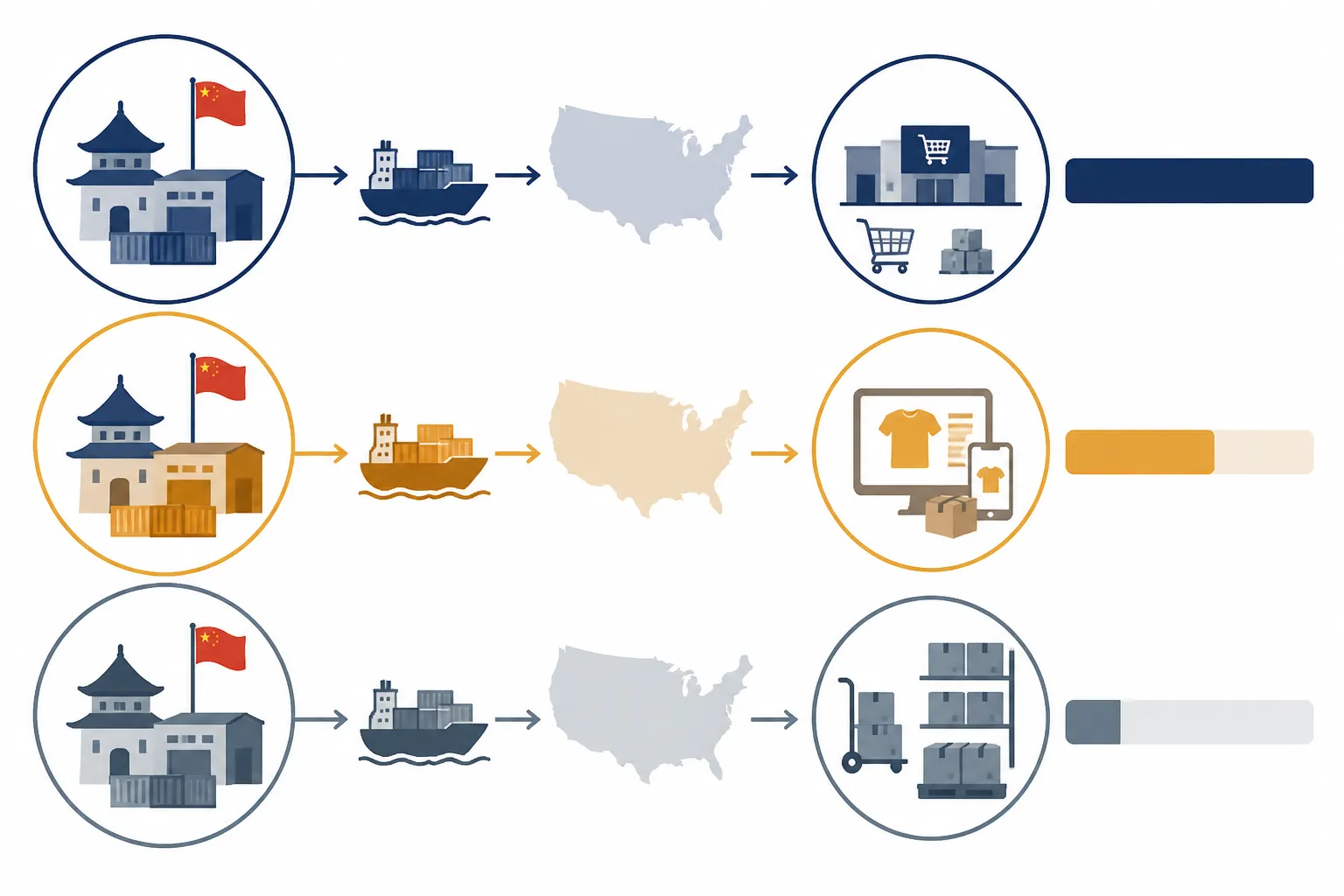
The United States remains the world's largest single-country importer of Chinese goods, with bilateral merchandise trade exceeding $500 billion annually according to U.S. Census Bureau data. Within that massive flow of commerce, the concept of "china merchants" — Chinese suppliers, trading companies, factory representatives, and exporters actively engaging with the U.S. market — has evolved dramatically over the past decade. Where once a U.S. buyer had to rely on trade show introductions or expensive sourcing agents to connect with verified Chinese manufacturers, digital infrastructure and AI-native platforms have compressed the discovery and verification cycle to hours rather than months.
The demand side in the United States spans an unusually wide buyer spectrum. At the enterprise level, major retailers and contract manufacturers maintain full-time Asia sourcing offices and rely on established relationships with tier-one Chinese factories. But the more dynamic growth is happening in the mid-market: independent e-commerce brands, TikTok Shop merchants, Amazon private-label sellers, and DTC operators who need reliable Chinese supply chains but lack the procurement staff of a Fortune 500 company. Industry estimates suggest that more than 60% of U.S. small-to-midsize businesses that import from China have fewer than three dedicated sourcing staff, making self-service supplier discovery tools increasingly critical.
A third buyer profile — often overlooked in generic trade coverage — is the overseas Chinese community operating retail and wholesale businesses across U.S. cities. From restaurant supply chains to specialty food importers to textile distributors serving ethnic enclaves in New York, Los Angeles, Houston, and San Francisco, these buyers have deep cultural ties to Chinese suppliers but still face the same operational challenges around payment security, quality assurance, and logistics that any other U.S. importer encounters. Understanding all three buyer profiles is essential to evaluating any platform or service that positions itself within the china merchants ecosystem in the United States.
What's Specific About the United States
Regulatory and Compliance Environment
The U.S. regulatory framework for importing from Chinese merchants is among the most complex in any single national market. Key frameworks every buyer and supplier must understand include:
U.S. Customs and Border Protection (CBP) enforces all import classifications under the Harmonized Tariff Schedule of the United States (HTSUS). Section 301 tariffs, introduced in 2018–2019 and periodically revised, still apply across most Chinese goods categories at rates ranging from 7.5% to 25%, with some categories subject to 145% under the most recent executive actions as of early 2026. Buyers sourcing from china merchants must factor tariff classification into landed-cost calculations before committing to a price.
The Uyghur Forced Labor Prevention Act (UFLPA), enacted in December 2021, creates a rebuttable presumption that goods with inputs from Xinjiang are produced with forced labor, barring their import. Any supplier sourcing cotton, polysilicon, tomato products, or a growing list of designated materials from Xinjiang must provide supply chain documentation sufficient to rebut this presumption. U.S. buyers should require a UFLPA compliance statement and supply chain mapping as standard due-diligence documents.
FCC certification, FDA registration, CPSC compliance, and UL/ETL listings apply depending on product category. Electronics must carry FCC Part 15 authorization; food-contact and consumable products require FDA facility registration; children's products are subject to CPSC's Children's Product Certificate requirements. A reputable china merchants platform or sourcing partner should be able to advise on which certifications apply to your product category and which Chinese factories already hold them.
FinCEN / Bank Secrecy Act requirements mean that U.S. businesses wiring large payments to Chinese suppliers face enhanced due-diligence expectations from U.S. banks. Transactions above $10,000 trigger mandatory reporting; patterns that look like structuring trigger Suspicious Activity Reports. This is not a reason to avoid wire transfers, but it underscores why buyers need verified banking details and legitimate commercial invoices for every transaction.
Cultural and Language Considerations
English-language communication with Chinese suppliers has improved substantially, but nuance still matters. Most tier-one factories in Shenzhen, Dongguan, Yiwu, and Ningbo have English-speaking sales staff; smaller OEM/ODM factories in inland provinces may not. Misunderstandings around product specifications, tolerances, and packaging requirements remain the leading cause of quality disputes — not because of bad faith, but because technical vocabulary does not always translate precisely.
U.S. buyers should request spec sheets in metric and imperial units, use annotated photos rather than text-only descriptions for complex design requirements, and confirm quality checkpoints in writing via email rather than relying solely on WeChat conversations, which are harder to enforce in dispute resolution.
Payment Methods Common in U.S.-China Trade
- T/T (Telegraphic Transfer / wire): The dominant method. Typically structured as 30% deposit, 70% balance against shipping documents or upon inspection.
- Letter of Credit (L/C): Preferred by larger U.S. buyers for orders above $50,000; provides payment security for both parties.
- Alibaba Trade Assurance / similar escrow platforms: Increasingly used by mid-market buyers for first-order risk mitigation.
- PayPal / Wise: Common for sample payments and small trial orders; not practical for production volumes.
- ACH / domestic USD transfer via U.S.-based intermediaries: Used when Chinese suppliers maintain U.S. banking relationships.
Credit card payments remain unusual for production-scale orders and typically carry a 2–4% surcharge.
How to Choose a China Merchants Provider in the United States
Whether you are evaluating a sourcing platform, a trading company, or a tech-enabled supplier marketplace, the following criteria are particularly important in the U.S. context:
1. Verifiable supplier credentials tied to U.S. import requirements A provider operating in the U.S. market should be able to confirm which of their listed suppliers hold relevant certifications (FCC, FDA, CPSC, ISO 9001, BSCI, etc.) and whether those certificates are current and independently audited. Avoid platforms that list certificates without verification dates or third-party audit references.
2. UFLPA and supply chain transparency Given the legal exposure created by the UFLPA, any china merchants platform worth evaluating in 2026 should have a documented supply chain mapping process. Ask directly: "Can you provide a bill of materials trace to the raw material level for products in this category?"
3. Time-zone coverage and response SLA The 12–16 hour time difference between U.S. coasts and China is a real friction point. Suppliers with dedicated U.S. time-zone customer service (or AI-powered 24/7 inquiry response) dramatically reduce the back-and-forth delay that stretches simple spec confirmations into week-long email threads.
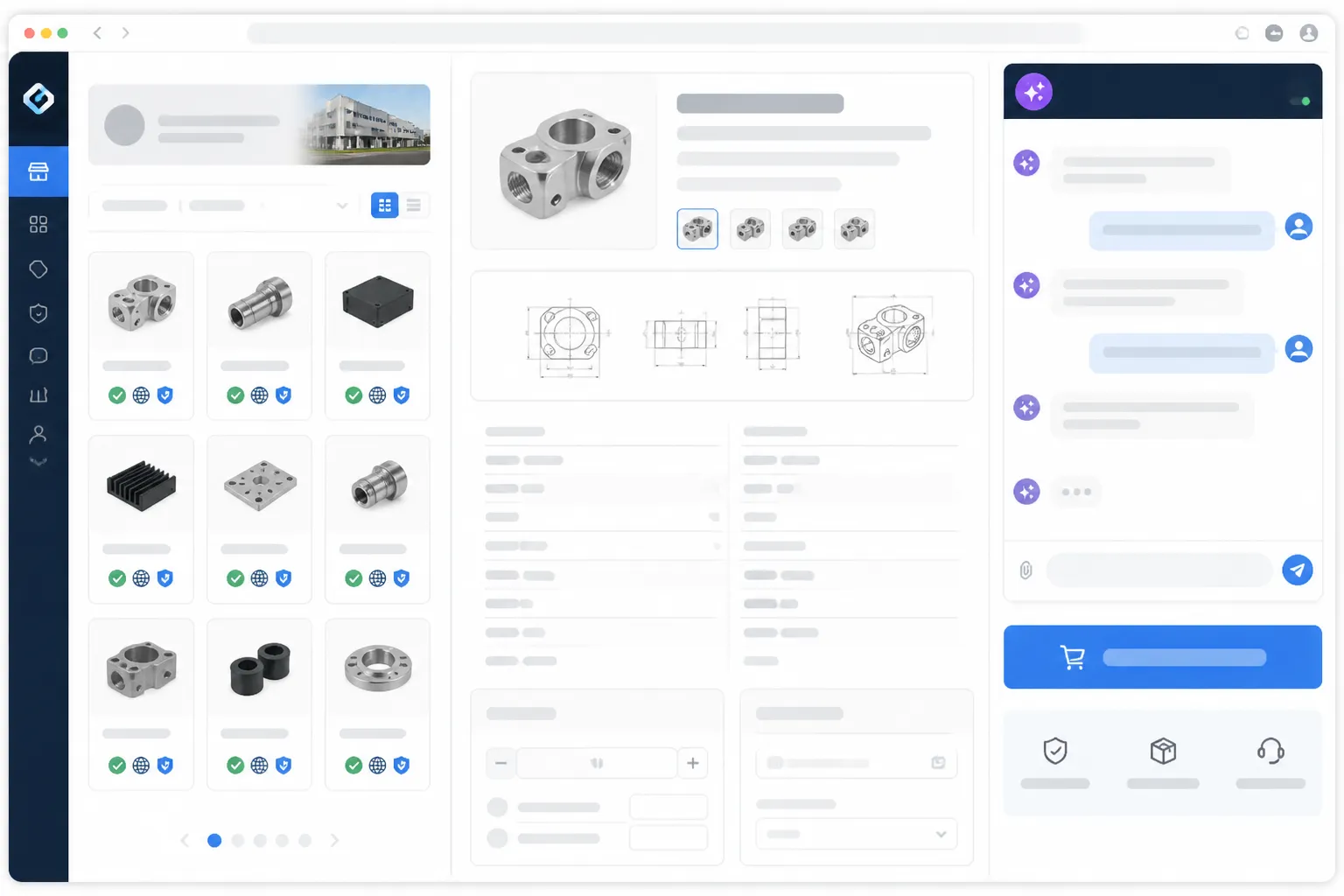
This is precisely where AI-native infrastructure makes a measurable difference. Link4a's Inbox product, for example, provides a 24/7 multilingual inquiry AI that responds to U.S. buyer inquiries in real time — eliminating the overnight communication gap that plagues traditional factory-direct relationships. For U.S. DTC operators and TikTok merchants who move fast and need supplier confirmation within hours, not days, that operational capability is a genuine differentiator.
4. Matchmaking speed and supplier breadth For buyers who do not yet have a fixed supplier relationship, the time to first qualified match matters. Link4a's Match engine delivers supplier matches in an average of 3 seconds, drawing from a network of 300+ verified factories. Compare that with the typical 3–7 day turnaround for RFQ responses on legacy B2B directories.
5. U.S. legal recourse and dispute resolution Understand what recourse you have if a dispute arises. Suppliers with U.S.-registered entities, U.S.-based bank accounts, or trade assurance coverage through a recognized escrow provider offer stronger buyer protection than factory-direct relationships with no U.S. legal nexus.
6. Language support and localization quality For U.S. buyers unfamiliar with Chinese business culture, a platform that provides English-language product pages, localized pricing in USD, and human-readable compliance documentation removes significant friction. Platforms like Link4a that support brand-to-independent-site deployment (via Sitebox, which can go live in under 30 minutes) enable Chinese suppliers to present professional, English-language storefronts to U.S. buyers — replacing the informal WeChat catalog experience with something closer to a branded e-commerce site.
Pricing in the United States
Pricing in U.S.-China trade is multidimensional. The factory FOB price is only the starting point; U.S. landed cost routinely runs 40–80% above FOB depending on category and logistics choices.
Typical cost components for U.S. importers:
| Cost Element | Typical Range (USD) |
|---|---|
| FOB Factory Price | Baseline |
| Ocean Freight (FCL, Asia → U.S. West Coast) | $1,500–$4,500 per 20' container |
| U.S. Customs Duties (Section 301 + MFN) | 7.5%–145% of declared value, category-dependent |
| ISF Filing + CBP Entry | $150–$350 per shipment |
| Drayage (port to warehouse) | $400–$1,200 depending on destination |
| 3PL Warehousing + Fulfillment | Varies by SKU/volume |
| Quality Inspection (pre-shipment) | $200–$350 per man-day |
What drives price variation in the U.S. market:
- Tariff exposure: Products under high Section 301 tariff rates (e.g., solar cells, certain electronics at 25–145%) face dramatically higher landed costs than goods in lower-tariff categories. Some buyers have shifted sourcing to third countries to mitigate this; reputable china merchants platforms should be transparent about which products carry elevated tariff risk.
- MOQ requirements: Factory pricing typically follows volume tiers. Request your target MOQ early and ask for a tiered price break schedule. Never assume the quoted unit price applies at quantities below the minimum.
- Logistics mode: Air freight is 6–10x the cost of ocean per kilogram but cuts lead time from 30–45 days to 5–7 days. For high-value, time-sensitive products, the math sometimes favors air; for most manufactured goods, ocean FCL or LCL is the baseline.
- Platform fees: Sourcing platforms and trading companies typically charge either a commission on transaction value (commonly 3–8%) or a subscription/SaaS fee. AI-native platforms like Link4a offer infrastructure-as-a-service pricing that can be more cost-effective for buyers with ongoing, high-volume sourcing needs.
- Payment terms: Suppliers offering Net 30 or Net 60 terms (rare but available with established relationships) effectively provide working capital financing. Factor the cost of 30% upfront deposits into your cash flow projections.
Common Challenges for U.S. Buyers Engaging China Merchants
Logistics and Lead Time Uncertainty
Ocean transit times from Chinese ports to U.S. West Coast (Los Angeles/Long Beach) average 14–18 days; to East Coast ports (Savannah, New York/New Jersey) via Panama Canal, 25–35 days. But port congestion, vessel delays, and customs holds can add 1–3 weeks unpredictably. U.S. buyers who have been burned by late inventory ahead of peak seasons know that "estimated arrival" from a Chinese factory sales rep is not a logistics commitment. Buyers should require freight booking confirmation, B/L copies, and real-time tracking integration.
Regulatory and Tariff Risk
The tariff landscape has been one of the most volatile policy environments in U.S. trade history since 2018. Section 301 tariff rates have been modified multiple times through executive action, with limited advance notice. U.S. buyers with deep single-category exposure to Chinese supply chains should maintain scenario plans for tariff escalation and ideally work with a licensed customs broker who monitors USTR actions actively.
Supplier Verification and Quality Assurance
The most common complaint from first-time U.S. buyers dealing directly with Chinese suppliers is sample-to-production quality divergence. A factory produces a pristine sample, wins the order, and then ships production units that fall short of the approved standard. Mitigation strategies include: (a) pre-production inspection of first article samples, (b) inline inspection during production, (c) pre-shipment inspection of finished goods, and (d) working only with suppliers who have verifiable third-party audit history (BSCI, SA8000, ISO 9001).
Communication and Specification Management
As noted in the cultural context section above, technical miscommunication is a persistent risk. U.S. buyers should develop a discipline of formal specification documentation — engineering drawings, approved sample photos with annotated tolerances, material safety data sheets — rather than relying on informal chat-based communication.
Payment Security and Fraud Risk
Wire fraud targeting U.S. businesses engaged in international wire transfers is a real and growing threat. Business Email Compromise (BEC) schemes that intercept supplier payment instructions and redirect funds to fraudulent accounts have caused billion-dollar losses annually across U.S. businesses, according to FBI IC3 reporting. Always verify banking detail changes via a phone call to a known contact number — never via email alone.
Finding Verified Suppliers at Scale
For buyers who need to source across multiple categories or scale their sourcing operations rapidly, the traditional approach of attending Canton Fair once a year or browsing Alibaba listings does not scale efficiently. AI-native matchmaking platforms like Link4a's Match engine address this by processing buyer requirements against a structured database of verified factory capabilities — returning qualified matches in seconds rather than days, and integrating directly into the broader workflow of inquiry management, site deployment, and content-driven lead generation via Reach.
Frequently Asked Questions (United States-Specific)
Q1: Do I need a customs broker to import from Chinese merchants into the United States?
Technically, U.S. importers can self-file entries with CBP for shipments under $2,500 (the informal entry threshold). For commercial shipments above that threshold, you are not legally required to use a licensed customs broker, but it is strongly recommended. A licensed customs broker navigates HTSUS classification, ensures accurate duty payment, manages ISF filings (required at least 24 hours before vessel departure), and can flag compliance issues before goods arrive. Given the complexity of Section 301 tariffs and UFLPA enforcement, the cost of a customs broker ($150–$350 per entry) is typically well justified.
Q2: How do Section 301 tariffs affect the cost of buying from China merchants?
Section 301 tariffs are charged as a percentage of the declared customs value (typically FOB or transaction value). Depending on the HTSUS classification of your product, additional duties of 7.5%, 25%, or — under the most recent executive actions — up to 145% may apply on top of standard Most Favored Nation (MFN) duty rates. The practical impact varies enormously by category: consumer electronics components, apparel, and industrial goods face very different tariff stacks. Always request your supplier's HS code, then verify the applicable duty rate at the USITC Harmonized Tariff Schedule website or via your customs broker before committing to a sourcing price.
Q3: How can I verify that a Chinese merchant or factory is legitimate before sending a deposit?
Request and verify: (1) Business license (营业执照) — a Chinese company registration document; (2) Factory audit report from a recognized third-party auditor (SGS, Bureau Veritas, Intertek, TÜV); (3) Export license or proof of prior U.S. shipment history (such as prior Bills of Lading or customs entry records); (4) Product certifications relevant to your category (FCC, FDA, UL, CE). For additional confidence, conduct a virtual or in-person factory visit, use a trade assurance or escrow payment mechanism for first orders, and start with a smaller trial order before committing to full production volumes.
Q4: What MOQ (minimum order quantity) should I expect from Chinese merchants targeting the U.S. market?
MOQ varies enormously by product category, factory size, and whether you are ordering a standard catalog item or a custom OEM/ODM product. Custom-manufactured products typically carry higher MOQs because the factory must set up tooling and production runs specific to your specification. When evaluating a supplier, always request their MOQ for your specific product at the specification level — not a generic answer. If their stated MOQ exceeds your initial volume needs, ask whether they offer a higher-per-unit price for a smaller trial quantity, which many factories will accommodate for new buyer relationships.
Q5: How does the UFLPA affect which Chinese merchants I can buy from?
The Uyghur Forced Labor Prevention Act creates a legal presumption that any goods with inputs from Xinjiang are produced with forced labor, unless an importer can provide evidence sufficient to rebut that presumption — a standard CBP has described as requiring "clear and convincing evidence," which is a high bar. In practice, U.S. buyers sourcing products in categories with Xinjiang supply chain exposure (cotton apparel, solar panels, polysilicon, aluminum, certain food products) must obtain supply chain documentation from their Chinese suppliers mapping inputs to their origin. Suppliers unwilling or unable to provide this documentation present legal and financial risk to U.S. importers.
Q6: Are there time-zone solutions for communicating with China merchants when my team works U.S. business hours?
Yes, and this has improved substantially with AI-native trade infrastructure. Platforms that provide 24/7 automated inquiry handling — such as Link4a's Inbox — allow U.S. buyers to submit product inquiries, spec questions, and quote requests at any hour and receive substantive responses without waiting for China business hours. For high-stakes negotiations or technical discussions, scheduling a live call during the overlap window (U.S. morning / China evening) or using asynchronous video messages via tools like Loom has become standard practice among experienced cross-border buyers.
Q7: What's the best way for a TikTok or DTC brand to find verified Chinese suppliers without going through a trading company?
Factory-direct sourcing is more accessible than ever for U.S. DTC and social commerce brands, particularly through AI-native matchmaking platforms. The key steps: (1) Define your product specification clearly — material, dimensions, packaging, certifications needed; (2) Use a matchmaking platform (such as Link4a's Match engine) to identify factories with relevant production capabilities; (3) Request sample orders from 2–3 shortlisted factories and evaluate quality against spec; (4) Conduct or commission a third-party factory audit before placing production orders; (5) Use trade assurance or escrow for initial payments. Skipping the trading company layer can reduce per-unit cost by 10–20%, but it also removes a layer of quality and logistics management that the trading company would otherwise handle — understand the tradeoff before going factory-direct.
Get Started: Connecting with China Merchants in the United States
If you are a U.S. buyer — whether an established importer, a growing DTC brand, or a TikTok Shop merchant building out your supply chain — the barriers to working directly with verified Chinese merchants have never been lower. The key is using infrastructure that was built for this workflow end-to-end, rather than stitching together fragmented tools.
Here is a concrete action sequence:
Define your procurement requirements — product category, target unit cost, annual volume, required certifications, and U.S. regulatory obligations specific to your category.
Run a supplier match — use Link4a's Match engine to identify verified Chinese factories with the production capabilities that fit your spec. At an average of 3 seconds per match, you can generate a shortlist of qualified suppliers in the time it used to take to compose a single RFQ email.
Engage suppliers through structured inquiry — Link4a's Inbox AI handles 24/7 multilingual inquiry management, so U.S. buyers can exchange spec questions and quote requests without waiting for China business hours to begin. Ask for: MOQ, unit pricing at your target volume, lead time, production capacity, available certifications, and UFLPA supply chain documentation if applicable.
Evaluate supplier storefronts — suppliers operating on Link4a's Sitebox platform present English-language brand sites with product catalogs, certification documentation, and inquiry forms — a substantially more reliable basis for evaluation than a WeChat business card or an Alibaba listing.
Request samples and conduct due diligence — commission a third-party factory audit, order samples at the specification level, and confirm quality against your approved standard before committing to production volume.
Negotiate terms and place a trial order — structure payment to protect your interests (trade assurance, escrow, or L/C for larger orders), confirm your HTSUS classification and landed cost with your customs broker, and set a formal quality inspection plan.
Link4a's full AI-native platform — Sitebox, Inbox, Match, and Reach — supports both sides of this relationship: Chinese factories getting their verified capabilities in front of U.S. buyers, and U.S. buyers accessing a structured, AI-driven discovery and inquiry workflow that replaces the slow, informal channels that have historically made cross-border sourcing so friction-heavy.
With 300+ factories already on the network and 1,400+ supplier sites live, the platform has meaningful coverage across the manufacturing categories most relevant to U.S. importers.
Ready to find your next verified Chinese supplier?
Submit your product requirements and get matched with verified Chinese manufacturers. Get MOQ & pricing details, request samples, and connect with suppliers who are set up to serve the U.S. market — all through one AI-native platform built for cross-border trade.
This article is intended as an informational guide for U.S. buyers. Tariff rates, regulatory requirements, and trade policy are subject to change. Consult a licensed customs broker and qualified legal counsel for advice specific to your import situation.