National Standards in China Sourcing: How to Verify Before You Order

National Standards in China Sourcing: How to Verify Before You Order
National standards are the codified technical benchmarks — covering materials, processes, safety thresholds, testing protocols, and labeling requirements — that govern how a product may be manufactured, tested, and sold. In the context of Chinese supply chains, understanding national standards is not a compliance formality; it is a procurement risk filter that separates reliable factories from ones that will fail your market's customs inspection.
For overseas sourcing buyers, DTC operators, and TikTok creators building private-label brands, standards compliance determines whether your shipment clears port, whether your product can be legally listed on Amazon or Shopify, and whether a consumer recall is a possibility. Getting it right starts before the purchase order is signed.
This guide breaks down China's national standards framework, explains how it maps to international equivalents, and gives you a concrete checklist to apply at every stage of supplier evaluation.
What Are National Standards? A Working Definition
National standards are officially published technical specifications issued by a country's standards body that define minimum or recommended requirements for products, services, and processes. In China, these are called GB standards (国家标准, Guójiā Biāozhǔn), administered by the Standardization Administration of China (SAC). They cover everything from textile fiber content labeling to lithium battery discharge safety to food contact material migration limits.
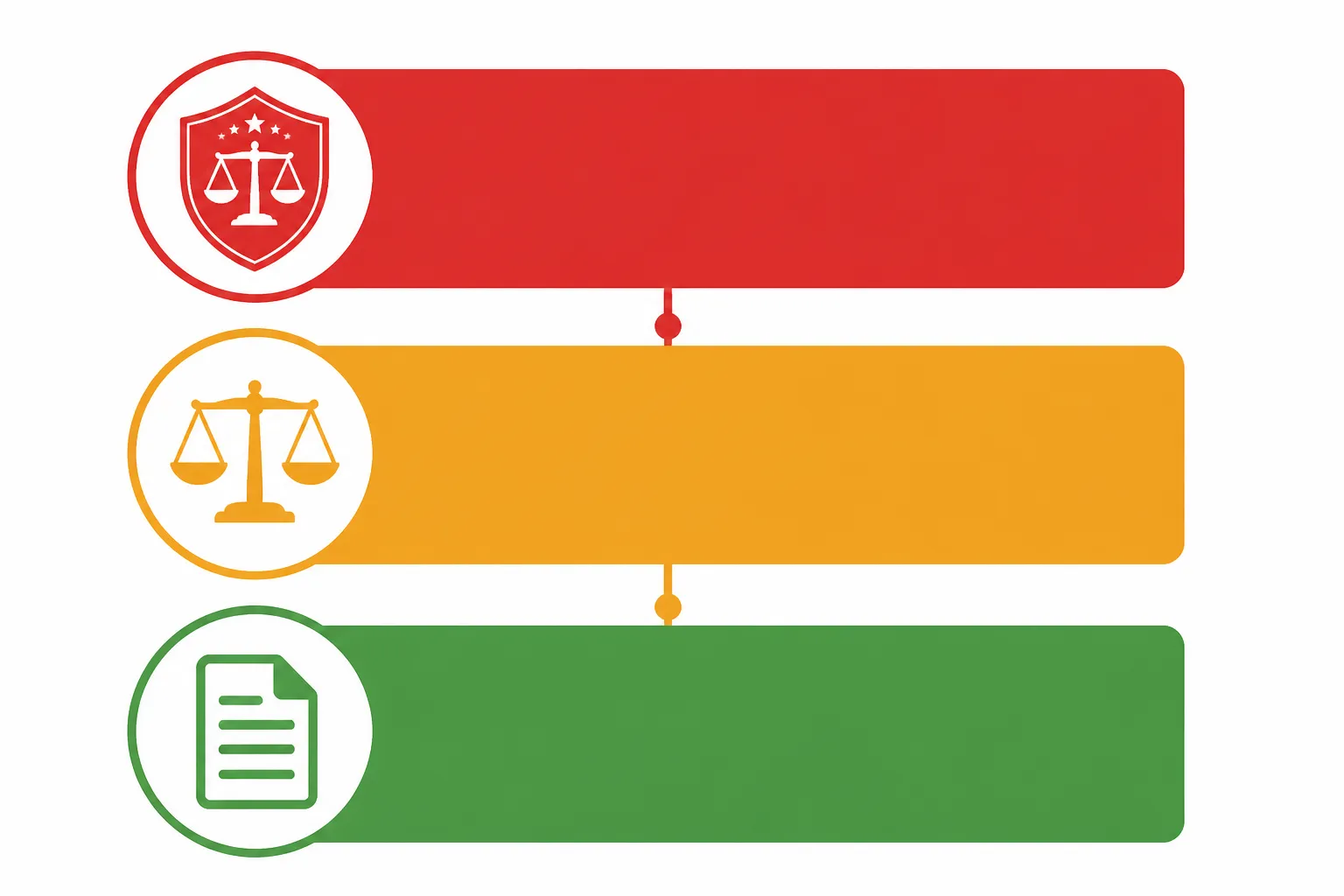
China's GB system uses three tiers:
- GB (mandatory) — non-negotiable legal minimums. Non-compliance can result in customs seizure, market withdrawal, or criminal liability for the importer.
- GB/T (recommended) — voluntary benchmarks that represent industry best practice. Most professional factories target GB/T even when GB alone is required, because buyers use them as a differentiation signal.
- GB/Z (guidance) — technical guidance documents, typically for emerging or niche product categories.
Adjacent to GB are two industry-level tiers: HB (行业标准, sector standards issued by ministries) and QB (企业标准, enterprise standards self-declared by factories). When a factory quotes QB compliance, probe further — enterprise standards can be self-set and may sit below GB/T quality levels.
China's GB Standard System: What Buyers Actually Encounter
When you open a factory audit report or a product test certificate from a third-party lab (SGS, Bureau Veritas, Intertek), you will see GB standard references in the format GB/T XXXXX-YYYY, where XXXXX is the standard number and YYYY is the revision year.
Common GB standard families relevant to global DTC and OEM sourcing:
| Product Category | Relevant GB Standard | International Equivalent |
|---|---|---|
| Children's toys | GB 6675 series | EN 71 (EU), ASTM F963 (US) |
| Textiles / apparel | GB 18401 | Oeko-Tex Standard 100 |
| Consumer electronics (low voltage) | GB 4706 series | IEC 60335 series |
| Lithium batteries | GB 31241 | IEC 62133 |
| Food contact plastics | GB 4806 series | EU 10/2011 |
| Cosmetics | GB 7916 | ISO 22716 (GMP) |
A factory holding a current test certificate under the relevant GB standard — issued within the last 12 months by an accredited third-party lab — provides an objective evidence trail that costs you nothing to request and eliminates a large category of quality risk.
Why National Standards Matter for Cross-Border Procurement
Market Access Is the First Gating Function
Your target market almost certainly has its own standards framework — CE marking in the EU, FCC/UL in the US, PSE in Japan, BIS in India. The question is whether the GB standard your factory is certified to has been harmonized with, or independently tested against, the destination market standard.
Where harmonization exists (many electrical safety standards align closely between GB 4706 and IEC 60335), a factory holding a valid GB certificate has cleared most of the technical burden for an EU CE Declaration of Conformity. Where gaps exist — particularly in children's products, food contact materials, and medical devices — you need supplemental testing to a destination-specific standard.
The cost of not checking: customs holds, destruction orders, emergency recalls, and listing suspensions. The cost of checking: a test certificate request and one email to a lab. The asymmetry is obvious.
Standards Signal Factory Maturity
A factory with no GB/T certifications is not automatically disqualified, but it is a flag. Most factories serving international OEM customers have invested in third-party certification because buyers require it. When a factory cannot produce a current test report for their primary product category's GB standard, you are likely dealing with a factory that:
- serves only domestic customers with lower enforcement pressure,
- is operating below the technical threshold for export quality, or
- has documentation but has not maintained ongoing compliance (i.e., the certificate is expired or covers a superseded version of the standard).
Requesting test reports as part of your RFQ checklist is a low-friction filter. Factories that respond quickly with valid, third-party-issued certificates are demonstrating procurement readiness.
Liability Transfers With Evidence
For DTC operators building a brand, the liability question is central. If a consumer product causes injury and your brand's name is on the packaging, you are in the chain of liability regardless of where the factory is located. A documented standards compliance trail — test reports, audit records, material certifications — is your primary evidence in any product liability dispute. It also determines whether your product liability insurance policy pays out.
How to Verify a Supplier's National Standards Compliance
Verification is not the same as taking a factory's word. The following checklist covers what to request and what to check.
Step 1: Request Current Third-Party Test Reports
Ask for test reports issued by an accredited lab (CNAS or ILAC-recognized), dated within 12 months, covering the GB standard applicable to your product category. Verify the certificate number is traceable on the lab's online portal (SGS, BV, Intertek all have public verification tools).
Red flags: Reports issued by in-house labs, reports older than 18 months, reports that cover a superseded standard revision.
Step 2: Check the Scope of the Certificate
A factory may hold a GB/T certificate for one product SKU but manufacture 50. Confirm the certificate scope matches your specific product model, material composition, and intended end use.
Step 3: Audit Enterprise Standards (QB) Declarations
If the factory references QB standards, request the full text of their self-declared enterprise standard and compare it against the relevant GB/T benchmark. Reputable factories set their QB above GB/T; this is a competitive differentiator they will highlight.
Step 4: Request a Bill of Materials (BOM) Against Standards
For regulated product categories — electronics, toys, food contact, cosmetics — ask for a BOM that maps each material or component to its GB compliance status. This is standard practice for factories supplying major international retailers.
Step 5: Verify Ongoing Compliance via Factory Audit
For orders above a threshold you set based on risk tolerance, commission a factory audit from a third-party firm. Audit scope should include: standards documentation review, production process observation, incoming material QC, and finished goods testing protocol.
Key National Standards Categories by Product Type
Electronics and Electrical Appliances
The GB 4706 series (household appliances) and GB 4943 (IT equipment) are the most commonly encountered in cross-border sourcing. For any product with a battery, GB 31241 (portable lithium cells) and GB 38031 (EV batteries) set the baseline. Factories supplying to EU or US markets will often hold dual certification: GB + IEC or GB + UL.
What to ask: "Can you provide current third-party test reports for GB 4706 / GB 4943 and your CE/FCC certifications for this SKU?"
Textiles and Apparel
GB 18401 is China's mandatory national standard for textile safety — it covers formaldehyde content, pH, color fastness, and decomposable aromatic amine dyes. Most professional textile factories targeting export also hold Oeko-Tex Standard 100 certification, which is more rigorous and internationally recognized.
What to ask: "Is your fabric certified under GB 18401? What Class? Do you also hold Oeko-Tex certification for your materials?"
Toys and Children's Products
GB 6675 is one of the most detailed GB standard families. It covers mechanical and physical safety, flammability, chemical properties, and electrical safety. Factories exporting to the EU or US must additionally meet EN 71 and ASTM F963 respectively. These do not fully overlap — you need separate certifications for each destination market.
Cosmetics and Personal Care
GB 7916 (cosmetics safety) and the 化妆品安全技术规范 (Cosmetics Safety Technical Specification, CSTS) govern formulation. If your product is destined for EU or US markets, EU Cosmetics Regulation 1223/2009 or FDA 21 CFR compliance is an additional layer. Request the full ingredient INCI list and a certificate of compliance from the factory's cosmetics formulator.
When to Require National Standards vs. International Equivalents
The decision tree is straightforward:
If selling in China (domestic market or cross-border e-commerce to Chinese consumers): GB mandatory standards are non-negotiable. GB/T benchmarks are your quality floor.
If selling in EU: Confirm which GB standards have been harmonized with EN/IEC equivalents. For harmonized categories, a valid GB third-party test report can supplement but typically does not replace a full CE technical file. For non-harmonized categories (most toys, cosmetics, food contact), commission destination-market testing independently.
If selling in US: The US has no mandatory pre-market certification for most consumer goods, but CPSC regulations, FCC rules, and ASTM voluntary standards create a de facto compliance framework. A factory with strong GB/T compliance will typically pass ASTM testing — but commission independent testing to confirm before your first shipment.
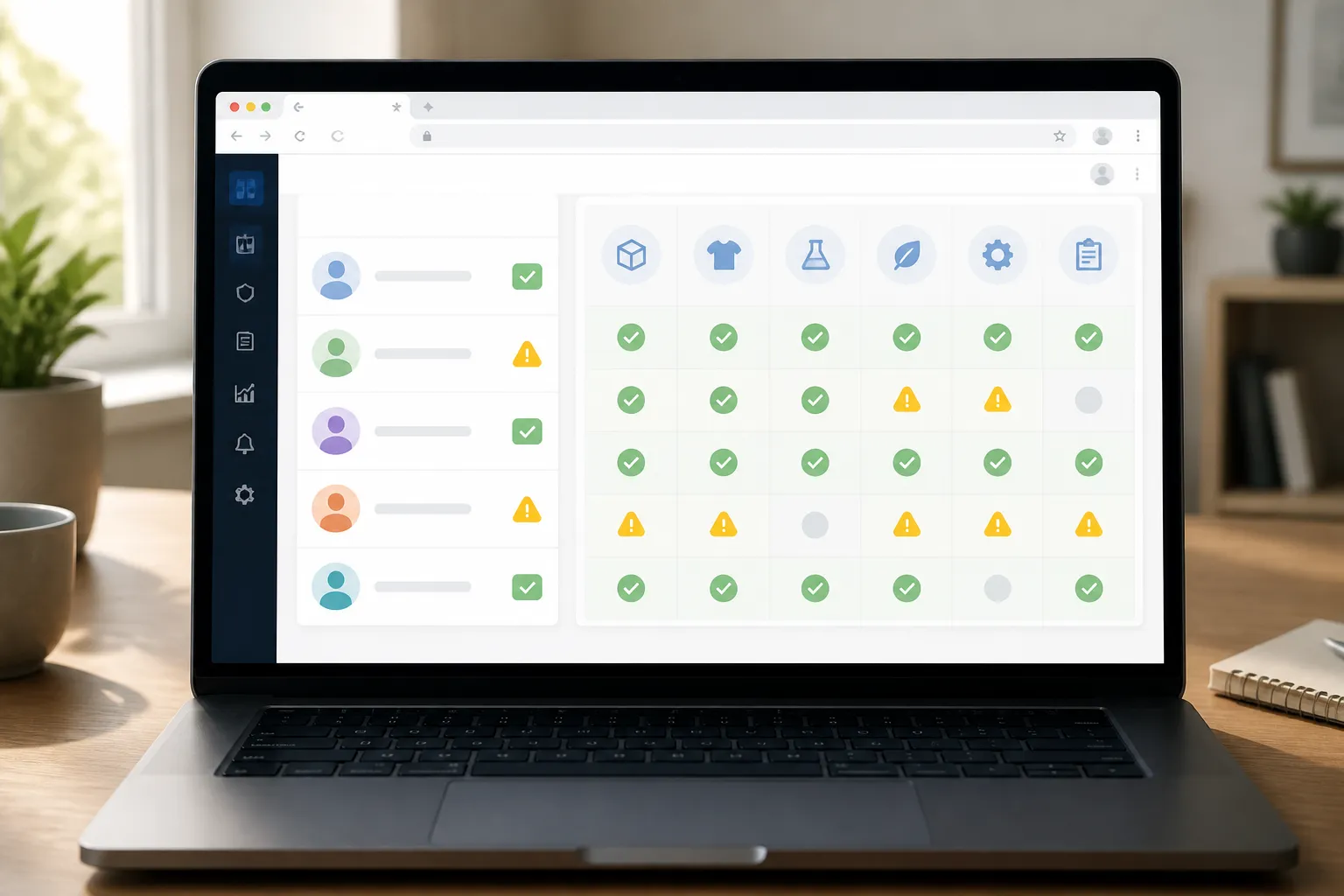
If selling across multiple markets simultaneously: Build a compliance matrix by SKU and destination at the RFQ stage. Factories experienced in international OEM work will have templates for this. Factories that don't recognize the request are not your target supplier for multi-market distribution.
Benefits of Sourcing from Standards-Compliant Chinese Factories
Reduced Customs and Regulatory Risk
Products with documented standards compliance clear customs faster and with fewer holds. For high-volume DTC operators with tight inventory cycles, a customs hold is a revenue event. Standards documentation is the cheapest insurance against it.
Stronger Brand Protection
If you are building a private-label brand — on Amazon, Shopify, TikTok Shop, or your own independent site — the brand is the asset. A product liability event or a viral defect video can destroy it. Sourcing from GB-certified factories, with documented test reports in your vendor file, is the evidence trail that distinguishes negligence from due diligence if something goes wrong.
Better Supplier Relationships
Factories that invest in standards certification are factories that invest in process discipline. They track material lots, maintain calibrated test equipment, retain production records, and respond to non-conformances with root cause analysis rather than excuses. These are the operational behaviors that translate to consistent quality across repeat orders.
Faster OEM Customization Cycles
Standards-compliant factories have already documented their materials and processes to the level required for OEM customization. When you request a custom color, formulation, or component substitution, they can assess standards impact and give you an engineering answer — not a guess.

How Technology Is Streamlining Standards Verification in 2026
The traditional standards verification workflow — email chains, PDF attachments, manual spreadsheet tracking — is being replaced by AI-native procurement infrastructure. This is especially relevant for buyers managing 10+ SKUs across multiple factories and destination markets.
链上科技 (Link4a) is building AI-native cross-border trade infrastructure specifically for this layer of the sourcing process. Their Match engine performs supplier matchmaking in approximately 3 seconds against a verified factory database, surfacing compliance status as part of the match result rather than as a separate research step. Their Inbox tool handles 24/7 multilingual supplier inquiry management — meaning standards documentation requests, follow-ups on expired certificates, and BOM submissions are handled in the buyer's local language without manual translation overhead.
For sourcing buyers evaluating Chinese supply at scale, the combination of AI-assisted supplier matching with built-in compliance signal filtering changes the economics of due diligence. Verifying national standards compliance is no longer a specialist task that requires a sourcing agent on the ground in China; it becomes a structured data request embedded in the initial supplier outreach.
Link4a's platform currently serves 300+ factories with 1,400+ live sites, which means the verified factory dataset reflects actual production capacity and documented compliance status — not scraped directory listings.
Practical Procurement Checklist: National Standards Verification
Before finalizing any supplier and issuing a purchase order, work through this sequence:
- Identify the GB mandatory standard(s) applicable to your product category
- Request third-party test reports (CNAS/ILAC accredited lab, within 12 months) for each standard
- Verify certificate numbers on the issuing lab's public portal
- Confirm certificate scope matches your specific SKU, materials, and end use
- For destination-market standards (CE, FCC, ASTM): confirm which have been independently tested vs. claimed on the basis of GB equivalence
- For regulated categories (toys, electronics, food contact, cosmetics): request a BOM with material-level compliance declarations
- For orders above your risk threshold: commission a third-party factory audit
- File all documentation before the first shipment clears customs — not after
MOQ, pricing, and lead times vary by factory and product type. Before engaging a supplier, confirm: minimum order quantity for a standards-compliant production run [your MOQ], whether the quoted price includes third-party testing fees or treats them as a separate line item, and what the lead time is for a compliant first production run including test report turnaround time (typically 7–15 working days for most GB standard families).
Conclusion: Standards Compliance Is a Procurement Filter, Not a Formality
National standards — GB mandatory and GB/T recommended — are the technical backbone of Chinese manufacturing quality. For overseas sourcing buyers and DTC operators, understanding this framework is not an optional layer of sophistication; it is the baseline required to source responsibly, protect your brand, and ensure your products reach consumers legally and safely.
The practical takeaway is simple: build standards verification into your RFQ template, not your post-shipment QC process. Factories that cannot respond promptly with current, third-party-issued test certificates are telling you something about their operational maturity before you commit capital.
Ready to source from verified, standards-compliant Chinese factories?
Request a Supplier Match & Compliance Overview →
Link4a's Match engine connects you with vetted Chinese factories in seconds, with compliance documentation surfaced as part of the match — not as a manual follow-up. Request a quote, validate certifications, and go from inquiry to verified supplier faster than any traditional sourcing channel.
This article covers national standards in Chinese manufacturing as of 2026. GB standards are updated on rolling revision cycles; always verify the current active version of any standard with SAC (sac.gov.cn) or your third-party testing laboratory before finalizing product specifications.