China Natural Resources: What U.S. Importers Need to Know
China Natural Resources: What U.S. Importers Need to Know
China holds one of the world's most complete mineral endowments — 138 of 157 mineral resources with proven national reserves are found in its western region alone. For U.S. companies that import Chinese-made goods, this resource base is not an abstract geology fact. It directly shapes which products get manufactured, at what cost, and under what supply-chain pressures.
China Natural Resources in the United States — Market Overview
China is among the ten countries in the world with more than 15 billion tons of exploitable petroleum reserves, and its mineral catalogue spans coal, natural gas, lithium, cobalt, copper, phosphorus, and dozens of nonferrous metals. That portfolio is why U.S. industries — from consumer electronics and EV batteries to construction materials, pharmaceutical inputs, and jewelry — remain deeply tied to Chinese supply chains. The resource breadth is not incidental; it is the structural reason China became the world's manufacturing floor.
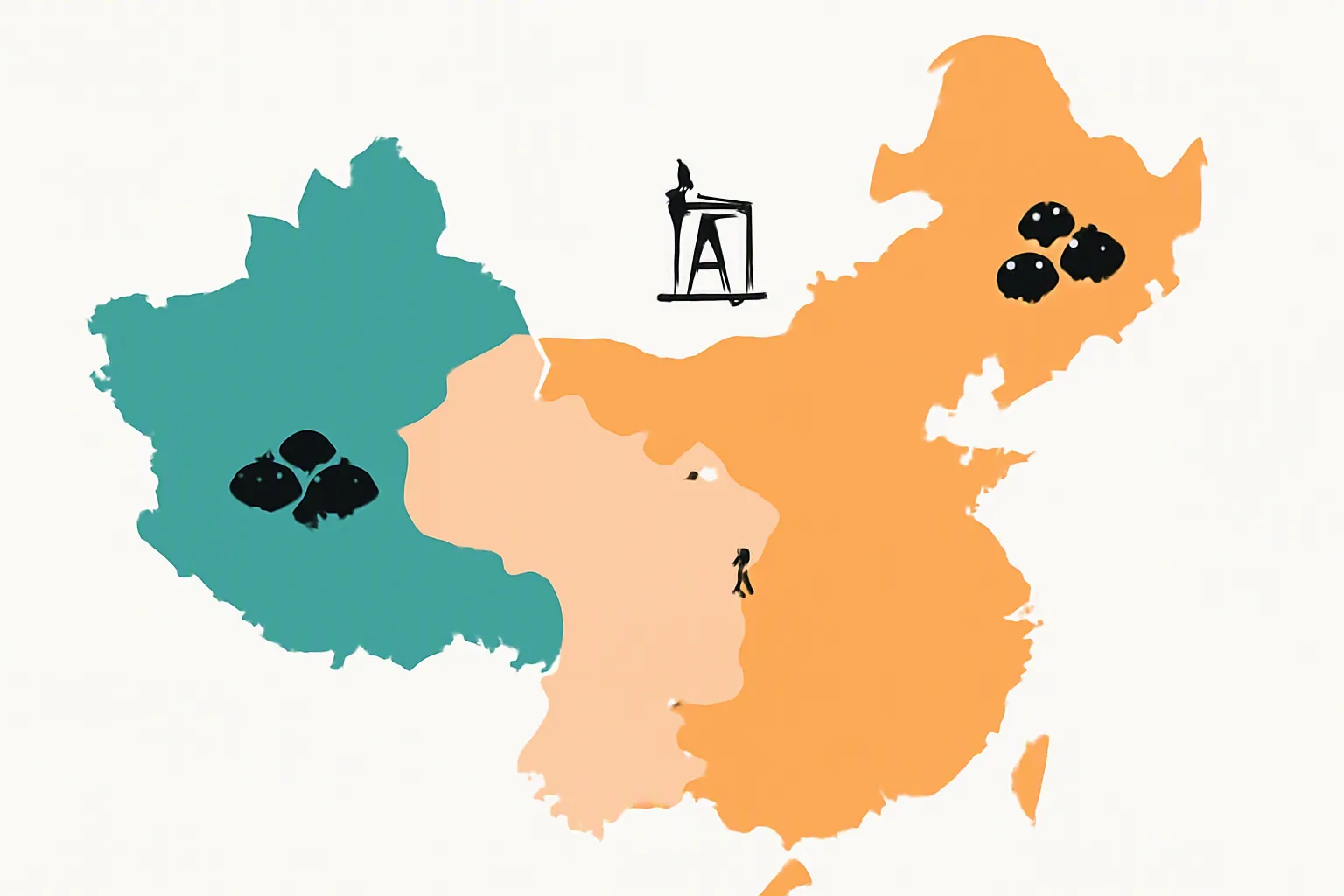
The geographic distribution of these resources defines how they reach global markets. China's central region serves as the country's largest energy and raw-materials base. More than 20 mineral categories there account for 50% or more of their respective national totals, and both raw coal and crude oil output each exceed 50% of national production. Major coal basins in Shanxi, Shaanxi, and Henan provinces feed thermal power generation and metallurgical coke exports, while the Zhongyuan and Jianghan basins anchor domestic crude oil extraction. The Ordos Basin, straddling Inner Mongolia and Shaanxi, holds some of the country's largest proven natural gas and coalbed methane deposits, supporting downstream chemical processing that supplies industrial buyers worldwide.
The western region adds another layer — rich in nonferrous metals and high-grade metallic ores, it accounts for the bulk of China's lithium and rare-earth supply that feeds global electronics manufacturing. The Bayan Obo deposit in Inner Mongolia remains one of the world's largest single sources of rare earth elements, critical for permanent magnets used in wind turbines, EV motors, and defense systems. Lithium extraction concentrates around salt lakes in Qinghai and Tibet, as well as hard-rock pegmatite deposits in Sichuan and Xinjiang, forming the upstream foundation for battery-grade lithium carbonate and hydroxide exported to cell manufacturers. Copper mining clusters in Tibet and Yunnan, while Xinjiang hosts significant polymetallic deposits including gold, nickel, and beryllium. Verified onshore petroleum reserves, meanwhile, represent only 20% of China's total petroleum resources, meaning the country's resource potential remains significantly underexplored.
For U.S. buyers, the relevant question is rarely "what does China have in the ground?" It is: how do those resources translate into finished or semi-finished goods that reach U.S. ports, and what constraints — trade policy, compliance rules, logistics realities, supplier reliability — govern your access to them? Demand in the United States comes from multiple buyer profiles: manufacturers needing raw-material inputs, importers reselling consumer products, DTC store owners building private-label brands, and online creators launching product lines who want a dependable sourcing partner rather than a gamble on a marketplace listing. That central-region concentration matters for U.S. importers: supply disruptions in Shanxi or the Zhongyuan basin ripple into global coal and metals pricing within weeks.
What's Specific About the United States
The regulatory environment governing import of China-derived goods into the United States is among the most layered in the world right now. U.S. Customs and Border Protection (CBP) enforces country-of-origin rules that affect tariff classification under Section 301 — the trade remedy applied to hundreds of Chinese product categories since 2018. Importers must track Harmonized Tariff Schedule (HTS) codes carefully. A product made partly from Chinese raw materials but finished in a third country may or may not qualify for tariff relief, depending on whether "substantial transformation" occurred at the finishing stage.
Sanction risk deserves its own paragraph. The Office of Foreign Assets Control (OFAC) maintains restricted-entity lists covering certain Chinese firms, particularly in sectors touching rare earths, cobalt, and semiconductor-adjacent minerals. More operationally significant for most importers: the Uyghur Forced Labor Prevention Act (UFLPA), enacted in late 2021, created a rebuttable presumption that goods mined, produced, or manufactured in Xinjiang — a major coal, cotton, and mineral region — were made with forced labor and are therefore banned from import. The burden of proof sits with the importer. Many small U.S. buyers do not discover this compliance gate until they receive a CBP detention notice.
Payment norms in U.S.-China import trade run through wire transfer (T/T), letters of credit, and platform escrow services like Alibaba Trade Assurance. The standard deposit structure is 30% to confirm production and 70% on balance before shipment, though factory relations and order history can shift these terms. The dollar is the universal pricing unit; invoices in CNY are uncommon except in specialized commodity deals.
India's rapid manufacturing expansion is worth noting here: it has become a secondary sourcing option for some U.S. importers looking to diversify away from China tariff exposure. But for most product categories — especially those dependent on China's mineral processing infrastructure — China's supplier density, tooling capacity, and logistics network remain unmatched. Relations between U.S. buyers and Chinese factories are most productive when treated as long-term partnerships rather than transactional spot purchases.
How to Choose a China Natural Resources Provider in the United States
"China natural resources" covers a wide spectrum — from raw ore to processed minerals to finished goods that embed Chinese-origin materials. Finding the right sourcing partner requires evaluating criteria that are specific to operating across this bilateral trade relationship.
Compliance awareness, not just sourcing speed. Any partner you work with should understand U.S. import compliance, not just Chinese export procedures. That means familiarity with UFLPA documentation standards, OFAC screening obligations, and CBP's HTS classification expectations. A sourcing partner who cannot tell you whether a factory sits in a UFLPA-risk region is a liability.
Factory vetting, not directory listings. Marketplace platforms aggregate traders, not manufacturers. A capable partner physically visits or third-party audits the factories they recommend — checking production capacity, quality controls, and whether the factory actually makes what it claims. With millions of registered Chinese factories, the shortlisting step is where most of the risk management happens.
MOQ and price negotiation reach. Small U.S. buyers — DTC store owners and online creators especially — frequently hit walls on minimum order quantities. A sourcing partner with established factory relationships can negotiate lower MOQs and better unit pricing than a cold-approach buyer achieves alone. Ask specifically: what MOQ has the partner already secured, and is it documented?
Time-zone and language coverage. The U.S.–China gap runs 12–15 hours depending on U.S. timezone. A partner with staff or operating hours that bridge both sides prevents the silent-day problem that stalls orders and kills momentum. Factory communications drafted in fluent Mandarin — not machine-translated English — prevent the specification drift that produces out-of-spec shipments.
Commission structure transparency. Some agents charge retainers regardless of outcome. Commission-only models, where the partner earns only when your order closes, align incentives cleanly for the buyer.
Link4a's sourcing approach covers all these dimensions — shortlisting vetted factories, negotiating MOQ and price, coordinating samples, handling repeat orders, and managing multilingual factory communication from inquiry through delivery. For factories, Link4a runs a managed overseas storefront across six languages with buyer conversations handled on the factory's behalf, charging commission only on closed orders.
Pricing in the United States
Pricing for goods derived from China's natural resources varies enormously by product category, mineral content, and order volume. A few frameworks help U.S. buyers orient themselves before entering negotiations.
Raw mineral inputs — lithium carbonate, cobalt sulfate, refined copper — are global commodities priced on exchanges like the LME and CME. U.S. buyers purchasing these directly from China pay import duties that vary by HTS code, plus ocean freight that has stabilized since pandemic peaks but remains elevated on certain lanes compared to pre-2020 baselines.
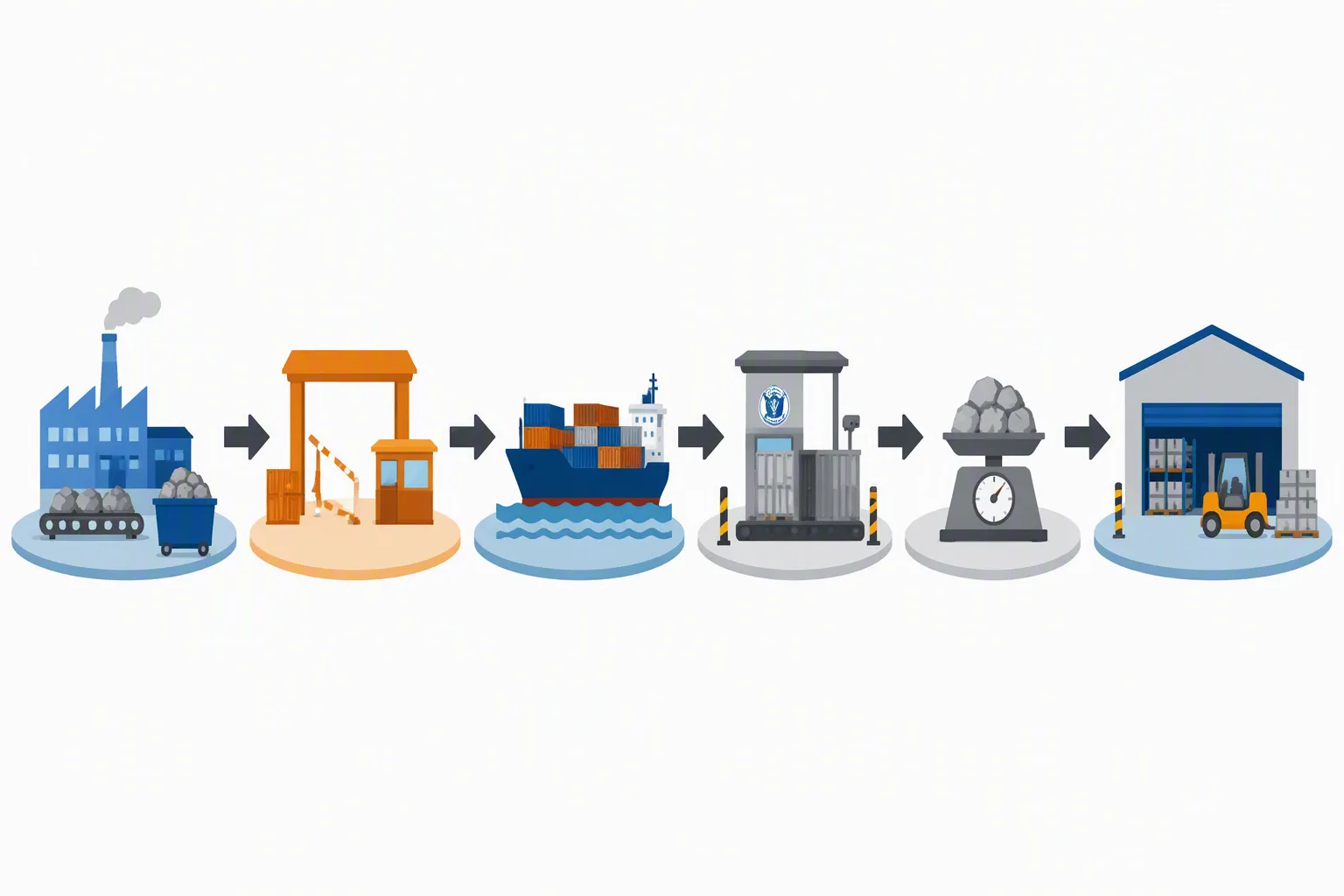
Manufactured goods with mineral content embed raw material cost plus manufacturing margin. The effective landed cost for a U.S. importer includes the FOB price in USD, ocean freight (quoted per container or per CBM for LCL shipments), marine insurance, CBP duties, and domestic trucking from port to warehouse.
As a concrete category example: jade jewelry — a product category directly tied to China's geological heritage and one of its most culturally significant mineral exports — spans a wide retail range depending on jade grade and craftsmanship. Chinese green jade pieces reflect a category where material provenance (origin mine, jade type, treatment disclosure) directly affects customs valuation and resale positioning for U.S. buyers. Documentation matters at the declaration stage.
What drives pricing shifts in the United States context:
- Section 301 tariff rate on the specific HTS code (7.5%–25% on most Chinese goods)
- CNY/USD exchange rate movements
- Raw material spot price volatility — especially visible in copper, lithium, and rare earths
- Factory production scheduling: Q4 is peak season; both lead times and unit pricing tighten
- Belt and Road Initiative infrastructure, which has reduced logistics costs from China's western provinces to export ports, lowering landed cost for mineral-heavy goods from those regions
Common Challenges for U.S. Buyers
Navigating Tariff, Sanction, and Forced Labor Compliance
Section 301 tariffs, UFLPA, OFAC restrictions, and Export Administration Regulations interact in non-obvious ways. A buyer who clears CBP on one shipment may face detention on the next if documentation gaps surface. Small importers consistently underestimate the compliance burden until a CBP hold arrives — at which point the goods sit in a bonded warehouse accruing storage fees while the importer scrambles for origin documentation they did not obtain at the time of order.
The Marketplace Reliability Problem
Trade platforms give U.S. buyers the visual impression of verified suppliers. In practice, much of the verification is self-reported. A factory listing its product as "316L stainless steel" or "grade A jade" may be shipping materials that test differently on arrival. Without independent factory visits, third-party lab testing, or a sourcing partner with on-the-ground relationships, buyers absorb all quality risk themselves — and quality failures are only discovered after goods clear customs.
Logistics and Lead Time Variability
Ocean freight from Chinese ports to U.S. West Coast runs roughly 14–18 days under normal conditions; East Coast routings via Panama add another week or more. Port congestion, vessel schedule changes, and customs holds extend this unpredictably. Chinese New Year — typically late January through mid-February — halts most factory production for two to four weeks. U.S. buyers who do not build this into their ordering calendar consistently run into inventory gaps at peak selling periods.
Mineral Supply Chain Visibility
U.S. companies importing goods containing cobalt, lithium, or rare earth elements face growing regulatory and investor pressure to document their mineral supply chains. China has invested upwards of $24 billion in lithium, cobalt, and nickel operations worldwide, and the DRC alone supplies nearly 95% of China's cobalt imports. An importer of batteries or EV components who cannot trace cobalt provenance may face future compliance exposure as conflict-mineral regulations expand. This is already a disclosure requirement for SEC-registered companies; it is likely to reach smaller importers over time.
Specification Drift in Cross-Border Communication
A U.S. buyer specifying dimensions in inches, hardness in Rockwell C, and surface finish in Ra values must confirm the Chinese factory engineer is working in the same reference frame. Metric conversion errors, differing tolerance standards (Chinese GB standard vs. U.S. ASTM), and ambiguous email chains produce goods that arrive out of spec. Rejected inventory, rework costs, and missed launch windows follow. This is the failure mode that multilingual, technically fluent sourcing communication is specifically designed to prevent.
Frequently Asked Questions (United States-Specific)
Q: Which Chinese minerals face the most import scrutiny in the United States right now? A: Goods with any production exposure to Xinjiang — including certain coal derivatives, polysilicon, cotton, and tomato products — face the UFLPA rebuttable presumption of forced labor and require affirmative documentation to clear CBP. Rare earth processing, gallium, and germanium are subject to Chinese export controls that constrain supply regardless of U.S. import rules. Always check the current CBP UFLPA enforcement list for your specific product category before placing an order.
Q: Do Section 301 tariffs apply to all Chinese goods? A: No. Section 301 tariffs apply to specific HTS codes at rates from 7.5% to 25%. Some products have received exclusions; others have had those exclusions expire. Your customs broker should classify your goods under the correct HTS code before you finalize landed-cost calculations — tariff misclassification is one of the most common and expensive import errors U.S. buyers make.
Q: How does China's Belt and Road Initiative affect what U.S. buyers pay? A: The Belt and Road Initiative has built logistics infrastructure across Central Asia, Africa, and Southeast Asia. For U.S. buyers, the practical effect has been lower shipping costs from China's inland western regions to coastal export ports, which reduces the landed cost of mineral-heavy goods from those areas. The flip side: it has concentrated global mineral supply chains around Chinese investment relationships, meaning disruption in a single belt-and-road corridor can simultaneously affect multiple material categories.
Q: Can a U.S. buyer legally import Chinese jade and mineral-based jewelry? A: Yes. Jade and most mineral-based jewelry are importable. The main compliance points are correct HTS classification, accurate customs valuation, and — for certain jade types — origin verification, since Burmese (Myanmar) jade faces separate sanctions treatment compared to Chinese jade. A sourcing partner who provides clear origin documentation at the order stage prevents problems at the port.
Q: What is a realistic timeline for a first order from a vetted Chinese factory? A: For an established product with existing tooling, budget 30–45 days from deposit payment to factory door, plus 14–21 days ocean transit to a U.S. West Coast port, plus CBP clearance (1–5 days for a clean shipment). First-time orders requiring sample approval add 2–4 weeks. A realistic total for a first order is 60–90 days door-to-door. Factor in Chinese New Year if your order timeline touches late January or February.
Q: How are current U.S.–China trade relations affecting sourcing deals? A: Relations remain under structural tension — tariffs, technology export restrictions, and supply-chain diversification pressure from U.S. industrial policy are all persistent factors. That said, bilateral trade volumes remain substantial. Most importers continue sourcing from China because the cost-and-capability combination is difficult to replicate elsewhere for most product categories. The practical change for U.S. buyers is that compliance documentation requirements are stricter and factory auditing matters more than it did five years ago.
Q: What is a commission-only sourcing arrangement and how does it work for U.S. buyers? A: In a commission-only model, the sourcing partner earns a fee only when an order closes — nothing is charged during supplier research, factory vetting, sample coordination, or negotiation. For U.S. buyers, this removes the risk of paying for a service that does not produce a viable supplier. It also aligns the partner's incentives directly with the buyer's: the partner only benefits when the buyer actually places a successful order.
Get Started in the United States
If you are a U.S. buyer sourcing goods tied to China's natural resource base — metal components, mineral-derived materials, consumer electronics, jewelry, or any manufactured product where Chinese raw materials sit in the supply chain — the first step is getting specific before you approach a factory or platform.
Here is a concrete action sequence:
- Classify your product under the correct HTS code. Check the current Section 301 tariff rate and confirm UFLPA exposure for your material category. Your customs broker handles this, or start with CBP's online tariff lookup.
- Define your MOQ floor. What is the minimum quantity you can realistically sell or absorb? That number determines which factories are viable partners and what negotiation leverage exists.
- Audit your documentation requirements. For mineral-content goods, know what origin documentation CBP expects before you order, not after the shipment lands.
- Request a sourcing consultation with a partner who has factory-level relationships and can provide vetted shortlists — not just marketplace links.
Link4a runs exactly this process for U.S. buyers: shortlisting vetted Chinese factories, negotiating MOQ and price, coordinating samples, and managing multilingual factory communication through repeat orders. Factories enter on a commission-only basis; buyers get that infrastructure without a retainer. Client stores managed through this process have demonstrated strong organic search visibility, with numerous product pages ranking on the first page of U.S. Google results for competitive queries, with the target queries published publicly on the homepage.
Bring your product category, target order quantity, and any compliance questions to the team. You will get concrete factory options and negotiated terms — not a pitch deck.