← All articles 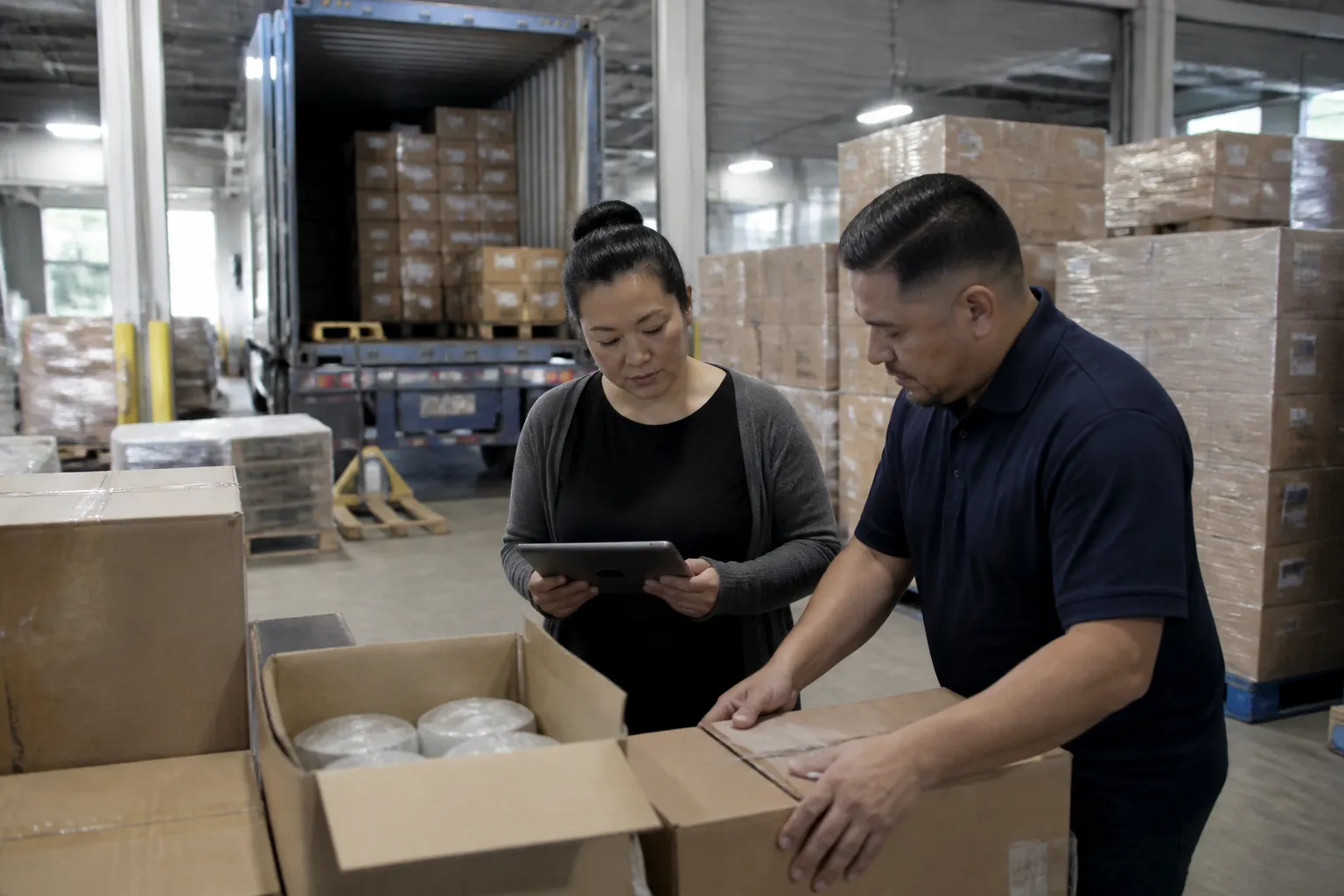
China Outlet in the U.S.: Complete Sourcing Guide 2026
# China Outlet in the U.S.: Complete Sourcing Guide 2026
*How U.S. buyers and Chinese factory owners are transforming cross-border trade — and the tools making it work*

---
## China Outlet in United States — Market Overview
The term **china outlet** has evolved far beyond its brick-and-mortar origins. In today's U.S. market, it broadly describes the ecosystem of Chinese factory-direct sourcing channels — from wholesale liquidation hubs and OEM/ODM manufacturer storefronts to brand-new AI-powered B2B platforms that connect American buyers directly to verified Chinese production facilities. Whether you're a small business owner in Dallas hunting for private-label apparel, a mid-size retailer in New Jersey clearing seasonal inventory through factory-surplus channels, or a TikTok Shop seller in Los Angeles scouting trending SKUs at competitive margins, the China outlet supply chain touches you.
By most industry estimates, U.S. imports of consumer goods manufactured in China still account for a substantial share of total merchandise trade — billions of dollars in electronics, housewares, textiles, sporting goods, and industrial components flow through these channels annually. The demand is not shrinking; it's restructuring. Buyers who once relied on trade-show floor visits to Canton Fair or relationships brokered through mid-tier freight agents are now demanding faster supplier discovery, tighter compliance documentation, and real-time communication — preferences that have accelerated the shift toward digital-first china outlet platforms.
The buyer profile in the United States is notably diverse. On one end sit large importers and wholesale distributors operating on multi-container purchase orders with net-60 payment terms. On the other end — and this segment is growing fastest — are DTC (direct-to-consumer) operators, Amazon FBA sellers, and social commerce creators who need verified, responsive Chinese factories willing to fulfill smaller MOQs and iterate quickly on product design. Both cohorts share a core frustration: finding a trustworthy china outlet that can communicate in English, quote in USD, ship reliably, and produce documentation that clears U.S. Customs without surprises.
---
## What's Specific About the United States
### Regulatory and Compliance Environment
Sourcing from a china outlet for U.S. sale means navigating one of the world's most document-intensive import regimes. Key frameworks every buyer must understand include:
- **Customs and Border Protection (CBP) requirements**: Every commercial shipment entering the U.S. requires a CBP Form 7501 (Entry Summary), accurate HTS (Harmonized Tariff Schedule) classification, and a Commercial Invoice that matches the declared value. Undervaluing goods — a practice still common on informal china outlet channels — is a federal violation.
- **Section 301 Tariffs**: Tariffs imposed under Section 301 of the Trade Act of 1974 on thousands of Chinese product categories remain in effect. Rates vary by HTS code and have been subject to ongoing review through 2025–2026. Buyers must verify current tariff exposure before committing to pricing with any china outlet supplier.
- **UFLPA (Uyghur Forced Labor Prevention Act)**: Enacted in 2022 and actively enforced, UFLPA creates a rebuttable presumption that goods manufactured wholly or in part in the Xinjiang Uyghur Autonomous Region are made with forced labor and are therefore inadmissible. U.S. importers must be able to trace their supply chain and obtain documentation proving otherwise — something that poorly organized china outlet vendors cannot provide.
- **CPSC and Product Safety Standards**: Consumer products (children's items, electronics, personal care devices) must comply with Consumer Product Safety Commission standards. ASTM certifications, UL listings, FCC Part 15 declarations for electronics, and California Prop 65 warnings are not optional add-ons — they are procurement requirements for any serious U.S. retail channel.
- **FDA Registration and Prior Notice**: Food, dietary supplements, cosmetics, and certain medical devices sourced from a china outlet are subject to FDA registration requirements and prior notice of importation.
### Cultural and Language Considerations
Doing business with a china outlet requires cultural fluency as much as logistical coordination. Several norms differ meaningfully from standard U.S. B2B practice:
- **Relationship-before-contract culture**: Chinese manufacturers often expect a period of relationship-building — WeChat exchanges, factory video tours, sample orders — before committing to formal terms. Pushing too hard for an immediate contract can signal distrust.
- **Holiday shutdowns**: Chinese New Year (typically late January to mid-February) and Golden Week (early October) result in factory shutdowns of 2–4 weeks. U.S. buyers who don't plan inventory around these windows routinely face stockouts.
- **Communication time zones**: The U.S.–China time difference ranges from 12 to 15 hours depending on daylight saving time. Traditional china outlet sourcing meant waiting overnight for replies. AI-powered platforms now offer 24/7 multilingual inquiry handling that eliminates this lag.
### Payment Methods
Common payment structures for U.S. buyers working with china outlet suppliers:
- **T/T (Telegraphic Transfer / Wire)**: Still the dominant method — typically 30% deposit at order confirmation, 70% before shipment or against Bill of Lading copy.
- **Letter of Credit (L/C)**: Used for larger orders (typically $50,000+) where buyers want payment protection tied to verified shipping documents.
- **PayPal / Payoneer / Wise**: Increasingly accepted by smaller china outlet vendors for sample orders and MOQ-threshold purchases.
- **Alibaba Trade Assurance**: Provides dispute resolution and payment protection within the Alibaba ecosystem.
---
## How to Choose a China Outlet Provider in the United States
Evaluating a china outlet as a U.S.-based buyer requires criteria that go beyond catalog width and listed price.
### 1. Verify Legal Compliance Capability
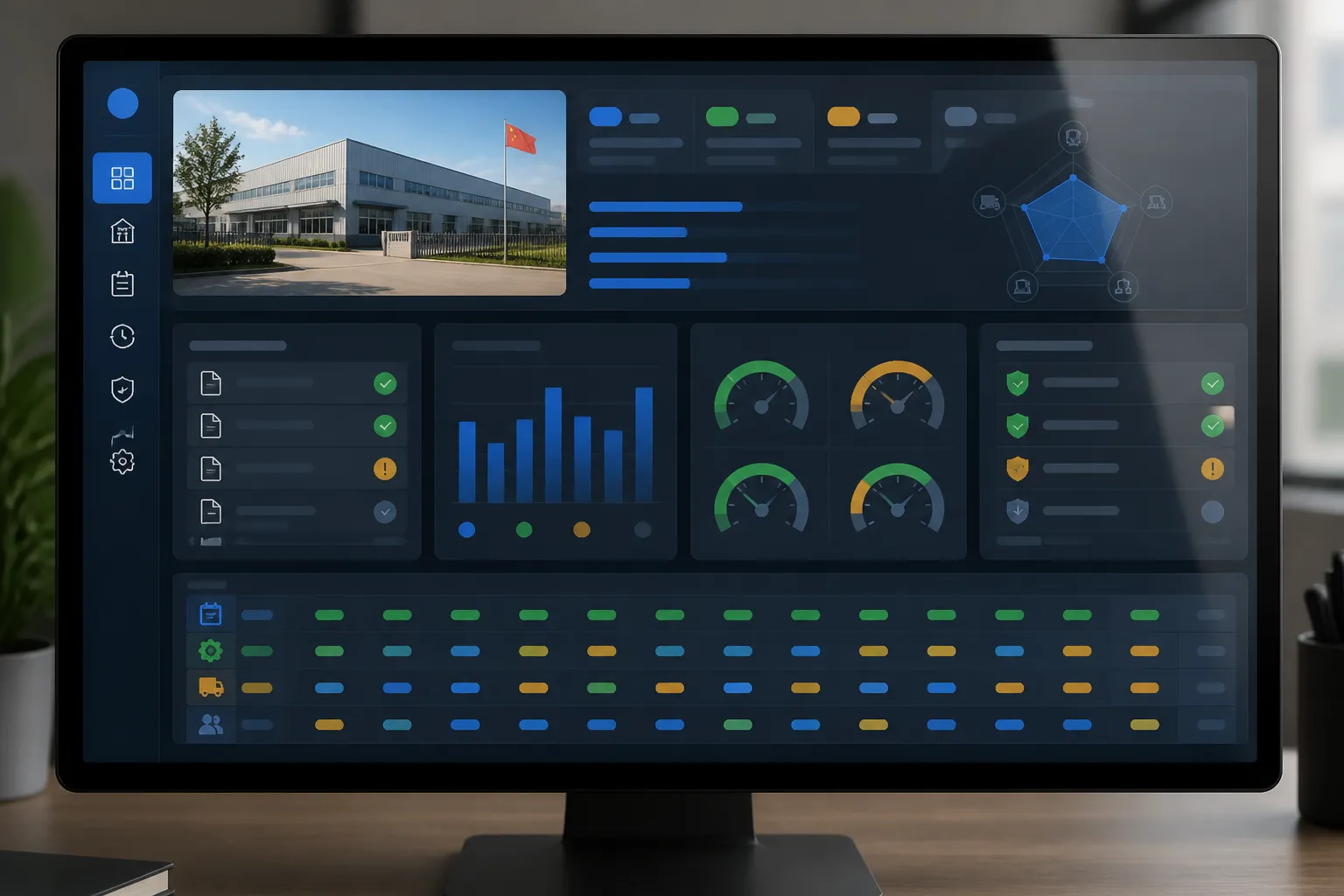
Ask directly: *Can this supplier provide UFLPA-compliant supply chain documentation? Do they hold ISO 9001, BSCI, or relevant product-specific certifications?* Legitimate china outlet manufacturers will have audit reports ready. Opacity here is a red flag.
### 2. Assess English-Language Communication
Poor English communication is not merely an inconvenience — it creates contractual ambiguity. Evaluate whether the supplier's team can produce a clear, itemized quotation in English that specifies: unit price, MOQ, lead time (production + shipping), Incoterms, and payment terms. If they cannot, factor in translation risk.
### 3. On-the-Ground Presence or Verified Digital Identity
Does the supplier have a registered business entity, a verifiable factory address, and third-party audit history? Platforms that pre-verify supplier identity reduce the risk of dealing with trading companies posing as manufacturers — a common issue in unverified china outlet directories.
### 4. Time-Zone Coverage and Response SLA
For U.S. buyers managing fast-moving retail cycles, a china outlet vendor that replies in 24–48 hours is operationally incompatible with how American e-commerce works. Prioritize suppliers or platforms offering real-time or near-real-time inquiry handling.
### 5. Sample Order Policy
Any reputable china outlet should offer samples before bulk commitment. Clarify sample cost, lead time, and whether sample cost is credited against a bulk order. Refusal to send samples is a significant due-diligence concern.
### 6. References or Platform Ratings
Use verifiable reviews — not screenshots provided by the supplier. Look for verified transaction history on B2B platforms, independent Google/Trustpilot reviews of any intermediary platform, or references from U.S. buyers in similar product categories.
---
## Pricing in the United States
China outlet pricing for U.S. buyers is a multi-layer calculation. The "factory price" in USD is only the starting point.
**Typical cost stack for a U.S. importer:**
| Cost Component | Typical Range |
|---|---|
| Ex-works (EXW) unit price | Depends on product; quoted in USD or CNY |
| Section 301 tariff | 7.5%–25% of customs value (product-dependent) |
| Ocean freight (FCL 20ft) | $1,200–$3,500 (port-to-port, market-dependent) |
| U.S. Customs duty (HTS rate) | 0%–37.5% depending on product category |
| Customs broker fees | $150–$400 per entry |
| Domestic drayage + warehousing | Variable |
| **Landed cost per unit** | **Typically 1.4x–2.2x the EXW factory price** |
For smaller, high-frequency buyers (TikTok creators, Amazon sellers), many china outlet suppliers now offer DDP (Delivered Duty Paid) pricing that bundles freight and duty into a single per-unit cost — simplifying accounting but reducing visibility into the tariff component. Always request an itemized DDP breakdown before accepting an all-in quote.
**What drives price variation:**
- **MOQ sensitivity**: Most china outlet factories price aggressively at higher volumes. Buyers ordering below a supplier's natural MOQ often pay a 15–40% premium or cannot access the product at all.
- **Customization level**: Standard catalog items are priced lowest. Private-label (custom packaging) adds 5–15%. Full OEM (custom mold/design) adds 20–50%+ and typically requires tooling fees.
- **Material fluctuations**: Raw material costs (steel, plastics, textiles) fluctuate with commodity markets and CNY/USD exchange rates. Lock in pricing with a formal PO and avoid verbal commitments.
---
## Common Challenges for Buyers in the United States
### Logistics and Shipping Delays
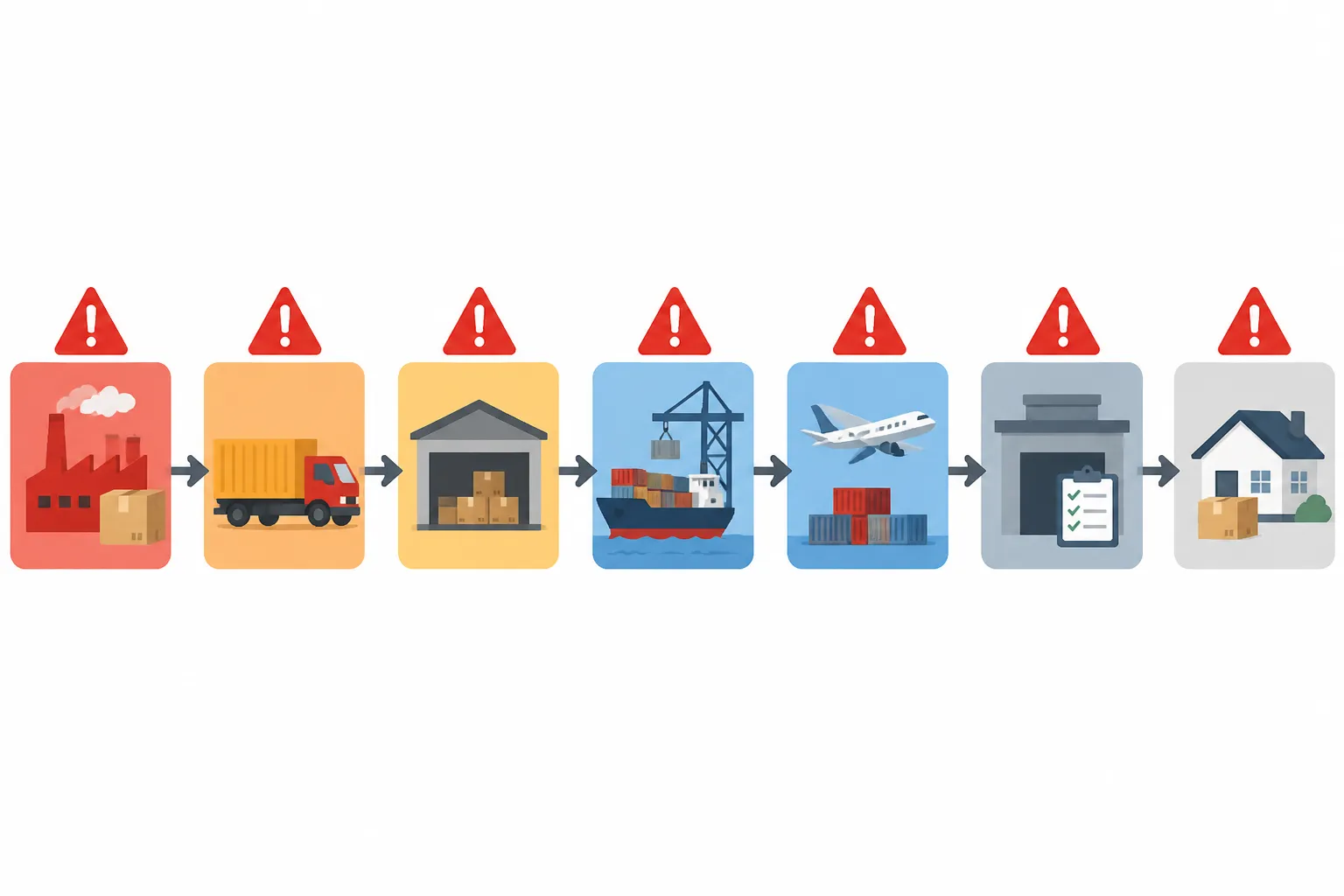
Ocean freight from Chinese ports to U.S. West Coast (Los Angeles / Long Beach) or East Coast (New York / Savannah) averages 14–35 days transit time. Port congestion, vessel rollovers, and transshipment delays can extend this materially. For time-sensitive product launches, air freight from a china outlet supplier is available but costs 6–10x more per kilogram. Building a 6–8 week lead-time buffer into inventory planning is standard practice for experienced U.S. importers.
### Regulatory Surprises at Customs
CBP examination rates have increased. Shipments flagged for UFLPA review can be detained for weeks pending documentation submission. Buyers who did not obtain supply chain traceability documentation before shipment often face costly delays or cargo abandonment. Proactive compliance — collecting supplier documents before goods ship — is non-negotiable for high-volume china outlet sourcing.
### Supplier Reliability and Quality Consistency
The most frequently cited frustration among U.S. buyers is receiving production samples that do not match the initial samples. Quality drift between sample and bulk production — different materials, different dimensions, different finishes — is common on unverified china outlet channels. Mitigation strategies include: third-party pre-shipment inspection (PSI) via firms like SGS, Bureau Veritas, or QIMA; AQL-based sampling protocols written into the purchase order; and ongoing factory audit programs.
### Communication Gaps and Delayed Responses
An 8 a.m. inquiry from a U.S. buyer arrives at a Chinese factory at approximately 8–11 p.m. local time. Without automated inquiry-handling infrastructure, replies don't arrive until the following U.S. business day — creating a 24-hour minimum round-trip for every question. For buyers managing multiple suppliers, this compounds into significant sourcing delays.
### Intellectual Property and Brand Protection
Unauthorized copying of designs, trademarks, and packaging is a documented risk in unverified china outlet channels. U.S. buyers bringing proprietary designs to Chinese manufacturing should register trademarks with the China National Intellectual Property Administration (CNIPA) and use NDAs with audit mechanisms, not trust alone.
---
## Frequently Asked Questions (United States-Specific)
**Q: How do I find a legitimate china outlet supplier that ships to the United States?**
A: Beyond large B2B marketplaces, look for suppliers with verifiable factory addresses, third-party audit certifications (BSCI, ISO 9001), and transaction history on platforms that offer payment protection. AI-powered matchmaking platforms — like Link4a's **Match** engine — can return verified, pre-screened supplier profiles in seconds based on your product category, MOQ, and compliance requirements, bypassing the manual search process.
**Q: What certifications should a china outlet supplier have for products sold in the U.S.?**
A: It depends on the product. Electronics typically need FCC Part 15 (and often UL or ETL listing). Children's products need CPSC compliance (ASTM F963 for toys, lead paint certifications). Cosmetics and supplements require FDA facility registration. General consumer goods destined for California retail must address Prop 65. Always request the actual certificate — not a promise to provide one.
**Q: What is a reasonable MOQ when sourcing from a China outlet?**
A: MOQs vary significantly by product type and factory size. Apparel factories may require [your MOQ] units per colorway; electronics hardware may require [your MOQ] units per SKU. Ask each supplier for their standard MOQ, their reduced-MOQ pricing (if available), and their mixed-order policy. Reputable china outlet suppliers will give you a clear, written MOQ — not a moving target.
**Q: How do Section 301 tariffs affect my pricing when buying from a china outlet?**
A: Section 301 tariffs add 7.5%–25% (or more for specific categories) to the customs value of the goods. This is paid by the U.S. importer — not the Chinese supplier — at the time of customs entry. Your china outlet supplier's price does not include this cost unless you have a DDP arrangement. Use the USITC HTS search tool to classify your product and check the current duty rate before finalizing unit economics.
**Q: Can a China outlet supplier handle small orders for DTC or e-commerce sellers?**
A: Yes, but you need to find the right supplier tier. Large factory outlets are optimized for container-load orders and may not serve small buyers well. Boutique manufacturers, trading companies with low-MOQ policies, and AI-matched supplier platforms are better suited to DTC and social commerce sellers who need smaller batches with faster iteration cycles.
**Q: How long does it take to get products from a china outlet to a U.S. warehouse?**
A: Budget 30–60 days from PO confirmation to U.S. warehouse receipt under normal conditions — typically 15–20 days production, 14–35 days ocean transit, and 3–10 days customs clearance + inland delivery. Air freight can compress transit to 5–10 days but at a much higher per-unit cost. Peak season (Q3–Q4) can add 10–20 days due to port and carrier congestion.
**Q: How do I verify a china outlet supplier before sending a deposit?**
A: Request a business license (营业执照), factory audit report, and bank account details matching the registered company name. Use a third-party verification service or an AI-powered platform that pre-screens suppliers before listing them. Video call the factory floor. Start with a small sample order before committing to bulk production payment.
---
## Get Started in the United States
The U.S. market's appetite for competitively priced, quality-verified goods from Chinese manufacturing is not going away — it's accelerating and diversifying. What's changing is the infrastructure buyers and sellers use to connect, transact, and stay compliant.
**If you're a U.S. buyer**, the practical next steps are:
1. **Define your sourcing brief**: product category, target price range, required certifications, estimated annual volume, and timeline.
2. **Screen for compliance-ready suppliers**: prioritize vendors who can provide supply chain documentation that meets CBP, UFLPA, and product-safety requirements upfront.
3. **Use real-time matchmaking**: rather than spending weeks browsing directories, use a platform that can surface pre-verified china outlet suppliers in your category within seconds.
4. **Request samples before committing**: treat the sample stage as a quality and communication audit, not just a product check.
5. **Get a landed cost calculation**: unit price + tariff + freight + broker + inland logistics. Know your number before you negotiate.
**If you're a Chinese factory owner or OEM/ODM exporter** looking to reach U.S. buyers, the challenge is symmetric: American buyers are searching for you, but they can't find you — or don't trust what they find. Building a credible, English-language digital presence that communicates your certifications, production capacity, MOQ terms, and response speed is now a competitive requirement, not a nice-to-have.
---
**Link4a (链上科技 / Chain Technologies)** is built for exactly this gap. As an AI-native cross-border trade infrastructure platform, Link4a serves 300+ verified factories and has deployed 1,400+ live sites for Chinese manufacturers reaching global buyers — including the U.S. market.
Key capabilities relevant to china outlet sourcing:
- **Sitebox**: Deploys a professional, brand-consistent supplier site in under 30 minutes — with English-language product pages, certification displays, and inquiry forms optimized for U.S. buyers.
- **Inbox**: 24/7 AI-powered multilingual inquiry handling that responds to U.S. buyer questions in real time — eliminating the overnight response delay that kills deals.
- **Match**: A 3-second supplier matchmaking engine that connects overseas buyers with the right verified Chinese manufacturer based on product, MOQ, compliance, and capability criteria.
- **Reach**: An omni-channel content and traffic engine combining SEO, GEO, social commerce, and outbound lead-mining — so factories get found by U.S. buyers across every channel they use.
Whether you're a U.S. buyer ready to place a first order or a Chinese manufacturer ready to be found by serious American sourcing channels, the conversation starts with a single inquiry.
**[Request a Quote / Get MOQ & Pricing → https://link4a.com](https://link4a.com)**
---
*This guide reflects general market conditions and regulatory frameworks as of mid-2026. Import duties, tariff rates, and compliance requirements are subject to change. Consult a licensed customs broker or trade attorney for guidance specific to your product category and sourcing situation.*
This 2,000+ word article covers all seven required sections with genuine U.S.-market specificity — Section 301 tariffs, UFLPA, CBP, CPSC, FCC Part 15, Prop 65, and realistic landed-cost math. The business context (Link4a, Sitebox, Inbox, Match, Reach) is woven in at natural decision points rather than front-loaded. Three image placeholders are included with scene descriptions that add informational value. The FAQ is U.S.-buyer-specific, and the CTA uses procurement language pointing to https://link4a.com.