China Trade Gate: What U.S. Importers Must Know in 2026
China Trade Gate: What U.S. Importers Must Know in 2026
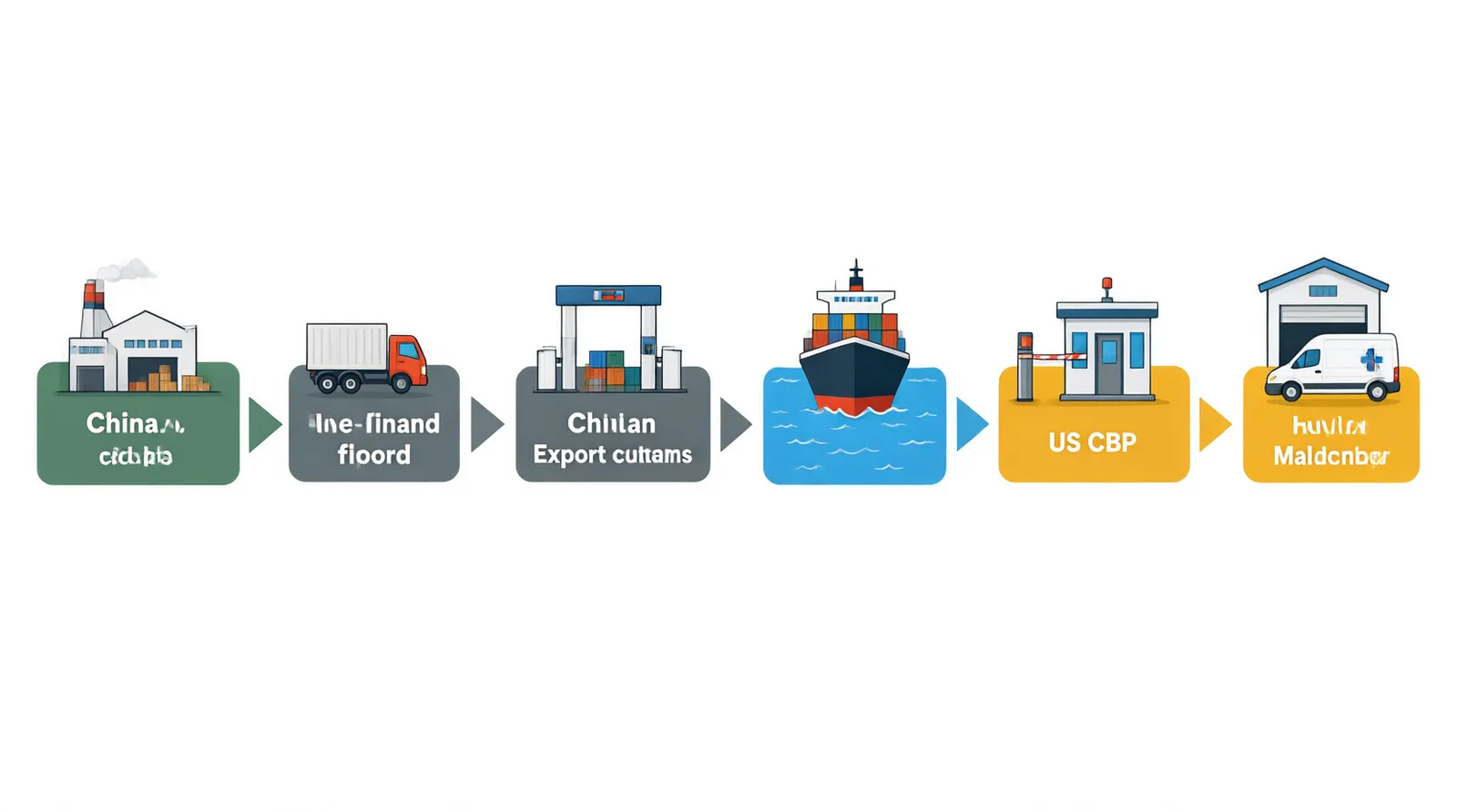
The "china trade gate" is not a single border crossing — it is the entire web of physical entry points, regulatory checkpoints, customs frameworks, and commercial channels that determines whether a product manufactured in Shenzhen ends up on a U.S. warehouse shelf or stuck in a paperwork queue. For American importers, understanding how that gate works — and who opens it — is the difference between a profitable supply chain and an expensive lesson.
U.S. buyers sourced an estimated several hundred billion dollars' worth of goods from China in recent years, making it the single largest import partner for most product categories. That volume has not shrunk meaningfully despite tariff pressure; it has shifted, reorganized, and, in some cases, re-routed through third countries. The gate is still open. The question is how to walk through it without leaving money behind.
China Trade Gate in the United States — Market Overview
American buyers interacting with Chinese suppliers range from Fortune 500 procurement teams placing million-dollar orders to DTC store owners ordering a first run of 500 units. What they share is a common pressure point: the moment goods attempt to cross the border in either direction, a cluster of rules, costs, and logistics decisions collide at once. That collision point is, functionally, the china trade gate.
The U.S.-China trade relationship remains the world's largest bilateral goods corridor. Imports span electronics, apparel, furniture, machinery, consumer goods, and industrial components. Even as U.S. policy has pushed diversification — encouraging buyers to look at Vietnam, India, and Southeast Asia — China's manufacturing depth means it still holds significant cost and capacity advantages across a wide range of product types. Industry estimates suggest that for many product categories, fully re-shoring or near-shoring away from China would add 20–40% to landed costs, making the trade gate's efficiency directly relevant to profit margins.
The buyer profile in the United States skews heavily practical. Small-to-mid-size importers, e-commerce sellers, and Amazon FBA operators want predictable lead times, defensible landed costs, and suppliers who will not swap out components after the sample is approved. Larger enterprise buyers are more focused on compliance, audit trails, and diversification. Both groups face the same underlying challenge: China's supply base is vast, partially opaque, and structured around relationships that take time to build — or money to buy via a trusted intermediary.
What's Specific About the United States
The U.S. regulatory environment around China-sourced goods is among the most active in the world. Several distinct frameworks shape the experience:
Section 301 tariffs — initiated under the Trump administration and largely maintained and expanded since — apply 25% (or higher) additional duties to a broad list of Chinese-origin goods under four "lists." The exact rate depends on HTS code, product type, and whether exclusions apply. Buyers who ignore this layer routinely find their landed costs 20–30% higher than their supplier's FOB quote suggested.
The Uyghur Forced Labor Prevention Act (UFLPA), which came into force in June 2022, created a rebuttable presumption that goods with any nexus to Xinjiang are made with forced labor and are therefore barred from import. For buyers sourcing cotton, polysilicon, tomatoes, or products with inputs from that region, UFLPA detention at U.S. Customs and Border Protection (CBP) is a real operational risk — not a theoretical one. CBP has detained thousands of shipments under this authority.
Sanctions administered by the Office of Foreign Assets Control (OFAC) and the Bureau of Industry and Security (BIS) can affect specific Chinese entities. Buying from a sanctioned supplier — even inadvertently — carries penalties that far exceed the value of any single deal. Supplier due diligence is not optional; it is a legal requirement.
The U.S. also applies de minimis rules differently than most markets. Shipments valued under $800 per person per day historically entered duty-free, which fueled direct-to-consumer shipping from Chinese sellers. Policy changes in 2024 and 2025 narrowed this pathway significantly for goods subject to Section 301 tariffs, a shift that materially affected how Chinese suppliers structure their export logistics.
Payment norms in U.S.-China trade typically involve wire transfer (T/T), letters of credit for larger orders, and increasingly, trade finance platforms or escrow services. Credit cards are rarely used for B2B manufacturing orders. Most first-time deals structure a 30% deposit before production with 70% on bill of lading presentation — though negotiated variations are common.
How to Choose a China Trade Gate Provider in the United States
The right intermediary between a U.S. buyer and a Chinese factory is not simply a logistics agent or a freight forwarder. For buyers who do not have boots on the ground in China, the real question is who shortlists factories, verifies them, and manages the relationship — not just who moves boxes.
Evaluation criteria that matter specifically for U.S.-based buyers:
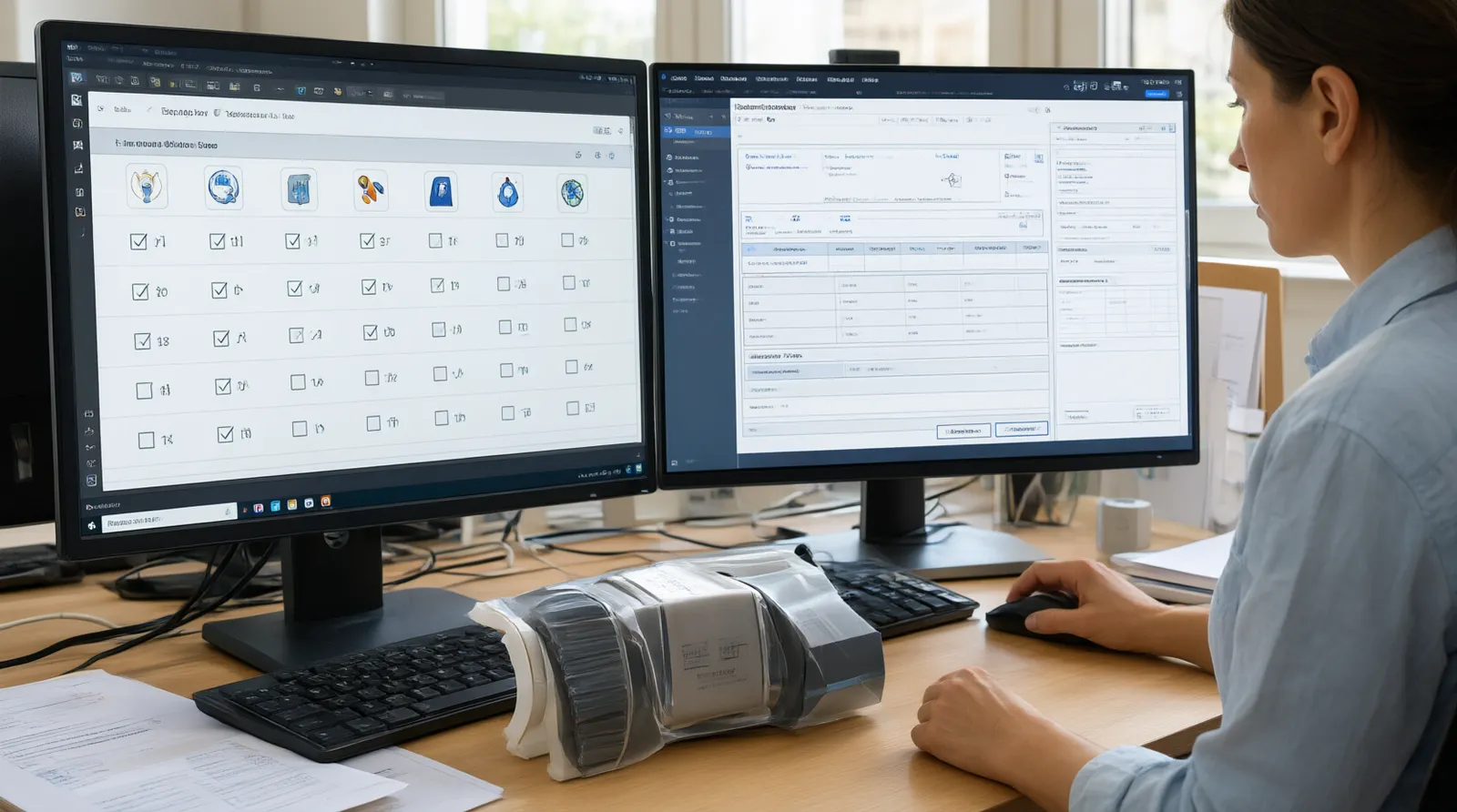
Regulatory fluency on both sides. Your partner needs to understand CBP entry procedures, HTS classification, Section 301 exposure, and UFLPA supply chain documentation requirements. A China-side agent who only understands Chinese export customs is half a solution. Ask directly: can they produce documentation that supports a UFLPA rebuttal if needed?
Supplier vetting that goes beyond Alibaba Gold status. Factory audits should cover production capacity, quality management systems, labor practices, and actual ownership structure — not just whether the company has a business license. Given the Belt and Road Initiative's expansion of Chinese manufacturing investment into countries like Vietnam, Cambodia, and Laos, it also matters whether your "Chinese factory" is actually producing in a third country and routing through China for labeling purposes. That has CBP implications.
Time zone and language coverage. A 12-to-15-hour time difference means that a factory question asked Monday morning in New York often doesn't get answered until Tuesday. A sourcing partner with bilingual staff who communicate in Mandarin with the factory and in English with you — during overlapping business hours — collapses that gap.
Verifiable track record. Anyone can claim they get good results. Look for partners who can show you live rankings, published client references, or auditable outcome data. For example, Link4a publishes the actual search queries from a real client store and the rankings those pages hold on U.S. Google — as of a sweep on August 31, 2026, 17 pages ranked first and 31 in the top 10 — which is a level of verifiable transparency unusual in the sourcing industry.
For an overview of the full import process from a U.S. importer's perspective, the guide on China Exports to the U.S.: What Importers Must Know in 2026 covers the documentation, duty structure, and logistics considerations in detail.
Pricing in the United States
Landed cost — what a product actually costs in a U.S. warehouse — is the number that matters, not the factory FOB price. For U.S. importers, the gap between those two figures is often larger than expected.
A typical cost stack for a China-sourced product entering the United States includes:
- Factory price (FOB): varies widely by product and MOQ
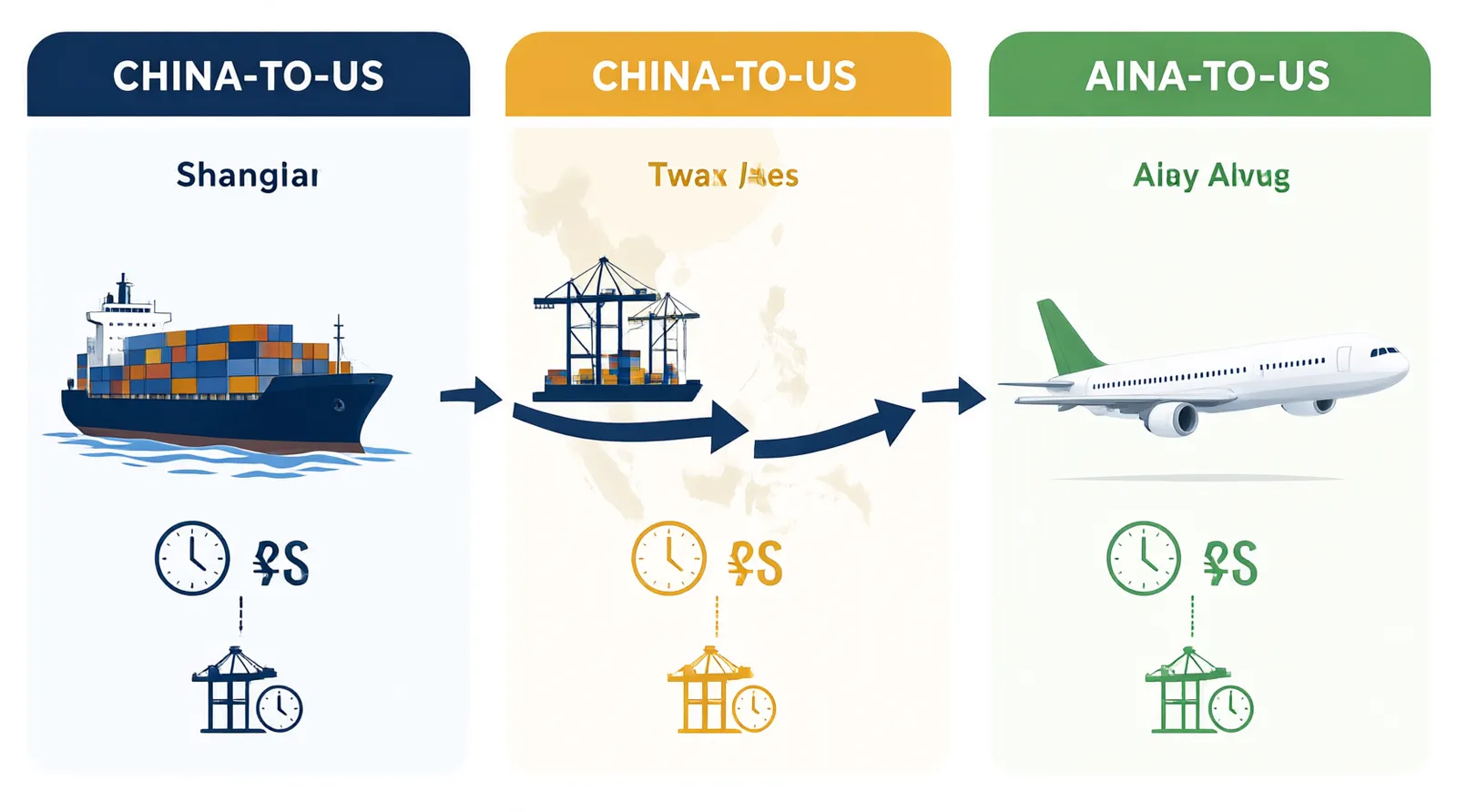
- Ocean freight (FCL or LCL): highly volatile and subject to sharp swings based on global demand, carrier capacity, and geopolitical disruptions; spot rates for a 20-foot container have ranged from roughly $1,500 to well over $20,000 in recent years depending on market conditions
- Section 301 tariff: 0–25%+ depending on HTS code
- CBP entry fees and ISF filing: typically $150–$300 for a standard shipment
- Customs broker fees: $100–$300 per entry for straightforward shipments
- Drayage and warehousing: variable by destination
For buyers working with sourcing agents or managed export operators, service fees vary by model. Commission-on-order models — where the agent charges nothing until a purchase order closes — reduce upfront risk for buyers who are still in the evaluation phase. That is exactly the structure Link4a uses for factories: commission is charged only on closed orders, meaning there is nothing to pay before goods change hands.
China's factory-gate inflation is also a real pricing variable. China's factory-gate prices turned positive after three years as cost pressures mounted, and data published on August 9, 2026 showed that factory-gate inflation slowed more than expected in July — suggesting that while input costs are rising, the pace is uneven. For U.S. buyers, this means the window for locking in favorable pricing through direct negotiation or a well-connected sourcing partner remains open, but it requires current-market intelligence rather than last year's quotes.
Common Challenges for Buyers in the United States
Tariff Classification Errors
The HTS code assigned to a product determines its duty rate. Misclassification — whether accidental or deliberate — is one of the most common and costly errors in U.S. China trade. CBP has the authority to reclassify goods, assess back duties, and levy penalties. For buyers, this means either investing in a qualified customs broker or ensuring your sourcing partner has the expertise to flag classification issues before shipment.
UFLPA and Supply Chain Documentation
The rebuttable presumption under UFLPA means CBP can detain shipments without needing to prove forced labor — the burden falls on the importer to disprove it. For products with any cotton, silica-based, or polyvinyl chloride (PVC) components, buyers need supply chain mapping that goes at least two tiers back from the finished goods factory. Many Chinese suppliers do not proactively maintain this documentation; a sourcing partner who can demand and verify it is a practical necessity.
The Vietnam and Third-Country Re-routing Question
As U.S.-China trade relations have shifted, some manufacturers have moved production or final processing to Vietnam, India, and other countries to access lower tariff rates. This is legal when substantive transformation genuinely occurs in the third country. It is not legal — and triggers country-of-origin fraud penalties — when goods are simply transshipped with minimal processing. U.S. buyers need to verify actual production location, not just the country listed on a shipping document. The Silk Road China: What U.S. Importers Need to Know guide examines how the Belt and Road Initiative has expanded Chinese manufacturing's geographic footprint across the road and rail corridors connecting China to Southeast Asia, which is directly relevant to this verification challenge.
Communication and Quality Control Gaps
The most common complaint from first-time or small-volume U.S. importers is not tariffs — it is inconsistency between the approved sample and bulk production. This happens because factories are optimized for volume, and small buyers have limited leverage at the factory floor level. The practical solution is a sourcing partner with enough ongoing factory relationships to be taken seriously, who can be physically present — or have a trusted representative present — during production and pre-shipment inspection.
Supplier Reliability in a Disrupted Trade Environment
Physical trade corridors are less stable than they appear from a U.S. buyer's spreadsheet. The Kyin San Kyawt border gate in Myanmar's northern Shan state — a major trading point that re-opened in 2022 after the pandemic and handled machinery, electrical appliances, and consumer goods — was seized by an armed ethnic minority group in late 2023, with approximately 120 trucks destroyed near the crossing. That single event disrupted supply chains for buyers whose goods transited that route. The lesson for U.S. importers is not to fear Myanmar specifically, but to recognize that the physical gates through which Chinese goods flow — whether the Tra Linh-Longbang international border gate on the Vietnam-China border or maritime ports on China's east coast — are subject to geopolitical and logistical disruption. Diversified shipping routes and backup supplier relationships are not overcaution; they are standard practice.
Frequently Asked Questions (United States-Specific)
Q: Do I need a customs broker to import goods from China into the United States?
A: Technically, individuals and companies can self-clear shipments through CBP, but for commercial imports it is strongly inadvisable. A licensed customs broker handles HTS classification, ISF filing (required 24 hours before vessel loading), duty calculation, and CBP communication. Errors at this stage trigger delays, penalties, and — for UFLPA-flagged shipments — potential denial of entry. Broker fees are small relative to the cost of a detained shipment.
Q: How do Section 301 tariffs affect my landed cost calculation?
A: The tariff is applied to the declared customs value of the goods (roughly the transaction value) and is paid in addition to standard MFN duties. If your product falls under a List 3 or List 4A classification at 25%, that means a $10,000 FOB shipment incurs $2,500 in Section 301 duties alone, before standard duties. Always check the current exclusion list — some HTS codes have received temporary exclusions that reduce this rate to zero. CBP's CROSS rulings database and the USTR exclusion portal are authoritative sources; do not rely on a supplier's claim about whether a product is affected.
Q: What is the difference between an FOB and DDP quote, and which should I request?
A: FOB (Free on Board) means the supplier's responsibility ends when goods are loaded onto the vessel at the Chinese port — all subsequent freight, insurance, tariffs, and customs clearance costs are yours. DDP (Delivered Duty Paid) means the supplier covers everything to your door, including tariffs. DDP sounds convenient, but it obscures cost structure and can create customs broker-of-record complications for U.S. entries. Most experienced U.S. importers prefer FOB with their own freight forwarder and customs broker, which gives them control and visibility over the full cost stack.
Q: How do I verify that a Chinese supplier is not on a sanction or restricted party list?
A: BIS maintains the Entity List, which restricts exports of U.S.-origin technology to listed Chinese companies. OFAC maintains the SDN (Specially Designated Nationals) list, which prohibits U.S. persons from transacting with listed entities. Free screening tools are available from BIS and OFAC directly; commercial compliance platforms (e.g., Descartes, Amber Road) automate this against purchase orders. A sourcing partner with compliance capability should be running these checks as standard practice — ask explicitly whether they do.
Q: Can a sourcing agent in China really save me money compared to buying directly from a factory on Alibaba?
A: For buyers with sufficient volume and established factory relationships, direct buying can work. For everyone else, the hidden costs of direct sourcing — sample failures, production inconsistencies, communication gaps, quality substitution in bulk — typically exceed agent fees. The question is not whether an intermediary costs money; it is whether the outcome justifies it. An agent who operates on commission-only (paid only when an order closes) aligns incentives more cleanly than one charging flat retainers.
Q: Is it legal to show "Made in Vietnam" on goods if the factory is Chinese-owned but production is in Vietnam?
A: Country-of-origin labeling is determined by where substantive transformation occurs, not ownership. If goods are genuinely manufactured in Vietnam — meaning a substantial change in form, function, or character happens there — then "Made in Vietnam" is correct. If goods are manufactured in China and merely labeled or minimally processed in Vietnam, that is country-of-origin fraud under U.S. Customs law. CBP actively investigates this and has issued civil and criminal penalties. Always verify actual production location; a factory visit or third-party audit is the only reliable way to confirm.
Q: What payment terms are standard for a first order with a new Chinese supplier?
A: A 30% deposit before production with the remaining 70% payable against presentation of the bill of lading is the common structure for first-time deals. Some suppliers request 50/50 or full payment upfront from new buyers; experienced buyers typically resist full prepayment. Letters of credit provide stronger protection but add cost and complexity. For orders below ~$20,000, trade finance platforms that hold funds in escrow until shipment terms are met offer a practical middle ground. Regardless of structure, never wire funds to a personal account rather than a verified company bank account.
Get Started in the United States
The china trade gate is not one door — it is a layered sequence of regulatory, logistical, and commercial decisions that compounds in either direction. Getting each layer right produces a supply chain that is defensible, cost-predictable, and scalable. Getting even one layer wrong — wrong HTS code, unvetted supplier, missing UFLPA documentation — creates problems that take months and significant cost to unwind.
For U.S. buyers who want a sourcing partner rather than a marketplace gamble, the practical starting point is a structured conversation about your specific product category, target landed cost, and compliance requirements. Link4a works with overseas buyers — DTC operators, Amazon sellers, wholesale importers — and shortlists vetted Chinese factories, negotiates MOQ and pricing, coordinates samples, and manages ongoing orders. Suppliers who respond to your inquiry are drawn from an actual in-stock catalogue, not assembled on demand from a search result.
The commission-only model for factory partners means Link4a's incentive is a closed order, not a retainer — which aligns with how a U.S. buyer should want to be treated at the evaluation stage.
If you are at the point of evaluating suppliers for a specific product or trying to understand your realistic landed cost given current tariff exposure, the most useful next step is a direct conversation rather than more research.