China Trade for U.S. Buyers: What You Need to Know in 2026
China Trade for U.S. Buyers: What You Need to Know in 2026
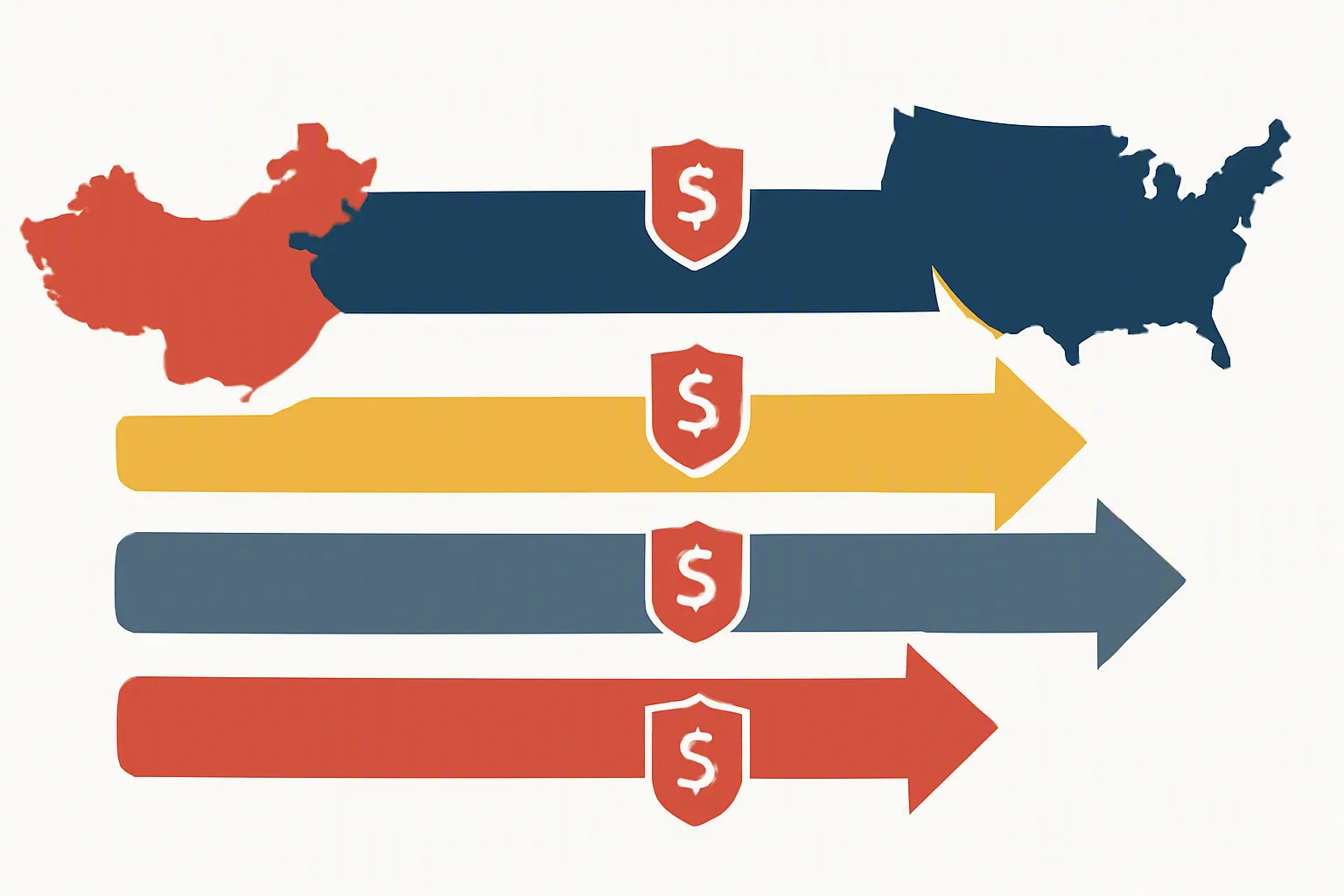
China remains the United States' largest goods trading partner, a relationship worth hundreds of billions of dollars annually and one that directly shapes prices on American shelves. Despite tariffs, geopolitical friction, and ongoing policy shifts, U.S. buyers continue to source from China because the manufacturing depth, supplier density, and price competitiveness are simply unmatched for most product categories.
China Trade in the United States — Market Overview
The scale of China-U.S. trade is hard to overstate. China's exports reached USD 397.85 billion in July 2026 alone, a 23.9% jump year-over-year, driven significantly by AI-related technology products and semiconductors — semiconductor export values nearly doubled compared to July 2025. The overall trade surplus widened to USD 112.5 billion in that month, exceeding analyst forecasts of USD 107 billion. These numbers reflect a manufacturing base that is still accelerating, not retreating.
For U.S. buyers specifically, the bilateral surplus — China's surplus with the U.S. — stood at USD 28.03 billion in July 2026, down slightly from USD 28.9 billion in June 2026. That modest dip reflects a familiar dynamic: American importers front-loading shipments ahead of tariff changes. Manufacturers rushed to ship goods to the U.S. before the new 12.5% tariff levy on Chinese products took effect in late July 2026, replacing a temporary 10% levy. For American buyers, timing purchases around tariff windows has become a core procurement skill.
The buyer profiles sourcing from China across the U.S. are broad. They include large-scale importers at major retail chains, mid-sized Amazon and DTC brand operators, and solo entrepreneurs running Shopify stores from a home office. What they share is the same underlying challenge: finding a supplier who is actually reliable, can hit the quality spec, and will still be in business on the third re-order. The marketplace-listing gamble — picking a factory on Alibaba and hoping for the best — is a well-documented failure mode that costs American buyers time, money, and inventory disruptions every year.
What's Specific About the United States
U.S.-China trade operates inside one of the world's most complex regulatory environments. The Office of the United States Trade Representative (USTR) administers trade policy and publishes presidential tariff actions that directly affect import costs. Alongside tariffs, U.S. Customs and Border Protection (CBP) enforces the Uyghur Forced Labor Prevention Act (UFLPA), which creates a rebuttable presumption that goods produced in or sourced through Xinjiang are made with forced labor — and therefore inadmissible. This is not a checkbox compliance item. It requires documented supply chain traceability that reaches back to raw material level for affected categories.
Beyond UFLPA, U.S. importers must navigate the Federal Communications Commission (FCC) certification requirements for electronics, the Consumer Product Safety Improvement Act (CPSIA) for children's products, FDA registration for food-contact goods and supplements, and ASTM/UL standards for a wide range of industrial and consumer categories. There is no single gate — each product category has its own agency, its own paperwork, and its own timeline. A factory that tells you their product is "certified" without naming the specific U.S. certification body and providing the certificate number is telling you very little.
Payment norms in U.S.-China trade are shaped by risk tolerance. Wire transfers (T/T) — typically 30% deposit, 70% before shipment — remain the standard for established relationships. For new suppliers, Letters of Credit (L/C) through a U.S. bank add a layer of protection, though they add cost and administrative friction. Trade finance platforms and escrow services have grown in adoption among DTC operators who want documented payment protection without the complexity of an L/C. Credit card payments via platforms like PayPal or Alibaba Trade Assurance offer dispute resolution but often come with higher per-unit costs passed through by the factory.
U.S. business culture expects direct, documented communication. Verbal commitments in a WeChat message do not carry the same weight in a U.S. legal context as a signed purchase order. The time zone gap between the U.S. coasts and mainland China — 12 to 15 hours depending on daylight saving time — means that without a China-side representative working your hours, you're operating on a one-response-per-day cadence at best.
How to Choose a China Trade Provider in the United States
Choosing the right China trade partner — whether that's a sourcing agent, managed operator, or trading company — comes down to five concrete evaluation dimensions, not marketing language.
Verifiable performance, not promises. Ask for ranked keyword data or documented sourcing outcomes, not case studies with anonymous client names. A firm like Link4a publishes its ranking results directly on its homepage: a sweep of 60 product pages on a client store on August 31, 2026 found 17 ranking first on U.S. Google and 31 in the top 10, with the specific queries listed publicly. That kind of transparency is rare and worth prioritizing.
On-the-ground factory access. A provider operating from a U.S. office who sends emails to Chinese factories is not the same as one with staff physically visiting production floors. Factory vetting — checking actual production capacity, quality control processes, worker conditions for UFLPA compliance — requires physical presence. Ask explicitly whether site visits are included in their process and how recent the last visit was.
Time-zone and language coverage. For U.S. buyers working against shipping deadlines, a partner who only responds during Beijing business hours is a liability. Look for bilingual (English/Mandarin) communication capacity and a defined response time commitment. Bonus: Arabic right-to-left layout and per-language keyword research matter if you're also selling in Middle Eastern markets, but for U.S.-focused buyers, English fluency on the factory communication side is non-negotiable.
Commission structure and alignment. The commission-only model — where the sourcing operator charges nothing until an order closes — aligns incentives cleanly. You're not paying for effort; you're paying for results. This is the structure Link4a uses for factory clients, and it's worth asking any prospective partner how and when they get paid.
Regulatory competency. A U.S.-oriented China trade provider should be able to speak fluently about UFLPA documentation, HTS code classification, CBP entry procedures, and the specific certifications your product category requires. If they can't show, in detail, how they handle compliance documentation, that's a red flag — not a minor gap.
Pricing in the United States
Import costs from China for U.S. buyers stack up across several layers, and understanding each one matters for margin planning.
Tariffs are currently the biggest variable. As of late July 2026, the U.S. applies a 12.5% levy on Chinese goods, having moved from a temporary 10% rate. Some product categories carry significantly higher Section 301 tariffs — consumer electronics, solar panels, steel, and aluminum have faced rates ranging from 25% to 145% depending on the specific HTS code and any product-specific exclusions granted by USTR. Check the USTR presidential tariff actions page for current rates before finalizing a deal; tariff schedules have shifted multiple times over the past two years and assuming last year's rate applies is a common, costly mistake.
Factory pricing varies by MOQ, product complexity, material specification, and certification requirements. As a general framing, commodity consumer goods (phone cases, basic apparel, simple hardware) carry far tighter margins than specialty or certified products (electronics requiring FCC, children's toys requiring CPSIA testing, food-contact items needing FDA registration). A sourcing partner who negotiates directly with factories — rather than routing through a trading company layer — typically achieves 10–20% better unit pricing on repeat orders, though actual savings depend on the category. Request current terms and MOQ tiers directly rather than relying on any quoted figures.
Logistics add meaningful cost. Containerized ocean freight from major Chinese ports to U.S. West Coast ports (Los Angeles, Long Beach) has been volatile. Air freight for samples or urgent small shipments runs significantly higher per kilogram but compresses lead time from weeks to days. Landed cost — factory price plus freight plus tariff plus customs brokerage plus domestic delivery — is the only number that actually matters for margin calculation.
Quality assurance and inspection typically runs $200–$400 per inspection for a third-party firm operating in China (companies like QIMA, Bureau Veritas, or SGS). This cost is modest relative to the risk of receiving a non-conforming shipment at a U.S. port.

Common Challenges for Buyers in the United States
Tariff Uncertainty and Front-Loading Risk
The pattern from mid-2026 is instructive: when new tariff announcements are anticipated, manufacturers rush to ship goods ahead of the effective date, compressing timelines and straining freight capacity. U.S. buyers who front-load inventory to beat a tariff increase lock up working capital and warehouse space — and sometimes get the timing wrong. Building tariff scenario planning into procurement decisions is not optional anymore; it's a core competency.
Supply Chain Compliance Under UFLPA
UFLPA enforcement has intensified. CBP withheld thousands of shipments in 2025 for insufficient documentation, and importers who couldn't prove supply chain traceability faced either abandoning goods or months-long administrative processes. Categories particularly affected include cotton apparel, polysilicon-based solar panels, and tomato products. If your product category touches Xinjiang-sourced raw materials anywhere in the supply chain, this requires proactive documentation — not reactive scrambling at the port.
Supplier Reliability on Repeat Orders
New supplier quality and repeat-order quality often differ. A factory that produces an excellent sample and passes initial inspection may shift workers, change sub-suppliers, or reduce material grade on the third production run. This is not unique to China, but the distance and language barrier make it harder to catch early. Systematic order monitoring — including in-process inspections, not just pre-shipment inspections — reduces this risk materially. This is part of why a sourcing partner with ongoing factory relationships outperforms one-off marketplace sourcing; the factory knows a repeat order depends on maintaining standards.
Geopolitical Context and Alternative Sourcing Pressure
U.S. trade policy increasingly pushes importers to consider alternatives. Vietnam and India have absorbed meaningful manufacturing volume that previously ran through China, particularly in apparel, furniture, and lower-complexity electronics assembly. The China-Pakistan Economic Corridor and broader Belt and Road Initiative investments have also built production capacity in other markets. That said, for most product categories, the depth of China's supplier ecosystem, tooling infrastructure, and component supply chains means viable alternatives require years of relationship-building — not a quick pivot. Sanctions risks (particularly for technology components) add another layer of complexity that a competent sourcing partner should be flagging proactively.
Quality-Control Gaps in Marketplace Sourcing
Sourcing via a marketplace listing without factory vetting is fundamentally a bet. The show rate for quality problems — products that pass photos and initial samples but fail at inspection or upon arrival — is high enough that experienced importers budget for it explicitly. A managed sourcing operator who shortlists and vets factories, negotiates contracts with quality specifications, and coordinates third-party inspections eliminates most of this exposure. See Link4a's guide to China import for U.S. buyers for a practical breakdown of supplier verification steps specific to the U.S. market.
Logistics and Port Congestion
U.S. West Coast port congestion — historically concentrated at Los Angeles and Long Beach — periodically creates weeks-long delays that cascade into stockouts. East Coast routing through ports like Savannah and New York/Newark has grown as a hedge, though it adds transit time. Importers relying on just-in-time inventory without safety stock are acutely exposed. Working with a China-side partner who can flag production delays early enough to adjust shipping mode (ocean vs. air) is a practical mitigation.
Frequently Asked Questions (United States-Specific)
Q: What tariff rate applies to Chinese goods imported into the U.S. right now? As of late July 2026, the U.S. applies a 12.5% levy on most Chinese products, replacing a temporary 10% rate. However, many product categories carry additional Section 301 tariffs stacked on top of baseline rates. HTS code classification determines the applicable rate — use the USTR's presidential tariff actions page and consult a licensed customs broker for your specific product before pricing a deal.
Q: How does UFLPA affect my China sourcing? The Uyghur Forced Labor Prevention Act creates a rebuttable presumption that goods from Xinjiang — or goods containing components sourced from Xinjiang — are made with forced labor and are inadmissible to the U.S. To rebut this presumption, importers must provide detailed, documented supply chain traceability. Categories most commonly flagged include cotton textiles, polysilicon, aluminum, and tomato products. A sourcing partner should be screening factories for UFLPA exposure before you place an order.
Q: Is China still the best sourcing option, or should I shift to Vietnam or India? For most product categories, China remains the best option — not because of price alone, but because of manufacturing depth, tooling capability, and component supply chain density that Vietnam and India are still building. Relations between the U.S. and China remain complex, but trade continues at scale. Vietnam and India are viable options for specific categories (garments, simple electronics assembly, leather goods), and diversifying across markets makes sense as a risk mitigation strategy. The Belt and Road Initiative has built infrastructure in several alternative manufacturing markets, but the practical depth of China's supplier ecosystem is a years-long competitive gap for most categories.
Q: What's a realistic minimum order quantity (MOQ) when sourcing from China? MOQ varies enormously by product category, factory size, and whether you're ordering a standard or custom product. A sourcing partner who negotiates directly with factories can often reduce MOQ meaningfully compared to marketplace minimums — particularly on repeat orders where the factory values the relationship. Request current MOQ terms for your specific product directly; published figures become outdated quickly and factory flexibility depends on current capacity.
Q: How do I verify that a Chinese factory is legitimate? At minimum: verify business registration through China's National Enterprise Credit Information Publicity System, request a factory audit report from a recognized third-party firm (QIMA, Bureau Veritas, SGS), confirm the factory holds certifications relevant to your product's U.S. market requirements (FCC, CPSIA, FDA, etc.), and check export records. A managed sourcing operator should be doing all of this before presenting a factory to you — not outsourcing the verification to you.
Q: What payment method offers the best protection for a new supplier relationship? For first orders with an unverified factory, a Letter of Credit through a U.S. bank offers the strongest protection — payment is released only when shipping documents conform to agreed terms. Trade Assurance via Alibaba is a lower-friction alternative for smaller orders, with dispute resolution available if the order doesn't meet specifications. Wire transfer (T/T) with a 30/70 split is standard for established supplier relationships. Avoid 100% upfront payment to any factory you haven't worked with before.
Q: Can a China-based sourcing partner actually handle U.S. regulatory requirements? The best ones can — but the operative word is "handle," not "advise on." A sourcing partner should be coordinating third-party testing at CNAS-accredited labs that issue U.S.-recognized certificates, managing the documentation chain for CBP entry, and flagging compliance gaps before goods ship. If a sourcing partner says they handle U.S. compliance but can't name the specific lab, certification body, or CBP entry process for your product category, that's a question to press before signing anything.
Get Started Sourcing from China as a U.S. Buyer
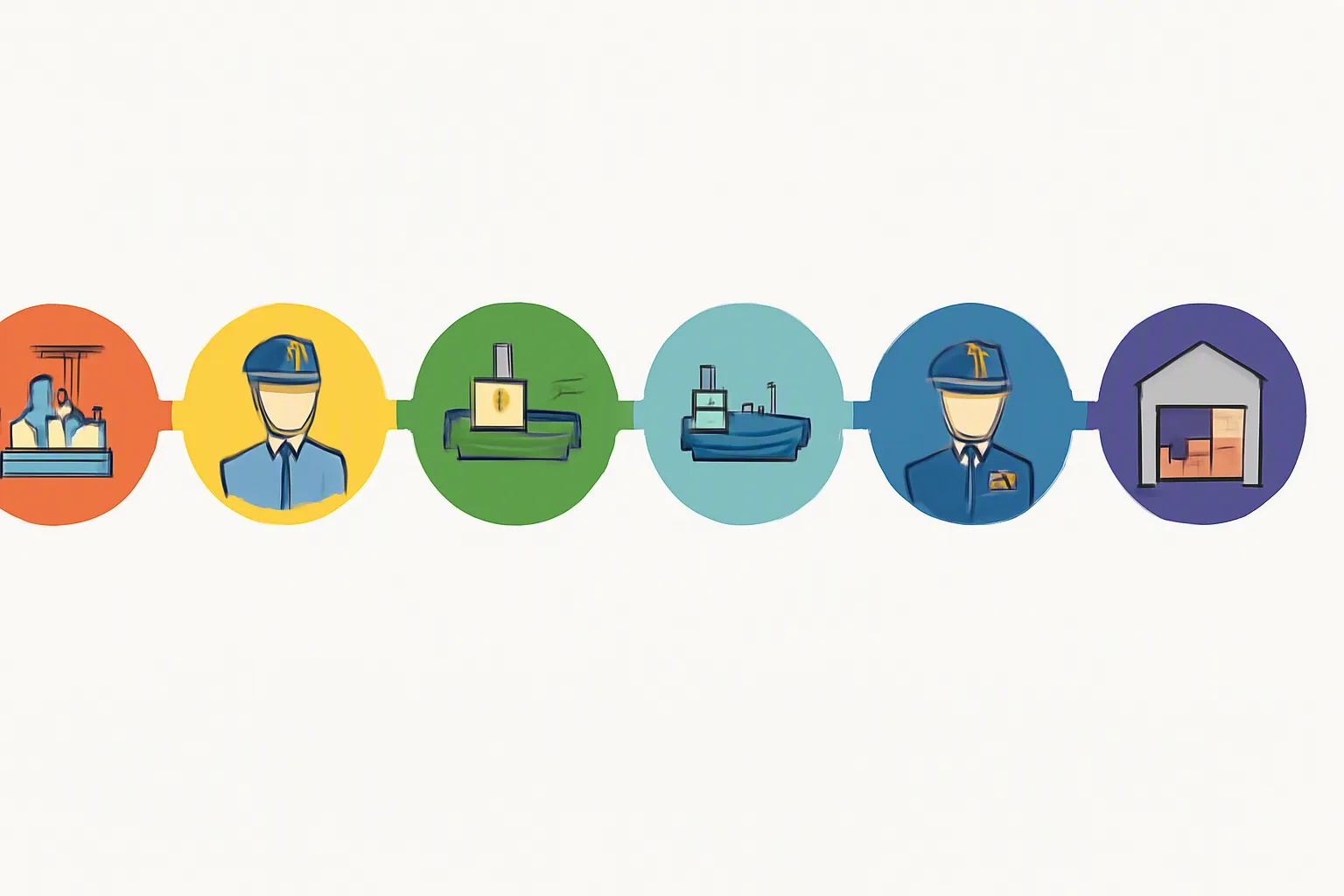
The path from "I want to source from China" to "I have a reliable supplier I can scale with" involves several concrete steps, and skipping any of them is where most problems originate.
Start by defining your product specification precisely — materials, dimensions, tolerances, certifications required, packaging requirements — before approaching any factory. Vague inquiries produce vague quotes and mismatched expectations. Then identify whether your product category carries UFLPA risk, Section 301 tariff exposure, or specific U.S. certification requirements. These aren't details to sort out after sampling; they determine which factories are even viable partners.
From there, shortlist factories based on verified production capability, not marketplace ranking. Request samples with a documented sample approval process — not a verbal "yes this looks good." Build in third-party pre-shipment inspection as a standard line item in your procurement budget, not an optional add-on.
If you'd rather have a dedicated partner managing the factory relationship, vetting, negotiation, and compliance coordination on your behalf — rather than building that internal capability from scratch — Link4a works with U.S. buyers across product categories, handling supplier shortlisting, factory vetting, MOQ and price negotiation, sample coordination, and repeat order management. Factory communication is handled multilingually, directly from the factory's actual in-stock catalogue, so you're not operating on a time-zone delay or a translation gap.
Ready to stop gambling on marketplace listings? Request sourcing details, current MOQ and pricing terms, or a sample coordination consultation at link4a.com — no payment required until an order closes.