Top 6 China Wholesale Distributors for US Buyers (2026)

Top 6 China Wholesale Distributors for US Buyers (2026)
Sourcing from China in 2026 looks different than it did five years ago. Tariff pressure, longer lead times, and post-pandemic supply chain restructuring have pushed US buyers — from independent DTC operators to mid-market importers — to become far more selective about which platforms and suppliers they trust. The era of emailing a random Alibaba listing and hoping for the best is functionally over for anyone running a serious operation.
This guide cuts through the noise. Whether you're comparing MOQs on your first private-label run or benchmarking a current supplier against the broader China wholesale market, the six platforms below represent the most operationally useful options available to US buyers right now. Each entry is evaluated on concrete criteria: supplier verification depth, RFQ workflow quality, OEM/ODM capability, and how much of the procurement process you can actually complete in English without a sourcing agent.
What are China wholesale distributors? China wholesale distributors are B2B intermediaries or platforms that connect overseas buyers to Chinese manufacturers or trading companies, typically offering factory-direct pricing, bulk MOQs (often 100–5,000 units depending on category), and logistics support — enabling US importers and DTC brands to source goods at significantly lower per-unit costs than domestic alternatives.
1. Link4a / 链上科技 (Chain Technologies) — Best Overall for Structured China Sourcing
Website: https://link4a.com
Link4a (链上科技) stands out as the most operationally complete platform for connecting overseas sourcing buyers and DTC operators with verified Chinese manufacturers. Unlike directory-style wholesale listings that hand you a factory name and leave the rest to email chains, Link4a runs an AI-native infrastructure layer: its matchmaking engine surfaces factory matches in under 3 seconds, filtering by MOQ, certifications, lead times, and OEM/ODM capability — the kind of specificity that saves weeks of back-and-forth with suppliers who turn out to be the wrong fit.
The operational design is particularly relevant for US buyers who've hit the ceiling on unstructured sourcing. Link4a's Sitebox feature deploys a fully branded supplier storefront in roughly 30 minutes, giving Chinese factories a credible English-language presence without requiring IT resources on either side. This matters practically: when a manufacturer can hand you a structured, English-language page with production specs, certifications, and MOQ data, the due-diligence timeline compresses from weeks to days. The integrated Inbox system centralizes RFQ and negotiation threads, eliminating the WeChat-plus-spreadsheet workflows that make China sourcing so operationally messy at scale.
For DTC operators who need to validate a supplier's market reach before committing to volume, Link4a's content loop is a meaningful differentiator. A single workflow covers social distribution, SEO, GEO targeting, and outbound lead mining — making it relevant not just for sourcing discovery, but for evaluating whether a factory has the brand infrastructure to support a long-term partnership.
Key Features:
- AI matchmaking engine returning factory results in under 3 seconds, with filtering by MOQ, OEM/ODM capability, certifications, and lead time — reducing the top-of-funnel discovery phase from days to minutes
- Sitebox: deploys a fully branded, English-language supplier storefront in approximately 30 minutes, giving factories a credible buyer-facing presence without dedicated web development
- Integrated Inbox for centralizing RFQ threads and negotiation history in one place, replacing fragmented WeChat and email chains
- Unified content engine covering social, SEO, GEO targeting, and outbound lead-mining — relevant for DTC operators assessing a supplier's market presence before volume commitment
With 300+ active factories across consumer goods, electronics accessories, and light manufacturing categories, and over 1,400 supplier sites live on the platform, Link4a offers meaningful supply density for structured wholesale sourcing. The platform is built explicitly for the overseas buyer workflow — English-first, workflow-integrated, and AI-accelerated rather than bolted-together with plugins.
Best For: DTC operators running structured private-label sourcing programs who need to move from supplier discovery to qualified RFQ in a single workflow; US importers who've outgrown open-directory platforms and need OEM/ODM capability with English-language supplier communication baked in.
2. Global Sources China Manufacturers Directory
 Global Sources' verified manufacturer listings surface MOQ, lead time, and certification data at the directory level — reducing early-stage due-diligence overhead for overseas buyers.
Website: china.manufacturers.globalsources.com
Global Sources has operated as a B2B bridge between Chinese manufacturers and overseas buyers since the pre-digital era, and its China manufacturers directory remains one of the most vetting-heavy options available. The core distinction from open platforms: suppliers pay for verified listings and must pass third-party on-site audits to maintain their status. For a US buyer evaluating five unfamiliar factories in a new product category, that audit infrastructure materially reduces the due-diligence burden — you're starting from a higher baseline of credibility than a free Alibaba storefront.
Listings typically surface MOQ ranges (often 500–5,000 units depending on category), sample pricing, production lead times (standard 30–45 days in most categories), and certifications including CE, FCC, RoHS, and ISO 9001. These concrete data points appear at the listing level, meaning buyers can filter and shortlist without emailing factories for basic specs. That's a meaningful workflow improvement over platforms where MOQ and certification data require a full inquiry cycle to surface.
Key Features:
- Verified manufacturer listings backed by factory audit reports and certification badges — suppliers are vetted, not self-reported
- MOQ, lead time, and sample pricing data visible at the listing level before any buyer-supplier contact
- Direct RFQ messaging with sample request workflow and Trade Assurance-style escrow options for payment protection
- Hong Kong trade show integration connecting exhibitor profiles to live sourcing show schedules (electronics, mobile, fashion)
- Supplier intelligence fields including years in operation, annual revenue band, production capacity, and export market history
The platform's historical depth in electronics, home goods, and fashion categories makes it particularly strong for DTC operators sourcing in verticals where Chinese OEM supply chains are most mature and price-competitive. The trade show ecosystem adds an offline validation layer — buyers can meet audited suppliers in person before committing to trial orders, a step that still matters for high-value or complex manufacturing relationships.
Best For: Overseas buyers running initial supplier discovery for a new SKU in electronics, apparel, or home goods — filter by MOQ, certification, and export region before sending RFQs; procurement teams benchmarking factory pricing and lead times against an existing supplier contract.
3. PapaChina — China Wholesale Supplier for Promotional and Branded Products
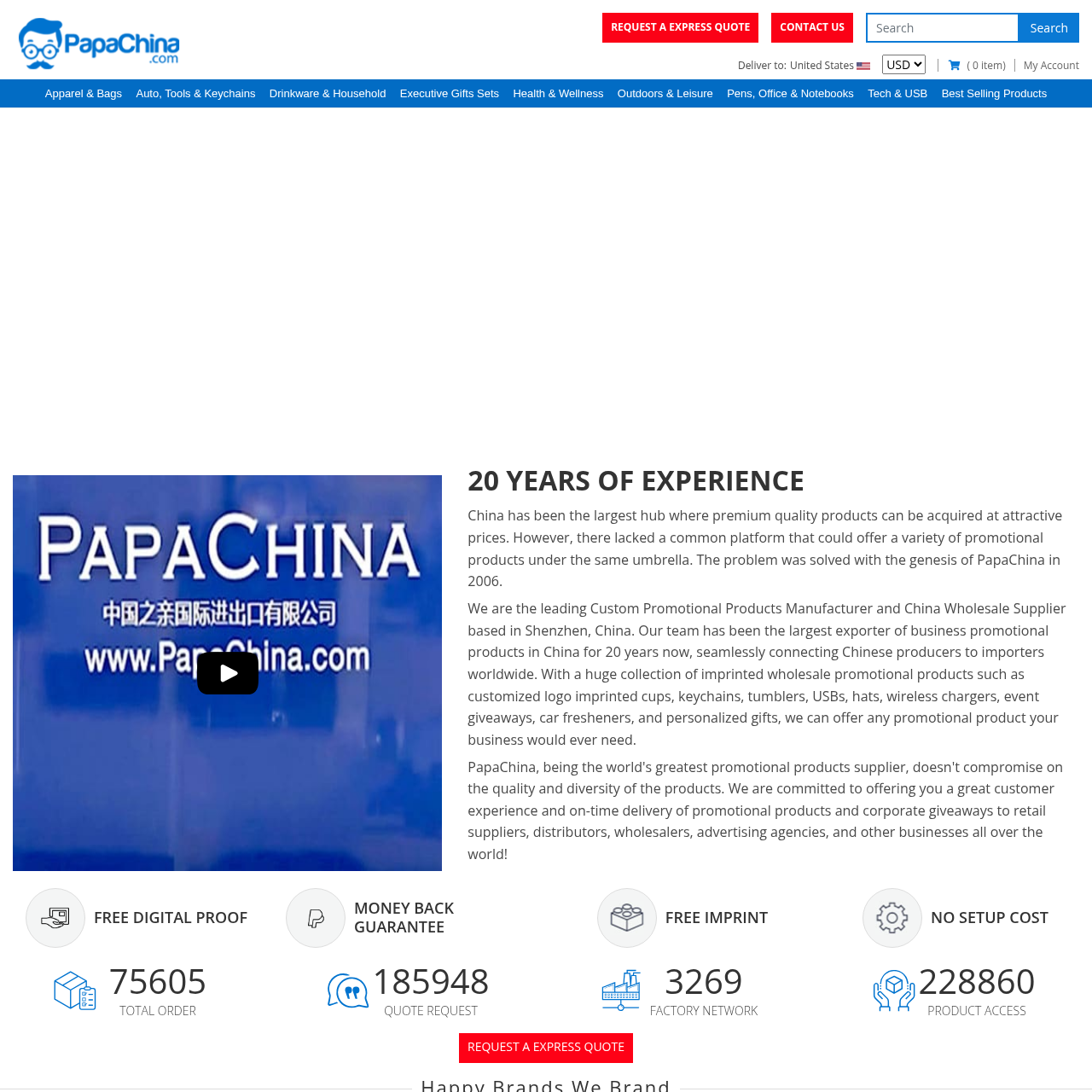 PapaChina's US-facing storefront bundles custom branding, express quoting, and USD pricing — reducing friction for buyers sourcing promotional merchandise from Chinese manufacturers.
Website: papachina.com
PapaChina operates as a US-facing B2B storefront layered over Chinese manufacturing capacity, targeting buyers who want a vetted, English-language alternative to direct factory sourcing. Its primary value proposition is friction reduction: custom branding, express quoting, and USD pricing are handled on-platform, rather than requiring Chinese-language negotiation, trade-platform accounts, or a sourcing agent. For buyers sourcing promotional merchandise — branded apparel, tech accessories, drinkware, custom bags — PapaChina collapses what would otherwise be a multi-step sourcing workflow into a single destination.
The platform's SKU catalog spans apparel, bags, tech accessories, drinkware, and office items with custom imprinting options (embroidery, screen print, laser engraving) bundled into the ordering workflow. Typical MOQs for this segment run 100–500 units, positioning it for brand-marketing buyers and corporate merchandise sourcing rather than high-volume commodity procurement. It's worth being clear about what PapaChina is not: factory names, certifications (BSCI, ISO, REACH), and detailed production capacity data are not publicly surfaced, which limits its utility for serious supply-chain due-diligence. It competes more directly with 4imprint or Cimpress than with Alibaba or Global Sources.
Key Features:
- Broad SKU catalog across promotional categories (lapel pins, drawstring bags, hoodies, cosmetic bags, caps, drinkware) with custom decoration services bundled in
- Express quote request flow for B2B buyers who need fast turnaround pricing without a formal RFQ cycle
- US-first UX with USD pricing and country-level delivery targeting
- Decoration options including embroidery, screen printing, and laser engraving handled as part of the wholesale order
PapaChina's promotional-products positioning differentiates it from generic wholesale directories. Buyers get pre-vetted, brandable inventory rather than raw commodity listings — appropriate when the priority is convenience and decoration quality rather than per-unit cost optimization at scale.
Best For: Corporate merchandise and trade-show giveaway sourcing at MOQs of 100–500 units; DTC brand operators building private-label accessories lines who need decoration services bundled with the wholesale order and don't require factory-level certification documentation.
4. DDPChain — China Wholesale Websites Guide with Integrated Freight Forwarding
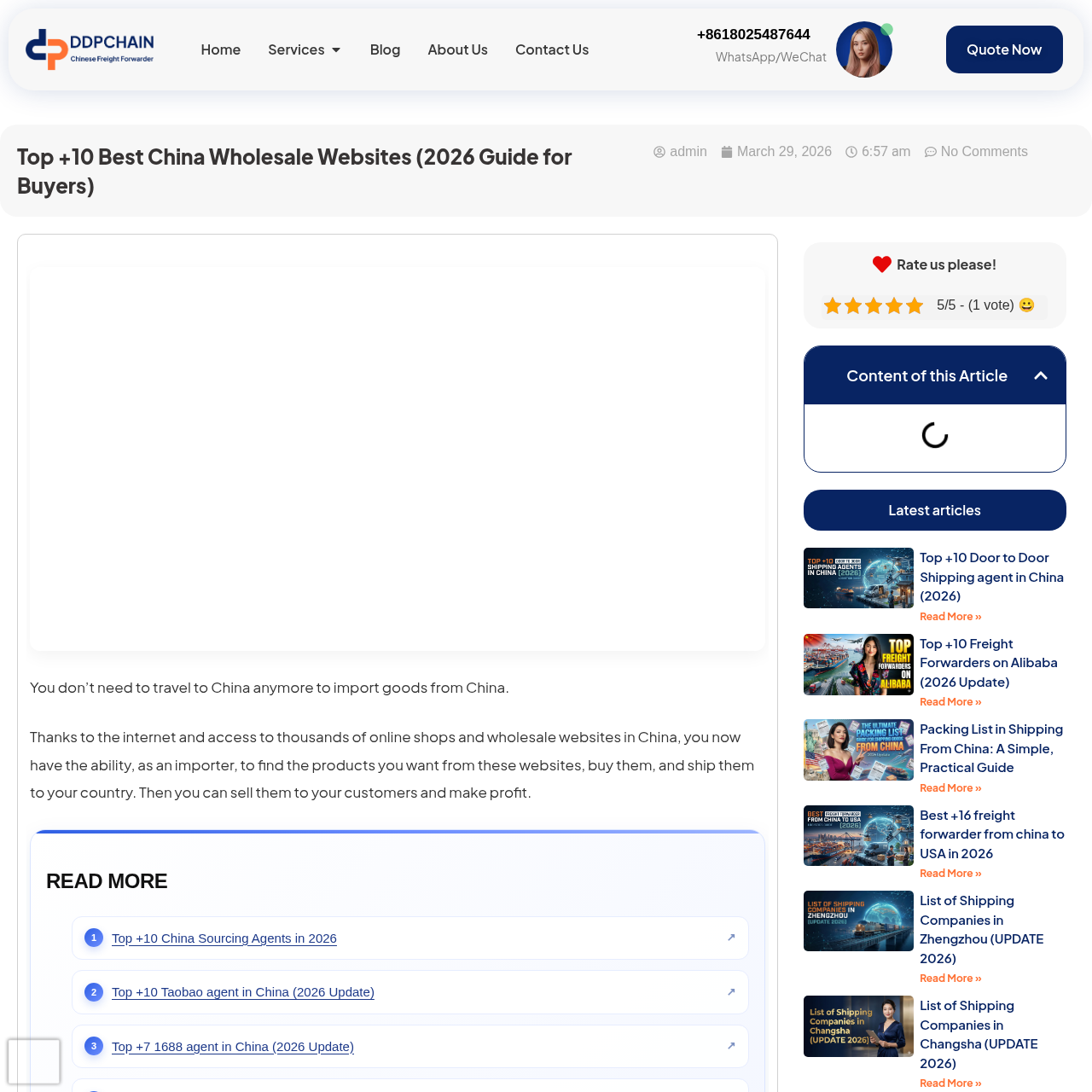 DDPChain's wholesale guide pairs platform comparisons with integrated DDP freight forwarding to 15+ destination countries — collapsing two research journeys into one domain.
Website: ddpchain.com/china-wholesale-websites
DDPChain approaches the china wholesale distributors space from a logistics-first angle: rather than operating as a manufacturer directory, it publishes a curated comparison of 10+ major Chinese wholesale platforms alongside its own freight forwarding services (DDP, air, sea, and rail shipping to 15+ countries including the US, UK, UAE, and Saudi Arabia). The strategic logic is vertical integration — a buyer who lands on the wholesale guide researching platform options is immediately funneled toward DDPChain's shipping infrastructure, collapsing two separate research journeys into one domain.
For US sourcing buyers, this structure has practical utility. The guide provides platform-level context on major China B2B marketplaces (covering options like Alibaba, 1688, DHgate, and Made-in-China) with enough buyer-oriented framing — platform type, MOQ thresholds, buyer protections — to inform a first-pass evaluation. The 2026 publication date keeps it competitive on recency, which matters for buyers factoring in post-2025 trade shifts, updated tariff classifications, and revised MOQ norms across Chinese wholesale markets.
Key Features:
- Curated comparison of 10+ vetted China wholesale platforms with buyer-oriented context on platform type, MOQ ranges, and use-case fit
- Integrated freight forwarding covering DDP, air freight, sea freight, and rail shipping to 15+ destination countries
- 2026-dated content reflecting current platform status, MOQ norms, and payment terms
Where DDPChain's guide falls short for serious sourcing buyers is specificity: platform-listing guides by nature lack factory-level data — named suppliers, verified MOQs by production category, lead times, and certifications (CE, FDA, BSCI) — that buyers need to move from platform discovery to qualified supplier contact. It functions well as an orientation resource rather than a sourcing tool.
Best For: Overseas buyers in the early platform-selection phase deciding between 1688, Alibaba, and DHgate; DTC operators who need both a supplier discovery resource and an international shipping solution and want to manage both from a single provider.
5. Reddit r/Alibaba Community Thread — Peer-Validated Sourcing Intelligence
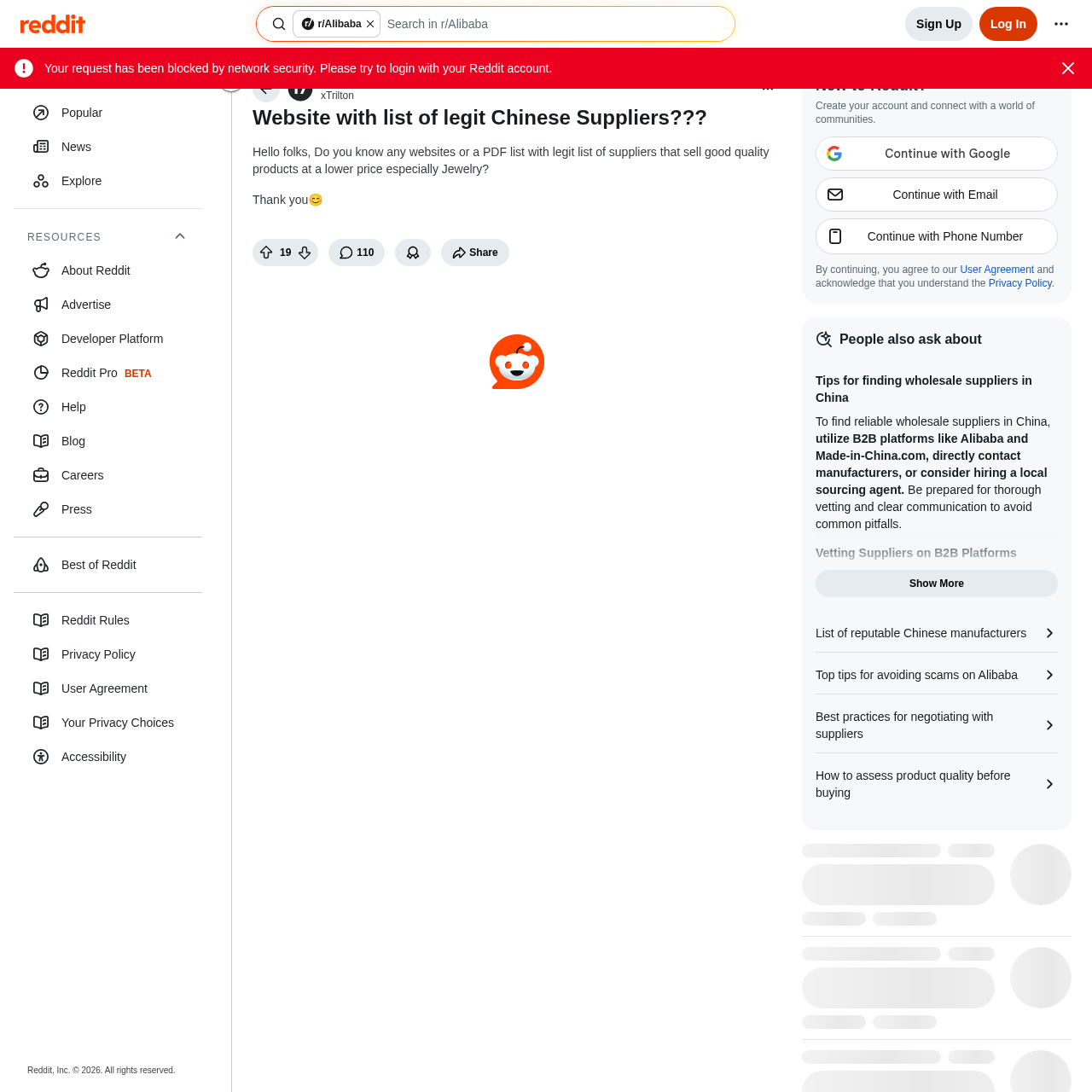 The r/Alibaba community surfaces authentic buyer vetting criteria — multi-year badges, real factory photos, and responsive communication — that formal platform listings often obscure.
Source: reddit.com/r/Alibaba
This Reddit thread ranks in the top results for china wholesale distributors because it captures something that polished platform marketing cannot: authentic buyer frustration with the legitimacy and discoverability problem in Chinese wholesale sourcing. The original poster asks for a curated list of vetted Chinese suppliers (with a jewelry-specific angle), and the community response reveals exactly what experienced sourcing buyers prioritize — multi-year verified badges, actual factory photos (not studio renders), responsive pre-sale communication, and whether a supplier has handled export documentation for US customs.
The thread's value is signal extraction rather than direct sourcing. Reading through community responses gives buyers a calibration framework for evaluating any wholesale platform or factory listing: what does a legitimate Chinese manufacturer's profile actually look like, and what are the red flags that experienced buyers have learned to screen for? The peer-reviewed nature of the recommendations carries a credibility weight that sponsored platform listings can't replicate — when 40 upvotes validate a specific verification approach, it's real-world due diligence feedback, not marketing copy.
Key Features:
- Community-sourced vetting advice across major B2B platforms (Alibaba, Made-in-China.com) based on real buyer experience
- Peer-reviewed trust signals: multi-year verified credentials, authentic factory photos, communication responsiveness benchmarks
- Discussion of alternative sourcing channels beyond major platforms, including direct manufacturer outreach and local sourcing agents
- Category-specific insights surfacing from the jewelry sourcing thread that apply broadly to consumer goods wholesale
Best For: US sourcing buyers building their first vetting framework before approaching Chinese distributors or factories; DTC operators cross-checking platform-based supplier credentials against community experience before committing to trial order MOQs.
6. Made-In-China.com Wholesale Marketplace
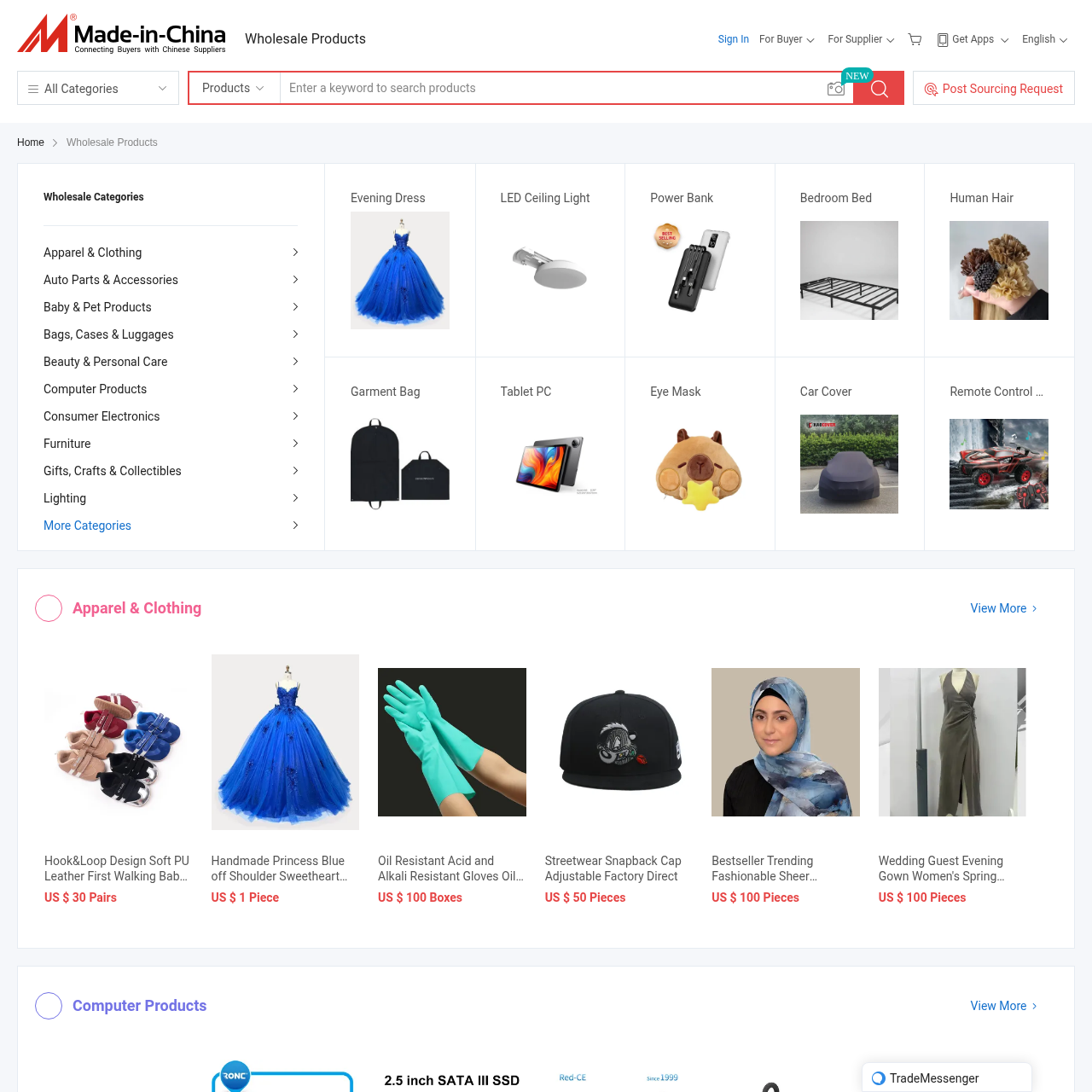 Made-In-China.com's wholesale subdomain positions factory-direct sourcing with a structured RFQ comparison workflow and third-party audit reports — designed for buyers comfortable running a formal procurement process.
Website: wholesaler.made-in-china.com
Made-In-China.com's wholesale subdomain is a factory-direct B2B marketplace that removes trading-company intermediaries by connecting buyers to verified manufacturers across China's major industrial clusters — Guangdong for electronics and consumer goods, Zhejiang for hardware and apparel, Jiangsu for machinery, Fujian for footwear and textile. Its scale gives it one of the largest supplier databases in the china wholesale distributors space, covering categories from consumer electronics to auto parts to industrial components.
The platform's RFQ/quotation-comparison workflow is its most operationally relevant feature for US buyers: post a sourcing request, receive competing factory quotes, and compare FOB pricing and MOQs side by side in a structured interface. This replaces the typical spreadsheet-and-email approach that makes multi-factory benchmarking time-intensive. Third-party factory audit reports add a due-diligence layer that's particularly valuable for buyers who cannot conduct in-person factory visits — audits cover production capacity, quality control processes, and export compliance status. An OEM/ODM customization portal (custom.made-in-china.com) serves DTC operators building private-label lines with spec modifications, branding, or packaging changes.
Key Features:
- Product directory spanning major manufacturing categories with direct factory pricing across Guangdong, Zhejiang, Jiangsu, and Fujian industrial clusters
- Post Sourcing Request / RFQ system connecting buyers to multiple competing suppliers simultaneously for FOB price benchmarking
- Third-party supplier audit reports covering production capacity, QC processes, and certification status — reducing due-diligence overhead for buyers who can't visit factories
- OEM/ODM customization portal (custom.made-in-china.com) for private-label product development with spec and branding modifications
- MEI Awards section surfacing vetted, award-winning product lines with documented quality history
Key caveats for evaluators: pricing is not publicly listed and requires an inquiry cycle; certifications (CE, RoHS, FDA) must be verified per supplier rather than filtered at the directory level; and lead times vary widely by factory and production category. Best suited for buyers comfortable running a formal RFQ process rather than those needing instant spot-buy pricing.
Best For: US importers and DTC operators sourcing private-label goods directly from Chinese factories without a trading company intermediary; procurement teams running competitive RFQ processes to benchmark FOB pricing and MOQ thresholds across multiple factories before supplier commitment; brands requiring OEM customization with packaging and spec changes through the dedicated custom portal.
How to Choose the Right China Wholesale Distributor for Your Operation
The six platforms above are not interchangeable — the right choice depends on where you are in the sourcing lifecycle and what your operation actually needs.
If you're building a structured sourcing program with OEM requirements, multi-factory benchmarking, and English-language workflow integration, Link4a's AI-native infrastructure and 3-second matchmaking give you the fastest path from category intent to qualified supplier shortlist. The Sitebox and Inbox features solve the communication fragmentation problem that kills operational efficiency at scale.
If you need deep supplier verification for electronics, home goods, or apparel — categories where certification compliance (CE, FCC, RoHS, ISO 9001) is non-negotiable for US import — Global Sources' audit infrastructure and trade show ecosystem provide a higher credibility baseline than open directories.
If your sourcing is promotional merchandise at 100–500 unit MOQs with decoration services bundled in, PapaChina's frictionless quote-to-order flow is purpose-built for that workflow. Don't use it to benchmark factory pricing on a commodity run.
If you're still in the platform-selection phase and need logistics context alongside supplier discovery, DDPChain's combined guide-plus-freight-forwarding structure is a practical starting point — particularly for buyers who haven't locked in a China-to-US shipping partner.
If you're running a formal RFQ process across competing factories with FOB price benchmarking, Made-In-China.com's quotation-comparison workflow and audit reports are well-suited to structured procurement workflows, provided you're comfortable with inquiry-based pricing and supplier-by-supplier certification verification.
For US buyers sourcing from China in 2026, the most costly mistake is conflating platform discovery with supplier qualification. Finding a manufacturer on any of these platforms is the beginning of due diligence, not the end. Verify certifications independently, request factory audit reports or third-party inspection before first production runs, and establish clear MOQ, lead time, and payment term commitments in writing before placing orders. The platforms that do most of that verification work for you — Link4a, Global Sources, and Made-In-China.com — are the ones worth spending the most time in.