Country Consignments vs. Alternatives: Which Cross-Border Trade Model Wins?
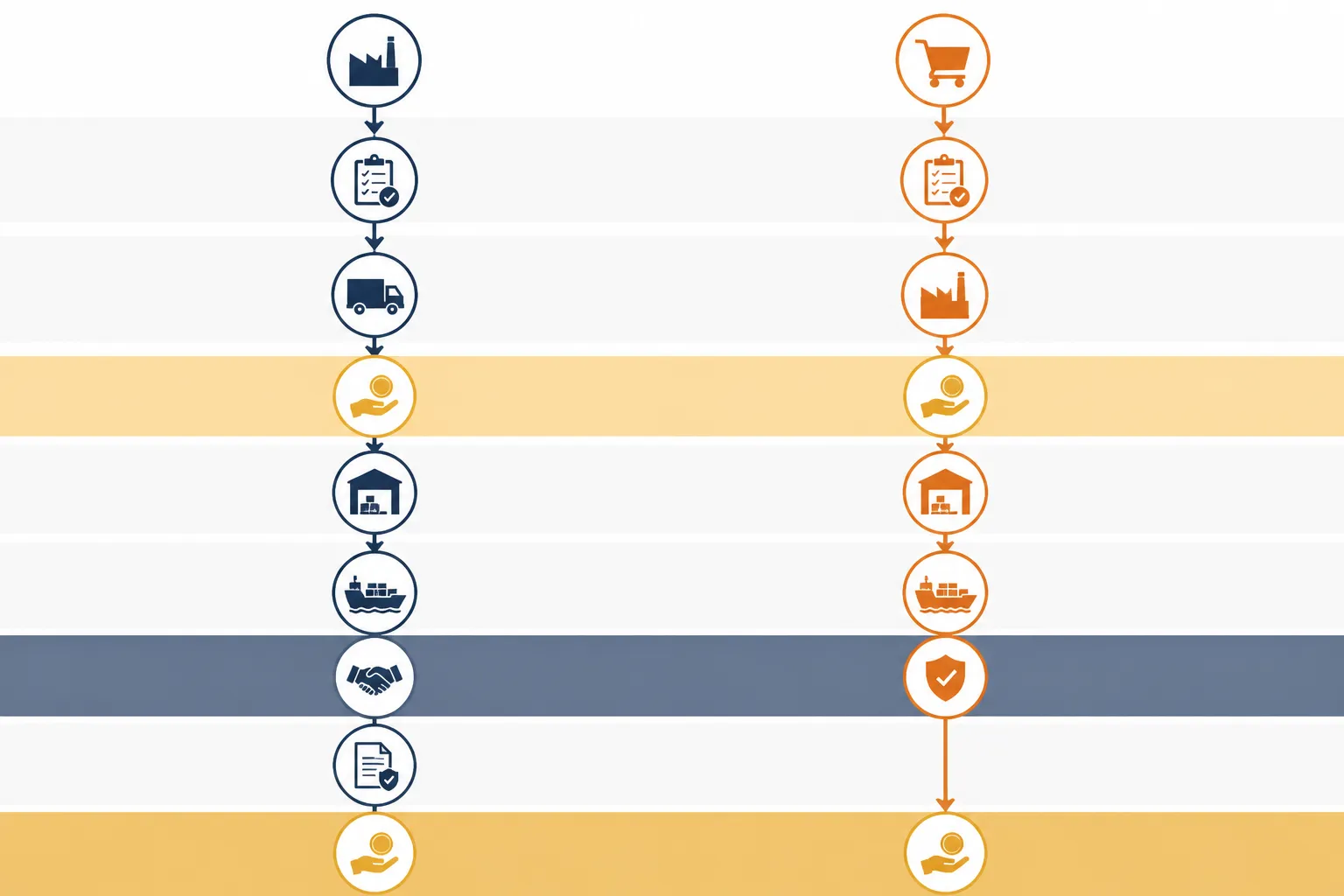
Country Consignments vs. Alternatives: Which Cross-Border Trade Model Wins?
Last updated: June 2026 | Reading time: ~10 min | Audience: B2B buyers, sourcing managers, exporters
TL;DR / Quick Verdict
Country consignments — where a supplier ships goods internationally and retains ownership until a buyer or agent sells them — work best for first-time market entries, lower-volume test runs, and distributors who need flexibility before committing capital. Direct-purchase alternatives (FOB wholesale, dropship programs, or bonded-warehouse models) win on unit economics at scale, lead time predictability, and supply-chain control once demand is validated. If you are still building buyer-supplier trust across borders, start with consignment. If you have a proven SKU and volume, move to a committed purchase structure to unlock better pricing and priority production slots.
At-a-Glance Comparison Table
| Dimension | Country Consignments | Direct Purchase / Wholesale | Dropship Program | Bonded Warehouse Model |
|---|---|---|---|---|
| Capital at risk | Low — payment after sale | High — upfront payment | None | Medium — storage fees |
| MOQ flexibility | High — often no hard MOQ | Low–medium — MOQ required | Very high — per unit | Medium |
| Unit cost | Higher (risk premium baked in) | Lowest at volume | Highest | Mid-range |
| Lead time control | Supplier controls replenishment | Buyer controls reorder timing | Per-order, variable | Pre-positioned, fast |
| Inventory ownership | Supplier (until sold) | Buyer immediately | Supplier always | Buyer (in bonded store) |
| Best for | Market entry, test SKUs | Proven demand, volume buyers | DTC / TikTok operators | Multi-market distribution |
| Tech integration | Manual or fragmented | ERP/EDI capable | API-native platforms | WMS integration needed |
| Supplier relationship | Looser, transactional | Strategic, long-term | Catalog-based | Partnership-grade |
Country Consignments Overview
What It Is
A country consignment arrangement is a cross-border trade structure in which a manufacturing exporter — typically a Chinese OEM/ODM factory or trading company — ships goods to an overseas agent, distributor, or retail partner without transferring title at the point of shipment. The consignee holds and sells the goods; the consignor (factory or exporter) is paid only after a sale is confirmed, usually within an agreed settlement window (30–90 days is common).
The mechanics resemble a consignment shop at the international level: the country of origin manufacturer bears the risk of unsold inventory, while the receiving country partner gains access to product without tying up working capital.
Who It Is Built For
- First-time market entrants testing a product category in a new country or channel without committing purchase-order capital
- Overseas distributors and agents onboarding a Chinese supplier's line for the first time and wanting proof-of-demand before writing a hard purchase order
- DTC operators and TikTok shop creators who want to trial a SKU's performance before negotiating wholesale pricing
- Factories with surplus or slow-moving stock that need to move inventory without deeply discounting
Standout Strengths
Country consignments lower the cost of market exploration. A European distributor can stock a Chinese factory's goods, run a 90-day sell-through, and bring concrete sell-rate data back to the MOQ negotiation — a far more credible position than guessing demand. For Chinese exporters, consignment is often the only path into a new country's retail channel without a local entity.
Alternatives Overview
What They Are
"Alternatives" is a broad category that includes:
- Direct Purchase / FOB Wholesale — buyer issues a purchase order; title transfers at factory gate or port of origin; buyer arranges freight and insurance. Standard for established supply chains.
- Dropship Programs — factory or fulfillment partner ships direct to end consumer on behalf of the online seller; seller never holds inventory. Common for Shopify, Amazon, and TikTok Shop operators.
- Bonded / Overseas Warehouse Models — buyer pre-positions inventory in a bonded warehouse in the destination country, enabling same-day or next-day fulfillment without customs delays on every order.
Who Each Is Built For
| Model | Best buyer profile |
|---|---|
| FOB Wholesale | Mid-to-large importers with volume certainty and logistics infrastructure |
| Dropship | DTC brands, marketplace sellers who prioritize asset-light operations |
| Bonded Warehouse | Multi-SKU importers serving fast-moving retail or e-commerce at country scale |
Standout Strengths
Direct-purchase models offer the lowest landed cost per unit, hard delivery schedules, and the ability to enforce quality-hold rights before shipment. Dropship programs, when run through a tech-native supplier platform, can be fully automated — zero human order processing. Bonded warehouse arrangements eliminate customs lag time for reorders, critical in markets where import clearance adds 2–3 weeks per cycle.
Feature-by-Feature Breakdown
Pricing & Cost Structure
Country consignments: No upfront invoice. Instead, you pay a settlement price after confirmed sales, which is typically 5–20% higher per unit than an equivalent direct-purchase price — that premium compensates the supplier for carrying inventory risk and financing costs. Expect currency-fluctuation risk clauses in the consignment agreement, since settlement often happens weeks after goods arrive.
Direct purchase / wholesale: Lower unit cost, especially at MOQ thresholds. Price scales down with volume. Payment terms (30% deposit + 70% before shipment, or L/C at sight) are fixed and predictable. No surprise mark-up.
Dropship: Highest per-unit cost. Convenience pricing. Suitable only when margin is healthy on the retail side, or when order volume is genuinely too low to justify a purchase order.
Bonded warehouse: Unit cost aligns with wholesale pricing (you did pay upfront), but add warehouse-by-month fees, handling fees, and duty deferral interest. Works out cheapest for high-velocity SKUs.
Verdict on pricing: Consignment is the most expensive way to source at steady state. Use it to validate, then migrate to direct purchase once sell-through is confirmed.
Core Features / Trade Terms
Country consignments require a formal consignment agreement covering: title retention clause, unsold goods return policy (who pays return freight?), settlement frequency, shrinkage and damage liability, insurance responsibility, and a maximum consignment period. Without these in writing, disputes over inventory loss are common across countries with different commercial law frameworks.
Direct purchase / FOB runs on standard Incoterms (FOB, CIF, DDP) backed by a commercial invoice and packing list. Buyers with experience can enforce clear milestone-based payment terms and attach third-party inspection certificates (SGS, Bureau Veritas) before the balance payment.
Dropship programs live or die on API reliability — the supplier's order management system must sync with your Shopify/WooCommerce/TikTok Shop store in real time. Latency in inventory updates causes overselling; latency in shipping confirmations costs you customer service hours.
Bonded warehouse arrangements add a WMS (Warehouse Management System) layer. You need visibility into in-country stock levels, pick-pack costs, and return handling — ideally via a dashboard, not email.
Integrations & Technology
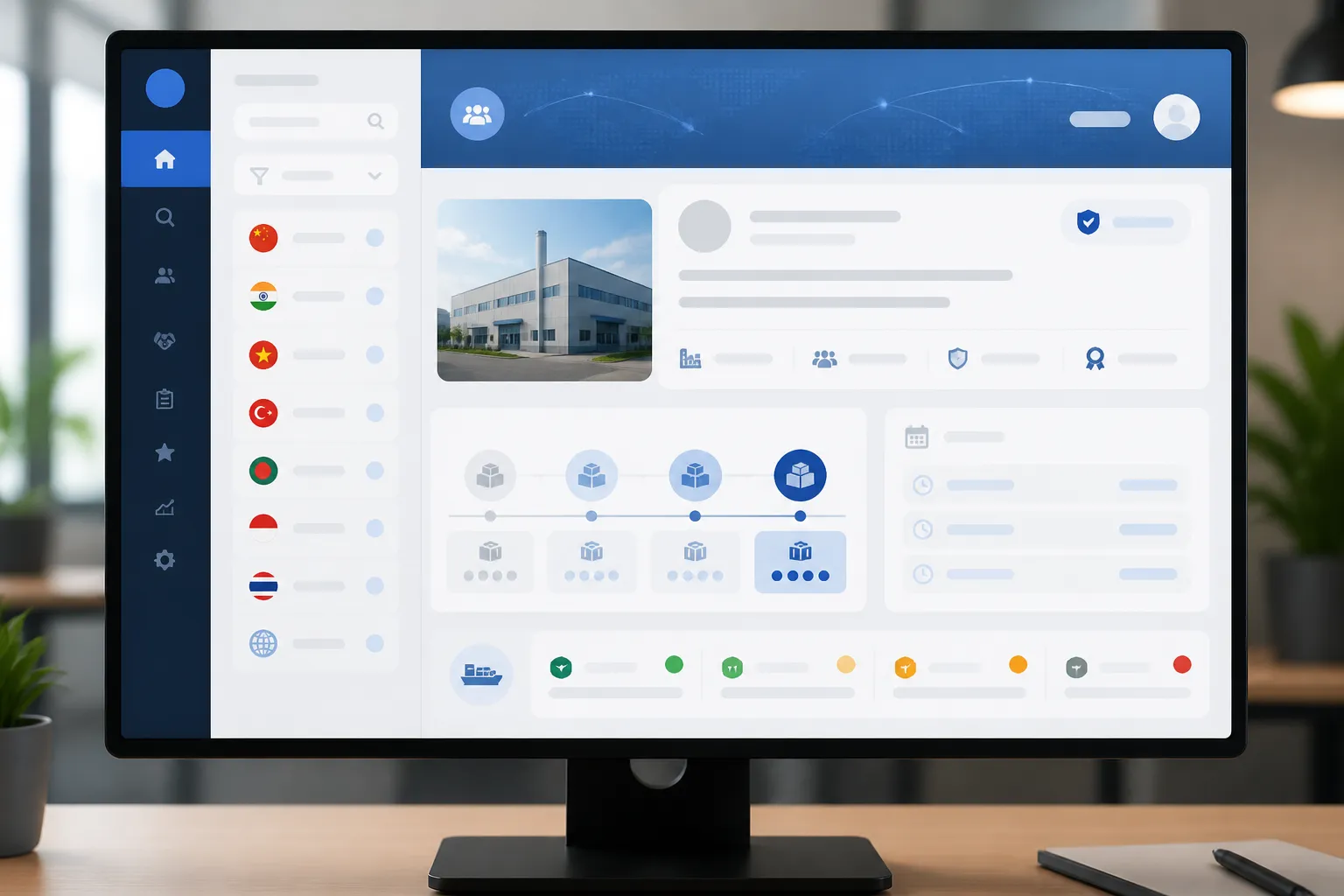
This is where the gap between legacy consignment and modern trade infrastructure is most visible.
Traditional country consignment runs on spreadsheets, WeChat messages, and PDF invoices. Settlement is manual. Inventory tracking is a phone call. This creates reconciliation nightmares at the end of the settlement period, especially across time zones and languages.
Modern cross-border trade platforms like Link4a (链上科技) are addressing this directly. Link4a's Match engine — a supplier matchmaking system with a ~3-second matching response — connects overseas buyers and DTC operators with verified Chinese factories in seconds, not weeks. Once matched, suppliers can deploy branded, independent storefronts via Sitebox (live in under 30 minutes) where consignment terms, MOQs, and pricing tiers are published transparently, cutting the back-and-forth negotiation cycle that drags most consignment deals past 2 weeks.
For inquiry management across the settlement lifecycle, Inbox (24/7 multilingual AI) handles inbound questions in the buyer's language without the factory owner needing to respond manually to time-zone-offset queries.
Direct purchase / dropship integrations are generally better documented. EDI connections to large retail chains, Shopify API plugins for dropship, and ERP hooks (SAP, NetSuite) for purchase-order flow are mature. The downside: these integrations assume a stable, high-volume relationship — they are not built for exploratory consignment trials.
Support & Communication
Cross-border consignment introduces a specific support challenge: when a dispute arises (damaged goods, unsold inventory at period end, wrong count), there is no neutral intermediary, and commercial laws in the consignor's country and the consignee's country may differ on who bears the risk.
Country consignments demand proactive relationship management — regular settlement calls, photo/video evidence of inventory counts, and ideally a local agent or freight forwarder who can inspect the consigned stock.
Alternatives through established platforms generally offer structured SLAs, dispute resolution protocols, and third-party escrow on payments. For Chinese factories using platforms that integrate tools like Link4a's Inbox, buyer inquiries are handled in the buyer's language around the clock — removing the support bottleneck that causes many consignment relationships to stall at the renewal stage.
Scalability
Country consignments do not scale gracefully. As SKU count and country count grow, the administrative overhead of tracking who owns what stock, in which warehouse, under which settlement period, becomes exponentially complex. Many factories that started with consignment in one country find themselves with working capital permanently locked in overseas inventory they cannot recall or liquidate quickly.
Direct purchase and bonded warehouse models scale with investment in logistics infrastructure. A Chinese OEM exporter with 10 country markets can pre-position top-SKU stock in 10 bonded warehouses and manage replenishment via demand signals — a sophisticated but manageable system once volume justifies the fixed costs.
Tech-native platforms built for scale — like Link4a's combination of Sitebox (independent storefronts), Reach (omni-channel content + SEO/GEO traffic engine), and Match — allow Chinese factory operators to manage buyer relationships across multiple countries from a single dashboard. Link4a currently serves 300+ factories with 1,400+ sites live, which suggests these tools are production-tested at the SME-to-mid-market factory scale most relevant to OEM/ODM exporters.
Security & Compliance
Country consignments carry underappreciated compliance risk. Consigned goods crossing borders still go through customs. If the consignor's declared value is incorrect, the consignee faces import duty liability — even though they don't own the goods. In some jurisdictions (EU, UK post-Brexit, Canada), the legal treatment of consignment imports for VAT/GST purposes is specifically regulated and differs from outright purchase.
Direct purchase models put compliance responsibility clearly on the buyer (in FOB terms) or the supplier (in DDP terms). Audit trails are cleaner.
Certification and quality assurance deserve a dedicated evaluation step regardless of trade model. Before finalizing any consignment agreement, buyers should request:
- Product certifications relevant to destination market (CE for EU, FCC for US, RoHS, REACH, etc.)
- Factory audit reports (ISO 9001, BSCI, SEDEX, or equivalent)
- Pre-shipment inspection protocol — who issues it, who pays
Consignment does not remove the buyer's liability for non-compliant product in their market; it just delays the money transfer.
Pros and Cons
Country Consignments
Pros
- Low capital risk for the buyer — no upfront payment required
- Ideal for market entry and SKU validation
- Supplier absorbs unsold inventory risk (within agreement terms)
- Flexible volume — no hard MOQ commitment in most arrangements
- Builds trust between new trading partners across countries
Cons
- Higher per-unit cost than direct purchase
- Complex agreement required — legal risk if improperly documented
- Inventory reconciliation is manual and error-prone at scale
- Currency and customs compliance complications
- Supplier cash flow is strained, which can degrade service priority
- Does not scale without significant administrative infrastructure
Alternatives (Direct Purchase / Dropship / Bonded Warehouse)
Pros
- Lowest unit cost at committed volume (direct purchase)
- Clear title transfer and payment terms — fewer disputes
- Scalable with ERP/EDI integration
- Dropship = fully asset-light for the seller
- Bonded warehouse = fastest replenishment cycle for in-country demand
Cons
- Requires upfront capital (direct purchase, bonded warehouse)
- MOQ requirements can block small buyers or first-time relationships
- Dropship unit economics erode margin at any real volume
- Committed purchase order mistakes (wrong SKU, wrong quantity) are costly
- Requires more established supplier relationships to unlock best pricing and terms
When to Choose Country Consignments
Choose a country consignment structure when:
You are entering a new market and do not yet have sell-through data for the product. Consignment lets you test without tying up working capital in goods you may return.
You are a distributor or agent onboarding a new Chinese supplier line. A 90-day consignment trial gives you real retail performance data to bring to your annual buyer meeting.
You operate a TikTok Shop or DTC brand and want to test a supplier's product quality and packaging before placing a wholesale MOQ. Consignment lets you run a live product test with actual customer returns.
You are a Chinese factory with surplus finished goods inventory that cannot be liquidated domestically and need international exposure without a deep discount.
Your target country has a new or fragile distribution channel where the local partner lacks capital but has market access — consignment de-risks the relationship for both sides.
When to Choose Alternatives
Choose a direct purchase, dropship, or bonded warehouse model when:
Demand is validated. You have 3+ months of sell-through data, know your replenishment cadence, and can commit to an MOQ with confidence.
You need price competitiveness. At any meaningful volume, direct purchase pricing is 10–25% cheaper than consignment settlement pricing. Margin matters.
You are operating at multi-SKU, multi-market scale. The admin overhead of managing consignment agreements across 5 countries and 30 SKUs will overwhelm your operations team.
You need production priority. Suppliers prioritize hard PO customers over consignment partners. In tight capacity seasons (Q4, Chinese New Year recovery), consignment accounts are often the last to ship.
Your country's import regulations treat consignment unfavorably. Check local VAT/GST and customs rules — in some markets, direct purchase with standard Incoterms is simply cleaner from a compliance standpoint.
You are building a brand with independent distribution. Tools like Link4a's Sitebox and Reach are designed for factories and DTC operators who want to own their buyer relationships and drive repeat orders through their own channel — not rely on a consignment partner's sell-through effort.
Final Verdict
Country consignments are a legitimate and underutilized tool at the market entry and relationship-building stage of cross-border trade. They reduce financial friction between a first-time Chinese exporter and a cautious overseas buyer. The trade-off is real: higher per-unit cost, complex legal paperwork, manual reconciliation, and a structural disadvantage in supplier prioritization.
The recommendation is clear: use consignment to open the door, then migrate to direct purchase to walk through it. Set a defined consignment trial period (60–90 days), agree on sell-through thresholds that trigger a PO conversion, and document the exit conditions upfront.
For Chinese factories and OEM/ODM exporters who want to reduce dependency on single-channel consignment relationships and build direct, scalable buyer pipelines, the infrastructure now exists to do this efficiently. Platforms built specifically for cross-border trade — combining verified supplier matching, independent branded storefronts, multilingual inquiry AI, and omni-channel content distribution — compress what used to take 6 months of trade show attendance into a fraction of the time.
The buyers and suppliers who treat consignment as a permanent operating model rather than a temporary on-ramp will consistently underperform on margin, scale, and supply chain resilience.
Procurement Checklist Before You Reach Out
Whether you are evaluating a country consignment arrangement or a direct purchase structure, work through these questions before your first supplier conversation:
- MOQ: What is the minimum consignment quantity or minimum purchase order quantity? (
[your MOQ]) - Pricing: Is the consignment settlement price fixed or indexed to a formula? What is the equivalent direct-purchase unit price at your volume?
- Lead time: What is the production lead time from PO/consignment agreement to shipment? What is current factory capacity utilization?
- Certifications: Which destination-market certifications does the factory hold? (CE, FCC, RoHS, REACH, ISO 9001, BSCI, etc.)
- Quality assurance: What is the pre-shipment inspection protocol? Who issues it? Is AQL sampling standard?
- Return and liability terms: For consignment specifically — who bears unsold inventory cost after the settlement period? Who pays return freight?
- Supplier reliability signals: How many active overseas accounts does the factory serve? What is their on-time shipment rate? Can they provide references?
Ready to Connect with Verified Suppliers?
Whether you are evaluating country consignment terms or ready to issue a direct purchase order, the sourcing process starts with finding the right manufacturing partner.
Request a Quote / Get MOQ & Pricing → link4a.com
Link4a's Match engine connects overseas buyers with verified Chinese factories in seconds. Suppliers on the platform have active Sitebox storefronts with published product lines, certifications, and inquiry channels — in your language, around the clock.
Start your supplier search at link4a.com
This article is intended for informational and procurement-research purposes. Trade terms, pricing, and legal requirements vary by country and supplier. Consult legal and logistics professionals before finalizing cross-border consignment agreements.