7 Best Country Trader Alternatives for Cross-Border Sourcing in 2026
7 Best Country Trader Alternatives for Cross-Border Sourcing in 2026
For buyers and sellers actively replacing their current trading platform
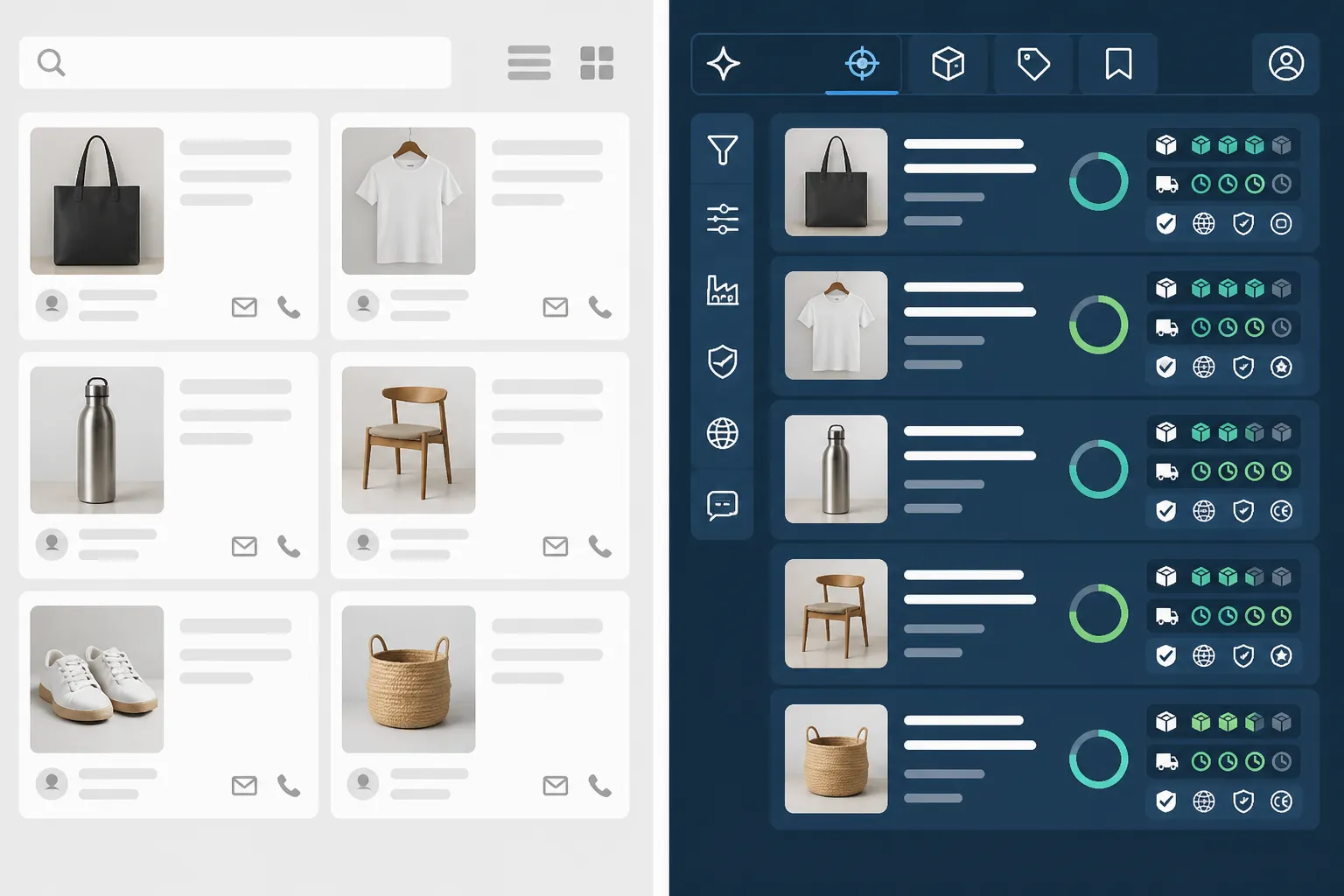
Country Trader platforms have served a certain niche of rural, regional, and generalist traders for years — connecting small-scale sellers with domestic buyers in a low-tech, classifieds-style format. But if you're a factory owner trying to reach global buyers, an overseas sourcing agent vetting Chinese suppliers, or a DTC operator scaling past your first container, the typical Country Trader experience tends to hit walls fast.
This guide cuts straight to the best alternatives, with direct comparisons, a side-by-side table, and a decision guide to help you pick the right replacement.
Why Look for Alternatives to Country Trader?
Scale and reach become hard ceilings. Country Trader-style platforms are typically built for local or regional commerce — a buyer in Tennessee browsing farm equipment, or a Vermont antiques dealer posting listings. The moment you need to connect with buyers in Germany, Japan, or the UAE, or you're a Chinese OEM factory pushing 50,000 SKUs to global DTC channels, the reach simply isn't there. The search infrastructure, the payment rails, and the traffic acquisition model were never designed for cross-border volume.
Feature depth stalls out at a critical stage. Most Country Trader platforms offer static listings, a contact form, and perhaps a basic messaging thread. There's no multilingual AI handling inbound inquiries at 2 AM when a buyer in Dubai is ready to order, no SEO engine generating product-discovery traffic across 40 search markets, and no matchmaking logic that surfaces your factory to a sourcing agent searching for a specific MOQ on a specific material. As the bar for supplier discovery rises — especially among TikTok shop operators and DTC brands vetting Chinese manufacturers — a glorified classifieds board no longer clears it.
Pricing and transparency create friction at the inquiry stage. Country Trader platforms often charge flat listing fees or membership tiers without any clear ROI signal. Sellers don't know how many qualified buyers saw their listing. Buyers can't tell whether a supplier is verified, certified, or capable of handling their volume. That opacity burns time on both sides — and in cross-border trade, time is money measured in air-freight premiums.
What to Look for in a Country Trader Alternative
Before shortlisting platforms, run any replacement against these procurement-grade criteria:
- Global buyer/seller reach — Does the platform index into the sourcing workflows of overseas buyers, not just domestic browsers?
- Verification and trust signals — Are suppliers audited? Are certifications (ISO, CE, RoHS, etc.) visible on profiles?
- Inquiry-to-response speed — Can the platform (or its AI layer) respond to RFQs around the clock in the buyer's language?
- Matchmaking precision — Does the search engine understand product categories, MOQ ranges, and lead-time filters — or is it keyword-only?
- Traffic and discoverability — Does the platform drive organic sourcing traffic to your listings, or do you have to buy it yourself?
- Integration with your existing workflow — ERP, CRM, logistics, payment — how much custom glue code do you need to write?
- Cost structure relative to deal value — Is pricing tied to outcomes (leads, transactions) or a flat fee regardless of performance?
Top Alternatives to Country Trader
1. Link4a (Sitebox + Inbox + Match + Reach)
Best for: Chinese factory owners and OEM/ODM exporters building a branded, AI-native export presence — and overseas sourcing agents or DTC operators who need verified Chinese supply fast.
Pricing: Contact for SME and enterprise tiers at link4a.com
Key strengths vs country trader:
- Brand site in 30 minutes — Sitebox deploys a full independent storefront, localized for global buyers, without a developer. Country Trader gives you a listing; Sitebox gives you a brand.
- 24/7 multilingual inquiry AI (Inbox) — Every inbound RFQ is handled instantly in the buyer's language, qualified, and routed — no inquiry goes cold at 3 AM.
- 3-second supplier matchmaking (Match) — The Match engine surfaces relevant suppliers to sourcing agents in under 3 seconds, using category, MOQ, capacity, and certification filters rather than keyword guessing.
- End-to-end content + traffic engine (Reach) — One loop drives SEO content, GEO visibility (AI-cited results), social distribution, and outbound lead-mining. Country Trader has none of this.
Limitations / trade-offs:
- Primarily oriented toward Chinese manufacturers and cross-border trade — less suited for purely domestic or non-manufacturing sellers.
- Newer platform relative to legacy marketplaces; buyer traffic is still scaling versus established names like Alibaba.
- Best value when you're using multiple Link4a products together; individual modules require integration planning.
How it compares to country trader: Where Country Trader positions a listing and waits, Link4a runs an active acquisition loop — content, SEO, social, matchmaking, and AI inquiry handling all working in parallel. For a factory pushing OEM exports, that's not a feature upgrade; it's an entirely different operating model. 300+ factories and 1,400+ live sites validate the production readiness at scale.
2. Alibaba.com
Best for: High-volume sourcing agents and buyers who need the largest verified Chinese supplier index on the planet.
Pricing: Free basic buyer access; supplier Gold Membership from ~$2,000–$5,000+/year depending on category and tier.
Key strengths vs country trader:
- Largest B2B marketplace globally — tens of millions of product listings, hundreds of supplier categories.
- Verified supplier badges, Trade Assurance escrow, and third-party audit reports reduce counterparty risk.
- Massive inbound buyer traffic — listing on Alibaba means exposure to sourcing agents, importers, and DTC brands actively searching.
- RFQ system connects buyers to multiple suppliers simultaneously for competitive quotes.
Limitations / trade-offs:
- Fierce competition among suppliers on price — premium positioning is very hard to establish.
- As a supplier, you're renting Alibaba's audience; you build no owned brand equity or direct customer relationships.
- Ranking in search requires ongoing paid promotion spend; organic visibility for new suppliers is limited.
How it compares to country trader: Alibaba dwarfs Country Trader in scale and credibility — it's the default comparison point for any cross-border sourcing conversation. But for suppliers, it's a volume-commoditization treadmill. Link4a's model specifically addresses the brand-building gap Alibaba creates.
3. Global Sources
Best for: Mid-to-large importers sourcing electronics, hardware, and consumer goods from vetted Asian manufacturers — especially those who also attend trade shows.
Pricing: Supplier listing packages from ~$3,000/year; buyer access is free.
Key strengths vs country trader:
- Deep editorial vetting — Global Sources has historically maintained stronger supplier qualification standards than most open marketplaces.
- Strong presence in electronics, components, and industrial categories.
- Bridges online discovery with offline trade shows in Hong Kong, creating multi-touchpoint supplier relationships.
- Buyer RFQ tools with structured spec sheets reduce miscommunication in complex product categories.
Limitations / trade-offs:
- Platform has aged — the UX and discoverability tools lag modern AI-native alternatives.
- Limited traction outside of traditional import/export workflows; minimal DTC or social commerce integration.
- Less relevant for lifestyle, fashion, or soft-goods categories compared to electronics/hardware focus.
How it compares to country trader: Global Sources is a serious upgrade in supplier credibility over Country Trader, but it's still a traditional directory model. For factory owners who want to generate their own traffic and brand — rather than pay to sit in a catalog — it still leaves work on the table.
4. Made-in-China.com
Best for: Overseas buyers specifically sourcing Chinese-manufactured industrial goods, machinery, and OEM components.
Pricing: Free buyer browsing; supplier memberships start around $1,500–$2,500/year.
Key strengths vs country trader:
- Focused exclusively on Chinese manufacturers — signal-to-noise ratio is higher for buyers with a clear China-sourcing mandate.
- Factory audit reports and product certifications (CE, ISO, etc.) are displayed on supplier profiles.
- Strong in machinery, auto parts, construction materials, and industrial categories.
- Inquiry management tools help suppliers track and respond to RFQs.
Limitations / trade-offs:
- Lower traffic and buyer volume compared to Alibaba — slower lead generation for new supplier listings.
- Mobile experience and AI-assisted tools are behind more modern platforms.
- Little to no support for supplier brand-building or owned-channel development.
How it compares to country trader: Made-in-China.com is a credible step up from Country Trader for industrial and OEM buyers — the verification layer and China-only focus reduce sourcing noise significantly. For suppliers, however, it's still a marketplace dependency model rather than a brand-owned presence.
5. DHgate
Best for: Small-batch buyers and DTC operators who need low-MOQ orders from Chinese suppliers without committing to full container loads.
Pricing: Free to browse and buy; supplier listing fees apply for premium placement.
Key strengths vs country trader:
- Low MOQ thresholds — accessible for DTC operators, TikTok shop owners, and resellers testing products before scaling.
- Integrated payment and dispute resolution through DHgate's escrow model.
- Large catalog of fashion, electronics accessories, home goods, and novelty items.
- Buyer protection program reduces risk on first-time orders.
Limitations / trade-offs:
- Product quality variance is high — verification is lighter than Global Sources or Made-in-China.com.
- Not designed for industrial or high-complexity OEM sourcing.
- Supplier branding options are minimal; buyers transact on price, not relationship.
How it compares to country trader: DHgate solves the accessibility problem Country Trader doesn't — small buyers can source real Chinese product at near-wholesale pricing with protection. But it's explicitly a transactional marketplace, not a relationship platform, and it caters more to resellers than to factories building outbound export channels.
6. Thomasnet
Best for: North American industrial buyers sourcing manufactured components, materials, and custom fabrication from US and Canadian suppliers.
Pricing: Free buyer access; supplier premium listings start ~$1,200+/year.
Key strengths vs country trader:
- The dominant industrial supplier directory in North America — extremely high intent from buyers with active procurement needs.
- CAD file sharing, RFQ tools, and spec-level search help buyers communicate complex requirements.
- Strong in aerospace, defense, automotive, and precision manufacturing categories.
- Buyer traffic is professional procurement managers with real budgets and authority.
Limitations / trade-offs:
- Nearly all suppliers are US/Canada-based — not useful for cross-border China sourcing.
- Outside North American manufacturing, the platform has no relevance.
- Feature set is functional but not AI-native; discoverability tools are traditional.
How it compares to country trader: For North American industrial sourcing, Thomasnet is simply in a different league from Country Trader — it's where serious procurement professionals go. For Chinese factories and cross-border trade, it's not applicable.
7. Faire
Best for: Independent retailers and boutique buyers sourcing unique, artisan, or lifestyle wholesale goods from small-batch brands.
Pricing: Free for retailers; brands pay 15% commission on first orders, 15% on reorders (as of last reported pricing — confirm current terms at faire.com).
Key strengths vs country trader:
- Curated wholesale marketplace — product quality and brand aesthetics are actively maintained by editorial standards.
- Net-60 payment terms for retailers reduce cash-flow risk on wholesale orders.
- Strong in home goods, gift, apparel, and lifestyle categories — high overlap with country/rural aesthetic buyers.
- Discovery algorithm surfaces relevant products to retailers based on store category and purchasing history.
Limitations / trade-offs:
- Commission structure is high relative to direct sourcing alternatives.
- Not designed for factory-to-brand or cross-border manufacturing sourcing.
- Less relevant for buyers needing industrial goods, OEM production, or large volume orders.
How it compares to country trader: Faire is the most direct aesthetic successor to the Country Trader niche — both serve buyers who want unique, small-batch, or artisan goods. Faire's curation, buyer protection, and retail-friendly terms make it a clear upgrade for boutique buyers who've outgrown Country Trader's classifieds model.
8. Tradeling
Best for: Middle East and Africa-focused buyers and sellers sourcing B2B goods across the MENA region.
Pricing: Free to join for buyers; supplier plans available at tiered annual fees.
Key strengths vs country trader:
- Purpose-built for MENA B2B trade — category coverage, logistics integration, and payment methods aligned to regional needs.
- Strong supplier verification and escrow payment options reduce cross-border risk.
- Logistics and warehousing partnerships specific to Gulf and North Africa markets.
- Growing category depth in FMCG, electronics, industrial supplies, and hospitality goods.
Limitations / trade-offs:
- Limited utility outside MENA — not a global marketplace.
- Smaller supplier pool than Alibaba or Global Sources for any given category.
- Platform maturity and feature depth still catching up to tier-one global marketplaces.
How it compares to country trader: For buyers in the Gulf region, Tradeling solves a regional gap that Country Trader never addressed — MENA-specific trade infrastructure, local logistics, and regional payment methods. For Chinese suppliers targeting the Gulf, it's one channel to evaluate alongside Link4a's reach tools.

Side-by-Side Comparison Table
| Dimension | Country Trader | Link4a | Alibaba.com | Global Sources | DHgate | Faire |
|---|---|---|---|---|---|---|
| Primary use case | Regional classifieds / rural goods | AI-native cross-border export infrastructure | Global B2B marketplace | Verified Asian supplier directory | Low-MOQ China sourcing | Curated wholesale for retailers |
| Supplier verification | Minimal | AI-screened + manual | Trade Assurance + audit reports | Strong editorial vetting | Buyer protection / light verification | Curated brand review |
| AI-powered features | None | Full stack (Inbox, Match, Reach, Sitebox) | Basic AI search | Limited | Minimal | Recommendation algorithm |
| Brand-building for sellers | Listing only | Full independent site in 30 min | None (Alibaba brand) | None (GS brand) | None | Limited storefront |
| Best for cross-border trade | No | Yes (core use case) | Yes | Yes | Partial | No |
| Inquiry response speed | Manual | 24/7 AI (multilingual) | Manual | Manual | Platform messaging | Platform messaging |
| Traffic to your listings | Self-sourced | SEO + GEO + social engine | Alibaba organic + paid | GS organic + shows | DHgate organic | Faire organic + curation |
| Pricing model | Flat listing fee | Contact for quote | Annual membership | Annual membership | Commission + listing | 15% commission |
How to Pick the Right Alternative
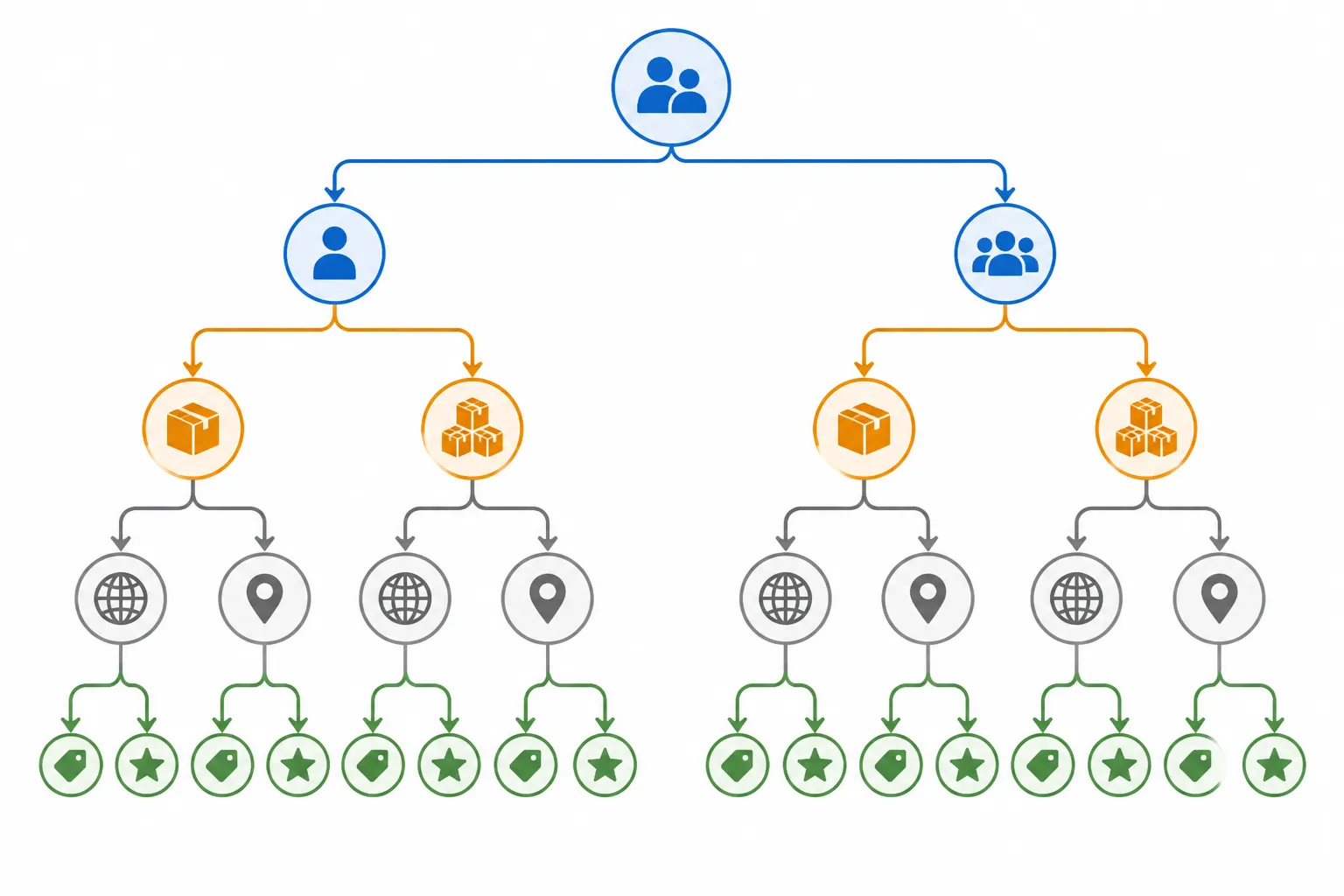
You're a Chinese factory owner building an export channel → Start with Link4a. The combination of Sitebox (branded site), Inbox (AI inquiry handling), Match (matchmaking exposure), and Reach (traffic engine) gives you owned infrastructure rather than platform dependency. Then layer Alibaba or Global Sources for supplementary marketplace exposure once your brand presence is established.
You're an overseas sourcing agent vetting Chinese manufacturers → Use Link4a's Match engine for fast supplier discovery, then cross-reference on Alibaba for Trade Assurance-backed transaction protection, and Global Sources for industrial categories where audit depth matters.
You're a DTC operator or TikTok shop owner looking for low-MOQ Chinese supply → DHgate for fast test orders, then migrate to Link4a-connected factories as you scale — the verified supplier access and AI-powered inquiry handling means faster RFQ cycles once you know what you want.
You're a boutique retailer who loved Country Trader's curated, artisan feel → Faire is your clearest upgrade — same aesthetic intent, dramatically better buyer protections, net-60 terms, and a real discovery algorithm.
You're sourcing industrial components in North America → Thomasnet is the only serious answer for domestic US/Canada manufacturing suppliers.
You're targeting buyers in the Middle East or Gulf → Evaluate Tradeling for regional trade infrastructure alongside Link4a's Reach tools for Chinese factories pushing product into MENA channels.
Key procurement questions to ask any alternative before committing:
- What is the minimum order quantity (MOQ) your suppliers support — and can the platform filter by it?
- Can you request a quote, sample, or audit report directly through the platform, or does it route you off-platform?
- What certifications (CE, ISO, RoHS, FDA, etc.) are visible on supplier profiles and how are they verified?
- What is the typical inquiry-to-quote lead time on this platform?
- Does the platform offer payment protection or escrow on cross-border transactions?
- What is the production capacity range of suppliers in your category, and can you filter by it?
Conclusion: Top Picks by Buyer Profile
For factory owners and OEM exporters going global: Link4a is the only platform on this list built specifically for your situation — owned brand infrastructure, AI that handles buyers while you're on the production floor, and a matchmaking engine that surfaces you to relevant sourcing agents. The 300+ factories and 1,400+ sites already live de-risk the choice.
For high-volume global sourcing: Alibaba.com remains the default catalog — nothing matches its breadth, and its Trust Assurance layer is mature. Use it alongside an owned presence, not instead of one.
For industrial or component sourcing: Global Sources (Asian supply) and Thomasnet (North American supply) are category specialists worth the premium over general-purpose platforms.
For boutique and artisan retail: Faire is the direct Country Trader successor — better tools, better buyer protection, and curated product quality.
For low-MOQ DTC test orders: DHgate gets product in your hands fast at minimum commitment.
Ready to Replace Country Trader? Request a Quote from Verified Suppliers
If you're at the point of actively replacing your current trading platform — whether you're a factory ready to build your own export channel or a buyer tired of chasing unverified listings — the next step is a direct conversation with suppliers who can meet your spec.
Request a Quote / Get MOQ & Pricing → link4a.com
Link4a connects overseas buyers with 300+ verified Chinese factories across major export categories. Whether you need to get MOQ and pricing, request a sample, or discuss OEM production capacity, the Match engine surfaces relevant suppliers in seconds and Inbox ensures your inquiry reaches the right person — in your language, immediately.