The Ultimate Import Export Guide for Sourcing from China
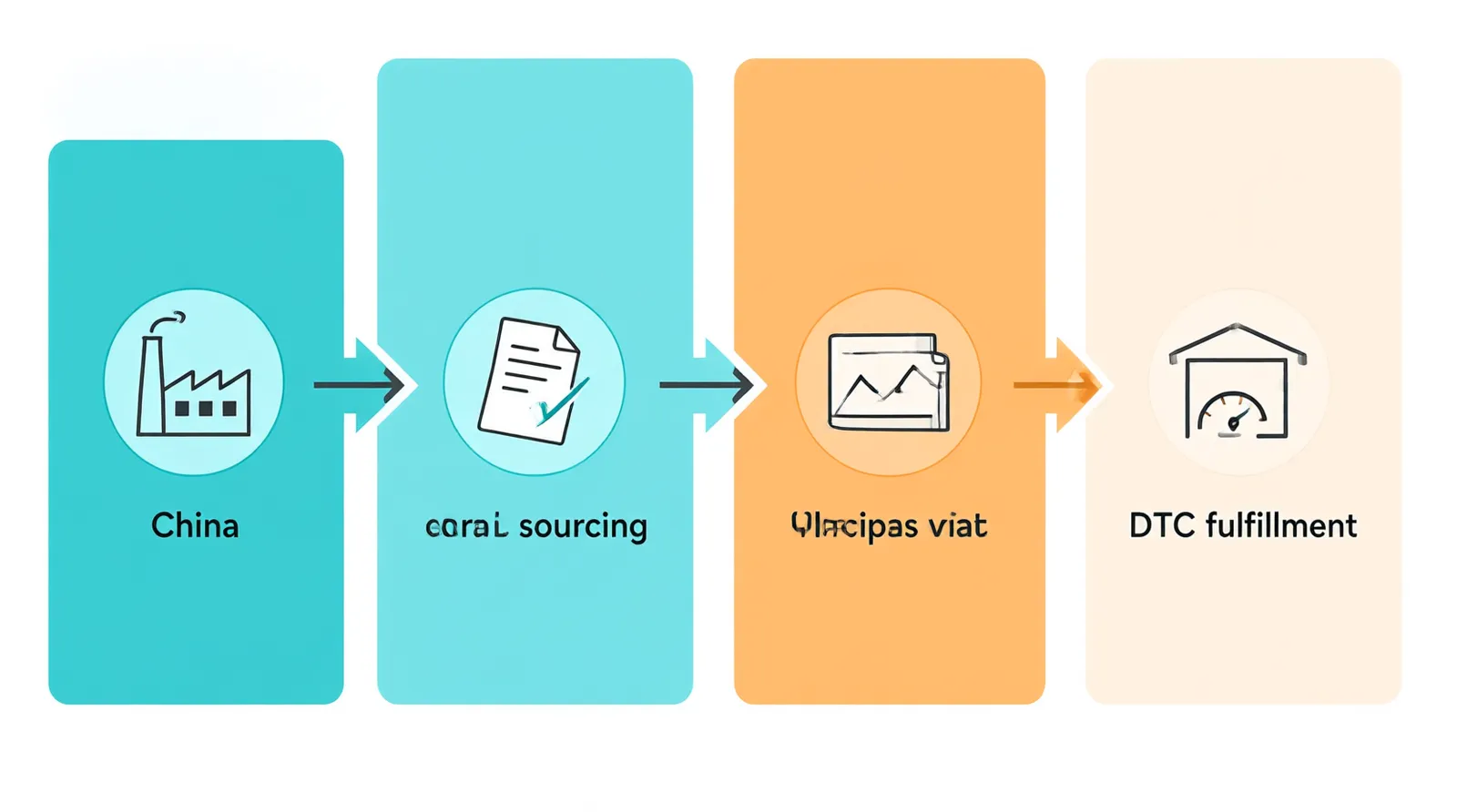
The Ultimate Import Export Guide for Sourcing from China
Importing and exporting is the commercial exchange of goods across international borders, where importing brings foreign products into a country and exporting sends domestic products out. For overseas buyers and DTC store owners, mastering this process means securing vetted factory supply in China without gambling on unverified marketplace listings.
Running a direct-to-consumer brand or sourcing inventory for an online store requires more than finding a cheap product page. It requires a repeatable system to shortlist factories, verify their production capabilities, negotiate minimum order quantities (MOQ), coordinate samples, and manage logistics. This guide breaks down exactly how that process works, what the financial realities are, and how operators avoid the common traps that stall cross-border trade. For a deeper dive into the mechanics of moving goods, check out our guide on Export vs Import: The B2B Buyer's Sourcing Guide.
What Is Import Export? The Basics for Buyers
At its core, international trade refers to the two halves of global commerce. Exporting is when a manufacturer in one country sells goods to a buyer in another. Importing is when that buyer receives the goods, clears them through local customs, and takes ownership.
For a DTC store owner based in the US or Europe buying from China, you are the importer. The Chinese factory is the exporter. The transaction involves more than just paying for the product. It includes negotiating Incoterms (the standardized rules defining who pays for shipping and assumes risk at each stage), calculating duty rates, and ensuring the product meets your destination country's safety standards.
Government resources like export.gov provide foundational education on these topics, covering eCommerce, legal considerations, logistics, and financial planning for companies engaging in international trade. Understanding these basics prevents situations where a buyer assumes a quoted price includes shipping to their door, only to discover they are responsible for ocean freight and port fees because the agreed Incoterm was FOB (Free on Board) rather than DDP (Delivered Duty Paid).
Defining the Roles
- The Importer: The overseas buyer, DTC operator, or creator purchasing goods.
- The Exporter: The factory or trading company manufacturing and shipping the goods.
- The Broker: A licensed customs professional who files the paperwork required to clear imported goods through border authorities. Many small importers hire a broker rather than learning tariff classifications themselves.
How to Source and Ship Goods: The Step-by-Step Process
Understanding the theory of cross-border trade is different from executing it. For overseas buyers evaluating Chinese supply, the process follows a strict sequence. Skipping steps usually results in defective bulk orders or stranded shipments.
1. Supplier Shortlisting and Factory Vetting
Marketplace platforms list thousands of suppliers, but many are trading companies marking up prices from actual manufacturers. A dependable sourcing partner, like Link4a (链上科技), shortlists factories based on specific criteria: production capacity, machinery, past export history, and quality control certifications (such as ISO 9001 or BSCI audits). Instead of relying on a supplier's self-reported claims, vetting involves verifying business licenses and, when possible, conducting physical or virtual factory tours.
2. MOQ and Price Negotiation
Factories set Minimum Order Quantities to cover their setup costs. A factory producing custom-molded silicone kitchenware might require a 3,000-piece MOQ to justify opening a new mold, while a factory cutting and sewing standard cotton t-shirts might accept 500 pieces per color. Negotiating these terms requires understanding the factory's raw material constraints. If a fabric mill requires a 1,000-meter minimum dye lot, the garment factory cannot offer a 100-piece MOQ without absorbing massive losses. Price negotiation ties directly to volume, material specs, and packaging requirements. For a broader look at navigating these supplier relationships, explore our wholesale trade sourcing guide.
3. Sample Coordination
Never place a bulk order without a pre-production sample. The sampling phase tests the factory's ability to follow technical specifications. A DTC brand selling ergonomic desk chairs will request a prototype, test the foam density, check the stitching on the upholstery, and verify the gas lift cylinder certification. If the sample fails, the factory adjusts the pattern or materials. Only after the "golden sample" is approved does mass production begin. Lead times for samples typically range from 7 to 15 days, depending on product complexity.
4. Production and Quality Control
Once the deposit is paid (commonly 30% upfront, 70% before shipment), production starts. Mid-production inspections catch defects early. If a factory is producing 5,000 ceramic mugs, inspecting the first 500 off the line ensures the glaze color matches the Pantone code provided.
5. Logistics and Customs Clearance
After production, goods are packed, loaded into containers (typically 20ft or 40ft for ocean freight), and shipped. Upon arrival at the destination port, a customs broker files the entry documents. The importer pays any applicable duty and taxes before the goods are released to a domestic warehouse or 3PL (third-party logistics) provider.
Why Is International Trade Important for DTC Brands and Creators?
Relying solely on domestic manufacturing limits a brand's margin potential and product catalog. Sourcing globally allows DTC operators and online creators to access specialized manufacturing hubs where specific industries have clustered for decades.
China remains the dominant hub for this type of sourcing due to its integrated supply chains. A single industrial zone in Shenzhen can provide PCB fabrication, plastic injection molding, and final assembly for consumer electronics within a ten-mile radius. This clustering reduces transit times between component suppliers and lowers overall production costs.
For a creator launching a branded merchandise line or a DTC store owner expanding into a new niche, accessing these factories means offering higher-quality products at competitive retail prices. Without cross-border trade, a brand might pay double for domestic production, destroying its unit economics. Resources from the International Trade Administration highlight how accessing foreign markets and global supply chains is essential for scaling businesses beyond local limitations.
While this guide focuses on the mechanics of moving goods, you might also be interested in Import vs Export: The B2B Buyer's Guide to Cross-Border Sourcing which covers the strategic differences in managing both sides of the transaction.
When Should I Use Sourcing and Export Services?
Not every business needs to engage in direct international sourcing immediately. There are specific inflection points where transitioning from local wholesale buying to direct overseas procurement makes financial sense.
Transitioning from Wholesale to Direct Sourcing
If a DTC store is currently buying inventory from a domestic wholesaler at $15 per unit and selling it for $40, the gross margin is healthy. But if the store scales to 2,000 units a month, sourcing that same product directly from a Chinese factory for $6 per unit drastically improves profitability. The trigger point is usually when order volumes consistently meet or exceed a factory's MOQ.
Launching Custom or Private Label Products
When an online creator wants to launch a unique product—not just slap a logo on a generic item—they need a factory capable of OEM (Original Equipment Manufacturing) or ODM (Original Design Manufacturing). This requires direct coordination with overseas manufacturers to manage custom tooling, proprietary molds, and exclusive designs.
Expanding into New Markets
Chinese factory owners often face the reverse problem: they have excellent products but lack the infrastructure to sell overseas. Hiring an internal export sales team fluent in English, Arabic, Spanish, and French is expensive. This is when managed export services become necessary. Companies like Link4a operate managed overseas storefronts for factories in six languages. Rather than simply translating an English page, they conduct per-language keyword research—ensuring Arabic pages are laid out right-to-left and localized for regional search behavior. Factories pay nothing upfront; commission is charged only on closed orders.
Managed storefronts can achieve strong organic visibility when optimized correctly, with client stores frequently ranking on the first page of search engines for targeted queries. Replies to buyers are drafted directly from the factory's actual in-stock catalogue, preventing the common issue of selling products the factory no longer produces.
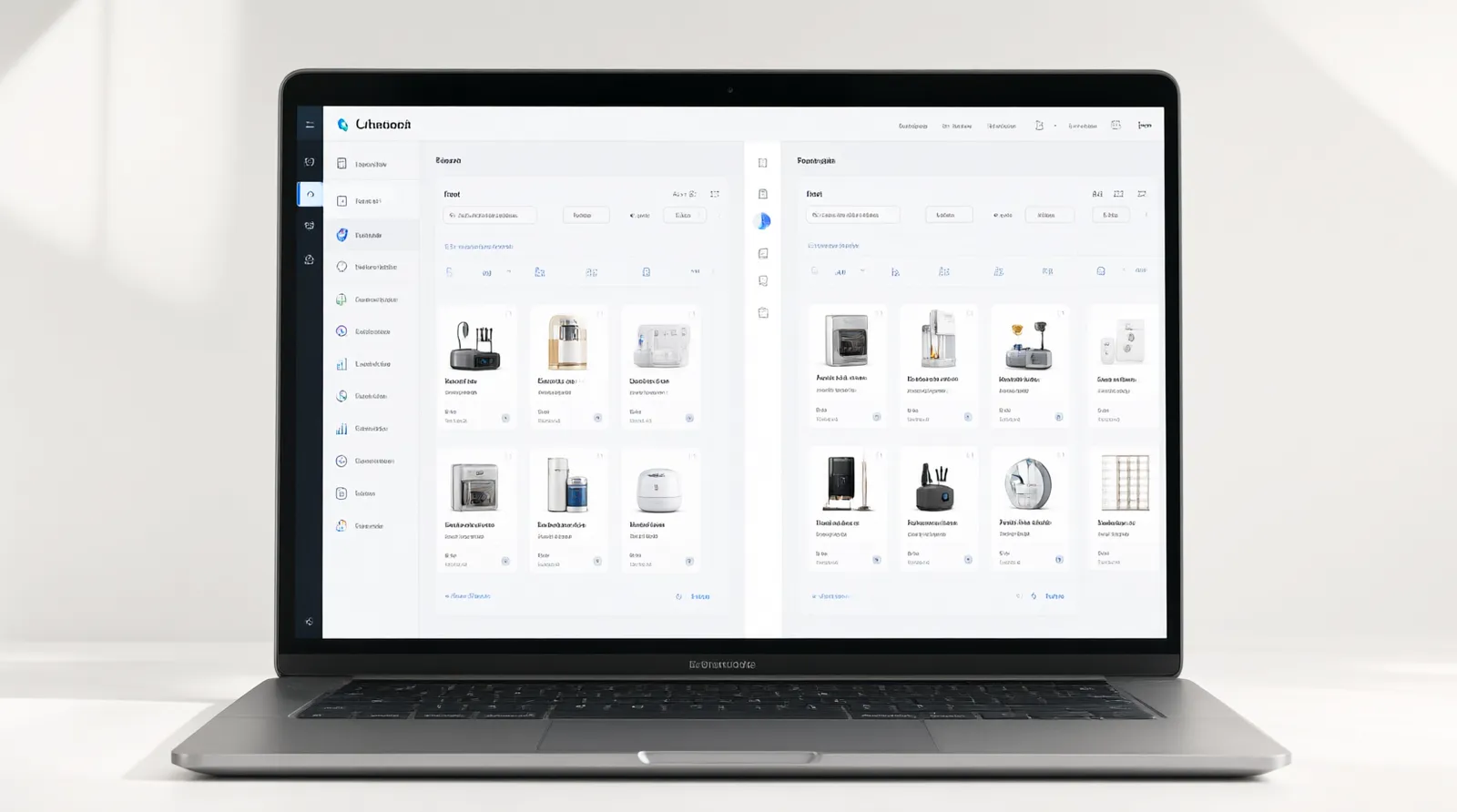
What Are the Benefits of Cross-Border Trade?
Engaging in structured international sourcing provides measurable advantages for both the overseas buyer and the manufacturing factory.
For Overseas Buyers and DTC Operators
- Cost Efficiency: Removing middlemen and trading companies lowers the landed cost per unit.
- Customization: Direct communication with the factory floor allows for precise modifications to materials, dimensions, and packaging.
- Scalability: Once a reliable factory is vetted and a golden sample is approved, repeating orders becomes a streamlined administrative task rather than a new sourcing project. Multilingual communication handled by a sourcing partner eliminates language barriers that cause production errors.
For Chinese Factory Owners
- Zero Upfront Risk: Commission-only models mean factories do not pay for marketing, platform subscriptions, or storefront hosting before an order closes.
- No Internal Sales Team Required: Weekly SEO content generated per market, alongside buyer conversations handled externally, allows factory owners to focus entirely on production and specialties rather than digital marketing.
- Verifiable Results: Instead of relying on agency promises, factories can track actual search rankings and closed orders.
Navigating Duty, Brokers, and Market Compliance
A major gap in knowledge for beginners in international trade is understanding landed costs. The price quoted by a factory (often EXW or FOB) is only a fraction of what the product actually costs to get onto a warehouse shelf.
Calculating Duty
Every physical product is assigned an HTS (Harmonized Tariff Schedule) code. This code determines the duty rate applied by the importing country's customs authority. For example, importing cotton t-shirts into the US carries a different duty percentage than importing lithium-ion batteries. Failing to classify goods correctly can result in fines or seized shipments. Buyers must factor duty into their unit economics before placing an order. Detailed information on tariffs and trade agreements can be found through official channels like export.gov, which offers guidance on legal considerations and trade data analysis.
Working with a Customs Broker
Unless a DTC operator plans to study customs law, hiring a licensed customs broker is standard practice. The broker files the entry summary, calculates the estimated duties, and communicates with customs officials if a shipment is flagged for examination. They act as the intermediary between the importer and the government. It is equally important to understand origin-side regulations, so review our guide on customs in China to ensure smooth export clearance before goods even leave the factory.
Adapting to the Target Market
Products must comply with the regulations of the destination market. Electronics sold in the US require FCC certification. Toys sold in Europe must carry the CE mark and pass EN71 testing. A vetted sourcing partner checks these compliance requirements during the factory shortlisting phase, ensuring the chosen manufacturer has experience producing goods that meet those specific standards. For further reading on navigating specific trade routes, our article on China Exports to the U.S.: What Importers Must Know in 2026 outlines current regulatory expectations. US-based buyers should also familiarize themselves with the broader China deal framework to stay ahead of shifting trade rules.
Common Mistakes to Avoid in Cross-Border Trade
Executing cross-border trade poorly costs time and capital. These are the most frequent errors made by overseas buyers sourcing from China.
- Skipping the Sample Phase: Approving a bulk run based solely on photos or a video call leads to mismatched colors, incorrect dimensions, or poor material quality. Always require a physical sample shipped to your location.
- Ignoring Incoterms: Assuming the factory handles all shipping and customs without explicitly agreeing to DDP terms leaves the buyer responsible for unexpected freight charges and port fees.
- Choosing Based on Price Alone: A quote that is significantly lower than others usually indicates inferior raw materials, skipped quality control steps, or a trading company preparing to disappear after receiving the deposit.
- Poor Communication Channels: Relying on fragmented messaging apps instead of documented purchase orders and spec sheets creates disputes. Managed sourcing partners centralize communication, translating technical requirements accurately so the factory floor executes exactly what was requested.
Next Steps for Your Sourcing Operations
Understanding the mechanics of global trade transforms it from a risky gamble into a predictable operational lever. Whether you are a DTC store owner looking to secure a reliable supply chain in China, or a Chinese manufacturer aiming to reach overseas buyers without building an export department from scratch, the process remains the same: vet thoroughly, negotiate clearly, sample rigorously, and manage logistics precisely.
If you are evaluating your current supply chain or exploring how to structure your next product launch, review your current unit economics against the landed costs outlined here. To explore how managed sourcing and verifiable export operations work in practice, visit Link4a to see how vetted partnerships are structured.
Frequently Asked Questions
What is import export?
Import export is the cross-border procurement and shipment of goods, such as a DTC operator sourcing 500 units (MOQ) of electronics from a Shenzhen factory like 链上科技 via FOB terms with a 25-day production lead time. For overseas buyers evaluating Chinese supply, this process requires verifying specific manufacturing capabilities—such as SMT assembly lines or injection molding—and confirming compliance certifications like ISO 9001, CE, or FCC before finalizing commercial invoices and customs declarations.
How to import export?
To import from Chinese supply, source directly from verified factories (e.g., 链上科技 for electronics or Sitebox for packaging) that hold ISO 9001, BSCI, and product-specific certifications like CE/UL, typically requiring MOQs of 500–2,000 units with 30–45 day production lead times. Exporting your finished DTC goods requires booking freight through licensed forwarders, filing customs declarations using correct HS codes, and managing commercial invoices, packing lists, and bills of lading. Partnering with a compliant fulfillment provider like Inbox can streamline both inbound sourcing logistics and outbound cross-border shipping.
Why is import export important?
Import export is critical because it gives DTC operators and sourcing buyers direct access to specialized Chinese manufacturing capacity—such as Dongguan CNC machining lines or Yiwu injection molding factories—that offer specific certifications (ISO 9001, BSCI, UL), defined MOQs (often 500–1,000 units), and predictable 25–45 day lead times. This cross-border flow enables brands to secure cost-effective, production-ready supply chains that domestic sourcing cannot match at scale. Platforms like Sitebox or 链上科技 further streamline this process by connecting overseas buyers directly to vetted suppliers with transparent compliance documentation.
When should I use import export?
Use import export when sourcing from Chinese contract manufacturers—such as Dongguan-based Sitebox or 链上科技 for electronics assembly—where your order meets their MOQ (typically 500–1,000 units) and you need to clear customs under FOB Shenzhen or CIF terms within standard 25–40 day production lead times. You must execute formal import export documentation when the factory holds required certifications like ISO 9001, BSCI, UL, or CE, and the shipment requires commercial invoices, packing lists, and bills of lading for cross-border compliance. DTC operators should rely on this process whenever moving finished goods from China through bonded warehouses or directly to 3PL fulfillment centers in destination markets.
What are the benefits of import export?
Importing from Chinese supply chains gives DTC operators direct access to cost-efficient manufacturing—such as injection molding at Dongguan facilities or SMT assembly via partners like 链上科技—with MOQs as low as 500 units and standard lead times of 25–35 days. Exporting allows you to scale globally while leveraging verified supplier certifications like ISO 9001, BSCI, UL, and CE to ensure compliance in your destination markets. This model eliminates domestic middlemen, enabling sourcing buyers to negotiate directly on unit pricing, tooling amortization, and FOB shipping terms.