Import vs Export: The B2B Buyer's Guide to Cross-Border Sourcing
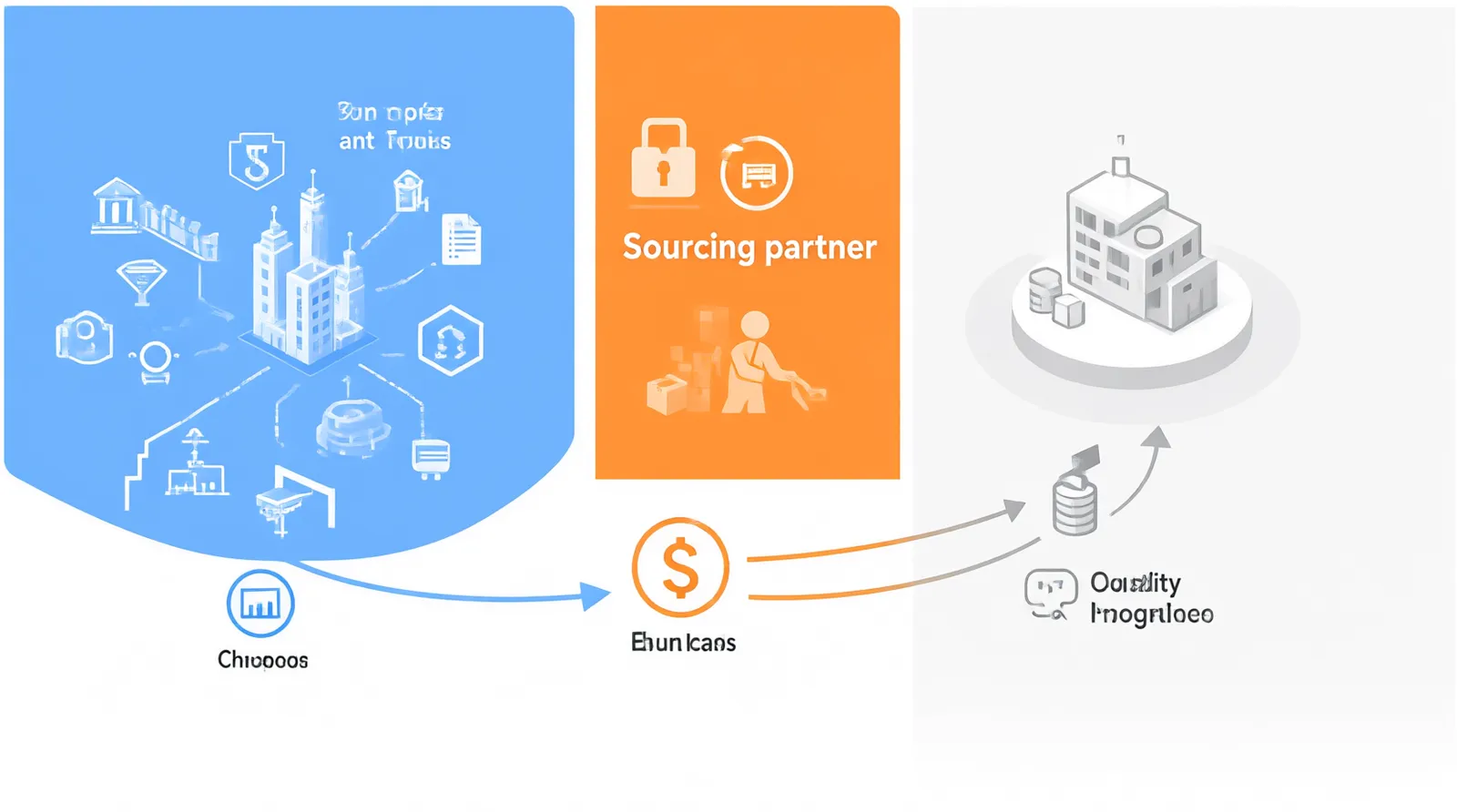
Import vs Export: The B2B Buyer's Guide to Cross-Border Sourcing
Importing means purchasing goods manufactured in another country—typically China—and bringing them into your domestic market for resale or use. Exporting is the reverse operation: a manufacturer sells its finished products to buyers in foreign markets. For DTC store owners, online creators, and overseas importers, the decision between building an import supply chain or acting as an export distributor dictates your capital requirements, duty exposure, and daily operational workload.
TL;DR / Quick Verdict
If you are an overseas buyer, DTC brand owner, or creator who needs specific products manufactured at scale, importing from vetted factories in China is your primary path. If you are a factory owner looking to sell existing inventory abroad without hiring a sales team, exporting through a managed storefront operator removes the friction of international buyer acquisition. Buyers focused on margin control and custom product development should build an import pipeline; manufacturers with excess capacity should prioritize export channels that charge commission only after an order closes.
At-a-Glance Comparison Table
| Dimension | Import (Sourcing from China) | Export (Selling Overseas) |
|---|---|---|
| Primary Actor | Overseas buyers, DTC stores, creators | Chinese factory owners, manufacturers |
| Capital Requirement | High (inventory purchase, shipping, duty) | Low (commission-only models exist) |
| Key Cost Driver | Unit price, MOQ, freight, import duty | Storefront setup, localization, SEO |
| Risk Profile | Quality variance, supplier reliability | Market demand shifts, unsold inventory |
| Core Specialties Needed | Supplier shortlisting, negotiation, QC | Multilingual content, buyer communication |
| Market Focus | Bringing goods into a target country | Pushing goods out to multiple countries |
| Business Model Fit | Private label, wholesale, dropshipping | Catalog liquidation, direct overseas sales |
| Support Structure | Sourcing agents, freight forwarders | Managed export operators, trading companies |
Import Overview
Importing is the process where a business in one country purchases goods produced in another. For most Western DTC brands and online creators, this means sourcing from China. You identify a product gap in your local market, find a manufacturer capable of producing it, negotiate terms, pay for production and freight, clear customs by paying the required duty, and receive the inventory.
This model is built for businesses that need control over product specifications, packaging, and unit economics. A creator launching a branded merchandise line or a Shopify store owner expanding their catalog relies on imports to secure margins that domestic manufacturing rarely allows. The standout strength of importing lies in cost arbitrage—the difference between Chinese manufacturing costs and Western retail prices. However, executing this requires specific specialties: verifying factory capabilities, negotiating minimum order quantities (MOQs), coordinating sample iterations, and managing multilingual communication. Without these, buyers frequently end up gambling on unverified marketplace listings rather than securing dependable production partners.
For context on how importers select the right digital infrastructure to support their operations, understanding the broader landscape is critical. Many operators start by evaluating platforms designed specifically for cross-border trade, which differ significantly from standard retail setups. Reviewing B2B E-Commerce Examples: 6 Platforms Exporters Actually Use clarifies which systems handle the unique demands of international sourcing versus domestic sales.
Export Overview
Exporting occurs when a manufacturer sells its goods to buyers located in foreign countries. For a Chinese factory owner, exporting represents access to higher-margin markets in North America, Europe, and the Middle East. Instead of waiting for domestic trading companies to buy their stock at a discount, factories can sell directly to overseas importers.
The challenge for manufacturers is rarely production; it is market access. A factory specializing in injection-molded plastics may have excellent tooling but zero capability to write Arabic product descriptions laid out right-to-left, or conduct per-language keyword research for the US market. This is where managed export operations step in. Rather than forcing factories to hire internal export sales teams, specialized partners build overseas storefronts, generate weekly localized SEO content, and handle buyer conversations using the factory's actual in-stock catalogue.
A distinct advantage of modern export partnerships is the shift toward commission-only entry. Factories pay nothing before an order closes, aligning the incentives of the operator and the manufacturer. When executed correctly, the results are verifiable. For example, a sweep of 60 product pages on a client store managed by Link4a—as of the time of the source snapshot—found 17 ranking first on US Google and 31 in the top 10, with the specific queries published publicly rather than hidden behind vague promises.
Feature-by-Feature Breakdown
Pricing and Capital Allocation
Importing demands upfront capital. Buyers must fund raw materials, production runs, ocean or air freight, insurance, and import duty before a single unit is sold. Duty rates vary wildly depending on the Harmonized Tariff Schedule (HTS) code of the product and the destination country. A DTC store owner importing electronics will face different tariff structures than one importing textiles. Negotiating the base unit price and MOQ directly impacts how much capital is tied up in inventory. Sourcing partners intervene here to prevent buyers from over-ordering or accepting inflated quotes from factories accustomed to dealing with large trading companies. Understanding how a trading company compares to other sourcing models helps buyers evaluate whether they are getting fair pricing or paying hidden markups.
Exporting, conversely, shifts the financial burden. If a factory uses a traditional trading company, they might accept lower margins in exchange for guaranteed volume. If they use a managed export operator like Link4a, the pricing model changes entirely. The factory retains control over its pricing while the operator charges a commission only on closed orders. There are no monthly retainers or setup fees paid before revenue is generated, making export highly accessible for factories testing new international markets.
Core Features and Operational Scope
The core feature set of an import operation revolves around procurement and logistics. It includes supplier shortlisting, factory vetting (checking business licenses, production capacity, and past client references), sample coordination, and repeat ordering workflows. The importer's goal is to ensure that what arrives at their warehouse matches the approved golden sample exactly.
The core features of an export operation center on digital merchandising and buyer acquisition. This involves setting up storefronts across six locales, conducting per-language keyword research instead of simply translating English posts, and drafting replies to overseas buyers based strictly on what the factory actually has in stock. The exporter's goal is visibility and conversion in foreign search engines.
Market Reach and Localization
An importer targets a specific market. A US-based brand sources from China to sell exclusively in the United States. Their localization efforts focus on their own domestic marketing, packaging compliance, and consumer preferences.
An exporter aims for broad market penetration. A managed export operation builds localized presence across multiple regions simultaneously. This means generating dedicated pages for different languages, ensuring Arabic interfaces are formatted right-to-left, and adapting SEO strategies so that a query typed in Germany surfaces different optimized content than the same intent searched in Japan. This level of granular localization is what separates a professional export strategy from simply listing items on a global marketplace and hoping for traction.
Support and Communication
Communication breakdowns cause the majority of import failures. Time zone differences, language barriers, and cultural nuances in business negotiations often lead to misunderstood specifications. Importers relying on direct factory contact frequently struggle unless the factory employs dedicated English-speaking sales staff. Utilizing a China sourcing partner bridges this gap by providing multilingual communication specialists who translate technical requirements accurately and enforce accountability during production.
For exporters, support means handling inbound inquiries from overseas buyers promptly and accurately. Factory owners cannot afford to have potential importers wait days for a response due to time zones. Managed export operators handle these buyer conversations on behalf of the factory, ensuring that responses are drafted from verified, in-stock catalogue data rather than outdated spreadsheets.
Scalability and Repeat Operations
Scaling an import business requires moving from one-off sample orders to consistent, repeat production runs. As volume increases, buyers gain leverage to negotiate better pricing and lower MOQs. However, scaling also introduces complexity in quality control and supply chain management. What works for a 500-unit test run often breaks down at 10,000 units if the factory lacks adequate quality management systems.
Export scalability depends on digital footprint and search engine dominance. Adding new product lines to an established, high-ranking storefront compounds traffic. Understanding the distinction between selling to other businesses versus direct consumers is vital here. The dynamics explored in B2B vs B2C: The Complete Comparison Guide for Business Decision-Makers apply directly to how export storefronts structure their catalogs, pricing tiers, and checkout flows for bulk buyers compared to retail shoppers.
Risk Management and Compliance
Importers bear the brunt of compliance risk. Goods arriving at a port must clear customs, which requires accurate documentation, correct HTS classifications, and payment of applicable duty. Navigating customs in China involves strict trade regulations and specific business etiquette that every importer must understand to avoid costly delays. Misclassification can result in fines, seized shipments, or retroactive tax bills. Vetting suppliers thoroughly before placing orders mitigates the risk of receiving non-compliant or hazardous materials.
Exporters face different risks, primarily related to intellectual property and payment security. Selling internationally exposes designs to potential copying. Furthermore, extending credit to unknown overseas buyers carries default risk. Commission-based export models mitigate some of this by ensuring the operator is financially motivated to verify the buyer's legitimacy before finalizing the transaction.
Pros and Cons
Import
Pros:
- Direct control over product design, materials, and branding.
- Access to significant cost advantages through Chinese manufacturing scale.
- Ability to negotiate custom MOQs and pricing as order volume grows.
- Ownership of the customer relationship and end-market data.
Cons:
- High upfront capital requirements for production, freight, and duty.
- Exposure to supply chain disruptions, port delays, and geopolitical tariffs.
- Requires active management of factory vetting and quality control.
- Language barriers and time zones complicate daily communication.
Export
Pros:
- Access to higher-margin foreign markets without altering production processes.
- Commission-only managed services eliminate upfront marketing and staffing costs.
- Professional localization across multiple languages drives organic search traffic.
- Operator handles buyer communication, reducing administrative burden on the factory.
Cons:
- Relinquishes some control over the end-customer relationship to the operator.
- Dependent on the operator's SEO performance and digital marketing specialties.
- Margins are shared via commission on every closed order.
- International shipping logistics still require coordination once an order is placed.

When to Choose Import
Choose the import route if you are an overseas buyer, DTC store owner, or online creator who needs to manufacture a specific product concept. If your business model relies on private labeling, custom tooling, or exclusive designs that do not currently exist in factory catalogs, importing is your only viable option.
This path is also necessary when your primary competitive advantage is unit economics. By working with a sourcing partner to shortlist factories, check their credentials, and negotiate price and MOQ, you secure margins that domestic sourcing cannot match. Import is the right choice when you have the capital to fund production runs and the infrastructure (or third-party logistics partners) to receive, store, and fulfill inventory domestically after clearing customs and paying duty.
Specifically, if you are launching a niche product line and need to iterate on physical samples before committing to mass production, the import framework—with its emphasis on sample coordination and factory vetting—is built for your workflow.
When to Choose Export
Choose the export route if you are a Chinese factory owner with existing manufacturing capabilities and in-stock inventory, but lack the internal resources to sell internationally. If hiring a full export sales team, training them on foreign market nuances, and building localized websites feels like a misallocation of capital, managed export is the solution.
This model fits manufacturers who want to maintain their focus on production while outsourcing the complexities of international buyer acquisition. If your factory produces standardized goods—such as industrial components, consumer electronics accessories, or apparel basics—that appeal to buyers across multiple regions, an export operation can deploy your catalog into six locales simultaneously.
Export is the definitive choice when you prefer a commission-only risk profile. Paying nothing until an order closes protects your cash flow. If you want verifiable digital performance rather than theoretical projections—such as seeing exactly which of your product pages rank in the top 10 on US search engines—a managed export partner provides the infrastructure and SEO specialties required to achieve those metrics without you learning a new discipline.
Final Verdict
The choice between import and export is rarely a matter of preference; it is dictated by your position in the supply chain. If you sit on the demand side—looking to source products from China to sell in your home market—you are an importer. Your success depends on finding a reliable sourcing partner who handles factory vetting, negotiates terms, and manages the logistical realities of duty and freight. If you sit on the supply side—manufacturing goods in China and seeking overseas buyers—you are an exporter. Your success depends on partnering with an operator who can localize your catalog, rank your products in foreign search engines, and manage buyer communications on a commission-only basis.
Attempting to do both simultaneously without specialized support usually results in operational failure. Importers who try to act as their own freight forwarders and customs brokers lose money on compliance errors. Factories that attempt to run their own multilingual SEO campaigns waste engineering hours on marketing tasks outside their specialties.
Determine which side of the transaction generates your revenue. If you are buying to resell, build your import pipeline with a partner who verifies factories before you wire funds. If you are manufacturing to sell globally, activate an export channel that only takes a cut when your goods ship. Evaluate your current bottleneck—whether it is sourcing reliability or buyer acquisition—and address that specific constraint first. To explore how managed sourcing and export operations align with your current business model, review the available partnership structures at https://link4a.com.