India China Sourcing for US Buyers: Compliance & Vetting Guide
India China Sourcing for US Buyers: Compliance & Vetting Guide
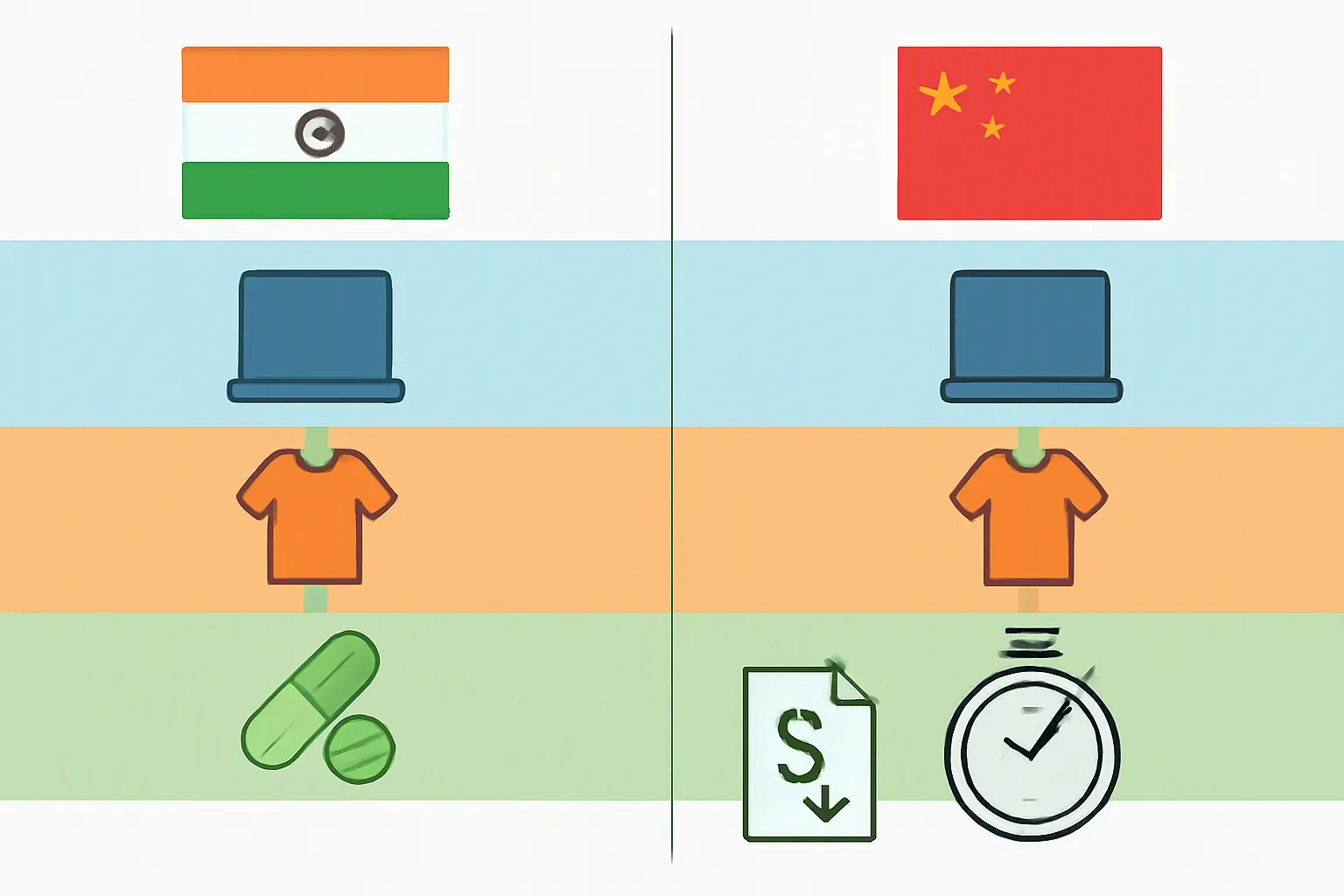
United States importers evaluating India and China sourcing strategies are primarily navigating a complex geopolitical landscape where trade policy, tariff structures, and supply chain resilience intersect. For American businesses, this search term rarely refers to bilateral diplomacy alone; it represents a critical procurement decision between two Asian manufacturing giants that collectively account for a significant portion of global exports. While China’s GDP reached $19.4 trillion by 2025, India’s economy stood at $4.1 trillion, creating distinct value propositions for US buyers depending on whether they prioritize established industrial scale or emerging cost advantages (Noema Mag).
Successful US importers treat the India-China dynamic not as a binary choice but as a diversification opportunity requiring specialized intermediaries to manage risk. The 2020 Galwan Valley clashes and subsequent diplomatic friction mean that cross-border verification is difficult; both nations have expelled nearly all resident reporters from the other, reducing independent on-the-ground intelligence (Noema Mag). For a DTC store owner in Austin or a wholesale buyer in New Jersey, this information vacuum makes professional sourcing partners essential. You cannot rely on marketplace listings or unverified factory claims when regulatory scrutiny from U.S. Customs and Border Protection (CBP) is at an all-time high. Partners like Link4a bridge this gap by providing vetted supplier shortlists and managing export operations directly, ensuring that dual-market sourcing translates into compliant, profitable inventory rather than geopolitical exposure.
What's Specific About United States Import Regulations and Market Dynamics
The United States maintains one of the most rigorous import compliance environments in the world, making the distinction between Indian and Chinese sourcing legally and financially significant. Under Section 301 of the Trade Act of 1974, many Chinese-origin goods face additional tariffs ranging from 7.5% to 25%, whereas Indian goods generally enter under standard Most-Favored-Nation (MFN) rates unless subject to specific antidumping duties. A US importer sourcing steel fasteners might pay a 25% Section 301 tariff on Chinese parts but only the base MFN rate on Indian equivalents, fundamentally altering the landed cost calculation. This tariff disparity drives much of the current "China Plus One" strategy among American manufacturers, yet shifting volume to India requires navigating different regulatory frameworks. For those maintaining significant volume in China, understanding China wholesale for US buyers remains critical to managing these ongoing compliance obligations effectively.
Cultural and communication norms differ sharply between the two markets, impacting how US buyers must structure their deal negotiations. In China, business relationships often hinge on guanxi (relational trust) built through repeated face-to-face interaction and indirect communication styles. In contrast, Indian business culture can be more hierarchical and debate-oriented, with negotiation timelines that may extend longer than Western counterparts anticipate. Language support is another critical variable; while English is widely used in Indian business and legal documentation, technical specifications from Tier-2 Chinese factories often require precise translation to avoid costly production errors. Link4a addresses this by offering multilingual communication and drafting buyer replies based on actual in-stock catalogues, eliminating the ambiguity that plagues direct marketplace messaging.
Payment infrastructure also varies significantly for US entities. Chinese suppliers increasingly accept digital platforms and structured trade finance, though capital controls remain a factor. Indian suppliers may prefer traditional Letters of Credit (LC) or wire transfers with different banking clearance times. Understanding these local financial norms prevents cash flow bottlenecks. Furthermore, US buyers must remain vigilant regarding sanction compliance; while neither country is broadly sanctioned, specific entities in both nations appear on the U.S. Entity List or Forced Labor Prevention lists. Verifying that a supplier is not linked to restricted parties requires continuous screening, a service embedded in professional sourcing partnerships rather than ad-hoc marketplace purchases.
How to Choose an India and China Sourcing Provider in United States
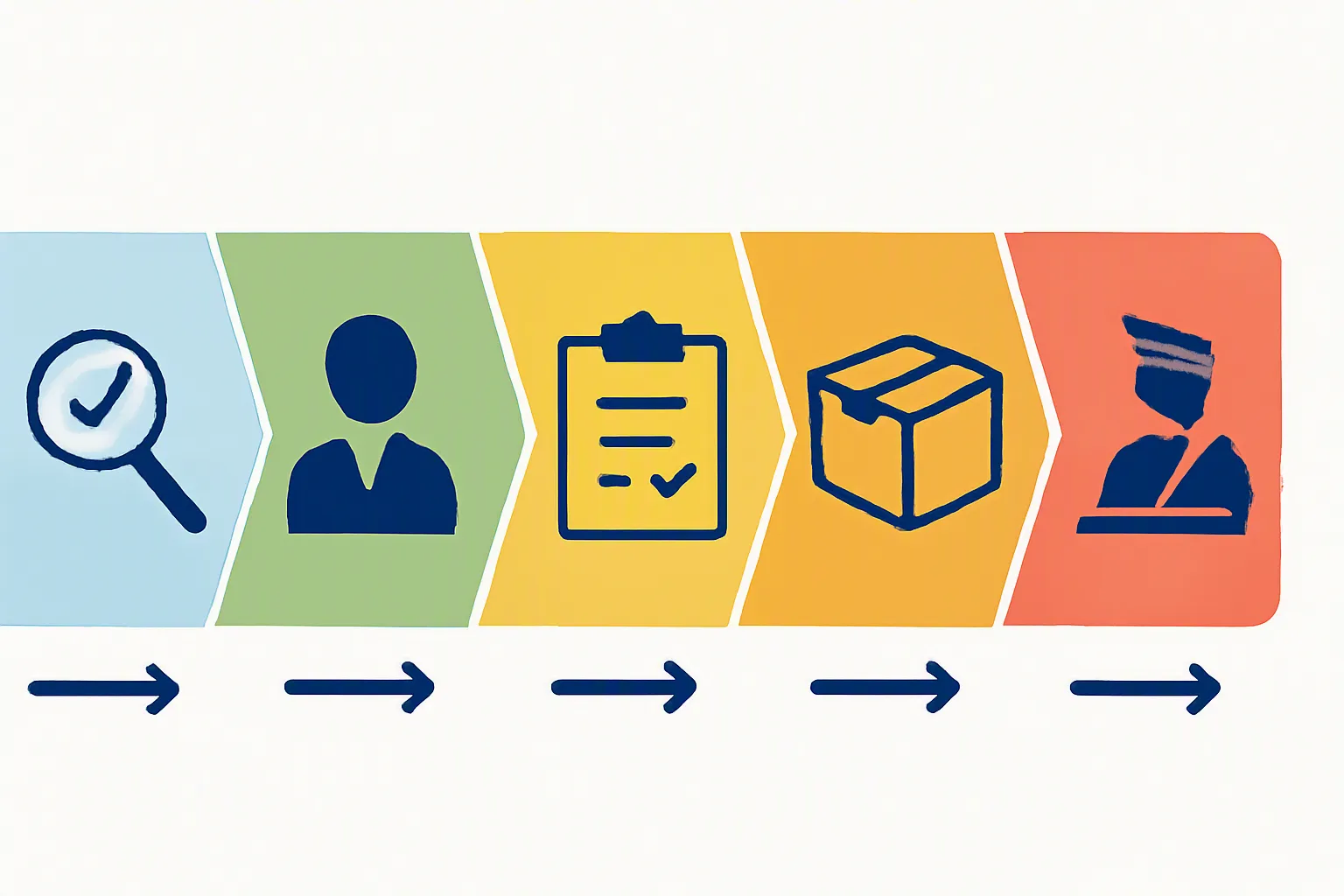
Selecting a sourcing partner for the India and China corridor requires evaluating capabilities beyond simple price negotiation. First, verify the provider’s physical presence and legal standing in both jurisdictions. A US-based agent without boots on the ground in Shenzhen or Tiruppur cannot effectively conduct factory audits or resolve quality disputes in real time. Look for partners who offer verifiable performance data rather than vague promises; effective providers demonstrate tangible market results through transparent reporting on product rankings and sales outcomes, proving their ability to drive commercial success rather than just facilitating transactions. This level of transparency indicates a provider invested in long-term outcomes rather than transactional fees.
Second, assess the provider’s commission structure and alignment with your success. Traditional sourcing agents often charge upfront retainers regardless of order closure, misaligning incentives. A commission-only model for factory engagement ensures the partner earns revenue only when you successfully close orders. For US buyers, this reduces upfront risk and signals confidence in the supplier network. Additionally, evaluate their content and SEO localization capabilities if you plan to resell sourced products online. Generic translations fail in diverse markets; effective providers conduct per-language keyword research and adapt layouts (such as right-to-left formatting for Arabic) to match local search intent, as seen in specialized storefronts managed for international sales.
Third, scrutinize their sample coordination and repeat order management processes. The gate to successful importing is consistent quality across production runs, not just a perfect golden sample. Ask potential partners specifically how they handle MOQ negotiation for initial test orders versus scaled production. Can they secure lower MOQs for US startups testing new SKUs? Do they have established protocols for pre-shipment inspections that align with US safety standards like CPSIA or FDA requirements? Providers who integrate these checks into their standard operating procedure, rather than offering them as expensive add-ons, demonstrate operational maturity suited for the US market’s liability-conscious environment.
Pricing in United States: Understanding Landed Cost Structures
Pricing for India and China sourcing services in the United States typically falls into three models: percentage-based commissions, fixed project fees, or hybrid retainer-plus-success structures. Industry estimates suggest sourcing commissions range from 3% to 10% of FOB value, depending on order volume and complexity. However, the true metric for US buyers is Total Landed Cost (TLC), which includes unit price, freight, insurance, duties, and brokerage fees. A Chinese supplier quoting $4.50/unit might actually cost $6.20 landed after Section 301 tariffs and ocean freight, while an Indian supplier quoting $5.00/unit could land at $5.40 due to lower duty rates and proximity to US East Coast ports via Suez transit.
Local factors in the United States significantly affect final pricing. Warehouse storage costs in major logistics hubs like Los Angeles or Newark average $0.50 to $0.75 per cubic foot monthly, incentivizing just-in-time delivery models that require reliable supplier lead times. If a Chinese factory delays shipment by three weeks during peak season, demurrage and detention charges at congested US ports can erase margin gains from lower unit prices. Conversely, Indian suppliers may offer competitive pricing but face infrastructure challenges that impact reliability; the Belt and Road Initiative has improved connectivity in some regions, but domestic logistics in India remain variable. Professional sourcing partners mitigate these risks by coordinating production schedules against US port congestion forecasts and advising on optimal Incoterms to balance cost and control.
For US creators and DTC brands, pricing also encompasses marketing readiness. Sourced products must be photograph-ready and compliant with US labeling laws upon arrival. Factories unfamiliar with American aesthetic preferences or regulatory text requirements generate hidden rework costs. Link4a’s managed export operation includes preparing overseas storefronts with localized SEO content, reducing the post-import marketing spend needed to convert traffic. When evaluating quotes, US buyers should request itemized breakdowns separating manufacturing costs, compliance preparation, and logistics to accurately compare Indian and Chinese options against domestic or nearshore alternatives.
Common Challenges for Buyers in United States
Regulatory Compliance and Tariff Volatility
US importers face constant shifts in trade policy affecting both India and China. Section 301 tariffs on Chinese goods remain subject to periodic review and exclusion processes, creating uncertainty for long-term planning. Simultaneously, India’s evolving foreign trade policies and occasional export restrictions on raw materials can disrupt supply continuity. Staying compliant requires active monitoring of Federal Register notices and CBP rulings. Many US buyers lack internal resources to track these changes, leading to unexpected duty bills or seized shipments. Partnering with specialists who maintain real-time regulatory databases transforms compliance from a reactive crisis into a managed operational parameter.
Supplier Reliability Amid Geopolitical Tensions
The strained relations between India and China create unique verification challenges for US buyers attempting to diversify. With minimal diplomatic staff and no resident press corps in either country, open-source intelligence is scarce (Noema Mag). Factory ownership structures can be opaque, and subcontracting to unauthorized facilities is common when primary suppliers face capacity constraints. US buyers relying solely on Alibaba or Global Sources profiles risk engaging middlemen posing as manufacturers. On-the-ground vetting by trusted partners confirms production capabilities, labor conditions, and business licenses directly, bypassing the information asymmetry exacerbated by geopolitical friction.
Logistics and Supply Chain Visibility
Transit times from Asia to the United States vary dramatically by origin and route. Shipments from Shanghai to Los Angeles typically take 14–18 days, while Mumbai to New York via Suez can take 25–30 days. These differences impact inventory carrying costs and stockout risks for US sellers operating on thin margins. Port congestion, carrier blank sailings, and equipment shortages further complicate planning. Unlike domestic suppliers, asia-based factories operate on different holiday calendars (Chinese New Year, Diwali) that can halt production for weeks. Effective sourcing partners build buffer stock strategies and multi-carrier routing plans tailored to US demand cycles, preventing seasonal gaps that marketplace algorithms penalize.
Cultural Misalignment and Communication Gaps
Despite globalization, business practices in India and China differ substantially from US norms. Decision-making hierarchies, contract enforcement expectations, and feedback styles can lead to misunderstandings that delay production or degrade quality. A US buyer’s direct criticism might cause a Chinese supplier to lose face and disengage, while overly polite phrasing might be interpreted as non-committal by an Indian vendor. These nuances matter when negotiating MOQ reductions or resolving defect claims. Multilingual teams with cultural fluency act as interpreters of intent, not just language, ensuring that commercial agreements reflect mutual understanding rather than linguistic approximation.
Frequently Asked Questions (United States-Specific)
How do Section 301 tariffs impact my decision between India and China sourcing? Section 301 tariffs impose additional duties of 7.5%–25% on thousands of Chinese-origin product categories, significantly increasing landed costs compared to Indian alternatives. However, tariff classifications are highly specific; your exact HTS code determines applicability. Always obtain a binding ruling or professional classification before assuming savings. Some US buyers find that despite tariffs, Chinese suppliers’ efficiency and scale still yield better total cost for complex assemblies, while simpler goods favor India.
Can I use a single sourcing partner for both Indian and Chinese factories? Yes, specialized partners like Link4a operate across both markets, providing unified communication and consolidated shipping options. This dual-market capability enables genuine comparison shopping and risk diversification without managing multiple vendor relationships. Ensure your partner has verified teams in both countries rather than outsourcing one market to third-party agents, which reintroduces the very opacity you seek to avoid.
What MOQ should I expect when sourcing from China versus India as a US small business? MOQs vary by industry and factory tier, but Chinese suppliers often accommodate lower test quantities (e.g., 100–300 units) for standardized products due to mature ecosystem clustering. Indian factories may require higher MOQs (500–1,000+) for custom items due to less integrated supply chains. Negotiation leverage increases with commitment; partners with existing factory relationships can often secure reduced MOQs for initial validation runs that individual US buyers cannot obtain independently.
How does Link4a’s commission-only model work for factory onboarding? Factories pay nothing upfront to join the Link4a network; commissions apply only when orders close. This aligns incentives toward conversion rather than listing volume. For US buyers, this means access to motivated suppliers whose catalogues are actively maintained and priced competitively. The model also enables weekly SEO content updates and multilingual storefront management that static directory listings cannot match, improving discoverability for niche US queries.
Are there sanctions or forced labor concerns specific to India or China I should monitor? Both countries have entities on US restriction lists. China’s Xinjiang region faces broad prohibitions under UFLPA, while certain Indian companies appear on Entity Lists for defense-related activities. Compliance requires screening every supplier against updated OFAC and BIS databases. Professional sourcing partners integrate this screening into vetting protocols, providing audit trails that satisfy CBP inquiries. Never assume geographic distance from restricted zones guarantees compliance; supply chains are interconnected.
How do cultural differences affect quality control negotiations? Direct confrontation often backfires in Asian business contexts. Effective QC involves collaborative problem-solving framed as mutual improvement rather than blame assignment. In China, preserving relationship harmony facilitates faster corrective action; in India, detailed written specifications reduce ambiguity. Partners with bicultural teams translate US quality standards into locally appropriate communication, turning inspections into relationship-building exercises rather than adversarial audits.
What payment methods are safest for US buyers working with new Asian suppliers? Wire transfers offer speed but limited recourse; Letters of Credit provide security but increase administrative burden. Escrow services and trade assurance programs balance protection with convenience for mid-sized orders. Never pay 100% upfront to unverified suppliers. Structure payments around milestones (deposit, pre-shipment inspection pass, bill of lading receipt) to maintain leverage throughout production. Your sourcing partner should advise on optimal terms based on supplier history and order value.

Get Started in United States
Navigating the India and China sourcing landscape requires more than keyword searches; it demands verified partnerships, regulatory awareness, and cultural competence tailored to US import realities. Whether you’re a DTC creator seeking differentiated products or a wholesale buyer optimizing landed costs, the next step is concrete supplier evaluation grounded in current market data. Review our detailed guide on China Sourcing Made Simple: How Link4a Connects You to Trusted Suppliers to understand our vetting methodology and see published query rankings that demonstrate real US market traction.
Ready to move beyond marketplace gambling? Request a customized supplier shortlist and MOQ assessment tailored to your product category and target margin. Visit Link4a to initiate your sourcing inquiry with a partner whose compensation depends entirely on your successful order closure. Specify your product specs, target price point, and compliance requirements to receive a preliminary feasibility analysis within 48 hours. Your supply chain resilience starts with a single verified conversation.