Jewelry Unlimited Sourcing: The B2B Buying Guide to Scale Faster
Jewelry Unlimited Sourcing: The B2B Buying Guide to Scale Faster
Jewelry Unlimited is a retail brand, but in the broader B2B context, buyers often use the term to describe an unrestricted procurement model used by importers, DTC store owners, and online creators to source a wide variety of jewelry—from 14K gold chains to custom pieces—without being bottlenecked by single-factory minimum order quantities. If you are researching an open-access sourcing strategy, your immediate priority is securing a dependable partner who shortlists factories, negotiates pricing, coordinates samples, and handles repeat orders so you can stop gambling on unverified marketplace listings. For a broader foundation on this process, review our guide on how to buy jewellery wholesale.
Who This Guide Is For
This guide is written for overseas buyers, importers, direct-to-consumer (DTC) store owners, and online content creators who are ready to purchase or restock inventory but lack a trusted manufacturing footprint in China. You might be scaling a brand that sells affordable fashion pieces inspired by trends from pandoras or kendra scott, or you might be expanding into high-margin categories like permanent jewelry supplies. Your trigger event is usually one of three things: your current supplier missed a lead time, your MOQs are tying up too much cash flow, or you need a partner capable of managing multilingual storefronts and buyer communications while you focus on marketing.
Specifically, this applies to you if:
- You run a DTC Shopify or WooCommerce store selling trend-driven items (e.g., paperclip chains, herringbone necklaces, or cubic zirconia tennis bracelets) and need factory-direct pricing to maintain a 60%+ gross margin without ordering 5,000 units per SKU.
- You are a permanent jewelry artist or studio owner requiring bulk spools of 14K gold-filled chain, laser welders, and jump rings with consistent alloy quality so your welds don't snap during application.
- You manage an Amazon FBA or TikTok Shop catalog where stockouts directly tank your algorithmic ranking, meaning you need a partner who can execute rapid replenishment cycles rather than standard 60-day ocean freight timelines.
- You are a Chinese factory owner with strong production capabilities but no internal team to write native English, Arabic, or Spanish copy, manage international SEO, or handle Western customer service expectations.
If your primary challenge is bridging the gap between Guangzhou or Yiwu manufacturing floors and Western checkout pages, the framework below will help you evaluate managed export operators.
What Jewelry Unlimited Actually Does
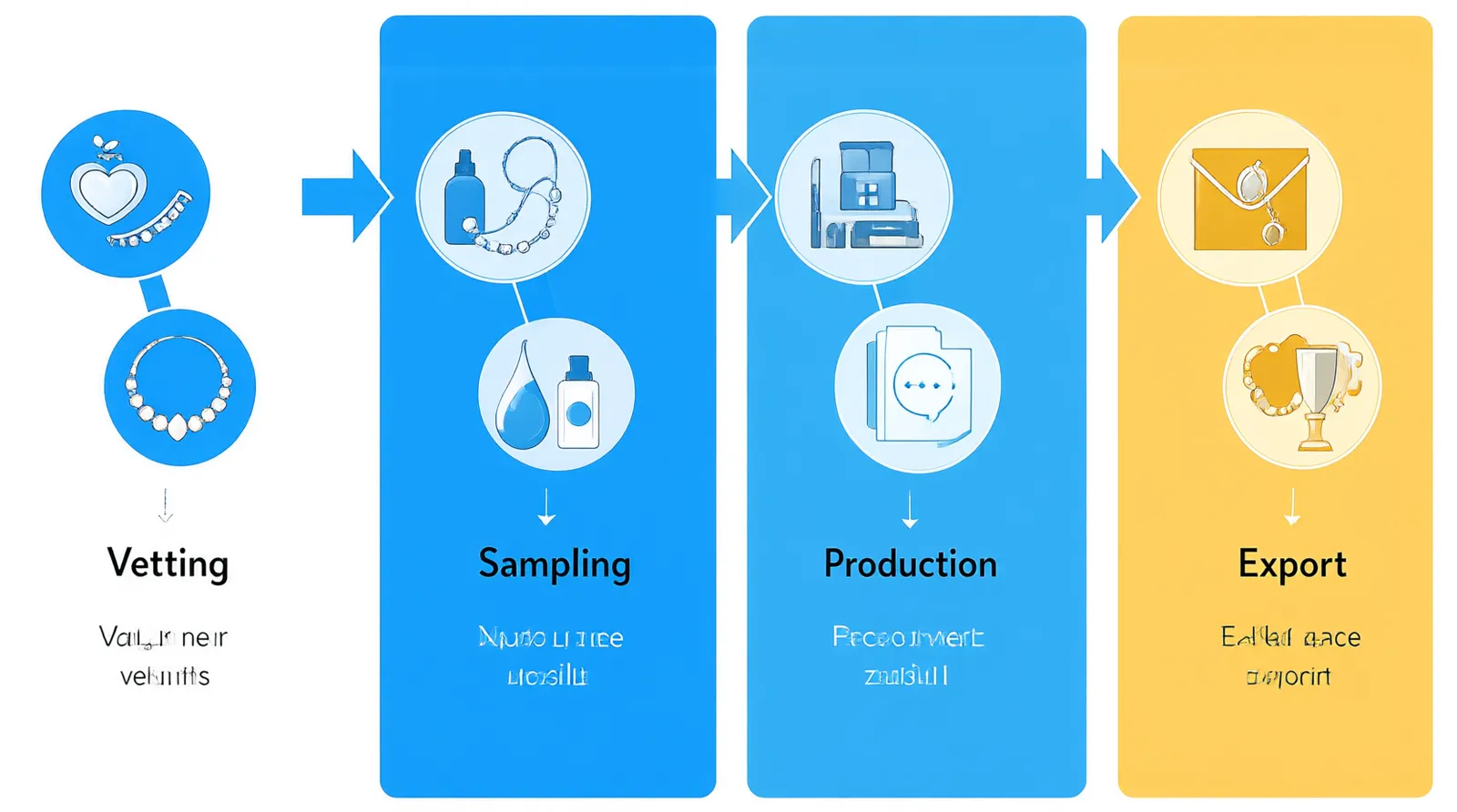
In the B2B context, operating an unrestricted jewelry supply chain means removing the traditional friction of international sourcing. Rather than buying off a static catalog, you work with a managed export operator—like Link4a—that acts as your dedicated China sourcing partner. This partner identifies vetted Chinese factories, checks their production capabilities, negotiates MOQ and price on your behalf, coordinates physical samples, and manages repeat ordering. Understanding how to properly evaluate jewellery wholesale supplies ensures you select partners who actually deliver on these promises.
For reference, retail-facing platforms operating under similar names, such as Jewelry Unlimited, sell luxury watches including Rolex, offer financing up to 36 months through Affirm, and provide custom items alongside standard necklaces and chains. However, for a B2B buyer, this concept is not a storefront; it is a procurement infrastructure. It allows you to access everything from 10K gold chains and bonded gold chains to diamond chains and tennis chains at factory-direct margins, without hiring your own export sales team or navigating language barriers. On the flip side, it also serves Chinese factory owners who want their catalogs sold overseas via managed storefronts in six languages, paying commission only when an order closes.
Key Decision Factors
When evaluating a partner to build your jewelry supply chain, run every prospect through these seven criteria.
Pricing Model and Commission Structure
What to evaluate: How the sourcing partner makes money. Do they charge upfront retainer fees, mark up the factory price invisibly, or operate on a transparent commission structure? What "good" looks like: A commission-only entry model. Factories should pay nothing before an order closes, ensuring their incentives align with yours. Buyers should receive clear breakdowns of unit cost, shipping, and the partner’s fee. Hidden markups destroy the margin advantage of sourcing directly from China.
Supplier Vetting and Factory Shortlisting
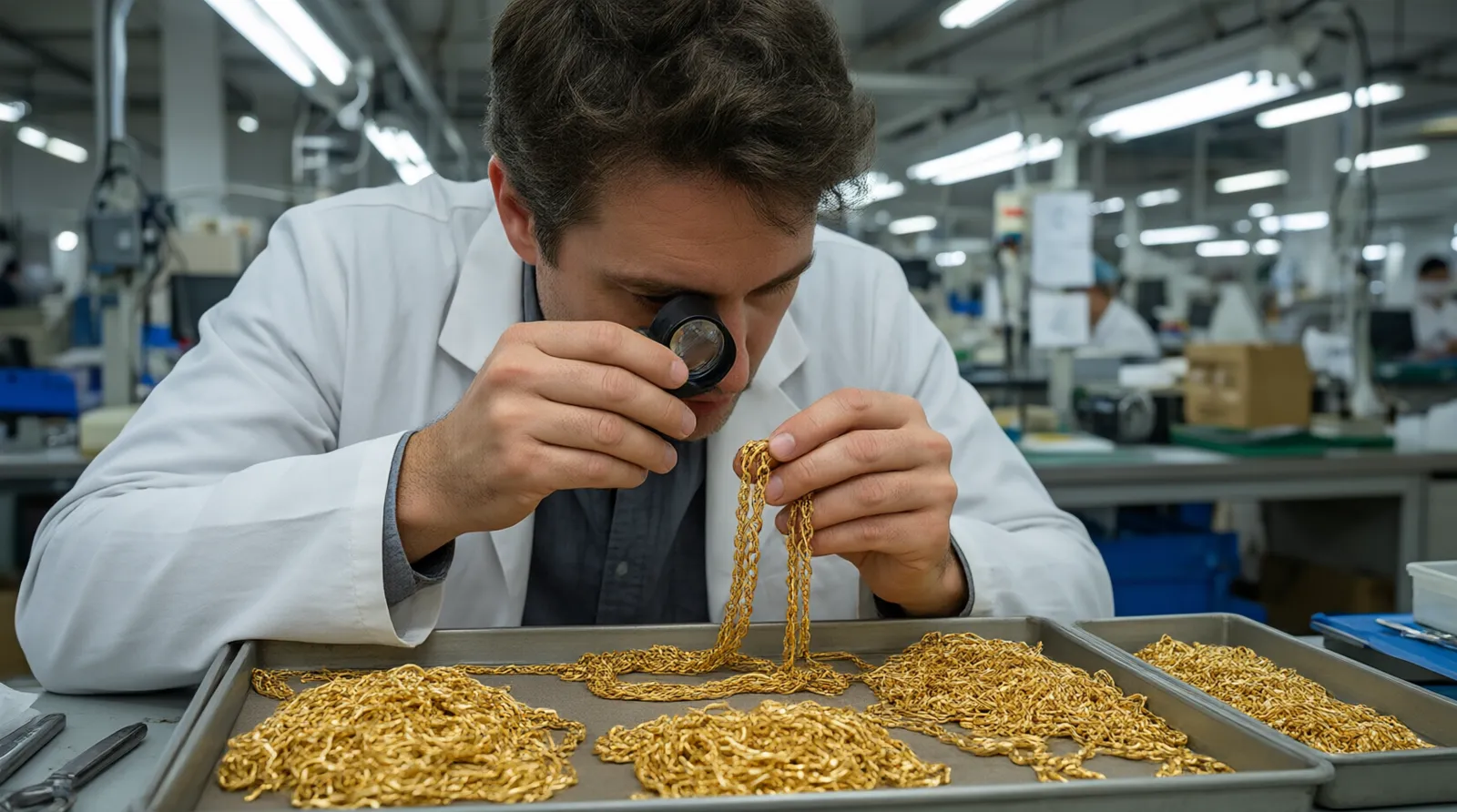
What to evaluate: The exact process used to verify a factory's legitimacy, production capacity, and ethical compliance. What "good" looks like: The partner physically visits or rigorously audits factories rather than scraping Alibaba listings. They should shortlist suppliers based on your specific needs—whether you require a factory experienced in david yurman-style cable designs or one specializing in laser-welded links for permanent jewelry.
MOQ and Price Negotiation Capabilities
What to evaluate: The partner's leverage and track record in lowering minimum order quantities without inflating per-unit costs.
What "good" looks like: The ability to negotiate an initial pilot run of [your MOQ] units to test market demand before committing to bulk. A strong partner aggregates orders across multiple clients to unlock tier-one pricing for smaller DTC brands.
Multilingual Storefronts and SEO Execution
What to evaluate: If the partner manages overseas sales for factories, how do they handle localization? What "good" looks like: Six distinct locales with native keyword research, not just translated English copy. Arabic pages must be laid out right-to-left natively. Look for verifiable ranking data rather than promises. A reliable partner should be able to demonstrate that their managed product pages consistently rank on the first page of US search results for targeted queries, with exact performance data available upon request.
Sample Coordination and Quality Assurance
What to evaluate: The workflow from digital approval to physical sample delivery, and how revisions are handled. What "good" looks like: A structured sampling phase where the partner inspects the prototype against your CAD files or reference images before it ships internationally. They should manage all back-and-forth communication with the factory, shielding you from time-zone delays.
Catalog Accuracy and Buyer Communication
What to evaluate: How inquiries are answered and whether stock levels are real-time. What "good" looks like: Replies drafted directly from the factory’s actual in-stock catalog. Generic, templated responses indicate the middleman doesn't have direct access to the warehouse floor. If a buyer asks for a specific 14K gold chain weight, the response should reflect exact current inventory.
Scalability and Repeat Order Management
What to evaluate: The systems in place to handle reorders seamlessly once a product goes viral or steady demand is established. What "good" looks like: Automated reorder triggers, consistent quality control across batches, and a dedicated account manager who understands your brand's aesthetic—whether you lean toward affordable everyday wear or luxury statement pieces.
Budget Tiers
Sourcing a flexible jewelry inventory requires budgeting for both the goods and the operational partnership. Use this framework to estimate your capital requirements.
| Tier | Typical Profile | Estimated Investment Scope | What You Get |
|---|---|---|---|
| Entry | Solo online creators, new DTC stores testing affordable niches. | Low initial capital; relies on partner-negotiated low MOQs. | Access to vetted factory catalogs, basic sample coordination, standard multilingual listing support. Ideal for testing permanent jewelry supplies or trend-driven fashion pieces. |
| Mid-Market | Established importers, growing e-commerce brands. | Moderate capital for bulk purchasing and dedicated logistics. | Aggressive price/MOQ negotiation, weekly SEO content per market for your storefronts, dedicated account management, and repeat order automation. |
| Enterprise | Large-scale distributors, multi-brand retail groups. | High volume; significant working capital deployed. | Custom factory tooling, exclusive manufacturing agreements, full end-to-end managed export operations, and bespoke quality assurance protocols. |
Note: Exact pricing depends on materials (e.g., solid gold vs. bonded gold) and order volume. Request a tailored quote based on your specific SKUs.
Red Flags to Avoid
Walk away immediately if a potential sourcing partner exhibits any of these behaviors:
- Upfront fees with no performance guarantee: Paying heavy retainers before a factory is even shortlisted shifts all the risk onto you.
- Machine-translated storefronts: If a partner claims to offer global reach but simply runs English copy through a translator without locale-specific keyword research, your products will not rank.
- No physical sample policy: Suppliers who pressure you to buy bulk based solely on digital renders or stock photos are hiding quality defects.
- Vague factory locations: If they cannot tell you which province or city the manufacturing occurs in, they are likely another middleman dropshipping from a marketplace.
- Ignoring compliance: Failing to ask about nickel-free certifications or lead-content regulations for your target country will result in seized shipments.
- Catalog hallucinations: Promising items that aren't actually in the factory's current production line just to close the deal.
- Refusal to allow third-party inspections: A trustworthy partner welcomes independent quality checks before final payment.
 (/PLACEHOLDER)
Buying Process Checklist
Follow this sequence to procure your inventory safely and efficiently:
- Define Requirements: Specify your target materials (e.g., 10K gold, stainless steel), design aesthetics, and maximum acceptable per-unit cost. Determine if you need custom jewelry versus stock wholesale items.
- Shortlist Vendors: Identify sourcing partners like Link4a that specialize in managed export operations rather than generic trading companies.
- Evaluate Portfolios: Review their past work. Check if they have experience handling complex items like diamond chains or precision-crafted luxury components.
- Request Initial Quotes: Submit your specifications and ask for a breakdown of unit cost, estimated lead time, and the partner's commission structure.
- Coordinate Samples: Order physical prototypes. Test them for weight, clasp durability, plating thickness, and finish accuracy.
- Conduct Reference Checks: Ask the partner for case studies or connect with other DTC owners who have executed repeat orders through them.
- Negotiate Terms: Finalize the MOQ, payment schedule (typically a deposit with balance paid post-inspection), and shipping Incoterms.
- Execute Pilot Order: Place a smaller initial order to test the entire logistical pipeline before committing to enterprise-level volume.
Questions to Ask Vendors
Copy and paste these questions into your next supplier inquiry email to separate professionals from amateurs:
- What is your exact process for vetting a new factory before adding it to my shortlist?
- Can you negotiate an initial MOQ of
[your MOQ]for a pilot run, and how does the per-unit price change at that volume? - How do you handle sample revisions if the first prototype fails my quality checklist?
- Are your multilingual storefronts built using native keyword research for each locale, or are they direct translations?
- Do you charge upfront retainers, or is your compensation strictly commission-based upon closed orders?
- How quickly can you confirm if a specific item, like a 14K gold chain or a custom pendant, is currently in the factory's active production catalog?
- What quality assurance checkpoints are in place during the bulk manufacturing phase?
- Can you provide verifiable data on search rankings or sales conversions for brands you currently manage?
- Who handles the day-to-day communication with the factory—me or your team?
- What happens if a shipment is delayed or arrives with defect rates above our agreed threshold?
- Do you assist with export documentation and customs compliance for my specific destination country?
- How do you structure repeat orders to ensure pricing remains locked in over time?
Recommended Next Steps
Building a scalable jewelry supply chain requires replacing guesswork with a structured, verifiable procurement system. Stop relying on unvetted marketplace listings that eat into your margins and introduce unnecessary risk. Whether you are an overseas buyer looking to source affordable fashion pieces or high-end gold inventory, or a factory owner needing a managed overseas storefront that ranks locally and converts globally, your next move dictates your margin.
Audit your current sourcing bottlenecks today. Gather your top three required SKUs, define your target price points, and reach out to a managed export operator who works purely on performance. To get your factory shortlist, request MOQ and pricing parameters, or initiate a sample coordination process with a partner that charges commission only on closed orders, visit Link4a.com and submit your procurement requirements directly.