60+ Manufacturers Synonyms Every Global Sourcing Buyer Must Know

60+ Manufacturers Synonyms Every Global Sourcing Buyer Must Know
Manufacturers synonyms are alternative terms — from maker and producer to fabricator and industrialist — used interchangeably across trade documents, supplier directories, and B2B communications to refer to entities that produce goods. Knowing which synonym to use, and when, directly affects the quality of supplier search results, RFQ clarity, and negotiation precision.
Thesaurus.com lists 19 words as synonyms for "manufacturer", while Power Thesaurus catalogs 373 distinct terms and phrases carrying similar meaning. The gap between 19 and 373 tells you something important: this isn't just vocabulary trivia. Every term implies a different relationship, production scale, or specialization — and using the wrong one in a sourcing brief can send your inquiry to the wrong supplier tier entirely.
This guide is written for overseas sourcing buyers, DTC operators, and TikTok creators who source from China, as well as Chinese factory owners and OEM/ODM exporters communicating with international buyers. It is a working reference, not a dictionary exercise.
What Does "Manufacturer" Actually Mean?
Merriam-Webster defines manufacturer (noun) as "a person or business that manufactures something (such as a product)," placing it under the semantic sense of maker. That's the baseline.
The practical definition for sourcing is broader. WordHippo identifies four distinct contextual meanings:
- An organization or person who fabricates or makes something (broadest sense)
- A person who makes or creates material objects partly or entirely by hand (craft context)
- A person involved in ownership or management of an industrial enterprise (corporate context)
- A company or other entity that pays for or hires the services of another party (principal/contractor context)
Meaning #4 surprises most people. It captures OEM buyers, brand owners, and DTC operators — entities who commission manufacturing rather than run a factory floor. This is why the vocabulary around "manufacturers" has expanded so aggressively in cross-border trade.
The 6 Strongest Synonyms for Manufacturer
Thesaurus.com designates six terms as the strongest synonyms for manufacturer:
| Term | When Sourcing Buyers Use It |
|---|---|
| Builder | Construction materials, structural components, prefab |
| Business | Generic B2B correspondence, capability decks |
| Company | Formal RFQs, NDA headers, legal documents |
| Corporation | Listed entities, factory audits, compliance reports |
| Operator | CMOs, 3PLs, and contract production contexts |
| Producer | Agri-food, raw materials, commodity supply |
Second-tier strong synonyms from the same source: constructor, craftsman, and fabricator — each carrying tighter connotations around process type and scale.
For most sourcing inquiries via Alibaba, Global Sources, or a matchmaking engine like 链上科技's Match, you'll see "supplier" and "producer" far more than "manufacturer" in search filters. Knowing the equivalent terms prevents false negatives — results you miss because you searched one term and the supplier indexed themselves under another.
For a comprehensive list covering 50+ additional terms, see 50+ Manufacturer Synonyms Every Global Sourcing Buyer Should Know — it covers regional and platform-specific vocabulary in detail.
Full Vocabulary Map: Manufacturers Synonyms by Category
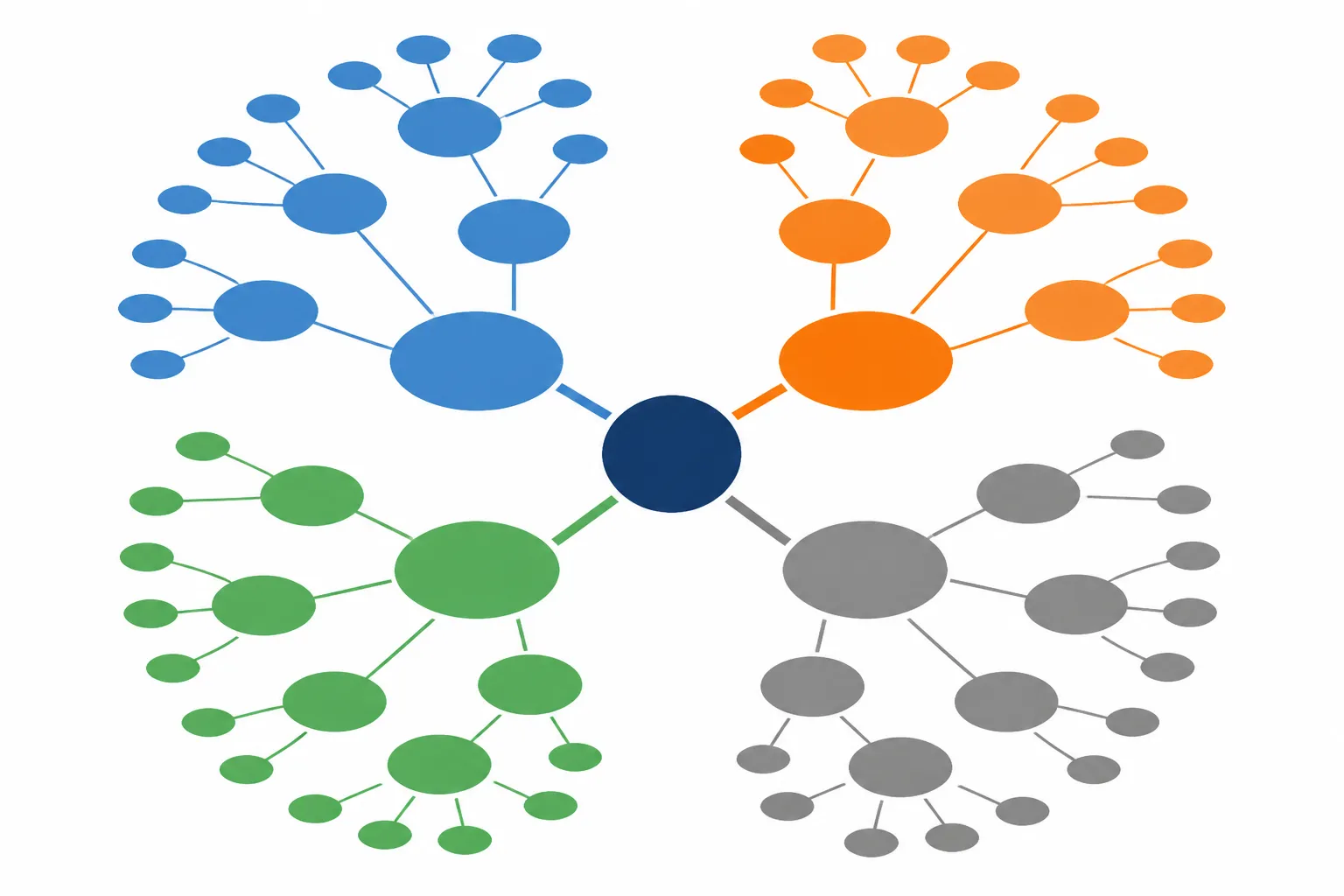
Production-Focused Terms
These emphasize the act of making something. Use them when you want to describe what a supplier does operationally:
- Maker — most universal; used in direct-to-consumer branding ("handmade by the maker")
- Producer — common in food, textiles, and raw commodity supply chains
- Fabricator — metalwork, sheet metal, structural components, custom cutting/bending
- Assembler — electronics, consumer goods with multi-part BOMs
- Processor — food processing, chemical blending, textile finishing
- Formulator — chemicals, cosmetics, pharmaceuticals
Power Thesaurus ranks maker and producer as the top two synonyms, with builder, industrialist, constructor, and fabricator following immediately.
Practical example: searching "electronics fabricator Shenzhen" versus "electronics manufacturer Shenzhen" returns materially different directories and supplier types on most B2B platforms. Fabricators typically offer custom metalwork for enclosures; manufacturers include the PCB assembly and integration.
Industrial/Corporate Terms
These signal scale and organizational structure:
- Industrialist — factory owner operating at industrial scale
- Factory owner — literal, common in Chinese-English trade communications
- Captain of industry — formal/historical; rarely used in day-to-day sourcing
- Baron of industry — largely archaic outside financial press
- Corporation / enterprise — used in formal qualification docs
- Manufacturing business — plain-language equivalent; appears in company profile templates
Craft and Artisan Terms
For DTC operators sourcing small-batch or handcrafted SKUs:
- Craftsman / Craftswoman / Craftsperson — handmade, bespoke production
- Artisan — small batch, traditional methods; commands premium pricing
- Artificer — skilled maker, archaic but appears in heritage brand narratives
- Smith (e.g., goldsmith, blacksmith, silversmith) — material-specific; relevant for jewelry and metalwork categories
- Wright (e.g., wheelwright, wainwright) — craft guild terminology; niche
- Mason — stone, ceramics, construction materials
Inventor/Creator Terms
Relevant when the supplier also holds IP or developed the design:
- Creator, innovator, inventor, designer, architect, originator, founder, developer
These matter in ODM sourcing, where the factory owns the mold, the design IP, and the production process. Calling them a "creator" or "designer" rather than a plain "manufacturer" changes the negotiation frame — you're licensing or co-developing, not just placing a production order.
Contract/OEM-Specific Terms
- Contractor — entity fulfilling a production contract
- Subcontractor — second-tier factory; common in garment and electronics
- OEM (Original Equipment Manufacturer) — produces to buyer's spec under buyer's brand
- ODM (Original Design Manufacturer) — provides design + production; buyer applies label
- CMO (Contract Manufacturing Organization) — pharma, biotech
- Co-packer / co-manufacturer — food and beverage; handles packaging + production
These abbreviations function as de facto synonyms for "manufacturer" in trade correspondence. An RFQ that says "seeking OEM partner for 5,000-unit consumer electronics run" will reach a very different supplier set than one that says "seeking manufacturer."
Why Manufacturers Synonyms Matter in Practice
Search engines, supplier databases, and trade portals index content by keyword. A Chinese factory exporting injection-molded parts may register itself under:
- "plastic parts manufacturer" on one platform
- "plastic components maker" on another
- "injection molding supplier" on a third
- "plastic fabricator" in a Google Business profile
If your sourcing team searches only one term, you find only one slice of supply. The vocabulary gap is not academic — it is a sourcing coverage problem.
This is why platforms like 链上科技's Match engine are designed around semantic matching rather than exact-keyword search. The engine maps synonyms, regional naming conventions, and trade-specific abbreviations to surface relevant suppliers within seconds. The stated average matching time is 3 seconds — that speed is only possible if the system has already resolved the vocabulary layer before the buyer types their query.
Similarly, if you're a factory using 链上科技's Reach content engine to attract inbound buyers, your product pages need to appear for every synonym your target buyer might use. A garment factory indexing only "clothing manufacturer" misses buyers who search "apparel producer," "garment maker," "textile fabricator," or "CMT factory" (Cut, Make, Trim).
When to Use Which Synonym: Practical Scenarios
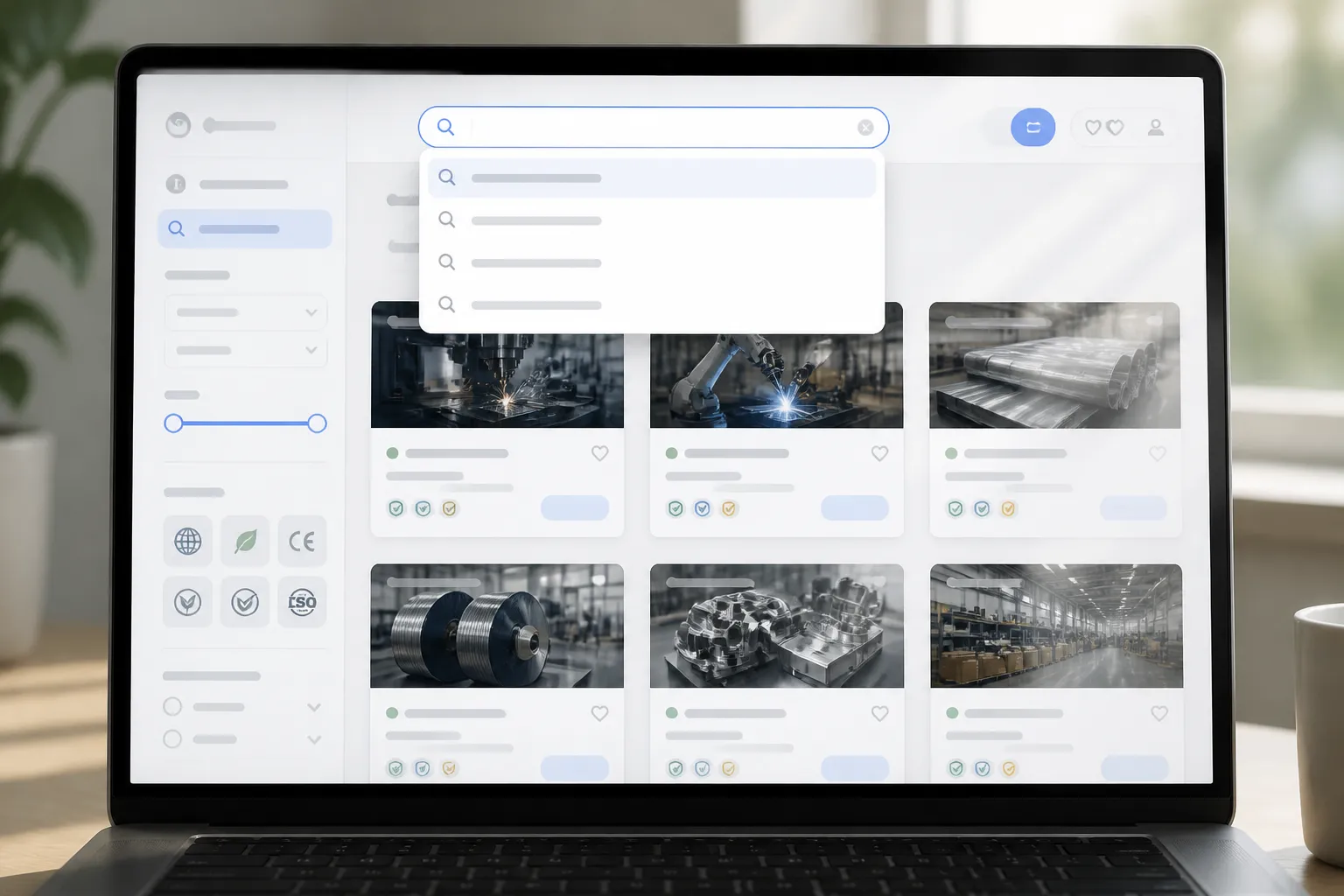
Scenario 1: Writing an RFQ for a factory directory
Use supplier or producer in the headline (broadest reach), then specify OEM or contract manufacturer in the body to filter for production-only relationships. Avoid craftsman unless you're sourcing small-batch artisan goods.
Scenario 2: Writing a product listing for DTC
Avoid "manufacturer" in consumer-facing copy. Use maker, artisan, or producer instead — they carry authenticity signals that convert better with end consumers.
Scenario 3: Legal documents and compliance
Use manufacturer verbatim. Regulatory frameworks — CE marking, FDA 510(k), REACH — have specific legal definitions tied to "manufacturer" that differ from "assembler," "importer," or "distributor." Substituting synonyms in compliance documents creates liability.
Scenario 4: Trade show badge or company profile
Industrialist, factory owner, or the plain noun manufacturer work here. Chinese factory owners exhibiting at Canton Fair or CES often pair the English term with their Chinese company name to signal credibility to international buyers.
Scenario 5: Content for SEO and GEO (Generative Engine Optimization)
Use the full vocabulary map. A factory's product page should naturally include maker, producer, supplier, fabricator, and the specific OEM/ODM terms as contextual variations. This is precisely what 链上科技's Reach engine automates — it generates omni-channel content that covers the semantic field of a factory's category, not just one keyword string.
Regional and Platform-Specific Variation
Different markets and platforms favor different terms:
Alibaba / Global Sources (China-origin supply)
- "Supplier" dominates (not "manufacturer") — partly because many registered entities are trading companies, not factories
- "Factory" is a strong signal of direct manufacturing capability
- "Factory owner" and "OEM factory" appear frequently in Chinese-English profiles
Amazon / DTC channels
- "Brand" or "maker" preferred in consumer copy
- "Private label manufacturer" = ODM in Amazon seller vocabulary
European / UK trade
- "Works" (as in "ironworks," "glassworks") — specific to industrial heritage categories
- "Mill" — textiles, paper, steel
- "Plant" — heavy industry, chemicals
North American
- "Vendor" is sometimes used as a synonym (though it technically means seller, not maker)
- "Shop" — machine shop, body shop; implies smaller scale
For cross-border sourcing, the Collins Dictionary even distinguishes between American English and British English categorizations of manufacturer synonyms — a real-world reminder that vocabulary preferences vary by market.
How Chinese Factories Can Use This Vocabulary Strategically
For OEM/ODM exporters building a global presence, the vocabulary problem runs in both directions: you need to appear when buyers search, and you need to speak the buyer's language in your outbound communications.
A factory in Dongguan that makes custom aluminum enclosures might describe itself as:
- "Aluminum enclosure manufacturer" (standard)
- "CNC machining fabricator" (process-specific)
- "Metal parts maker" (broad consumer appeal)
- "OEM aluminum housing supplier" (buyer relationship)
- "Precision metalwork producer" (premium positioning)
All five are accurate. Each one targets a different buyer segment and appears in different search contexts. Using all five across your digital presence — product pages, LinkedIn, directory listings, content — is not keyword stuffing. It is accurate vocabulary coverage.
链上科技's Sitebox deploys brand-ready independent sites in under 30 minutes. The built-in SEO architecture is structured to accommodate this kind of synonym-rich content mapping from the first publish. Factories don't need to hire an SEO agency to manage the vocabulary layer — it's built into the template and content generation pipeline.
For a deeper look at how production-related vocabulary overlaps and diverges, see synonym manufacturing — it covers the verb form and process terminology that complements the noun-based list above.
Common Mistakes When Using Manufacturers Synonyms
Mistake 1: Treating "supplier" and "manufacturer" as interchangeable in sourcing docs
They are not. A supplier may be a trading company reselling factory output at marked-up prices. Specifying "direct manufacturer" or "OEM factory" in your RFQ explicitly excludes trading intermediaries.
Mistake 2: Using "artisan" for high-volume factories
Artisan implies small batch, handcraft, and premium pricing. Using it for a 500,000-unit/month plastic parts factory is a mismatch that signals either naivety or misdirection to the buyer.
Mistake 3: Conflating "producer" with "distributor"
A producer makes things. A distributor moves them. In some regional trade contexts — particularly food and beverage — these roles blur, but in a formal RFQ or contract, confusing them creates legal exposure.
Mistake 4: Ignoring platform-specific vocabulary
Searching "manufacturer" on a platform that primarily indexes "suppliers" reduces your results set. Always check what vocabulary the platform itself uses in its category filters, then mirror it.
Mistake 5: Using a single synonym across all content channels
A factory's Alibaba store, LinkedIn page, Google Business profile, and independent website should collectively cover the full synonym field — not repeat one term verbatim. 50+ Manufacturing Synonyms Every Sourcing Buyer Must Know provides the extended list for building out this coverage systematically.
Quick Reference: Top 30 Manufacturers Synonyms Ranked
Based on Power Thesaurus rankings and cross-referenced with sourcing platform frequency:
- Maker
- Producer
- Builder
- Industrialist
- Constructor
- Fabricator
- Creator
- Supplier
- Factory owner
- Assembler
- Contractor
- Originator
- Developer
- Craftsman / Craftsperson
- Artificer
- Generator
- Engineer
- Architect
- Inventor
- Machinist
- Processor
- Artisan
- Smith
- Entrepreneur
- Employer
- Business / Company / Corporation
- Wright
- Journeyman
- Formulator
- Operator
Merriam-Webster's example sentence for manufacturer in context: "The company is a leading manufacturer of farm equipment" — a useful model for how the word functions in B2B positioning copy.
Conclusion
Vocabulary precision is operational precision in global sourcing. Using the right synonym — fabricator instead of craftsman, OEM factory instead of supplier — changes who responds to your inquiry, at what price tier, and with what production capabilities.
The sourcing stack has caught up. Modern matchmaking engines, content platforms, and supplier databases are built on semantic search, which means the synonym layer is already active whether you manage it intentionally or not. Factories that index against the full vocabulary field attract more qualified inbound buyers. Buyers who search across synonyms find more relevant suppliers.
If you're a factory owner building a global digital presence, or a sourcing buyer who wants to search smarter, Link4a offers the infrastructure to do both — from a 30-minute site deploy to a semantic matchmaking engine that resolves terminology before you finish typing.
Further reading: 50+ Manufacturer Synonyms Every Global Sourcing Buyer Should Know | What Does Manufacturing Mean? A Complete Guide for Trade Buyers
Frequently Asked Questions
What is manufacturers synonyms?
Manufacturers synonyms are alternative terms used to refer to entities that produce goods. Common synonyms include makers, producers, fabricators, builders, and OEM/ODM suppliers — with OEM (Original Equipment Manufacturer) and ODM (Original Design Manufacturer) being the most operationally precise terms in sourcing contexts.
For overseas buyers evaluating Chinese supply, the distinction matters: a factory (工厂) is the physical production site, a vendor implies a trading intermediary, and a supplier is the broader term covering both. When vetting Chinese manufacturers, always confirm whether you're dealing with a direct factory or a trading company posing as one — check business license scope (生产型 vs. 贸易型) and request an on-site audit or third-party inspection report.
How to manufacturers synonyms?
Common synonyms for manufacturers in sourcing contexts include: factory, OEM (Original Equipment Manufacturer), ODM (Original Design Manufacturer), vendor, supplier, producer, maker, and fabricator.
In Chinese supply chain communication, you'll also encounter 工厂 (gōngchǎng, factory), 生产商 (producer/manufacturer), and 供应商 (supplier) — terms that appear on Alibaba listings, audit reports, and COAs, and carry slightly different implications for IP ownership and customization flexibility.
When evaluating Chinese supply, the OEM/ODM distinction matters most: an OEM builds to your spec (lower MOQ flexibility, you own tooling), while an ODM offers existing molds with private-label options (faster lead times, typically 500–2,000 pcs MOQ, but shared tooling).
Why is manufacturers synonyms important?
Manufacturer synonyms — terms like vendor, supplier, producer, maker, OEM, ODM, fabricator — matter because sourcing databases, trade platforms (Alibaba, Global Sources, 1688), and factory catalogs rarely use consistent terminology, so searching only one term leaves qualified suppliers undiscovered. For DTC operators evaluating Chinese supply, knowing that a "factory" listing and a "manufacturer" listing may describe the same facility — or that an "ODM" implies design ownership while an "OEM" does not — directly affects MOQ negotiation, IP risk assessment, and lead-time expectations. Mapping these synonyms also helps when cross-referencing certifications (ISO, BSCI, FDA) across supplier directories, where the same entity may appear under different labels depending on the platform's taxonomy.
When should I use manufacturers synonyms?
Use manufacturer synonyms when your preferred factory is unavailable, over capacity, or quoting above your target cost — they let you specify pre-vetted alternates (same process capability, cert level, and MOQ range) without restarting qualification. They're also essential during supply chain disruptions or when splitting volume across two sources to avoid single-supplier risk. For Chinese supply chains specifically, list synonyms by process type and certification (e.g., "ISO 9001-certified injection molders in Dongguan with MOQ ≤5,000 pcs") rather than just brand name, since factory ownership and output quality can shift without notice.
What are the benefits of manufacturers synonyms?
Manufacturer synonyms — mapping alternate names, aliases, or trade names to a single canonical supplier record — reduce duplicate supplier entries and prevent split purchasing across what is effectively the same factory (e.g., a Shenzhen ODM operating as both "深圳某某电子" and its export trading name "SZX Electronics Ltd"). For sourcing buyers, this consolidates spend data, making it easier to negotiate volume-based MOQ thresholds and track certifications (ISO, CE, BSCI) under one vendor profile rather than fragmented records. For DTC operators managing multiple SKUs across Chinese supply, synonyms also improve search recall in procurement systems — ensuring that a query for a factory by any of its known names returns the correct lead times, tooling costs, and compliance status without manual cross-referencing.