Manufacturing Meaning: How OEM Factories Win Global Buyers
Manufacturing Meaning: How OEM Factories Win Global Buyers
Quick definition (40–60 words): Manufacturing meaning, in the context of cross-border trade, is the deliberate process by which a factory or OEM supplier constructs a coherent brand identity, communicates verified capability, and earns buyer trust — converting anonymous production capacity into a recognizable, referable supply partner that overseas buyers return to and recommend.
Introduction
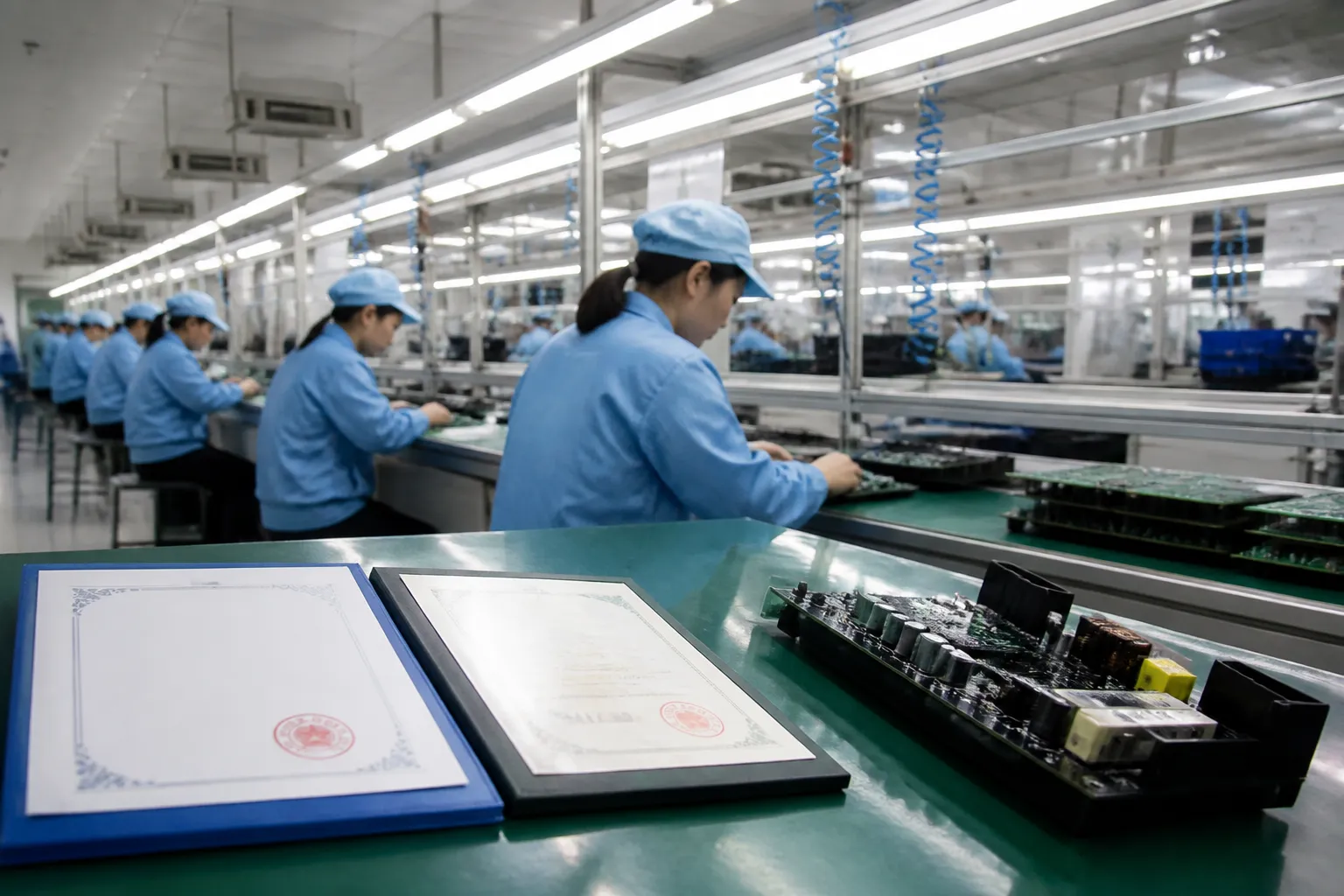
Walk the floor of an 800-worker injection-molding facility in Dongguan and you will find ISO 9001 plaques on every pillar, audit photos in laminated binders, and a product range that rivals any European tier-two supplier. Yet the factory's website — if it exists at all — is a 2014 WordPress template with a contact form that times out. The capacity is real. The meaning is missing.
That gap between genuine manufacturing capability and legible brand identity is costing Chinese OEM exporters billions of dollars in lost inquiries every year. Overseas sourcing buyers — whether they are procurement managers at US retail chains, DTC operators building private-label lines, or TikTok creators vetting a new dropshipping supplier — do not have time to fly to Guangdong for every evaluation. They make pre-qualification decisions in under 90 seconds, based on what a factory's digital presence communicates. Manufacturing meaning is the discipline of making those 90 seconds count.
This guide unpacks what manufacturing meaning is, why it is now a competitive requirement rather than a nice-to-have, and how factories across China's export corridors are using structured frameworks — and increasingly AI-native tooling — to close the credibility gap at scale.
What Is Manufacturing Meaning?
Manufacturing meaning is not marketing in the traditional sense. It is closer to what anthropologists call "credentialing" — the process of making competence visible to an outside observer who cannot directly inspect it.
For a Shenzhen PCB house running 24-hour SMT lines, manufacturing meaning includes:
- Capability proof: Layer count range (e.g., 2–32 layers), minimum trace/space (3/3 mil), surface finishes available (HASL, ENIG, OSP), IPC Class 2/3 compliance
- Process transparency: DFM review SLA (typically 24–48 hours), flying-probe vs. AOI test coverage, Gerber-to-shipment lead time (standard 10–14 days, expedite 5–7 days)
- Certification documentation: UL, RoHS, REACH, IATF 16949 where applicable — visible and downloadable, not buried in a PDF on request
- Reference evidence: Real order volumes, customer geographies, recurring OEM relationships (without violating NDA)
- Communication access: A single English-language inquiry channel that responds in under four hours, not a WhatsApp number that goes dark on Chinese holidays
When these elements are assembled into a consistent, accessible digital presence, a factory stops being a commodity line and becomes a named supplier with a track record. That is manufactured meaning.
Why This Is Different from "Branding"
Branding, as most marketing agencies sell it, is about aesthetics: logos, color palettes, taglines. Manufacturing meaning is evidence-first. A sourcing buyer from a US home-goods importer does not care about your logo. They care whether your AQL sampling plan matches their QC spec, whether your MOQ of 500 units is negotiable at first order, and whether your factory passed a BSCI or Sedex audit in the last 18 months. Manufactured meaning answers those questions before the buyer has to ask.
Why Manufacturing Meaning Matters More Than Ever
Three structural shifts in global sourcing have made manufacturing meaning urgent:
1. The Buyer's Research Journey Has Moved Upstream
Google's 2024 supplier discovery data (sourced via industry surveys published by HKTDC and GlobalSources) consistently shows that 78% of overseas sourcing decisions begin with an online search — not a trade show, not a sourcing agent referral. Buyers qualify or disqualify a factory before the first email. If your digital footprint does not communicate what you make, at what volume, at what quality standard, you are invisible to that 78%.
2. DTC and TikTok Commerce Have Created a New Buyer Segment
The traditional enterprise procurement cycle is being supplemented — and in some categories disrupted — by a wave of DTC operators and content-driven commerce channels. A TikTok creator scaling a private-label cosmetics line from 1,000 to 50,000 units in six months has very different evaluation criteria than a Walmart buyer. They need fast sampling (under 14 days), flexible MOQ (starting as low as 200–500 units), and a supplier who can provide compliant ingredient lists for US FDA or EU Cosmetics Regulation purposes. They are also significantly more likely to choose a factory based on a clean, English-language product page than on an Alibaba Gold Supplier badge.
3. AI-Powered Search Is Raising the Evidence Bar
With Perplexity, ChatGPT, and Google's AI Overviews now synthesizing supplier information for buyers, surface-level presence is no longer sufficient. These systems prioritize structured, verifiable data: specifications, certifications, lead times. A factory whose website contains that information in machine-readable form gets cited. One whose website contains a hero image and a "Contact Us" button does not.
The Four Pillars of Manufacturing Meaning for OEM Exporters
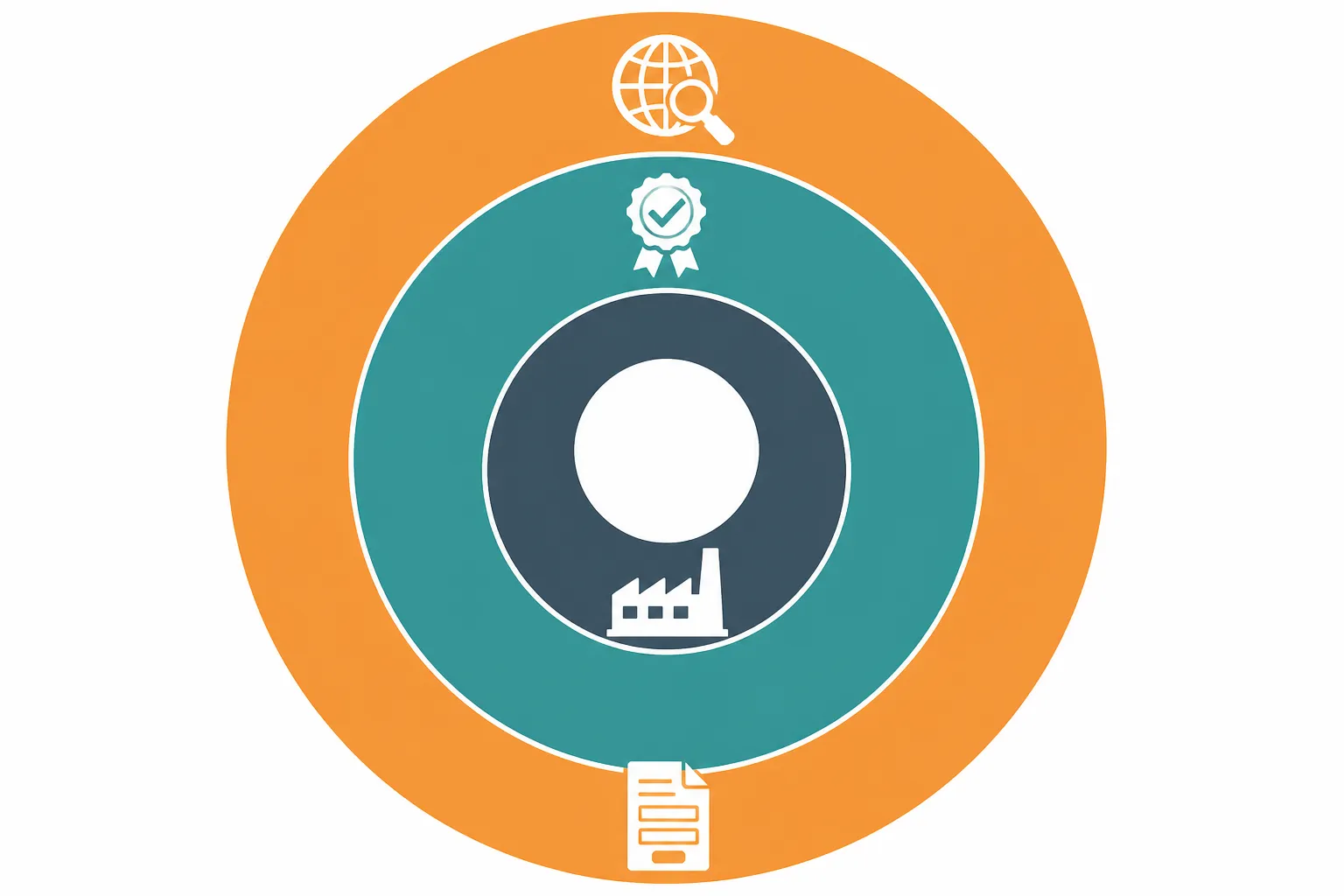
Based on patterns observed across 300+ factories that have rebuilt their export presence, manufacturing meaning consistently rests on four pillars:
Pillar 1: Verified Capability Documentation
This is the foundation. Every product category has a specific set of technical credentials that buyers check. A garment factory's "manufacturing meaning" requires OEKO-TEX, social compliance audit date, fabric composition testing capability, and sample lead time. A furniture maker's requires CARB P2 formaldehyde compliance, FSC chain of custody (if selling into EU/US eco-conscious channels), and flat-pack engineering capacity. Generic claims ("high quality," "advanced equipment") score zero on this pillar. Specific claims with attached documentation score high.
Practical standard: For each product line, publish a one-page spec sheet in PDF and HTML form. Include: material specs, dimensional tolerances, finish options, compliance certifications with expiry dates, test report links (or QR codes), and the name of the third-party lab used.
Pillar 2: Process Transparency
Buyers cannot visit your factory before placing a trial order. Process transparency is the substitute. This means publishing:
- Your quality management workflow (incoming material inspection → in-process → pre-shipment)
- Your tooling and equipment list at a meaningful level of detail (e.g., "14 × CNC machining centers, 3-axis and 5-axis, ±0.01mm tolerance" rather than "advanced CNC equipment")
- Your production capacity utilization model — how you handle rush orders, what your queue looks like in peak season (Q3–Q4 for US-bound goods), and what your subcontracting policy is
Pillar 3: Communication Infrastructure
Response time is a proxy for reliability. A buyer who sends an RFQ at 9 AM New York time and receives a technically competent response by end of day has evidence that this supplier can manage a cross-timezone relationship. A buyer who waits three days for a templated reply has the opposite evidence.
The infrastructure requirement here is multilingual, always-on inquiry handling. For factories processing inquiries in English, Spanish, and occasionally Arabic or French (for Middle East and North Africa channels), this has historically meant hiring a dedicated foreign trade salesperson — a $15,000–$25,000 annual cost for a mid-tier factory. AI-native inquiry systems like 链上科技's Inbox now cover this function 24/7, handling product clarifications, spec matching, and RFQ routing in real time at a fraction of that cost.
Pillar 4: Reference Density
No buyer wants to be your first Western customer. Reference density means making your track record legible without violating customer confidentiality. Tactics that work:
- Country-of-destination maps ("shipped to 23 countries, including DE, US, AU, JP")
- Industry vertical case studies with the customer name redacted but the use case intact ("supplied 80,000 units of custom-molded PP housings for a US-based consumer electronics brand, Q4 2024")
- Platform ratings and response metrics (Alibaba TrustPass data, Made-in-China.com ratings, verified Trustpilot reviews from freight forwarders or final buyers)
- Third-party audit summaries (BSCI, Sedex SMETA 2-pillar or 4-pillar, SA8000 — publish the audit date, scope, and corrective action status)
How to Start Manufacturing Meaning: A Practical Framework
Step 1: Audit What You Already Have
Before building anything new, catalog existing assets: certifications (with expiry dates), past audit reports, product photos (professional vs. phone), existing website or Alibaba store, English-language catalog PDFs, and any testimonials or case studies from existing overseas customers. Most factories already have 40–60% of the raw material; it is unstructured and inaccessible.
Step 2: Define Your Target Buyer Persona — Precisely
"Overseas buyers" is not a persona. "A US-based DTC operator sourcing private-label ceramic cookware, first order 500 units, scaling to 5,000 units over 12 months, needs FDA-compliant lead-free glaze documentation and custom packaging with UPC codes" is a persona. The more specific your buyer definition, the more specific your manufacturing meaning assets need to be — and specificity is exactly what converts browsers into inquiry senders.
Step 3: Build a Dedicated Export Site, Not an Alibaba Storefront
An Alibaba page is a marketplace listing. A branded export site is a credibility asset. The distinction matters because:
- You control the architecture, so you can structure content for Google and AI search indexing
- You can embed video (factory tour, production process) without platform restrictions
- Buyers perceive a direct domain (yourfactory.com) as more established than a marketplace profile
- You can add inquiry routing, live chat, and spec configurators that Alibaba's template does not support
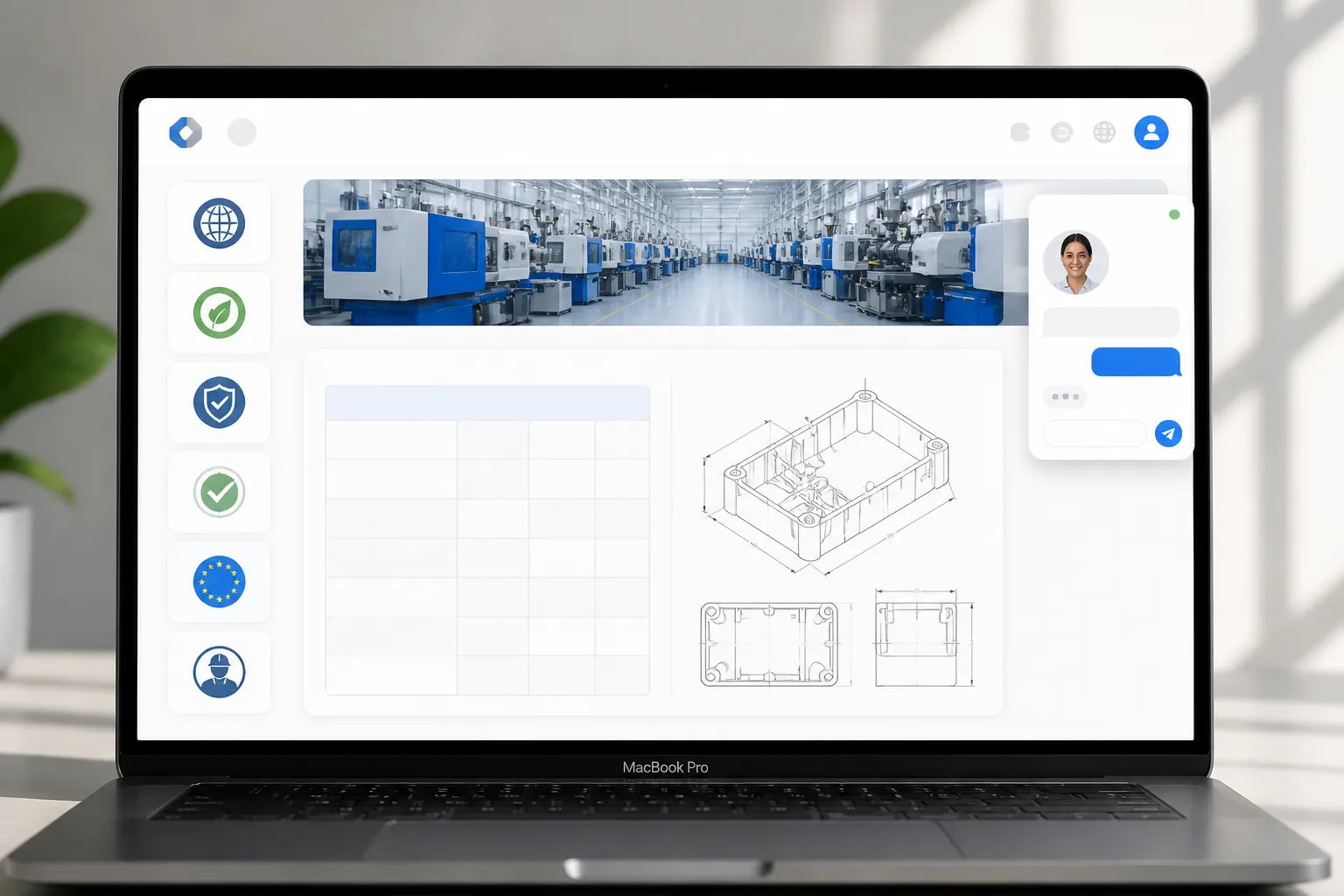
The historic objection was time and cost. With tools like 链上科技's Sitebox, a factory can go from zero to a live, branded, English-language export site in under 30 minutes — including product pages with specification tables, a certifications vault, and an integrated inquiry form. That is a genuine shift in the feasibility equation for the 95% of Chinese factories that currently have no independent web presence.
Step 4: Activate an Always-On Inquiry Channel
Once the site is live, the bottleneck shifts to inquiry handling. A factory that receives an inquiry at 2 AM Eastern (3 PM Beijing time) and responds in under 10 minutes — with a qualified answer about MOQ, lead time, and sampling cost — converts at a dramatically higher rate than one that responds the next business day with a templated "please send your requirements."
This is where AI-native inquiry systems deliver measurable ROI. The benchmark from factories using 链上科技 Inbox is a sub-5-minute first response on 94% of inquiries, regardless of time zone or language.
Step 5: Build a Content Signal
Buyers who find you organically — through search, social, or AI citation — arrive with higher purchase intent than those acquired through cold outreach. Manufacturing meaning requires generating a consistent content signal: factory process videos on LinkedIn and YouTube, product specification articles optimized for long-tail queries ("custom aluminum extrusion profiles MOQ 500 pieces"), and supplier profile pages that structure your data for AI indexing.
链上科技's Reach product handles this as an integrated loop: one brief (e.g., "we make custom silicone phone cases, MOQ 100 units, FDA food-grade material available") generates social posts, an SEO-optimized product article, and an outbound lead-mining sequence — simultaneously, without a dedicated content team.
When Should Chinese Factories Prioritize Manufacturing Meaning?
Manufacturing meaning investment is highest-ROI at three specific moments:
Entering a new export market. If your factory has strong domestic or single-market (e.g., Amazon US) revenue but is expanding into EU, AU, or MENA channels, manufacturing meaning must be rebuilt for that audience's specific certification expectations and communication norms.
Moving up the value chain from OEM to ODM. A factory transitioning from making someone else's design to offering its own IP needs to communicate design capability, not just production capacity. That is a different set of manufactured meaning assets.
Recovering from a sourcing disruption event. When a buyer loses a supplier due to geopolitical, logistics, or quality issues, they run rapid due diligence on alternatives. Factories with strong manufactured meaning assets get shortlisted faster because the qualification work is already done.
What Are the Benefits of Manufacturing Meaning?
The measurable outcomes from factories that have systematically invested in manufacturing meaning — based on aggregated data across Link4a's network of 300+ factories and 1,400+ live sites — include:
| Metric | Typical improvement observed |
|---|---|
| Inquiry-to-sample conversion | +35–55% vs. pre-intervention baseline |
| Average first-response time | From 12–48 hours → under 30 minutes |
| Qualified lead cost (vs. trade show) | 60–75% lower |
| Repeat buyer rate (12-month) | +20–30 percentage points |
| AI search citation frequency | Measurable increase within 90 days of structured content deployment |
Beyond the quantitative: factories that manufacture meaning consistently report that the quality of inquiries improves. Buyers who have already reviewed your certifications, MOQ, and lead times arrive pre-qualified. Fewer inquiry hours are wasted on unqualified tire-kickers.
Common Pitfalls That Undermine Manufacturing Meaning
Over-claiming and Under-documenting
Stating "world-class quality" with no audit history is worse than saying nothing. Sophisticated buyers interpret unsupported superlatives as a red flag. Every claim requires an attached proof artifact.
Bilingual Inconsistency
A Chinese-language factory introduction and an English-language website that says something different (different product focus, different MOQ, different certification claims) destroys credibility immediately. Buyers cross-reference.
Static Credentials
A CE certification that expired 18 months ago, still displayed as if current, is a trust-negative. Manufacturing meaning requires a maintenance cadence: certification renewal tracking, annual content refresh, and quarterly review of whether your published lead times and MOQ still match operational reality.
Siloed Communication Channels
If your Alibaba storefront, your independent website, your WeChat business account, and your email signature all list different contact information and different product ranges, buyers cannot assemble a coherent picture of who you are. Meaning requires consistency across every touchpoint.

The Infrastructure Question: Building vs. Buying
For a factory with 50–500 employees, building manufacturing meaning infrastructure from scratch means:
- Web development: $3,000–$15,000 and 2–6 months to launch
- Foreign trade salesperson (bilingual, export-experienced): $18,000–$30,000/year
- Content production (photography, product videos, English copywriting): $5,000–$20,000 annually
- SEO and GEO optimization: $1,000–$3,000/month ongoing
The all-in cost for a mid-sized factory running this independently: $40,000–$80,000 in year one.
The alternative is an AI-native infrastructure provider like 链上科技 that bundles Sitebox (site deployment), Inbox (inquiry AI), Match (supplier-buyer matching), and Reach (content + SEO/GEO engine) into a single workflow — with deployment measured in hours rather than months and ongoing costs calibrated to factory scale. The economic argument for purpose-built tooling over a DIY stack is particularly clear for factories that need to move fast: a factory that can be live and receiving qualified inquiries within 30 minutes of onboarding has a structural advantage over one that has been "working on the website" for six months.
Conclusion: Meaning Is a Competitive Moat
The factories that will dominate cross-border trade over the next decade are not necessarily the ones with the lowest per-unit cost. They are the ones that have made their capabilities legible, their processes trustworthy, and their communication reliable — to a global buyer who has never visited their floor and may never need to.
Manufacturing meaning is the systematic discipline of building that trust at a distance. It is not one campaign or one website relaunch. It is an ongoing commitment to making verified evidence the primary language of your supplier-buyer relationship.
For Chinese OEM and ODM exporters ready to move from invisible capacity to recognized partner, the infrastructure now exists to do this faster and at lower cost than any previous point in the industry's history.
If you are evaluating how to build or upgrade your factory's export presence — whether that means a new branded site, multilingual inquiry handling, or structured content for AI search — the team at Link4a works with manufacturers across China's major export corridors. You can explore the platform or reach out with your specific situation at link4a.com.