How to Source Non Tarnish Gold Jewelry: A Buyer's Guide
How to Source Non Tarnish Gold Jewelry: A Buyer's Guide
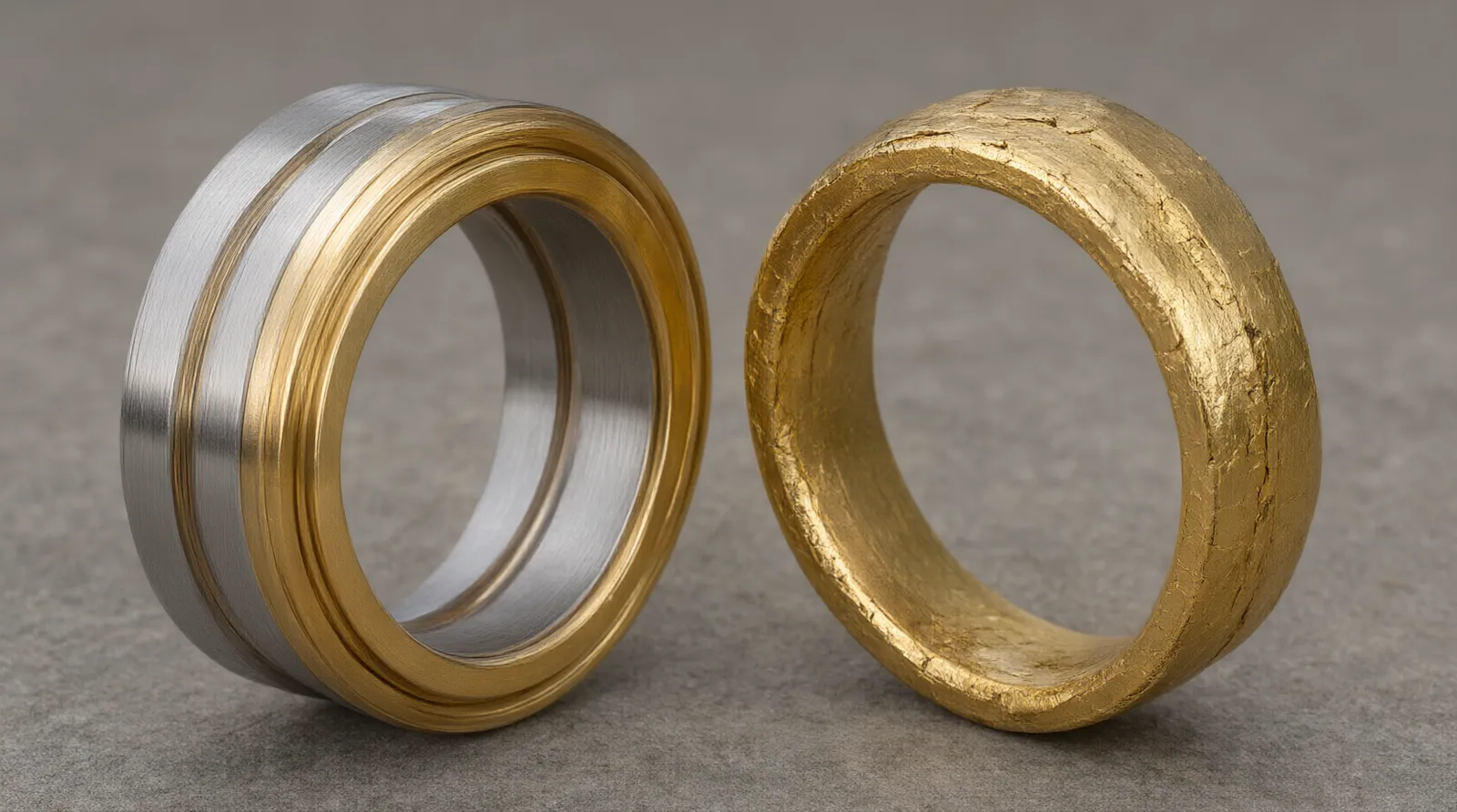
Non tarnish gold jewelry is manufactured using either solid 14k/18k gold, PVD (Physical Vapor Deposition) vacuum coating on stainless steel, or heavy gold vermeil over sterling silver to prevent oxidation and skin discoloration. For DTC store owners, online creators, and importers, sourcing this category means evaluating plating thickness in microns, base metal composition, and a factory’s ability to consistently hit those specifications across repeat orders rather than relying on marketplace listings that often misrepresent material quality.
Who This Guide Is For
This guide is written for overseas buyers, importers, DTC e-commerce store owners, and online creators who are ready to purchase non tarnish gold jewelry inventory but need a dependable sourcing partner in China to execute the procurement safely. You are likely scaling past local wholesale markets or dropshipping, dealing with customer returns caused by cheap plating, and looking for a managed export operator who shortlists factories, checks them, negotiates MOQ and price, coordinates samples, and handles multilingual communication. It also serves Chinese factory owners who want their catalogues sold overseas without hiring an internal export sales team, utilizing managed storefronts instead of gambling on algorithm-dependent marketplaces.
What Non Tarnish Gold Jewelry Actually Does
Non tarnish gold jewelry solves the primary failure point of fashion accessories: rapid oxidation that turns pieces green or black after minimal exposure to water, sweat, or perfume. Buyers searching for affordable options expect pieces that survive daily wear without requiring the price tag of fine jewelry. Technically, this is achieved through specific manufacturing processes. PVD coating bonds titanium nitride and gold at a molecular level inside a vacuum chamber, creating a layer significantly harder than traditional electroplating. Brands competing in the same visual space as pandoras, kendra, or david yurman rely on these finishes to deliver a luxury aesthetic with a permanent finish. For B2B buyers, "non tarnish" is not a marketing buzzword; it is a verifiable specification tied to micron thickness, salt-spray testing hours, and base metal purity that dictates your return rate.
Key Decision Factors
Base Metal Composition
What to evaluate: The core material underneath the gold finish dictates the structural integrity and hypoallergenic properties of the piece. Stainless steel (specifically 316L surgical grade) is the standard for true waterproof, non tarnish items. Sterling silver (925) is used for higher-end vermeil. Brass is cheaper but requires much thicker plating to prevent tarnishing and often contains trace nickel. What "good" looks like: A vetted factory provides exact alloy certifications. If you are building a brand comparable to scott style aesthetics, 316L stainless steel paired with PVD coating ensures the jewelry survives showers and pools without degrading. Understanding how to properly evaluate stainless steel jewelry sourcing is critical when verifying these base metal claims with overseas manufacturers.
Plating Technology and Thickness
What to evaluate: Traditional electroplating deposits gold via electrical current, resulting in a softer, thinner layer. PVD uses vaporization in a vacuum, yielding a harder, more uniform coat. Thickness is measured in microns. What "good" looks like: Look for suppliers specifying PVD coating at 0.5 to 1.0+ microns for stainless steel, or 2.5+ microns of gold over sterling silver for vermeil. Vague terms like "gold dipped" or "triple plated" without micron measurements indicate a supplier hiding substandard specs.
Custom Capabilities and Tooling
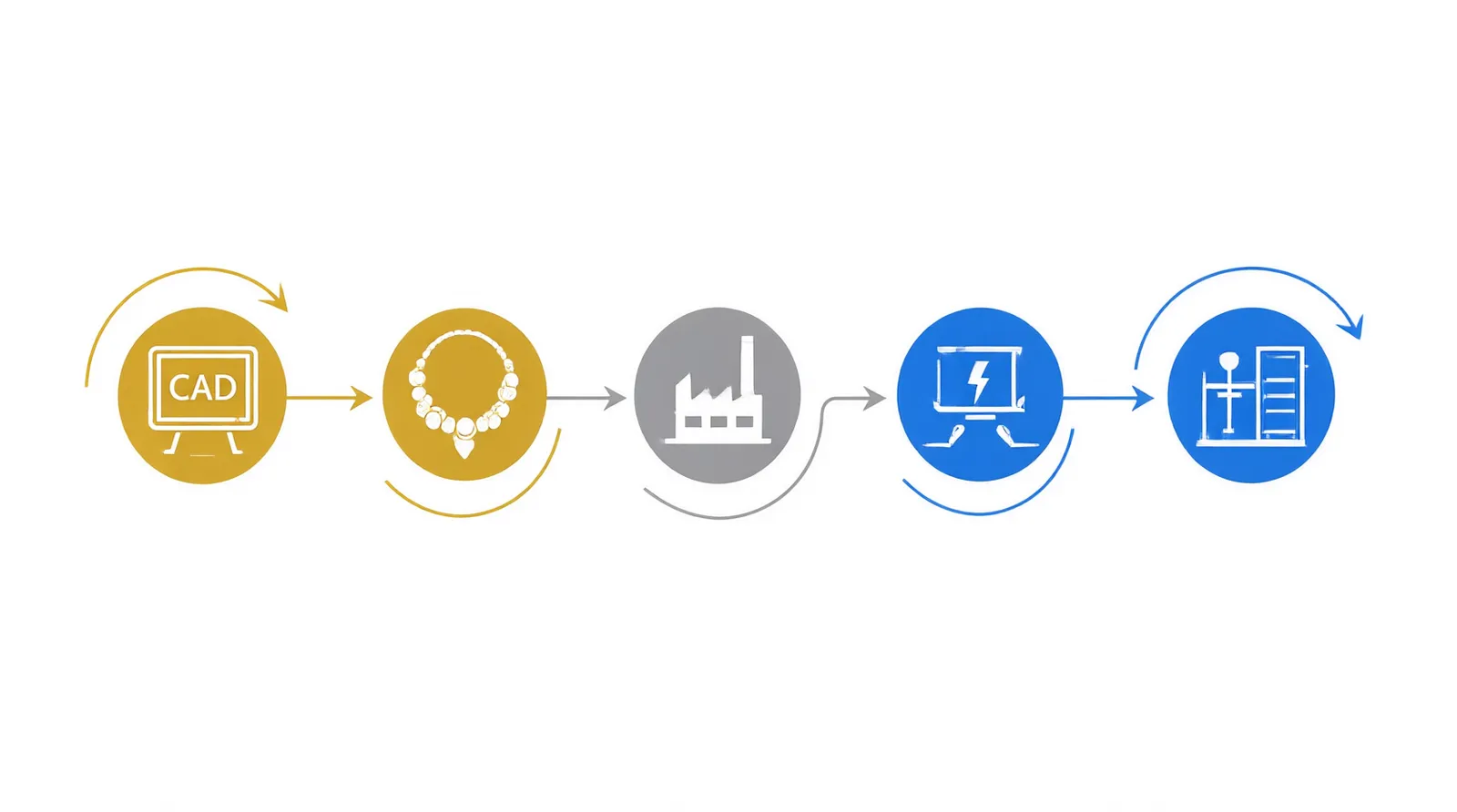
What to evaluate: Your ability to differentiate from competitors relies on whether a factory can execute custom designs, engraving, or proprietary clasps without prohibitive tooling costs. What "good" looks like: Factories should offer CAD rendering before cutting molds. A reliable sourcing partner negotiates these tooling fees, often amortizing them across your first few production runs rather than demanding massive upfront capital for custom molds.
Minimum Order Quantity (MOQ) and Pricing Model
What to evaluate: MOQ determines your cash flow risk. Some factories demand thousands of units per SKU; others allow mixed batches. Pricing models vary between fixed unit costs, tiered volume discounts, and FOB vs. EXW shipping terms. What "good" looks like: Working through a managed export operator like Link4a allows you to negotiate lower MOQs because the partner aggregates buyer demand or holds established leverage with the factory. You receive transparent pricing without hidden marketplace markup.
Quality Assurance and Compliance
What to evaluate: Heavy metals testing (REACH compliance for Europe, California Proposition 65 for the US), salt spray testing results, and clasp tension durability. What "good" looks like: The supplier provides third-party lab reports (SGS, Intertek, TÜV) upon request. A good sourcing partner physically inspects the batch in China before it ships, checking for plating bubbles, uneven polishing, or defective jump rings.
Supplier Reliability and Communication
What to evaluate: Language barriers, time zone friction, and response accuracy. Many overseas buyers lose money because they miscommunicate specs to a factory sales rep who simply agrees to everything to close the deal. What "good" looks like: Multilingual communication handled by professionals who draft replies based on the factory's actual in-stock catalogue, rather than promising impossible specs. Link4a operates six locales with dedicated pages—including right-to-left Arabic layouts—and conducts per-language keyword research rather than lazy direct translations, ensuring clear communication flows both ways.
Scalability and Repeat Ordering
What to evaluate: Can the factory maintain identical color matching and plating thickness when you scale from 500 units to 10,000 units? What "good" looks like: Documented standard operating procedures (SOPs) for your specific SKUs. A managed partner coordinates repeat orders seamlessly, holding the factory accountable to the original sample's specifications rather than allowing quality to drift on subsequent runs.
 ](PLACEHOLDER)
Budget Tiers
When budgeting for non tarnish gold jewelry inventory, unit costs depend heavily on base metal, plating method, and order volume. Below is a framework for DTC brands and importers planning their initial and scaling purchases.
| Tier | Target Buyer | Typical Unit Cost Range | What You Get |
|---|---|---|---|
| Entry | New DTC stores, online creators testing the market | $3 – $12 per unit | 316L stainless steel base, standard PVD gold plating (approx. 0.3-0.5 microns), catalog designs (no custom tooling), higher MOQ requirements if buying direct, basic packaging. |
| Mid-Market | Established boutiques, growing e-commerce brands | $12 – $35 per unit | Thicker PVD coating (0.5-1.0+ microns) or gold vermeil over 925 sterling silver, custom logo engraving, negotiated lower MOQs via a sourcing partner, individual branded packaging, REACH/Prop 65 compliant. |
| Enterprise | Large-scale importers, multi-channel retail brands | $35 – $100+ per unit | Fully custom CAD designs, proprietary clasps, heavy micron plating, dedicated production lines, rigorous third-party lab testing per batch, complex logistics coordination, lowest possible unit cost due to high volume. |
Note: Exact pricing fluctuates based on raw gold commodity prices and factory capacity. Request current quotes based on your specific tech pack.
Red Flags to Avoid
Walk away from a supplier or marketplace listing immediately if you encounter any of the following:
- "Waterproof" claims without PVD or solid gold specs: Electroplated brass marketed as waterproof will tarnish within weeks of customer use, triggering chargebacks.
- Refusal to provide base metal composition: If a factory cannot confirm whether a piece is brass, copper, or 316L stainless steel, they are likely substituting cheaper alloys mid-production.
- No physical sample policy: Never place a bulk order based solely on digital renders or Alibaba photos. A legitimate factory will produce a pre-production sample for approval.
- Unverifiable supplier identity: Marketplaces are flooded with trading companies posing as factories. If you cannot verify the entity through a sourcing partner who physically checks the facility, you are gambling on a listing.
- Upfront fees for "storefront access": For factory owners, beware of agencies charging monthly retainers just to list your products. Link4a operates on a commission-only entry model for factories—nothing to pay before an order closes.
- Vague compliance documentation: Certificates that lack lab accreditation numbers or look digitally altered are useless for customs clearance in strict regulatory markets like the EU or US.
- Promises of guaranteed viral sales: Sourcing partners handle logistics, negotiation, and SEO. Anyone guaranteeing instant retail success is running a scam.
Buying Process Checklist
Follow this step-by-step procurement sequence to secure non tarnish gold jewelry inventory without absorbing unnecessary financial risk.
- Define Requirements: Specify your target base metal (e.g., 316L stainless steel), plating type (PVD), required micron thickness, target retail price point, and necessary compliance standards (REACH, Prop 65).
- Shortlist Vendors: Instead of scrolling through unvetted marketplace directories, engage a China sourcing partner like Link4a to shortlist factories based on verified capabilities and historical performance.
- Request & Evaluate Samples: Order physical samples. Test them yourself using saltwater immersion, perfume application, and scratch tests. Measure plating thickness if you have access to an XRF analyzer.
- Negotiate MOQ and Price: Use your sourcing partner to negotiate favorable terms. Factories are more willing to lower MOQs and offer better unit pricing when dealing with an established export operator handling multilingual communication.
- Conduct Reference Checks: Ask the sourcing partner for data on the factory's defect rates on previous runs. For factory owners evaluating a storefront partner, look for verifiable rankings. (For example, audits of client store product pages have shown significant portions ranking on the first page of US Google, with queries published directly on the Link4a homepage).
- Finalize Contract and Deposit: Sign a purchase order detailing exact specs, acceptable defect margins, lead times, and payment milestones (typically 30% deposit, 70% before shipment).
- Pre-Shipment Inspection: Have your partner inspect the goods at the factory floor before the final balance is paid. Ensure color consistency matches the approved sample.
- Coordinate Logistics: Hand off freight forwarding, customs documentation, and export operations to your managed partner to ensure smooth delivery to your destination country.
Questions to Ask Vendors
Before committing capital, demand concrete answers to these questions. Route them through your sourcing partner to ensure accurate translation and technical comprehension.
- What is the exact base metal alloy used for this SKU, and can you provide a material safety data sheet (MSDS)?
- Is the gold finish applied via traditional electroplating or PVD vacuum coating?
- What is the guaranteed plating thickness in microns, and how do you measure it during QC?
- How many hours does this specific piece survive in a standard 5% neutral salt spray test before showing oxidation?
- What is your MOQ for catalog items versus custom CAD designs?
- Are your materials certified compliant with EU REACH regulations and US California Proposition 65?
- What is your documented defect rate, and what is the protocol for replacing out-of-spec units?
- What are your exact production lead times from deposit receipt to ex-factory date?
- Do you offer tiered pricing, and at what volume thresholds do unit costs decrease?
- For factory owners evaluating Link4a: How is the weekly SEO content generated for my specific market, and is it native keyword research or translated English copy?
- For factory owners: How are buyer conversations managed, and are replies drafted strictly from my actual in-stock catalogue?
- Can I receive a pre-production sample identical to the bulk run materials before full manufacturing begins?
Recommended Next Steps
Sourcing non tarnish gold jewelry requires verifying metallurgical specs and managing cross-border logistics—not guessing which marketplace listing is legitimate. While understanding how to source solid gold jewelry is valuable for fine jewelry buyers, non-tarnish PVD and vermeil options offer a highly scalable alternative for DTC brands targeting accessible luxury. If you are an overseas buyer, importer, or DTC owner ready to secure vetted inventory, or a Chinese factory owner looking to expand internationally without upfront platform fees, stop relying on unverified directories. Partner with a managed export operator that handles factory vetting, MOQ negotiation, sample coordination, and localized storefront management. Reach out to Link4a today to Request a Quote and get verified MOQ and pricing for your next collection.