Order Classification: The Complete Buying Guide for Cross-Border Trade Teams
Order Classification: The Complete Buying Guide for Cross-Border Trade Teams
Last updated: June 2026 | 2,200+ words | For procurement managers, factory operators, and sourcing teams
Who This Guide Is For
You are a factory owner, OEM/ODM export manager, or overseas sourcing professional sitting on a growing queue of inbound inquiries — sample requests, pilot runs, bulk production orders, DTC drops, and TikTok creator co-ops — all arriving through different channels, in different languages, with wildly different specifications. Your current process involves spreadsheets, WeChat threads, and someone's memory. Orders fall through the cracks. Priority jobs ship late. Small repeat buyers get the same slow treatment as first-time tire-kickers. You need a system that classifies every incoming order automatically, routes it to the right workflow, and gives your sales and production teams a single source of truth. This guide walks you through exactly how to evaluate and buy that system.
What Order Classification Actually Does
Order classification is the automated or rule-based process of assigning every incoming purchase request to a defined category — by order type, product line, customer tier, urgency, compliance requirement, or production route — so that downstream workflows (quoting, scheduling, fulfillment, compliance checks) trigger correctly without manual triage.
In cross-border trade, the stakes are high. A misclassified sample order that gets routed to the bulk production queue burns two weeks of lead time. An ODM custom order treated as a standard OEM run creates IP and spec disputes. An order from a regulated market (EU, FDA-zone, REACH-compliant) that skips compliance tagging becomes a customs seizure.
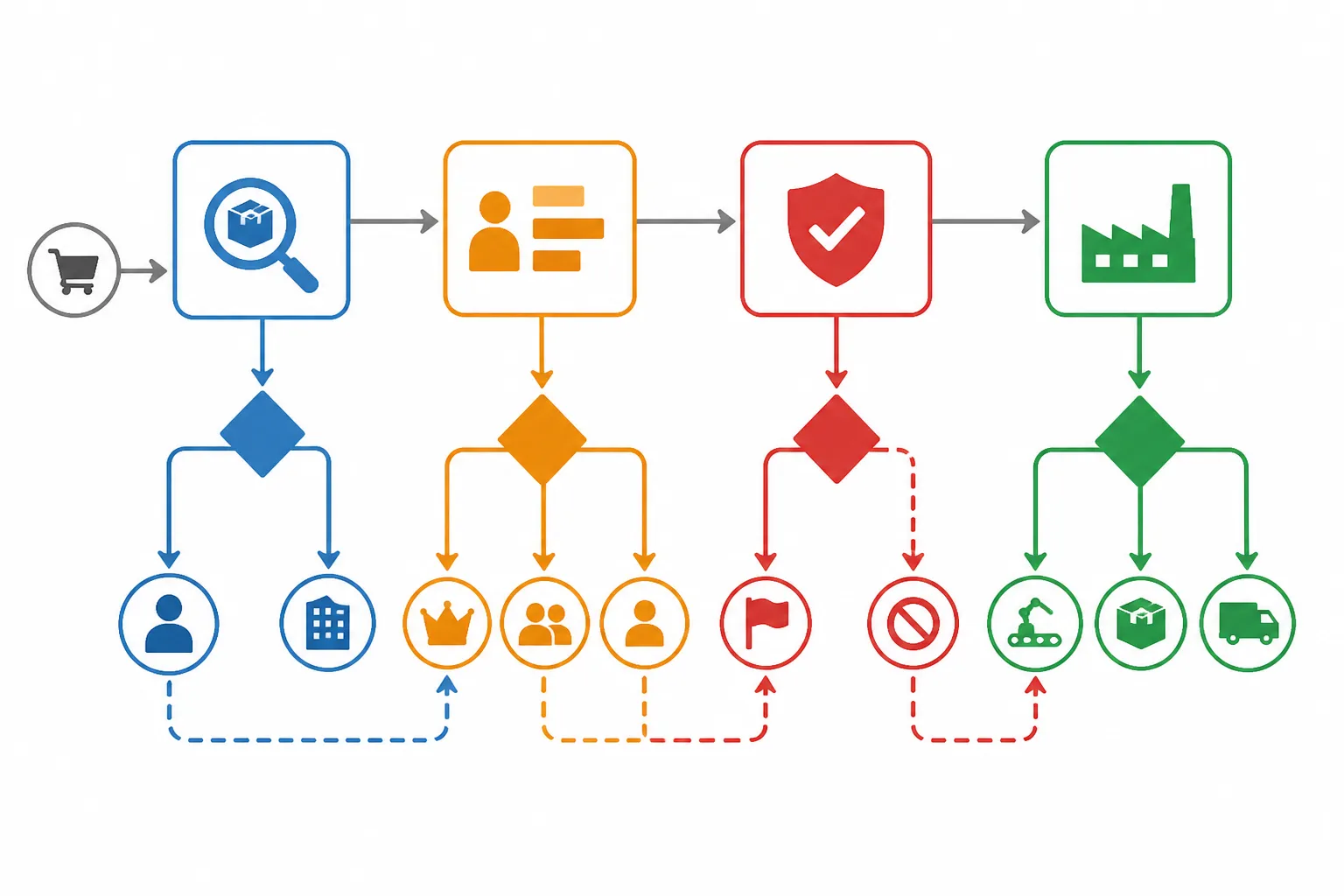
Done well, order classification is the intake spine of your entire export operation. It answers four questions automatically:
- What kind of order is this? (sample / pilot / blanket PO / spot / DTC micro-batch)
- Who is the buyer, and what tier are they? (new lead / repeat customer / key account / marketplace platform)
- What does production need to know immediately? (HS code, material spec, certification requirement)
- What SLA applies? (standard lead time vs. expedited vs. seasonal peak)
The buying decision you're making is: which platform or system handles this classification reliably, at scale, across multiple languages and channels?
Key Decision Factors
1. Classification Rule Engine — Depth and Flexibility
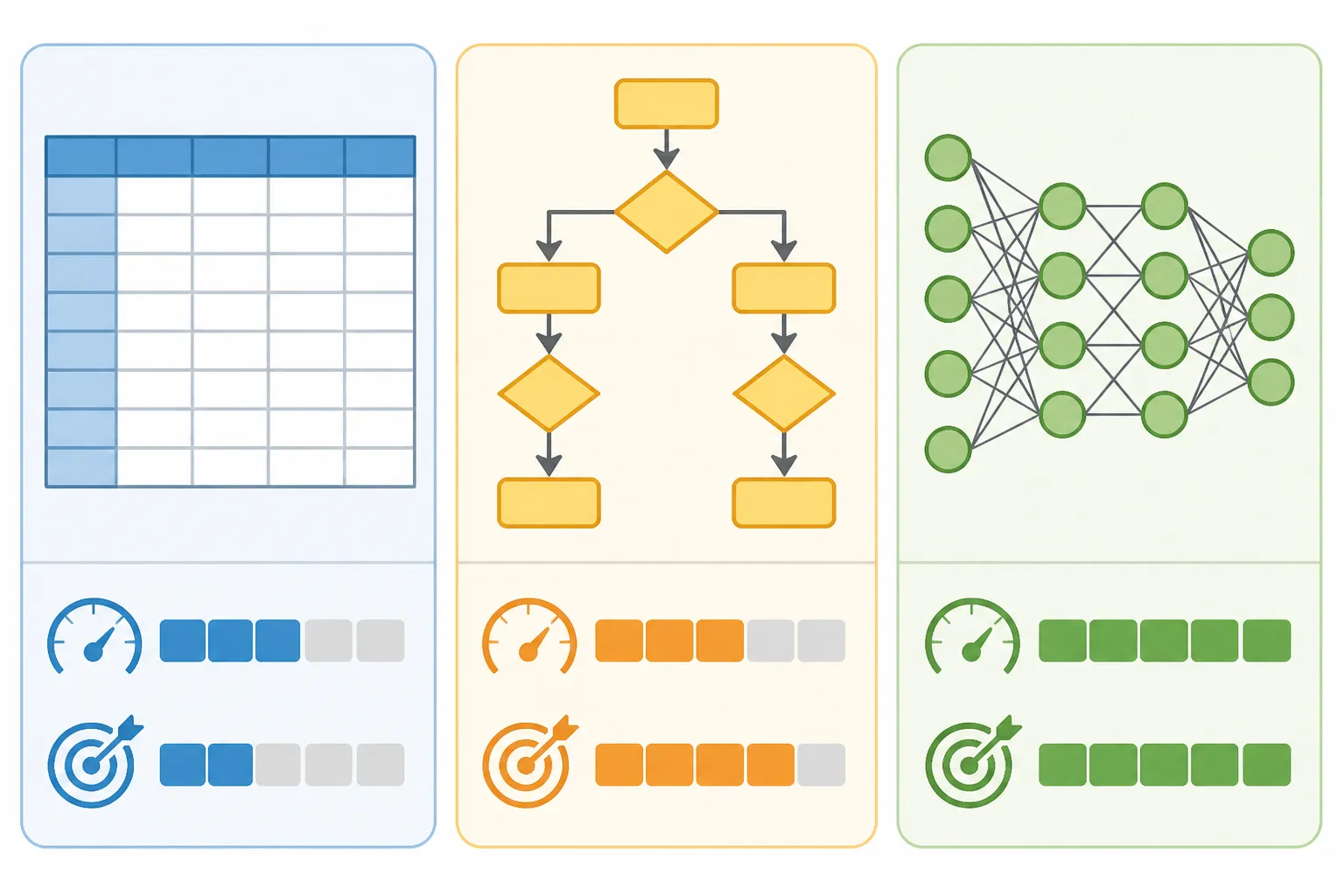
What to evaluate: Can the system classify by multiple simultaneous dimensions (order type + product category + buyer geography + compliance zone) rather than a single tag? Does it support both rule-based logic (if MOQ < 50 units → sample tier) and ML-assisted classification for ambiguous inquiries?
What "good" looks like: A configurable rule engine that lets your ops team define classification hierarchies without engineering support. You should be able to add a new product line or a new buyer tier in under 15 minutes. AI-assisted classification should flag low-confidence matches for human review rather than silently misfiling them.
Watch out for: Systems that only support flat, single-label tagging. One tag is not enough for cross-border complexity.
2. Multilingual Inquiry Parsing
What to evaluate: Inbound orders arrive in English, Mandarin, Arabic, Spanish, and increasingly via voice notes or social DMs. Can the classification engine parse intent and extract structured data (SKU, quantity, delivery country, certification ask) from unstructured multilingual text?
What "good" looks like: Native NLP across at least Mandarin, English, Spanish, and Arabic. Structured field extraction — not just language detection — so "我需要500个定制包装" correctly populates Quantity=500, Type=ODM, Packaging=custom, without manual re-entry. Platforms like Link4a's Inbox handle 24/7 multilingual inquiry parsing specifically for factory-side export workflows.
Watch out for: "Multilingual" systems that are actually English-first with machine translation bolted on. Translation errors upstream corrupt every downstream classification.
3. Channel Integration Breadth
What to evaluate: Where do your orders originate? Email, Alibaba, independent B2B site, WhatsApp, TikTok Shop, Amazon, direct API from buyer's ERP? The classification system must ingest from all active channels without requiring buyers to change their behavior.
What "good" looks like: Native connectors or webhooks for your top five channels, plus an open API for custom integrations. Orders from a buyer's ERP should arrive pre-structured; orders from social DMs should be parsed and enriched before classification. A unified inbox that normalizes all channels into a single classification queue eliminates the "which spreadsheet is this on?" problem.
Watch out for: Vendors who call an email-to-form parser "omnichannel." Ask for a live demo with an unstructured WhatsApp message and watch what happens.
4. Compliance and HS Code Tagging
What to evaluate: For cross-border shipments, classification must include trade compliance dimensions: HS code assignment, destination country import restrictions, required certifications (CE, FCC, FDA, REACH, RoHS), and dual-use goods flags. Manual HS code lookup is a $500/hour mistake waiting to happen.
What "good" looks like: Automated HS code suggestion based on product description, with confidence scoring and human-review flags for novel SKUs. Integration with a maintained compliance database that updates when regulations change. Export control screening against restricted-party lists.
Watch out for: Systems that provide HS code "suggestions" from a static 2018 database. Trade classification rules change; your system must keep pace.
5. Integration with Your Production and ERP Systems
What to evaluate: A classified order that lives in a silo is useless. The system must push classification outputs — order type, priority tier, BOM pointers, lead time SLA, compliance tags — directly into your production planning, inventory, and ERP systems in real time.
What "good" looks like: Pre-built connectors for common factory ERP platforms, plus a well-documented REST API. Bi-directional sync: when production updates status, the classification record should reflect it. No re-keying. No "nightly batch export to CSV."
Watch out for: Vendors who describe integration as "export to Excel and import into your ERP." That is not integration.
6. Scalability Under Peak Volume
What to evaluate: Cross-border exporters experience brutal seasonality — Q4 holiday rush, Chinese New Year pre-buys, viral TikTok traffic spikes. Your classification system needs to handle 10× normal inquiry volume without queue backup or classification errors.
What "good" looks like: Cloud-native architecture with auto-scaling. Published throughput benchmarks. SLA guarantees on classification latency (e.g., 95th-percentile classification in under 3 seconds). Link4a's Match engine, for instance, targets supplier-to-buyer matching in under 3 seconds even at platform-wide peak load — classification infrastructure should meet the same standard.
Watch out for: On-premise systems or single-region SaaS that require manual capacity planning. Ask: "What happened to your system performance in November of last year?"
7. Reporting, Analytics, and Feedback Loops
What to evaluate: Classification data is a strategic asset. Which order types have the highest conversion rate? Which buyer tiers generate the most repeat business? Which product categories carry the highest compliance risk? Your system should surface this intelligence, not just store it.
What "good" looks like: Real-time dashboards with filterable order classification breakdowns, conversion funnel by order type, and exception reporting (misclassified orders, SLA breaches, compliance flags). Exportable to BI tools. A feedback loop that improves ML classification accuracy over time based on corrections.
Watch out for: Vendors who can only show you counts. Counts are a starting point; actionable classification analytics require drill-down, cohort comparison, and trend lines.
8. Vendor Stability and Support SLAs
What to evaluate: A classification system failure at peak season can halt your entire fulfillment operation. Vendor financial stability, support response times, and escalation paths matter as much as features.
What "good" looks like: Defined support tiers with contractual SLAs (P1 issues resolved in under 4 hours), a dedicated account manager for mid-market+ contracts, and a published uptime SLA of 99.9%+. Reference customers in cross-border manufacturing you can actually call.
Watch out for: Startups with a single support email and no published uptime history. Also watch for vendors who count "business hours" support as 24/7.
Budget Tiers
| Tier | Typical Annual Price | What You Get |
|---|---|---|
| Entry | $0–$3,000 | Manual-assisted classification with rule templates; single-channel intake (email/form); basic tagging; no compliance automation; suitable for <50 orders/month |
| Mid-Market | $3,000–$18,000 | Multi-channel intake with AI parsing; configurable rule engine; HS code suggestions; ERP export via API; dashboards; multilingual support for 2–3 languages; up to ~500 orders/month |
| Growth | $18,000–$60,000 | Full AI-native classification; omnichannel ingestion including social; compliance tagging with live regulatory updates; bi-directional ERP sync; 5+ languages; SLA guarantees; dedicated CSM; 500–5,000 orders/month |
| Enterprise | $60,000+ | Custom ML models trained on your product catalog; white-glove onboarding; restricted-party screening; global compliance database; custom integrations; audit trails for regulatory review; unlimited volume; 99.9%+ uptime SLA |
Note: AI-native platforms that bundle classification with inquiry management, site deployment, and traffic generation (such as Link4a) often deliver Growth-tier classification capability within a platform price that covers multiple functions — evaluate total cost of ownership across your full workflow stack, not classification in isolation.

Red Flags to Walk Away From
- No live demo with your actual data. Any vendor unwilling to run a pilot classification against a sample of your real order history is hiding accuracy problems.
- "Multilingual" means "we translate to English first." Upstream translation errors compound into downstream classification errors. Demand native-language NLP.
- Classification latency over 10 seconds. At scale, queue backup from slow classification creates bottlenecks that negate the system's value entirely.
- No audit trail. If you cannot see why an order was classified a certain way, you cannot debug errors or satisfy compliance reviews. Black-box classification is a liability.
- Flat, single-label taxonomy. One tag per order is insufficient for cross-border trade complexity. Walk away from any system that cannot classify simultaneously across type, tier, compliance zone, and SLA.
- No published uptime SLA or reference customers in manufacturing. Classification infrastructure is operational infrastructure. Treat it like one.
- Locked data export. Your order classification history is your business intelligence. Any vendor who makes it difficult or expensive to export your own data owns you.
Buying Process Checklist
- Define requirements — Document your current order types, intake channels, languages, ERP systems, compliance markets, and monthly volume. Identify your top three pain points (misrouting, compliance gaps, language barriers).
- Set evaluation criteria weights — Score accuracy, integration depth, multilingual capability, compliance features, scalability, and support on a 1–5 scale weighted by your priorities before you talk to any vendor.
- Shortlist vendors — Identify 3–5 candidates that cover your intake channels and languages. Prioritize vendors with reference customers in cross-border manufacturing.
- Request a structured demo — Provide the vendor with 20 real (anonymized) orders from your history. Watch the system classify them. Measure accuracy. Ask how it handles the ones it gets wrong.
- Run a paid pilot or POC — 30–60 day pilot on live order volume. Define success metrics upfront: classification accuracy rate, latency, exception rate, integration stability.
- Reference checks — Speak with two or three customers at similar scale in cross-border trade. Ask specifically about peak-season performance and support responsiveness.
- Contract negotiation — Lock in: uptime SLA with penalty clauses, data portability rights, price escalation caps, and a defined roadmap for compliance database updates. Do not accept "we update our system regularly" — get a frequency and scope in writing.
Questions to Ask Vendors
- What is your classification accuracy rate on ambiguous, multilingual inquiries, and how is it measured?
- How does your system handle an order type it has never seen before — does it flag for review, guess, or fail?
- Which languages does your NLP engine support natively (not via translation)?
- How do you keep your compliance and HS code database current, and who is responsible when a regulatory change causes a misclassification?
- What is your documented uptime SLA, and what is the compensation structure if you miss it?
- Can you show me a bi-directional integration with [our ERP] working in your demo environment?
- What does your classification latency look like at 10× our average daily volume?
- How does a factory operator — not a developer — add a new product line or buyer tier to the classification rules?
- What data does your system retain about our orders, where is it stored, and how do we export it if we leave?
- What did your system performance look like during the last Q4 peak, and do you have metrics to share?
- How many cross-border manufacturing customers do you have at our order volume, and can we speak with two of them?
- What is included in your standard onboarding, and what is the typical time-to-live for a factory at our scale?
Recommended Next Steps
Order classification is not a standalone purchase — it is the intake layer that determines the quality of every downstream workflow: quoting, production scheduling, compliance, fulfillment, and customer communication. Buying the wrong system (or patching the gap with spreadsheets for another quarter) compounds into delayed shipments, compliance incidents, and lost repeat buyers.
Here is what to do this week:
- Audit your current classification failure rate. Pull last quarter's orders. Count how many were misrouted, missed SLAs, or required manual correction. Attach a cost figure to each category. That number is your budget floor.
- Map your intake channels and languages. If you do not know exactly where your orders originate or in what languages, you cannot evaluate a vendor's capability honestly.
- Talk to a platform that has already solved this for factories at your scale. Link4a's AI-native infrastructure — including Inbox (multilingual inquiry management), Match (3-second supplier matchmaking), and Sitebox (brand-to-deploy independent sites in under 30 minutes) — is purpose-built for Chinese OEM/ODM exporters managing exactly this complexity. Over 300 factories and 1,400+ live sites already run on this stack.
Ready to see how order classification fits into a complete export workflow?
Request a Quote or Live Demo → link4a.com
Tell them your current monthly order volume, your top intake channels, and your primary export markets. They will show you exactly how classification, inquiry handling, and traffic generation work as a single system — not a stack of plugins.
This guide is updated periodically as AI-native trade infrastructure capabilities evolve. Share with your operations manager or export team lead before your next vendor evaluation.