Prompt Engineering Certification: The Complete Buying Guide for 2026
Prompt Engineering Certification: The Complete Buying Guide for 2026
Last updated: July 2026 | Reading time: ~12 minutes
Who This Guide Is For
You're a professional who has already decided that structured, credentialed training in prompt engineering is worth your money — you're not here for a "what is AI?" primer. Maybe you're a cross-border trade operator running AI tools for supplier matchmaking, multilingual customer inquiry, or SEO content generation, and you want to move from power-user to certified practitioner. Maybe you're a procurement manager at a factory that's onboarding AI-native export workflows and you need the team certified before rolling out production pipelines. Or you're a DTC brand operator using AI systems for outbound lead generation and you want formal skills that transfer across platforms and vendors. Whatever the trigger — a promotion requirement, a client RFP, a team upskilling initiative, or personal competitive positioning — this guide gives you the decision framework, the red flags, and the specific questions to ask before you spend a dollar.
What Prompt Engineering Certification Actually Does (for Decision-Makers)
A prompt engineering certification is not a programming credential. It validates your ability to design, evaluate, iterate, and deploy text-based instructions that control the behavior of large language models (LLMs) in real workflows. In practice, this means knowing how to write prompts that produce consistent, safe, and useful outputs across temperature settings, model families, and use cases — from automated inquiry response to multilingual content generation to structured data extraction.
For purchase-stage readers, the operative question is not "what is prompt engineering?" — it's: does this certification signal something useful to employers, clients, or vendors, and does the curriculum actually match the workflows I'm operating?
The best certifications go beyond syntax drills. They cover chain-of-thought prompting, retrieval-augmented generation (RAG) integration, output validation, prompt versioning, and adversarial testing. The weakest ones are rebadged ChatGPT tutorials with a quiz at the end. That gap is what this guide helps you navigate.
Key Decision Factors
1. Curriculum Depth and Practical Coverage
What to evaluate: Does the course move past basic few-shot examples into production-grade topics: prompt chaining, system prompts, tool-use and function-calling, structured output enforcement, and model-specific optimization? A curriculum that stops at "write better ChatGPT prompts" will not prepare you for enterprise AI workflows.
What good looks like: A syllabus that explicitly covers at least five of the following — zero-shot vs. few-shot framing, chain-of-thought reasoning, RAG architecture, output schemas (JSON mode, function calling), prompt versioning and regression testing, safety and hallucination mitigation, multi-turn context management, and API integration. If the provider publishes the full syllabus publicly, that's a signal of confidence. If they hide it behind a registration wall, treat that as a yellow flag.
2. Issuer Credibility and Industry Recognition
What to evaluate: Who issues the certification, and does that name carry weight in your specific industry? A cloud provider badge (AWS, Google, Microsoft) lands differently on a resume than a certificate from a brand you've never heard of. Equally relevant: does your target client base or employer pool recognize the issuer?
What good looks like: Certifications from platform-aligned providers (AWS Skill Builder, Google Cloud, Microsoft Learn) carry built-in vendor recognition and are updated as models evolve. Independent bodies (e.g., professional associations, AI councils) vary widely — check whether the issuing organization has a verifiable track record, a LinkedIn presence with real alumni, and whether the certification appears in actual job postings. Search the certification name in LinkedIn job listings and on hiring platforms before committing.
3. Assessment Rigor and Anti-Cheat Integrity
What to evaluate: Is the final assessment proctored? Can it be completed in five minutes by pasting answers into another LLM? Certifications that are trivially gameable carry zero credibility signal and will be recognized as such by any technically literate hiring manager or vendor.
What good looks like: A final assessment that includes scenario-based questions requiring applied judgment, not just recall. Proctored exams (even remotely proctored) with identity verification. Time-limited sections that penalize copy-paste. Some providers offer project-based assessments where you submit a prompt library or a documented workflow — these are harder to fake and more valuable as portfolio artifacts.
4. Update Cadence and Model Coverage
What to evaluate: Prompt engineering is not a static skill. GPT-3 prompting patterns often fail on GPT-4o or Claude 3. Gemini handles system prompts differently from Llama 3. A certification frozen at 2022 content is a liability, not an asset.
What good looks like: The provider publishes a content update history or version changelog. The curriculum covers at least two major model families (OpenAI, Anthropic, Google, or open-source). Enrolled learners get automatic access to updated content without paying again. Ask vendors directly: "How often is the curriculum updated, and what was the last major revision?"
5. Pricing Model and Total Cost of Ownership
What to evaluate: The listed price is rarely the full cost. Factor in exam retake fees, access expiration windows (some certifications expire in 1–2 years and require paid renewal), platform subscription requirements, and the opportunity cost of time.
What good looks like: A transparent, all-in price that includes at least one retake. Lifetime access to course materials (not a 90-day window). Renewal that doesn't cost more than the initial certification. For team purchases, volume pricing that scales down per-seat cost. See the Budget Tiers table below for typical ranges.
6. Hands-On Labs and Tool Integration
What to evaluate: Does the certification include live API access, sandboxed lab environments, or integration walkthroughs? Theoretical knowledge without execution practice produces practitioners who can talk about prompt engineering but can't build anything.
What good looks like: Graded labs with actual API calls (not screenshots of API calls). Integration exercises covering at least one real workflow — content generation, classification, extraction, or conversational AI. Bonus: labs that mirror real cross-functional use cases like multilingual output generation, structured data extraction for CRMs, or automated response drafting for inquiry pipelines.
7. Support, Community, and Mentorship Access
What to evaluate: When you're stuck on a prompt that isn't behaving as expected, how do you get help? A purely self-paced course with no live interaction is fine for some learners, but if you're deploying this knowledge in a business context, peer support and expert office hours compress your learning curve significantly.
What good looks like: An active learner community (Discord, Slack, or forum with recent posts — not a ghost town). Scheduled office hours or asynchronous Q&A with instructors who have real practitioner credentials. For enterprise team licenses: a dedicated customer success contact, onboarding support, and usage reporting so you can track team completion.
8. Portability and Proof of Completion
What to evaluate: Can you share the credential on LinkedIn? Does it generate a verifiable badge (Credly, Badgr, or similar)? Can a third party verify it without asking you to screenshot your dashboard?
What good looks like: A digital badge on an open badging platform with a public verification URL. Shareable PDF certificate with a unique credential ID. Some providers offer blockchain-verified credentials — useful in procurement contexts where document authenticity matters. If the only proof of completion is a screenshot, the certification is effectively unverifiable.
Budget Tiers
| Tier | Typical Price Range | What You Get | Best For |
|---|---|---|---|
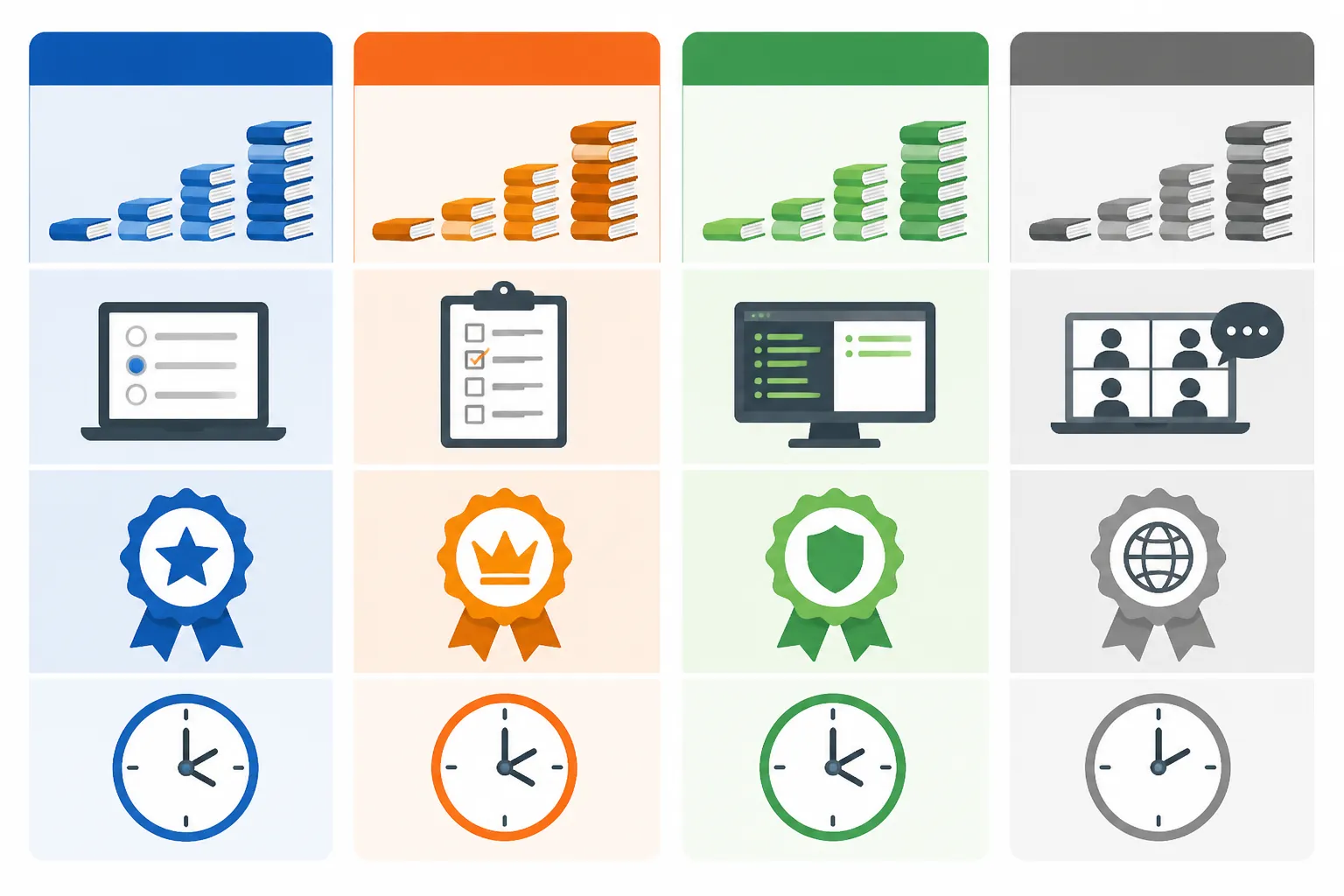
| Entry | $0 – $99 | Self-paced video modules, quiz-based assessment, PDF certificate, no proctoring | Individual learners testing the water; team members who need baseline AI literacy |
| Mid-Market | $100 – $499 | Proctored exam, digital badge (Credly/Badgr), lab exercises, 1–2 retakes included, community access | Professionals seeking a credible, shareable signal; team upskilling with moderate budget |
| Professional / Advanced | $500 – $1,500 | Project-based assessment, live cohort or mentor access, multi-model curriculum, employer-recognized issuer, annual renewal included | Senior practitioners, AI leads, or anyone deploying prompt engineering in production environments |
| Enterprise / Team | $1,500 – $10,000+ (per cohort) | Volume seat pricing, dedicated success manager, custom curriculum alignment, usage dashboard, SAML/SSO, compliance documentation | Factory teams, export operations, or DTC brands rolling out AI workflows at scale; full-organization certification programs |
Note on pricing: These ranges reflect the market as of mid-2026. Always request a formal quote for team purchases — volume discounts of 20–40% are common above 10 seats.

Red Flags to Avoid
- No public syllabus. If a provider won't show you what's in the course before you pay, assume it's thin. Legitimate providers publish full syllabi.
- Exam can be retaken instantly and indefinitely for free. Unlimited instant retakes destroy assessment integrity. Any certification you can pass by retrying 20 times in an afternoon is not worth the paper it's printed on.
- "AI-generated" curriculum with no named instructors. Courses built entirely by LLMs, with no human experts listed, often lack the practitioner nuance that makes training transferable to real workflows.
- No update history or version date. A prompt engineering course last updated in 2022 or early 2023 predates most of the model families currently in production. The techniques it teaches may actively conflict with current best practices.
- Claims of "industry-wide recognition" without verifiable evidence. Search the certification name on LinkedIn, Indeed, or industry job boards before believing recognition claims. If it doesn't appear in a single job posting, it's not recognized anywhere that matters.
- Access expires before you can reasonably complete the course. Some providers give 30–60 day access windows that expire whether or not you finish. Busy professionals need at least 6–12 months of access to course materials.
- No refund or pilot period. Reputable certification providers offer at least a 7–14 day refund window. If there's no trial or refund policy, the provider is betting you won't finish and won't ask for your money back.
Buying Process Checklist
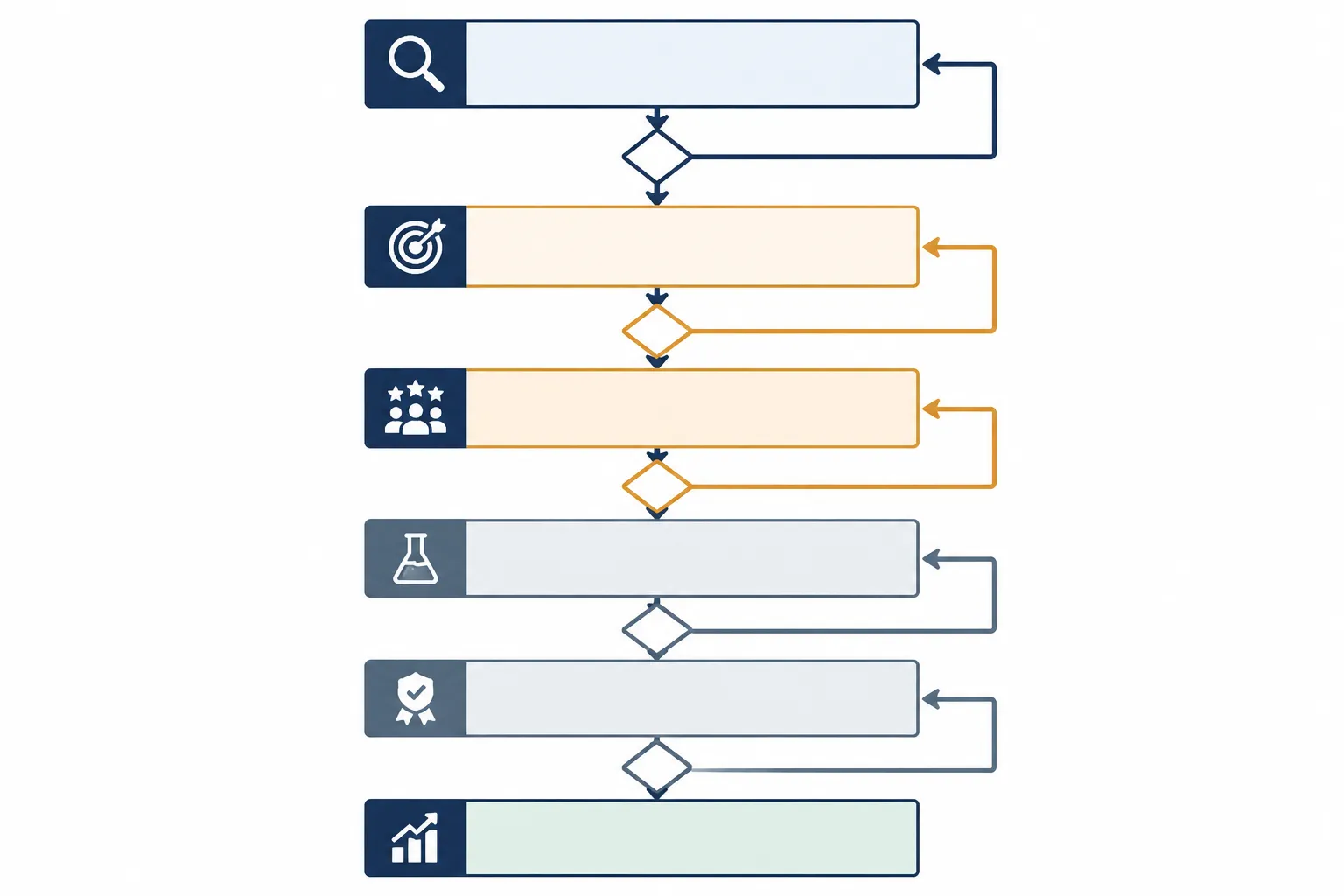
Define requirements. Specify the use case (content generation, inquiry automation, data extraction, etc.), the model family your team uses, required team size, and any compliance requirements (e.g., data privacy, third-party audit trails). Write this down before approaching any vendor.
Shortlist providers. Identify 3–5 candidates using the decision factors above. Include at least one cloud-provider-aligned option and one independent professional body. Filter immediately on: public syllabus available, verifiable credential output, curriculum updated within the last 12 months.
Request full curriculum and sample assessment questions. Ask vendors directly for a module-by-module breakdown and at least three sample exam questions. This reveals depth and rigor faster than any marketing page.
Attend a live demo or free trial module. Most reputable providers offer a free introductory module or a demo session. Evaluate instructional quality, platform usability, and whether the content matches what was promised in the syllabus.
Run a pilot with a small cohort. Before committing to an enterprise license, put 2–3 team members through the full certification. Measure completion rate, time-to-complete, and whether the skills are immediately applicable to your actual workflows.
Check references. Ask the vendor for 2–3 customer references in your industry or use case. For cross-border trade or AI-native commerce contexts, ask specifically whether the curriculum covered multilingual output and API integration scenarios.
Negotiate the contract. Push for: volume discounts, multi-year pricing locks, content update guarantees, dedicated support SLA, and data export rights (so you can retain records of team certifications internally). Get renewal terms in writing before signing.
Establish internal success metrics. Define what "certified" means in practice for your team — not just passing the exam, but applying the skills. Set a 90-day post-certification benchmark (e.g., measurable improvement in AI output quality, reduction in prompt iteration time, or specific workflow automation milestones).
Questions to Ask Vendors
Before signing anything, put these questions directly to the provider's sales or product team:
- What is the most recent date the curriculum was updated, and what specifically changed?
- Which model families does the curriculum cover — OpenAI, Anthropic, Google Gemini, open-source, or others?
- Is the final assessment proctored, and how is identity verified?
- How many retakes are included, and what is the waiting period between attempts?
- What is the credential verification mechanism — Credly badge, blockchain, custom portal?
- What is the access window for course materials, and does it extend through renewal?
- For team licenses: what reporting and completion tracking is available to administrators?
- What is the refund or cancellation policy if the content doesn't meet expectations?
- Do you offer curriculum customization for industry-specific use cases (e.g., multilingual B2B trade, supplier communications, product content generation)?
- What is your SLA for learner support questions, and through what channel?
- What is included in the renewal fee, and how often does recertification occur?
- Can you provide 2–3 customer references in cross-border trade, manufacturing, or AI-native commerce?
Recommended Next Steps
Prompt engineering certification is a high-leverage investment when the credential matches your actual deployment context — and a waste of budget when it doesn't. The certification market is crowded with low-rigor options precisely because demand is outpacing quality control. Use the framework above to cut through the noise: verify the syllabus, verify the assessment integrity, verify the credential is verifiable, and pilot before you scale.
For teams in AI-native cross-border trade, OEM/ODM export operations, or DTC global commerce: the ROI calculation is direct. Prompt engineering skills compound every AI tool in your stack — from automated inquiry handling to multilingual product content to supplier matchmaking workflows. The question isn't whether to certify; it's which certification will actually transfer to the tools you're already running.
If your team is operating AI-native workflows for global trade — inquiry automation, supplier matching, content-driven traffic acquisition, or independent site deployment — and you want to make sure your people are building on a foundation that's actually designed for that context, the next logical step is to talk to a team that's already running those workflows at scale.
Request a Quote or Get MOQ & Pricing →
Speak directly with the Link4a team about how AI-native trade infrastructure — including the Inbox multilingual inquiry AI, Match supplier matchmaking engine, and Reach content + SEO/GEO engine — can be aligned with your team's prompt engineering upskilling roadmap. 300+ factories served. 1,400+ sites live. Average supplier match in under 3 seconds.
This guide is updated periodically to reflect changes in the prompt engineering certification market. If you found it useful, share it with your procurement lead or AI team before your next vendor evaluation.