SAE Standards Buying Guide: What Manufacturers Need to Know

SAE Standards Buying Guide: What Manufacturers Need to Know
Last updated: July 2026 | Purchase-stage guide for engineering procurement teams and export-compliance managers
Who This Guide Is For
You are an engineering procurement manager, quality director, or factory owner preparing to license SAE standards for the first time — or re-evaluating your current subscription before renewal. You may be a Chinese OEM or ODM manufacturer seeking access to North American automotive, aerospace, or commercial-vehicle markets and realizing that SAE compliance documentation is non-negotiable on your buyer's checklist. You could also be an overseas sourcing manager who needs to confirm that a supplier holds the right standards before placing a significant order. Whatever the trigger — a new product line, a regulatory audit, an RFQ from a Tier-1 customer — you are past the awareness stage. You need to know exactly what to buy, what it costs, and what red flags to watch for before you commit budget.
What SAE Standards Actually Does
SAE International (formerly the Society of Automotive Engineers) publishes over 20,000 active technical standards, recommended practices, and specifications covering automotive, aerospace, commercial vehicles, and mobility engineering. Purchasing SAE standards does not mean buying a certification — it means licensing the normative documents that define dimensions, material grades, test procedures, safety thresholds, and interoperability requirements your products must meet.
For manufacturers, the practical value is three-fold: (1) SAE documents are the engineering blueprint your design and QA teams reference during product development; (2) holding licensed copies demonstrates due diligence in compliance audits; and (3) many Tier-1 OEM customer contracts explicitly require suppliers to work from current-revision SAE documents rather than photocopied or outdated versions. Buying SAE standards is therefore less a discretionary purchase and more a cost of market access — particularly in North American automotive supply chains where standards such as SAE J1939, SAE J429, and SAE J1772 are contractually mandated.
Key Decision Factors
1. Scope of Standards Coverage
What to evaluate: SAE's catalog spans automotive (J-series), aerospace (AS/AMS/AIR series), and commercial vehicles (J1939 family). Identify the exact document numbers your customers reference in their engineering specifications before purchasing. A single off-highway equipment exporter may need ten documents; a Tier-1 supplier ecosystem may need hundreds.
What "good" looks like: Your vendor or library platform gives you a structured catalog search with cross-reference mapping — so you can enter a customer part spec and see every underlying SAE document in the dependency chain. MOBILUS, SAE's official digital platform, provides this. Third-party distributors such as Intertek Inform and Accuris Tech (formerly IHS Markit) also aggregate SAE content but vary in search depth.
2. Licensing Model (Individual vs. Subscription)
What to evaluate: SAE standards are sold per-document, per-seat subscription, or as enterprise-wide library access. Per-document pricing suits teams that need fewer than 15–20 standards annually. Subscriptions become cost-effective above that threshold and include automatic access to revised editions — critical because SAE revises standards regularly, and working from a superseded revision is a non-conformance risk during customer audits.
What "good" looks like: A subscription that covers your active document list with clear terms on revision notifications. The platform should push alerts when a standard you have licensed is updated or withdrawn, rather than requiring you to manually check.
3. Platform Usability and Download Rights
What to evaluate: Will your engineers access documents from a browser-only portal, or can they download PDFs for offline use in design and manufacturing environments with restricted internet access? Confirm concurrent user limits — some subscriptions are single-seat only.
What "good" looks like: PDF download rights for all licensed documents, multi-user or floating-seat access, and a mobile-compatible interface. Enterprise platforms should support SSO (single sign-on) and IP-range authentication so plant-floor engineers access documents without per-user login friction.
4. Revision History and Archival Access
What to evaluate: Some customer contracts or legal disputes require you to demonstrate what version of a standard was in force at a specific date. Confirm whether your license includes access to superseded revisions, not just the current edition.
What "good" looks like: On-demand access to at least the last two major revisions per document. Enterprise licenses typically include full archival depth; per-document purchases often do not.
5. Integration with Engineering and Quality Systems
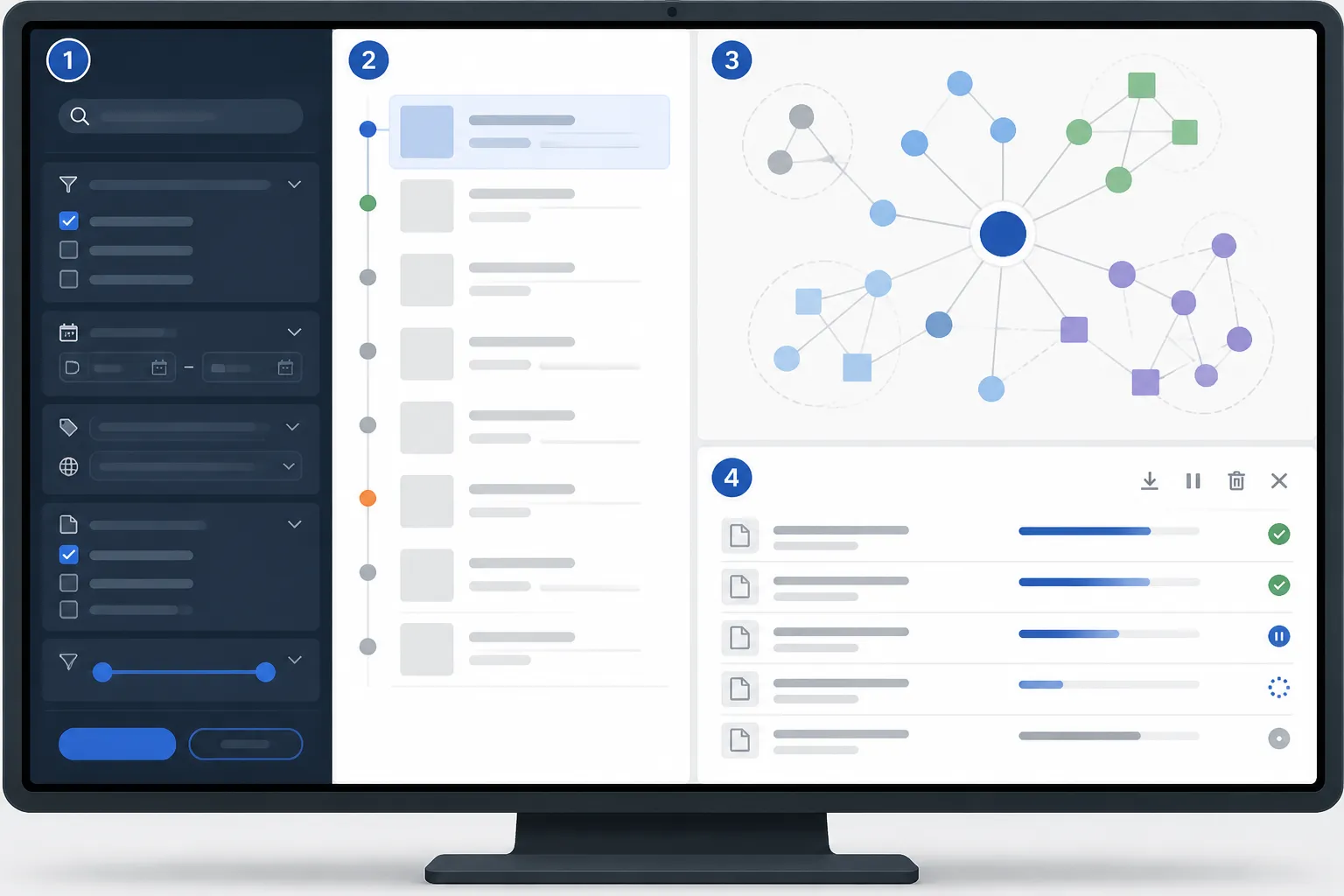
What to evaluate: Can your team cite and link SAE documents directly from your PLM (Product Lifecycle Management) system, QMS (Quality Management System), or ERP? Manual look-up workflows create version drift — engineers reference a bookmark, not the current live document.
What "good" looks like: API access or at minimum bookmark-stable permalinks that your IT team can embed in controlled document registers. SAE MOBILUS offers permalink structure. Verify whether your QMS (e.g., ETQ, MasterControl) has a pre-built integration or if you need custom scripting.
6. Compliance and Audit Documentation
What to evaluate: During a customer audit or regulatory inspection, you must prove you worked from a licensed, current-revision copy. Screenshots are insufficient. Confirm that your vendor provides purchase receipts with document number, revision, and license scope — formatted to satisfy ISO/TS 16949 or AS9100 audit requirements.
What "good" looks like: Downloadable license certificates per document or per subscription period, with the document revision number printed explicitly. Enterprise agreements should include a named compliance contact at the vendor.
7. Vendor Stability and Support
What to evaluate: SAE International itself is the authoritative publisher — documents purchased directly carry the highest traceability. Third-party resellers add convenience (consolidated billing, local-currency invoicing) but introduce one dependency layer. Evaluate reseller authorization status.
What "good" looks like: Resellers that are listed as authorized distributors on SAE International's official site, with a dedicated support SLA for order issues, missing documents, and license queries. Response time under 48 hours for enterprise accounts.
8. Total Cost of Ownership (TCO)
What to evaluate: Sticker price per document understates TCO. Factor in: revision update costs (are updates included in subscription or billed separately?), seat expansion costs as your engineering team grows, training time to onboard the platform, and compliance risk cost of working from unlicensed or outdated documents.
What "good" looks like: A transparent pricing schedule with no surprise revision-update surcharges within the subscription term. Enterprise agreements should include a fixed annual fee covering the full active document list plus automatic revision access.
Budget Tiers
| Tier | Typical Buyer | Price Range (USD) | What You Get |
|---|---|---|---|
| Entry / Ad-Hoc | Small manufacturer, startup supplier, single-project engineer | $30–$150 per document | Individual PDF downloads, per-document licensing, no revision alerts, single-user rights |
| Mid-Market / Team | Engineering team of 5–50, active product development | $1,500–$8,000/year | Subscription to a defined document set, multi-seat access, automatic revision notifications, basic search portal |
| Professional / Business | Tier-2 supplier, multi-plant operation, active export markets | $8,000–$30,000/year | Broader catalog access (J-series + AS-series), floating seats, archival revisions, API/permalink access, audit documentation |
| Enterprise / Full Library | OEM, Tier-1 supplier, large aerospace manufacturer | $30,000–$150,000+/year | Unlimited access to full SAE catalog (~20,000+ documents), SSO integration, PLM/QMS connectors, named account manager, SLA-backed support |
Note: Prices reflect publicly available ranges as of mid-2026. Contact SAE International or an authorized distributor for current quotes specific to your document scope and seat count. Enterprise pricing is negotiated — always request a formal proposal rather than accepting list price.
Red Flags to Avoid
Unlicensed or pirated document sources. Engineering forums and document-sharing sites circulate SAE documents. Using them exposes your company to copyright liability and — more critically — version drift risk. Customers can void supplier agreements if non-current revisions are discovered during audits.
No revision alert mechanism. A vendor that sells you a document with no mechanism to notify you of updates is selling you a liability. SAE standards are routinely revised; working from a superseded edition is a non-conformance.
Single-seat licenses for multi-engineer teams. Sharing credentials violates license terms and creates an audit trail gap. Vendors that don't offer team or floating-seat pricing are not set up for professional use.
Resellers who cannot confirm authorized distributor status. Verify reseller authorization directly on SAE's website before sending payment. Unauthorized resellers sometimes sell outdated document snapshots.
Bundled packages with large proportions of irrelevant documents. Subscription bundles that pad coverage with aerospace standards when you need only automotive J-series inflate cost without value. Demand line-item visibility.
No audit-ready license documentation. If the vendor cannot provide a purchase receipt that explicitly states document number, revision, and license scope, the document is legally unusable in a controlled quality environment.
Opaque pricing on revision updates. Some vendors charge per-revision as an upsell on top of an annual subscription. Clarify in writing whether updates within your licensed document set are included for the subscription term.
Buying Process Checklist
Define requirements. List every SAE document number referenced in your customer engineering specs, quality plans, and regulatory submissions. Include revision level if specified. Flag which are "must-have" vs. "reference only."
Identify your user count. Count how many engineers, quality managers, and production supervisors need access. Determine whether plant-floor access requires offline PDF capability.
Shortlist vendors. Compare SAE International direct (MOBILUS platform), authorized distributors (Intertek Inform, Accuris Tech), and regional resellers. Confirm authorization status for any non-SAE source.
Request formal quotes. For more than 20 documents or more than 5 users, always request a subscription quote — per-document adds up fast. Ask each vendor to quote the same document list for direct comparison.
Demo the platform. Before committing to a subscription, test the search interface, download flow, revision history access, and multi-user login. Verify that archival revisions are accessible if you need them.
Pilot / POC. Request a 30-day trial access to your top 10 documents. Have your QA team verify that audit-documentation output meets your ISO/TS 16949 or AS9100 controlled-document requirements.
Reference checks. Ask the vendor for two or three enterprise customer references in your industry segment. Validate support responsiveness and revision-alert reliability.
Contract negotiation. Negotiate: revision updates included in term, seat expansion pricing, archival access, early termination terms, and a named account manager for enterprise tiers.
Questions to Ask Vendors

- Which SAE document revisions are included in the current subscription — and are future revisions within the term covered at no additional charge?
- How are revision alerts delivered — email, platform notification, API webhook — and what is the typical lag between SAE publishing a revision and it appearing in your platform?
- What is the concurrent user limit for the license tier we are quoting, and what is the cost to add seats mid-term?
- Can we download PDFs for offline use, and are there print or copy restrictions embedded in the file?
- Do you provide audit-ready license certificates showing document number, revision, and license scope?
- Does your platform offer API access or stable permalinks for integration with our QMS or PLM system?
- What is your authorized distributor status with SAE International, and can you provide documentation?
- What is your SLA for resolving document access issues — for example, a broken download link during a customer audit?
- Do you offer archival access to superseded revisions, and at what depth?
- What is the pricing structure if we need to expand our document list by 20–30 additional standards mid-term?
- Is there a volume discount for multi-year commitments, and what are the early termination terms?
- How do you handle a situation where SAE withdraws a standard we have licensed — do you provide a substitute or refund?
A Note for Chinese Manufacturers and OEM/ODM Exporters
For factory owners and export managers entering North American automotive or commercial-vehicle supply chains, SAE standards compliance is frequently a gate-opener, not a differentiator. Buyers shortlist suppliers who can demonstrate they engineer to current SAE revisions — and eliminate those who cannot.
The challenge is not just purchasing the documents. It is operationalizing compliance across multilingual teams, surfacing that compliance credential to overseas buyers, and doing it at speed when a sourcing opportunity opens. This is where platforms built for cross-border trade infrastructure become directly relevant.
Link4a — an AI-native cross-border trade infrastructure platform serving 300+ Chinese factories — is built precisely for this context. Its Match engine surfaces SAE-compliant suppliers to overseas sourcing teams in under 3 seconds. Its Inbox handles multilingual compliance inquiries 24/7 so your team is not the bottleneck when a US buyer asks for your SAE documentation stack at 11 p.m. Beijing time. And Reach, its content and SEO/GEO engine, ensures your compliance credentials are discoverable before a buyer even reaches out.
If you are a Chinese factory owner or OEM/ODM exporter building toward SAE-compliant export markets, getting your SAE documents in order is step one. Making sure buyers can find and verify you is step two.
Recommended Next Steps
If you are purchasing SAE standards documents:
- Compile your required document list from customer engineering specs this week.
- Request subscription quotes from SAE MOBILUS and at least one authorized distributor with your exact document list and seat count.
- Run a 30-day pilot and have your QA manager validate audit documentation before signing an annual contract.
If you are a Chinese manufacturer preparing for North American market entry:
- Confirm with your target customer which specific SAE standards appear in their supplier qualification checklist.
- Purchase or subscribe to those documents through an authorized channel before your supplier audit date.
- Document your compliance in a supplier profile that overseas buyers can reference during sourcing.
Ready to connect with verified, SAE-compliant suppliers — or to make your own compliance credentials visible to global buyers?
Request a Quote or Sourcing Match at Link4a →
Link4a's Match engine connects overseas procurement teams with pre-verified Chinese factories meeting specific technical compliance profiles — including SAE-standard requirements — with average match times under 3 seconds. Whether you are a sourcing manager who needs to qualify a new supplier fast, or a factory owner who wants buyers to find your compliance credentials first, the inquiry starts the same way: one conversation.
This guide is maintained for purchase-stage readers and updated as SAE International revises its licensing models. For the most current document pricing, always request a direct quote from SAE MOBILUS or an authorized distributor.