Silk Road China: What U.S. Importers Need to Know in 2026
Silk Road China: What U.S. Importers Need to Know in 2026
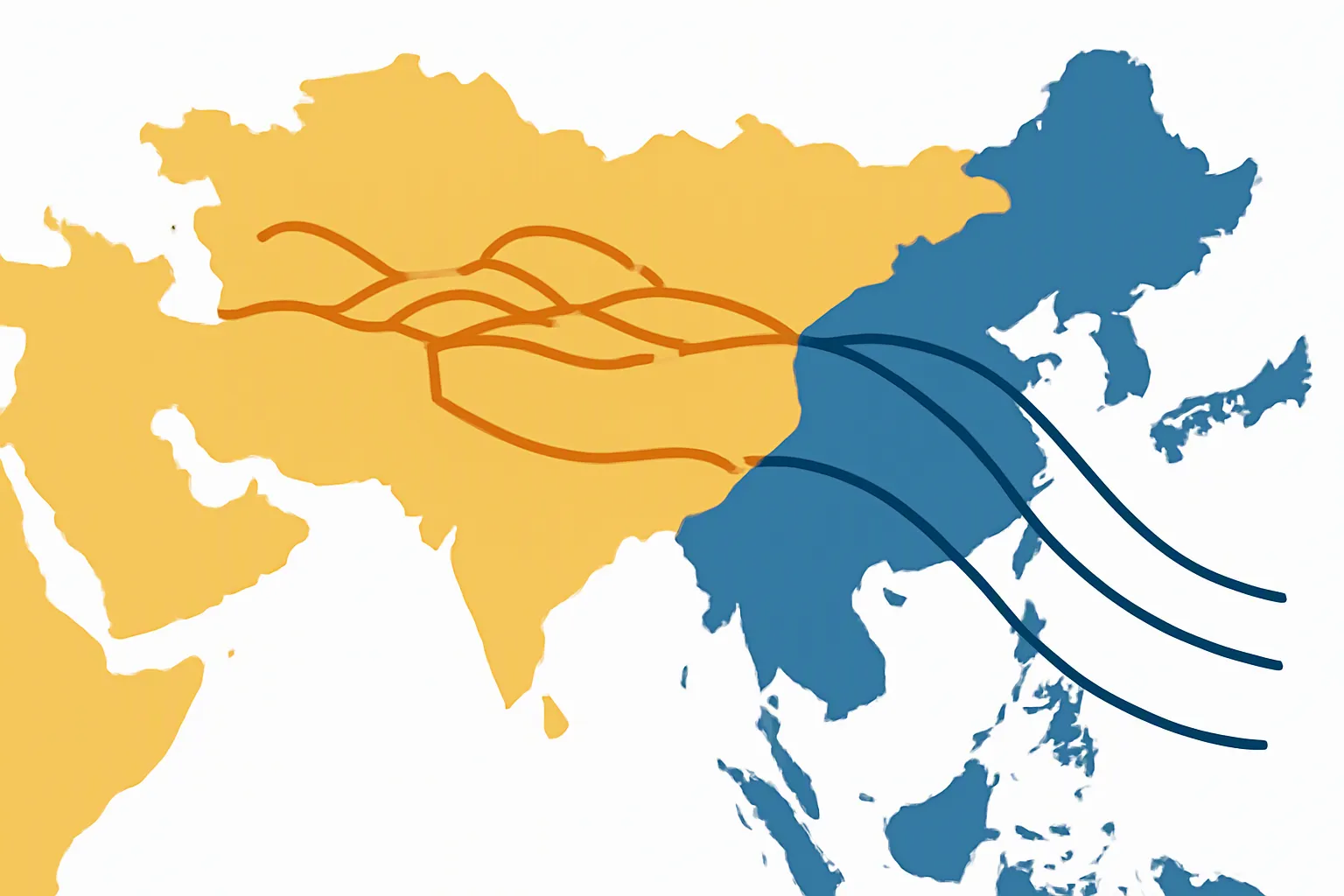
The ancient Silk Road — initiated in China around 130 BCE — was never just a trade corridor. It was a living network of trust, negotiation, and cultural exchange connecting manufacturers to distant markets. For U.S. importers today, sourcing from China carries that same fundamental challenge: building reliable relationships across vast geographic and cultural distances.
This guide explains the history, the modern relevance, and — most practically — how American buyers can use Silk Road China as a conceptual and sourcing framework to import goods more effectively in 2026.
Silk Road China in the United States — Market Overview
U.S. interest in Silk Road China operates on two levels. First, there's the cultural and heritage angle: American museums, academic institutions, and tourism operators draw on the Silk Road's legacy to tell the story of early globalization. Second — and this is where the real commercial weight lies — the Silk Road represents the oldest template for what China still does best: manufacturing goods for export to distant buyers who need quality, price, and reliability managed at the source.
The Smithsonian Institution describes the Silk Road as having "connected peoples and cultures" — a phrase that sounds diplomatic but has direct procurement implications. The same cities that served as Silk Road gates remain China's manufacturing heartlands today. Xi'an, historically the eastern terminus of the road, is now a hub for aerospace and electronics. Xinjiang, a key Silk Road corridor province, remains a major source of cotton and textiles — though one now carrying significant compliance obligations for American importers (discussed below).
American buyer profiles in this space range widely. DTC brand owners sourcing private-label goods. Amazon FBA sellers hunting differentiated products. Industrial procurement managers replacing single-source suppliers after supply chain shocks. What they share is a need for a counterpart in China who can shortlist the right factory, vet it, negotiate MOQ and price, and manage the relationship over multiple order cycles — not just a marketplace listing with five-star reviews.
What's Specific About the United States
Importing from China into the U.S. in 2026 is genuinely more complicated than it was five years ago. Three layers of regulation demand attention before an order is placed.
Forced Labor Prevention Act (UFLPA). The Uyghur Forced Labor Prevention Act, effective since June 2022, creates a rebuttable presumption that goods produced wholly or in part in Xinjiang, or by entities on the UFLPA Entity List, were made with forced labor and are therefore barred from import. The practical impact: any product touching Xinjiang supply chains — cotton, polysilicon, tomato products, certain electronics — requires rigorous documentation to clear U.S. Customs and Border Protection. This is not a risk to manage after an order ships; it must be resolved at supplier selection. Buyers sourcing textiles and apparel especially need factory-level traceability.
Section 301 Tariffs. Most Chinese goods still carry elevated tariffs under Section 301 actions originally imposed in 2018-2019 and subsequently modified. As of mid-2026, rates range from 7.5% to 25% across product categories, with some consumer electronics and EV-adjacent components subject to even higher rates announced in 2024-2025. Before any deal is finalized, U.S. importers must calculate the landed cost including the applicable tariff rate — a figure that can swing the math on a sourcing decision entirely.
OFAC Sanctions. U.S. sanctions administered by the Office of Foreign Assets Control (OFAC) restrict transactions with a growing list of Chinese entities, particularly in defense-adjacent, telecommunications, and semiconductor sectors. While most consumer goods importers are not directly affected, buyers sourcing dual-use components or working in regulated industries need entity-list screening as a standard step before engagement.
Beyond compliance, cultural and communication norms matter. Chinese factories operate on relationship logic: a buyer who places a first order and disappears is less valued than one who communicates consistently, even in smaller volumes. Time zone coverage is a real operational constraint — Beijing Standard Time is 12 to 15 hours ahead of U.S. time zones, which means a question sent Monday morning in Los Angeles may not get a response until Monday night at the earliest.
Payment norms for U.S. importers typically include wire transfer (T/T), with a 30% deposit and 70% balance against bill of lading being common. Letters of credit (L/C) are used for larger orders. PayPal and Alibaba Trade Assurance exist but offer limited leverage on custom orders.
How to Choose a Silk Road China Sourcing Partner in the United States
The evaluation criteria that matter most to U.S. buyers are different from what buyers in other markets prioritize. Here's what to screen for specifically.
Compliance-first vetting. A sourcing partner who cannot verify supply chain provenance at the factory level is a liability, not an asset, given UFLPA enforcement. Ask directly: how do they screen factories for Xinjiang supply chain exposure? Do they maintain documentation trails?
U.S. market fluency. Understanding American labeling standards (FCC for electronics, CPSC for children's products, FDA for food-contact goods, ASTM for toys) is non-negotiable. A partner who treats these as afterthoughts will cost you in detention, re-labeling, or destroyed goods.
Time-zone and language coverage. English-fluent point-of-contact during U.S. business hours is a basic requirement. Some sourcing operations staff night shifts in China; others keep U.S.-based liaisons. Either works, but you need confirmed coverage.
Verifiable track record. Claims are cheap. Ask for client references, or for evidence of actual ranking and buyer conversion — the kind of verifiable performance data that can be independently confirmed rather than taken on faith.
Commission structure vs. retainer. Sourcing agents charging a monthly retainer regardless of outcome have misaligned incentives. Commission-only structures, where the agent earns only when an order closes, align the partner's interest with yours.
Link4a operates on a commission-only basis — factories pay nothing until an order closes — which removes the upfront risk that makes many buyers hesitant about managed sourcing partnerships. Their publicly listed ranking data (a sweep of 60 product pages in August 2026 found 17 ranking first on U.S. Google and 31 in the top 10) offers the kind of verifiable benchmark that is rare in this industry.
For deeper context on China's resource and manufacturing landscape, see China Natural Resources: What U.S. Importers Need to Know — it covers the upstream supply picture that feeds the export categories most relevant to American buyers.
Pricing in the United States
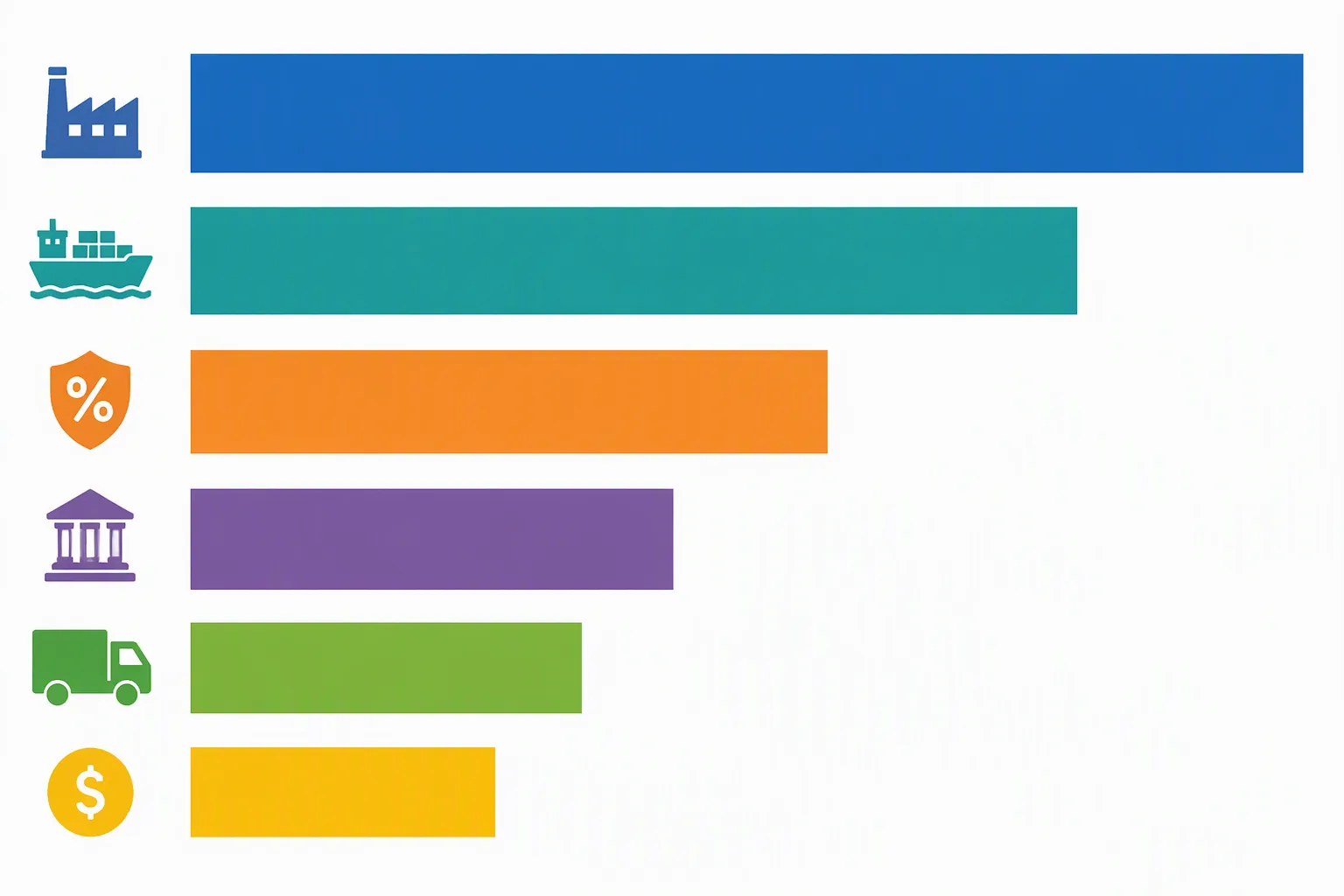
Pricing for China-sourced goods in U.S. dollars must account for several layers beyond the factory price.
Factory (FOB) price is the starting point, but rarely the number that matters. A textile item quoting $4.50 FOB Guangzhou might land at $7.80 after a 25% Section 301 tariff, $1.20 in ocean freight (per unit at reasonable volume), and $0.40 in U.S. customs fees. That's a 73% markup over FOB — a calculation many first-time importers don't complete before placing an order.
MOQ thresholds affect unit price significantly. Most Chinese factories offer tiered pricing: a lower MOQ (say, 100 units) carries a higher per-unit cost; scaling to 500 or 1,000 units typically drops the price 15-30%. Ask specifically what break points exist — don't assume the first quote is final.
Sample costs range from free (with a written purchase order commitment) to $50-$300 per sample depending on the product. Expect to pay, and treat sample cost as an investment in quality assurance before committing to production volume.
Currency dynamics in 2026 continue to create volatility. CNY/USD fluctuations affect factory-side pricing, and while most China export quotes are in USD, currency moves can shift a factory's willingness to hold a price for 30+ days. Build in a negotiation window.
For competitive categories with aggressive pricing from India or Southeast Asia, the Silk Road belt of Chinese manufacturing still offers advantages in scale and supply chain integration — particularly in materials processing, tooling, and electronics. The China-India trade relations dynamic in 2026 is complex: while India is building domestic manufacturing capacity, Chinese component supply chains remain deeply embedded in Indian final-goods production, creating both competition and interdependence that affects global import pricing.
Common Challenges for U.S. Buyers Sourcing from Silk Road China
Compliance and Sanction Risk
The UFLPA is the most operationally disruptive compliance challenge facing U.S. importers of Chinese goods. CBP has detained shipments from factories with no direct Xinjiang operations simply because a tier-2 supplier used Xinjiang-origin cotton. Buyers need full supply chain mapping, not just a factory audit. An import partner with established compliance protocols — not a marketplace intermediary — is essential for categories at risk.
Separately, OFAC sanction screening must cover not just the factory but its parent entities and affiliated trading companies. This is particularly relevant for electronics, industrial equipment, and anything with dual-use potential.
Logistics and Lead Time
Ocean freight from China to U.S. West Coast ports (Los Angeles/Long Beach, Oakland) has historically run approximately 14-18 days under normal conditions, though transit times are subject to meaningful variation — port congestion, carrier routing changes, and freight market cycles (as seen dramatically in 2021-2022 and again in 2024) can shift these figures. East Coast transit via Panama adds another 7-10 days. The freight booking-to-departure window, port congestion, and inland trucking variability mean a 45-day production lead time can easily become a 75-day door-to-warehouse timeline. Build buffer. Air freight is available for urgent or high-value, low-weight goods but carries a substantial premium over ocean rates — a gap that fluctuates with fuel costs and market conditions, so confirm current quotes before building air into your cost model.
Quality Control Without On-the-Ground Presence
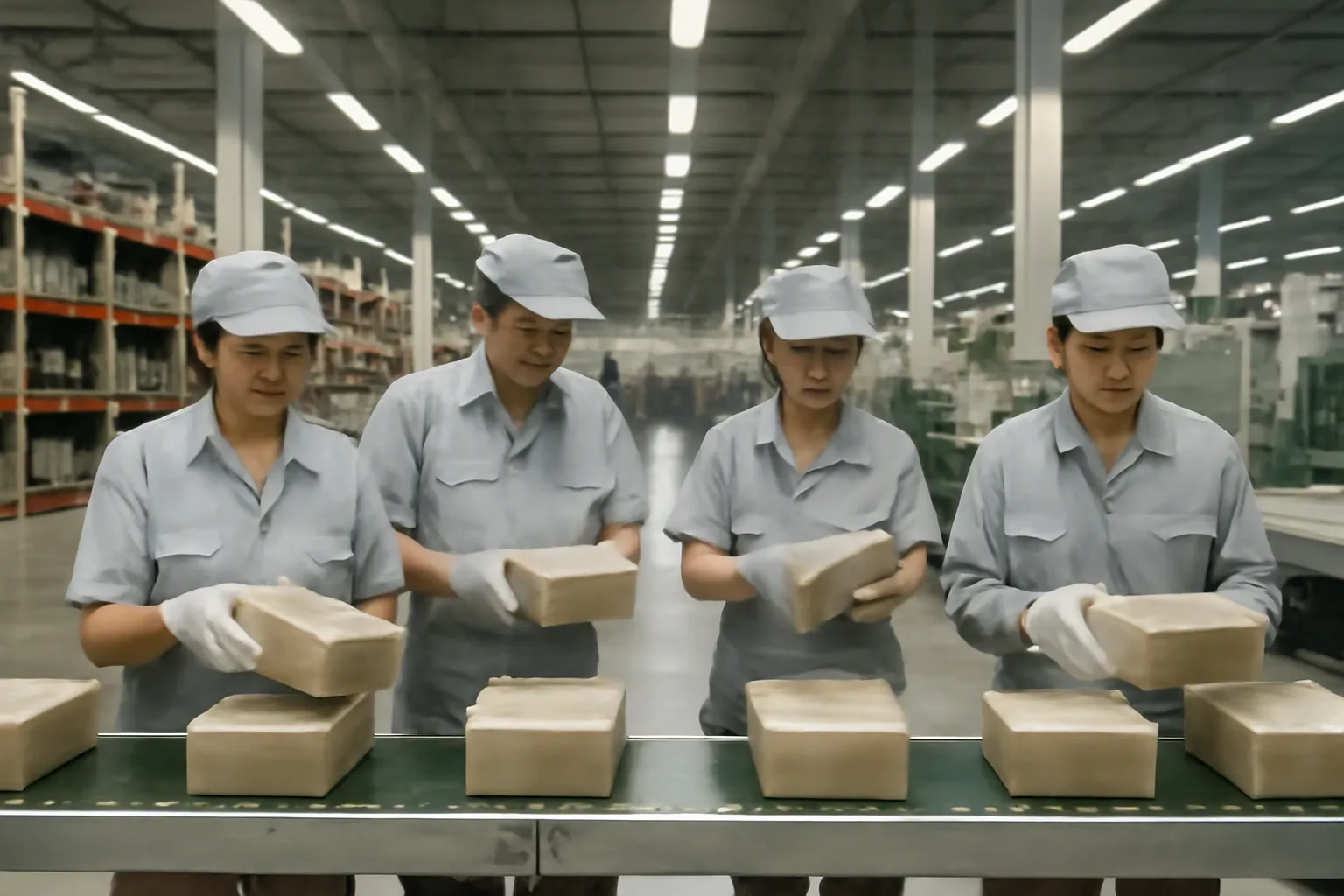
The single biggest reason first-time China importers get burned is approving a sample and receiving production goods that don't match it. Factory workers optimize for speed under production conditions; the sample was built by their best craftsperson on a slow day. Third-party pre-shipment inspection (PSI) — typically conducted when production is 80% complete — is standard practice. Costs vary by provider, product complexity, and location, so request current quotes from inspection firms; budget for it as a fixed line item rather than an afterthought.
Communication and Relationship Management
Language barriers are real but manageable. The deeper challenge is reading unspoken communication: a factory saying "we can try" often means "we don't know how but won't say no." An experienced sourcing partner who has built relationships in specific factory regions — and understands the norms around face-saving communication — closes this gap in ways that direct-buyer approaches cannot.
The Belt and Road Initiative Context
China's Belt and Road Initiative (BRI), launched in 2013, has reshaped infrastructure and trade relations across Central Asia, Southeast Asia, the Middle East, and Africa. For U.S. importers, the BRI's most direct relevance is in logistics: Chinese-funded port infrastructure in ports like Colombo, Gwadar, and Piraeus has shifted container routing in ways that affect transit times and carrier availability. Understanding the BRI's footprint helps buyers anticipate freight lane dynamics and alternative routing options when the main trans-Pacific lanes are congested.
Frequently Asked Questions (United States-Specific)
Q: Is it legal to import goods from Silk Road China regions like Xinjiang into the United States?
A: Goods with supply chain connections to Xinjiang face a rebuttable presumption of forced labor under the UFLPA, meaning they will be detained at the U.S. border unless the importer provides clear and convincing evidence the goods were not produced with forced labor. Legal importation is possible but requires documented supply chain traceability. Work with a sourcing partner who screens for this at supplier selection, not at customs.
Q: How do Section 301 tariffs affect the true cost of importing from China?
A: As of mid-2026, Section 301 tariffs add 7.5% to 25% (and in some categories, more) to the dutiable value of Chinese-origin goods. They apply on top of normal Harmonized Tariff Schedule (HTS) rates. These rates are subject to change through executive or trade action, so before finalizing any deal, calculate your HTS code and confirm the applicable Section 301 rate with the CBP website or a licensed customs broker — those are the authoritative sources for current rates.
Q: What's the difference between sourcing through Alibaba and using a managed sourcing partner?
A: Alibaba provides access to a marketplace of suppliers; it does not vet factories, negotiate on your behalf, coordinate samples, manage quality control, or handle reorders. A managed sourcing partner does all of that — typically with commission-only terms on the factory side — and takes responsibility for the relationship, not just the introduction.
Q: How does China-India trade competition affect U.S. import options?
A: India has emerged as an alternative manufacturing base, particularly for textiles, pharmaceuticals, and some electronics assembly. Tariff differentials (India faces lower U.S. tariffs in several categories than China), shorter lead times to East Coast ports, and UFLPA-free supply chains make India attractive for certain categories. A capable sourcing partner can help you assess China vs. India sourcing on a product-by-product basis rather than making a blanket switch.
Q: What payment terms should U.S. importers expect from Chinese factories?
A: Standard terms for new relationships are 30% T/T deposit before production, 70% balance before or against the bill of lading. Some factories offer net-30 or net-60 on established relationships or for large orders. Letters of credit (L/C) are accepted for significant order values but add bank fees. Never wire 100% upfront to an unvetted factory.
Q: Are there U.S.-based sourcing agents who specialize in Silk Road China regions?
A: Yes. Agents based in the U.S. with China-based operations, or China-based operations with English-speaking U.S. market specialists, both exist. The key differentiator is whether they have actual factory relationships in the relevant product category — not just general China market knowledge. Ask for category-specific references, not general testimonials.
Q: What certifications should I require from a Chinese supplier for products destined for the U.S. market?
A: It depends on the product category. Electronics need FCC compliance. Children's products need CPSC testing to ASTM F963. Food-contact goods need FDA compliance and, for food items, proper facility registration. Electrical products often need UL listing for retail channels. Request current test reports, not just certificates — reports carry the test date and scope. See our guide on China-Russia-India: 6 Resources Every Sourcing Buyer Needs in 2026 for a broader look at navigating multi-source supply chain compliance.
Get Started: Sourcing from Silk Road China as a U.S. Importer
The Silk Road's 2,000-year legacy is more than history. The trade network that began around 130 BCE was built on the same fundamentals driving successful China sourcing today: the right product, the right counterpart, and trust built through consistent follow-through.
For U.S. importers, the practical gate to reliable China sourcing is not a marketplace search — it's a qualified partner who shortlists the right factories, screens them for compliance risk (including UFLPA exposure), negotiates MOQ and price, coordinates samples, and manages repeat orders with multilingual communication direct to the factory floor.
Link4a operates as that partner. Factories enter on a commission-only basis — no fees until an order closes. Buyers get a vetted shortlist and managed process rather than a list of leads to evaluate alone. Their ranking performance is publicly verifiable on their homepage, an unusual degree of accountability in an industry built on unverifiable promises.
Ready to start a sourcing conversation?
Submit your product requirements, target price point, and intended volume to receive factory shortlists, compliance screening, and MOQ/pricing — before committing to any order.
This article is for informational purposes. Tariff rates, sanctions lists, and import regulations change. Verify current requirements with a licensed U.S. Customs broker or legal counsel before placing orders.