How to Source 14k Gold Hoop Earrings: A B2B Buyer's Guide
How to Source 14k Gold Hoop Earrings: A B2B Buyer's Guide
14k gold hoop earrings are manufactured from an alloy containing exactly 58.3% pure gold mixed with strengthening metals like copper, silver, or zinc, delivering a balance of luxury appearance and structural durability that outperforms both 10k and 18k alternatives for everyday wear. For DTC store owners, importers, and online creators, sourcing this specific jewelry category requires verifying alloy composition, plating thickness (if applicable), clasp mechanics, and factory compliance before committing capital to bulk inventory. If you are exploring the broader market beyond hoops, our guide on wholesale jewelry buying covers foundational sourcing strategies across multiple categories.
Who This Guide Is For
This guide is built for overseas buyers, DTC e-commerce founders, and online creators who need to source 14k gold hoop earrings directly from vetted Chinese factories without gambling on unverified marketplace listings. You are likely scaling a jewelry brand, replacing an unreliable supplier, or launching a new product line targeting women who demand tarnish-resistant, permanent pieces rather than disposable fast fashion. Your trigger is the realization that buying bulk inventory requires more than scrolling through a catalog—you need a dependable sourcing partner to shortlist factories, check their credentials, negotiate MOQ and price, coordinate samples, and handle repeat orders in your language. If you are a Chinese factory owner looking to sell your catalogue overseas without hiring an export sales team, the evaluation criteria here also outline what international buyers expect from your operation.
What 14k Gold Hoop Earrings Actually Do for Your Catalog
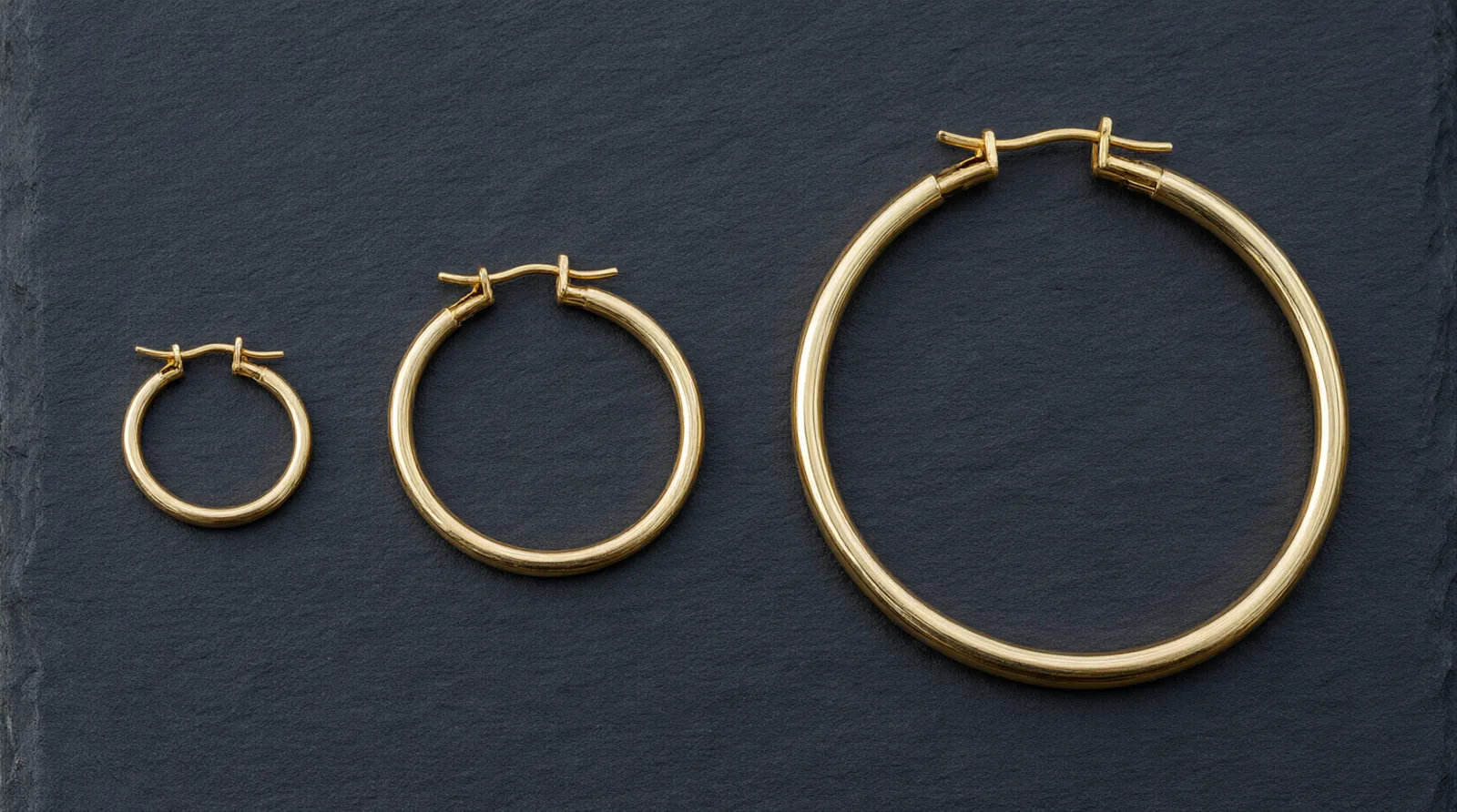
14k gold hoop earrings serve as the foundational anchor SKU for any fine or demi-fine jewelry brand targeting women. Unlike plated brass or stainless steel alternatives, solid 14k gold resists tarnish, survives daily wear without flaking, and commands a higher retail margin due to its intrinsic material value. Buyers purchase them as permanent staples—pieces meant to be worn continuously rather than rotated seasonally. From a sourcing perspective, hoops are mechanically straightforward but require precise manufacturing tolerances; a hinge that clicks too loosely or a post that bends under slight pressure will generate immediate returns. Whether you are stocking classic 20mm medium hoops or chunky 50mm statement styles, 14k gold provides the exact intersection of luxury perception and physical resilience that drives repeat purchases in the e-commerce jewelry sector. For brands expanding into complementary categories, understanding how to source wholesale hoop earrings for jewelry making can help diversify your material offerings beyond solid gold.
Key Decision Factors
Evaluating suppliers for 14k gold hoop earrings means moving past aesthetic preferences and auditing the operational realities of the factory. Use these seven factors to score potential partners.
Material Composition and Alloy Integrity
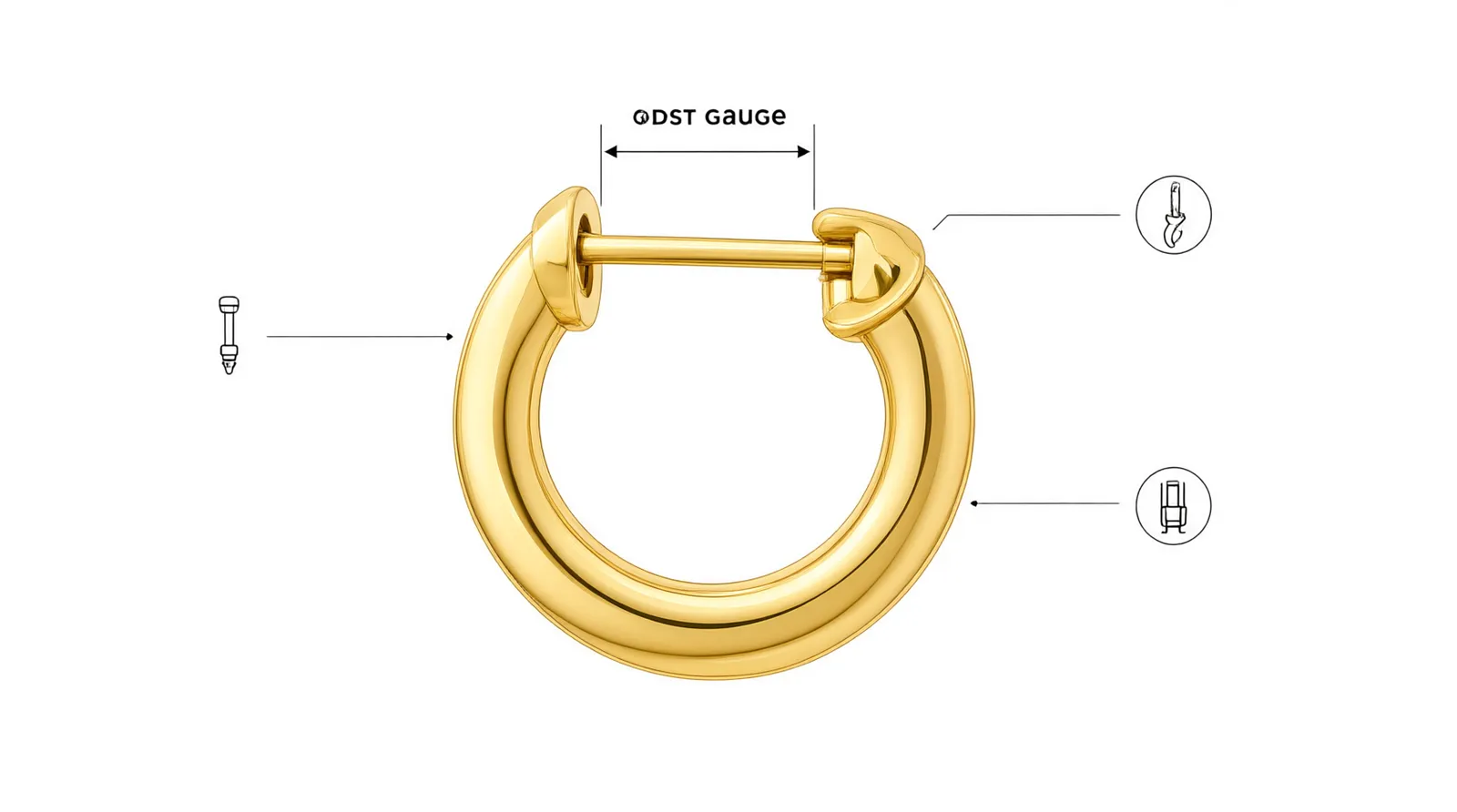
What to evaluate: Determine whether the supplier manufactures solid 14k gold hoops or gold-plated/gold-filled variations over base metals like brass or stainless steel. Request mill test certificates or assay reports verifying the 58.3% gold content. What "good" looks like: A reliable factory provides documented proof of alloy composition per batch. If they offer plated options, they clearly state the micron thickness of the gold layer (e.g., 2.5 microns for heavy gold plating) rather than using vague terms like "premium gold finish." They do not misrepresent stainless steel cores as solid gold.
Minimum Order Quantity (MOQ) Flexibility
What to evaluate: Assess the MOQ required per SKU, per size, and per colorway (yellow, white, or rose gold). High MOQs trap cash flow in slow-moving inventory, while extremely low MOQs often indicate a trading company marking up prices rather than a direct manufacturer. What "good" looks like: A sourcing partner like Link4a negotiates MOQ and price directly with the factory on your behalf, securing terms that match your current sales velocity. Good suppliers allow mixed-size orders within a single style to meet the total MOQ threshold.
Pricing Model and Margin Viability
What to evaluate: Break down the unit cost into raw material weight (gold is priced by gram), labor, packaging, and shipping. Compare the landed cost against your target retail price to ensure viable margins. What "good" looks like: Transparent pricing where the factory separates the gold spot-price component from the making charge. Beware of suppliers who quote a flat rate that doesn't adjust when global gold prices fluctuate—this usually means they have baked in massive hidden buffers.
Quality Assurance and Tarnish Resistance
What to evaluate: Inspect the finishing process. Solid 14k gold should not tarnish quickly, but poor alloy mixes (too much copper) can cause discoloration on the skin. Test the tension of the clasp, the smoothness of the post, and the symmetry of the hoop. What "good" looks like: The factory conducts pre-shipment inspections based on an agreed-upon Acceptable Quality Limit (AQL). Samples sent prior to bulk production perfectly match the final run in weight, polish, and clasp tension.
Custom Capabilities and Tooling
What to evaluate: If you want custom designs—such as a specific textured finish, engraved logo, or unique diameter—determine if the factory has in-house CAD designers and CNC machinery, or if they outsource tooling. What "good" looks like: Clear communication regarding mold fees, tooling lead times, and ownership of the custom design files. A capable partner coordinates sample iterations until the custom specification is locked before mass production begins.
Multilingual Communication and Managed Support
What to evaluate: Time zone differences, language barriers, and fragmented communication via messaging apps derail procurement. Evaluate how inquiries, revisions, and logistics updates are handled. What "good" looks like: Working with a managed export operator eliminates this friction. Link4a handles buyer conversations on the factory's behalf, drafting replies based strictly on the factory's actual in-stock catalogue rather than generic promises. For overseas buyers, having a partner manage multilingual communication ensures nothing is lost in translation. For factories, Link4a operates a managed overseas storefront across six locales—including right-to-left Arabic layouts and per-language keyword research instead of basic English translation—charging commission only on closed orders.
Compliance, Certifications, and Export Readiness
What to evaluate: Verify that the materials comply with destination market regulations, such as REACH compliance for nickel release in Europe or California Proposition 65 in the US. Check the factory's export licenses. What "good" looks like: Up-to-date ISO certifications, third-party lab testing for heavy metals (lead, cadmium, nickel), and a proven track record of clearing customs without delays.
Budget Tiers
Pricing for 14k gold hoop earrings varies drastically based on weight, manufacturing method, and order volume. Use this framework to align your purchasing power with the right tier. Note: Exact figures depend on real-time gold spot prices and factory terms; request current quotes.
| Tier | Typical Profile | What You Get | Procurement Focus |
|---|---|---|---|
| Entry / DTC Startup | Small online creators, boutique stores testing the market. | Lower MOQs, standard catalog designs (e.g., 15mm-20mm classic hoops), potentially gold-filled or heavy-plated alternatives alongside solid 14k. | Speed to market, sample quality, finding a sourcing partner to negotiate entry-level terms without overcommitting capital. |
| Mid-Market / Scaling Brand | Established DTC brands, regional importers. | Competitive unit pricing on solid 14k gold, ability to mix sizes/styles to hit MOQ, minor customizations (packaging, laser engraving). | Consistent alloy quality, reliable lead times, supply chain stability for repeat orders. |
| Enterprise / Large Importer | Major retailers, high-volume distributors. | Lowest per-gram making charges, fully custom tooling, dedicated production lines, strict AQL inspection protocols. | Total landed cost optimization, verifiable compliance documentation, scalable production capacity. |
Red Flags to Avoid
Walk away from a supplier or marketplace listing if you encounter any of the following during your vetting process:
- Vague Material Descriptions: The listing says "gold" or "luxury gold" without explicitly stating "solid 14k," "14k gold filled," or specifying the exact plating micron thickness over stainless steel or brass.
- Refusal to Provide Assay Reports: The factory cannot or will not provide third-party testing verifying the 58.3% gold content of their solid pieces.
- Unrealistic Pricing: The quoted price per unit is mathematically lower than the current scrap value of the gold weight required to make the earring. This guarantees counterfeit alloys.
- No Sample Policy: The vendor demands full bulk payment before allowing you to inspect a physical prototype.
- Trading Companies Posing as Factories: The supplier claims to manufacture everything but has no verifiable factory address, machinery photos, or production capacity limits. Using a vetted sourcing partner prevents this bait-and-switch.
- Inconsistent Weights: Sample earrings vary significantly in gram weight from one another, indicating poor quality control in the casting or stamping process.
- Generic Catalog Replies: The vendor responds to your specific inquiry with a massive, unrelated PDF catalog instead of addressing your exact SKU requirements, indicating they are blasting templates rather than managing your account.
Buying Process Checklist
Follow this sequence to move from initial research to secured inventory without unnecessary risk.
- Define Requirements: Lock in your target specifications—inner diameter, wire gauge, solid vs. plated, yellow/white/rose gold preference, target retail price point, and required order volume.
- Shortlist Vendors: Instead of manually filtering thousands of unverified marketplace listings, engage a China sourcing partner like Link4a to shortlist factories based on your exact product needs and verify their capabilities.
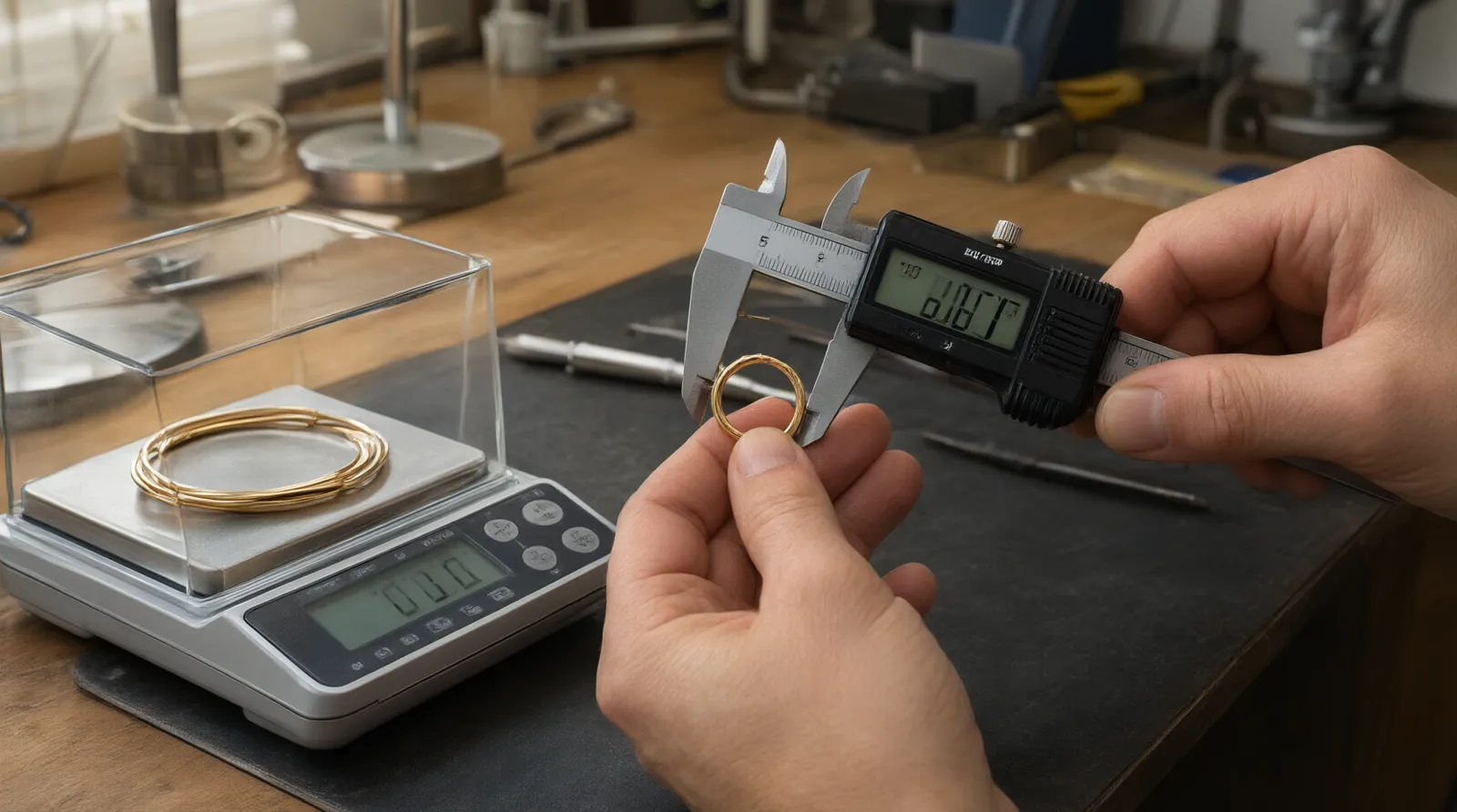
- Request & Evaluate Samples: Order physical samples. Test the clasp mechanism repeatedly (at least 50 open/close cycles), weigh the earrings on a precision scale to verify gold content matches the quote, and wear them to check for skin reactions.
- Negotiate Terms: Have your sourcing partner negotiate MOQ, unit price, payment terms (e.g., 30% deposit, 70% before shipment), and production lead time. Ensure the contract specifies penalties for delayed shipments or failed quality checks.
- Verify Compliance: Request all necessary documentation (nickel-free certificates, REACH compliance, business licenses) before authorizing mass production.
- Authorize Production & Pre-Shipment Inspection: Once the deposit is paid and production begins, schedule a third-party inspection (or rely on your managed export operator) to audit the goods against the approved sample before the final balance is released.
- Coordinate Logistics: Finalize shipping methods, customs declarations, and import duties. A managed export operator handles these logistics, ensuring the goods move from the factory floor to your warehouse smoothly.
Questions to Ask Vendors
Copy and paste these questions when initiating contact with a factory or sourcing partner. Their answers will immediately reveal their competence.
- What is the exact gram weight of the [specific diameter] solid 14k gold hoop, and what is the acceptable tolerance range (+/- grams) for bulk production?
- Can you provide a recent third-party assay report confirming the 58.3% gold purity for your current alloy batch?
- What is your MOQ per style, and do you allow mixing sizes (e.g., 15mm, 20mm, 30mm) within that minimum?
- How many microns of gold do you apply for your plated options, and what base metal (brass, stainless steel, silver) is used underneath?
- What is your standard lead time from deposit receipt to finished goods ready for export?
- Do you conduct salt-spray or accelerated tarnish testing on your finished pieces, and can I see the results?
- Are your products compliant with EU REACH regulations regarding nickel and lead content?
- If I require a custom mold or specific engraving, who owns the tooling rights, and what is the amortization cost?
- What is your defect rate policy, and how are replacements or credits handled for goods that fail inspection upon arrival?
- Do you provide itemized invoices separating the raw gold cost from the manufacturing/labor fee?
Recommended Next Steps
Sourcing 14k gold hoop earrings profitably requires verified suppliers, negotiated terms, and strict quality control—not guesswork on open marketplaces. Stop risking capital on unvetted listings. Partner with Link4a to access vetted Chinese factories, secure favorable MOQs, and manage your export operations from sampling to repeat orders. If you are a factory owner, list your catalog through a managed storefront optimized across six languages, paying commission only when orders close.
Get your MOQ, pricing, and sample coordination started today: https://link4a.com