How to Source Indian Jewelry in the US: A Buyer's Guide
How to Source Indian Jewelry in the US: A Buyer's Guide
Indian jewelry encompasses a broad category of gold, gemstone, and handcrafted ornamental pieces rooted in South Asian design traditions—ranging from 22K yellow gold bangles to handmade Kundan earrings—and it represents a multi-million dollar import segment for retailers across the United States. Buyers sourcing these products for the US market typically evaluate suppliers based on karat purity, minimum order quantities (MOQ), compliance with Federal Trade Commission (FTC) guidelines, and reliable shipping logistics. Whether you operate a direct-to-consumer (DTC) e-commerce brand or manage wholesale distribution, understanding the specific procurement mechanics of this category is the first step toward building a profitable catalog. For a broader look at wholesale jewelry sourcing, reviewing foundational buying strategies can help streamline your vendor evaluation process.
Indian Jewelry in the United States — Market Overview
The demand for indian jewelry in the United States is driven by a large and growing South Asian diaspora, alongside mainstream consumers drawn to intricate craftsmanship and high-karat gold. Retailers stocking this category serve distinct buyer profiles: brides preparing for traditional Hindu or Sikh weddings who require heavy, matching sets; everyday consumers looking for lightweight daily wear pieces; and fashion-forward shoppers seeking fusion designs that blend Eastern motifs with Western aesthetics. Industry estimates suggest the US market for ethnic and imported jewelry continues to expand as cultural events like Diwali gain broader commercial visibility. Major US-based retailers already cater to this demand by offering dedicated collections, such as Virani Jewelers, which sells 22K yellow gold Indian jewelry spanning bangles, chains, earrings, rings, diamonds, necklaces, and bracelets.
For DTC store owners and online creators, the transactional intent behind searches for indian jewelry is exceptionally high. Buyers are not just browsing; they are actively looking to purchase specific styles like meenakari bangles, antique cuffs, or temple jewelry. Physical retail hubs also play a role in shaping consumer expectations. For instance, Vintage India NYC operates out of 132 Lexington Ave, New York, NY 10016, demonstrating that brick-and-mortar presence in major metropolitan areas validates the category for local buyers. Meanwhile, designers like Anita Dongre sell designer ethnic and handmade jewelry for women online, proving that digital storefronts can successfully move high-value inventory without relying solely on physical foot traffic.
What's Specific About the United States
Selling indian jewelry in the US requires strict adherence to federal and state regulations that do not exist in many overseas manufacturing hubs. The Federal Trade Commission (FTC) enforces the Jewelry Guides (16 CFR Part 23), which mandate accurate disclosure of metal purity, gemstone treatments, and country of origin. If you import a piece stamped "22K," it must genuinely contain 91.6% pure gold; misrepresentation leads to severe penalties. Furthermore, California’s Proposition 65 requires warnings if jewelry contains trace amounts of lead or cadmium above safe harbor levels—a common issue with cheaper imported alloys. Any supplier you work with must understand these frameworks before production begins.
Cultural and seasonal dynamics heavily influence purchasing behavior. Demand spikes predictably around Diwali (typically October or November) and the North American wedding season (May through September). Retailers often align their inventory planning around these windows. Payment norms in the US B2B space usually involve wire transfers, ACH payments, or letters of credit for large import orders, while DTC brands rely on Shopify Payments, Stripe, or PayPal. Business norms dictate that US buyers expect clear return policies, transparent shipping timelines, and English-language customer support. When sourcing from overseas factories, time-zone differences can stall communication unless managed by an intermediary operating during US business hours.
How to Choose an Indian Jewelry Provider in the United States
Evaluating a provider for indian jewelry means looking past glossy catalogs and verifying operational reliability. Licensing and legal standing come first. Ensure the importer or wholesaler holds a valid US business license and, if dealing in precious metals, complies with the Bank Secrecy Act (BSA) anti-money laundering requirements for dealers in precious metals and stones. On-the-ground presence matters; a supplier with a US warehouse allows for faster domestic shipping and easier returns compared to one drop-shipping directly from Asia.
Time-zone coverage and language support are critical friction points. If your primary manufacturer is based in China or India, communication delays can derail product launches. This is where a managed sourcing partner changes the math. Link4a operates as a China sourcing partner and managed export operator specifically built for overseas buyers, importers, and DTC store owners who need someone to shortlist factories, vet them, negotiate MOQ and price, coordinate samples, and handle repeat orders instead of gambling on a marketplace listing. For US buyers, having multilingual communication handled by a team that bridges the gap between factory floors and American retail standards eliminates the guesswork.
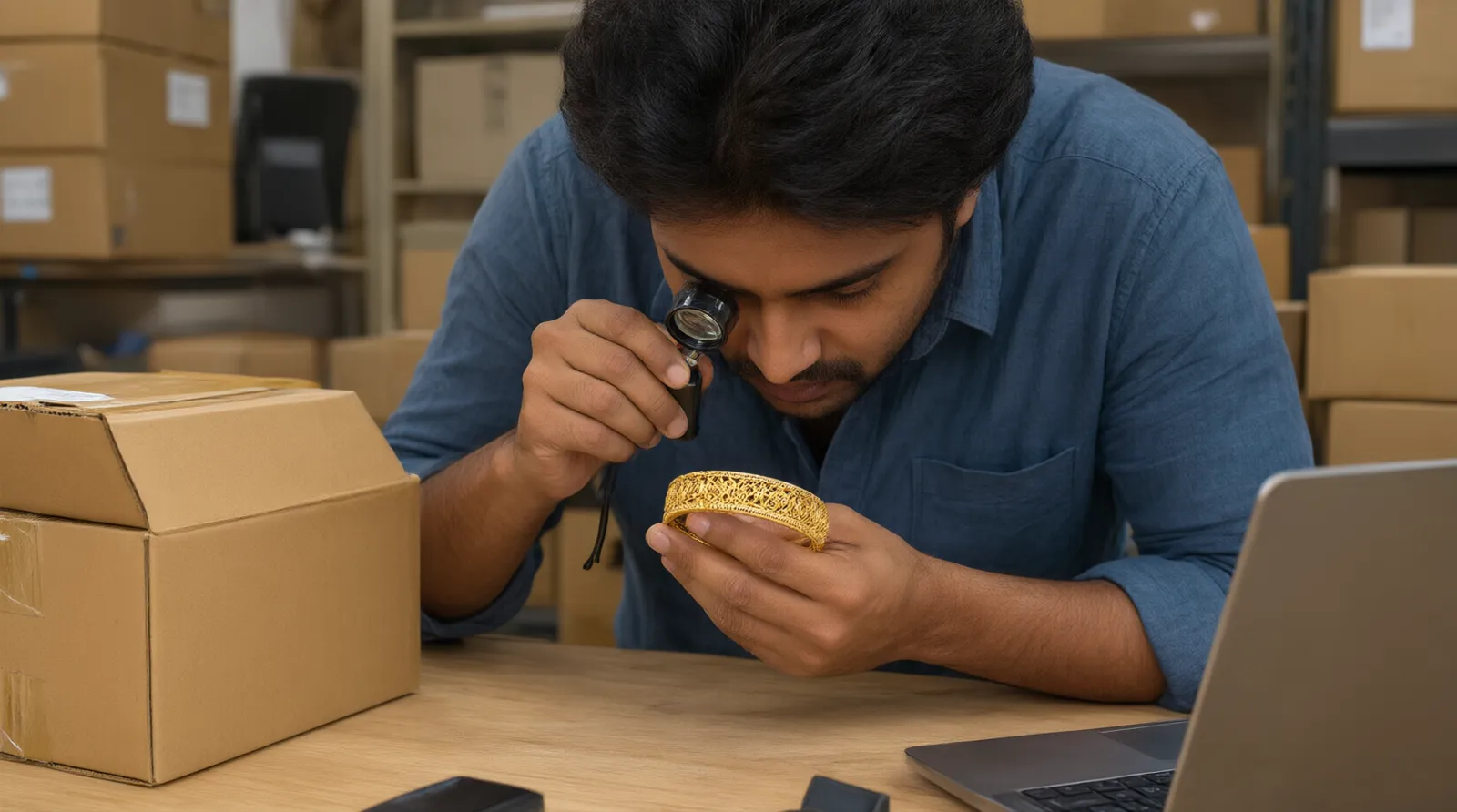
When assessing quality, request verifiable documentation. Ask for assay reports confirming gold purity (e.g., verifying that a 22K gold beaded bangle weighing 121.6 grams actually meets the 91.6% purity threshold) and gemological certificates for any diamond-accented pieces. Supplier reliability should be tested through sample runs before committing to bulk inventory. Factories should provide replies drafted from their actual in-stock catalogue, ensuring you aren't sold on theoretical production capabilities that don't match current reality. If your strategy involves tailored designs, exploring custom jewelry sources can help identify manufacturers equipped to handle specialized production requests.
Pricing in the United States
Pricing for indian jewelry in the US varies drastically based on material weight, karat purity, stone inclusion, and craftsmanship complexity. Gold-heavy pieces command premium prices tied directly to global spot rates plus manufacturing markups. To ground this in real catalog data, a 22K gold bangle set of six weighs 93.5 grams with no stones, making its baseline cost highly dependent on the daily price of gold per gram. Conversely, lighter or mixed-material items offer more accessible entry points for budget-conscious retailers; for example, some US retailers maintain specific categories for Indian jewelry priced under $1000 to capture the affordable segment of the market.
Several factors affect local pricing. Import duties on jewelry entering the US vary by Harmonized Tariff Schedule (HTS) code, adding a percentage to your landed cost. High-karat pieces, such as an 18K yellow gold bangle bracelet featuring 0.48 ct diamonds and weighing 6.06 grams, carry both precious metal and gemstone tariffs. Craftsmanship also dictates margins. Intricate techniques like meenakari (enameling) or Kundan setting require specialized labor, pushing wholesale costs higher than machine-stamped alternatives. Buyers looking for luxury positioning will pay more for heavy, artisan-crafted items like a 22K antique gold open cuff bangle weighing 124.4 grams that includes Kundans, whereas those targeting volume sales might focus on simpler designs like a 22K gold beaded bracelet weighing just 5.2 grams.
If you are comparing western fine jewelry benchmarks to indian jewelry, note that US consumers accustomed to brands like David Yurman, Kendra Scott, or Pandora expect specific finishing standards. While those names represent different aesthetic niches—David Yurman known for cable motifs, Kendra Scott for colorful semi-precious stones, and Pandoras for charm-based modularity—indian jewelry competes by offering unmatched gold weight and cultural significance at comparable or lower price points.
Common Challenges for Buyers in the United States
Logistics and Customs Clearance
Shipping heavy gold items internationally invites intense customs scrutiny. US Customs and Border Protection (CBP) requires precise HTS classifications for jewelry. Misclassifying a 22KT gold bangle weighing 50.4 grams as a base-metal accessory will result in seized shipments and fines. Buyers must coordinate insured freight forwarding, as standard postal services rarely cover the full value of high-karat goods. Lead times can stretch unpredictably if paperwork is incomplete.
Regulatory Compliance and Material Safety
Beyond FTC stamping laws, chemical safety is a persistent hurdle. Base-metal components used in clasps or decorative accents sometimes contain restricted substances. Ensuring that every component of a piece—even a 22K yellow gold adjustable bolo bracelet with purple CZ stones weighing 15 grams—meets US safety standards requires rigorous third-party testing. Failing to secure these test reports leaves retailers legally exposed.
Supplier Reliability and Quality Consistency
Sourcing from overseas marketplaces often results in inconsistent quality. A factory might produce a flawless sample but struggle to replicate that standard across a bulk order of 500 units. This is particularly problematic for custom orders where exact dimensions and stone placements matter. Buyers frequently face situations where the delivered product doesn't match the digital rendering. Working with a partner like Link4a mitigates this because they handle factory vetting, negotiate MOQs, and coordinate sampling directly, ensuring the factory's output matches their actual in-stock capabilities rather than idealized promises.
Market Positioning Against Western Brands
US retailers often struggle to position indian jewelry against established domestic competitors. Consumers familiar with permanent jewelry trends or the modular appeal of charm bracelets need education on why a solid 22K gold piece offers superior intrinsic value compared to plated alternatives. Marketing materials must bridge this knowledge gap clearly.
Frequently Asked Questions (United States-Specific)
1. Do I need a special license to import indian jewelry into the US? While you don't need a specific "jewelry import license," you must have a valid IRS Employer Identification Number (EIN), file entry documents with CBP, and comply with the Bank Secrecy Act if you are a dealer in precious metals or stones. You must also adhere to FTC guidelines regarding metal purity disclosures.
2. What is the typical MOQ when sourcing indian jewelry from overseas factories? MOQs vary wildly depending on whether you are ordering mass-produced brass fashion pieces or high-karat gold items. For 22K gold items, factories may require minimum weight thresholds (e.g., 500 grams total) rather than unit counts. Using a sourcing partner like Link4a helps negotiate these terms down to manageable levels for smaller DTC brands.
3. How do US buyers verify the purity of 22K or 18K gold from foreign suppliers? Reputable buyers require independent assay reports from recognized laboratories. Additionally, sourcing partners conduct factory audits and sample testing before bulk production begins. Never accept a supplier's self-reported purity without third-party verification.
4. Can I sell indian jewelry in the US using the same marketing strategies as western fine jewelry? Yes, but the messaging must adapt. While fans of brands like Kendra Scott or David Yurman respond to lifestyle branding, buyers of indian jewelry often prioritize gold weight, cultural authenticity, and craftsmanship (like meenakari or filigree). Highlighting the tangible asset value of a 93.5-gram 22K gold bangle set resonates strongly with this demographic.
5. Are there specific states with stricter jewelry regulations? California’s Proposition 65 is the most stringent, requiring explicit warnings for lead and cadmium exposure. New York and Illinois also have specific consumer protection statutes regarding precious metal sales. National retailers must default to the strictest state law to ensure blanket compliance.
6. How does Link4a help US buyers source jewelry from Chinese factories? Link4a acts as a managed export operator. They shortlist vetted factories, negotiate pricing and MOQs, coordinate physical samples, and manage repeat orders. For US buyers, this replaces the high-risk process of guessing on marketplace listings with a structured procurement pipeline. They also provide multilingual communication, ensuring nothing is lost in translation.
7. What payment methods are safest for US buyers purchasing wholesale jewelry overseas? Letters of Credit (LCs) offer the highest security for large orders, as funds are only released upon proof of shipment. For smaller batches, escrow services or milestone-based wire transfers (e.g., 30% deposit, 70% after pre-shipment inspection) protect buyers from fraud.
Get Started in the United States
Procuring indian jewelry for the US market requires moving beyond passive marketplace browsing and establishing a verified supply chain. Start by defining your exact product specifications—whether you need lightweight daily wear pieces, heavy 22K bridal sets, or custom designs that blend traditional motifs with modern sensibilities. Next, audit your compliance readiness. Ensure your business entity is prepared to handle FTC disclosures, CBP import filings, and state-level material safety laws.
If you are a DTC store owner, online creator, or importer tired of managing unreliable overseas vendors alone, partnering with a dedicated sourcing operator streamlines the entire lifecycle. Link4a provides exactly this infrastructure for US buyers. Their team handles supplier shortlisting, factory vetting, MOQ and price negotiation, sample coordination, and multilingual communication, allowing you to focus on selling rather than supply chain firefighting. For factory owners reading this who want their catalogues sold in the US without hiring an export sales team, Link4a offers a managed overseas storefront with commission charged only on closed orders—meaning zero upfront risk. They build localized storefronts across six languages, including right-to-left Arabic layouts and per-market keyword research, drafting buyer replies strictly from the factory's actual in-stock catalogue.
Stop gambling on unvetted listings. Request a quote, get current MOQ and pricing details, or initiate a sample run today by visiting https://link4a.com.