How to Source Permanent Jewelry That Actually Sells
How to Source Permanent Jewelry That Actually Sells
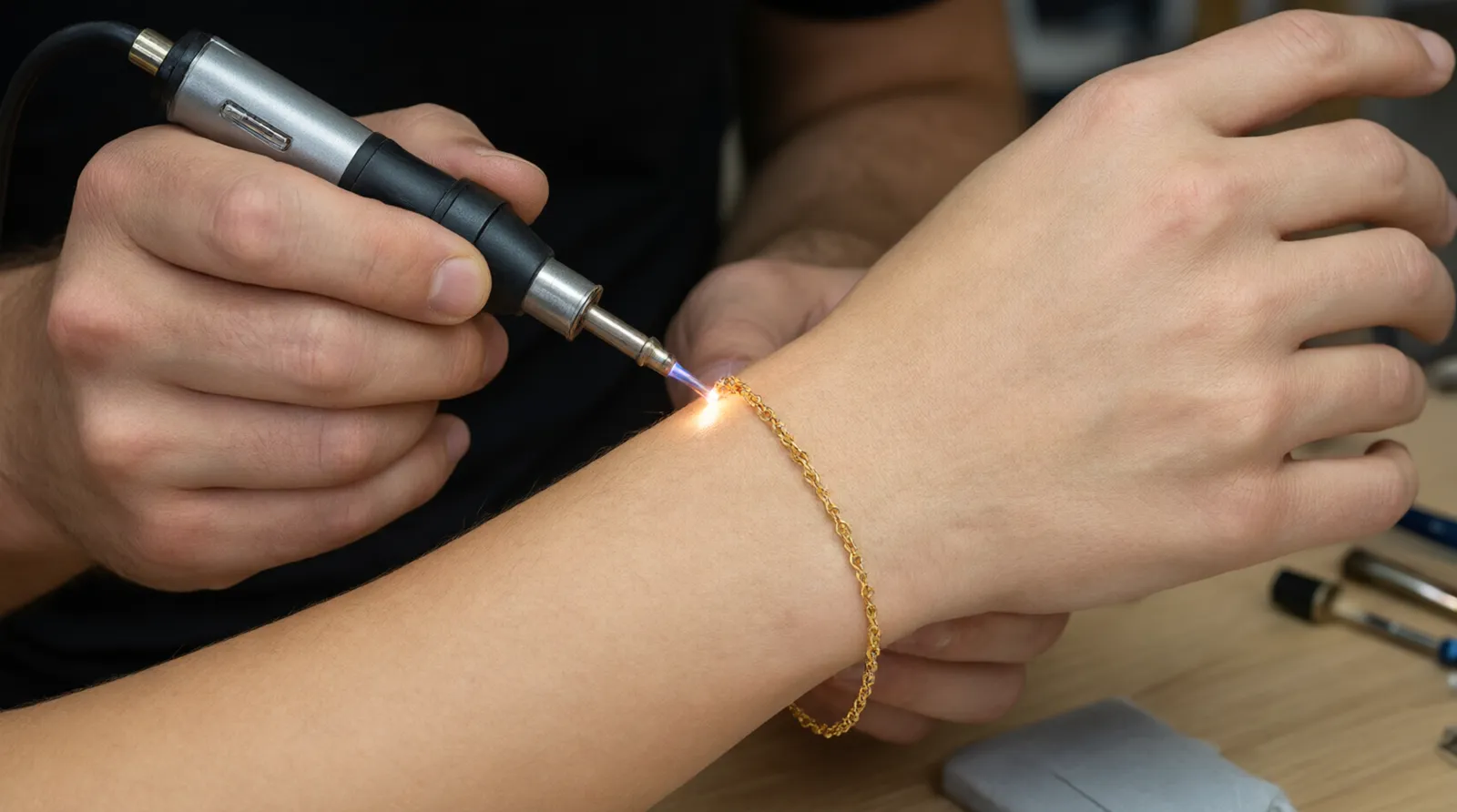
Permanent jewelry is a clasp-free chain, bracelet, or anklet welded directly onto the wearer's wrist or ankle using a micro-pulse arc welder. For DTC store owners and overseas importers, it represents a high-margin category built on repeat appointments rather than one-off transactions.
The retail market for welded chains has moved past novelty. Brands that once sold charm-heavy pieces inspired by pandoras or kendra scott aesthetics now stock minimalist 14k gold-filled links because customers want everyday wear without maintenance. If you run an online store or manage a physical appointment-based business, your profit depends entirely on two things: the quality of the chain you source and the reliability of the factory producing it. Gambling on unvetted marketplace listings usually results in tarnished inventory and canceled bookings. A wholesale jewelry sourcing guide where factories are shortlisted, checked, and negotiated with before a single sample ships removes that risk.
What Is Permanent Jewelry? (And Why Buyers Need to Know the Specs)
What is permanent jewelry? It is a continuous loop of metal—typically 14k gold-filled, sterling silver, or stainless steel—joined by a tiny welded link instead of a traditional clasp. The welding process uses a low-voltage electrical pulse that fuses the metal instantly without burning the skin.
For a buyer sourcing from China, understanding the metallurgy is non-negotiable. You are not buying finished goods off a shelf; you are specifying wire gauge, plating thickness, and base metal composition. A standard 14k gold-filled chain used for this application requires a brass or copper core bonded with a layer of 14-karat gold making up at least 5% of the total weight. Factories that cut corners use flash plating—a microscopic layer of gold over cheap alloy—which tarnishes within weeks and destroys your brand's reputation.
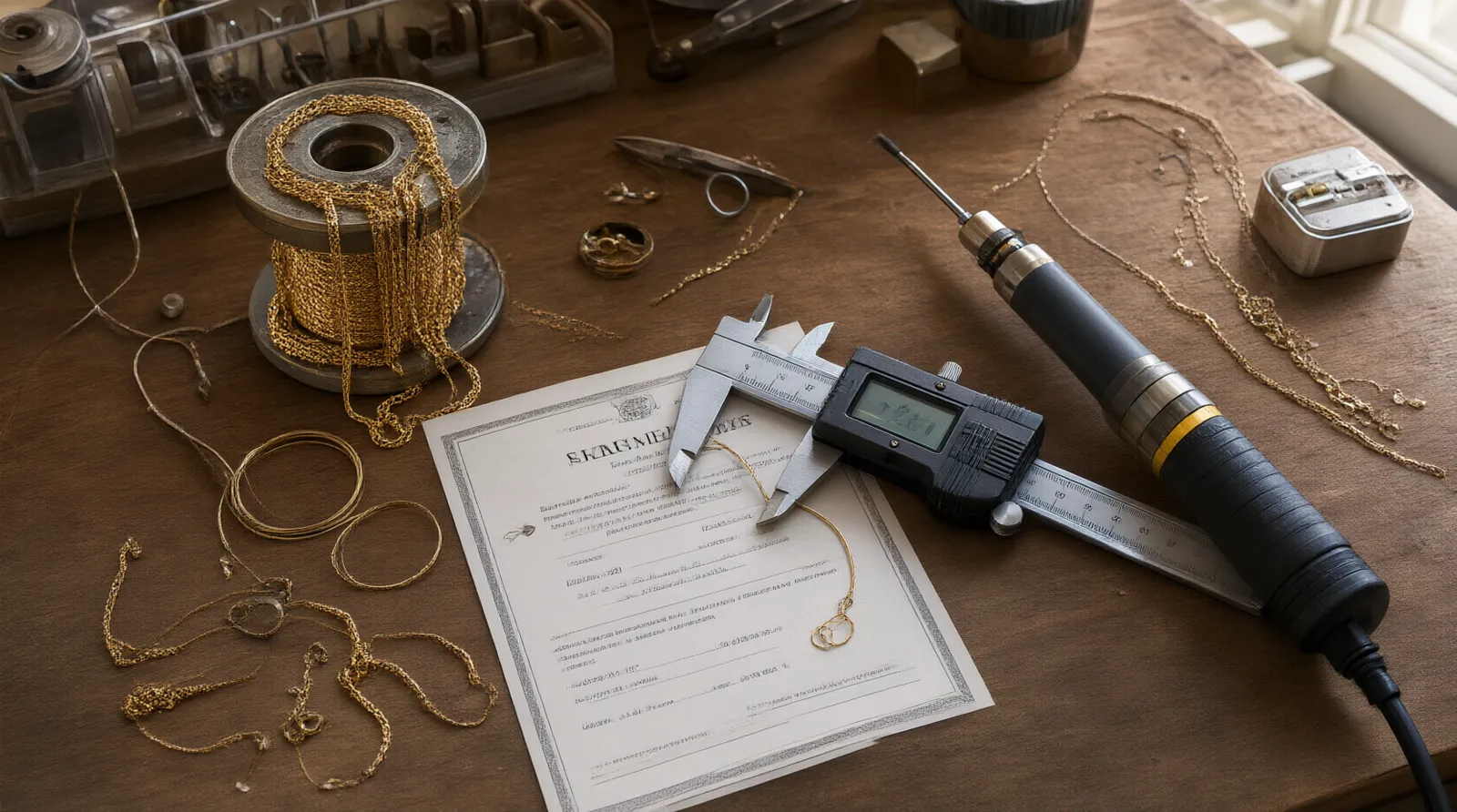
When evaluating Chinese supply, look for manufacturers who can provide SGS or RoHS test reports verifying nickel-free and lead-free compositions. Skin contact products face strict compliance rules in the US and EU. Ask your supplier for their specific certification documents before requesting a quote.
How to Permanent Jewelry: The Retail Workflow and Sourcing Implications
How to permanent jewelry? The retail process involves measuring the customer's wrist, cutting the chain to size, and using a specialized welder to fuse the final link. This takes roughly five to ten minutes per appointment.
This workflow dictates exactly what you need to buy from your factory. You are not purchasing pre-sized bracelets. You are purchasing bulk spools or long continuous lengths of chain, plus separate jump rings and tiny connector links.
Here is where procurement criteria matter:
- Minimum Order Quantity (MOQ): Chain spools are typically sold by the meter or foot. Ask the factory for their MOQ per chain style. Some vetted suppliers will allow mixed-style orders to meet a total MOQ threshold, which helps smaller DTC operators test designs without overcommitting capital.
- Lead Time & Production Capacity: If you book 30 appointments a week, you burn through chain fast. Confirm the factory's production lead time for repeat orders. A reliable partner should be able to ship restocks within [your required lead time] days of order confirmation.
- Sample Coordination: Never place a bulk order based on a catalog photo. Request physical samples of the exact chain profile you intend to sell. Test the sample with your own welder. Some alloys spark excessively or melt unevenly under the arc.
Brands like Ana Luisa have recognized the operational shift this requires, offering dedicated permanent jewelry appointments to integrate the service into their retail model. To support that level of consistency, your upstream supply chain must be locked down.
Why Is Permanent Jewelry Important for DTC Margins?
Why is permanent jewelry important? It shifts your business model from selling a product to selling an experience, drastically increasing customer lifetime value. The margin structure is fundamentally different from traditional e-commerce jewelry.
Consider the math. A DTC operator buys 14k gold-filled chain at wholesale. The material cost per wrist is often a fraction of the retail price. Customers routinely spend $125 or more on these experiences, and brands like Ana Luisa run periodic promotions around this spend threshold—as of the time of writing, they offered discounts such as 20% off for customers who spend $125 or more—while still maintaining healthy margins due to the low raw material cost. They also offset acquisition costs by ensuring free shipping on all orders.
The aesthetic positioning matters here. Consumers no longer want heavy, dangling charms. The trend leans toward affordable luxury—pieces that mimic the structural elegance of david yurman cable designs or the clean lines of scott kay, but at a price point accessible to younger demographics. If your factory can produce custom chain profiles (e.g., a specific paperclip link or a twisted rope chain) that match these higher-end aesthetics, you command premium pricing. Exploring the best custom jewelry sources ensures you find manufacturers capable of executing these proprietary designs reliably.
For men's permanent jewelry, the market is expanding rapidly. Thicker gauges (2mm to 3mm), matte finishes, and industrial link styles like Cuban or Figaro chains are in demand. Sourcing factories that specialize in heavier wire drawing and polishing ensures you don't miss this segment.
When Should I Use Permanent Jewelry Sourcing vs. Marketplace Buying?
When should I use permanent jewelry sourcing partners instead of Alibaba or AliExpress? Use a managed sourcing partner when your business relies on repeatable quality and you cannot afford a bad batch.
Marketplace buying works for hobbyists testing the waters. It fails for scaling businesses. On open platforms, you deal with trading companies masquerading as factories. You negotiate blindly. When a batch arrives tarnished, dispute resolution takes months, and your appointment calendar sits empty.
A managed export operator like Link4a (链上科技) changes this dynamic for overseas buyers. Instead of scrolling through thousands of unverified listings, a sourcing partner shortlists factories based on your exact specs—wire gauge, plating microns, and alloy composition. They physically check the facilities. They negotiate the MOQ and price on your behalf, coordinate the samples so you only test viable options, and handle the multilingual communication required to manage repeat orders smoothly.
For Chinese factory owners, the equation flips. Many excellent manufacturers lack the English-speaking sales teams or SEO infrastructure to reach Western DTC brands. Link4a operates managed overseas storefronts across six languages—including right-to-left Arabic layouts—and produces weekly SEO content tailored per market, not just translated from English. Crucially, replies to buyers are drafted directly from the factory's actual in-stock catalogue, preventing the common marketplace failure where a seller promises items they do not actually manufacture. The model is commission-only for factories: nothing is paid before an order closes. The ranking results are verifiable, with successful search placements for client storefronts documented directly on their homepage.
What Are the Benefits of Permanent Jewelry for Your Brand Catalog?
What are the benefits of permanent jewelry for an importer or online creator? Beyond the immediate profit margins, it builds a localized, recurring revenue stream that insulates you from e-commerce shipping delays.
- Inventory Velocity: Because chain is purchased in bulk spools and cut to order, you hold significantly less dead stock compared to sizing out hundreds of individual ring or bracelet SKUs.
- Social Proof and Content: The welding process is inherently visual. Online creators generate massive engagement filming the "zap." This organic marketing lowers your customer acquisition cost.
- Customization: Offering custom chain styles allows you to differentiate from competitors who all buy the same generic cable chain. Working with a factory that accepts custom tooling requests lets you build proprietary designs.
- Cross-Selling: Welded bracelets naturally lead to upselling anklets, necklaces, or adding small, detachable charms—bridging the gap between the permanent jewelry trend and traditional charm models.
To capture these benefits, your procurement process must evaluate suppliers rigorously. Do not ask "how much is the chain?" Ask for the plating thickness in microns. Ask for the base metal assay report. Ask how many meters they draw per day to verify they can handle your volume if your TikTok video goes viral.
Procurement Criteria: What to Ask Before You Buy
Before contacting any supplier or sourcing partner, define your parameters. Vague requests yield vague quotes.
- Material Specifications: Specify 14k gold-filled (1/20 14K GF), 18k gold vermeil over sterling silver, or 316L surgical stainless steel. State the required wire diameter (e.g., 1.2mm, 1.5mm).
- Compliance: Require REACH compliance for Europe or California Proposition 65 documentation for the US. Heavy metals testing is mandatory for skin-contact items.
- Quality Assurance: Define your acceptable defect rate. How does the factory handle spools with broken links or inconsistent plating? Will they credit your next order or require you to ship defective material back to China?
- Pricing Structure: Understand if pricing is tiered by volume. A quote for 100 meters will differ vastly from 1,000 meters. Request a formal quotation sheet valid for 30 days, as raw gold and copper prices fluctuate.
If you are a factory owner reading this, ensure your catalogue data is accurate. Managed export services rely on precise in-stock information to draft buyer replies. If your system says you have 5,000 meters of Figaro chain, but your warehouse only holds 500, the resulting fulfillment failure damages both your standing and the platform's search rankings.
Moving From Sourcing to Selling
The difference between a permanent jewelry brand that scales and one that stalls is rarely marketing. It is supply chain execution. A beautiful website means nothing if your chain turns wrists green after two weeks, or if your factory ghosts you during peak holiday demand.
Stop treating manufacturing procurement as an afterthought handled via chat apps and unverified marketplace carts. Map out your material requirements, define your compliance needs, and establish your volume projections. Once those numbers are clear, you need a partner who can translate them into factory-floor reality in China without the guesswork.
Request a quote, get current MOQ and pricing tiers, or coordinate a material sample by reaching out to the team at Link4a. Whether you are an overseas buyer needing vetted factory access or a manufacturer ready to sell internationally on a closed-order commission basis, start the conversation with your exact specifications in hand.
Frequently Asked Questions
What is permanent jewelry?
Permanent jewelry refers to clasp-free chains (typically 14K/18K gold-filled or 316L stainless steel) welded directly onto the wearer using a micro-arc pulse laser process. Chinese factories such as 链上科技 and Sitebox supply these pre-cut, solder-ready chains with MOQs of 50–100 meters per SKU and 7–15 day lead times for bulk orders. Sourcing buyers should verify ISO 9001 certification and require REACH/RoHS-compliant nickel-free test reports before placing DTC inventory orders.
How to permanent jewelry?
Permanent jewelry is assembled using a micro-pulse arc welder (e.g., Orion or Sunstone) to fuse solid 14K/18K gold or stainless steel chains directly on the wearer without a clasp. For DTC operators sourcing from China, factories like 链上科技 and Yiwu-based jewelers supply pre-cut, solder-ready chains with MOQs of 50–100 meters and 7–15 day lead times. Ensure suppliers provide SGS material certifications verifying nickel-free compliance and exact alloy content before importing for retail pop-ups or studio use.
Why is permanent jewelry important?
Permanent jewelry is important to DTC operators because its claspless, micro-laser-welded format drives high-margin experiential retail and repeat customer traffic. When evaluating Chinese supply, source 316L stainless steel or 14k gold-filled chains from Panyu-district factories like 链上科技 (Liànshàng Kējì), which offer spot-laser welding equipment bundles, MOQs of 500 meters per SKU, 10–15 day lead times, and SGS nickel-release certifications. This turnkey hardware-and-consumable model allows overseas buyers to rapidly deploy permanent jewelry pop-ups with verified, compliant components.
When should I use permanent jewelry?
Permanent jewelry is best deployed for DTC experiential retail or pop-up activations, requiring suppliers like 链上科技 (Guangzhou) that provide laser-welding equipment alongside finished chains. When sourcing from Chinese factories in Panyu or Yiwu, specify 316L stainless steel or 14K gold-filled materials with ISO 9001/REACH certifications, as MOQs typically start at 500 meters per SKU with 15–20 day lead times. Ensure your supplier provides integrated Sitebox or Inbox inventory management tooling to track chain consumption and welder maintenance across overseas storefronts.
What are the benefits of permanent jewelry?
For DTC operators, permanent jewelry drives higher AOV and repeat visits because chains are micro-TIG welded on-site using 0.8–1.2mm 14K/18K gold-filled or solid gold links sourced from Shenzhen/Guangzhou factories like 链上科技 (MOQ 50 meters per style, 7–10 day lead time, ISO 9001 certified). For overseas sourcing buyers, the benefit is a streamlined SKU model: suppliers ship continuous chain spools and welding equipment rather than finished clasped pieces, reducing packaging costs and simplifying customs declarations. Factories typically provide nickel-free/lead-free test reports (SGS/TÜV) to meet EU REACH and US CPSIA compliance for direct-to-consumer retail.