How to Source Jewelry for Women at Scale: A Buyer's Framework
How to Source Jewelry for Women at Scale: A Buyer's Framework
Sourcing jewelry for women at commercial scale requires vetting factories for metal purity, plating thickness, minimum order quantities (MOQs), and compliance with destination-market regulations like REACH or California Proposition 65. Buyers who skip factory audits and rely solely on marketplace listings frequently receive shipments where the gold plating flakes after two weeks or the alloy triggers skin discoloration. This guide provides the exact evaluation framework DTC store owners, importers, and online creators need to purchase inventory that sells through without generating chargebacks. For a broader overview of navigating overseas suppliers, see this women's jewelry buying guide.
Who this guide is for
This guide is written for overseas buyers, importers, direct-to-consumer (DTC) store owners, and online creators actively purchasing jewelry for women in commercial quantities. You are likely scaling a brand beyond dropshipping, launching a new collection, or replacing an unreliable supplier whose lead times keep slipping. Your trigger is the need for a dependable sourcing partner in China—someone who shortlists factories, checks them, negotiates MOQ and price, coordinates samples, and handles repeat orders, instead of gambling on a marketplace listing. If you are a Chinese factory owner looking to sell your catalogue overseas without hiring an export sales team, the procurement criteria outlined here also define exactly what international buyers demand before they wire funds.
What jewelry for women actually does for your business
For a retail buyer, stocking the right jewelry for women drives high-margin impulse purchases and increases average order value. A customer buying a $120 dress will routinely add a $45 pair of earrings at checkout if the design matches current trends. For the importer, the product category offers exceptional freight economics; a single cubic meter of shipping container space can hold thousands of units of lightweight brass or sterling silver pieces, keeping landed costs low. Unlike fast fashion apparel, which suffers from complex size-run returns, rings, necklaces, and bracelets have standardized sizing that drastically reduces reverse logistics overhead. The commercial function of this category is margin generation and inventory velocity.
Key decision factors
Evaluating suppliers for jewelry for women means moving past catalog aesthetics and auditing manufacturing capabilities. Use these eight factors to score potential partners.
Material composition and plating standards
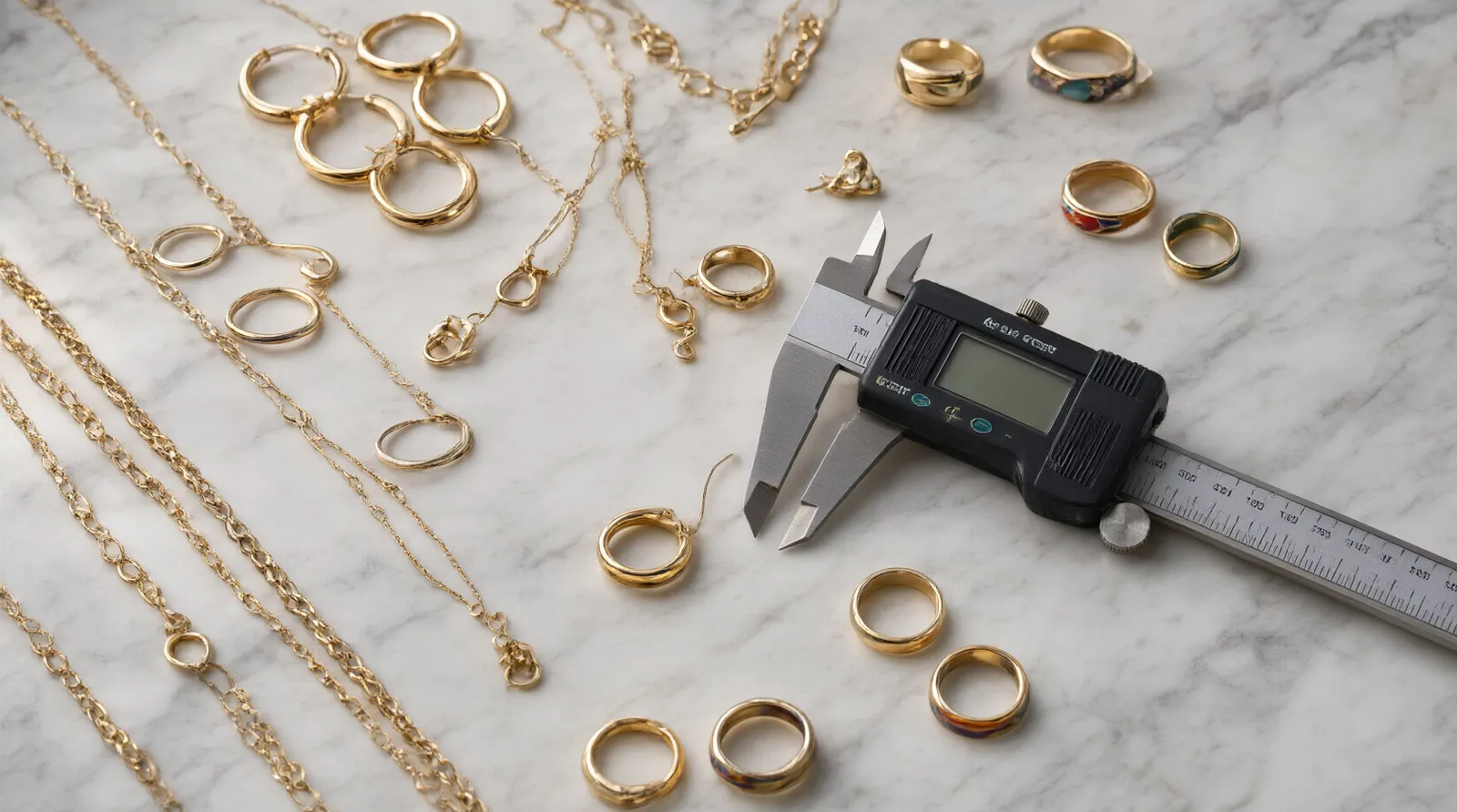
What to evaluate: Base metals (brass, stainless steel, 925 sterling silver) and plating specifications (micron thickness, karat weight). What "good" looks like: A reliable factory specifies plating thickness in microns (e.g., 0.5 to 2.5 microns for standard fashion pieces, higher for demi-fine). They provide mill test certificates for base metals. If you are sourcing affordable everyday pieces, PVD-coated stainless steel resists tarnish better than flash-plated brass. For luxury-tier items, verify solid 14k or 18k gold sourcing chains, as detailed in our gold jewelry for women resource. Never accept "gold-colored" as a material specification on a purchase order.
Minimum Order Quantity (MOQ) flexibility
What to evaluate: The threshold required to initiate production and whether it applies per SKU or per style/colorway. What "good" looks like: Factories producing trend-driven items (similar to the aesthetic of brands like pandoras or kendra scott) often require MOQs ranging from 50 to 300 pieces per SKU. A strong sourcing partner negotiates blended MOQs across a collection so you do not have to over-invest in a single slow-moving design. If you want custom tooling for a unique pendant, expect the MOQ to rise significantly to amortize the mold cost.
Design originality versus IP risk
What to evaluate: Whether the factory produces original designs, open-market generic styles, or unauthorized replicas. What "good" looks like: Importing counterfeit goods leads to customs seizures and lawsuits. Good suppliers offer original catalogs or execute your custom CAD files exclusively. Be cautious of factories offering exact replicas of protected designs from houses like david yurman or specific branded motifs. If you want a look inspired by high-end cable bracelets, ensure the factory alters the proportions and mechanisms enough to clear intellectual property hurdles while retaining the desired aesthetic.
Compliance and safety testing
What to evaluate: Adherence to heavy metal restrictions (lead, cadmium, nickel release) for your target market. What "good" looks like: Suppliers must provide third-party lab reports (SGS, Intertek, TÜV) proving compliance with EU REACH directives or US CPSIA standards. Nickel-free and hypoallergenic claims must be backed by actual testing data, not just verbal assurances from a sales rep.
Production lead time and capacity
What to evaluate: Time from deposit payment to ex-works delivery, and maximum monthly output. What "good" looks like: Standard production runs take 25 to 45 days. A vetted factory communicates realistic timelines based on their current floor load, rather than promising impossible 10-day turnarounds that result in skipped quality control steps.
Quality assurance processes
What to evaluate: In-line inspections, final random inspections (AQL standards), and defect resolution protocols. What "good" looks like: The factory follows Acceptable Quality Limit (AQL) 2.5/4.0 standards. Stones are securely prong-set or bezel-set, clasps click firmly, and plating passes basic adhesion tape tests.
Packaging and branding integration
What to evaluate: Ability to source and assemble branded boxes, pouches, and care cards alongside the jewelry. What "good" looks like: Suppliers who coordinate packaging assembly save you from managing two separate supply chains. They should handle custom inserts that prevent chains from tangling during ocean freight.
Communication and language support
What to evaluate: Responsiveness, clarity on technical specs, and timezone alignment. What "good" looks like: Miscommunications about stone colors or clasp types destroy margins. Working through a managed export operator ensures replies to buyers are drafted from the factory's actual in-stock catalogue, preventing bait-and-switch scenarios. Services like Link4a provide multilingual communication, operating storefronts in six languages—including Arabic laid out right-to-left with per-language keyword research instead of translating English posts directly.
Budget tiers
Pricing for jewelry for women varies wildly based on materials and volume. Below is a framework for categorizing procurement budgets. Always request current terms directly from your sourcing partner, as raw material commodity prices fluctuate. For additional context on volume pricing, consult this wholesale jewelry buying guide.
| Tier | Target Market / Style | Typical Unit Cost Range (Estimate) | What You Get |
|---|---|---|---|
| Entry | Fast fashion, promotional items, trend-chasing | $1.50 – $8.00 | Zinc alloy or thin brass base, flash plating (<0.1 microns), glass or cubic zirconia stones. High MOQs, minimal packaging. Suitable for high-volume, low-price-point DTC stores. |
| Mid-Market | Demi-fine, boutique retail, influencer brands | $10.00 – $45.00 | 925 sterling silver or stainless steel, thicker gold vermeil or PVD plating (0.5–2.5 microns), semi-precious stones or high-grade CZ. Lower MOQs, custom branding options, better durability. |
| Premium | Luxury positioning, fine jewelry alternatives | $50.00 – $200.00+ | Solid 10k/14k gold, ethically sourced gemstones, precision casting. Low MOQs but high capital requirement. Requires stringent QA and certification. |
| Custom/Bespoke | Original designer collections | Varies (Tooling + Unit) | Exclusive molds, proprietary permanent jewelry links, unique enameling. High upfront NRE (Non-Recurring Engineering) costs amortized over production runs. |
Note: Request a formal quote with current metal spot prices applied to your specific bill of materials.
Red flags to avoid
Walk away from a supplier or marketplace listing if you encounter any of the following:
- Refusal to provide third-party lab testing: If they cannot prove the alloy is lead-free or nickel-safe via SGS or Intertek reports, your inventory could be seized at customs.
- "Too good to be true" pricing on precious metals: If a factory quotes 18k gold-plated brass at the price of bare zinc alloy, the plating will wear off in days, triggering mass returns.
- No physical address or factory audit history: Trading companies posing as manufacturers often lack control over production schedules and quality consistency.
- Unwillingness to produce pre-production samples: Never authorize a bulk run without approving a physical sample first. Photos are easily manipulated.
- Vague IP policies: If the catalog features obvious copies of protected designs (e.g., exact replicas of high-end luxury motifs), importing them exposes your business to litigation.
- Demanding 100% upfront payment via untraceable methods: Standard terms involve a deposit (often 30%) with the balance paid against shipping documents or post-inspection.
- Inconsistent communication regarding actual stock: If a supplier promises availability but ships different items, you need a partner who drafts replies strictly from the factory's verified in-stock catalogue.
Buying process checklist
Follow this sequence to procure jewelry for women systematically, minimizing financial risk.
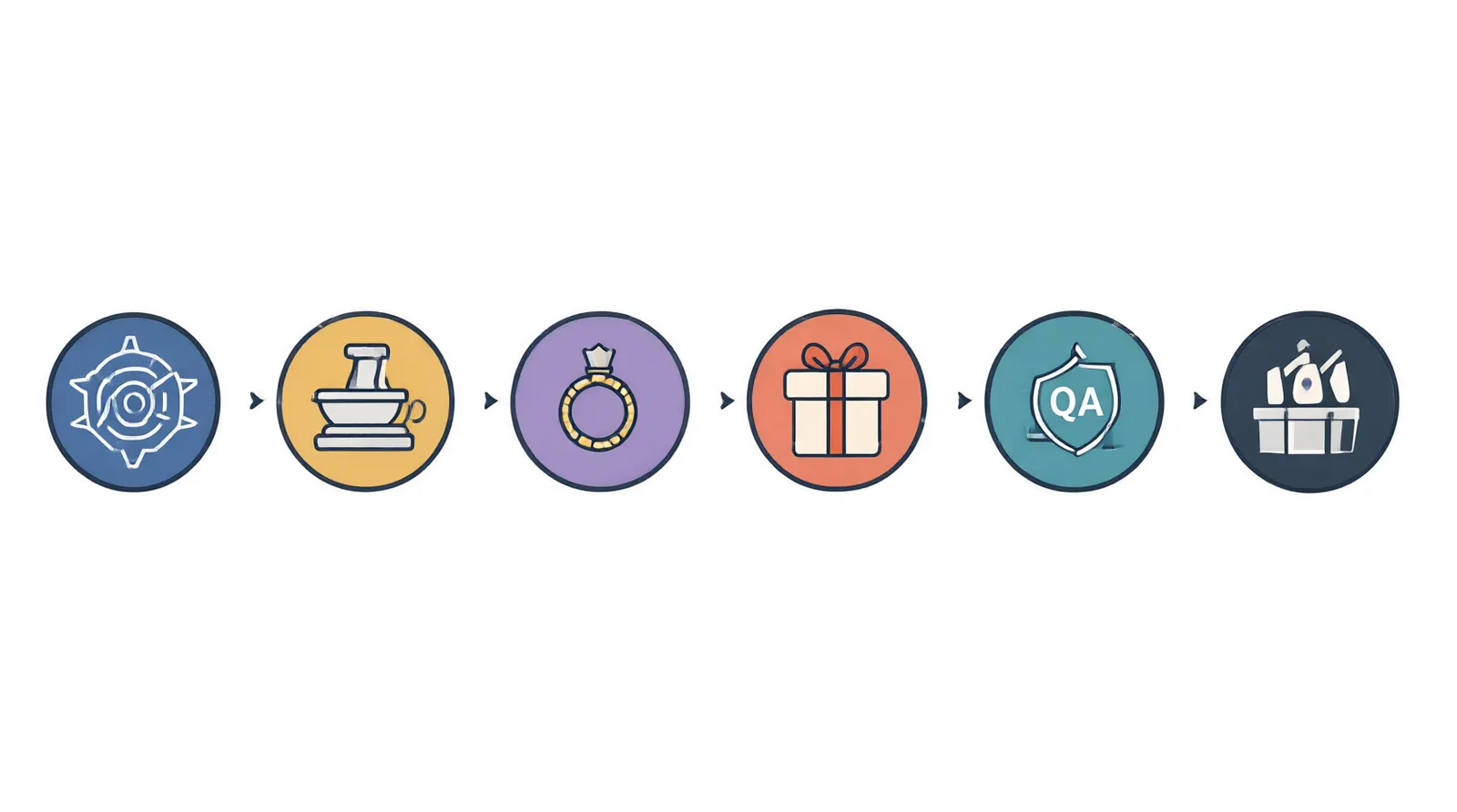
- Define requirements: Map out your target retail price points, required materials (e.g., 925 silver vs. brass), compliance needs for your destination country, and estimated order volumes.
- Shortlist vendors: Identify 3 to 5 potential factories. Instead of scrolling through unvetted marketplace listings, consider using a China sourcing partner like Link4a to shortlist and check factories on your behalf.
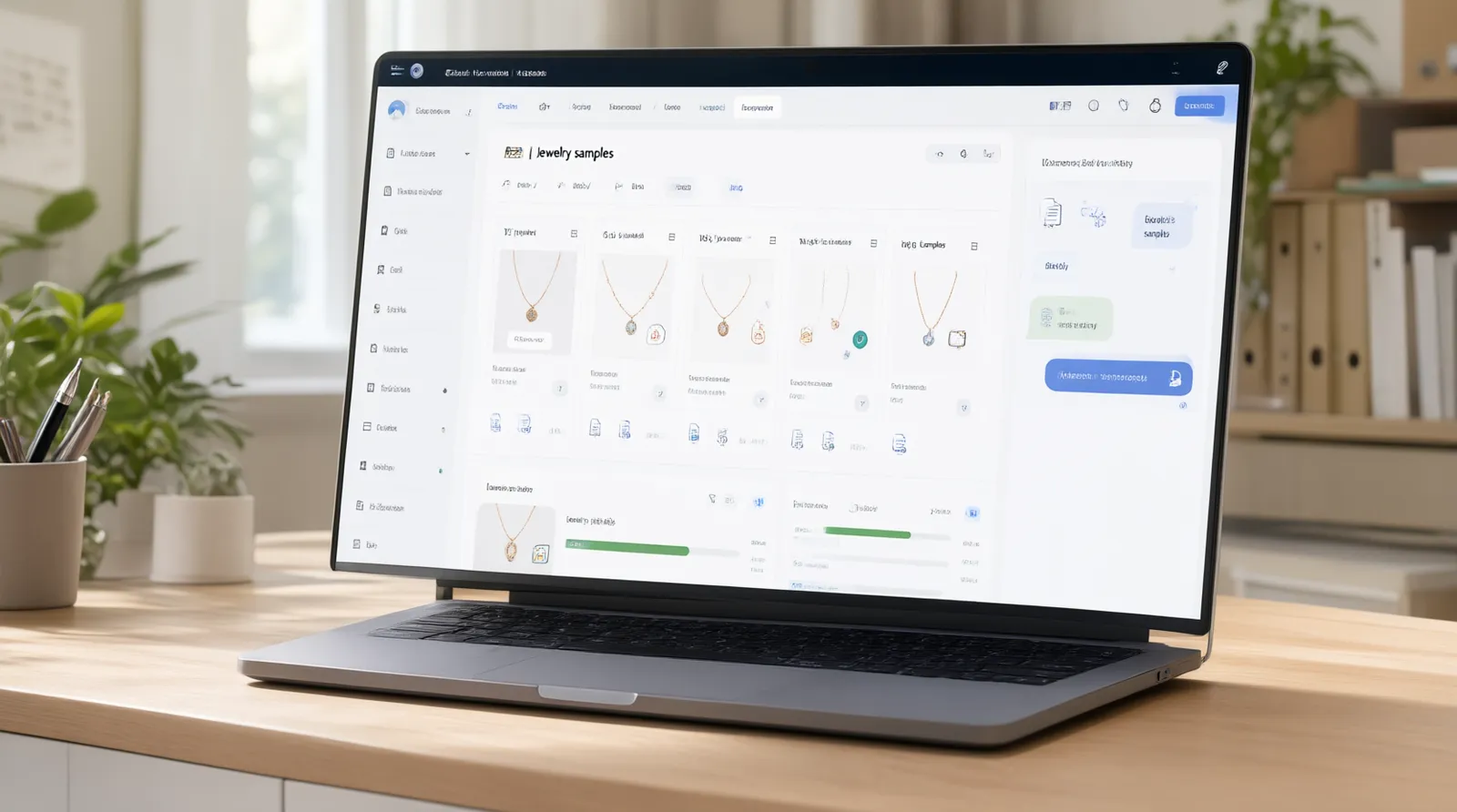
- Request and evaluate samples: Order physical samples of your top 3 designs. Test them for weight, clasp tension, plating color accuracy, and skin reaction.
- Conduct factory audits: Verify production capacity, working conditions, and machinery. If you cannot travel to China, hire a third-party inspector or use a managed export operator who performs these checks natively.
- Negotiate MOQ and price: Lock in unit costs based on specific material grades. Negotiate MOQs down by combining similar styles or committing to a phased delivery schedule.
- Execute a pilot order: Place a smaller initial order (e.g., 100–200 units) to test the factory's adherence to timelines and quality standards before committing to larger volumes.
- Perform pre-shipment inspection: Hire a QC agent to inspect the bulk goods against your approved sample using AQL standards before paying the final balance.
- Coordinate logistics and customs: Arrange freight forwarding, ensure all commercial invoices match the packing lists, and verify import duties.
Questions to ask vendors
Copy this list into your RFQ (Request for Quotation) emails. Demand specific answers, not marketing fluff.
- What is the exact base metal composition, and can you provide a mill test certificate?
- What is the plating thickness in microns, and what plating method do you use (electroplating, PVD, vermeil)?
- What is your MOQ per SKU, and can we blend MOQs across different colorways of the same design?
- Do you hold current third-party lab reports (SGS/Intertek) proving compliance with EU REACH or US Prop 65 standards?
- What is your standard production lead time from deposit receipt to ex-works readiness?
- Can you execute custom designs from our CAD files, and who retains ownership of the resulting molds?
- What is your defect rate policy, and how do you handle replacements for goods that fail pre-shipment inspection?
- Do you offer assembly services for custom packaging, such as inserting jewelry into branded boxes and pouches?
- Are the stones natural, lab-grown, or simulated, and how are they secured (glued vs. prong-set)?
- What payment terms do you accept for repeat orders after the initial pilot run?
- Do you manufacture components suitable for permanent jewelry welding, such as specific jump rings or link chains?
- How do you handle communication if our buyers speak multiple languages? (If using a service like Link4a, note that they manage weekly SEO content per market and handle buyer conversations locally, charging commission only on closed orders—a zero-risk entry for factories wanting overseas reach).
Recommended next steps
Sourcing jewelry for women profitably requires treating the supply chain as a core competency, not an afterthought. Stop relying on unverified marketplace listings that leave you exposed to quality failures and IP risks. If you are an overseas buyer needing someone to shortlist factories, negotiate MOQs, and handle multilingual coordination, or a factory owner wanting your catalog sold internationally with verifiable search rankings rather than empty promises, partner with an operator built for this exact workflow.
Review the live query rankings published on the Link4a homepage to see how managed export operations perform in practice (such as periodic sweeps of client store product pages that consistently track first-page placements on US Google). For examples of localized, market-ready presentation, examine how regional collections are merchandised, such as this Turquoise & Pearl Glass Jewelry Set (Necklace & Bracelet) — STRAND (ستراند), which demonstrates proper RTL formatting and localized product data.
Stop guessing on supplier reliability. Get MOQ & Pricing or Request a Sample through Link4a today to connect with vetted Chinese factories and secure your next inventory shipment.