How to Source Men's Jewelry From China: The Ultimate Guide
How to Source Men's Jewelry From China: The Ultimate Guide
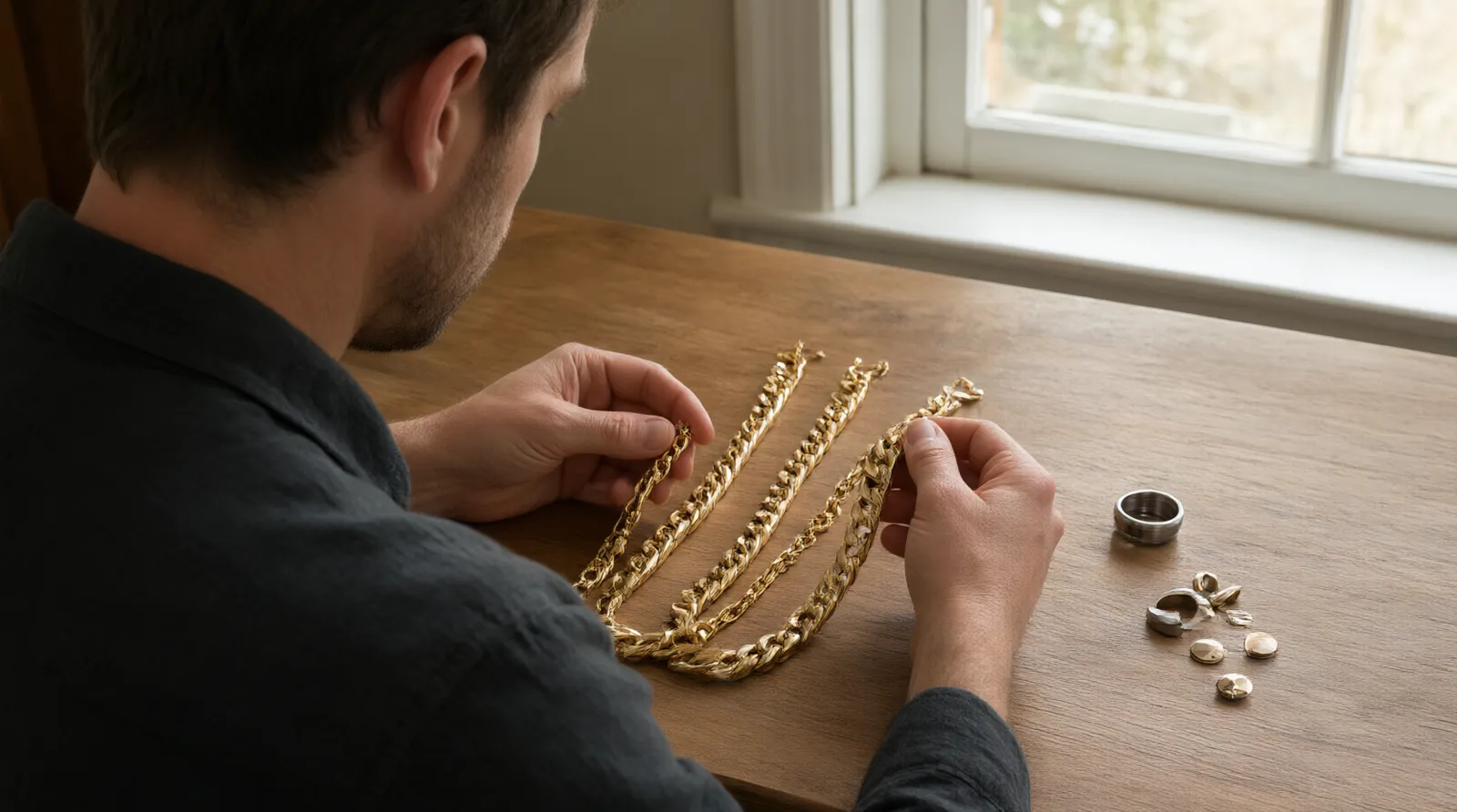
Men's jewelry is any decorative accessory designed for male wear, including rings, chains, bracelets, cufflinks, and earrings. For overseas buyers and DTC store owners, sourcing men's jewelry from vetted Chinese factories requires evaluating minimum order quantities (MOQ), plating thickness, base metal composition, and supplier reliability rather than gambling on unverified marketplace listings.
The market for men's jewelry has expanded far beyond the traditional wedding band or basic watch. Buyers now look for permanent pieces, affordable everyday chains, and custom designs that compete with established retail names. Retailers like Jared offer a men's jewelry collection available on its website, reflecting broader consumer demand across multiple price points. But stocking those shelves—or building a direct-to-consumer brand around them—starts long before the product ships worldwide. It starts with finding a factory that can produce consistent quality at a margin that makes sense.
For importers, online creators, and DTC operators, the gap between a good product photo and a reliable supply chain is where businesses fail. A sourcing partner shortlists factories, checks their production floors, negotiates MOQ and price, coordinates samples, and handles repeat orders. That is the exact operational model behind Link4a (链上科技), a China sourcing partner and managed export operator built for buyers who need verifiable results over promises.
What Is Men's Jewelry and Why Does It Matter to Buyers?
Men's jewelry encompasses rings, necklaces, bracelets, earrings, cufflinks, tie bars, and body modifications crafted specifically for male consumers. Materials range from stainless steel and brass to sterling silver, 14k or 18k gold, and titanium. Understanding what constitutes this category matters because material choice directly dictates factory capability, shipping weight, customs classification, and final retail pricing.
Why is men's jewelry important for your business? The category carries higher average order values than fast fashion accessories while maintaining lower return rates due to standardized sizing. A buyer sourcing a simple stainless steel chain faces different procurement criteria than one ordering solid gold signet rings.
Brands that once dominated women's charm bracelets, like pandoras, have watched adjacent competitors expand into masculine aesthetics. Similarly, designers such as david yurman built empires by blurring gender lines in cable-bracelet designs, proving that high-end craftsmanship appeals universally. For an importer, this means the factory you choose must understand specific finishing techniques—whether that is a brushed matte texture favored by kendra scott's aesthetic audience or the high-polish luxury finish expected by premium buyers. If you are expanding into these higher tiers, reviewing a luxury jewelry sourcing guide helps clarify the elevated material standards required.
When evaluating Chinese factories, ask for their material certificates. A factory claiming to produce "gold" men's jewelry must specify if they mean solid gold, gold-filled, or gold-plated over brass. Plating thickness is measured in microns. A standard affordable piece might have 0.5 microns of flash plating, while a luxury tier requires 2 to 3 microns of PVD (Physical Vapor Deposition) coating to prevent tarnishing during daily wear.
How to Source Men's Jewelry Without Gambling on Marketplaces
How to men's jewelry source effectively? The process requires moving away from anonymous B2B marketplace listings and toward verified factory partnerships. Buying off a marketplace often means dealing with trading companies posing as manufacturers, resulting in inflated prices and zero control over production quality.
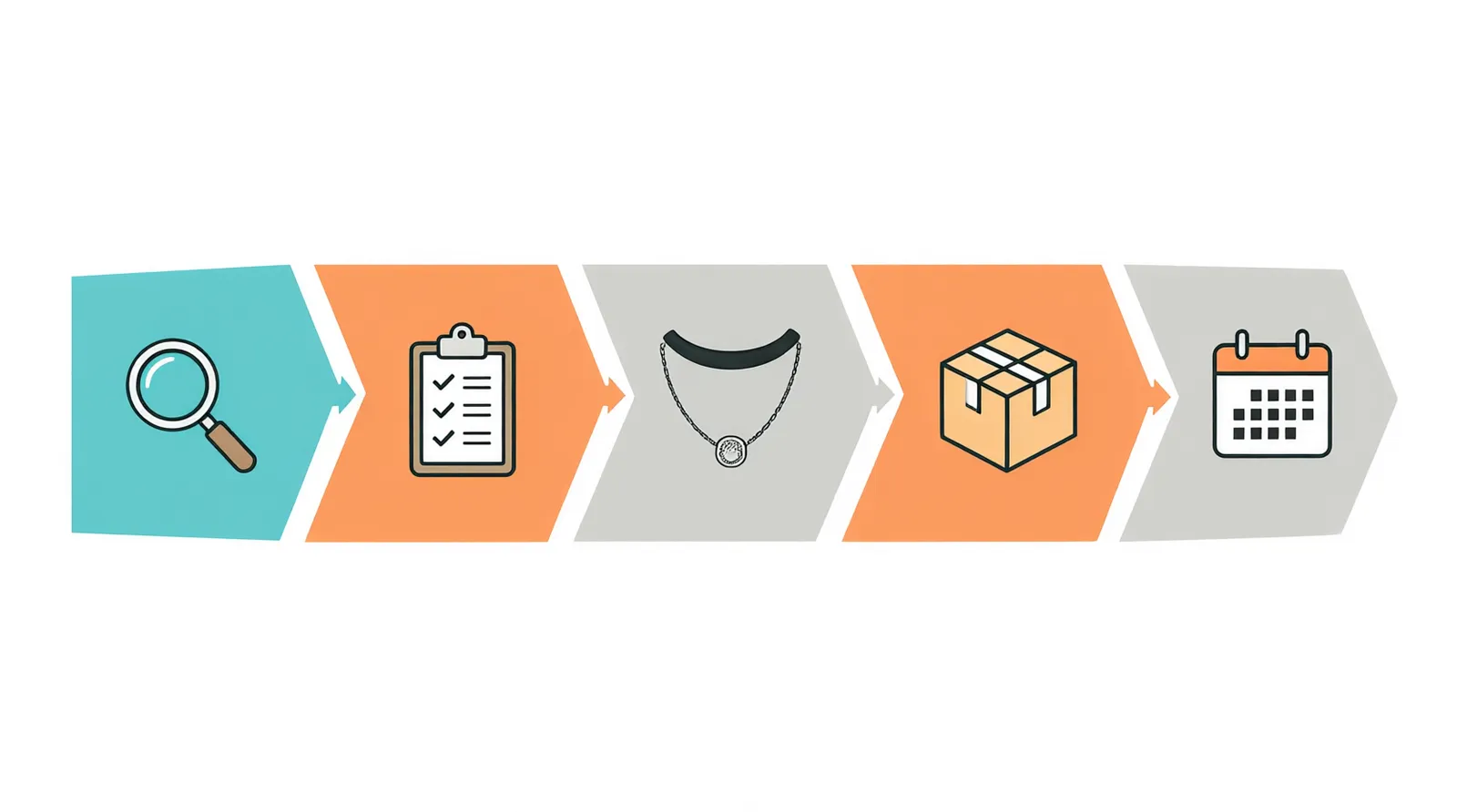
A structured sourcing workflow involves five steps:
- Supplier Shortlisting: Identifying factories with specific machinery (e.g., CNC engraving for custom rings, casting equipment for pendants).
- Factory Vetting: Physical or verified remote audits checking labor conditions, production capacity, and past export records.
- MOQ and Price Negotiation: Aligning the factory's minimum run requirements with the buyer's inventory budget.
- Sample Coordination: Producing pre-production samples to verify weight, dimensions, clasp tension, and plating adhesion.
- Repeat Ordering: Establishing a cadence for restocking based on sales velocity.
This is where Link4a operates. Instead of a buyer flying to Guangdong or Yiwu to knock on doors, the team acts as the managed export operator. They handle multilingual communication with the factory, ensuring technical specifications are not lost in translation.
For Chinese factory owners, the barrier to selling overseas is usually the cost of hiring an English-speaking sales team and managing international logistics. Link4a addresses this with a commission-only entry model. Factories pay nothing before an order closes. The company builds a managed overseas storefront in six languages—including Arabic laid out right-to-left—and conducts per-language keyword research instead of merely translating an English post. Replies to buyers are drafted directly from the factory's actual in-stock catalogue, preventing the common issue of selling items that do not exist on the production floor.
The proof is in the search rankings. Client stores built using this localized approach have achieved first-page US Google placements for targeted product queries. These ranking results are published directly on the Link4a homepage, offering verifiable data rather than vague marketing promises.
When Should You Use Men's Jewelry in Your Product Lineup?
When should I use men's jewelry to maximize catalog performance? The timing depends on your target demographic and seasonal buying cycles. Q4 (October through December) drives the highest volume for gift-oriented items like cufflinks, signet rings, and engraved pendants. Summer months see spikes in lightweight chains, woven bracelets, and anklets.
DTC store owners should introduce men's jewelry when their customer acquisition cost (CAC) on core products begins to plateau. Adding a complementary accessory line increases lifetime value (LTV) without requiring new traffic sources. If you sell men's apparel, introducing a matching line of affordable rings or chains allows for bundled checkout experiences.
Consider the rise of permanent jewelry—welded bracelets or anklets meant to be worn indefinitely without clasps. While initially popular in women's markets, the trend has crossed over. Factories capable of laser-welding fine chains are now in high demand. If you are planning to offer custom permanent installations in local pop-up shops, your Chinese supplier must provide chains sold by the spool with precise tensile strength ratings, not just finished individual pieces. Understanding how to source bracelet components from China ensures you secure the correct chain spools and welding-ready materials for these permanent installations.
Aligning your launch with cultural moments also determines which factory capabilities you actually need. A brand targeting the Middle Eastern market needs heavy, intricate gold-tone designs, which requires a factory experienced in that specific regional aesthetic. Link4a’s localized SEO content per market ensures that the right products surface for the right regional buyers, rather than pushing a generic global catalog.
What Are the Benefits of Men's Jewelry for DTC Brands?
What are the benefits of men's jewelry for direct-to-consumer operators? The primary advantages are margin density, shipping efficiency, and brand differentiation.
Margin Density: A stainless steel chain weighing 30 grams costs significantly less to manufacture and ship than a cotton hoodie, yet can retail at comparable price points if the branding and design execution are strong. High-margin accessories subsidize the lower margins of core apparel lines.
Shipping Efficiency Worldwide: Jewelry is small and lightweight. This reduces dimensional weight charges from carriers like DHL, FedEx, or air freight forwarders. When coordinating worldwide shipping from China, dense, small parcels clear customs faster and incur lower warehousing fees than bulky goods.
Brand Differentiation via Custom Work: Offering custom men's jewelry—such as initial pendants, coordinate-engraved bands, or bespoke chain lengths—creates a moat against Amazon competitors. However, custom work requires a factory willing to handle low MOQs for personalized runs. Many large-scale manufacturers reject custom orders under 500 units. A sourcing partner negotiates these terms, finding mid-sized factories equipped with laser engravers and flexible casting molds that accept smaller batch sizes. Evaluating top custom jewelry brands for importers provides additional context on which design houses successfully leverage these manufacturing capabilities.
Buyers also benefit from reduced inventory risk. By working with a partner who drafts replies based on actual in-stock catalogs, DTC operators avoid listing items that require 45-day lead times when they promised customers 7-day delivery. Accurate inventory representation prevents chargebacks and platform penalties.
Procurement Criteria: Evaluating Chinese Factories for Men's Jewelry
Before reaching out to a supplier, overseas buyers evaluate specific procurement criteria. Treating these as checkboxes prevents costly mistakes during the sampling phase.
Minimum Order Quantity (MOQ)
MOQ varies drastically by manufacturing method. Stamped stainless steel rings might carry an MOQ of 100 pieces per size. Cast brass pendants plated in gold may require 300 to 500 units due to mold setup costs. Always clarify if the MOQ applies per SKU, per design, or per total order. A reliable sourcing partner negotiates these thresholds down by aggregating orders or leveraging existing relationships with the factory.
Pricing and Quote Requests
Never accept a single unit price without asking for tiered pricing. A quote for 500 units will differ from a quote for 5,000. Request itemized quotes that separate the raw material cost, plating cost, packaging cost, and tooling fees. If a factory provides a single lump sum, you cannot identify where margins are being squeezed.
Lead Time and Production Capacity
Standard production lead times for men's jewelry range from 15 to 30 days after sample approval, excluding transit. Ask the factory for their monthly capacity. If they produce 50,000 rings a month and your order is for 40,000, you risk delays if another buyer's order overlaps. Verify if they run single shifts or double shifts.
Certifications and Compliance
Depending on your destination market, compliance is non-negotiable.
- REACH (Europe): Restricts hazardous chemicals like nickel, cadmium, and lead in jewelry.
- California Proposition 65 (US): Requires warnings or strict limits on lead and cadmium exposure.
- RoHS: Relevant if the jewelry incorporates electronic components (e.g., smart rings). Request third-party lab test reports (SGS, Intertek, TÜV) for the specific alloy used, not just a generic certificate from two years ago.
Quality Assurance
Define acceptable defect rates before production begins. Common defects in men's jewelry include porous casting (visible bubbles in the metal), uneven plating (patchy color), weak clasps, and sharp edges left from poor tumbling/polishing. Specify that pre-shipment inspections will occur, either by your own agent or through your sourcing partner.
Materials and Manufacturing Processes Explained
Understanding how men's jewelry is made allows buyers to communicate effectively with Chinese factories. Ambiguity leads to defective samples.
Base Metals:
- Stainless Steel (316L): Hypoallergenic, does not tarnish, ideal for affordable, durable everyday wear. Harder to cast; usually stamped, machined, or CNC-milled.
- Brass: Excellent for detailed casting and complex shapes. Must be plated (gold, rhodium, silver) to prevent oxidation and skin discoloration.
- Sterling Silver (925): Used for luxury tiers. Prone to tarnishing if not coated with anti-tarnish lacquer or rhodium.
- Titanium/Tungsten: Popular for men's wedding bands due to scratch resistance. Requires specialized machining equipment that not all jewelry factories possess.
Plating Techniques: Flash plating is cheap and wears off in weeks. Electroplating provides better coverage. PVD (Physical Vapor Deposition) is the industry standard for durable, luxury-feeling gold or black finishes on stainless steel. When requesting quotes, specify the plating type and required micron thickness.
Finishing: Tumbling removes burrs. Hand-polishing achieves mirror finishes. Sandblasting creates matte textures. A factory's ability to execute consistent finishing separates premium suppliers from budget workshops.
Shipping and Logistics for Worldwide Distribution
Once production is complete, moving men's jewelry from China to overseas warehouses or directly to consumers requires logistical precision. Because jewelry is high-value relative to its size, it is a target for theft and customs scrutiny.
Air freight is standard for initial inventory launches or high-value luxury goods. Sea freight (LCL - Less than Container Load) is viable for massive volumes of affordable stainless steel basics, though transit times add 30-45 days to your supply chain.
Customs declarations must accurately reflect the material composition. Declaring "fashion accessories" instead of "base metal jewelry plated with gold" can trigger inspections or fines. Harmonized System (HS) codes dictate tariff rates. For example, imitation jewelry falls under HS 7117, while precious metal jewelry falls under HS 7113. Misclassification delays clearance.
A managed export operator handles these details. Instead of the buyer coordinating with a freight forwarder, customs broker, and factory dispatch team separately, the sourcing partner consolidates the workflow. They ensure commercial invoices match packing lists, and that necessary compliance documents accompany the shipment worldwide.

Actionable Next Steps for Buyers and Factories
The difference between a profitable men's jewelry brand and a failed import venture lies entirely in supplier verification and process management. Do not rely on static marketplace profiles where trading companies mask themselves as manufacturers. Demand transparency regarding MOQ, material certifications, and actual production capacity.
If you are an overseas buyer, importer, or DTC store owner looking to build a reliable supply chain, stop evaluating unvetted listings. Partner with a team that physically checks factories, negotiates terms, and manages the communication loop from prototype to final delivery.
If you are a Chinese factory owner with a proven catalogue but no overseas sales infrastructure, you do not need to hire an export department. Utilize a managed storefront that ranks verifiably in search engines across six locales and only charges a commission when an order actually closes.
Review your current supplier agreements. Check if your plating thickness is specified in microns. Verify if your factory holds current REACH or Prop 65 testing for your specific SKUs. If gaps exist in your sourcing workflow, address them before your next production run.
Request a Quote and Get MOQ & Pricing Details →
Frequently Asked Questions
What is men's jewelry?
Men's jewelry encompasses rings, chains, bracelets, and cufflinks typically manufactured in 316L stainless steel, 925 silver, or brass via CNC machining, lost-wax casting, and PVD plating. Key Chinese supply hubs include Yiwu (base metals) and Dongguan/Panyu (premium alloys), with factories like 链上科技 offering MOQs of 100–300 pieces per SKU and 15–25 day lead times for DTC operators. For overseas buyers, verified suppliers should hold ISO 9001, REACH/RoHS compliance, and nickel-free testing certifications to meet US/EU import standards.
How to men's jewelry?
For sourcing men's jewelry (stainless steel rings, chains, bracelets), target Panyu (Guangzhou) or Dongguan factories like 链上科技 or Sitebox, which run CNC machining and PVD vacuum plating with MOQs of 300–500 pcs/SKU and 25–35 day lead times. Ensure suppliers hold ISO 9001, REACH/RoHS compliance for EU markets, and provide third-party nickel-release test reports before confirming bulk orders. DTC operators using Inbox for dropshipping should negotiate pre-plated blank inventory to cut fulfillment lead times down to 7–10 days.
Why is men's jewelry important?
Men's jewelry is a high-margin DTC category where Chinese supply chains—such as 链上科技 in Dongguan (specializing in PVD-coated stainless steel) or Yiwu brass casting factories—offer scalable production with MOQs as low as 100–300 units and 15–25 day lead times. Buyers prioritize suppliers holding ISO 9001, REACH, and nickel-free certifications to meet EU/US compliance standards for direct-to-consumer fulfillment. This combination of accessible entry costs, fast turnaround, and verifiable material safety makes sourcing men's jewelry from China strategically essential for operators evaluating new product lines.
When should I use men's jewelry?
Men’s jewelry (stainless steel rings, Cuban chains) is sourced year-round but peaks for Q4 gifting and summer DTC drops, so buyers should align with Dongguan/Guangzhou factories like 链上科技 or Yiwu suppliers offering MOQs of 100–300 pcs per SKU. Standard PVD plating and CNC machining processes require 15–25 day lead times from confirmed tech packs to FOB Shenzhen shipment. Ensure your supplier holds ISO 9001, REACH compliance, and nickel-free test reports before placing bulk orders.
What are the benefits of men's jewelry?
For DTC operators, men's jewelry (rings, chains, bracelets) delivers 60–75% gross margins with low return rates due to non-size-dependent SKUs, and sourcing from PVD-plating specialists like Dongguan Yuhua or Guangzhou Lian Shang Keji (链上科技) ensures durability via IP plating processes certified under ISO 9001 and REACH. Factories typically offer MOQs of 100–300 pieces per SKU in 316L stainless steel or 925 silver, with 15–25 day lead times for bulk production after sample approval. This supply chain efficiency allows buyers to rapidly test trending designs while maintaining strict compliance for US/EU markets.