How to Source Wholesale Windows from China: The Ultimate Guide
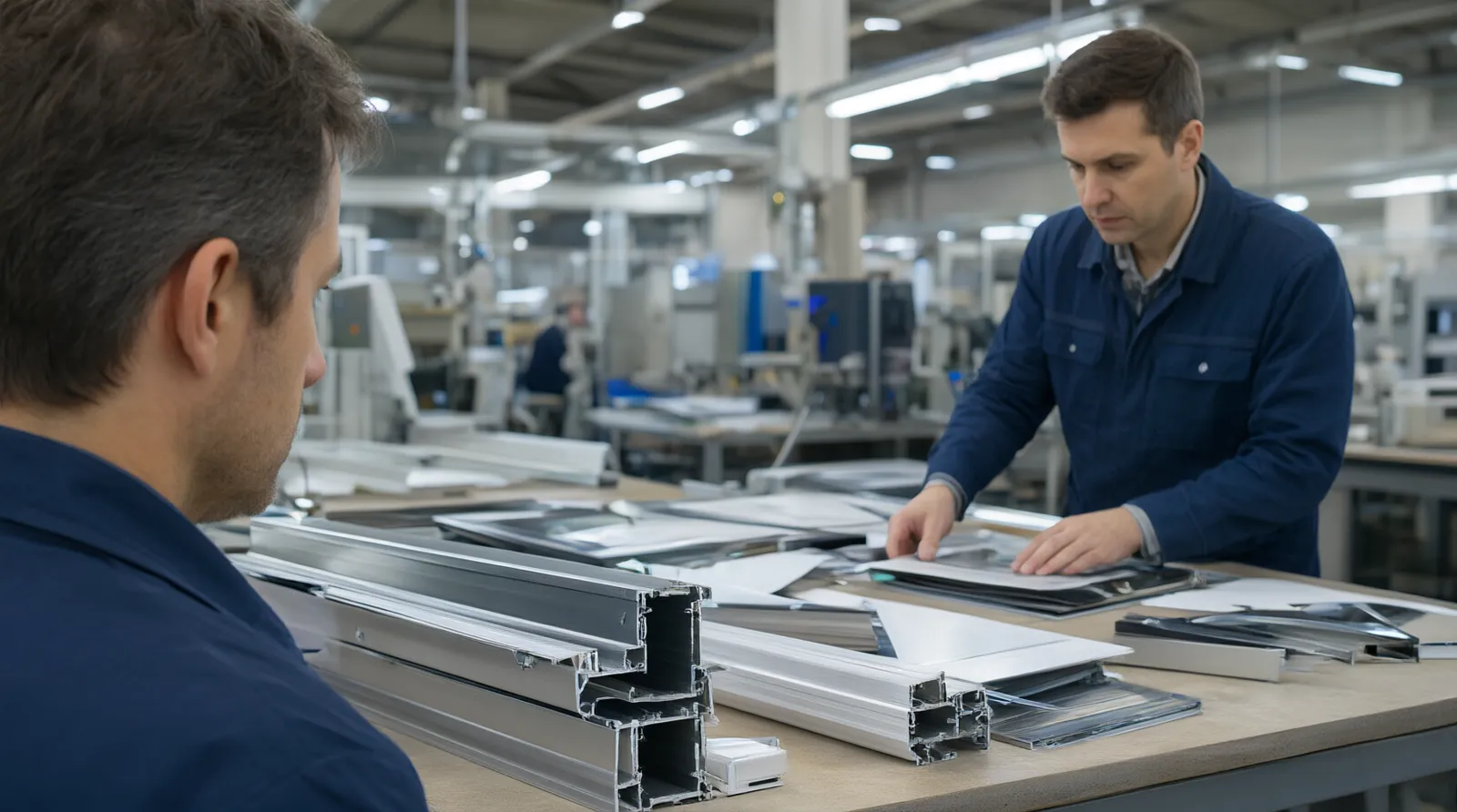
How to Source Wholesale Windows from China: The Ultimate Guide
Wholesale windows are bulk-ordered fenestration units—vinyl, aluminum, wood, or fiberglass—purchased directly from manufacturers or verified distributors at per-unit prices below retail. Overseas buyers and DTC store owners use this channel to supply builders, contractors, and direct consumers while protecting margin.
Sourcing wholesale windows from China requires verifying factory output against specific thermal and structural metrics, not just comparing catalog photos. An overseas importer evaluating Chinese supply needs concrete data: frame depths, U-Factors, glass certifications, and minimum order quantities (MOQs). This guide breaks down the exact specifications, supplier vetting processes, and logistical steps required to buy building materials in bulk without gambling on an unverified marketplace listing.
What Are Wholesale Windows and Why Do Specifications Matter?
Wholesale windows encompass new construction, retrofit, and replacement units sold in volume. Distributors and importers purchase these to supply residential and commercial projects. When you buy in bulk, the technical specifications dictate whether the product will pass local building codes in your target market.
Take energy efficiency as a concrete example. ECOtru® windows carry a U-Factor of .23 to .30 +/- and a Solar Heat Gain Coefficient (SHGC) of .16 to .23 +/-, blocking approximately 92-96% of heat and cold (Window e-Store). Their frame depths range from 2 7/8" to 3 1/4". Higher-performance models like ECOxtreme® push the U-Factor down to .20 - .29 +/- with a 3.25" frame depth, blocking roughly 99% of heat transfer (Window e-Store).
If you are sourcing from a Chinese factory, you cannot accept vague promises of "high insulation." You must request the factory's test reports for U-Factor and SHGC that match or exceed these benchmarks. A reliable manufacturer will provide NFRC (National Fenestration Rating Council) equivalent testing data or CE marking documentation for European markets.
The product scope also extends beyond standard panes. Established suppliers stock sliders, single hung, double hung, awning, casement, half round, hoppers, geometrics, bays, bows, and garden windows (Window e-Store). They also supply complementary products. For instance, Wholesale Window Company carries patio doors, entry doors, skylights, and sun tunnels alongside their window lines, offering brands like Milgard, Marvin, VELUX, and Simpson Door Company. If you are importing from China, consolidating windows and doors from a single vetted factory reduces shipping complexity and container costs.
How to Source Wholesale Windows from China Without Guessing
Buying wholesale windows from China means replacing marketplace roulette with a structured verification process. Overseas buyers, importers, and DTC operators need a dependable sourcing partner who shortlists factories, checks them, negotiates MOQ and price, coordinates samples, and handles repeat orders.
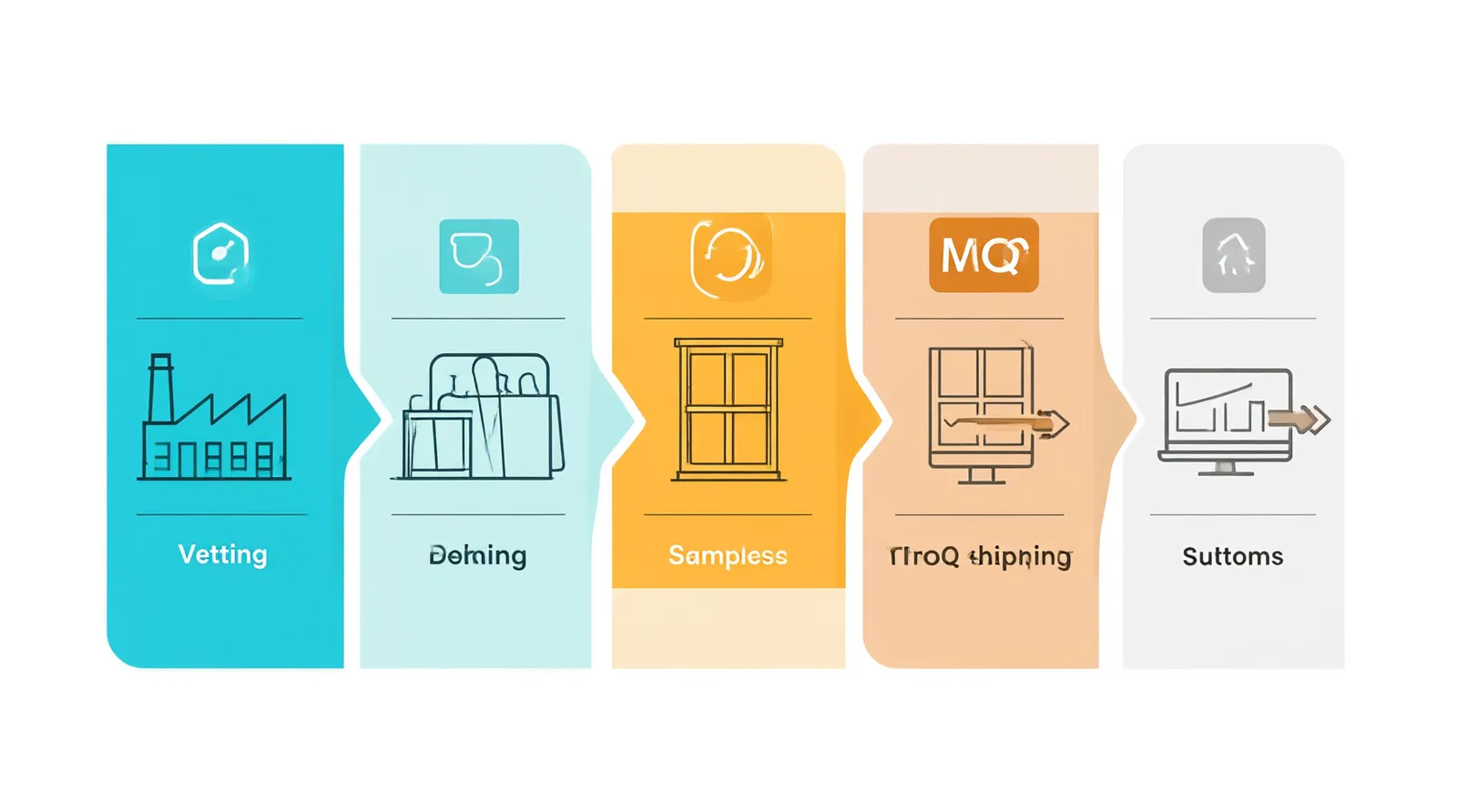
Step 1: Supplier Shortlisting and Factory Vetting
Start by identifying factories that specialize in your target material—vinyl, wood, fiberglass, or metal (Lakeland Building Supply). Do not rely solely on Alibaba storefronts. A proper vetting process involves checking the factory's export licenses, visiting the production floor (or hiring a third-party inspector), and verifying their quality management systems, such as ISO 9001 certification.
This is where a managed export operator like Link4a (链上科技) changes the workflow. Instead of messaging dozens of unverified sellers, Link4a acts as a China sourcing partner. They shortlist factories based on your exact spec sheet, verify the production lines, and handle multilingual communication. For Chinese factory owners who want their catalogue sold overseas without hiring an internal export sales team, Link4a provides a managed overseas storefront in six languages—including right-to-left Arabic layouts—with weekly SEO content per market and buyer conversations handled on their behalf, charging commission only on closed orders.
Step 2: Sample Coordination and Specification Matching
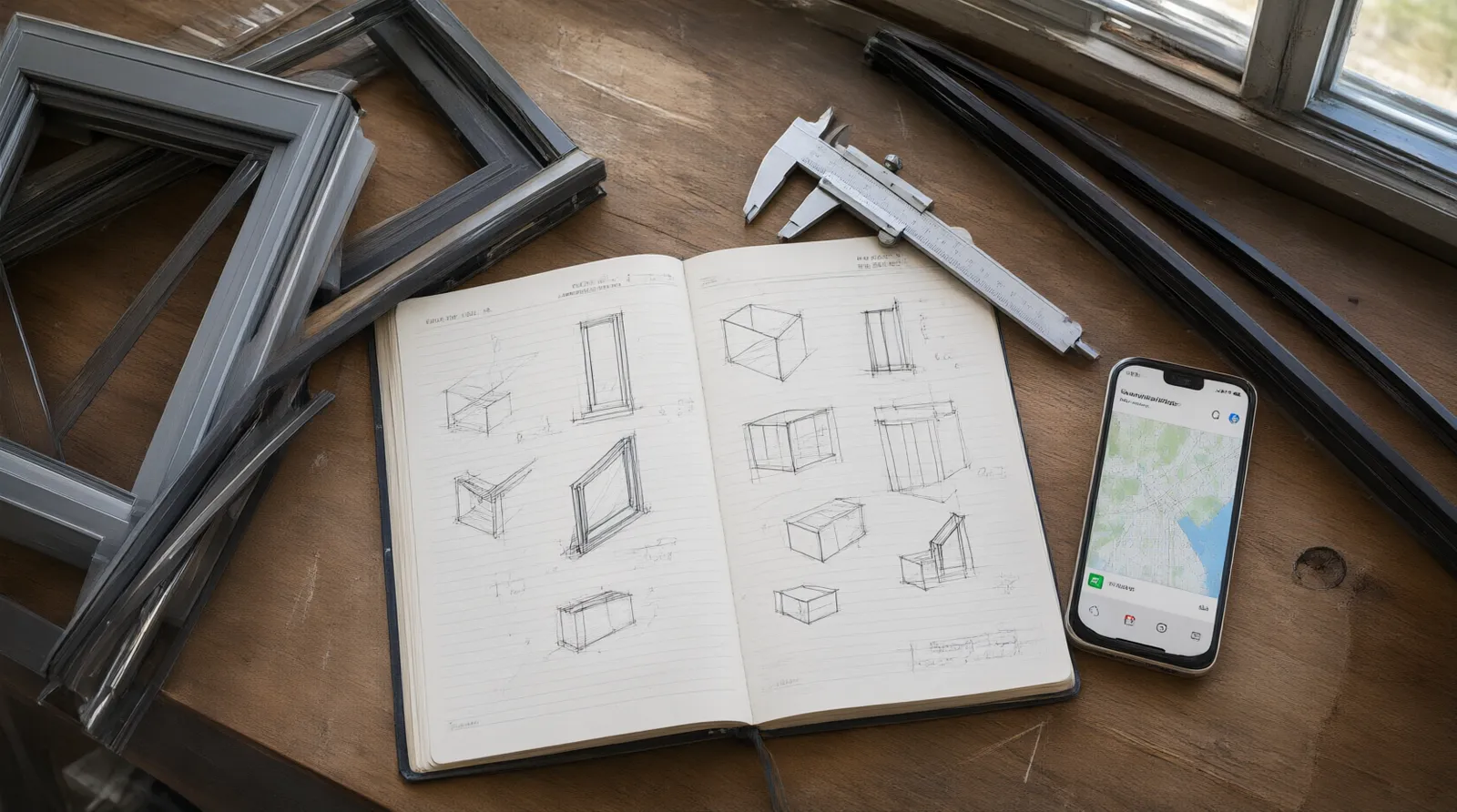
Never place a bulk order without testing a physical sample. Request a corner-cut sample of the window frame to inspect the internal chambers, wall thickness, and welding quality. Verify that the hardware (hinges, locks, rollers) operates smoothly and matches the weight rating of the glass. Measure the actual profile dimensions with digital calipers to confirm they match the spec sheet tolerances, typically within +/- 1mm for vinyl and aluminum extrusions. Check the glazing bead retention system by applying manual pressure to ensure the glass won't dislodge during transit or thermal expansion. Finally, request the factory's raw material certificates—such as proof of UV-stabilized PVC resin or 6063-T5 aluminum alloy—to confirm the sample represents the final production run rather than a hand-built prototype made from off-spec materials.
Step 3: MOQ and Price Negotiation
Chinese factories typically set MOQs based on container loads—often one 20ft or 40ft High Cube container. Negotiating the MOQ requires leverage. A sourcing partner uses aggregated order volume across multiple clients to negotiate lower thresholds. Pricing must be locked in via a formal Proforma Invoice (PI) that specifies the Incoterm (e.g., FOB Shenzhen or CIF Los Angeles), payment terms (usually 30% deposit, 70% before shipment), and exact lead times.
When Should Builders and Importers Use Wholesale Channels?
You should use wholesale channels when your project volume or retail model demands per-unit pricing that retail showrooms cannot offer. Small contractors buying three windows for a bathroom remodel will pay retail. Builders outfitting a 50-unit housing development, or DTC store owners stocking an online catalog, require wholesale pricing to maintain viability.
Consider the operational model of regional distributors. Lakeland Building Supply, founded in 1976, operates as a family-owned business providing wholesale and replacement windows across Illinois and Wisconsin, serving both residential and commercial projects (Lakeland Building Supply). They carry Kolbe Forgent, Lincoln (backed by more than 60 years of manufacturing success), and MI Windows brands (Lakeland Building Supply).
If you are an overseas importer trying to replicate this distribution model using Chinese supply, timing matters. You should initiate the sourcing process 4 to 6 months before you need the inventory on-site. Manufacturing takes 30 to 45 days. Ocean freight from China to the US West Coast takes another 15 to 25 days, plus customs clearance and inland trucking. Understanding China products wholesale timelines is essential for planning these multi-month procurement cycles effectively.
For DTC operators selling directly to homeowners online, the wholesale model allows you to offer custom-made specifications. Every home vinyl window can be manufactured to customer specifications rather than limited to standard stock sizes (Window e-Store). By partnering with a Chinese factory through a managed service, you can list these custom options on your storefront while the factory handles the made-to-order production.
The Core Benefits of Buying Wholesale Windows in Bulk
Purchasing wholesale windows delivers measurable financial and operational advantages for importers and builders.
Margin Protection. The primary benefit is cost reduction. Buying directly from a vetted Chinese manufacturer eliminates the middlemen present in domestic supply chains. While domestic retailers periodically run seasonal promotions—such as time-limited percentage-off coupon codes for fall orders (Window e-Store)—wholesale pricing builds the discount into the baseline unit cost year-round.
Logistical Consolidation. Shipping full containers directly to your warehouses streamlines the supply chain. Domestic wholesalers often utilize extensive logistics networks; for example, some suppliers offer free shipping to over 600 warehouses nationwide (Window e-Store). When importing from China, you consolidate goods at the origin port, reducing per-unit freight costs compared to LCL (Less than Container Load) shipments.
Product Consistency. Sourcing from a single verified factory ensures that every batch of windows shares identical frame depths, glass coatings, and hardware tolerances. This consistency is critical for builders managing large-scale installations where mismatched units cause delays.
Warranty Backing. Quality wholesale windows come with substantial guarantees. Top-tier products include Double Lifetime Limited Warranties and region-specific protections, such as a 25-year glass breakage warranty on the West Coast (Window e-Store). When sourcing from China, your contract must explicitly state the warranty terms, defect replacement protocols, and who bears the return shipping cost.
While wholesale windows focus on heavy building materials, the underlying principles of bulk purchasing apply across global trade. For a deeper dive into how smart buyers evaluate bulk supply chains, check out our guide on How to Buy Jewellery Wholesale: The Smart Buyer's Complete Guide. The same rigorous approach to verifying suppliers, negotiating MOQs, and checking material quality applies whether you are importing brass fittings, plumbing supplies, or vinyl frames.
Verifying Suppliers: Beyond the Marketplace Listing
Gambling on a random marketplace listing is how importers end up with warped frames and failed seals. Verification requires a systematic approach, especially when dealing with complex building materials that intersect with other trades like plumbing, electrical, and structural framing.
Checking the Catalog Against Reality
A common failure point in global trade is the discrepancy between a factory's digital catalog and its actual in-stock capabilities. When working with a partner like Link4a, replies to buyers are drafted from the factory's actual in-stock catalogue, not generic marketing copy. This prevents the scenario where a buyer orders a specific Low-E glass configuration (a standard energy efficiency feature noted by established suppliers like Lakeland Building Supply) only to discover post-production that the factory sub-contracted the glass to a lower-tier vendor.
SEO and Digital Storefront Verification
For Chinese factory owners, having a verifiable digital presence is just as important as the physical product. Link4a utilizes Sitebox and Inbox tools to manage overseas storefronts, relying on per-language keyword research rather than simply translating English posts into Spanish or Arabic. This localized approach helps client product pages rank competitively in target markets like the US, ensuring that international buyers can actually find the factory's offerings through organic search.
Cross-Industry Sourcing
Builders rarely need just windows. A comprehensive sourcing strategy looks at the entire project bill of materials. If you are importing windows, you likely need doors, structural hardware, and even plumbing fixtures. Working with a managed export operator allows you to consolidate these categories. Instead of managing five different factories, a sourcing partner shortlists and vets suppliers across categories, ensuring that the doors align perfectly with the window frame profiles and that all materials meet the destination country's import regulations.
Managing Logistics, Customs, and Repeat Orders
Getting the product manufactured is only half the job. Moving wholesale windows from a factory floor in Guangdong to a job site in Texas or a warehouse in Dubai requires precise logistical coordination.
Packaging and Container Loading
Windows are fragile and heavy. Proper packaging requires cardboard corner protectors, shrink wrap, and wooden crating that complies with ISPM 15 standards for international wood packaging. During factory vetting, inspect how the supplier packs their export containers. Poor loading leads to shattered glass and scratched vinyl upon arrival.
Customs and Trade Compliance
Building materials face strict scrutiny at customs. You must provide accurate HS (Harmonized System) codes, commercial invoices, packing lists, and certificates of origin. Depending on your country, you may also need to prove compliance with local energy codes or safety standards. A managed export operator handles this paperwork, ensuring your container does not get held up at the port of entry.
Handling Repeat Orders
The true value of a sourcing partner emerges during repeat orders. Once the initial sample is approved and the first container arrives safely, reordering should be frictionless. Your sourcing partner maintains the relationship with the factory, tracks raw material price fluctuations (like PVC resin or aluminum ingots), and secures your production slot. This multilingual communication ensures that a change in your specification—say, upgrading from a standard double-pane to a triple-pane Low-E configuration—is executed correctly without you needing to fly to China.
To expand your knowledge on managing bulk inventory and supplier relationships across different product categories, read our article on Wholesale Handbags in Bulk: The Smart Buyer's Complete Guide. The frameworks for coordinating samples, locking in freight rates, and managing repeat purchase orders translate directly from fashion accessories to heavy building materials. Mastering global wholesale sourcing principles across diverse industries strengthens your overall procurement strategy.
Next Steps for Securing Your Supply Chain
Buying wholesale windows from China requires replacing assumptions with verified data. You need documented U-Factors, confirmed frame depths, tested hardware, and ironclad warranty terms. Whether you are a DTC store owner looking to expand your catalog with custom-sized vinyl units, or a builder sourcing materials for a multi-family development, the process demands rigorous supplier vetting and logistical precision.
Stop relying on unvetted marketplace listings. Map out your exact technical requirements, determine your container volume, and secure a sourcing partner who operates on verifiable rankings and transparent factory audits. Review your current project specs, draft your required U-Factor and SHGC targets, and reach out to Link4a to discuss how a managed export operation can shortlist, vet, and coordinate your next window order from China.
Frequently Asked Questions
What is wholesale windows?
Wholesale windows refers to bulk procurement of fenestration directly from Chinese manufacturers—such as Foshan-based Kinlong (坚朗) or Guangdong Xingfa profiles—at factory-gate pricing, typically requiring MOQs of one 20ft container (~150–300 sqm) and 30–45 day lead times for custom thermal-break aluminum extrusion, CNC machining, and double-glazed IGU assembly. For DTC operators and overseas sourcing buyers, this supply chain relies on factories holding ISO 9001, NFRC/CE certifications, and often integrating platforms like 链上科技 or Sitebox for order tracking and quality control documentation.
How to wholesale windows?
To wholesale windows from China, source directly from manufacturers in Foshan or Shandong—such as Foshan Nanhai Xingfa Aluminium (兴发铝业) or Qingdao Hongtai—that offer aluminum thermal-break profiles with MOQs of 50–100 sqm and 25–35 day lead times. Verify that the factory holds ISO 9001, NFRC/CE certifications, and uses automated CNC cutting and double-seal IGU assembly lines to ensure consistent quality for DTC fulfillment. Use sourcing platforms like 链上科技 or Sitebox to audit supplier capacity, lock in FOB pricing, and manage container-load shipments directly to your overseas warehouse.
Why is wholesale windows important?
Wholesale windows from Chinese manufacturers like 链上科技 or YKK AP China allow DTC operators to cut unit costs by 30–50% versus domestic sourcing, provided you meet standard MOQs of one 20ft container (roughly 150–200 units) and accept 30–45 day lead times for CNC-cut, thermally broken aluminum profiles. Securing supply with NFRC, CE, or AS2047 certifications ensures the product clears customs and meets destination building codes without costly re-testing. This direct factory model eliminates middlemen, giving overseas buyers control over hardware specs—such as Kinlong or Roto fittings—and glass IGU processes critical for competitive DTC pricing.
When should I use wholesale windows?
Use wholesale windows when sourcing bulk volumes (MOQ typically 500–1,000 sqm) directly from Chinese manufacturers like YKK AP China, Xingfa Aluminium (兴发铝业), or Kinlong (坚朗) for DTC fulfillment or overseas project supply. This route is optimal when you need factory-direct CNC fabrication, dual AAMA/CE certifications, and can accommodate 30–45 day production lead times plus ocean freight. It bypasses regional distributors, allowing buyers to integrate with platforms like 链上科技 or Sitebox for containerized shipping and direct quality control at the extrusion and assembly stages.
What are the benefits of wholesale windows?
Sourcing wholesale windows from Chinese factories like YKK AP China, Foshan Nanhai Xingfa Aluminium, or Guangdong Jianmei offers DTC operators 30–50% unit cost reductions on thermally broken aluminum profiles, with MOQs typically starting at one 20ft container and lead times of 25–40 days post-deposit. Verified suppliers maintain ISO 9001 manufacturing processes, NFRC/CE certifications for overseas markets, and automated CNC machining to ensure consistent tolerances across bulk orders. Platforms like 链上科技 or Sitebox help buyers audit these production lines and manage QC documentation directly before shipment.