How to Source Women's Jewelry from China: A Buyer's Guide
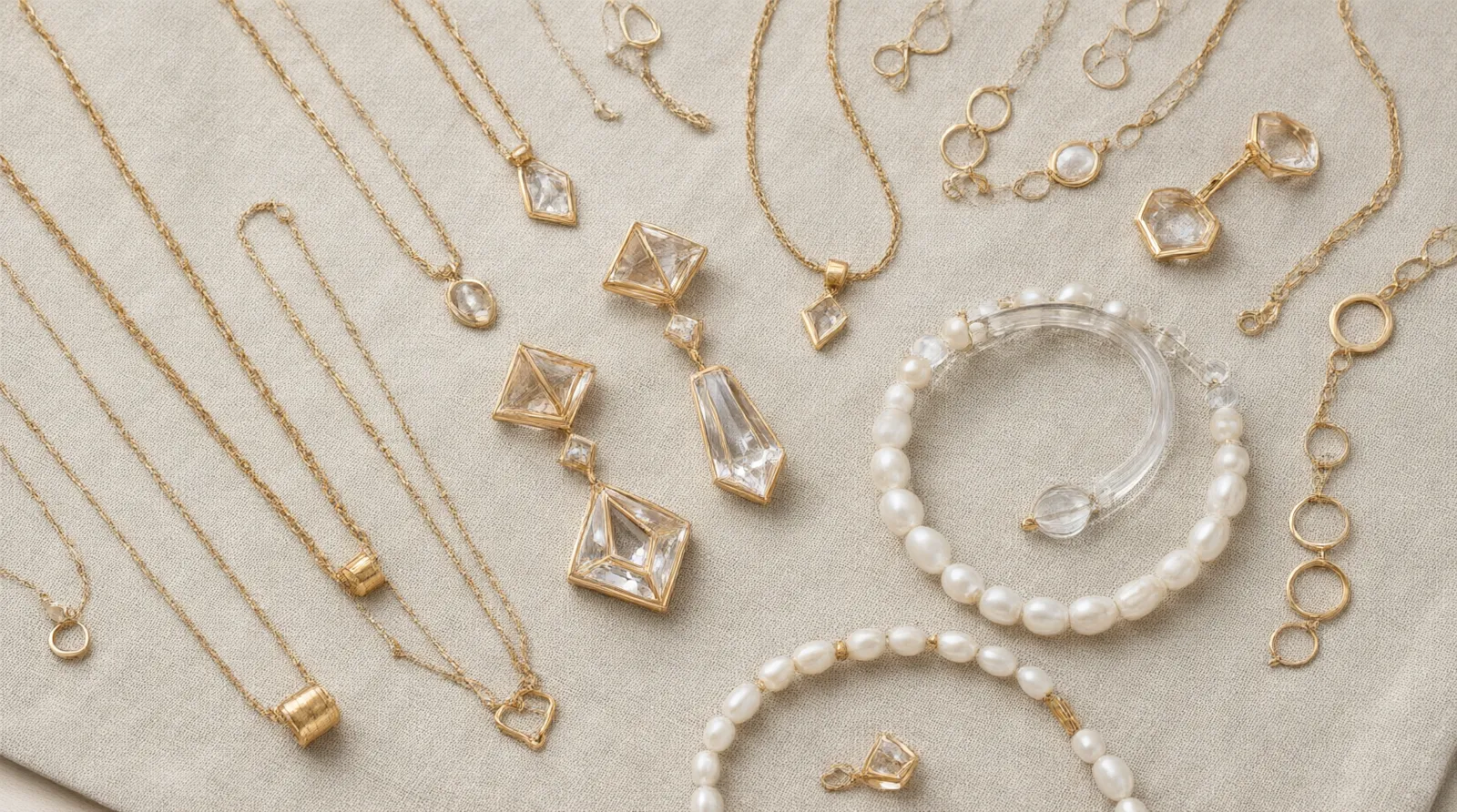
How to Source Women's Jewelry from China: A Buyer's Guide
Sourcing women's jewelry for resale requires evaluating metal composition, plating thickness, minimum order quantities (MOQs), and supplier compliance before committing capital. Buyers who skip factory vetting and rely solely on marketplace listings frequently absorb the cost of defective batches, inconsistent sizing, or delayed shipments. This guide provides the concrete procurement criteria, budget frameworks, and vendor evaluation checklists needed to source women's jewelry profitably and reliably from Chinese manufacturers.
Who this guide is for
This guide is built for overseas buyers, importers, direct-to-consumer (DTC) store owners, and online creators who need a dependable sourcing partner in China for women's jewelry. You are likely expanding your current catalog beyond basic accessories, launching a new brand line, or replacing an unreliable supplier who failed to deliver consistent quality on repeat orders. Your trigger event might be preparing for Q4 holiday inventory, pivoting from dropshipping to holding stock, or fulfilling a specific custom design brief that local manufacturers cannot produce at viable margins. If your focus is bespoke pieces, our guide to women's custom jewelry covers those specialized procurement steps in detail. You need someone who shortlists factories, checks them, negotiates MOQ and price, coordinates samples, and handles repeat orders—rather than gambling on a random marketplace listing.
What women's jewelry actually does for your business
Women's jewelry functions as a high-margin, low-shipping-weight category that anchors accessory sales across retail and e-commerce channels. Standard commercial catalogs categorize these products into necklaces, rings, earrings, bracelets, and coordinated sets, mirroring how major retailers like Seventh Avenue structure their women's jewelry categories. For a DTC brand, a well-sourced jewelry line increases average order value (AOV) because customers rarely buy a single piece; they purchase matching sets or stackable items. The product must perform two jobs simultaneously: it must look visually compelling enough to drive clicks (often described by experts as "sparkly and timeless," according to Wirecutter's published jewelry recommendations), and it must physically withstand daily wear without tarnishing, snapping, or triggering skin allergies. Sourcing correctly means balancing aesthetic appeal with material durability and unit economics.
Key decision factors
Material Composition and Plating Standards
What to evaluate: Base metals (brass, stainless steel, 925 sterling silver), plating type (gold, rhodium, rose gold), and plating thickness measured in microns. What "good" looks like: A reliable factory will provide exact micron counts for their plating. For affordable fashion jewelry meant for seasonal trends, 0.5 to 1 micron of gold plating over brass is standard. For pieces positioned closer to luxury or demi-fine markets, you want 2 to 3 microns of plating over 925 sterling silver or surgical-grade stainless steel. If you are sourcing permanent jewelry components (designed to be welded onto the wearer without a clasp), the metal must be hypoallergenic, typically solid 14k gold or high-grade stainless steel, as it will not be removed. Always request third-party lab reports verifying nickel and lead content to meet US/EU safety standards.
Pricing Models and Unit Economics
What to evaluate: Tiered pricing based on volume, tooling costs for custom designs, and hidden fees for packaging or quality control inspections. What "good" looks like: Transparent, tiered unit pricing where the cost per piece drops predictably as you scale from your initial MOQ to full container loads. Be cautious of suppliers quoting prices comparable to established brands like David Yurman or Kendra Scott without offering the corresponding material quality or craftsmanship. Your target landed cost (manufacturing + shipping + duties) should leave room for a 3x to 5x retail markup depending on your channel. Understanding broader wholesale jewelry pricing models can help you benchmark quotes accurately. If you use a managed export operator like Link4a, ensure their fee structure aligns with your margins; commission-only models where you pay nothing before an order closes protect your upfront cash flow.
Minimum Order Quantities (MOQ) and Scalability
What to evaluate: The lowest number of units a factory will produce per SKU, per color, or per style, and how flexible they are for trial runs. What "good" looks like: Factories capable of supporting emerging DTC brands often offer lower MOQs for existing catalog items compared to fully custom designs. A good supplier allows you to test three to five SKUs at a manageable quantity before forcing you into a massive production run. Scalability means the factory has the floor space and workforce to increase output by 300% within a few weeks if a TikTok creator features your product and demand spikes. Verify this by asking about their maximum monthly capacity versus their current utilization rate.
Design Capabilities and Catalog Depth
What to evaluate: Whether the factory produces trend-driven fast fashion, classic staple pieces, or highly engineered custom designs. What "good" looks like: A versatile manufacturer can produce charm-style bracelets reminiscent of Pandoras' modular systems, as well as structured, architectural rings similar to Scott Kay's aesthetic. If you require custom designs, evaluate their CAD (Computer-Aided Design) turnaround time and prototyping process. A strong partner drafts replies and pitches based on the factory's actual in-stock catalogue rather than making promises about capabilities they do not possess. Look for suppliers who update their catalogs seasonally and can provide localized merchandising support.
Quality Assurance and Compliance Testing
What to evaluate: In-line inspection processes, final random inspection (FRI) protocols, and chemical compliance testing (REACH for Europe, Proposition 65 for California). What "good" looks like: The factory employs dedicated QC staff who inspect goods during production, not just after it finishes. They should readily agree to third-party inspections by agencies like SGS, Intertek, or Bureau Veritas before the final balance payment is released. Good compliance means every batch of gold-plated or enameled jewelry comes with documented proof that heavy metals are below legal thresholds.
Multilingual Communication and Market Localization
What to evaluate: How effectively the supplier communicates technical details, handles disputes, and understands your specific regional market. What "good" looks like: Direct communication with Chinese factories often breaks down due to language barriers and cultural differences in business expectations. A managed sourcing partner bridges this gap. For example, Link4a operates managed overseas storefronts in six languages—including Arabic laid out right-to-left and Russian—with per-language keyword research rather than direct English translations. You can see this localization in action on client sites, such as the Turquoise & Pearl Glass Jewelry Set listed on STRAND's Arabic storefront or the Vintage Green Crystal Geometric Jewelry Set on their Russian page. This level of localization ensures your end-buyers find exactly what they are searching for in their native language.
Lead Times and Production Capacity
What to evaluate: Sampling lead times, bulk production timelines, and historical on-time delivery rates. What "good" looks like: Standard sampling takes 7–14 days. Bulk production for women's jewelry typically requires 30–45 days depending on complexity and order size. A reliable vendor builds buffer time into their quotes and communicates delays proactively. If you are planning a Q4 launch, working backward from your required warehouse arrival date means placing orders by July at the latest.
Vendor Stability and Track Record
What to evaluate: Years in operation, export history, financial stability, and verifiable digital footprint. What "good" looks like: Avoid factories that only exist as a single Alibaba profile created last year. Look for verifiable rankings rather than empty promises. As a benchmark for digital reliability, a review of product pages on a Link4a client store found multiple listings ranking on the first page of US Google search results, with the specific queries published transparently on their homepage. This proves the partner doesn't just manufacture goods but understands how to position them for actual search visibility.
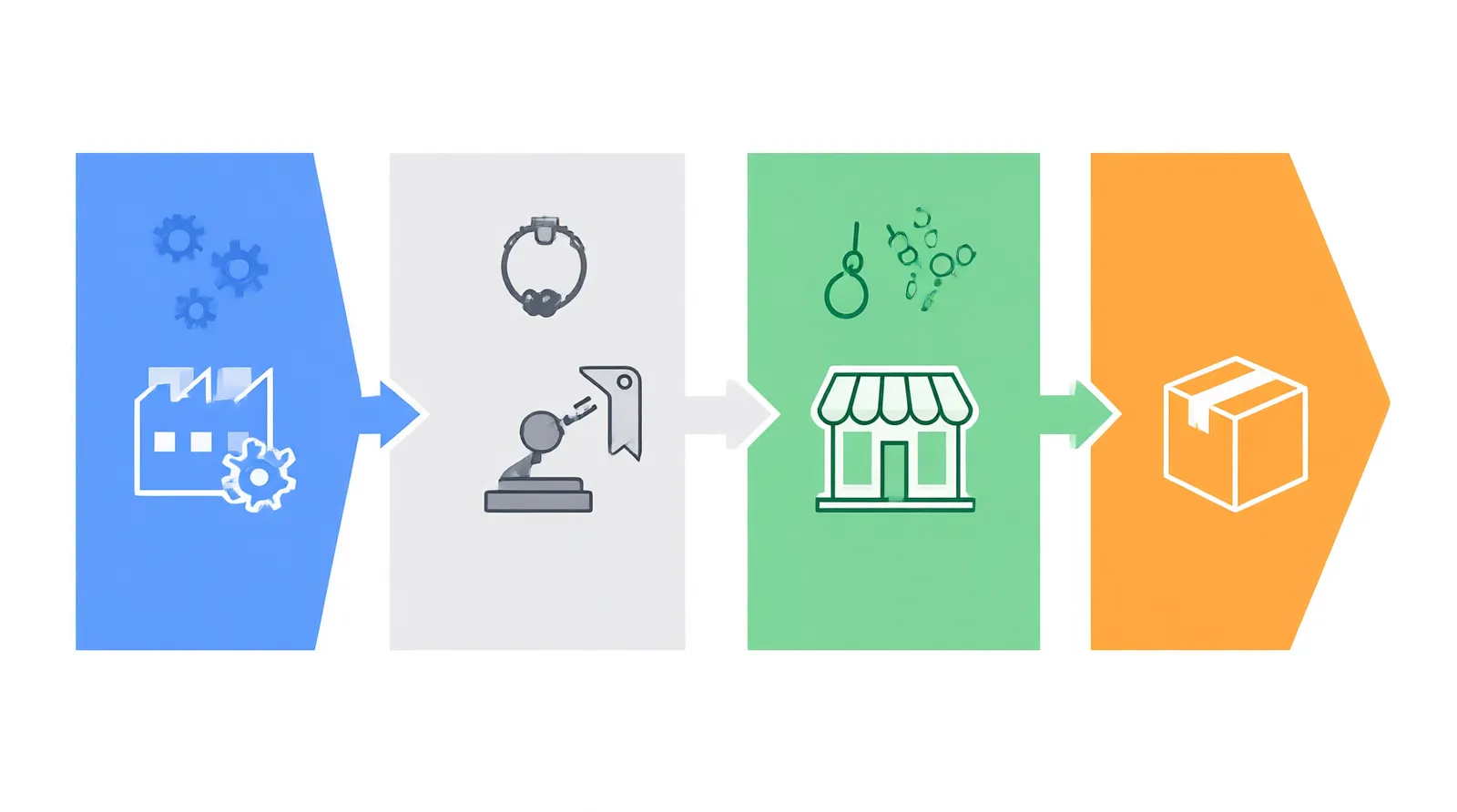
Budget tiers
When sourcing women's jewelry, your budget dictates the materials, plating thickness, and customization level available to you. Use this table to align your target retail positioning with realistic manufacturing parameters.
| Tier | Target Retail Positioning | Typical Manufacturing Cost Range (Per Unit) | What You Get |
|---|---|---|---|
| Entry | Fast fashion, trend-driven impulse buys, promotional giveaways | $1.50 – $5.00 | Zinc alloy or thin brass base, flash plating (<0.5 microns), glass or cubic zirconia stones, high MOQs for custom work, standard catalog designs only. |
| Mid-Market | Everyday DTC brands, boutique retail, influencer collaborations | $6.00 – $25.00 | Solid brass or stainless steel base, 1–2 microns of gold/rhodium plating, semi-precious stones or high-grade crystals, moderate MOQs, access to light custom modifications (color/size changes). |
| Premium | Demi-fine brands, luxury-adjacent positioning, bridal | $30.00 – $80.00+ | 925 Sterling silver or solid 10k/14k gold, 2–3+ microns of heavy plating or solid construction, genuine gemstones, low MOQs for custom CAD designs, premium packaging included. |
| Enterprise / Private Label | Large-scale retail chains, established department store brands | Custom quoted based on volume | Full bespoke manufacturing, dedicated production lines, strict SLA-backed lead times, comprehensive REACH/Prop 65 compliance documentation, integrated logistics management. |
Note: Costs exclude international freight, tariffs, and third-party inspection fees. Request current terms directly from your sourcing partner.
Red flags to avoid
Walk away from a supplier immediately if you encounter any of the following during your vetting process:
- Refusal to provide material certifications: If a factory cannot or will not provide lab reports proving their gold plating thickness or confirming their products are nickel-free and lead-free, they are hiding substandard or dangerous materials.
- Demanding 100% upfront payment: Standard industry practice is a 30% deposit to begin production and 70% balance paid after goods pass final inspection but before shipping. Demanding full payment upfront removes all your leverage.
- No physical address or verifiable factory audit: Suppliers who only communicate via messaging apps and refuse video calls showing the actual production floor are likely middlemen marking up prices or outright scammers.
- Unrealistic lead times: If a vendor promises to manufacture 10,000 custom-plated brass necklaces in five days, they are either lying or outsourcing to an unvetted shadow factory that will compromise your quality.
- Inconsistent sample quality: If the pre-production sample arrives flawless but the first bulk shipment shows uneven plating, misaligned clasps, or dull stones, the factory lacks standardized quality control processes.
- Vague answers regarding IP protection: If you share a custom CAD file and the supplier refuses to sign a Non-Disclosure Agreement (NNN agreement in China), your design will likely appear on competitor marketplaces within weeks.
- Hidden tooling or setup fees introduced post-deposit: All mold costs, setup fees, and packaging charges must be itemized in the initial proforma invoice.
Buying process checklist
Follow this sequential framework to move from initial research to finalized inventory without unnecessary risk.
- Define requirements: Map out your target retail price, desired margin, material specifications (e.g., 18k gold plated brass, 2 microns), and estimated order volume. Determine if you need existing catalog items or custom designs.
- Shortlist vendors: Identify potential manufacturers. Instead of scrolling blindly through B2B marketplaces, engage a sourcing partner like Link4a to shortlist and vet factories based on your specific criteria, saving weeks of dead-end communication.
- Request and evaluate samples: Order physical samples from your top 2-3 shortlisted factories. Test them for weight, clasp durability, plating adhesion (tape test), and visual accuracy against photos.
- Conduct factory audits: Verify the factory's existence, working conditions, and production capacity. If you cannot travel to China, use a managed export operator who performs these checks locally on your behalf.
- Negotiate terms: Finalize unit pricing, MOQ, payment terms (typically 30/70), lead times, and penalty clauses for late delivery or quality failures.
- Pilot order: Place a smaller initial order to test the factory's execution, communication, and logistics handling before committing to your full seasonal volume.
- Third-party inspection: Hire an independent QC agency to conduct a Final Random Inspection (FRI) at the factory before authorizing the final 70% payment transfer.
- Logistics and fulfillment: Coordinate freight forwarding, customs clearance, and final delivery to your warehouse or 3PL.
- Establish repeat ordering cadence: Once a successful pilot is complete, set up automated reordering schedules and maintain multilingual communication channels for ongoing relationship management.
Questions to ask vendors
Use these specific questions during your supplier interviews to separate professional manufacturers from unreliable traders.
- What is the exact base metal used for this SKU, and what is the plating thickness in microns?
- Can you provide recent REACH and California Proposition 65 compliance test reports for your current plating processes?
- What is your standard MOQ for existing catalog items versus fully custom CAD designs?
- What are your exact payment terms, and do you accept Letters of Credit (L/C) for enterprise-level orders?
- How many production lines do you currently operate, and what is your maximum monthly output capacity for women's jewelry?
- What is your defect rate tolerance, and what is your protocol for replacing or refunding defective units discovered after delivery?
- Do you offer in-house packaging design and assembly, or must we source boxes and pouches separately?
- How do you handle intellectual property protection for custom designs submitted by overseas buyers?
- What is your standard lead time from deposit receipt to goods being ready for freight pickup?
- Are you a direct manufacturer or a trading company representing multiple factories?
- Can you accommodate staggered shipments if our warehouse cannot receive the entire MOQ at once?
- How do you communicate production delays, and who is our dedicated point of contact?
Recommended next steps
Sourcing women's jewelry profitably requires moving past generic marketplace searches and partnering with operators who understand both manufacturing realities and international retail demands. Stop risking capital on unvetted suppliers. Review your current catalog gaps, define your material and margin requirements using the budget tiers above, and initiate contact with a specialized sourcing partner.
To get verified factory shortlists, negotiate accurate MOQs, and coordinate physical samples without managing cross-border communication yourself, request a quote and start your procurement process at https://link4a.com.