Special Economic Zones China: What U.S. Importers Need to Know in 2026
Special Economic Zones China: What U.S. Importers Need to Know in 2026
China's special economic zones (SEZs) account for 60% of the country's total exports and have attracted 45% of all national foreign direct investment. For U.S. importers, understanding these zones is not academic — it directly affects where your goods are made, how quickly they reach the gate of a U.S. port, and what compliance obligations you inherit when you place an order.
This guide covers the geography, the regulatory context that matters on the American side of the deal, the sourcing dynamics inside China's SEZs, and the practical steps U.S. buyers take before placing their first order.
Special Economic Zones China in the United States — Market Overview
The United States is the single largest destination market for goods manufactured inside China's SEZs. American importers — from Fortune 500 procurement departments to solo DTC store owners dropshipping from Shopify — source electronics, apparel, hardware, consumer goods, and industrial components from factories clustered inside or adjacent to zones like Shenzhen, Pudong (Shanghai), and the Guangzhou Export Processing Zone.
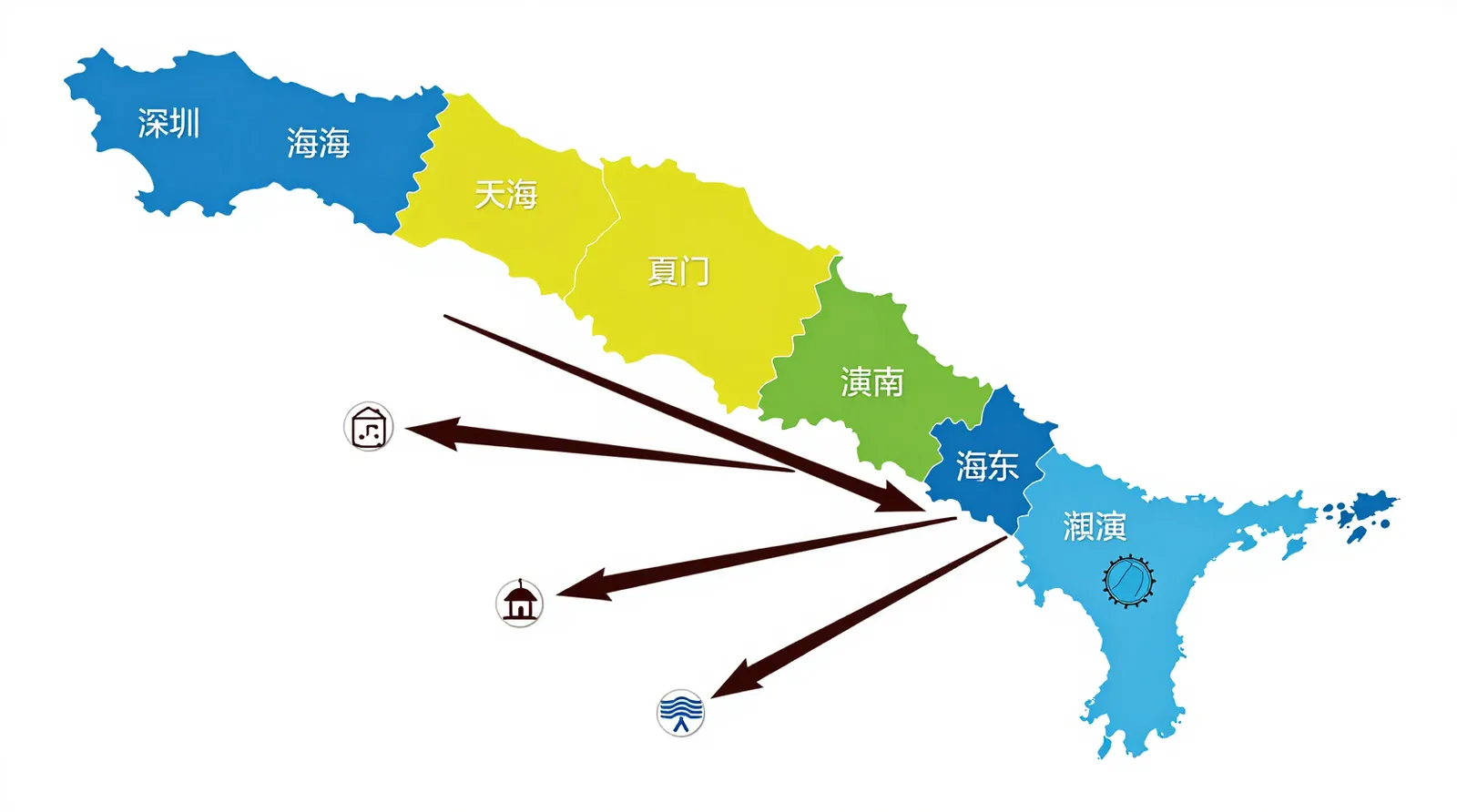
China's Open Door policy reforms, begun in 1978, triggered a chain of economic changes that reshaped global trade. The first four SEZs — Shenzhen, Zhuhai, and Shantou in Guangdong province, and Xiamen in Fujian province — were designated in 1980. Shenzhen alone grew from a fishing town of roughly 30,000 people in 1979 to more than one million residents by the early 2000s, becoming the world's electronics manufacturing hub in the process. Today, Shenzhen factories supply a significant share of the consumer electronics, PCBs, and smart-home devices on Amazon's U.S. bestseller lists.
Demand among U.S. buyers falls into three broad groups. Large importers and retailers use SEZ-based factories for volume production because the infrastructure — bonded warehousing, streamlined customs clearance, port proximity — keeps landed costs predictable. Mid-market brands and private-label operators source from SEZ-adjacent industrial parks to access specialized clusters: toy manufacturing in Chenghai, furniture in Foshan, clothing in Guangzhou's Haizhu district. Small importers, online sellers, and independent creators are the fastest-growing segment; they need the same SEZ supply chain but often lack the relationships, language skills, and minimum-order leverage to access it directly. That gap is exactly where a sourcing partner adds measurable value.
What's Specific About the United States
The U.S. import environment is one of the most rule-dense in the world, and the rules that apply to SEZ-manufactured goods have changed significantly since 2018.
Tariff and trade-law framework. Section 301 tariffs imposed by the U.S. Trade Representative (USTR) still apply to the majority of Chinese goods imported into the U.S., with rates ranging from 7.5% to 25% as of mid-2026, depending on the Harmonized Tariff Schedule (HTS) chapter. These tariffs apply regardless of whether a product originates inside or outside a Chinese SEZ — the zone designation does not create a tariff exception on the U.S. side. The trade relationship between the two countries has evolved through multiple rounds of escalation and partial rollback; as of 2026, Section 301 reviews continue and importers must check the USTR's official exclusion list before assuming a product qualifies for relief.
Sanctions and forced-labor compliance. The Uyghur Forced Labor Prevention Act (UFLPA), enforced by U.S. Customs and Border Protection (CBP), creates a rebuttable presumption that goods produced in Xinjiang — or by entities on the UFLPA Entity List — were made with forced labor and are therefore barred from import. Factories inside or connected to certain Chinese SEZs that have supply chain ties to Xinjiang cotton, polysilicon, or tomato products fall within UFLPA scope. U.S. importers must maintain supply chain traceability documentation or face cargo holds at the port of entry. For a thorough breakdown of how China sanction compliance works in practice, the China Sanctions: A U.S. Buyer's Complete Compliance Guide is a practical starting reference.
Payment norms. U.S. buyers typically use wire transfers (T/T), letters of credit (L/C) for large orders, or third-party escrow via platforms like Alibaba Trade Assurance. PayPal is accepted by some smaller factories but is generally avoided by serious manufacturers due to dispute-risk exposure. Net-30 or net-60 payment terms are common among established buyer-supplier relationships but rare on first orders; most factories request a 30% deposit against the purchase order, with the balance due before shipment.
Cultural and communication norms. Chinese factory contacts operate on Beijing Standard Time (UTC+8), which is 13 to 16 hours ahead of U.S. time zones. Real-time negotiation requires either early-morning or late-evening calls on the U.S. side. Business relationships in China's manufacturing sector are heavily relationship-driven (关系, guānxi); factories prioritize buyers who communicate consistently, pay on time, and demonstrate intent to place repeat orders. Cold RFQs sent via generic inquiry forms rarely get the factory's best price. This is one of the structural reasons U.S. importers who work through a China-based sourcing partner consistently report better pricing and faster sample turnaround than those who negotiate directly without an established relationship.
How to Choose a China Sourcing Partner in the United States
A "provider" in this context means anyone who facilitates your access to SEZ-based manufacturing: sourcing agents, trading companies, freight forwarders with sourcing arms, or dedicated sourcing partnerships. The evaluation criteria that matter most for U.S. buyers are distinct from what a European or Southeast Asian buyer would prioritize.
Compliance verification capability. Your sourcing partner must be able to run UFLPA supply chain checks and confirm that factory documentation meets CBP evidentiary standards. Ask whether they have experience pulling Bill of Materials (BOM) traceability back to raw material origin. A partner who cannot answer this question clearly is a liability.
Factory vetting depth. "Verified supplier" badges on marketplace platforms are not the same as on-site factory audits. A credible sourcing partner visits factories, reviews business licenses, checks production capacity against your order volume, and negotiates quality-inspection checkpoints before shipment. For U.S. buyers, third-party inspection (TPI) at the factory before goods reach the port is the most cost-effective way to catch defects — it is far cheaper than refusing a container at the U.S. port of entry.
Time-zone and language coverage. Real-time issue resolution matters when a shipment is behind schedule or a factory substitutes a component. A sourcing partner with staff physically in China can walk a factory floor at 10 a.m. Beijing time while you are still asleep. Multilingual capability — including Mandarin, Cantonese for Guangdong-province factories, and English for U.S. buyer communication — removes the single largest friction point in cross-border sourcing.
Commission structure vs. retainer. Some sourcing agents charge a flat retainer regardless of whether they find you a suitable supplier. Others, like Link4a, operate on a commission-only basis — no fee until an order closes. For importers still validating a product concept or testing a new category, commission-only structures substantially reduce the financial risk of exploration.
Verifiable performance record. Marketing promises are easy to make; ranking data is not. When evaluating a sourcing partner, ask for documented proof of buyer reach and market presence. Link4a publishes its Google ranking results openly — a sweep of 60 product pages on August 31, 2026, found 17 pages ranking first on U.S. Google and 31 in the top 10, with the specific queries listed on the homepage. That kind of verifiable evidence of market access is a more useful signal than testimonials.
Pricing in the United States
Understanding SEZ-influenced pricing requires separating the factory price (FOB or EXW) from the landed cost that actually hits your books.
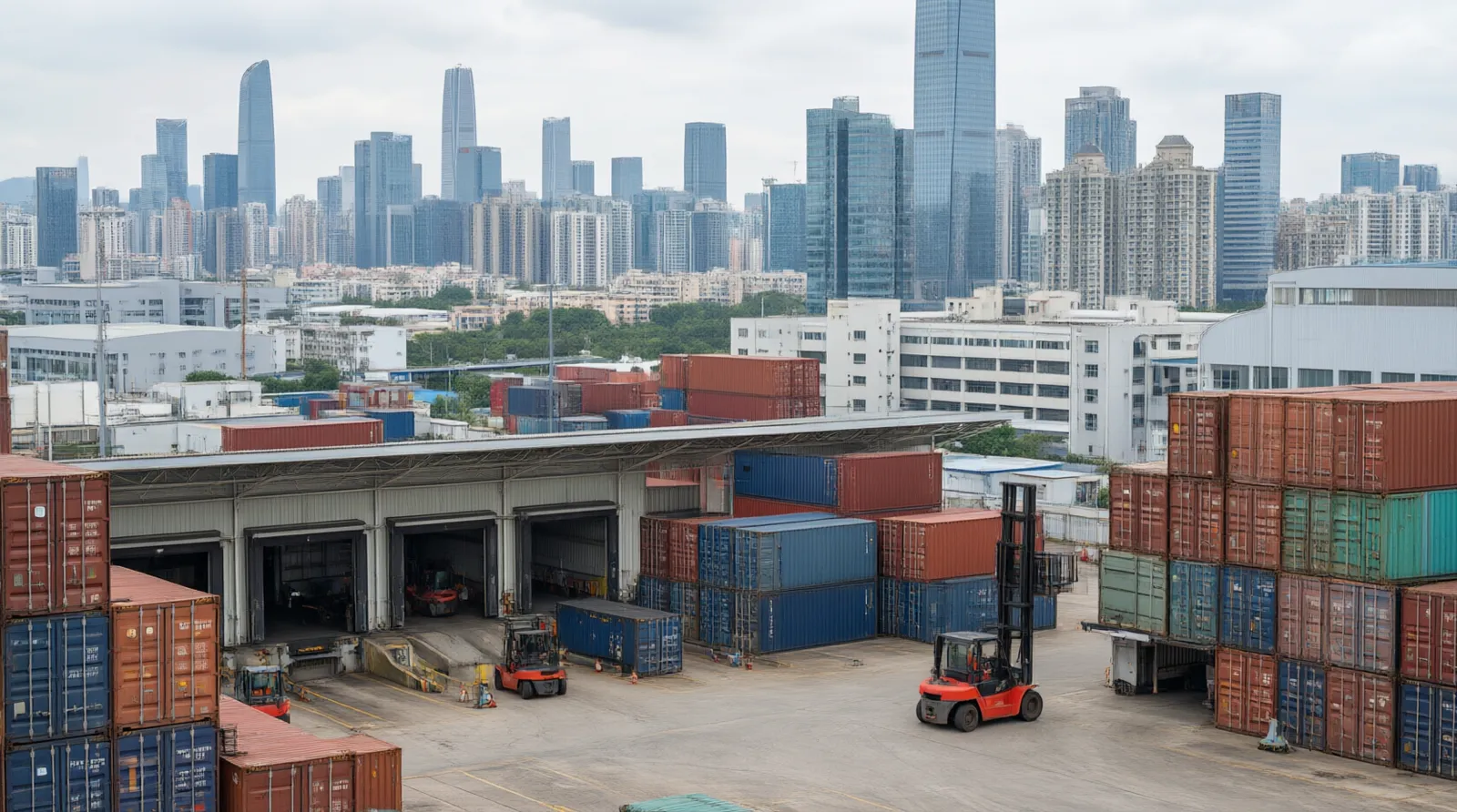
Factory-gate pricing. SEZ-based factories benefit from streamlined customs procedures, bonded zones that defer import duties on raw materials, and concentrated supplier ecosystems that reduce component costs. This infrastructure advantage is reflected in factory prices. A factory inside Shenzhen's high-tech zone typically quotes tighter margins on electronics than a factory in an inland province, because component lead times are shorter and logistics costs to Yantian or Shekou port are minimal.
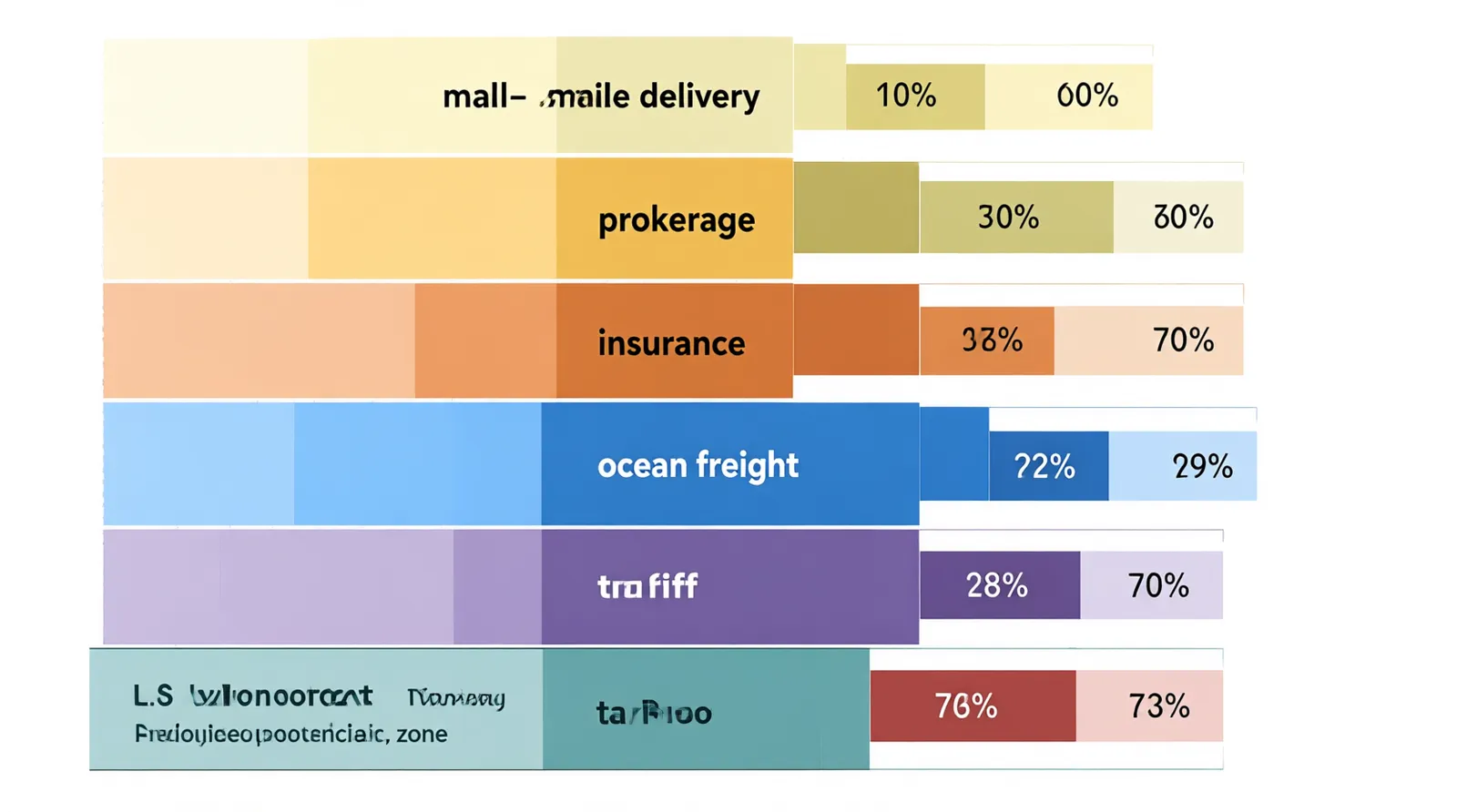
Tariff impact on landed cost. For U.S. importers, Section 301 tariffs add 7.5%–25% to the customs value of most Chinese goods. On a $10,000 FOB order, a 25% tariff adds $2,500 before you account for ocean freight, marine insurance, customs brokerage fees (typically $150–$400 per entry), and domestic drayage. Total landed cost is commonly 35%–55% above the FOB factory price for standard consumer goods shipped to a U.S. distribution center.
Pricing variables specific to the U.S. market. HTS classification determines your tariff rate — misclassification is a CBP enforcement risk, not just a cost issue. Some factories deliberately misclassify goods to reduce buyer tariff exposure; this exposes the U.S. importer (not the Chinese factory) to CBP penalties and potential seizure. Always verify your HTS code independently before finalizing a purchase order. The China Exports to the U.S.: What Importers Must Know in 2026 guide covers HTS classification pitfalls in more depth.
MOQ and unit economics. SEZ factories generally have higher fixed costs than smaller inland workshops, which means their MOQs tend to be higher. A Shenzhen electronics factory may set an MOQ of 500–1,000 units on a custom SKU; a furniture maker in Foshan may require a full 20-foot container. Negotiating MOQ down requires either a strong existing relationship or a sourcing partner who aggregates volume across multiple buyers.
Common Challenges for U.S. Buyers
Navigating the Tariff and Sanction Landscape
The single largest operational challenge for U.S. importers in 2026 is tariff uncertainty. Section 301 rates have shifted multiple times since 2018 and remain subject to USTR review cycles. Adding complexity, the Belt and Road Initiative has expanded Chinese manufacturing investment across Southeast Asia — Vietnam, Cambodia, and Mexico have all seen Chinese factory relocation. CBP's "substantial transformation" rules determine whether goods assembled in a third country from Chinese components can be imported as non-Chinese-origin; the standards are strict, and CBP has increased enforcement. Importers who attempt to use third-country routing to avoid China-origin tariffs without genuine substantial transformation face seizure and penalty exposure.
The U.S.-India trade relations angle adds another dimension: as India positions itself as an alternative sourcing destination, some U.S. buyers are running dual-sourcing strategies — China for volume and precision manufacturing, India for categories where SEZ-equivalent cost structures exist. The deal economics only work if you understand both supply chains and their respective compliance requirements.
Supplier Reliability and Quality Consistency
SEZ factories serve buyers globally. A factory with strong ratings for one product category may have no experience with yours. Common reliability problems include: component substitution mid-production run (swapping a spec'd component for a cheaper alternative), inconsistent quality between sample and bulk production, and over-committed production calendars that push delivery dates back. Pre-shipment inspection by a third party (Bureau Veritas, SGS, QIMA, and similar firms operate throughout China's SEZ regions) is the standard mitigation for U.S. importers.
Logistics Lead Times and Port Congestion
Ocean freight from South China ports (Yantian, Shekou, Nansha) to U.S. West Coast ports (Los Angeles/Long Beach, Seattle) runs approximately 14–18 days in normal conditions. East Coast routing via the Panama Canal adds 25–30 days. Port congestion — a recurring issue at LA/LB — can add 5–15 days of vessel anchorage. Building buffer time into purchase orders is standard practice; sourcing 10–12 weeks ahead of your in-stock need date is a reasonable baseline for most consumer goods categories.
Communication and Documentation Gaps
Factory communication in China's SEZ clusters is relationship-based. English-language emails to general inquiry addresses frequently go unanswered or are routed to junior staff without decision-making authority. Purchase orders, quality specifications, and packaging requirements need to be documented in Chinese as well as English to be enforceable. Verbal commitments made on WeChat are common but legally thin — always follow up in writing and request factory acknowledgment.
Frequently Asked Questions (United States-Specific)
Q: Do goods from Chinese SEZs face lower tariffs when imported into the U.S.? No. China's SEZ designation is a domestic Chinese policy tool — it affects how goods are treated inside China (tax incentives, streamlined customs, deferred duties on inputs). The U.S. applies Section 301 tariffs based on the country of origin of the finished good, not whether it was produced inside an SEZ. A widget made in Shenzhen SEZ pays the same Section 301 rate as one made anywhere else in China.
Q: What is the UFLPA and how does it affect SEZ sourcing? The Uyghur Forced Labor Prevention Act (UFLPA), enforced by CBP, creates a rebuttable presumption that goods with a nexus to Xinjiang were made with forced labor. This applies even if the direct manufacturer is based in an SEZ outside Xinjiang — if upstream inputs (cotton, polysilicon, aluminum) originate in Xinjiang or from listed entities, the goods are presumptively barred. U.S. importers must document their supply chain back to raw materials to rebut the presumption.
Q: How do China-U.S. trade relations affect my import costs in 2026? The trade relationship between the U.S. and China remains in a state of managed tension. Section 301 tariffs have not been comprehensively removed; specific exclusions exist for some product categories and are reviewed periodically by the USTR. Importers should monitor USTR Federal Register notices and the USTR exclusion portal for their specific HTS codes. Some importers have shifted portions of their sourcing to Belt and Road-connected countries — Vietnam, Malaysia, Thailand — to diversify tariff exposure, but CBP's transshipment enforcement means this requires genuine manufacturing presence, not just re-labeling.
Q: What is the typical lead time from a Chinese SEZ factory to a U.S. warehouse? Production lead time varies by product complexity: simple consumer goods may run 20–35 days, while electronics with PCB assembly can run 45–60 days. Add 14–30 days ocean transit depending on port of destination and routing, plus 3–7 days for customs clearance and drayage. A realistic total from purchase order to U.S. warehouse is 8–14 weeks for most categories. Air freight cuts transit to 5–10 days but typically costs 4–6x more per kilogram than sea.
Q: How do I verify a factory inside a Chinese SEZ is legitimate before placing an order? Request the factory's business license (营业执照, yíngyè zhízhào), which lists registered capital, legal representative, and business scope. Cross-reference against China's National Enterprise Credit Information Publicity System (available in Chinese at gsxt.gov.cn). For higher-value orders, commission a third-party factory audit from a firm with on-the-ground China operations. A sourcing partner with existing factory relationships can fast-track this process — and can read the Chinese documentation directly.
Q: Can a small U.S. importer access SEZ factories with low MOQs? Yes, but it requires either a sourcing partner who consolidates orders across multiple buyers (giving the factory a viable total volume), or finding factories that specialize in small-batch production. SEZ factories with high fixed costs generally prefer larger orders. Industrial parks outside the core SEZ boundaries — in cities like Yiwu, Foshan, and Dongguan — often have more flexible MOQ policies for low-to-medium volume categories.
Q: What payment method protects U.S. buyers best when ordering from a Chinese SEZ factory? Letters of credit (L/C) offer the strongest contractual protection for large orders — payment is released only when shipping documents confirming the goods match the agreed specifications are presented to the issuing bank. For mid-size orders, T/T with a 30% deposit and 70% against Bill of Lading copy is standard. Alibaba Trade Assurance provides escrow-like protection for orders placed through the platform. PayPal is not recommended for factory orders; it carries high dispute risk and many factories will not accept it.
Get Started in the United States
The path from "I want to source from a Chinese SEZ" to "I have a vetted factory, a confirmed price, and a purchase order in flight" has five concrete steps.
Step 1: Define your product specification and target landed cost. Before contacting any factory or sourcing partner, document your product requirements — dimensions, materials, tolerances, certifications required (FCC, CE, CPSC, ASTM as applicable), and packaging specifications. Calculate your target landed cost by working backward from your retail price. This gives any factory or sourcing partner a real brief instead of a vague request.
Step 2: Confirm your HTS classification and tariff exposure. Use the U.S. International Trade Commission's HTS search tool (hts.usitc.gov) to identify your product's 10-digit HTS code and check the applicable Section 301 rate. This is a compliance requirement — misclassification is a CBP enforcement risk, not a rounding error.
Step 3: Engage a sourcing partner with verifiable China presence. A partner who shortlists factories, vets them on-site, negotiates MOQ and price in Mandarin, and coordinates samples removes the three biggest failure points in direct sourcing: unvetted factory risk, communication breakdown, and sample-to-bulk quality inconsistency. For factories that want overseas buyers without building an export sales team, Link4a operates a managed overseas storefront in six languages — including Arabic laid out right-to-left and per-language keyword research — with commission charged only on closed orders.
Step 4: Request samples before committing to bulk production. A signed sample approval — countersigned by the factory — is your quality benchmark. Document it photographically and in writing. Attach it to your purchase order as the acceptance standard.
Step 5: Build your compliance documentation before the shipment ships. Gather UFLPA-relevant supply chain documents, country-of-origin declarations, and any product safety certifications before goods reach the U.S. port. CBP holds are easier to prevent than to resolve.
The China SEZ supply chain gives U.S. importers access to manufacturing scale, specialization, and cost structures unavailable anywhere else in the world — contributing 22% of China's GDP and over 30 million jobs. Using it well requires the right partner on the ground in China and the right compliance framework on the U.S. side.
Ready to source from China's SEZ factories without the risk of going in blind? Request a Quote at link4a.com — describe your product and target volume, and Link4a's sourcing team will shortlist vetted factories, negotiate MOQ and pricing on your behalf, and coordinate samples before you commit to a bulk order.