Supplement Contract Manufacturing: A Buyer’s Guide to Sourcing in China
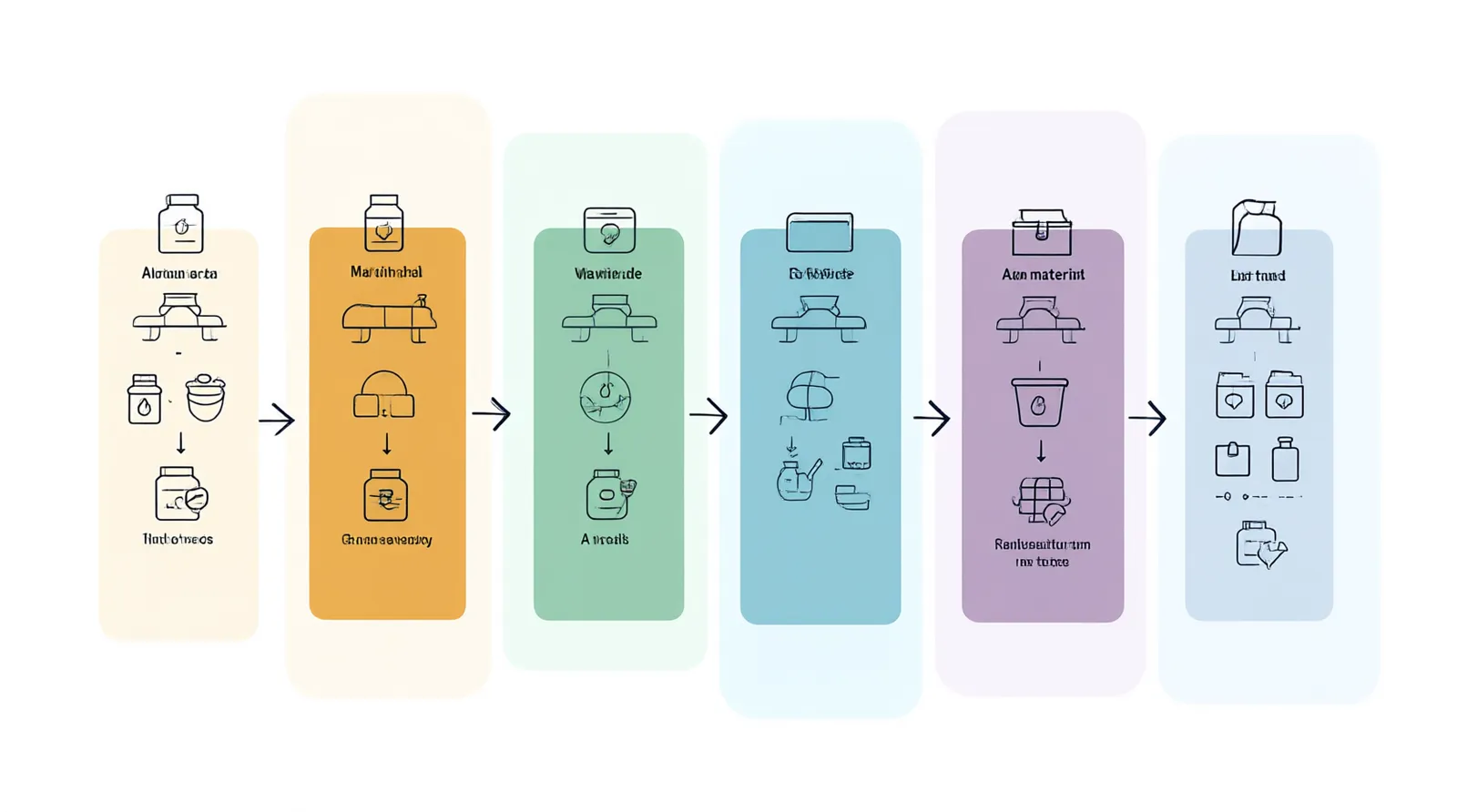
Supplement Contract Manufacturing: A Buyer’s Guide to Sourcing in China
Supplement contract manufacturing means hiring a specialized facility to formulate, blend, encapsulate, and package dietary supplements under your brand name. You own the formula or select from the factory’s catalog; they handle the mass production, quality control, and regulatory compliance so you can focus on sales. For a deeper dive into category-specific considerations, explore our supplements contract manufacturing guide tailored for DTC brands.
Who This Guide Is For
This guide is built for DTC store owners, online creators launching private-label lines, and importers who are ready to place an order but need a dependable sourcing partner in China. If you have outgrown local white-label suppliers and need lower unit economics without sacrificing compliance, you are at the purchase stage. Your trigger might be a product launch deadline, a margin squeeze from domestic manufacturers, or the need to scale from 1,000 to 50,000 units per run. You need someone who shortlists factories, checks them, negotiates MOQ and price, coordinates samples, and handles repeat orders—instead of gambling on a marketplace listing.
What Supplement Contract Manufacturing Actually Does
A supplement contract manufacturer (often called a CMO) takes your raw ingredient specifications or approved formula and turns it into shelf-ready products. This covers everything from powder blending and capsule filling to tablet compression, liquid bottling, and final packaging. Unlike generic trading companies that simply broker deals, a true contract manufacturer controls the production line, maintains cleanroom standards, and holds certifications like GMP, ISO 22716, or FDA registration.
For overseas buyers, the real value lies in accessing mature supply chains—such as those clustered around Suzhou or Dongshan—where precision in dosing and permanent quality systems are standard operating procedures. If you are researching terminology before signing a contract, reviewing our breakdown of 50+ Manufacturing Synonyms Every Sourcing Buyer Must Know will help you decode supplier proposals, as terms like "OEM," "ODM," and "private label" carry different legal and operational meanings.
Key Decision Factors
Pricing Model and Unit Economics
What to evaluate: How the manufacturer structures costs. Look beyond the per-unit price to understand tooling fees, setup charges, and minimum batch surcharges. What "good" looks like: Transparent tiered pricing where the cost per unit drops predictably as your order volume increases. A reliable partner will clearly separate one-time NRE (Non-Recurring Engineering) costs from recurring production costs. Avoid suppliers who bundle hidden fees into vague "service charges." When working through a managed export operator like Link4a, pricing and MOQ negotiations are handled directly with the factory floor, ensuring you get actual production rates rather than inflated broker markups.
Certifications and Regulatory Compliance
What to evaluate: Facility audits and product registrations relevant to your target market. If you sell in the US, the facility must comply with FDA 21 CFR Part 111 (Current Good Manufacturing Practice for Dietary Supplements). For Europe, look for FSSC 22000 or equivalent food safety standards. What "good" looks like: The manufacturer provides verifiable, up-to-date certificates upon request, not just logos on a website. They should have a dedicated regulatory affairs team that understands the definition of compliant labeling in your destination country.
Minimum Order Quantities (MOQ)
What to evaluate: The lowest volume the factory will run for your specific format (e.g., capsules vs. gummies). Gummy lines typically require higher MOQs due to mold costs, while capsule runs can sometimes start lower. What "good" looks like: Flexibility for initial pilot runs. A good sourcing partner negotiates MOQs down for first-time orders to allow you to test the market before committing to mass production volumes.
Quality Assurance and Testing Protocols
What to evaluate: In-process testing, finished product analysis, and third-party lab verification. Ask what parameters they test (heavy metals, microbial limits, active ingredient potency). What "good" looks like: A Certificate of Analysis (CoA) accompanies every batch. The facility uses precision equipment like HPLC (High-Performance Liquid Chromatography) to verify that the active ingredients match the label claim exactly.
Lead Times and Production Capacity
What to evaluate: The timeline from raw material procurement to finished goods ready for export. Also, assess their maximum monthly output to ensure they won't bottleneck your growth. What "good" looks like: Realistic, documented lead times. A standard supplement run might take 30–45 days after artwork approval and deposit. The manufacturer proactively communicates delays related to raw material shortages rather than hiding them until the shipping date.
Communication and Language Support
What to evaluate: How effectively you can communicate technical adjustments. Misunderstandings about milligram dosages or excipient ratios can ruin a batch. What "good" looks like: Multilingual communication channels. Factories often lack dedicated English-speaking sales engineers. Using a managed export operator ensures replies to buyers are drafted from the factory's actual in-stock catalogue, eliminating the risk of overpromising capabilities the facility doesn't possess.
Scalability and Repeat Ordering
What to evaluate: The ease of reordering and the manufacturer's ability to scale alongside your brand. What "good" looks like: Standardized SOPs for repeat orders that reduce lead time on subsequent runs. Your sourcing partner should maintain your formulation files, packaging dielines, and historical CoAs permanently so you never have to restart the onboarding process for a reorder.
Total Cost of Ownership (TCO)
What to evaluate: The fully landed cost. This includes manufacturing, inland freight in China, export customs, ocean/air freight, import duties, and warehousing. What "good" looks like: A partner who optimizes packaging dimensions to fit more units per pallet, reducing your shipping cost per bottle. TCO calculations should be mapped out before you sign the first purchase order. To build a comprehensive framework for evaluating these cross-border expenses, refer to our product sourcing playbook covering verified Chinese supply chains.

Budget Tiers
Understanding typical investment levels helps align your expectations with the right class of manufacturer.
| Tier | Typical Order Size | Estimated Investment Range | What You Get |
|---|---|---|---|
| Entry / Pilot | 1,000 – 5,000 units | $3,000 – $10,000 | Off-the-shelf formulas or minor customizations, standard packaging, basic CoA, higher per-unit cost. Ideal for DTC brands testing a new SKU. |
| Mid-Market | 10,000 – 50,000 units | $15,000 – $60,000 | Custom formulations, branded packaging design support, comprehensive third-party testing, optimized unit economics, dedicated account management. |
| Enterprise | 100,000+ units | $80,000+ | Full R&D partnership, exclusive raw material sourcing, automated high-speed production lines, multi-market regulatory filing support, lowest possible unit cost. |
Note: Prices vary heavily based on format (gummies cost more than capsules), ingredient complexity, and packaging materials. Always request a formal quote based on your exact specifications.
Red Flags to Avoid
Walk away from a supplier if you encounter any of these warning signs during your vetting process:
- Refusal to share audit reports: If a factory claims GMP certification but refuses to provide a copy of their latest audit report or certificate number for verification, they are likely non-compliant.
- Vague answers on raw material sourcing: Manufacturers who cannot tell you the origin of their active ingredients or refuse to disclose if they use brokers for raw materials pose a severe contamination risk.
- No physical address or factory video: Trading companies posing as manufacturers will avoid live video tours of the production floor. Insist on seeing the actual blending and encapsulation rooms. Understanding how a trading company compares to direct manufacturers can help you identify these intermediaries early.
- Demanding 100% upfront payment: Standard terms involve a deposit (e.g., 30-50%) with the balance paid against shipping documents or after pre-shipment inspection. Full payment before production removes all your leverage.
- Unwillingness to provide samples: A legitimate contract manufacturer will always produce a pre-production sample or pilot batch for your approval before running the full mass order.
- Guaranteeing medical claims: If a manufacturer encourages you to print disease-curing claims on your labels to boost sales, they do not understand FDA or international regulations and will get your shipment seized at customs.
- Communication only through anonymous messaging apps: Professional B2B transactions require traceable email records and formal contracts, not just WeChat or WhatsApp voice notes.
Buying Process Checklist
Follow this sequence to move from research to a signed purchase order safely.
- Define Requirements: Lock in your target format (capsule, powder, gummy), active ingredients, desired dosage, packaging type, and target retail price to calculate your maximum allowable manufacturing cost.
- Shortlist Vendors: Use a sourcing partner like Link4a to identify vetted Chinese factories. Instead of scrolling through unverified marketplace listings, rely on a partner who has already checked the facilities.
- Request Quotations (RFQ): Send identical specification sheets to 3-5 shortlisted manufacturers. Require them to break down costs by formulation, packaging, and labor.
- Coordinate Samples: Order lab samples or pilot batches. Test them yourself and send them to an independent third-party lab in your home country to verify potency and purity.
- Conduct Reference Checks: Ask the manufacturer for contact information of current overseas clients. Verify their track record for on-time delivery and defect rates.
- Negotiate Terms: Finalize MOQ, pricing tiers, lead times, payment terms, and liability clauses regarding out-of-spec batches.
- Sign Contracts and Place Deposit: Execute a formal manufacturing agreement. Never proceed on a verbal promise.
- Pre-Shipment Inspection: Hire a third-party inspector or rely on your sourcing partner to check the goods at the factory before they are loaded into the shipping container.
Questions to Ask Vendors
Use these concrete questions during your vendor interviews to separate professional manufacturers from unreliable brokers:
- What specific dietary supplement formats does your facility manufacture in-house versus outsource?
- Can you provide your current GMP, ISO, or FDA registration certificates with valid expiration dates?
- What is your standard MOQ for a custom-formulated capsule versus a stock formula?
- How many days does a standard production run take from the moment the deposit is received and artwork is approved?
- Do you conduct in-house heavy metals and microbial testing, or do you use a third-party laboratory?
- What is your protocol and financial responsibility if a finished batch fails the Certificate of Analysis?
- Can you source specific patented ingredients (e.g., specific branded extracts), or are we limited to your current supplier list?
- How do you handle intellectual property protection for custom formulas provided by our brand?
- What are your standard payment terms for a first-time overseas buyer?
- Do you offer assistance with export documentation and customs clearance in China?
- How do you manage change orders if we need to adjust the flavor profile or capsule color mid-development?
- What is your current production capacity, and how much notice do you need to scale up our volume by 50% for peak season?
Recommended Next Steps
Finding a reliable supplement contract manufacturing partner requires verifying compliance, negotiating fair terms, and managing logistics across borders. You don't need to guess which Alibaba listing is a real factory and which is a middleman marking up the price.
If you are an overseas buyer, importer, or DTC brand owner looking for a dependable sourcing partner in China, Link4a shortlists factories, checks them, negotiates MOQ and price, coordinates samples, and handles repeat orders on your behalf. We manage multilingual communication directly with the factory floor so you receive accurate updates based on actual production reality.
For Chinese factory owners who want their catalog sold overseas without hiring an export sales team, Link4a operates a managed overseas storefront in six languages—including Arabic laid out right-to-left—with per-language keyword research instead of translated English posts. We charge commission only on closed orders, meaning nothing to pay before an order closes. Our approach relies on verifiable ranking rather than promises; periodic sweeps of client store product pages consistently show strong placement on US search engines, with the specific queries published on our homepage.
Stop risking your capital on unvetted marketplace listings. Request a Quote and get verified MOQ & pricing for your next supplement production run today.