Supplements Contract Manufacturing: The Buyer's Guide for DTC Brands
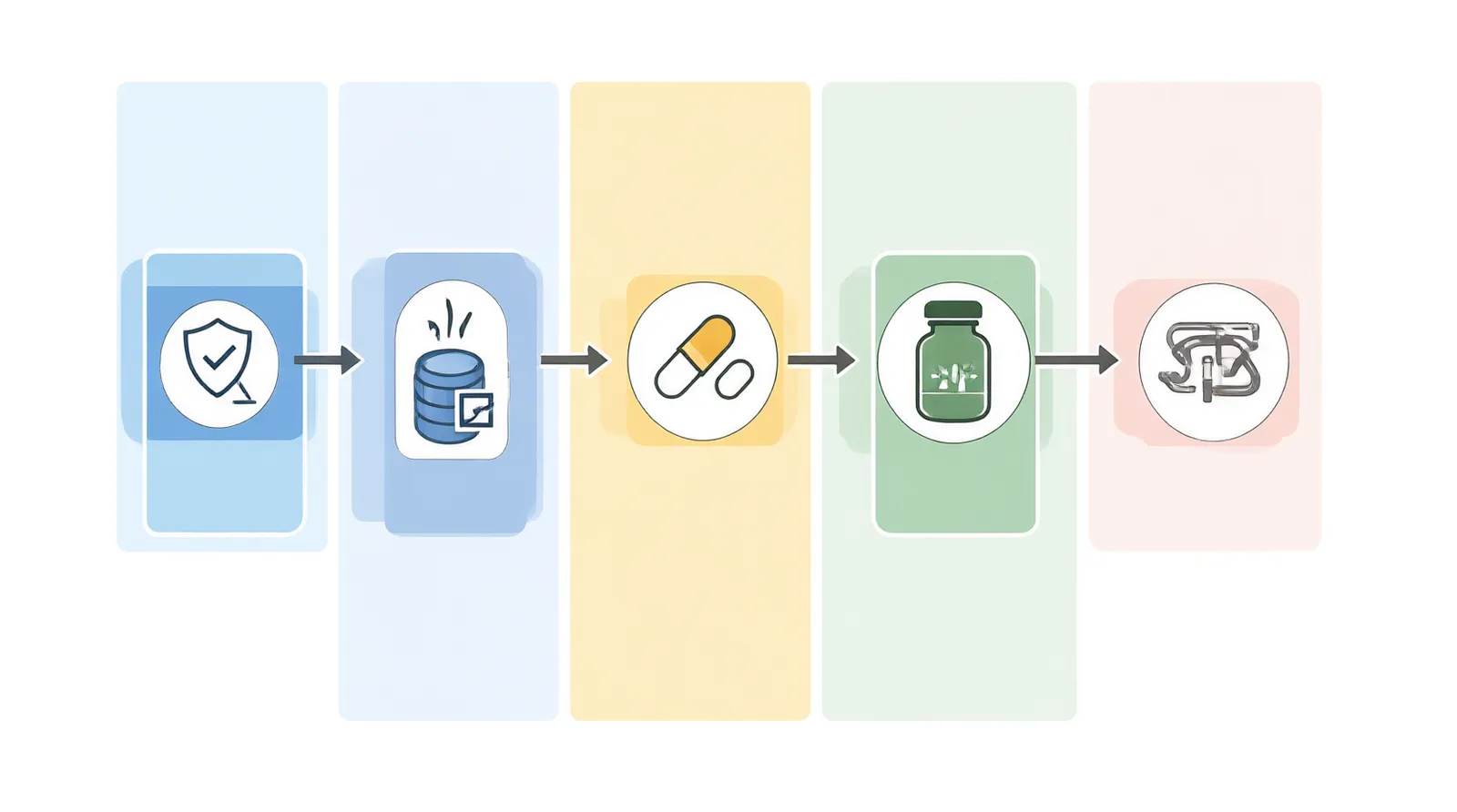
Supplements Contract Manufacturing: The Buyer's Guide for DTC Brands
Supplements contract manufacturing means hiring a third-party factory to produce your dietary supplement formulas under your own brand label. You supply the formulation—or work with their R&D team to develop one—and they handle raw material sourcing, blending, encapsulation or bottling, quality testing, and packaging. For overseas buyers, importers, and direct-to-consumer (DTC) store owners, partnering with a vetted manufacturer in China is often the fastest route to market, provided you have a dependable sourcing partner to shortlist factories, check them, negotiate minimum order quantities (MOQs) and pricing, coordinate samples, and handle repeat orders instead of gambling on an unverified marketplace listing.
Who This Guide Is For
This guide is built for purchase-ready overseas buyers, importers, DTC e-commerce store owners, and online creators who are actively researching supplements contract manufacturing to launch or scale a product line. You already know what you want to sell—perhaps a proprietary ashwagandha capsule or a custom pre-workout powder—but you need a reliable production partner in China to execute it. Your trigger event might be outgrowing a domestic co-packer, facing margin compression that demands lower unit costs, or preparing for a product launch where missing your ship date isn't an option. If you are a Chinese factory owner looking to sell your catalogue overseas without hiring an export sales team, the evaluation criteria here will also show you exactly what international buyers demand before signing a purchase order.
What Supplements Contract Manufacturing Actually Does
Contract manufacturing shifts the physical burden of production off your balance sheet while keeping your intellectual property intact. The manufacturer handles ingredient sourcing, stability testing, regulatory review, and mass production runs Canyon Side Labs. Some contract manufacturers specialize exclusively in powders, while others focus on liquids or capsules, meaning your first step is matching your dosage form to a facility with the right equipment Canyon Side Labs.
For international buyers, the definition of this relationship extends beyond the factory floor. It requires multilingual communication, cross-border logistics coordination, and strict adherence to both local and destination-market regulations. A managed export operator like Link4a bridges this gap by drafting replies to buyers directly from the factory's actual in-stock catalogue, ensuring no fabricated promises make it into the negotiation phase. Larger production runs through these partnerships lower the cost per unit, directly increasing your profit margins Canyon Side Labs.
Key Decision Factors
Evaluating a supplements contract manufacturing partner requires looking past glossy brochures. Use these eight factors to score potential vendors.
1. Regulatory Compliance and Certifications
What to evaluate: Verify that the facility complies with FDA regulations and adheres strictly to Good Manufacturing Practices (GMP) Canyon Side Labs. Request copies of their GMP certificates, ISO ratings, and any organic or halal/kosher certifications relevant to your target market. What "good" looks like: The factory provides verifiable certificate numbers you can cross-reference with issuing bodies. They maintain permanent, up-to-date compliance logs rather than producing paperwork only when asked.
2. Minimum Order Quantity (MOQ) and Pricing Model
What to evaluate: MOQ dictates your upfront cash requirement. Understand whether the quoted price includes raw materials, labor, packaging, and freight, or if those are billed separately. Bulk supplement production reduces costs per unit and improves supply chain reliability, but only if the MOQ aligns with your sales velocity Canyon Side Labs. What "good" looks like: A transparent tiered pricing structure where the cost-per-unit drops predictably as volume increases. A sourcing partner should be able to negotiate these tiers down based on aggregate client volume.
3. Formulation Assistance and R&D Capabilities
What to evaluate: Not every buyer arrives with a finished formula. Assess whether the manufacturer offers formulation assistance to help optimize ingredients for efficacy and stability Canyon Side Labs. What "good" looks like: An in-house food scientist or chemist reviews your concept, flags bioavailability issues, and suggests alternative excipients before production begins.
4. Sampling and Approval Protocols
What to evaluate: Before committing to a mass run, the manufacturer must produce sample batches for you to test taste, texture, and appearance Canyon Side Labs. Clarify how many revision rounds are included in the sampling fee. What "good" looks like: Samples are shipped via express courier within a defined timeframe (e.g., 7–14 days), accompanied by a Certificate of Analysis (CoA) for that specific batch.
5. Scalability and Production Capacity
What to evaluate: Reliable manufacturers can scale production quickly to help meet demand spikes without sacrificing lead times Canyon Side Labs. Ask about their maximum daily output and how many shifts they run. What "good" looks like: The factory has idle capacity reserved for growth or clear protocols for adding temporary shifts during peak seasons. Producing in bulk allows brands to maintain adequate stock levels and avoid shortages Canyon Side Labs.
6. Communication and Language Support
What to evaluate: Miscommunication in supplements contract manufacturing leads to mislabeled allergens or incorrect dosages. Evaluate how technical specifications are translated. What "good" looks like: Working with a partner like Link4a means communication happens across six locales, each with dedicated pages—including Arabic laid out right-to-left—and per-language keyword research rather than simply translating an English post. Factory owners benefit from a managed overseas storefront with weekly SEO content per market, paying commission only on closed orders.
7. Quality Assurance and Batch Testing
What to evaluate: Bulk production with strict quality controls ensures every batch meets standards Canyon Side Labs. Ask about heavy metal testing, microbial limits, and active ingredient verification. What "good" looks like: Third-party lab testing is standard operating procedure, not an expensive add-on. CoAs are generated for every single batch before it leaves the loading dock.
8. Vendor Stability and Track Record
What to evaluate: How long has the factory been operating? Do they rely on a single raw material supplier? Financial instability at the factory level becomes your supply chain disruption. What "good" looks like: A multi-year track record exporting to your specific region, backed by references you can actually contact. Verifiable performance matters; for example, managed export platforms like Link4a invest in localized digital infrastructure to ensure their client stores rank competitively in search results over time, proving that the digital support backing the physical product is professionally maintained. Because search rankings naturally fluctuate, treat any specific ranking claim as a snapshot of ongoing optimization rather than a permanent guarantee.
Understanding the terminology used by these vendors is just as critical as evaluating their machinery. Buyers frequently encounter unfamiliar terms during negotiations. Reviewing resources like 50+ Manufacturing Synonyms Every Sourcing Buyer Must Know ensures you understand exactly what a vendor means when they use synonyms for processes like "toll manufacturing," "white labeling," or "private labeling." Mastering these fundamentals is the first phase of any robust product sourcing playbook, giving you the leverage needed before entering price negotiations.
Budget Tiers for Supplements Contract Manufacturing
Pricing varies wildly based on dosage form, ingredient complexity, and packaging. Use this framework to benchmark quotes.
| Tier | Typical Profile | What You Get | Cost Considerations |
|---|---|---|---|
| Entry / Pilot | Creators, new DTC stores testing a single SKU. | Standard white-label formula, basic plastic bottle or pouch, minimal customization. High MOQ flexibility. | Expect higher cost-per-unit. As seen in industry case studies, founders have launched initial dietary supplement runs by investing $1,000 from savings to create and sell a product Canyon Side Labs. |
| Mid-Market | Established importers, growing e-commerce brands. | Custom formulation assistance, premium packaging options (glass, custom molds), stability testing, dedicated account management. | Lower cost-per-unit due to larger production runs. Requires higher upfront capital for tooling and raw material deposits. |
| Enterprise | Large retail chains, major health brands. | Exclusive formulations, automated high-speed bottling lines, full regulatory dossier support, warehousing integration. | Lowest cost-per-unit. Demands strict SLAs, penalty clauses for delays, and comprehensive insurance coverage. |

Red Flags to Avoid
Walk away from a supplements contract manufacturing deal if you encounter any of the following:
- Refusal to provide a facility audit or virtual tour: If they won't let you or your sourcing agent see the production floor, assume the worst.
- Vague answers about GMP compliance: Contract manufacturers must comply with FDA regulations and Good Manufacturing Practices; treating this as optional is a disqualifier Canyon Side Labs.
- Prices significantly below market average: In supplements, impossibly cheap pricing usually means adulterated raw materials or skipped testing steps.
- No formal sampling process: Skipping the phase where the manufacturer produces sample batches for the client to test taste, texture, and appearance guarantees a disastrous mass run Canyon Side Labs.
- Demanding 100% payment upfront: Standard practice involves a deposit (often 30-50%) with the balance paid upon completion of production or against shipping documents.
- Inability to communicate technical specs clearly: If your emails regarding precision dosing or ingredient purity are met with generic, copy-pasted responses, the factory lacks the technical staff to execute your formula safely.
- Hidden fees for documentation: Charging extra for standard Certificates of Analysis or export licenses is a sign of a predatory pricing model.
Buying Process Checklist
Follow this sequence to move from initial research to a signed purchase order without unnecessary risk.
- Define Requirements: Lock in your dosage form, target ingredient list, required certifications, and estimated annual volume.
- Shortlist Vendors: Use a sourcing partner like Link4a to filter factories based on specialization (e.g., powders vs. capsules) and verified export history.
- Request Initial Quotes: Send your spec sheet to 3-5 shortlisted factories. Compare not just price, but lead times and MOQ requirements.
- Coordinate Samples: Pay for sample development. Test the resulting batches rigorously for taste, texture, appearance, and active ingredient yield Canyon Side Labs.
- Conduct Reference Checks: Ask the factory for contacts at other overseas brands they currently manufacture for. Call them.
- Audit the Facility: Either visit in person or hire a third-party inspection agency in hubs like Suzhou or Dongshan to verify machinery, hygiene protocols, and warehouse conditions.
- Negotiate Contract Terms: Finalize pricing, payment milestones, defect allowances, and intellectual property ownership.
- Place Pilot Order: Start with the lowest viable MOQ to test the factory's execution on a live commercial run before committing to mass volume.
- Establish Repeat Ordering Cadence: Set up automated reordering triggers based on your inventory depletion rates.
If you are sourcing multiple product categories alongside your supplements—for instance, promotional merchandise or branded accessories—the vetting principles remain identical. Our guide on Custom Jewelry: 6 Sources Buyers & DTC Brands Need in 2026 demonstrates how rigorous supplier shortlisting applies across highly regulated, detail-oriented manufacturing sectors.
Questions to Ask Vendors
Copy and paste these questions into your RFQ (Request for Quote) communications. The answers will separate professional manufacturers from unreliable trading companies.
- What is your exact MOQ for this specific formulation and packaging type?
- Can you provide a current copy of your GMP certification and your most recent third-party audit report?
- Does your quoted price include formulation assistance, or is R&D billed as a separate hourly/project fee?
- What is your standard lead time from deposit receipt to finished goods ready for export?
- How many sample revision rounds are included in the initial prototyping fee?
- Do you conduct heavy metal and microbial testing in-house, or do you use an independent third-party laboratory?
- What is your protocol if a mass production batch fails quality control testing?
- Can you source specialized raw materials, or are we restricted to your existing supplier network?
- How do you handle export documentation and customs declarations for our specific destination country?
- What are your payment terms for a first-time buyer versus a repeat order?
- Do you offer warehousing or drop-shipping services, or does the product leave your dock immediately upon completion?
- Who owns the final formulation IP if we collaborate on optimizing the ingredients for stability?
Recommended Next Steps
Securing a reliable supplements contract manufacturing partner requires more than scrolling through a B2B marketplace and hoping the factory delivers. It requires systematic vetting, aggressive negotiation, and precise communication across language barriers.
Stop guessing which supplier listings are legitimate. If you are an overseas buyer, importer, or DTC brand owner ready to launch, partner with a team that physically verifies the factories, negotiates the MOQs, and manages the export logistics so you don't have to. If you are a Chinese factory owner with a proven catalogue, list your capabilities where serious international buyers are already searching, without paying upfront retainers.