Suzhou Dongshan Precision Manufacturing: Inside a Global Electronics Giant
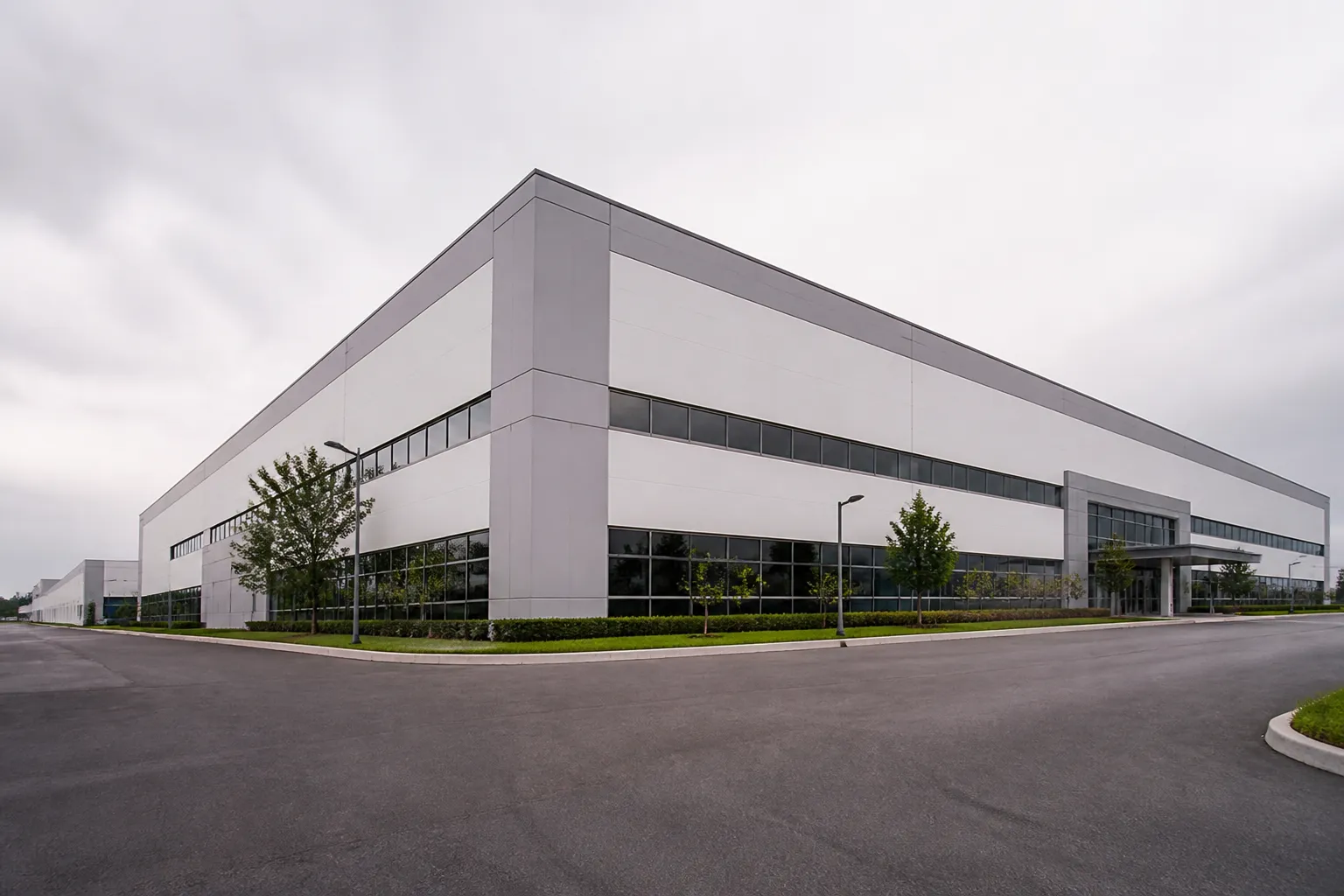
Suzhou Dongshan Precision Manufacturing: Inside a Global Electronics Giant
Suzhou Dongshan Precision Manufacturing Co., Ltd. (DSBJ / 东山精密) is a publicly listed Chinese electronics manufacturer founded in 1980, headquartered in Suzhou, Jiangsu. It ranks as the world's second-largest supplier of flexible printed circuits (FPCs) and is among the top three global suppliers of PCBs — making it one of the most consequential factories in the global electronics supply chain.
For overseas sourcing buyers, DTC operators, and OEM/ODM teams evaluating Chinese supply, understanding DSBJ's capabilities, structure, and positioning is table stakes. This guide covers what the company actually makes, how it operates across 11 countries, what procurement processes look like at this scale, and how AI-native sourcing infrastructure helps buyers connect with verified factories in this tier.
What Is Suzhou Dongshan Precision Manufacturing?
DSBJ — short for Dongshan Precision Manufacturing, stock ticker 002384 on the Shenzhen Stock Exchange — is a vertically integrated electronics component manufacturer. Founded in 1980, it has over four decades of development history and currently employs more than 10,001 people globally.
The company's stated vision is "Building a better-connected world for tomorrow." That positioning reflects a deliberate pivot from domestic contract manufacturing toward becoming what it describes as a leading worldwide technology partner providing critical components for IoT intelligence.
For buyers sourcing in the electronics, telecom, and industrial sectors: DSBJ is not a trading company or broker. It is a Tier-1 manufacturer with direct engineering, tooling, and volume production capability.
Four Core Business Segments
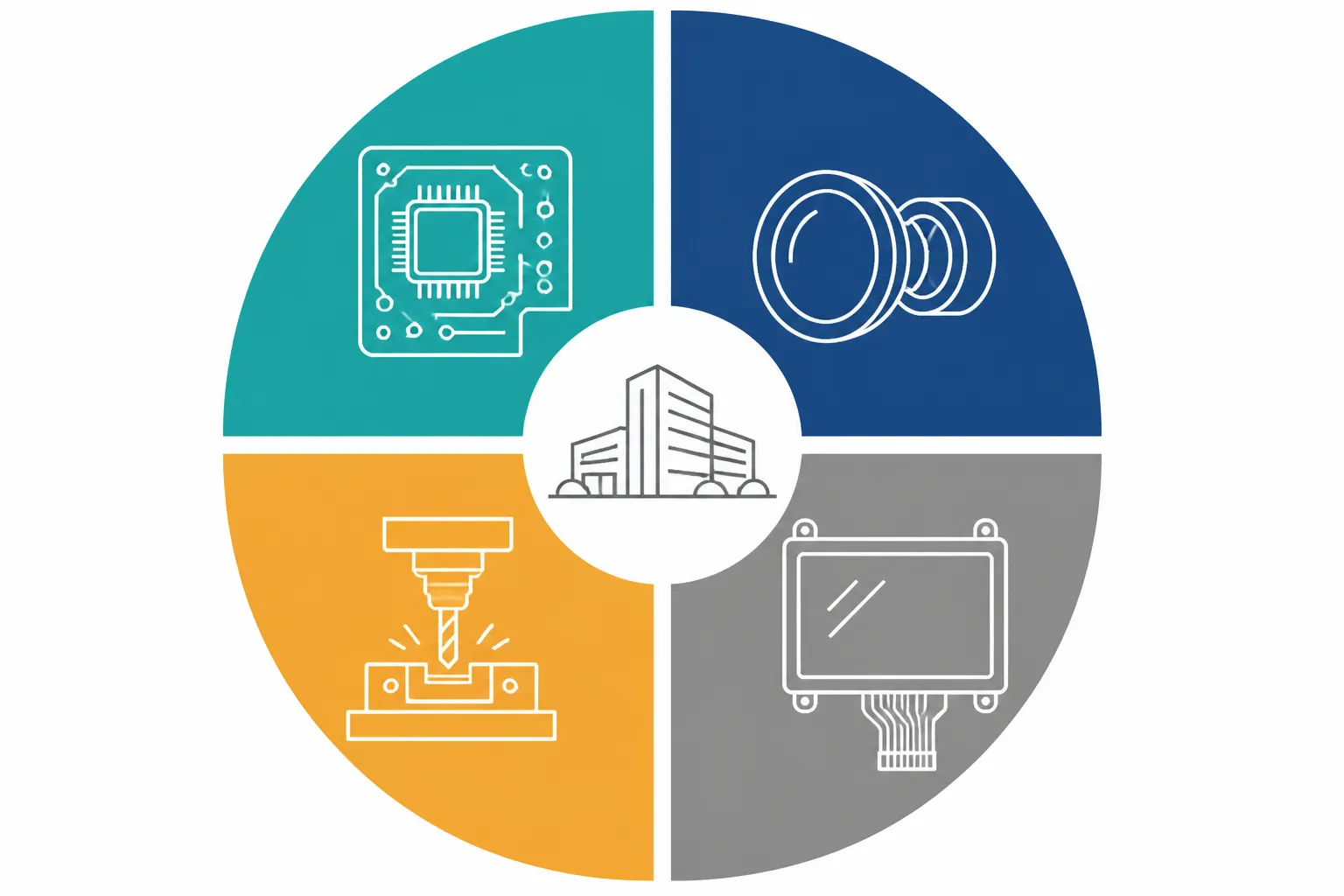
DSBJ operates across four core business segments:
1. Electronic Circuitry (PCB & FPC)
This is the company's anchor segment. DSBJ holds the #2 global position in FPC supply and top-3 globally in PCB supply. FPCs are critical in smartphones, wearables, automotive dashboards, and medical devices — anywhere a rigid board cannot flex or fit.
Sourcing buyers evaluating flexible circuit supply from China will consistently encounter DSBJ as a benchmark supplier. Lead times, specification tolerances, and reliability data from this segment set the standard for the category.
2. Optical Modules (Including Optical Chips)
This segment covers transceiver modules and optical chips used in data center interconnects and telecom infrastructure. It's a high-barrier-to-entry product line where IP, process control, and fab cleanliness matter more than labor cost arbitrage.
3. Precision Components
Metal precision manufacturing — CNC-machined enclosures, stamped parts, structural components. This segment aligns with what many OEM/ODM buyers think of first when they hear "precision manufacturing Suzhou": tight-tolerance metalwork at volume. DSBJ has a special focus on Telecommunication Equipment and Metal Precision.
4. Optoelectronic Display Modules
LED and display module assembly for consumer electronics, automotive HMI, and industrial panels. This feeds directly into the supply chains of brands selling finished goods into North America and Europe.
Global Footprint: 11 Countries, One Supply Chain
DSBJ is not a purely domestic manufacturer. It has an established presence in mainland China, Taiwan, South Korea, Finland, India, Sweden, Germany, Poland, Estonia, the US, and Mexico — 11 countries and regions total.
That footprint matters for sourcing buyers for three concrete reasons:
Tariff routing: With manufacturing and warehousing in Mexico and Eastern Europe, DSBJ can ship finished components into North America or the EU without triggering China-origin duties on certain HS codes. Buyers should verify this on a per-product basis with their customs broker, but the option exists structurally.
Customer service proximity: DSBJ provides sales locally as well as customer service and warehousing capabilities in its international markets. A buyer in Germany isn't purely dealing with a Suzhou office — there is regional infrastructure.
Supply chain redundancy: With R&D and production spread across Asia, Europe, and North America, DSBJ can absorb some regional disruption without a full line-down event for customers. That's a meaningful SLA consideration for high-volume procurement contracts.
The company has grown this network through investments, acquisitions, and new facilities — not organic greenfield alone. Acquisitions include Finnish and US electronics firms, which is how European process engineering expertise entered the DSBJ supply chain.
Why Global Buyers Evaluate Dongshan Precision
Three factors drive buyer interest in DSBJ specifically, rather than generic Suzhou precision manufacturers:
Scale That Absorbs Demand Spikes
With 10,001+ employees and production spread across multiple continents, DSBJ can handle demand variability that smaller contract manufacturers cannot. A seasonal spike of 40% in wearable FPC orders doesn't break their planning cycle the way it would a 500-person Shenzhen factory.
Certifications and Process Consistency
Suppliers at this tier carry automotive-grade process certifications (IATF 16949), telecom supplier approvals, and ISO 9001/14001 compliance. Buyers in regulated sectors — medical devices, automotive, industrial IoT — need this documentation for their own compliance stack. Verify the specific certifications directly with DSBJ's sales engineering team, as these can vary by facility and product line.
Vertical Integration Reduces Coordination Risk
Because DSBJ controls its own FPC, PCB, precision metal, and optical module production under one corporate structure, a buyer sourcing a complex sub-assembly doesn't manage four separate supplier relationships. The coordination overhead — NDA management, BOM reconciliation, quality escapes — is compressed.
For buyers who want to understand how Chinese manufacturing terminology differs across supplier tiers and product categories, the guide on 50+ Manufacturing Synonyms Every Sourcing Buyer Must Know is a useful reference for decoding factory profiles and RFQ language.
How to Approach Suzhou Dongshan as a Sourcing Target
DSBJ's official website is www.dsbj.com. Their LinkedIn company page lists 236 employees publicly and has 1,172 followers — useful for identifying procurement contacts and regional sales leads.
For buyers initiating first contact, the standard process looks like:
Step 1 — Define your technical specification. DSBJ operates at Tier-1 volumes. Arriving without a detailed BOM, layer stack-up requirements, or approved-vendor list context wastes both parties' time. Know your layer count, material spec (e.g., polyimide vs. FR4), tolerance class, and surface finish.
Step 2 — Identify the right segment contact. DSBJ has four distinct business segments with separate engineering and commercial teams. An inquiry about metal precision components landing in the FPC division will stall. Use LinkedIn or their regional offices to route correctly.
Step 3 — Request NDA and DFM review. Before sharing proprietary Gerber files or CAD data, execute a mutual NDA. DSBJ's legal infrastructure is mature enough to handle this quickly; expect 3–5 business days for a standard bilateral NDA to be reviewed and countersigned.
Step 4 — Establish audit rights. For buyers sourcing at meaningful volume (typically $500K+ annual), request a facility audit or accept DSBJ's third-party audit reports. Given their multi-site global structure, clarify which facility will produce your specific part.
Step 5 — Negotiate SLAs, not just price. At this tier, landed cost differences between DSBJ and mid-tier alternatives are often smaller than the reliability delta. Build lead time, on-time delivery rate, and quality escape response time into the contract, not just unit price.
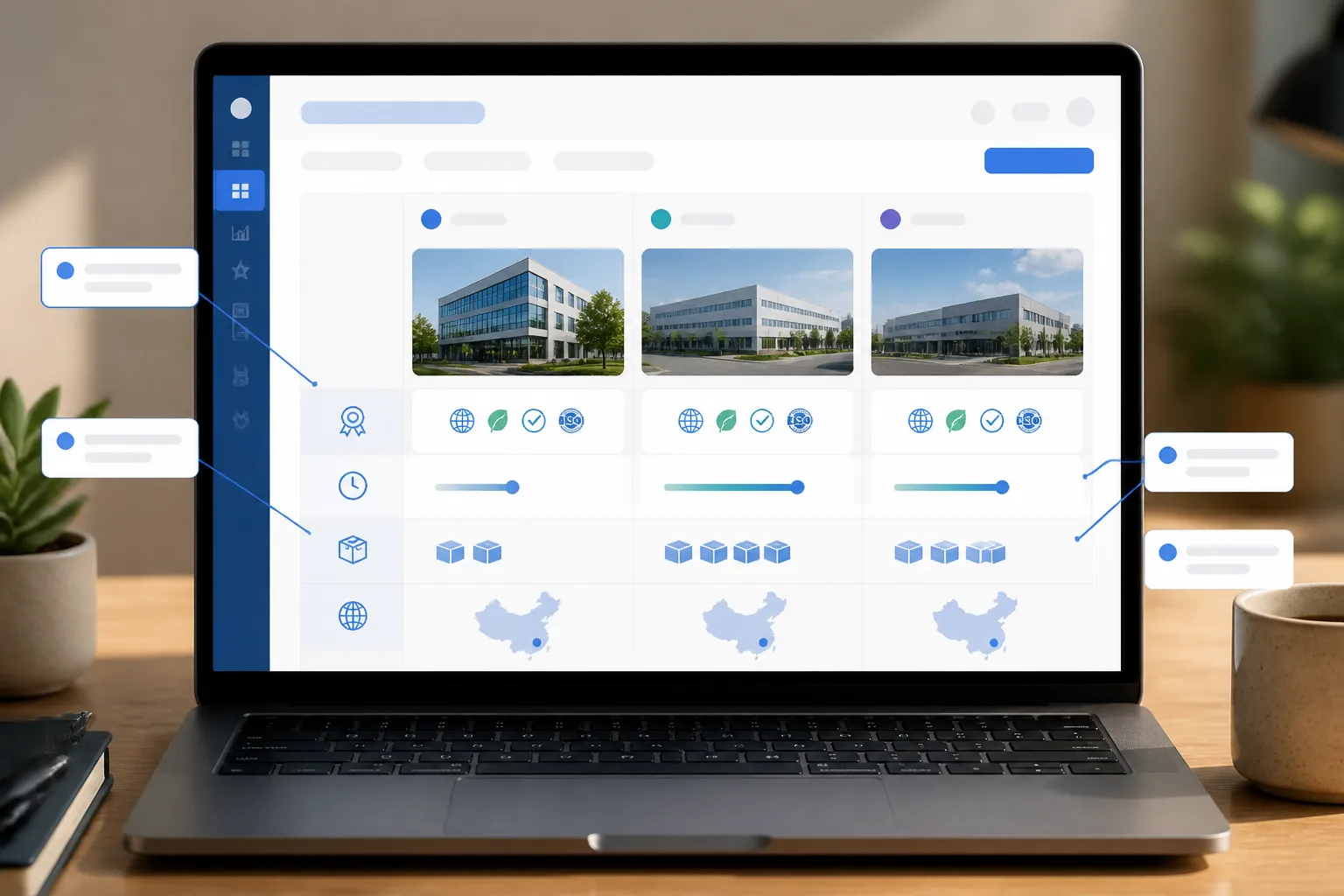
Integrating Verified Chinese Supply with AI-Native Infrastructure
Finding a factory like DSBJ is step one. Converting that sourcing relationship into a scalable revenue channel is where most Chinese factories and their overseas buyers lose time.
This is the operational gap that Link4a / 链上科技 is designed to close — specifically for Chinese factory owners, OEM/ODM exporters, and the overseas buyers trying to reach them.
Link4a's product suite addresses four bottlenecks in the cross-border trade workflow:
Sitebox: Deploys a brand-ready independent site in under 30 minutes. For a precision components manufacturer that wants to capture direct inquiries from European industrial buyers — rather than waiting for a trade show lead — this compresses what used to be a 3-month web development cycle into a same-day decision.
Inbox: A 24/7 multilingual inquiry AI that handles inbound RFQs, pre-qualifies buyers, and routes complex questions to human sales engineers. For a factory operating across time zones (Suzhou to Stuttgart, for instance), this eliminates the 14-hour response lag that kills deals before they start.
Match: A supplier matchmaking engine that returns qualified results in an average of 3 seconds. Overseas sourcing teams and DTC operators who need verified Chinese supply — not trade show booths — use Match to shortlist factories by capability, certification, and output category.
Reach: An omni-channel content and SEO/GEO/outbound lead engine. Factories that rely solely on Alibaba listings or trade show attendance are competing on price alone. Reach drives discovery through social, search, and outbound channels simultaneously.
The numbers behind the platform: 300+ factories served, 1,400+ live sites deployed. For Chinese exporters evaluating how to build international distribution without a local sales team, that's a credible proof set.
Understanding how to communicate your factory's capabilities in sourcing-buyer language is part of the same challenge. The guide on 60+ Manufacturers Synonyms Every Global Sourcing Buyer Must Know covers the vocabulary gap between how Chinese factories describe themselves and how overseas buyers search for them.
When Does Suzhou Dongshan Precision Make Sense for Your Sourcing Strategy?
Not every project warrants a DSBJ engagement. The honest answer is: this supplier tier fits a specific buyer profile.
DSBJ is the right call when:
- Annual FPC or PCB volume justifies Tier-1 supplier onboarding overhead (typically $500K–$1M+ annually)
- Your product requires automotive or telecom-grade process certifications
- You need supply chain redundancy across multiple geographies
- Sub-assembly integration (circuitry + precision metal + optical) reduces your vendor management burden
DSBJ is probably not the right call when:
- You're at prototype or early-run stage (MOQ economics won't favor a 10,001-person manufacturer)
- Your lead time window is under 4 weeks for complex PCB configurations
- You need a supplier who will co-develop your product without an existing IP framework
For buyers in the second category, mid-tier Suzhou precision manufacturers with flexible MOQ, faster tooling cycles, and co-development appetite are a better starting point. The AI matchmaking tools from Link4a's Match engine are specifically built for this qualification step — surfacing verified factories against your technical requirements in seconds rather than days of trade directory searches.
Conclusion
Suzhou Dongshan Precision Manufacturing (DSBJ) is a measurable fact in global electronics supply: founded 1980, 10,001+ employees, present in 11 countries, second globally in FPC supply, top-three in PCBs. For overseas sourcing buyers evaluating Chinese electronics component supply, it represents a benchmark — both as a potential supplier and as a calibration point for what Tier-1 Suzhou precision manufacturing actually looks like at scale.
The practical next step depends on your volume and stage. If you're qualifying DSBJ directly, start with a technical NDA and a scoped DFM inquiry routed to the correct business segment. If you're still building your Chinese supply shortlist, use a verified matchmaking tool to surface alternatives across the precision manufacturing landscape before committing to the onboarding overhead of a Tier-1 engagement.
To explore how AI-native infrastructure can accelerate your cross-border sourcing and sales workflow — whether you're a factory looking to reach global buyers or a buyer looking to reach verified Chinese supply — visit link4a.com.
Frequently Asked Questions
What is suzhou dongshan precision manufacturing?
Suzhou Dongshan Precision Manufacturing Co., Ltd. (苏州东山精密制造股份有限公司, A-share ticker: 002384) is a Suzhou-headquartered, publicly listed electronics contract manufacturer specializing in flexible printed circuits (FPC), backlight modules, and optical/LED components — with FPC as its core revenue driver after acquiring Multek (formerly a Flex Ltd. division) to become one of China's largest FPC producers by capacity. Their customer base includes Tier-1 global OEMs in consumer electronics, automotive, and telecom (including indirect Apple supply chain participation), with manufacturing sites spanning mainland China and Southeast Asia. For sourcing buyers, the relevant profile is high-volume, precision FPC and module assembly at scale — not a spot-sourcing or low-MOQ vendor, but a strategic supplier for programs requiring ISO/IATF-certified production and established EMS infrastructure.
How to suzhou dongshan precision manufacturing?
Dongshan Precision Manufacturing (东山精密, SZ: 002384) is a Suzhou-based Tier-1 electronics manufacturer specializing in PCB/FPC, LED backlight modules, and precision metal stamping — primarily supplying Apple, Samsung, and major EMS players. To engage them as a supplier, you would approach through their business development team for NDA and NPI (New Product Introduction) qualification, which typically requires sharing Gerber files, BOM, and annual volume forecasts; MOQs for FPC are generally 5,000–50,000 pcs depending on layer count and complexity, with lead times of 4–6 weeks for tooling and 2–3 weeks for production runs. They hold ISO 9001, IATF 16949 (automotive), and UL certifications, and operate facilities in Suzhou, Shenzhen, and overseas (US/Mexico via acquisitions like MFLX), so DTC operators sourcing at scale should expect direct factory audits and supply agreements rather than spot orders through trading companies.
Why is suzhou dongshan precision manufacturing important?
Suzhou Dongshan Precision Manufacturing (苏州东山精密制造, SZ: 002384) matters to overseas buyers because it sits inside Tier-1 supply chains for Apple, Samsung, and Xiaomi — producing FPC (flexible printed circuits), rigid-flex PCBs, and LED display modules at scale, with certifications including ISO 9001, IATF 16949, and UL. Its vertical integration across PCB fabrication, SMT assembly, and precision metal stamping under one roof compresses lead times (typically 4–6 weeks for FPC NPI) and reduces multi-vendor coordination risk that DTC operators usually face when sourcing complex electromechanical assemblies from China. For sourcing teams, it represents a benchmark supplier when qualifying domestic alternatives: if a candidate factory can't match Dongshan's process controls or audit standards, that's a concrete red flag worth documenting in your supplier scorecard.
When should I use suzhou dongshan precision manufacturing?
Use Suzhou Dongshan Precision (东山精密, SZ:002384) when:
- You're sourcing high-volume FPC (flexible printed circuits), precision metal stampings, or Mini-LED/MLED backlight modules — these are their core competencies, with Apple-tier quality validation (they supply iPhone flex circuits and display components).
- Your program demands tight tolerances and certified supply chain: they hold IATF 16949 (auto), ISO 13485 (medical), and operate under Apple-audited QMS — relevant if you need cross-vertical certification coverage.
- You're running large-scale consumer electronics or automotive display programs: MOQs are industrial (typically 10K+ units per SKU), lead times run 6–12 weeks for NPI, scaling to 4–6 weeks in mass production. Not suited for DTC small-batch or prototype runs — for those, route to a Tier-2 Suzhou contract shop instead.
What are the benefits of suzhou dongshan precision manufacturing?
Suzhou Dongshan Precision Manufacturing (东山精密, SZ:002384) is vertically integrated across precision metal stamping, FPC (flexible printed circuits), and LED components — meaning buyers can consolidate PCB, stamped metal housing, and backlight sourcing under one vendor, reducing coordination overhead and lead times typically to 4–6 weeks for repeat orders.
The company holds IPC-A-610, IATF 16949 (automotive-grade), and ISO 13485 (medical) certifications across its facilities, which de-risks qualification for buyers in regulated or high-reliability categories (automotive, industrial, medical wearables).
MOQs vary by product line but are generally competitive for mid-volume DTC runs (FPC modules from ~500–1,000 pcs), and the company's scale — multiple fabs in Suzhou plus acquired MFLX (US) and Multek assets — provides redundancy and the option to route production through a non-China entity if tariff exposure is a concern for US-bound goods.