US China Trade in 2026: What American Importers Must Know
US China Trade in 2026: What American Importers Must Know
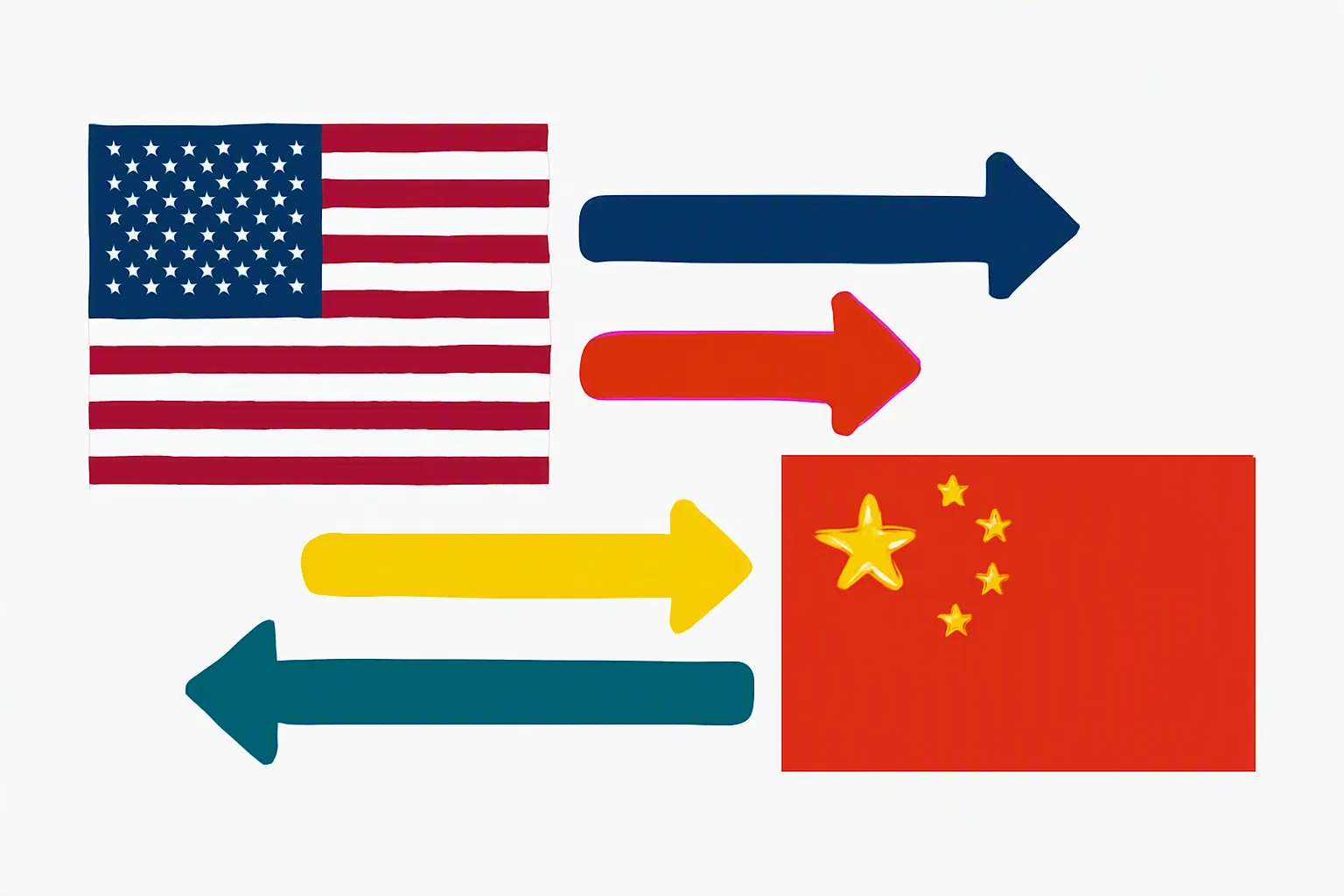
China exported $453 billion worth of goods to the United States in 2024 — more than any other country on earth. For American importers, DTC store owners, and procurement teams, that figure isn't just a headline: it's the backdrop to every sourcing decision they make.
US China Trade in the United States — Market Overview
The United States and China are the world's two biggest economies, and their trade relationship touches virtually every American household. Consumers benefit from lower prices on electronics, furniture, apparel, and household goods — products that would cost significantly more if manufactured domestically. At the same time, the relationship has reshaped entire industrial regions, and the political debate around it has only intensified since tariffs first arrived in 2018.
In June 2026 alone, China exported $43.5 billion to the United States — a 13.9% increase over the same month in 2025. The top category, as it has been for several years, was telephones at $2.47 billion for that single month. Machinery, furniture, plastics, and apparel round out the major inbound categories. U.S. exports to China in the same month reached $14.6 billion, led by petroleum gas ($13.5 billion annually in 2024), soybeans, semiconductors, and aircraft.
American buyer profiles are wide-ranging. Amazon FBA sellers and Shopify store owners source consumer electronics, home goods, and seasonal products directly from Chinese factories. Mid-market manufacturers import industrial components or semi-finished parts. Retail chains run dedicated procurement offices. What all of them share is exposure to the same policy environment: shifting tariff schedules, customs compliance requirements, and the ongoing challenge of vetting a supplier 7,000 miles away without a local partner on the ground.
What's Specific About the United States
American importers operate inside one of the most rule-dense trade environments in the world. That isn't a complaint — it's a planning reality.
Tariffs and Section 301. The Section 301 tariffs first imposed in 2018 remain the dominant structural cost in US-China trade. President Biden maintained most of those tariffs, and Trump's second term pushed rates higher on many categories. The U.S. Supreme Court struck down some emergency-act tariffs, but the bulk remain in force. Importers must classify goods accurately under the Harmonized Tariff Schedule (HTS) — a misclassification that lowers duties can trigger back-payment, penalties, and CBP audits.
Sanctions and export controls. The U.S. Entity List, administered by the Bureau of Industry and Security (BIS), restricts trade with designated Chinese entities. Importers buying components that touch dual-use technology — chips, sensors, certain chemicals — need to verify their Chinese supplier isn't on a restricted list before any money moves. The consequence of getting this wrong isn't just a fine; it can mean criminal liability.
UFLPA compliance. The Uyghur Forced Labor Prevention Act (UFLPA), fully operational since 2022, creates a rebuttable presumption that goods from Xinjiang were made with forced labor. CBP detains shipments suspected of Xinjiang origin; the importer must produce documentation proving otherwise or lose the goods. Apparel, cotton, polysilicon, and tomato products face heightened scrutiny.
Payment norms. Most U.S. importers pay Chinese suppliers via wire transfer (T/T), with terms typically structured as 30% deposit, 70% against a bill of lading copy. Letters of credit (LC) are common on larger orders but add bank fees and complexity. Online platforms like Alibaba's Trade Assurance provide a degree of protection for smaller transactions, though they don't substitute for factory due diligence.
Time-zone reality. Beijing operates 12–13 hours ahead of U.S. Eastern time (13 during EDT). A question emailed at 9 a.m. in New York might not be answered until the following morning. For importers who need fast turnaround on sample approvals or quality holds, that lag compounds quickly without a partner who can communicate in real time on both sides.
How to Choose a US China Trade Partner
The gate to reliable China sourcing isn't a marketplace listing — it's the vetting process that happens before you place an order.
Supplier shortlisting and factory verification. A credible sourcing partner checks business licenses, export licenses, factory audit reports (BSCI, SMETA, ISO 9001), and production capacity before presenting a shortlist. Ask any prospective partner how many factories they personally visited in the past 12 months — the answer tells you quickly whether they operate on the ground or from a desk.
MOQ and price negotiation. Minimum order quantities from Chinese factories can range from 50 units for simple products to 5,000+ for custom-molded items. A good partner negotiates realistic MOQs for your volume level and benchmarks pricing across multiple factories. They should show you rejected quotes alongside the one they recommend.
Sample coordination. Getting a pre-production sample right is far cheaper than fixing a production run. The partner should manage the sample brief in Chinese, confirm the spec sheet with the factory, and arrange shipping so samples arrive with proper customs documentation.
Language and cultural fluency. Contract language, quality spec sheets, and dispute correspondence need to be handled in Mandarin — not via auto-translate. Relations between a U.S. buyer and a Chinese factory often hinge on communication nuance that a bilingual intermediary handles naturally and a Google Translate chain cannot.
Verifiable performance, not promises. Before signing with any sourcing partner, ask for evidence. Link4a publishes the queries behind its SEO performance: a sweep of 60 product pages in August 2026 found 17 ranking first on U.S. Google and 31 in the top 10 — the queries are listed on their homepage so buyers can verify independently. That's the kind of show-your-work transparency that separates an accountable partner from a marketing claim.
Pricing in the United States
Import costs for US-China trade aren't just the factory price — they're the landed cost, and the gap between those two figures surprises new importers every time.
Tariff impact. Depending on HTS classification, Section 301 tariffs add 7.5% to 145% on top of the factory price (rates vary widely by product category and the current political status of US-China relations). A consumer electronics item at $10 FOB Shenzhen might carry a 25% Section 301 rate plus standard MFN duties, pushing landed cost well above the factory quote.
Freight and logistics. Ocean freight from major Chinese ports (Shenzhen, Shanghai, Ningbo) to U.S. West Coast ports (Los Angeles, Long Beach) runs approximately $1,500–$4,000 per 20-foot container in stable market conditions, though rates have swung dramatically in recent years. Air freight is available for urgent or high-value shipments but typically runs 4–6x the ocean rate per kilogram.
Sourcing partner fees. Sourcing agencies typically charge either a flat sourcing fee, a percentage of FOB value (commonly 5–10%), or a commission-only model where they earn only when an order closes. Link4a operates on a commission-only model for factories — nothing is charged until an order closes — which aligns the partner's incentive with the buyer's outcome.
Currency. All factory quotes are in USD for most export transactions, which simplifies currency risk for American buyers compared to markets where local currency fluctuation is a daily variable.
Common Challenges for Buyers in the United States
Tariff Classification Disputes
CBP liquidates entries with the HTS code the agency determines is correct — which may differ from what the importer declared. Retroactive duty assessments can arrive years after import. Using a licensed customs broker and requesting binding rulings for ambiguous products reduces this risk substantially.
Supplier Reliability and Quality Consistency
A factory that ships a flawless sample is not guaranteed to replicate that quality across a 2,000-unit production run. Common failure points include material substitution (cheaper components swapped in after approval), subcontractor involvement without disclosure, and inadequate QC before shipment. Third-party pre-shipment inspection — conducted in China before the container is loaded — is the standard mitigation. It typically costs $200–$350 per inspection and is almost always worth it.
The Belt and Road Initiative Shadow
China's Belt and Road Initiative has deepened Chinese manufacturing integration with dozens of countries, including many in Southeast Asia. This matters for U.S. importers because some goods now show "Made in Vietnam" or "Made in Cambodia" labels despite heavy Chinese component content. CBP's anti-circumvention enforcement has increased; country-of-origin rules under Section 301 look at substantial transformation, not just the final assembly point.
Rare Earth and Technology Restrictions
Beijing's export controls on rare earth elements — imposed as a counter-measure in the ongoing trade dispute — affect buyers of motors, batteries, electronics, and defense-adjacent products. U.S. importers in affected categories need to check whether their Chinese supplier can legally export specific materials, as these controls shift with diplomatic relations.
India as an Alternative: Context, Not Replacement
India has attracted significant manufacturing investment as U.S. buyers seek China-plus-one strategies, and the comparison shows up in every sourcing discussion. The reality is more nuanced: India's strengths lie in textiles, pharmaceuticals, and certain engineering goods, while China's manufacturing depth across electronics, tooling, and consumer goods remains difficult to match at scale. Many U.S. importers run dual-sourcing programs rather than full migrations.
Communication Lag and the "Lost in Translation" Problem
Factory contacts in China typically respond during their business hours (9 a.m.–6 p.m. CST). For a buyer in New York, that's a 12-hour overnight gap. Misunderstandings about specifications get amplified when neither side is fluent in the other's language. A bilingual intermediary who drafts communications from the factory's actual in-stock catalogue — rather than guessing or translating marketing copy — closes that gap in ways that email threads cannot.

Frequently Asked Questions (United States)
Q: What tariffs apply to goods imported from China in 2026? Most Chinese goods face MFN (most-favored-nation) duties plus additional Section 301 tariffs ranging from 7.5% to well above 100% depending on product category. The 2024 USTR Report on China's WTO Compliance is the primary government source for understanding current U.S. policy positions. Use the USITC HTS database to look up your specific code, then verify with a licensed customs broker before committing to an order.
Q: Is a trade deal between the U.S. and China coming that would lower tariffs? Diplomatic contact has continued — the May 2026 Trump-Xi summit in Beijing extended a fragile détente but produced no comprehensive deal to restore normal trade relations. The Phase One Deal framework remains a reference point, but a broad tariff reduction agreement is not imminent based on current public information. Plan procurement costs around existing rates.
Q: How do I verify a Chinese factory before placing an order? Request the business license (营业执照), export license, and any third-party audit certifications (BSCI, ISO 9001). Cross-check the company registration on China's National Enterprise Credit Information Publicity System. For high-value or long-term relationships, a professional factory audit conducted in person is the most reliable approach — and the basis for the vetting Link4a performs before recommending any supplier.
Q: What is UFLPA and how does it affect my import? The Uyghur Forced Labor Prevention Act creates a legal presumption that goods from the Xinjiang Uyghur Autonomous Region were produced with forced labor and are therefore prohibited from import. To rebut CBP detention, importers must produce supply-chain documentation tracing materials back to their origin. Cotton, polysilicon, aluminum, and tomato products face the highest scrutiny.
Q: What should I ask a China sourcing partner before hiring them? Key questions: How do they charge (flat fee, percentage of FOB, or commission-only on closed orders)? How many factories did they physically visit in the past year? Can they show verifiable evidence of sourcing or market performance — not just testimonials? Do they handle communication in Mandarin or through translation tools? What is their quality-inspection process before shipment?
Q: How long does it take to receive goods from China? Ocean freight from major Chinese ports to the U.S. West Coast takes approximately 14–21 days of transit time, plus several days for customs clearance on the U.S. side. Add factory lead time — typically 30–60 days for production after sample approval, depending on product complexity and factory load. Air freight cuts transit to 5–7 days but at a significant cost premium.
Q: Can I source from China if my order volume is small? Yes, though MOQs vary widely by factory and product type. A sourcing partner who negotiates MOQs on your behalf can often secure terms that a cold approach to a factory won't produce. For buyers who want to understand what realistic MOQ and pricing look like for their product category before committing, the right first step is a sourcing inquiry — not a marketplace purchase.
Get Started: Sourcing from China as a U.S. Buyer
The US-China trade relationship will remain complex for the foreseeable future. High tariffs, rare earth restrictions, UFLPA compliance requirements, and shifting diplomatic relations all require active management — not a one-time setup. The buyers who handle it well share a common trait: they have a reliable partner on the China side who handles factory communication, quality checks, and order coordination in real time.
For deeper background on what's currently moving through ports, see our guide to China Exports to the U.S.: What Importers Must Know in 2026 and the current policy context in China Trade Deal 2026: What U.S. Importers Must Know Now.
If you're ready to move beyond marketplace listings and want a sourcing partner who shortlists vetted factories, negotiates MOQ and price, coordinates samples, and handles factory communication in Mandarin — visit Link4a and submit a sourcing inquiry. There's no charge until an order closes.