US China Trade Deal 2026: What American Importers Must Know
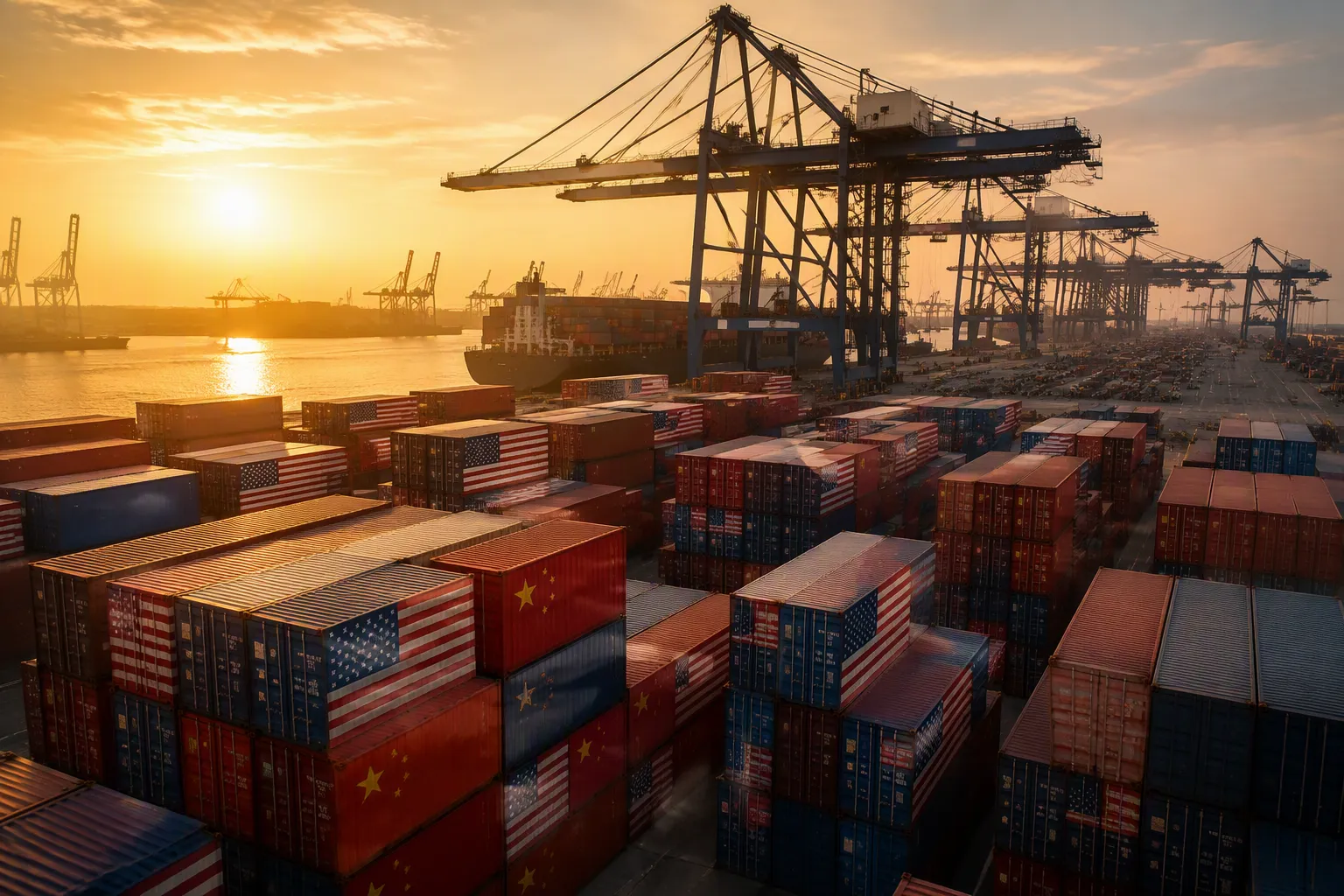
US China Trade Deal 2026: What American Importers Must Know
The US China trade deal landscape has shifted significantly since 2018 — tariffs remain, partial agreements have come and gone, and American importers are now navigating a more complex procurement environment than at any point in the past two decades. For US buyers sourcing from China today, understanding the policy backdrop is not academic; it directly affects your landed costs, supplier options, and sourcing strategy.
US China Trade Deal in United States — Market Overview
The United States and China remain the world's two largest economies, and their trade relationship has shaped global supply chains for a generation. According to the Council on Foreign Relations, China is one of the largest export markets for US goods and services, while the United States is China's top export destination. That mutual dependency has not dissolved despite years of political friction — it has simply become more expensive and more complicated to manage.
American buyers span a wide range of profiles: large-scale importers managing multi-SKU product catalogues, DTC e-commerce store owners sourcing private-label goods, Amazon FBA sellers looking for factory-direct margins, and mid-market brands that need consistent quality without a procurement team on the ground in Shenzhen. What they share is a need to understand how the current trade environment affects their cost structure and which sourcing channels are still viable.
Demand drivers for China-sourced goods in the US remain strong despite tariff headwinds. Manufacturing capacity, tooling expertise, and supplier density in categories like electronics, apparel, home goods, and industrial components are simply unmatched by most alternative markets. While some buyers have diversified into Vietnam, India, or other Southeast Asian hubs, industry estimates suggest that China still accounts for the majority of manufactured goods imported into the United States by value. The trade relationship is strained, but it has not been severed — and for most American buyers, China sourcing is still a foundational part of their supply chain.
What's Specific About the United States
Regulatory and Compliance Environment
US importers operate under a layered compliance framework that has grown considerably more complex since 2018. The core bodies governing imports are US Customs and Border Protection (CBP), the Office of the United States Trade Representative (USTR), and the Bureau of Industry and Security (BIS) within the Department of Commerce.
Tariffs are the most immediate concern. President Trump imposed broad tariffs on Chinese goods starting in 2018, and crucially, many of those tariffs were maintained by the Biden administration and then steepened during Trump's second term. The bulk of US-China trade war tariffs remain in place as of 2026, according to CFR, meaning most HTS (Harmonized Tariff Schedule) categories covering Chinese goods carry additional duties of 25% or more on top of the standard Most Favored Nation (MFN) rate.
Beyond tariffs, US importers must track:
- Section 301 tariff exclusions — some product categories have received temporary exclusions, but these expire and must be renewed through the USTR process
- Export controls — BIS has expanded Entity List designations affecting tech hardware; buyers sourcing electronics or components should verify supplier status
- Uyghur Forced Labor Prevention Act (UFLPA) — enacted in 2022, this creates a rebuttable presumption that goods from Xinjiang involve forced labor; CBP can detain shipments absent documentation proving otherwise
- Antidumping and countervailing duty (AD/CVD) orders — products ranging from steel to solar panels carry additional AD/CVD duties on top of Section 301 rates
The 2024 USTR Report to Congress on China's WTO Compliance documents ongoing concerns about Chinese government subsidies, intellectual property enforcement, and state-owned enterprise advantages — factors that continue to influence US trade policy decisions.
Sanction-related compliance is a separate but related concern. OFAC maintains lists of sanctioned Chinese entities, and US buyers must screen their factory partners accordingly. The gate for importing goods is not just customs duty payment; it includes confirming that the supply chain does not touch restricted parties.
Payment Methods and Business Norms
US buyers typically pay Chinese factories via wire transfer (T/T), with the standard structure being a 30% deposit before production and 70% against a copy of the bill of lading. Letter of Credit (L/C) arrangements are common for larger orders. Platforms like Alibaba Trade Assurance offer a middle ground for new supplier relationships, though they come with limitations on customization and direct negotiation.
US business culture expects written contracts, clear IP assignment clauses, and quality inspection rights. Chinese factories vary widely in their familiarity with these norms — established export manufacturers in Guangdong or Zhejiang typically understand them; smaller interior-province factories may not.
How to Choose a China Sourcing Partner in the United States
"Provider" in this context means any service that helps US buyers access Chinese supply chains: sourcing agents, freight forwarders with sourcing arms, managed sourcing platforms, or marketplace-based services.
What Actually Matters at the Evaluation Stage
Verifiable track record, not promises. The sourcing industry is full of operators who claim broad factory networks. Ask for specific, checkable evidence — Google rankings for their content, references from buyers in your product category, or documented order histories. Link4a, for example, publishes the actual search queries where their client store ranks on US Google, so buyers can verify performance rather than take marketing copy at face value.
On-the-ground factory access in China. Sourcing agencies operating purely via email and Alibaba searches provide limited value over what you could do yourself. A meaningful partner has relationships with factories they have physically visited, assessed, and placed repeat orders through.
Multilingual capacity for factory communication. Misunderstandings in specification documents are a leading cause of quality failures. Your provider should be communicating with factories in Mandarin — not running English specs through a translation tool and hoping for the best.
Time-zone coverage. US buyers on the East Coast are 12-13 hours behind China Standard Time. A sourcing partner with staff handling both time zones prevents the 24-hour response lag that stalls sample iterations and production decisions.
Commission structure vs. retainer. Some agents charge monthly retainers regardless of order volume. Others, like Link4a's model for factory clients, work on commission applied only to closed orders — meaning no upfront cost before value is demonstrated. For buyers, understanding the fee structure helps you assess whether the incentives are aligned with getting your order placed at the right price.
Compliance knowledge. Given the UFLPA, CBP scrutiny, and Section 301 complexities described above, your sourcing partner should be able to discuss tariff classification, provide documentation for CBP, and flag supply chain risks in regulated categories. This is especially relevant if you are sourcing textiles, electronics, or materials that touch the rare earth supply chain.
Pricing in the United States
Sourcing service costs in the US market vary by the type of arrangement and order size.
Sourcing agent fees typically range from 5% to 15% of FOB value, depending on complexity, order size, and the agent's positioning. Agents handling smaller orders in niche categories tend toward the higher end; high-volume commodity sourcing typically commands lower percentages.
Tariff impact on landed cost is now a major pricing variable. For most Chinese-origin goods, US buyers must budget for Section 301 duties (ranging from 7.5% to 25%+ depending on HTS category), plus standard CBP processing fees, Harbor Maintenance Fees, and Merchandise Processing Fees. The actual tariff rate on your specific product is the first calculation any serious sourcing plan should include.
Factory price negotiation remains one of the highest-leverage activities in procurement. MOQ thresholds, payment terms, and seasonal capacity pressures all affect the factory's willingness to move on unit price. A sourcing partner with an existing relationship at a factory will almost always secure better pricing than a cold inquiry from a buyer's Alibaba account.
Freight costs from China to the US fluctuate with vessel capacity, fuel surcharges, and broader market conditions. While rates have eased from the extreme peaks seen during 2021-2022, ocean freight remains a significant line item for bulky or heavy goods. Sea freight from major Chinese ports to US West Coast or East Coast ports varies seasonally and should be quoted close to your intended ship date rather than estimated months in advance.
For buyers evaluating total cost of ownership, the calculation is: factory price + sourcing fee + freight + tariffs + domestic logistics = true landed cost per unit.

Common Challenges for Buyers in the United States
Tariff Volatility and Policy Uncertainty
The most significant operational challenge for US importers is the instability of the tariff environment. The Phase One Deal, signed in 2020, was intended to stabilize the relationship and prevent further escalation, but it did not result in a comprehensive rollback of tariffs. As CFR notes, the May Trump-Xi summit extended a fragile détente but failed to produce the comprehensive deal needed to restore normal trade relations. Buyers cannot plan multi-year procurement strategies around tariff rates that may change with a policy announcement.
Practical mitigation: build a tariff scenario into your landed cost model, maintain supplier relationships in Vietnam, India, or Mexico for categories where tariff exposure is highest, and monitor Section 301 exclusion applications relevant to your HTS codes.
Supply Chain Transparency and UFLPA Compliance
CBP's enforcement of the Uyghur Forced Labor Prevention Act has caught many importers off-guard. The law's rebuttable presumption means that goods with any traceable connection to Xinjiang — including cotton, polysilicon, and certain industrial inputs — can be detained at the port of entry. Demonstrating compliance requires supplier-level documentation, not just a declaration from your factory.
Buyers in apparel, textiles, electronics, and renewable energy hardware need to audit their supply chains at the raw material level, not just the finished goods level.
Supplier Reliability and Quality Consistency
Finding a reliable factory is a different problem from finding a cheap factory. Marketplaces show you price per unit; they do not show you whether a supplier has shipped defective batches to previous buyers, whether they subcontract production during peak seasons, or whether their QC process is documented.
A vetting process that includes factory audits, reference checks from existing buyers, and sample inspection before full production orders is the minimum standard for any non-trivial procurement relationship. One failed production run typically costs more — in reshipping, delays, and lost sales — than several months of sourcing agent fees.
Logistics and Freight Complexity
US importers must navigate port congestion, chassis availability on the US side, inland freight to final distribution centers, and customs clearance timelines. LCL (less than container load) shipments work for smaller volumes but add transit time. Air freight is an option for urgent replenishment but is cost-prohibitive for most physical goods at scale.
Working with a freight forwarder experienced in China-US trade lanes — and one who communicates proactively about delays — is as important as the factory relationship itself.
Communication Gaps and Specification Failures
Specification failures are quiet — they show up as wrong colors, incorrect dimensions, missing certifications, or packaging that does not match what was approved. They typically trace back to ambiguous communication at the sample stage: a buyer approves a sample that "looks right" without confirming technical specs in writing, and the factory interprets ambiguity in a direction that works for their production line, not the buyer's market.
Multilingual, specification-first communication with factories — confirming every material, finish, dimension, and compliance marking in writing before production begins — is the professional standard, and it is what distinguishes a managed sourcing relationship from a marketplace order.
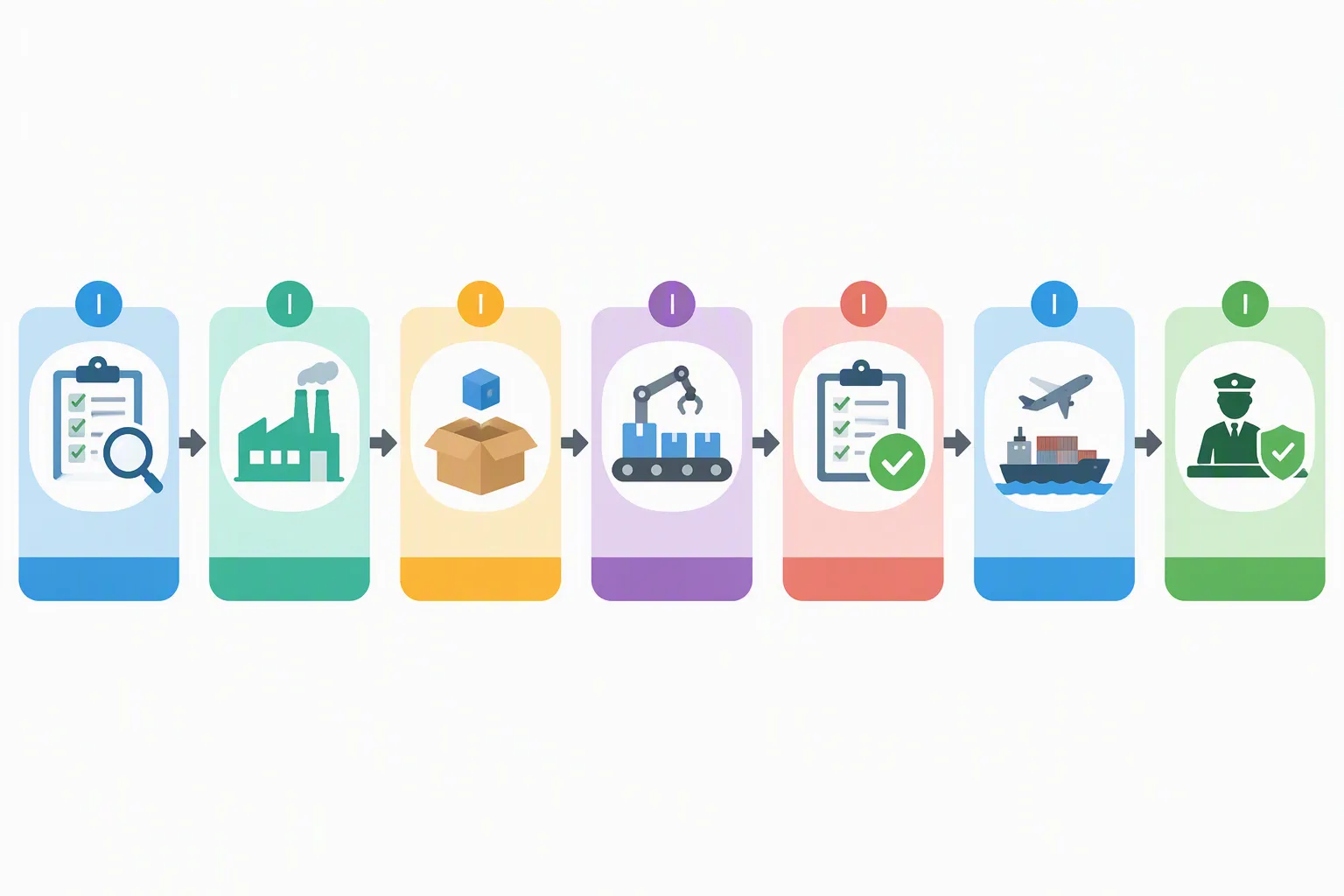
The Broader Trade Context: Belt and Road, India, and Alternative Routes
China's Belt and Road Initiative has created infrastructure corridors through Central Asia, Southeast Asia, and Africa that affect logistics options and factory location decisions. For US buyers, the practical relevance is that some Chinese manufacturers have opened production facilities along Belt and Road routes — in Vietnam, Cambodia, or elsewhere — partly to offer goods with non-China origin marking that escapes Section 301 tariffs.
This is a legitimate strategy when the production genuinely occurs in the third country, but CBP has significantly tightened enforcement of transshipment and origin fraud. "Made in Vietnam" labeling requires that substantial transformation occurred in Vietnam, not that Chinese-manufactured components were assembled there. Buyers who source through Vietnam or other third countries as a tariff gate strategy need documented proof of origin at every stage.
India is another market receiving significant attention as a China-alternative sourcing destination, particularly for textiles, pharmaceuticals, and some electronics. US-India relations on trade are more straightforward than US-China relations from a tariff and sanctions perspective, though India's manufacturing ecosystem has different strengths and depth compared to China's industrial base.
The show of diversification across multiple source countries is real for large importers. For smaller buyers, the practical reality is that the supplier depth, tooling capability, and price competitiveness of China's manufacturing clusters are difficult to replicate in the near term — even with the tariff disadvantage.
Frequently Asked Questions (United States-Specific)
Q: Are Section 301 tariffs on Chinese goods still in effect in 2026?
Yes. The bulk of US-China trade war tariffs remain in place. Some tariff exclusions exist for specific HTS categories and must be applied for separately through the USTR. Check the USTR website and your freight forwarder's tariff guidance for the specific classifications covering your products.
Q: How does the UFLPA affect my sourcing from China?
If any component or raw material in your supply chain originates from Xinjiang — including cotton, polysilicon, tomato products, or certain electronics inputs — CBP can detain your shipment. You must be able to document the full supply chain and demonstrate that forced labor was not involved. Work with your factory to obtain supplier declarations and traceability documentation before your first shipment.
Q: What is the Phase One Deal and does it still matter?
The Phase One Deal, signed in January 2020, was a partial agreement in which China committed to purchasing more US goods and making structural reforms in certain areas. The Congressional Research Service summary (IF12125) provides an authoritative overview. China did not fully meet its purchase commitments, and the deal did not resolve core structural issues. It remains the most recent formal bilateral trade agreement, but its practical impact on day-to-day import tariffs is limited.
Q: Can I use a sourcing agent in China if I have never imported before?
Yes, and for most first-time importers it is advisable rather than optional. A credible sourcing partner handles factory vetting, MOQ negotiation, sample coordination, and production oversight — reducing the likelihood of a costly first-order failure. Make sure the agent has verifiable experience in your product category and can provide references from existing clients.
Q: How do I verify that a Chinese factory is legitimate and not a trading company posing as a manufacturer?
Request the factory's business license (营业执照), ask for photos of the production floor, and check whether their export license covers your product category. A sourcing partner with an established relationship at the factory can confirm this directly. Third-party audit services such as QIMA or SGS also offer on-site factory assessments for a fee.
Q: What's the typical lead time for manufactured goods from China to the United States?
Production lead times vary widely by product complexity — industry estimates typically range from 20 to 60 days for standard manufactured goods, longer for complex tooling or custom components. Add 25-35 days for sea freight transit from major Chinese ports to US West Coast or East Coast, plus customs clearance time. For time-sensitive replenishment, air freight reduces transit to 5-7 days but at significantly higher cost.
Q: Does sourcing through Vietnam or India avoid Section 301 tariffs?
It can, if production genuinely occurs in the third country and meets CBP's substantial transformation standard. However, CBP actively investigates transshipment — goods manufactured in China but re-labeled or minimally processed in a third country do not qualify. If you pursue this route, maintain complete documentation of the production process in the source country.
Get Started in the United States
The current US China trade environment rewards buyers who approach sourcing as a managed procurement process rather than a series of one-off marketplace transactions. That means knowing your landed costs including tariffs before you negotiate with a factory, verifying suppliers through vetting rather than star ratings, and having a communication process that catches specification problems at the sample stage rather than after production.
For US importers who want to go deeper on the 2026 specifics, the China Trade Deal 2026: What U.S. Importers Must Know Now guide covers the current tariff landscape in detail, and the China Exports to the U.S.: What Importers Must Know in 2026 article breaks down category-level considerations for common import categories.
Link4a works directly with vetted Chinese factories to connect overseas buyers with reliable supply chain partners. The sourcing process covers supplier shortlisting, factory vetting, MOQ and price negotiation, sample coordination, and ongoing repeat order management — with multilingual communication handled directly with the factory.
For factory owners, Link4a manages a six-language overseas storefront with per-market SEO content and handles buyer conversations on your behalf, charging commission only on closed orders. No upfront cost before an order closes.
Ready to evaluate your China sourcing options? Request a sourcing consultation or get MOQ and pricing information for your specific product category at link4a.com. Whether you are placing your first trial order or restructuring an existing supply chain to absorb tariff shifts, working with a vetted sourcing partner removes the guesswork from factory selection, compliance documentation, and landed cost planning. Start by mapping out your target HTS codes and landed cost thresholds, then bring those specifics into your first supplier conversation so every quote you receive reflects the true regulatory and logistical reality of importing into the United States in 2026.
Sources: CFR — Contentious US-China Trade Relationship | USTR 2024 Report on China's WTO Compliance | CRS Phase One Deal Summary IF12125