Used Clothes Exporters in USA: 2026 Buyer's Guide to Sourcing & Pricing
Used Clothes Exporters in USA: 2026 Buyer's Guide to Sourcing & Pricing
The USA is one of the biggest second-hand clothes exporters globally, shipping $706 million worth of used clothing in 2019 alone. If you're buying, importing, or building a supply relationship with used clothes exporters in the USA, the scale, variety, and regulatory framework of this market sets it apart from any other country.
Used Clothes Exporters in USA — Market Overview
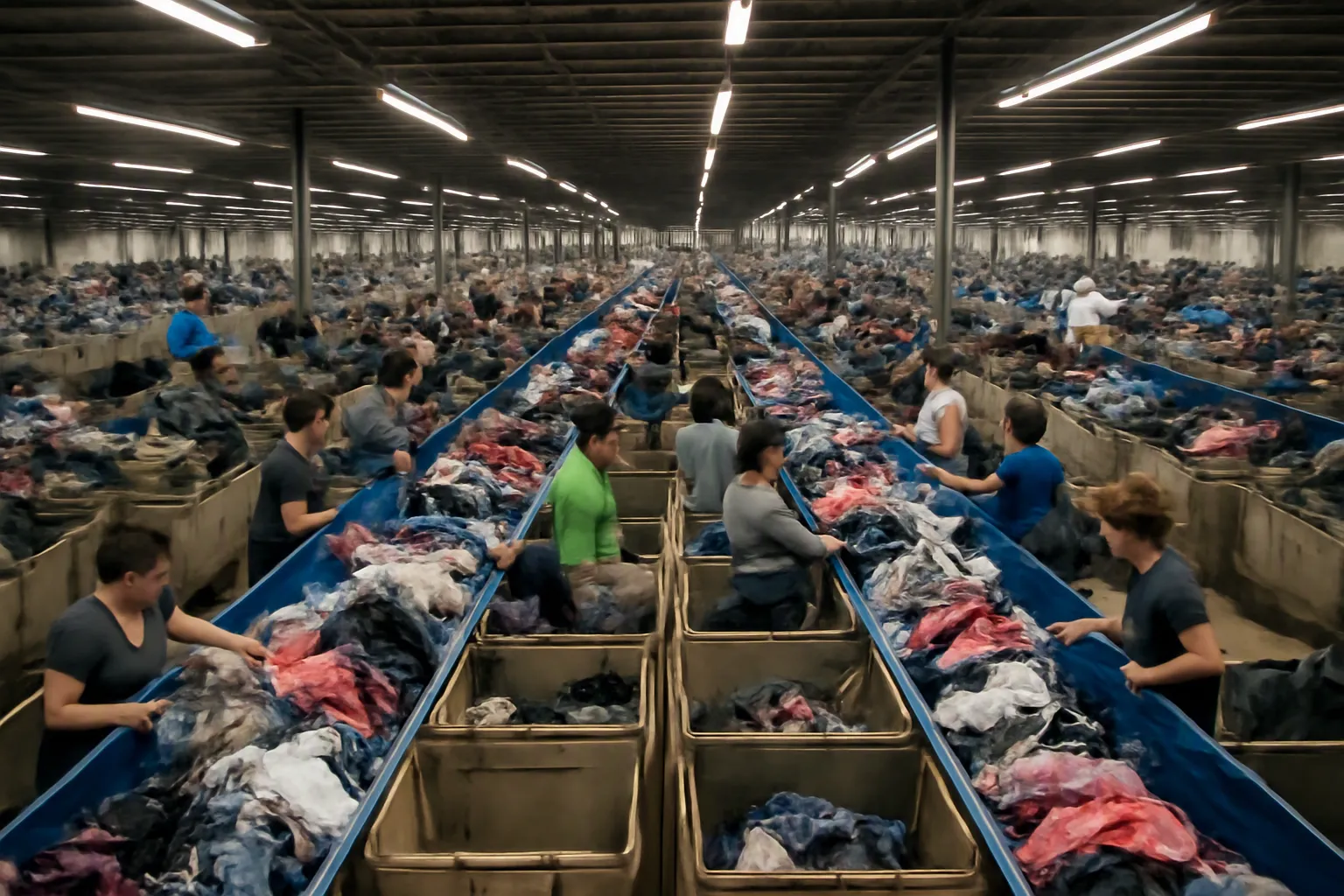
The American used clothing export industry operates at a volume most buyers underestimate. Exporters collect garments from households, thrift shops, charities, and corporate donation drives across every major metro area — then sort, grade, bale, and ship them to receiving markets in South Asia, Africa, the Middle East, and Latin America. The products exported include everyday casualwear, women's clothing and dresses, denim, outerwear, children's apparel, and footwear.
Demand for American second-hand garments is driven by several factors that buyers from another country consistently cite: brand recognition, fabric quality, and durability. Well-known American labels — Calvin Klein, Ralph Lauren, Tommy Hilfiger, Nike, Levi Strauss (whose jeans rose to global prominence as far back as 1873) — command price premiums in resale markets worldwide. Buyers in markets like India, Egypt, Nigeria, Morocco, and Pakistan specifically seek out USA-origin bales because American-produced garments are known to maintain color and resist shrinkage through repeated washing, making them high-value at every tier of the resale chain.
The buyer profile varies significantly. At one end are large-volume wholesale importers in developing markets purchasing 20-foot or 40-foot container loads for distribution to local markets. At the other end are e-commerce operators, vintage resellers, and DTC brands building curated inventory from graded American stock. The commercial intent behind most sourcing searches — what to buy, what grades are available, what pricing structures apply — reflects this range. If you're new to buying from US-based used clothing suppliers, understanding how exporters sort and price their goods is the foundation of a productive purchasing relationship.
What's Specific About the USA Used Clothing Export Market
The regulatory environment for used clothes exporters operating out of the USA is governed by a combination of federal and state-level frameworks. At the federal level, the U.S. Consumer Product Safety Improvement Act (CPSIA) sets baseline standards for textile products, particularly children's clothing — relevant if you're importing goods and re-selling in regulated markets. The Federal Trade Commission (FTC) requires that clothing sold domestically carry accurate fiber content and country-of-origin labels, though export-only shipments operate under different labeling rules.
Exporters based in New York, New Jersey, Maryland, Delaware, and Connecticut — a dense corridor of collection activity on the East Coast — must also comply with state-level solid waste and textile recycling ordinances that have grown stricter since 2020. In cities like New York, extended producer responsibility (EPR) legislation is actively reshaping how brands and retailers handle post-consumer textiles, which feeds directly into the exporter supply chain. Dallas and other Sunbelt cities are emerging collection hubs as population growth in Texas drives higher donation volumes.
Payment norms in the US export market lean heavily toward wire transfer (T/T), letters of credit (LC) for large container orders, and increasingly, escrow-based platforms for first-time buyer relationships. Many established exporters also accept PayPal or trade finance arrangements for mid-tier orders. Net-30 or Net-60 payment terms are common once a buyer relationship is established, but new buyers should expect to pay upfront or via LC until trust is built. English is the operating language, though major exporters with international client bases — particularly those shipping to Latin America or South Asia — often have Spanish- or Hindi-speaking staff available for sales and logistics coordination.
How to Choose a Used Clothes Exporter in the USA
Choosing the right supplier from among US used clothing exporters comes down to a handful of evaluation criteria that separate reliable long-term partners from one-off transactional sources.
Sorting and grading transparency. The best exporters sort clothes into granular categories — industry leaders sort into 200 or more distinct categories, with each item individually inspected. Ask any prospective supplier how many grades and categories they use, and whether they provide a manifest or packing list per bale. Vague grading ("Grade A/B mix") without documentation is a red flag.
Collection geography and supply consistency. Exporters drawing from dense urban collection networks — the Northeast corridor, major Midwest cities, Southern California — tend to have more reliable and consistent volume than those depending on a single city or regional market. Ask where their collection happens and whether they work with thrift chains, corporate clothing drives, or municipal recycling programs. Exporters that run public education campaigns in churches and schools, for instance, signal a professional community-sourced supply chain rather than ad-hoc sourcing.
Export licensing and compliance. Legitimate exporters should hold a valid EIN (Employer Identification Number), be registered with U.S. Customs and Border Protection as an exporter of record, and be able to provide certificates of origin if required by your importing country. For buyers importing into markets with strict phytosanitary or fumigation requirements — India, several African nations — ask specifically whether bales come pre-fumigated or if that's your responsibility at destination.
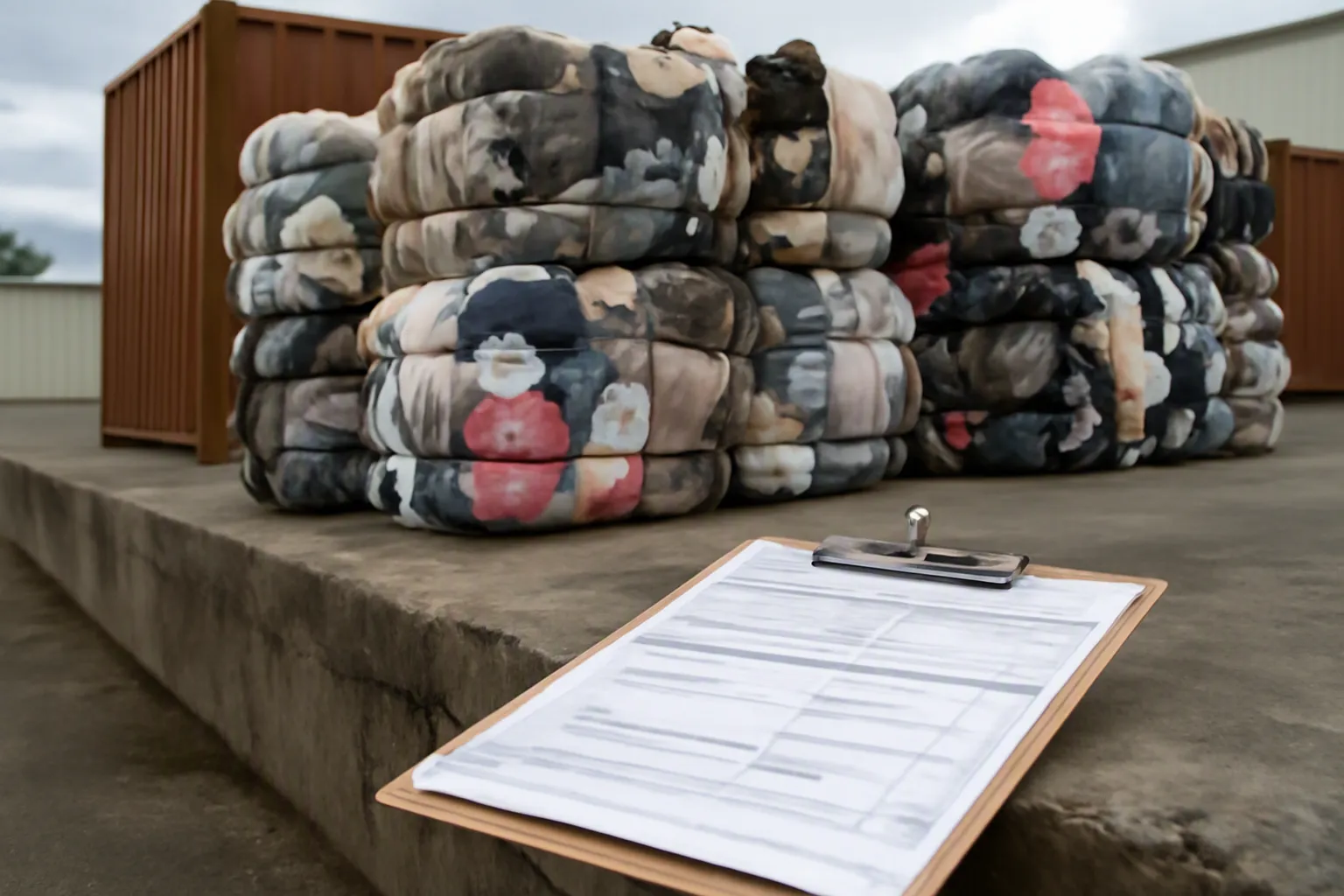
Container utilization and packaging. Efficient exporters bale garments to maximize container utilization, targeting 100% fill on 20- or 40-foot containers. Loose loading or poor baling wastes your per-unit economics. Get clarity on average bale weight and how many bales per container before committing.
Time-zone and language coverage. USA-based exporters operate on Eastern, Central, or Pacific time. If you're sourcing from Asia or Africa, synchronous communication windows are narrow. Confirm whether your contact person has WhatsApp availability, whether email response times are under 24 hours, and whether they have experience handling export documentation for your specific destination country.
For broader guidance on vetting US-based wholesale suppliers — not just in clothing but across categories — the Wholesale Suppliers in USA: The Complete 2026 Buyer's Guide covers evaluation frameworks that apply directly here.
Pricing in the USA
Used clothing from US exporters is priced primarily by grade, category, and order volume. Pricing is denominated in US dollars (USD).
Container-load pricing (FCL, 40-foot) for mixed used clothing — the most common commercial format — varies by grade, category mix, and market conditions at the time of purchase; premium-sorted categories (branded women's clothing, vintage denim, name-brand sportswear) are priced higher than general mixed bales. Pricing fluctuates with collection volume, freight costs, and global demand cycles, so always request a current quotation rather than relying on any published benchmark. Bale-level pricing varies by grade and category mix. Buyers taking a full container of a single high-demand category (e.g., sorted men's denim or branded sneakers) will pay more per pound than buyers taking general mixed bales.
Several factors move pricing meaningfully:
- Season of collection. Winter-weight garments collected in Q4 command higher prices than summer stock due to global demand patterns.
- Brand concentration. Bales with higher concentrations of known American brands (Nike, Levi's, etc.) are priced at a premium and often sold separately from generic mixed stock.
- Sorting depth. Exporters who sort into 200+ categories deliver more value to buyers who resell by niche, justifying higher per-pound prices versus unsorted general mix.
- Volume commitment. Multi-container buyers typically have room to negotiate discounts relative to single-bale buyers, who generally pay spot price or above.
- Destination market. Some exporters price differently by destination due to local import duty structures — worth verifying if you're importing into a market with high used-clothing tariffs.
Always request a detailed quotation that breaks down price per pound or per bale, packaging costs, inland freight to the loading port, and any documentation fees. Do not accept "all-in" quotes without a line-item breakdown.
Common Challenges for Buyers in the USA
Inconsistent Grading Standards
The used clothing industry lacks a single universal grading standard enforced across all exporters. "Grade A" at one exporter may include items that another calls "Grade B." This inconsistency creates quality disputes, especially for first-time buyers. The fix: request sample bales before placing a full container order, and specify grading criteria in writing in your purchase contract.
Regulatory Requirements at Destination
Importing used clothing into markets like India, Nigeria, or Morocco comes with strict import regulations — fumigation certificates, phytosanitary inspections, and in some countries outright bans or high tariff barriers on certain used clothing categories. Buyers are often caught off-guard when their shipment is held at destination customs. Research your importing country's specific requirements before you finalize a purchase; your exporter should have experience with your destination and can advise, but the importing-side compliance is ultimately your responsibility.
Logistics Lead Times and Port Congestion
Ocean freight from US East Coast ports (Newark, Baltimore) or West Coast (Los Angeles, Long Beach) to major receiving markets can range from 2 to 6 weeks depending on destination and vessel availability. Port congestion — a recurring challenge at key hubs — can add days or weeks to transit. Build buffer time into your inventory planning and confirm your exporter's cutoff for booking container space.
Supplier Reliability for Repeat Orders
Finding a reliable used clothes exporter for a one-time purchase is easier than building a consistent supply relationship. Volume and quality can fluctuate seasonally. Buyers who need predictable inventory — for a resale business or a wholesale distribution operation — should negotiate standing purchase agreements and inspect a supplier's collection network before committing. Marketing your needs clearly (category preferences, grade requirements, volume targets) gives exporters the signal to prioritize your orders. AI trade infrastructure is making this supplier-buyer matching process faster and more transparent across wholesale categories.
Payment and Trade Finance Risk
Wire transfers to an unfamiliar exporter carry counterparty risk. For first orders, use a letter of credit or an escrow arrangement. Established exporters with verifiable references, EIN documentation, and a track record of shipping to your market are safer than those offering unusually low prices without documentation. The meaning of "Grade A" in a sales contract is only as reliable as the contract terms and the supplier's track record.
Frequently Asked Questions (USA-Specific)
What does "used clothes exporter" mean in the US context? In the USA, a used clothes exporter is a company that collects post-consumer clothing, sorts and grades it, packages it into bales, and ships those bales to buyers in other countries. The process involves collection partnerships with thrift stores, charities, and households, followed by industrial sorting and baling before export.
What are the main products exported by US used clothing exporters? The product mix typically includes general mixed clothing, women's clothing, men's shirts and denim, children's wear, footwear, and branded sportswear. Some exporters specialize in specific categories — vintage denim, branded athletic wear — while others focus on high-volume general mix bales.
Is buying used clothes from USA exporters regulated? Yes. Exporters must comply with US export regulations, including EAR (Export Administration Regulations) for certain goods and applicable state textile recycling laws. Buyers importing into their own country must also comply with destination-country import rules, which vary widely — some countries restrict or prohibit used clothing imports entirely.
What's the minimum order quantity (MOQ) for US used clothing exporters? MOQ varies by exporter. Some work at the single-bale level (45–55 kg), while most commercial-scale exporters require a minimum of one 20-foot container load. Ask each supplier directly for their current MOQ and pricing at that minimum — terms change based on supply and demand. For broader context on how wholesale MOQs work across categories, see the China Products Wholesale in the US: The Complete 2026 Buyer's Guide.
Are American-produced used clothes better quality than those from another country? Many importers specifically seek USA-origin used clothing for quality reasons — American-produced garments from brands like Levi Strauss, Calvin Klein, and Nike are known to maintain fabric integrity, color, and structure through repeated washing. This quality perception drives demand and price premiums in markets from Delhi to Dubai.
How do I verify an exporter's credentials before buying? Request their EIN, business registration documents, references from previous international buyers, and a sample shipment. Verify their export history through US Census Bureau trade data (available through the Census Bureau's USA Trade Online portal). Legitimate exporters will have no hesitation providing documentation.
Are there used clothing exporters in Dallas specifically? Dallas and the broader Texas market are growing collection hubs given Texas's population growth. However, the highest concentration of established large-scale used clothing exporters remains on the East Coast — New York, New Jersey, Maryland, Delaware, and Connecticut — due to population density and proximity to major East Coast ports. Texas-based exporters typically ship through the Port of Houston.
Get Started in the USA
The used clothing export market in the USA offers genuine commercial opportunities — but only for buyers who approach it with the right sourcing infrastructure. Knowing what grade to order, what documentation to require, and how to evaluate supplier reliability separates buyers who build profitable supply chains from those who waste capital on mismatched inventory.
If you're a factory owner, OEM/ODM exporter, overseas buyer, or DTC operator looking to build or optimize your used clothing sourcing, the operational complexity compounds quickly: supplier vetting, logistics coordination, multi-language communication, and marketing your purchasing capacity to reach the right exporters all require coordinated effort.
Link4a's Match engine connects verified suppliers and buyers rapidly, while Inbox handles multilingual inquiry management around the clock — so you're not losing opportunities when your team is offline. For buyers building their own sourcing channel or exporters looking to reach international buyers faster, Sitebox gets a branded, SEO-ready site live in under 30 minutes, and Reach drives ongoing content and SEO traffic to keep inquiries coming.
Ready to find verified used clothing suppliers or expand your buyer reach?
Request a Match or Get Started on Link4a →
All trade volume figures cited from the Observatory of Economic Complexity (OEC), a widely referenced international trade data platform used by researchers and policymakers globally.