Vietnam Trade Deal 2026: The Complete Buying Guide for Importers
Vietnam Trade Deal 2026: The Complete Buying Guide for Importers
Main Keyword: vietnam trade deal | Target Reader: Purchase-stage importers, sourcing managers, DTC operators, and Chinese OEM/ODM exporters | Updated: June 2026
Who This Guide Is For
You are a procurement manager, DTC brand owner, TikTok Shop operator, or factory-side export strategist who has just watched the tariff map shift — again. The U.S.–Vietnam framework agreement on reciprocal, fair, and balanced trade (reached in late 2025) has moved Vietnam from a quiet tariff-arbitrage play to a formally recognized trade partner with preferential schedules, and now you need to decide: do you shift sourcing toward Vietnam, double down on a China-direct supply chain, or build a hybrid model that captures both? This guide is written for the moment right before you commit budget, sign a sourcing contract, or deploy trade infrastructure. It gives you the evaluation criteria, the red flags, the vendor questions, and the step-by-step procurement checklist to make that decision with confidence — not guesswork.
What the Vietnam Trade Deal Actually Does (Decision-Relevant Summary)
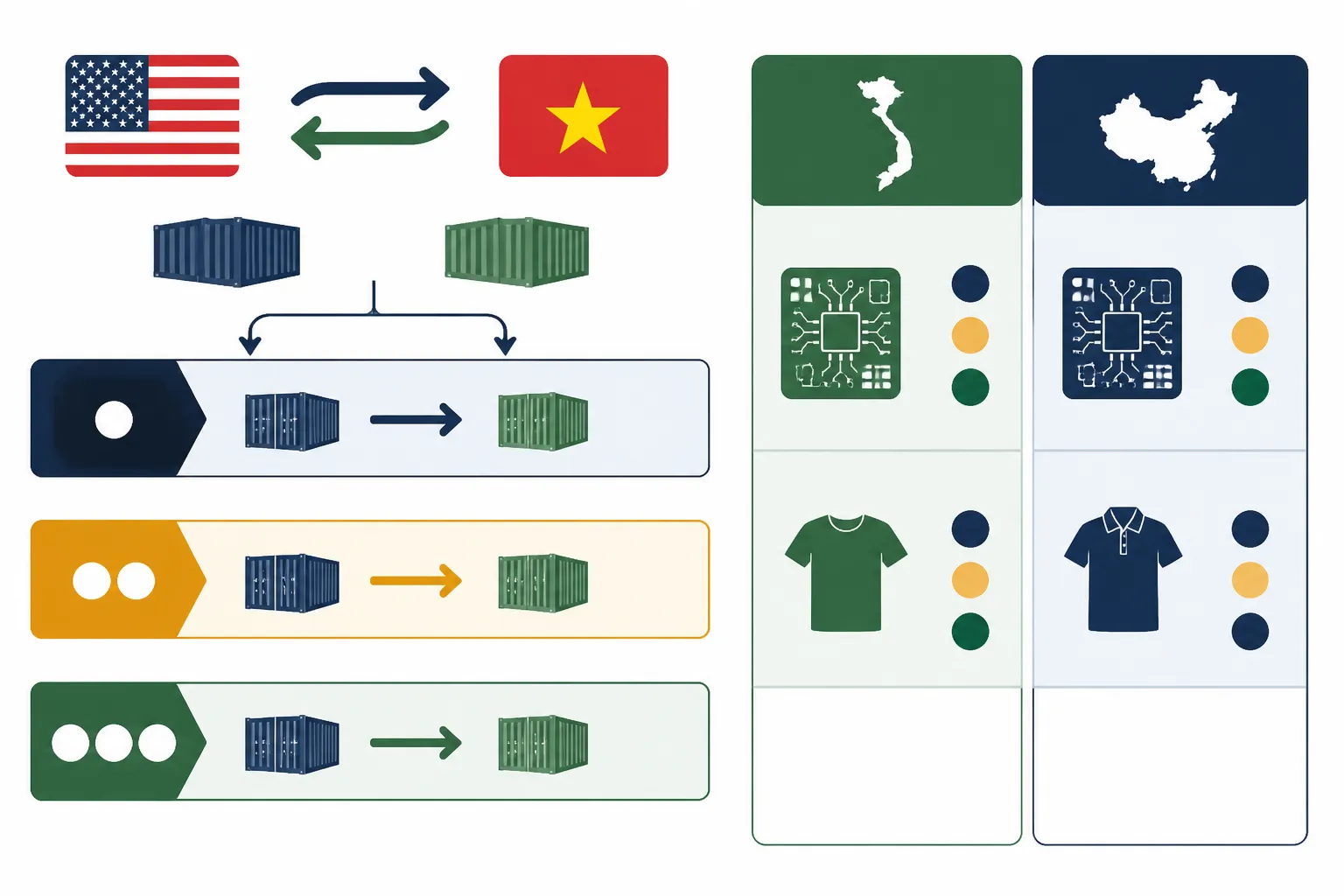
The U.S.–Vietnam Framework Agreement is not a full free trade agreement (FTA) in the USMCA or KORUS sense. It is a structured bilateral framework that:
- Establishes reciprocal tariff schedules across priority goods categories (electronics, textiles, footwear, agricultural inputs), with phased rate reductions tied to rules-of-origin compliance
- Creates enforcement mechanisms against transshipment — meaning goods assembled in Vietnam from Chinese inputs without sufficient value-add will not qualify for preferential rates
- Opens government procurement channels and sets IP, labor, and environmental baseline standards as preconditions for rate access
- Accelerates customs digitization on both sides, reducing clearance times for compliant shipments
For buyers: this deal lowers landed costs on qualifying Vietnam-origin goods but raises the bar for what "Vietnam-made" means. For Chinese exporters: the deal creates both competitive pressure and an opportunity — buyers who previously used Vietnam purely as a tariff workaround will now consolidate to fewer, more compliant suppliers, raising the premium on verified Chinese supply with strong documentation and digital traceability.
Key Decision Factors
1. Rules-of-Origin Compliance Threshold
What to evaluate: The deal requires that a specified percentage of the finished product's value originate within Vietnam. This threshold varies by HS code category. Buyers must verify that their Vietnam-based supplier can document local value-add — not merely final assembly of Chinese-made components.
What "good" looks like: A supplier provides a Certificate of Origin (CO) issued by the Vietnam Chamber of Commerce and Industry (VCCI), a bill of materials (BOM) with traceable input sourcing, and a declared regional value content (RVC) percentage that clears the applicable threshold for your specific product category.
Red flag: Supplier cannot produce a VCCI CO or offers only a generic "Made in Vietnam" label without documented input sourcing.
2. Tariff Schedule Applicability by Product Category
What to evaluate: Not all goods benefit equally. The framework's preferential rates are tiered and category-specific. Electronics, semiconductors, and certain textiles receive the most favorable treatment; other categories remain on standard MFN rates or are excluded pending further negotiation rounds.
What "good" looks like: You have confirmed the exact HS-8 code for your product and verified its status in the published tariff schedule (available via USTR and trade.gov). You know your current effective rate and the deal-rate, and the delta justifies any supply chain adjustment costs.
What to ask: Request a tariff engineering memo from your customs broker specifically for your product SKUs under the new framework before signing any sourcing contracts.
3. Transshipment Risk & Traceability Infrastructure
What to evaluate: U.S. Customs and Border Protection (CBP) has significantly enhanced scrutiny of Vietnam-origin claims following the 2018–2025 tariff arbitrage period. Suppliers who rely on minimal Vietnamese finishing operations on Chinese-made goods are now high-risk. A CBP audit can result in duty evasion findings, back-assessed duties, and blacklisting.
What "good" looks like: Your supplier has an auditable factory floor in Vietnam (not just a bonded warehouse), documented labor and production records, and a third-party audit history (BSCI, SMETA, or equivalent). Digital supply chain traceability — where every input is logged and timestamped — is the emerging standard.
Practical action: Require a factory audit report dated within the last 12 months before placing your first purchase order.
4. Supplier Verification & Matchmaking Speed
What to evaluate: The Vietnam deal is accelerating buyer interest in Vietnamese supply, which means more noise in the supplier market. Unverified, low-capacity, or compliance-deficient factories are now actively marketing themselves as "deal-compliant." The speed and quality of your supplier verification process directly affects how fast you can capitalize on the tariff advantage.
What "good" looks like: You use a structured matchmaking process with pre-screened factories — not cold searches on B2B directories. Platforms that can surface a shortlist of verified, capacity-confirmed suppliers in seconds (not days) compress your time-to-first-sample from weeks to days.
This is precisely where AI-native trade infrastructure like Link4a's Match engine changes the game: its 3-second supplier matchmaking capability surfaces pre-verified OEM/ODM factories — including Vietnamese and China-based exporters with full documentation — rather than returning raw search results that require hours of manual vetting.
5. Communication & Inquiry Handling Quality
What to evaluate: Cross-border sourcing across the Vietnam trade corridor means operating in at least two language environments (English and Vietnamese, often with Chinese intermediaries). Delayed or mistranslated inquiry responses are one of the top reasons deals stall at the RFQ stage.
What "good" looks like: Your supplier or trade infrastructure platform provides 24/7 multilingual inquiry handling — not a human operator working one time zone, but an always-on system that captures, qualifies, and responds to inbound buyer inquiries in the buyer's language, immediately.
Link4a's Inbox product addresses this directly: it runs 24/7 multilingual AI inquiry handling so that a buyer in Chicago at 11 PM gets a substantive, accurate response in English while the Chinese factory team sleeps — compressing the inquiry-to-quote cycle from days to hours.
6. Digital Trade Infrastructure & Site Presence
What to evaluate: The Vietnam deal is formalizing a trade corridor that runs through digitally sophisticated buyers — DTC brands, Amazon FBA sellers, TikTok Shop operators — who vet suppliers via their web presence before ever sending an inquiry. A factory with no independent website, no English-language product pages, and no SEO/GEO visibility will be invisible to this buyer cohort regardless of how competitive their pricing is.
What "good" looks like: Your exporter or trade partner has a live, branded independent site with English-language product specs, certifications, and a clear inquiry flow. Sites deployed in under 30 minutes with AI-native product page generation (like Link4a's Sitebox) are now a realistic standard — not a luxury. The benchmark is 1,400+ live sites across 300+ factories.
7. Content, SEO & Outbound Lead Generation Capability
What to evaluate: In a post-deal environment where Vietnamese and Chinese exporters are competing for the same buyer attention, traffic generation is a durable competitive advantage. Suppliers who can drive organic search, social, and GEO (generative engine optimization — appearing in AI search answers) leads at scale have lower customer acquisition costs and faster pipeline growth.
What "good" looks like: Your trade infrastructure runs an omni-channel content engine that produces social content, SEO-optimized product pages, and AI-search-ready structured data in one workflow loop. Link4a's Reach product does exactly this — connecting SEO, GEO, TikTok/social, and outbound lead-mining in a single loop rather than requiring a separate agency, plugin stack, or headcount.
8. Total Cost of Compliance vs. Tariff Savings
What to evaluate: The Vietnam deal's tariff benefit must be net of compliance costs: supplier audit fees, CO documentation, customs broker fees for HS reclassification, potential supply chain redundancy costs if you're running dual-sourcing, and any platform or infrastructure costs you add to manage the new supply corridor.
What "good" looks like: A clear landed-cost model that compares: (current China-direct cost) vs. (Vietnam-origin cost + compliance overhead + logistics delta). If the net saving is under 4–6%, many buyers find the supply chain complexity is not worth it and instead invest in making their China-direct supply more digitally competitive.

Budget Tiers for Vietnam Trade Deal Sourcing Infrastructure
| Tier | Typical Spend Range | What You Get | Best For |
|---|---|---|---|
| Entry | $0–$500/mo | Manual supplier search via B2B directories, DIY website builder, human-translated inquiry handling, basic customs broker consultation | First-time importers testing a single Vietnam SKU; MOQ-sensitive DTC operators |
| Mid-Market | $500–$3,000/mo | Verified supplier matchmaking platform access, AI-assisted inquiry handling, branded independent site with product pages, tariff schedule tools | Growing DTC brands, FBA sellers adding Vietnam to their supply mix, Chinese factories with 5–50 overseas buyers |
| Scale / Growth | $3,000–$8,000/mo | Full AI-native trade infrastructure (site + inbox + matchmaking + content/SEO engine), multilingual content generation, GEO optimization, outbound lead-mining, factory audit coordination | Chinese OEM/ODM exporters serving 50+ overseas accounts; sourcing agencies managing multi-factory portfolios |
| Enterprise | $8,000+/mo | Custom integrations with ERP/WMS, dedicated account management, bespoke compliance workflows, multi-market tariff engineering, white-label buyer portals | Large exporters, trading companies, enterprise importers running >$10M/yr Vietnam trade volume |
Note: Tariff engineering, customs broker fees, and factory audit costs are additional and vary by product category and audit scope. Request a tailored quote at link4a.com.
Red Flags to Avoid
- No auditable Vietnam production footprint. If a supplier cannot show you a factory floor with Vietnamese labor records and dated production logs, you are looking at a transshipment risk, not a compliant supply chain.
- VCCI Certificate of Origin without matching BOM documentation. A CO alone is not proof of compliance. Without a bill of materials tracing inputs to Vietnamese or qualifying-country sources, the CO is window dressing that will not survive a CBP audit.
- Tariff savings quoted without HS-code specificity. Any supplier or broker who tells you "you'll save X% under the Vietnam deal" without citing your exact 8-digit HS code is guessing. Walk away from that conversation.
- No English-language inquiry response capability. A supplier who routes all buyer inquiries through a single English-speaking sales rep — with a 24–72 hour response window — will cost you deals. In 2026, buyers expect substantive responses in hours, not days.
- Website-free or directory-only presence. Suppliers who exist only as a listing on Alibaba or Global Sources with no independent site have no brand equity and no way for you to verify their real-world scale or compliance posture independently.
- Pricing quoted only in "container-load" minimums with no tiered MOQ structure. Purchase-stage buyers need to understand the minimum order quantity at sample tier, trial order tier, and bulk tier. Suppliers who refuse to disclose this tiered structure are not ready to serve agile DTC buyers.
- Vague on lead times and production capacity. If a factory cannot tell you their current production calendar utilization and realistic lead time from PO to FOB, they are either overbooked or have no production management systems — both are serious risk signals.
Buying Process Checklist
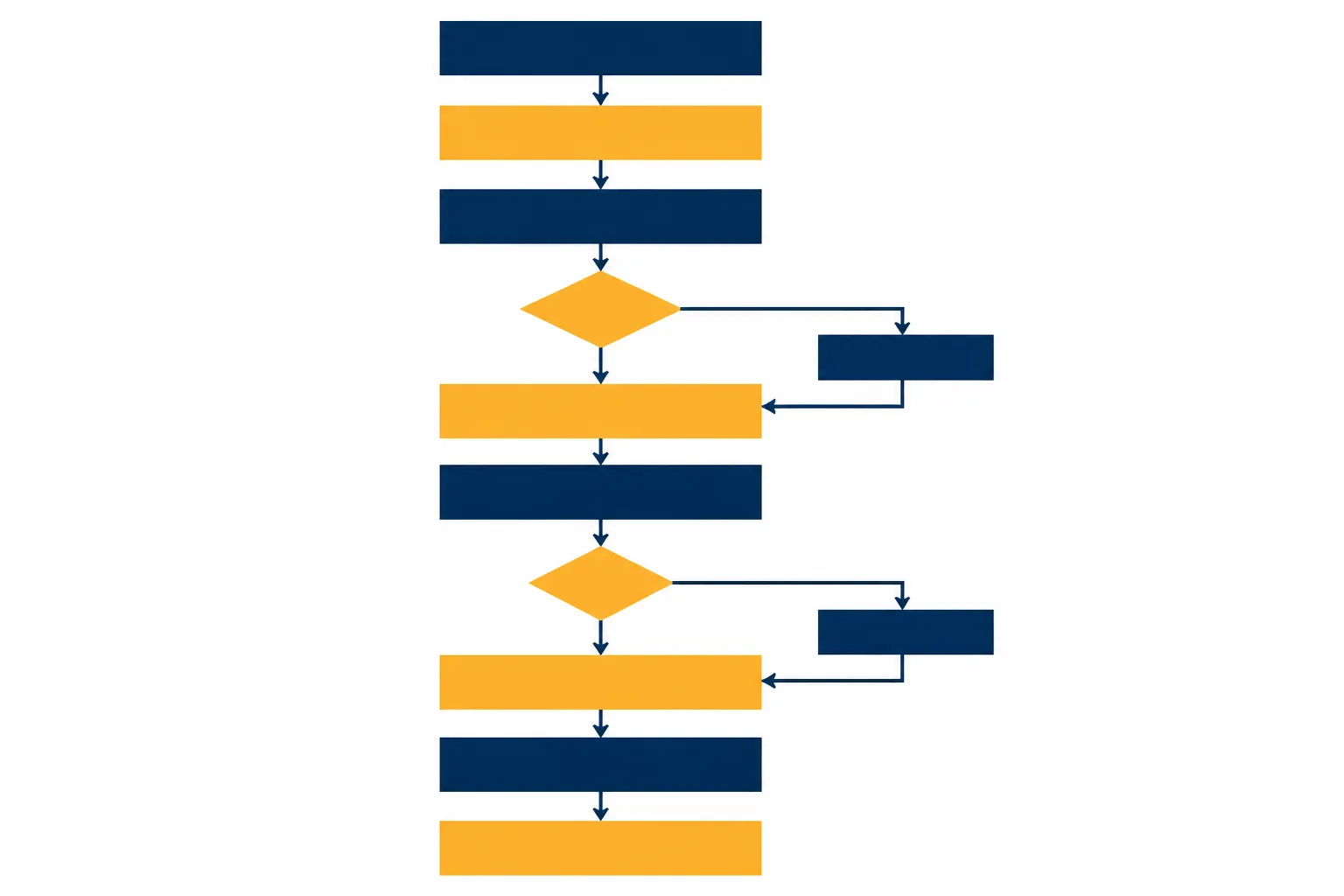
Define requirements — Document your target HS codes, estimated annual volume (units and value), quality standards (certifications required: CE, FCC, REACH, CPSC, etc.), and maximum acceptable landed cost including tariff.
Run a tariff analysis — Work with a licensed customs broker to confirm your product's status under the Vietnam framework, calculate the preferential rate, and model the net landed-cost delta vs. your current supply chain.
Shortlist suppliers — Use a verified matchmaking engine (not cold directory search) to generate a shortlist of 5–8 pre-screened suppliers meeting your category, capacity, and compliance criteria. Set a maximum shortlist time of 72 hours.
Request documentation packages — From each shortlisted supplier, request: factory audit report (≤12 months old), VCCI CO sample, BOM template, ISO/quality certifications, and references from 2–3 Western buyers.
Demo / virtual factory tour — Schedule a live video walkthrough of the production floor with the factory's QC manager present. This is non-negotiable for any supplier you intend to send a trial PO to.
Pilot / sample order — Place a paid sample order at the supplier's stated sample MOQ. Evaluate: packaging, labeling compliance, lead time accuracy, communication quality, and product spec conformance.
Reference checks — Contact 2 of the supplier's existing Western buyers directly. Ask specifically about lead time reliability, response quality during problem resolution, and documentation accuracy.
Contract negotiation — Lock in: tiered MOQ schedule, lead times by order size, QC inspection rights (your right to third-party inspection at your cost), IP non-disclosure terms, and payment milestones (T/T 30% deposit / 70% against BL is standard; LC at sight for larger orders).
Infrastructure deployment — Before your first bulk PO ships, ensure your trade infrastructure is live: branded buyer-facing site, inquiry handling system, and content/SEO pipeline. The Vietnam deal is bringing new buyers into the market — make sure they can find you.
Ongoing compliance monitoring — Set a 12-month calendar reminder to re-audit your supplier's CO documentation and BOM, and to review any USTR/CBP updates to the Vietnam framework's tariff schedules.
Questions to Ask Vendors and Suppliers
"Can you provide your current VCCI Certificate of Origin along with the bill of materials that supports the regional value content claim for my specific product?"
"What is your current production capacity utilization, and what is your realistic lead time from purchase order receipt to FOB shipment for a [your MOQ] unit order?"
"Have you been subject to a CBP transshipment investigation or audit in the past 36 months? What was the outcome?"
"What third-party audits have you completed in the last 12 months, and can you share the full audit report — not just the summary certificate?"
"What is your tiered MOQ structure: sample order, trial order, and standard bulk order? What are the unit price breaks at each tier?"
"How do you handle quality disputes and non-conformance claims? What is your standard remediation timeline and compensation policy?"
"Do you have an independent branded website with English-language product pages and a direct inquiry channel? What is your average inquiry response time?"
"Can you provide references from two Western buyers (U.S. or EU-based) who have been ordering from you for at least 12 months?"
"What certifications does your product currently hold, and what is your process for adding a new certification if my market requires it?"
"How do you communicate production status updates between PO placement and shipment? Do you use a platform, email, or messaging apps?"
"What is your policy on IP protection for custom designs, molds, and formulations? Do you sign NDAs, and what jurisdiction governs them?"
"If the Vietnam framework's tariff schedule is revised in a future negotiation round, how would that affect your pricing model? Is your pricing formula transparent enough that I can recalculate if tariff inputs change?"
Recommended Next Steps
The Vietnam trade deal has reset the competitive landscape for cross-border sourcing — and the window to position ahead of the consolidation wave is now, not after the next tariff review cycle. Here is what purchase-ready buyers and exporters should do in the next 30 days:
If you are an importer or DTC brand: Run a tariff analysis on your top 3 SKUs, shortlist 5 Vietnam-capable suppliers using a verified matchmaking tool, and place a paid sample order with the highest-ranked option. Budget 60–90 days for this cycle before your next bulk buying season.
If you are a Chinese factory owner or OEM/ODM exporter: The deal creates urgency — Western buyers are actively re-evaluating their supply chains right now, and the ones who find a credible, digitally present Chinese supplier with strong documentation will consolidate their business there rather than shifting to Vietnam. That means your window to get your site live, your inquiry handling automated, and your SEO/GEO pipeline running is measured in weeks, not quarters.
Link4a's AI-native cross-border trade infrastructure — Sitebox (branded site live in 30 minutes), Inbox (24/7 multilingual inquiry AI), Match (3-second supplier matchmaking), and Reach (omni-channel SEO/GEO/social content engine) — is purpose-built for exactly this moment. With 300+ factories served and 1,400+ sites already live, the platform is proven at scale for Chinese exporters competing for global buyer attention in a shifting trade environment.
Ready to move?
Request a Quote or Book a Demo at link4a.com →
Whether you are an overseas sourcing team looking for verified Chinese supply, a DTC operator evaluating your Vietnam vs. China landed-cost model, or a factory owner ready to capture the buyer traffic this deal is generating — the conversation starts with one inquiry.
This guide reflects publicly available framework information as of June 2026. Tariff rates, HS-code schedules, and rules-of-origin thresholds are subject to revision through ongoing U.S.–Vietnam negotiation rounds. Always verify current rates with a licensed customs broker before committing to sourcing contracts.